Understanding the Causes of Nerve Pain & Dysfunction
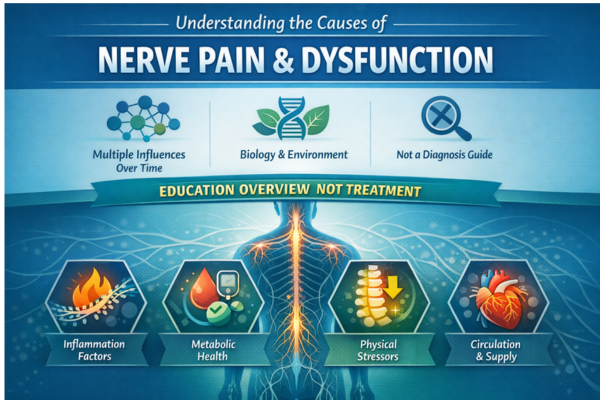
Understanding the causes of nerve pain begins with recognizing that symptoms rarely stem from a single factor. Instead, biological and systemic influences often interact over time.
For example, inflammation, metabolic strain, structural pressure, and regulatory imbalance may combine rather than act alone. As a result, nerve dysfunction is often multi-layered.
Therefore, this page explains common influencing factors that may affect nerve health within a structured, educational framework. In other words, the goal is to clarify patterns rather than assign a diagnosis.
Importantly, this is not a diagnostic guide. Rather, it is an overview designed to help you understand contributing factors more clearly.
What “Causes” Means
What Do We Mean by Causes of Nerve Pain?
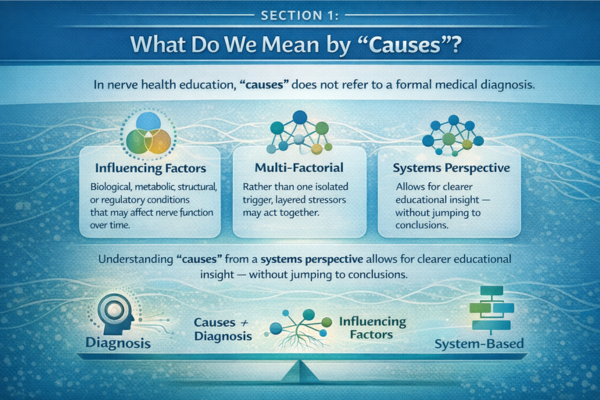
In nerve health education, “causes” does not refer to a formal medical diagnosis. Instead, it refers to influencing factors — biological, metabolic, structural, or regulatory conditions that may affect how nerves function over time.
In many cases, nerve dysfunction is multi-factorial. For instance, layered stressors may interact rather than arise from a single isolated trigger.
Consequently, understanding causes from a systems perspective allows for clearer educational insight. Ultimately, this approach encourages broader awareness without jumping to conclusions.
Inflammation & Neural Stress as Causes of Nerve Pain
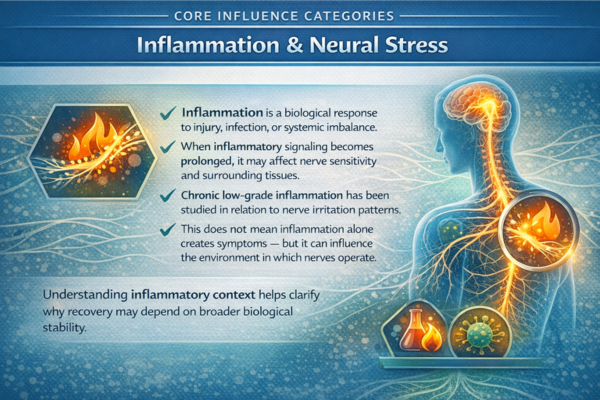
Inflammation is a biological response to injury, infection, or systemic imbalance. However, when inflammatory signaling becomes prolonged, it may affect nerve sensitivity and surrounding tissues.
Over time, chronic low-grade inflammation has been studied in relation to nerve irritation patterns. Nevertheless, this does not mean inflammation alone creates symptoms.
Rather, it may influence the broader biological environment in which nerves operate. Therefore, understanding inflammatory context helps explain why systemic stability matters.
Metabolic & Blood Sugar Factors as Causes of Nerve Pain
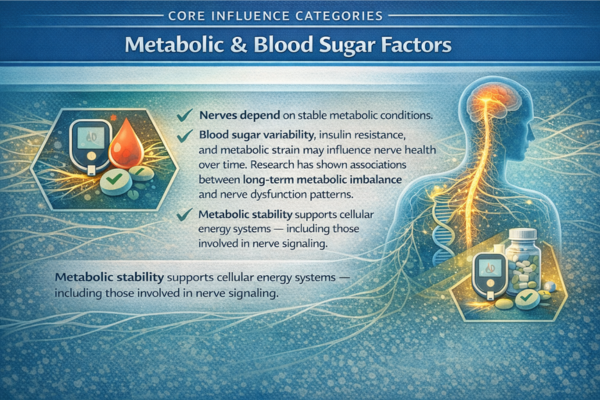
Nerves depend on stable metabolic conditions. For example, blood sugar variability, insulin resistance, and metabolic strain may influence nerve health over time.
Additionally, research has shown associations between long-term metabolic imbalance and nerve dysfunction patterns. As a result, metabolic stability supports cellular energy systems involved in nerve signaling.
In this way, metabolic health contributes indirectly to overall nerve performance.
Compression & Structural Load
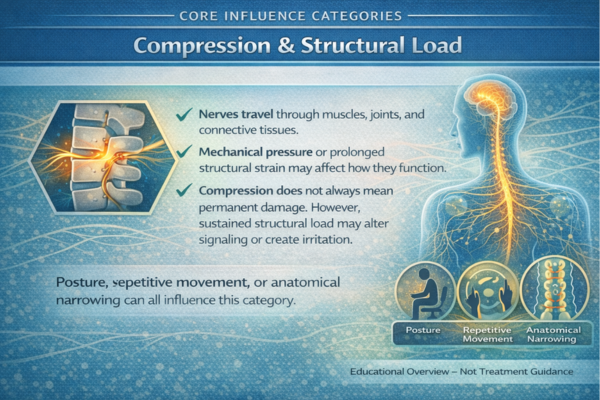
Nerves travel through muscles, joints, and connective tissues. Therefore, mechanical pressure or prolonged structural strain may affect how they function.
However, compression does not always mean permanent damage. Instead, sustained structural load may alter signaling or create irritation over time.
For instance, posture, repetitive movement, or anatomical narrowing can all influence this category. Consequently, structural balance plays a supportive role.
Circulation & Oxygen Delivery
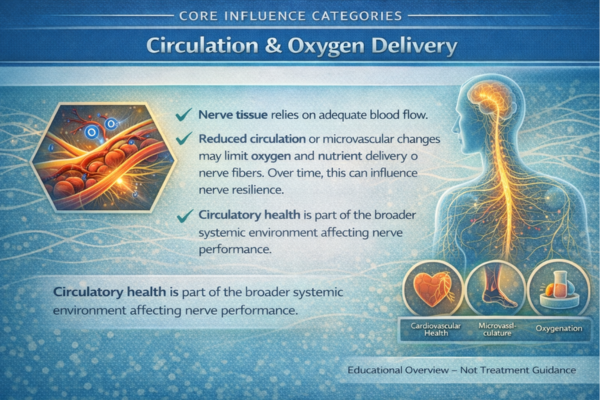
Nerve tissue relies on adequate blood flow. Consequently, reduced circulation or microvascular changes may limit oxygen and nutrient delivery to nerve fibers.
Over time, this may influence nerve resilience. In addition, circulatory health forms part of the broader systemic environment affecting nerve performance.
Therefore, circulation should be understood within the overall biological context.
Stress Signaling & Nervous System Regulation
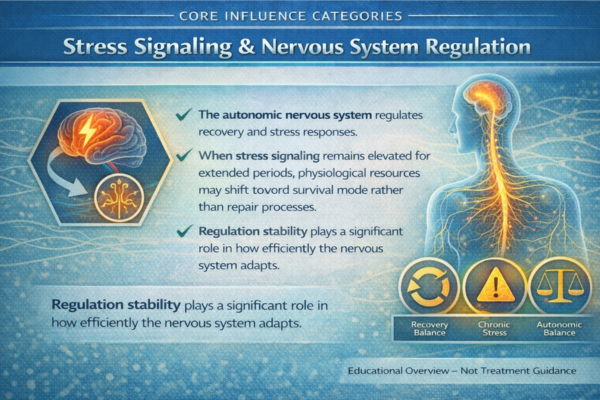
The autonomic nervous system regulates recovery and stress responses. However, when stress signaling remains elevated for extended periods, physiological resources may shift toward survival mode rather than repair processes.
As a result, regulatory stability plays a significant role in how efficiently the nervous system adapts. To better understand this process, it may be helpful to explore the underlying neurobiology of stress regulation. In contrast, persistent activation may reduce recovery efficiency.

Nutritional Context
Nerves require adequate micronutrients and energy substrates for maintenance. For example, deficiencies or absorption challenges may influence nerve function indirectly.
However, nutrition does not operate as a quick fix. Instead, it functions as part of a broader biological context supporting long-term stability. In many cases, these influences are better understood within broader root cause patterns that affect systemic balance over time.
Therefore, nutritional context should be viewed as one component within a systems-based framework.
Important Medical Note
This page is for educational purposes only.
If you are experiencing persistent symptoms, worsening discomfort, or functional changes, consult a qualified healthcare professional for proper evaluation and diagnosis.
Do not delay seeking professional care based on online information.
Where to Go Next
Understanding influencing factors is only the first step.
Choose your next structured pathway: