
Nutrition for Nerve Health: Food, Nutrients, Deficiencies, and Recovery Support
If nerves depend on nutrients, it is easy to make the next assumption:
Give the body more nutrients, and damaged nerves should heal faster.
The first part is true. The second does not automatically follow.
Nerves are living tissue. They need energy. They need functioning cellular machinery. They depend on oxygen and nutrient delivery, normal metabolism, healthy membranes, and a long list of vitamins, minerals, amino acids, and other substances that allow cells to do ordinary biological work.
Nutrition therefore matters.
But there is a large difference between providing what the nervous system normally requires, correcting a nutritional problem that is actually contributing to nerve dysfunction, and claiming that a particular food or supplement can regenerate an injured nerve.
Those ideas are often blended together online.
Someone searching for “foods for nerve repair” may actually have vitamin B12 deficiency. Another person may have diabetic neuropathy. Someone else may have a compressed nerve, chemotherapy-related neuropathy, an autoimmune neuropathy, an inherited disorder, or symptoms that have not yet been diagnosed.
The role of nutrition is not the same in all of those situations.
NINDS lists nutritional and vitamin imbalances among the possible causes of peripheral neuropathy, but it also lists diabetes, trauma, autoimmune disease, vascular problems, medications, toxins, infections, chemotherapy, and many other causes. In other words, nutrition may sometimes be central to the problem and at other times mainly supportive.
So the question I would begin with is not:
“What should I eat to heal my nerves?”
It is:
“What role is nutrition actually playing in my situation?”
If you are still trying to understand what numbness, tingling, burning, weakness, or other neurological symptoms may mean, start with Symptoms of Nerve Dysfunction and How Nerve Dysfunction Is Diagnosed before assuming that food is the missing piece.
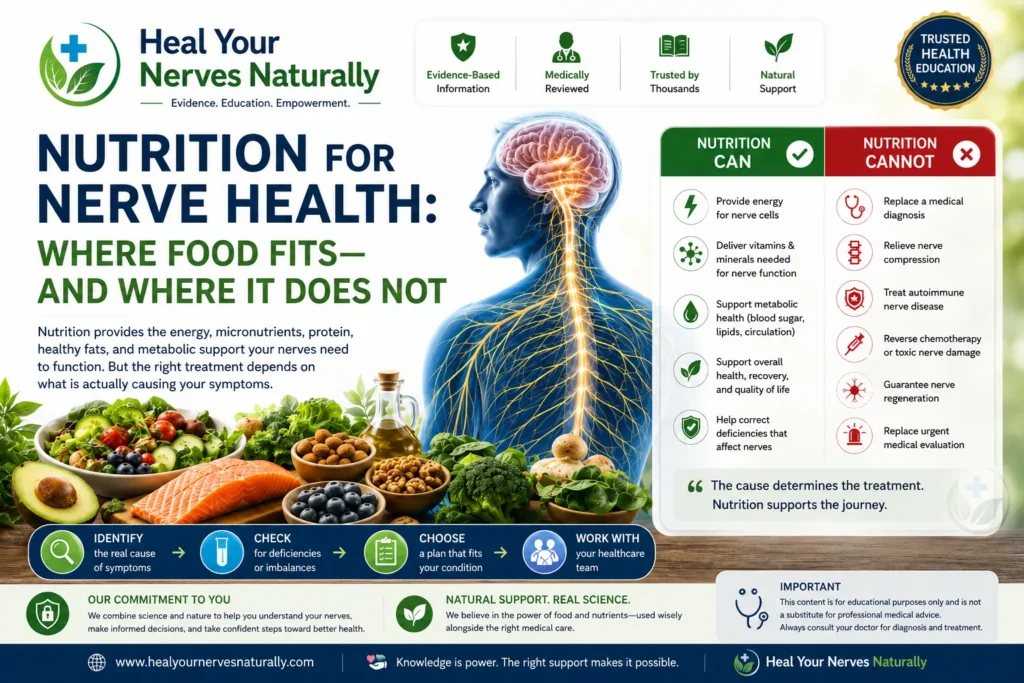
Quick Answer
Good nutrition helps provide the energy and nutrients required for normal nervous-system function. In certain circumstances, nutritional deficiency or excess can itself contribute to neurological problems. Vitamin B12 deficiency and excessive vitamin B6 intake are two well-recognized examples in peripheral neuropathy.
What nutrition cannot do is give us one universal treatment for every type of nerve damage.
A useful way to think about it is:
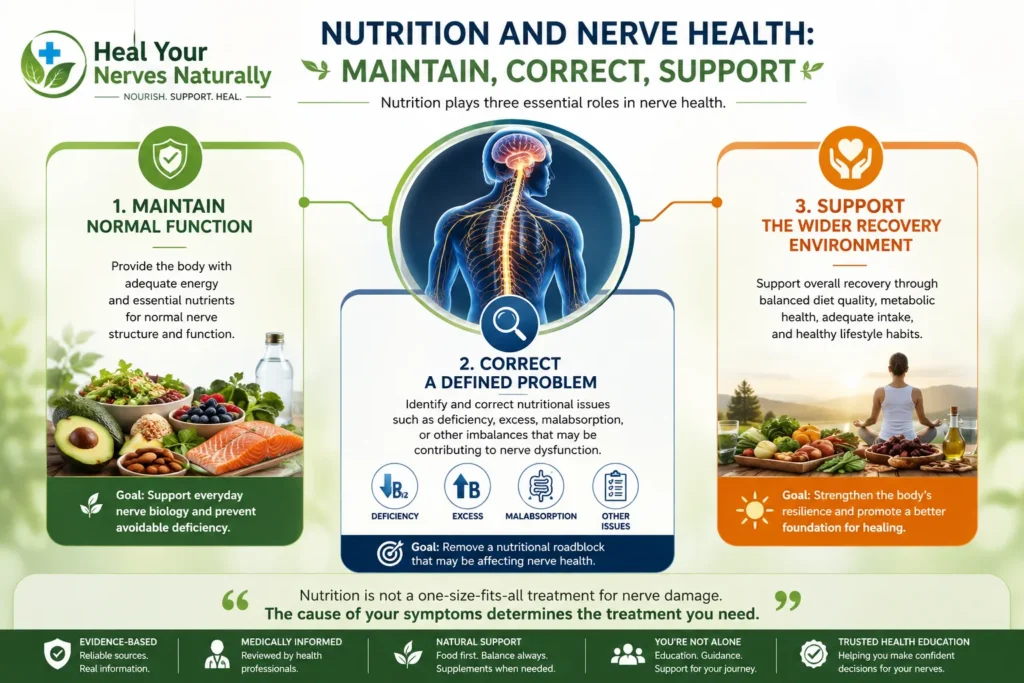
Nutrition may maintain normal function, correct a defined nutritional problem, or support the wider environment in which recovery takes place.
Those are valuable roles.
They are not interchangeable.
Important Clinical Distinction
Nutritional requirement ≠ nutritional deficiency treatment ≠ nerve regeneration.
A nutrient can be necessary for normal nerve biology without extra amounts of that nutrient becoming a treatment for an injured nerve.
What Does Nutrition Actually Do for Nerves?
The nervous system is metabolically active.
Even when you are sitting still, nerve cells are maintaining electrical gradients, transporting materials, communicating with other cells, maintaining membranes, and responding to changes in the body.
That work requires energy and raw materials.
Thiamin, for example, is involved in energy metabolism, while copper participates in enzyme systems involved in processes that include energy production and neurotransmitter synthesis. Severe deficiencies of particular nutrients can produce neurological consequences rather than simply vague “low energy.”
But there is an easy mistake to make here.
If nutrient X participates in process Y, that does not prove that taking more nutrient X improves process Y beyond normal requirements.
Water is essential for life. Drinking ten times more water does not make someone ten times healthier.
Nutrition follows the same general principle: requirement and treatment are different concepts.
This becomes especially important in nerve-health marketing, where ordinary biological facts are sometimes stretched into therapeutic promises.
A vitamin may be involved in normal nerve function.
A fatty acid may be part of cell membranes.
An amino acid may participate in protein synthesis.
None of those facts, by themselves, establish that supplementing the substance repairs a particular neuropathy.
For a broader explanation of the supportive biology rather than the diagnostic side, see How Nutrition Supports Nerve Repair.
Three Very Different Roles Nutrition Can Play
It helps to separate nutrition into three jobs.
The first is maintenance.
A person who does not have a nutritional deficiency still needs adequate nutrition. Nerves, muscles, blood vessels, immune cells, and every other tissue need energy and nutrients to function normally.
The second is correction.
Sometimes a nutritional problem is no longer background health advice. It is part of the medical problem itself. A true vitamin B12 deficiency, severe thiamin deficiency, or another clinically relevant nutritional abnormality may require identification and appropriate correction.
The third is support.
A person recovering from illness or living with a chronic neurological condition still needs enough energy, protein, micronutrients, and an eating pattern compatible with their metabolic and general health.
These roles overlap.
But they should not be collapsed into:
“Food heals damaged nerves.”
That sentence skips the most important question: What damaged the nerve?
Sometimes Nutrition Is Not Just “Support”—It Is Part of the Cause
This is where nutrition becomes clinically more interesting.
Imagine two people with tingling feet.
The first has a nutritionally adequate diet and a confirmed nerve-compression problem.
The second has a significant vitamin B12 deficiency.
Both have tingling.
But nutrition does not occupy the same place in their clinical story.
In the first person, eating better may support general health without removing the compression.
In the second, the nutritional abnormality may be directly relevant to the neurological problem.
NINDS specifically identifies nutritional and vitamin imbalances as possible causes of peripheral neuropathy and highlights vitamin B12 deficiency and excessive B6 as well-known vitamin-related examples.
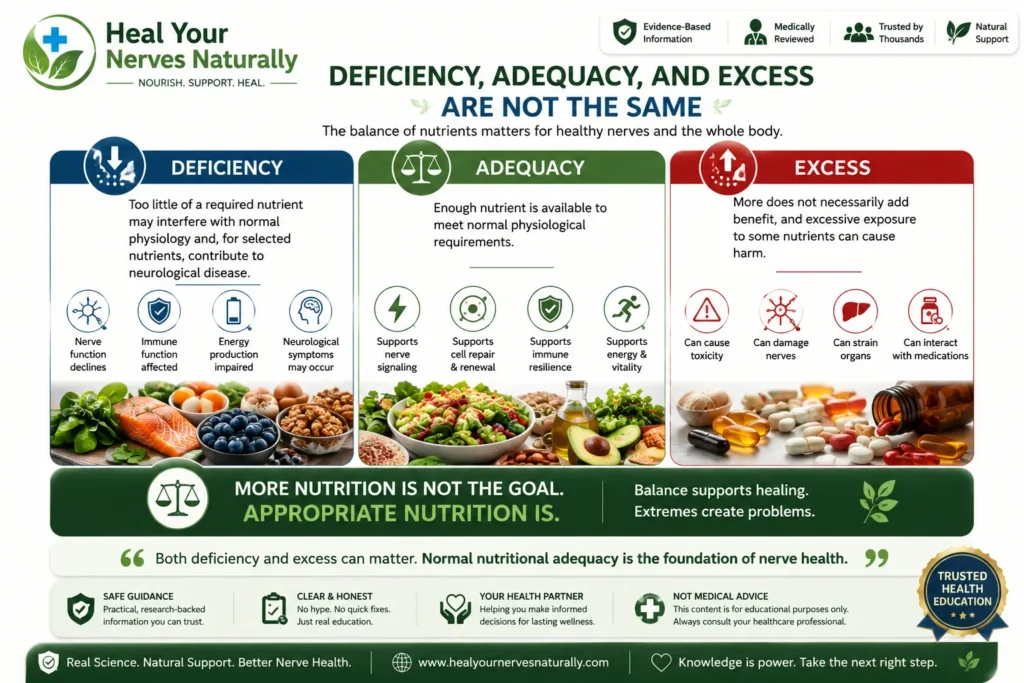
That is why it is worth treating the word deficiency carefully.
A deficiency does not necessarily mean someone simply failed to eat “healthy food.”
Intake is only one part of nutrient status.
Digestion, absorption, gastrointestinal disease, surgery, medications, age, and other medical factors can matter too.
Vitamin B12 makes that especially clear.
Vitamin B12: A Good Example of Why Diet Alone Does Not Tell the Whole Story
Someone may reasonably say:
“I eat foods containing B12, so I cannot be deficient.”
Unfortunately, biology is not always that convenient.
Vitamin B12 deficiency can occur because intake is inadequate, but absorption problems are also important. NIH’s Office of Dietary Supplements identifies higher-risk groups including people with pernicious anemia, gastrointestinal disorders, gastrointestinal surgery, older adults, and people following vegetarian dietary patterns.
Some medications can also affect B12 status. NIH notes that metformin may reduce B12 absorption and serum concentrations, while gastric-acid-suppressing medications can interfere with absorption of food-bound B12.
This matters because B12 deficiency can produce neurological symptoms such as numbness and tingling.
Perhaps more importantly, those neurological changes can occur without anemia. A normal assumption that “B12 problems always show up as anemia first” can therefore be misleading. NIH emphasizes early diagnosis because neurological injury may otherwise become irreversible.
That is a very different message from:
“Take B12 because B12 is good for nerves.”
The more useful reasoning is:
Could B12 deficiency actually be present, and if so, why?
Those are clinical questions.
What If Someone Eats a Vegan or Vegetarian Diet?
A plant-based diet does not automatically mean poor nerve health.
But vitamin B12 needs particular attention because naturally occurring B12 food sources are largely animal-derived. NIH identifies vegans and vegetarians as groups with greater risk of inadequate B12 and notes that fortified foods or supplementation can reduce that risk.
The practical lesson is not that one dietary philosophy is “good” and another is “bad.”
It is that every dietary pattern has to meet actual physiological requirements.
A diet can be thoughtfully designed.
It can also be restrictive in a way that creates nutritional gaps.
Those are different things.
Vitamin B6 Shows the Opposite Problem
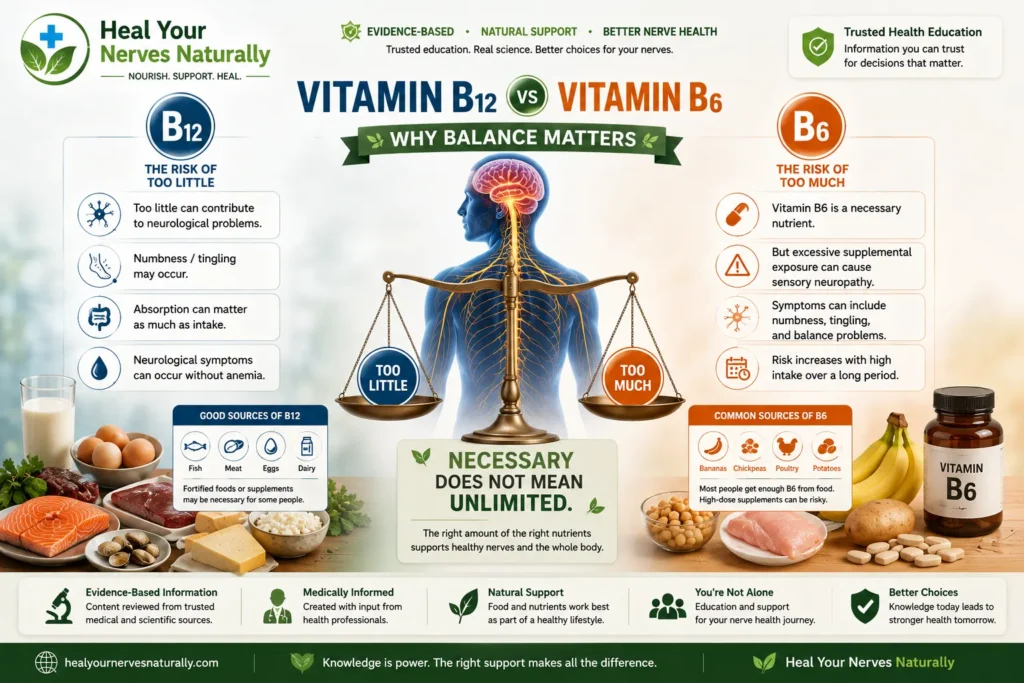
B12 illustrates why too little of a nutrient can matter.
Vitamin B6 illustrates why more is not always safer.
A person experiencing tingling may buy a product labelled “nerve support,” then another multivitamin, then perhaps an energy supplement.
Each product may contain B6.
The labels can make every ingredient sound helpful.
But chronic excessive supplemental vitamin B6 can itself cause sensory neuropathy. NIH’s Office of Dietary Supplements describes severe, progressive sensory neuropathy associated with high chronic supplemental intake.
That creates an important paradox:
A nutrient required for normal physiology can become harmful when exposure is excessive.
This is precisely why “good for nerves” is not a useful way to judge a supplement.
The more relevant questions are how much is being taken, from how many products, for how long, and whether there is any defined reason for taking it.
I would not use this page to prescribe a universal B6 dose. Different regulatory authorities also use different upper-limit frameworks, and individual medical situations can change what is appropriate. The safer principle is to review supplemental intake rather than assuming more is better.
B12 and B6 Together Tell a Larger Story
These two vitamins make an unusually useful pair.
With B12, the problem may be inadequate availability.
With B6, excessive supplemental exposure can itself become a neurological problem.
That gives us a much better model than “take nerve vitamins.”
The real model is:
Identify the nutritional problem first.
Then decide whether anything actually needs correcting.
That may sound less exciting than a supplement protocol.
It is much safer.
What About Thiamin, Vitamin E, Copper, and Other Nutrients?
There is no need to turn the Nutrition hub into an alphabetical encyclopedia.
But a few examples help show how varied nutritional neurology can be.
Severe thiamin, or vitamin B1, deficiency can cause beriberi, which NIH describes as being characterized largely by peripheral neuropathy and impaired sensory, motor, and reflex function.
Vitamin E deficiency can also produce neurological problems including peripheral neuropathy and ataxia. But there is an important piece of context: frank vitamin E deficiency is rare in healthy people and is more strongly associated with conditions that interfere with fat absorption.
Copper participates in enzyme systems involved in energy production, iron metabolism, connective-tissue synthesis, neuropeptide activation, and neurotransmitter synthesis. Copper deficiency is uncommon but can have neurological manifestations, including ataxia.
Notice how different those stories already are.
One nutrient may be affected by alcohol-related or absorption problems.
Another may become deficient mainly in malabsorption conditions.
Another may become problematic through supplement excess.
That is why a generic “nerve vitamin deficiency” label is rarely enough.
For a more detailed micronutrient discussion, the Nutrition hub should eventually send readers into your dedicated micronutrient content rather than trying to turn this page into twenty separate vitamin articles.
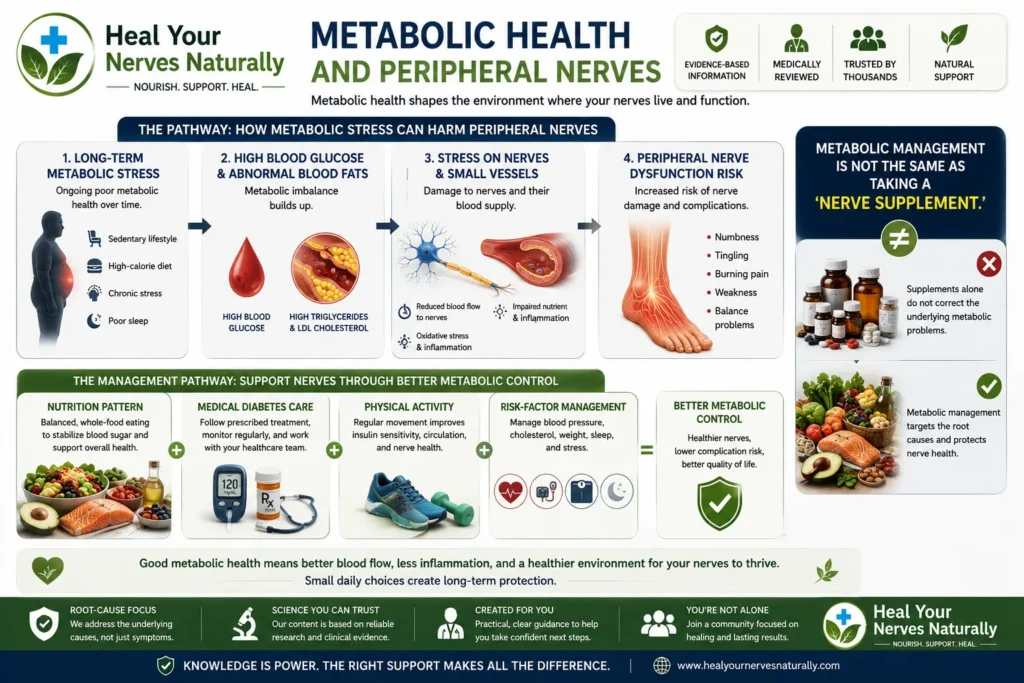
Metabolic Health Is Bigger Than Vitamins
When people hear “nutrition for nerves,” vitamins often dominate the conversation.
That can distract from one of the most important nutrition-related nerve issues: diabetes and metabolic health.
Diabetic neuropathy is not a vitamin-deficiency disorder.
NIDDK explains that over time, high blood glucose and high blood fats such as triglycerides can damage nerves and the small blood vessels that supply nerves with oxygen and nutrients. Managing diabetes—including glucose, blood pressure, cholesterol, weight, prescribed treatment, and an appropriate meal plan—is therefore part of preventing or limiting diabetes-related nerve damage.
This changes how we should think about food.
For someone with diabetes-related neuropathy, the nutritional question may be less:
“Which vitamin repairs nerves?”
and more:
“Does my overall eating pattern support effective diabetes management?”
That is not as easy to package into a miracle-food headline.
It is much closer to the actual clinical problem.
For condition-specific context, see Diabetic Neuropathy. Your existing page already separates diabetes-related nerve damage from other forms of neuropathy.
So What Does a Nerve-Supportive Eating Pattern Look Like?
This is where many articles produce a list of ten foods.
Salmon.
Spinach.
Eggs.
Berries.
Walnuts.
The foods may be nutritious. The problem is what the list quietly implies:
Eat these foods and your nerves will repair.
That is a much larger claim.
A more useful approach begins one level higher.
Ask whether the diet is providing enough overall energy for the person’s needs.
Is there a reliable source of protein?
Is there enough dietary variety to make nutritional gaps less likely?
Are vegetables, fruit, legumes, whole grains or other appropriate carbohydrate sources, protein foods, and unsaturated-fat sources represented in a way that fits the person’s medical needs, culture, budget, and tolerance?
For someone with diabetes, carbohydrate amount and overall meal planning may need individualized attention.
For someone with kidney disease, nutritional priorities may be different.
For someone with malabsorption, eating a nutrient does not necessarily guarantee adequate absorption.
For someone following a vegan diet, B12 needs active consideration.
There is therefore no single “nerve diet” that fits every reader.
The better diet is the one that meets nutritional requirements and fits the condition actually affecting the person.
What Are the Best Foods for Nerve Repair?
This question deserves a direct answer because people genuinely search for it.
There is no single food proven to repair every form of nerve damage.
That conclusion follows from something much more fundamental: peripheral neuropathy itself is not one disease. NINDS describes more than 100 types of peripheral neuropathy and multiple acquired causes, ranging from metabolic disease and physical injury to autoimmune disease, nutritional imbalance, toxins, infections, medications, and chemotherapy.
A food therefore cannot be expected to solve all of those mechanisms.
What food can do is help provide the nutritional foundation the body normally requires.
If someone wants a food-focused guide, your Nerve Food Repair page is the better place to explore practical food patterns. That page already frames “nerve food repair” as nutrition-support education rather than a cure claim.
The distinction is worth protecting:
Nutritious food is valuable even when it is not medicine for neuropathy.
We do not need to exaggerate food to make it important.
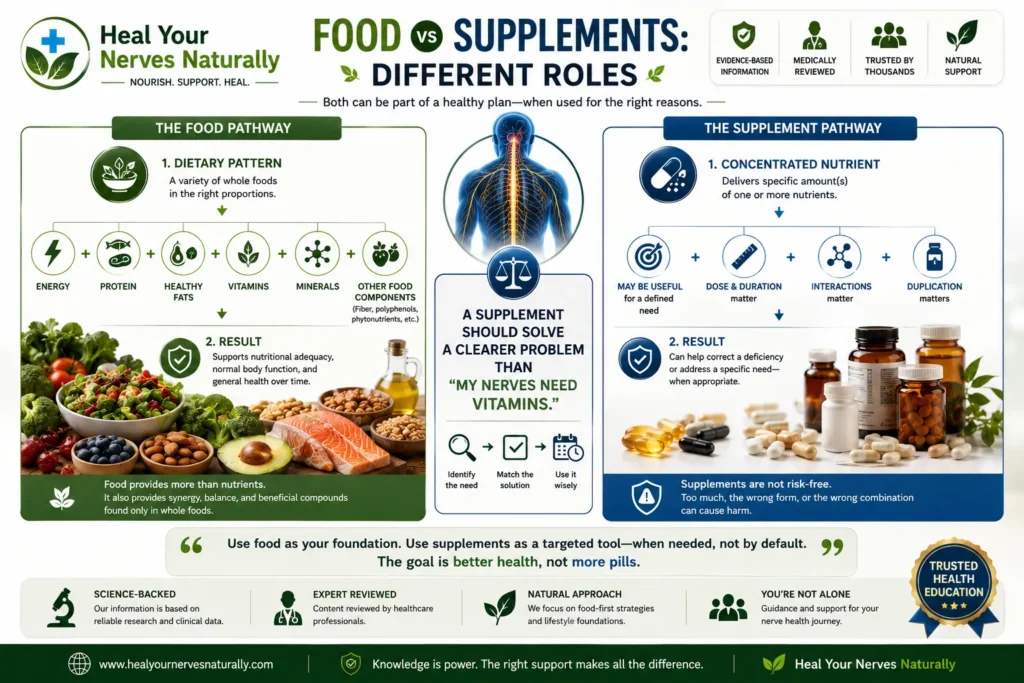
Food and Supplements Are Not Interchangeable
A bowl of lentils and a capsule containing a concentrated nutrient are both related to nutrition.
They are not the same intervention.
Food delivers combinations of nutrients within an overall dietary pattern.
A supplement may deliver a concentrated quantity of one or more substances.
Sometimes that is useful.
If a genuine deficiency is present, a clinician may recommend targeted replacement.
If an absorption problem exists, even the route of treatment may matter.
But supplementation without a defined reason can also create problems. Vitamin B6 is the clearest nerve-related example because excessive supplemental exposure can itself cause sensory neuropathy.
Meanwhile, B12 shows another complication: a person may need supplementation because absorption or dietary pattern makes adequate status difficult to maintain.
So instead of asking:
“What is the best supplement for nerves?”
I would ask:
“What problem is this supplement supposed to solve?”
If the answer is vague—“nerve health,” “energy,” “repair,” “detox”—it may be worth looking more closely before assuming the product is necessary.
A Simple Supplement Safety Check
Before adding another “nerve” product, it is useful to review:
- What am I actually taking, and why? Check every vitamin, mineral, herbal product, energy formula, fortified powder, and multivitamin rather than evaluating products one at a time.
- Am I getting the same nutrient from several products? Ingredient stacking can be easy to miss.
- Is there evidence that I am deficient, at risk of deficiency, or otherwise likely to benefit?
- Could my medications change nutrient absorption or status? B12 and medications such as metformin or acid-suppressing drugs are one example.
- Could the supplement itself contribute to symptoms? Excessive B6 is an important nerve-related example.
- Would testing or professional review answer the question better than experimenting?
This is not a substitute for individualized medical advice.
It is simply a better starting point than assuming that every nutrient marketed for nerves is harmless.
Nutrition and Myelin: Another Area Where Words Can Run Ahead of Evidence
Myelin is often described as the insulation surrounding many nerve fibers.
That leads to an appealing idea:
If myelin contains certain nutrients, perhaps eating those nutrients will rebuild damaged myelin.
Again, there is a missing step.
Normal myelin biology exists inside an extraordinarily complex cellular system. Nutritional adequacy matters because living cells cannot maintain or repair tissue without adequate resources.
But eating a particular fat, vitamin, or “myelin food” does not mean that substance travels directly to a damaged peripheral nerve and reconstructs its myelin sheath.
Your Myelin System page is the better place for the deeper anatomy and signaling explanation. The existing page describes myelin as an important part of efficient nerve signaling while placing it inside the wider nervous-system context.
For this Nutrition hub, one sentence is enough:
Adequate nutrition supports the biology in which myelin exists; it does not provide a universal dietary treatment for demyelinating disease.
Nutrition and Axonal Recovery
The same distinction applies to axons.
If an axon has been injured, regeneration—when it is biologically possible—is not simply a matter of supplying one missing ingredient.
The type and severity of injury matter.
So does whether the nerve remains structurally connected, whether the underlying damaging process continues, and what disease caused the injury in the first place.
Nutrition belongs in that picture because repair requires energy and normal cellular resources.
But adequate nutrition does not guarantee axonal regrowth.
For the biology of actual regrowth rather than dietary support, continue to Axonal Regrowth.
That keeps the two topics clean:
Nutrition page → what resources the body needs
Axonal Regrowth page → what damaged nerve fibers may biologically do after injury
What About “Anti-Inflammatory Foods”?
There is nothing wrong with eating a diet that supports general metabolic and cardiovascular health.
The problem starts when the phrase anti-inflammatory becomes an explanation for every neurological symptom.
Inflammation is not one disease.
And nerve symptoms can arise from very different processes.
NINDS lists mechanical injury, metabolic problems, vascular disease, autoimmune disorders, nutritional abnormalities, toxins, medications, infections, chemotherapy, and other causes of neuropathy.
So an “anti-inflammatory diet” cannot reasonably be treated as a substitute for diagnosing those conditions.
A person with active autoimmune neuropathy may need disease-specific medical treatment.
A person with a compressed nerve may need the mechanical problem addressed.
A person with B12 deficiency needs the nutritional issue identified and corrected.
A person with diabetic neuropathy needs appropriate diabetes management.
Nutrition can remain part of all four people’s general health without becoming the same treatment for all four.
For the biology and limits of inflammation-related explanations, see Neuroinflammation and Autoimmune Nerve Disorders. Your neuroinflammation content already treats inflammation as one nervous-system layer rather than a universal diagnosis.
Gut Health Matters Most Clearly When It Changes Nutrition
“Fix your gut and your nerves will heal” is an attractive claim.
It is also much broader than the evidence allows.
There is, however, a very real connection between the digestive system and nutritional neurology:
nutrients have to be absorbed.
B12 again provides a good example.
NIH identifies pernicious anemia, gastrointestinal disease, gastrointestinal surgery, and other absorption problems as important contexts for B12 inadequacy. Someone can therefore consume B12 and still have difficulty maintaining adequate status.
Vitamin E provides another example: overt deficiency is rare in healthy people but becomes more relevant in conditions that impair fat absorption.
That is a much more concrete gut–nerve connection than vague “detox” language.
For broader system-level education, the site’s Gut–Nerve Axis content can carry that discussion further. But on this page, the practical point is enough:
what reaches the plate and what becomes available to the body are not always the same thing.
Is There a Best Diet for Neuropathy?
Not without knowing what kind of neuropathy we are talking about.
That is the problem with the question.
A person with diabetic neuropathy has a different nutritional context from someone with B12-deficiency neuropathy.
A person recovering from traumatic nerve injury has different priorities again.
Someone with malabsorption may require attention to deficiencies that would be unusual in someone with normal absorption.
So rather than declaring one diet—Mediterranean, low-carbohydrate, vegan, ketogenic, or anything else—the universal “nerve-healing diet,” I would judge a dietary pattern by more practical questions:
Does it reliably meet nutritional needs?
Does it fit the person’s diagnosed condition?
Does it create avoidable deficiency risk?
Does it support appropriate metabolic goals?
Can the person actually sustain it?
Does medication or medical treatment change what is appropriate?
This is an inference from the fact that neuropathy has many different causes and nutritional problems themselves arise through different mechanisms; a universal therapeutic diet would ignore those distinctions.
When Nutrition Should Move From the Kitchen to the Clinic
There is a point at which experimenting with food is no longer enough.
Suppose someone has slowly progressive numbness.
Or new weakness.
Or balance problems.
Or burning pain that continues to spread.
They decide it must be a vitamin deficiency and spend three months cycling through B-complex products.
That approach may not only fail.
In the case of excessive B6 exposure, supplementation itself can become part of the neurological problem.
Peripheral neuropathy has a broad differential diagnosis, and NINDS describes medical history, neurological examination, blood tests, and other testing as part of the diagnostic process.
So if symptoms are persistent, progressive, unusual, or associated with objective weakness or loss of function, the better next step is usually to clarify the diagnosis—not expand the supplement cabinet.
See How Nerve Dysfunction Is Diagnosed and Causes of Nerve Pain for the broader clinical framework.
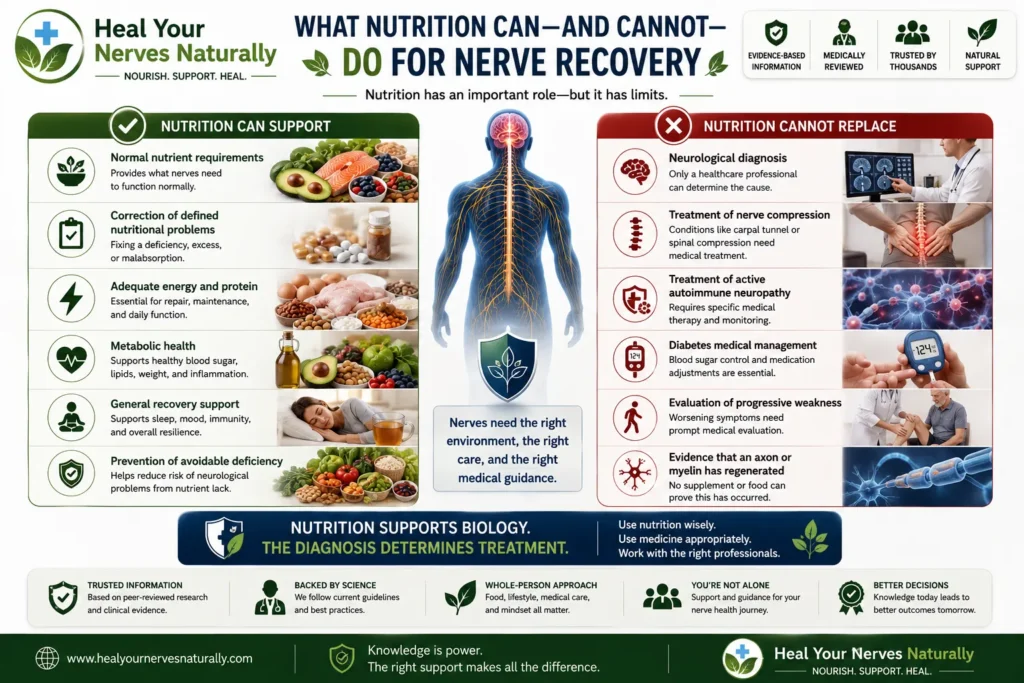
What Nutrition Can—and Cannot—Do for Nerve Recovery
Nutrition can help provide normal physiological requirements.
It can matter directly when a nutritional deficiency or excess is contributing to neurological dysfunction.
It can support appropriate metabolic management.
It can help prevent avoidable nutritional problems during restrictive diets, illness, recovery, or other circumstances.
But food cannot identify the cause of unexplained weakness.
A supplement cannot decompress a trapped nerve.
A balanced diet does not replace treatment for active autoimmune neuropathy.
A “nerve food” does not reverse chemotherapy exposure.
And symptom improvement after changing the diet does not, by itself, prove that structural nerve regeneration has occurred.
The useful role of nutrition is substantial enough without asking it to do jobs that belong to diagnosis, medical treatment, or regeneration biology.
[IMAGE 06 PLACEHOLDER]
Where “Natural Healing” Fits
There does not need to be a conflict between natural support and medical care.
That is a false choice.
If someone has B12 deficiency, correcting that nutritional problem is both biologically natural and medically relevant.
If someone has diabetic neuropathy, eating patterns may form part of good diabetes management—but they work alongside the rest of appropriate diabetes care. NIDDK emphasizes glucose, blood pressure, cholesterol, weight, medications, physical activity, and an appropriate meal plan in preventing or slowing diabetes-related nerve problems.
If a nerve is severely compressed, vegetables cannot mechanically remove the compression.
If an immune-mediated neuropathy is active, sleep and nutritious food may still matter, but they do not replace disease-directed therapy.
So the most useful definition of a natural approach is not:
“avoid medicine.”
It is:
“support the body’s normal requirements while treating the actual problem appropriately.”
That position is more realistic, more useful, and ultimately more respectful of the reader.
A Practical Way to Review Your Own Nutrition Context
You do not need to diagnose yourself.
But you can arrive at a medical or dietetic appointment with better information.
Consider whether your diet has become very restrictive.
Think about whether you regularly use several supplements containing overlapping B vitamins.
Note any gastrointestinal disease or surgery that might affect absorption.
Make a complete medication list, because some medications can influence nutrient status; B12 and metformin or gastric-acid inhibitors are one documented example.
Think about whether diabetes or another metabolic condition may be relevant.
And if you suspect a deficiency, ask whether testing makes more sense than guessing.
The goal is not to turn nutrition into another source of health anxiety.
It is to make the questions more precise.
Questions Worth Asking a Doctor or Dietitian
Instead of asking only “Which supplement is best for nerves?”, more useful questions might be:
Could a nutritional deficiency or excess plausibly fit my neurological symptoms?
Do my diet, medications, gastrointestinal history, or surgery history put me at risk for a particular deficiency?
Would laboratory testing help before I start supplementing?
Could any of my current supplements be providing more B6 or another nutrient than I realize?
If a deficiency is present, do we know why it developed?
Does my underlying condition change the kind of eating pattern that is appropriate for me?
Those questions are more likely to produce actionable information than a generic request for “nerve vitamins.”
Frequently Asked Questions About Nutrition and Nerve Health
Can poor nutrition cause neuropathy?
Yes, selected nutritional deficiencies and imbalances can contribute to peripheral neuropathy. NINDS identifies nutritional/vitamin imbalances as recognized acquired causes and specifically mentions B12 deficiency and excessive B6 as well-known vitamin-related examples. However, neuropathy has many other possible causes.
Which vitamin deficiency can cause tingling?
Vitamin B12 deficiency is an important example and can cause numbness and tingling in the hands and feet. Neurological symptoms may occur even without anemia. Severe thiamin deficiency can also produce peripheral neuropathy. Tingling itself is not specific enough to identify a deficiency without clinical context.
Is vitamin B12 good for nerves?
B12 is required for normal physiology, and deficiency can produce neurological problems. That does not mean extra B12 improves every nerve condition in someone who is not deficient. The useful clinical question is whether B12 inadequacy is actually present or likely.
Can you be B12 deficient even if you eat well?
Yes. B12 status can be affected by pernicious anemia, gastrointestinal conditions, gastrointestinal surgery, age-related absorption problems, certain medications, and other factors. Intake is only part of the story.
Can too much vitamin B6 affect nerves?
Yes. Chronic excessive supplemental vitamin B6 can cause sensory neuropathy. This is one reason multiple overlapping “nerve,” energy, and multivitamin products should not automatically be assumed harmless.
Can food repair damaged nerves?
Food provides resources required for normal physiology, but there is no single food that can reasonably be considered a treatment for every form of nerve damage. Peripheral neuropathy itself has many different causes and biological mechanisms.
What should I eat for neuropathy?
That depends partly on the cause. Someone with diabetes-related neuropathy may need an eating pattern that supports diabetes management, while someone with a defined nutritional deficiency has a different problem. A varied, nutritionally adequate pattern is a reasonable foundation, but diagnosis-specific needs may require individual medical or dietetic guidance.
Are supplements better than food for nerve health?
Not as a general rule. Supplements can be valuable when a defined need exists, but concentrated nutrient exposure also creates the possibility of inappropriate dosing or duplication. NIH generally advises that nutritional needs be met primarily through food when possible while recognizing that fortified foods and supplements are useful in specific circumstances.
Does a vegan diet cause nerve damage?
A vegan diet does not automatically cause nerve damage. However, because natural B12 food sources are largely animal-derived, people who consume no animal products have greater risk of B12 inadequacy unless reliable fortified foods or supplementation provide enough B12.
Can diabetes damage nerves even if I take nerve vitamins?
Yes. Diabetic neuropathy is related to the metabolic effects of diabetes. NIDDK describes long-term high blood glucose and high blood fats as factors that can damage nerves and the small vessels supplying them. Vitamins do not substitute for appropriate diabetes management.
Should unexplained tingling be treated with supplements first?
Not automatically. Tingling can occur with nutritional problems, but also with diabetes, compression, autoimmune disease, trauma, medications, infections, and many other conditions. Persistent or progressive symptoms deserve appropriate evaluation rather than assumption.
What Matters Most
Nutrition matters to nerves for the same reason it matters to every living tissue:
cells need resources to function.
But that simple truth becomes misleading when it is turned into:
“If nutrients are good for nerves, more nutrients must heal damaged nerves.”
Sometimes nutrition really is close to the center of the problem.
Vitamin B12 deficiency is a clear example.
Sometimes excess becomes the problem.
Vitamin B6 shows us that.
Sometimes nutrition acts through the disease that is damaging the nerves.
Diabetes is an important example.
And sometimes the nerve disorder has a cause that nutrition cannot remove at all.
That is why the strongest approach is not to search endlessly for the perfect “nerve-healing food.”
It is to work out which question you are actually trying to answer:
Does my nervous system have what it normally needs?
Is there a nutritional deficiency, excess, or absorption problem that needs attention?
Is nutrition part of managing the disease affecting my nerves?
Or is nutrition mainly supporting my health while another problem is diagnosed and treated?
Those distinctions turn nutrition from a collection of wellness claims into something far more useful.
They also leave room for food to matter without pretending that food can do everything.
Continue Learning
If your next question is mainly about foods and practical dietary patterns, continue with Nerve Food Repair. For the biological support side, read How Nutrition Supports Nerve Repair. If your concern is numbness, tingling, burning, or weakness without a clear diagnosis, move instead to Symptoms of Nerve Dysfunction, Peripheral Neuropathy, and Nerve Dysfunction Diagnosis.
For diabetes-related nerve disease, see Diabetic Neuropathy. For deeper nerve biology, continue to Myelin System or Axonal Regrowth. And if you are trying to understand inflammation or immune-mediated nerve disease, use Neuroinflammation and Autoimmune Nerve Disorders rather than assuming a dietary explanation.
Medical Safety Note
This page is for education and is not a personal nutrition, diagnosis, or treatment plan.
Persistent or progressive numbness, tingling, burning pain, muscle weakness, loss of sensation, balance problems, muscle wasting, rapidly changing neurological symptoms, or other concerning neurological changes should be evaluated by an appropriately qualified healthcare professional.
Do not stop prescribed treatment, begin high-dose nutrient supplementation, or delay neurological evaluation because symptoms appear to improve or worsen with diet.
Seek urgent medical care for sudden significant weakness, facial drooping, trouble speaking, severe new loss of coordination, breathing or swallowing difficulty, or other rapidly developing neurological symptoms.
References and Clinical Sources
The primary evidence base for this page should remain deliberately narrow and authoritative: NINDS — Peripheral Neuropathy for neuropathy types, causes, symptoms, and evaluation; NIH Office of Dietary Supplements — Vitamin B12 for deficiency, neurological manifestations, absorption, risk groups, and medication interactions; NIH Office of Dietary Supplements — Vitamin B6 for excessive supplemental intake and sensory neuropathy; NIH ODS — Thiamin and Vitamin E for clinically relevant deficiency states; NIH ODS — Copper for normal copper-related physiology; and NIDDK — Diabetic Neuropathy for diabetes-related metabolic nerve injury.
Editorial Information
Written by: Heal Your Nerves Naturally Editorial Team
Medical/Nutrition review: Add only if a qualified clinician or registered dietitian actually reviews the article
Last updated: August 2026
Editorial approach: Medical and nutritional claims should prioritize government health agencies, established clinical sources, systematic reviews, and peer-reviewed evidence. Supplement or food claims should not be upgraded from “supports normal physiology” to “treats nerve damage” without direct evidence.