
Nerve Recovery Methods: How Treatment, Rehabilitation, and Support Fit Together
A person with burning feet can receive several completely different kinds of advice.
One clinician may talk about blood-glucose control. Another person may be referred to physical therapy. Someone with a vitamin deficiency may need that deficiency corrected. Someone recovering from an injury may need time, rehabilitation, and sometimes specialist or surgical care. Online, the same person may encounter recommendations for supplements, sleep, “nerve exercises,” stress regulation, massage, light therapy, or products advertised for nerve regeneration.
The confusing part is that all of these can be described as helping recovery, even though they are not trying to do the same thing.
If a nerve is being compressed, improving nutrition does not remove the compression. If vitamin B12 deficiency is contributing to neurological symptoms, exercise does not correct the deficiency. If pain becomes easier to live with after better sleep, that improvement matters—but it does not, by itself, tell us whether an injured axon has regenerated.
So before asking which nerve recovery method is best, there is a more useful question:
What problem is the method supposed to solve?
That question changes almost everything.
If you do not yet know what may be causing your symptoms, start with Symptoms of Nerve Dysfunction, Causes of Nerve Pain, and How Nerve Dysfunction Is Diagnosed. Recovery planning becomes much more meaningful once the underlying problem is at least reasonably understood.
Quick Answer
Nerve recovery is not one treatment and it is not one outcome.
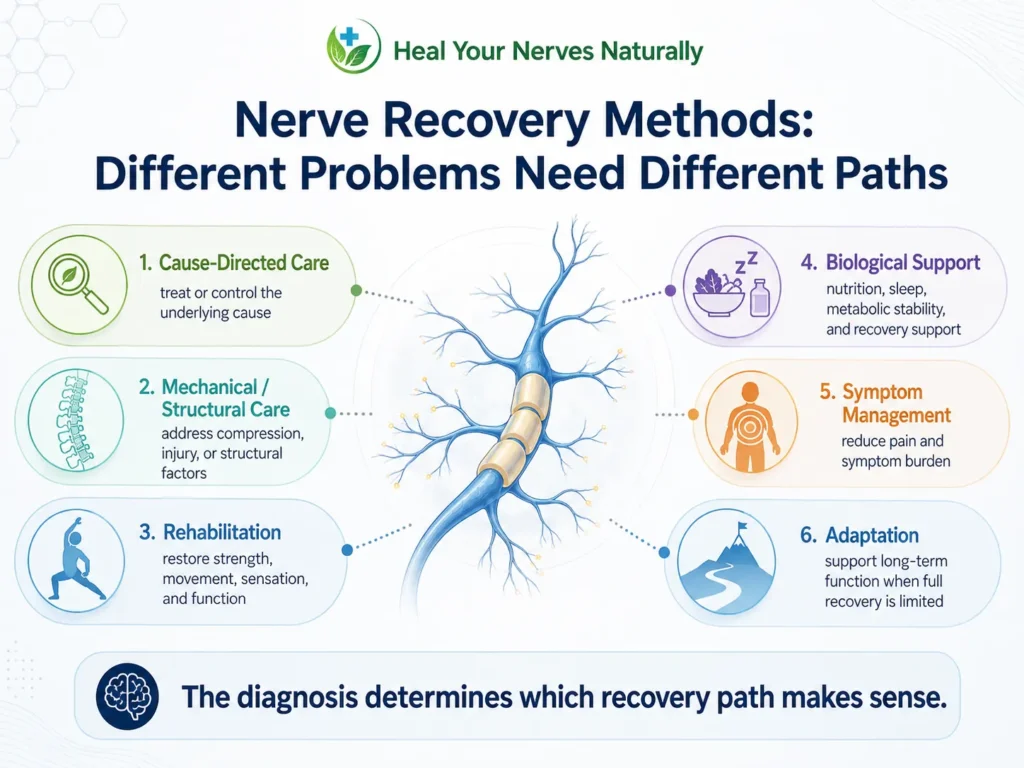
Depending on the diagnosis, a recovery method may be intended to:
- treat or control the underlying cause;
- reduce ongoing mechanical or metabolic stress on a nerve;
- support normal biological requirements during recovery;
- restore strength, movement, sensation, balance, or daily function through rehabilitation;
- reduce pain or other symptom burden;
- or help a person adapt when complete structural recovery is limited.
These roles can overlap, but they should not be confused.
A method can be useful without being a nerve-regeneration treatment. Pain can improve without proving structural repair. Function can improve even when some neurological deficit remains. And biological recovery may occur slowly enough that day-to-day symptom changes are a poor measure of what is happening inside the nerve.
Clinical boundary
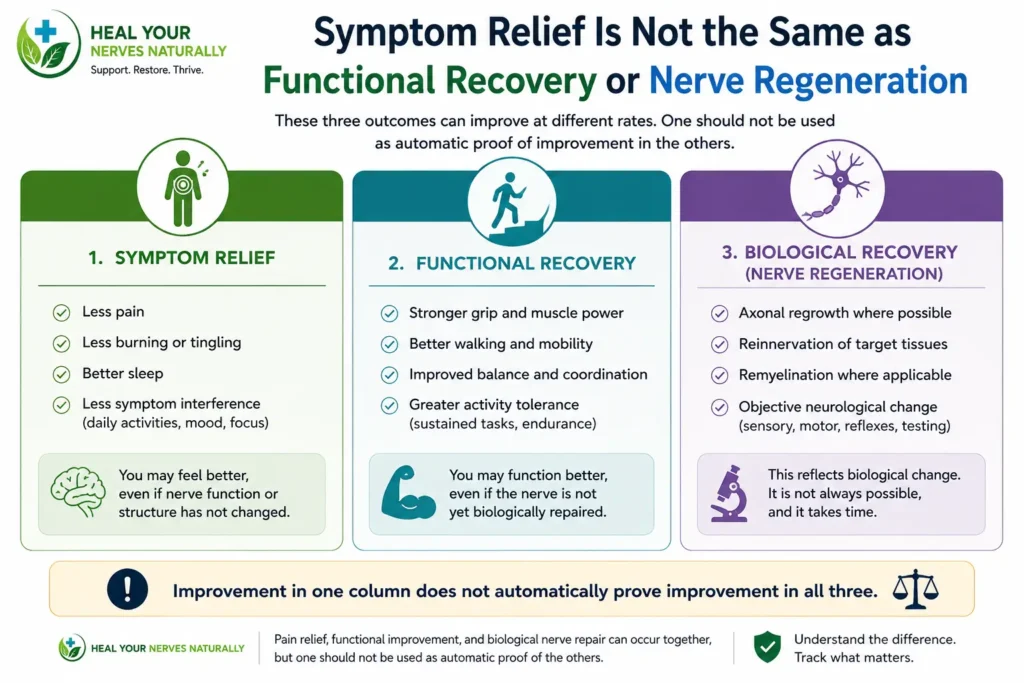
Symptom relief, functional recovery, and nerve regeneration are related—but they are not the same evidence.
Scope of This Guide
The phrase “nerve recovery” is broad. This guide focuses mainly on recovery methods relevant to peripheral nerve problems, peripheral neuropathy, nerve compression, post-injury nerve damage, and supportive recovery.
Conditions involving the brain, spinal cord, or specific central nervous system diseases can follow different biological and treatment pathways. They should not automatically be placed into the same recovery model as peripheral nerve injury or peripheral neuropathy.
Recovery Is Not One Outcome
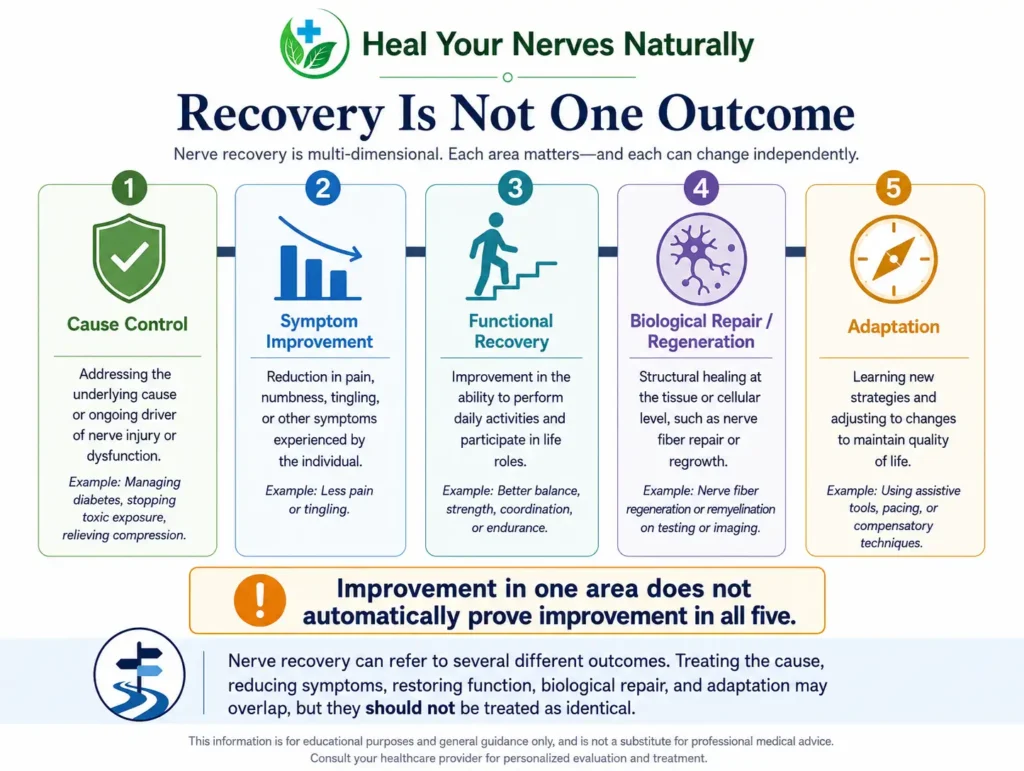
People often use the word healing to mean several things at once.
That can make recovery difficult to judge.
A person may say, “My nerve is healing,” because the burning pain is less intense. Another may mean that grip strength is returning. Another may mean that numbness is shrinking. A surgeon or neurologist may be thinking about axonal continuity, reinnervation, remyelination, nerve-conduction findings, or whether the underlying disease process has been controlled.
Those are related observations, but they are not interchangeable.
Treating the Cause
Sometimes recovery begins with stopping or controlling the process that is damaging the nerve.
A nutritional deficiency may need correction. Diabetes may require better metabolic management. A compressed nerve may need the mechanical problem addressed. An immune-mediated neuropathy may require disease-specific medical treatment.
In these situations, supportive recovery methods do not replace cause-directed care.
Symptom Improvement
Pain, burning, tingling, sensitivity, or other symptoms may become less disruptive.
That is meaningful. Symptom relief can improve sleep, mobility, work, mood, and quality of life.
But symptom relief does not necessarily show that the original nerve lesion has structurally reversed.
Functional Recovery
A person may walk farther, grip more strongly, tolerate activity better, regain balance, return to work, or perform daily tasks more independently.
Function often matters more to daily life than a single symptom score.
Rehabilitation frequently works in this territory.
Biological Repair or Regeneration
In some peripheral nerve injuries, axons may regenerate and myelin may be restored over time. Whether that can occur, how much recovery is possible, and how long it may take depend heavily on the type and severity of the injury.
This is a biological process, not a synonym for “feeling better.”
Adaptation
Sometimes full restoration is not possible.
Recovery may then include learning safer movement strategies, using braces or other supports, adapting tasks, improving conditioning, protecting areas with sensory loss, and finding ways to function well despite a remaining deficit.
That is not a lesser form of care. It is a different recovery goal.
Start With the Cause, Not the Method
A search for “how to heal a nerve” naturally produces methods.
But methods make little sense without context.
Consider three people who all describe burning and tingling in the feet.
One has diabetic peripheral neuropathy.
Another has vitamin B12 deficiency.
A third has a focal nerve compression.
The symptom language overlaps. The first recovery priority does not.
For the person with diabetes, metabolic management is part of the underlying problem. For the person with B12 deficiency, identifying and correcting the deficiency matters. For the person with compression, the mechanical source of pressure may need to be addressed.
No supplement, exercise routine, stress technique, or diet can reasonably be called the “best nerve recovery method” across all three situations.
This is why diagnosis belongs upstream of recovery planning.
The National Institute of Neurological Disorders and Stroke describes more than 100 forms of peripheral neuropathy and lists a wide range of acquired causes, including diabetes, physical injury, autoimmune disease, vascular problems, nutritional imbalances, toxins, medications, infections, kidney and liver disease, and cancer treatment.
That variety is not a technical detail.
It is the reason universal recovery claims fail.
A useful rule is:
Do not choose the method before defining the problem.
The Main Families of Nerve Recovery Methods
There are many therapies, but most of them fall into a smaller number of practical roles.
The categories below are not competing schools of treatment. A real recovery plan may use more than one at the same time.
Cause-Directed Medical Care
This is the part of recovery that addresses the disease, deficiency, exposure, or other condition driving nerve dysfunction.
Examples may include diabetes management, correction of a clinically relevant nutritional deficiency, treatment of an immune-mediated neuropathy, removal or reduction of a harmful exposure, or condition-specific medical care.
The exact treatment depends on the diagnosis.
This category matters because a method aimed only at comfort or general health may do little if the damaging process is still active.
Mechanical and Structural Care
Some nerve problems are caused or worsened by compression, trauma, entrapment, or other structural factors.
The appropriate response may include activity or position changes, splinting, targeted rehabilitation, treatment of surrounding structural problems, or specialist/surgical assessment in selected cases.
A compressed nerve is a useful reminder that “supporting the body” and “removing the mechanical problem” are not the same task.
For more detail, see Nerve Compression and Post-Injury Nerve Damage.
Rehabilitation
Rehabilitation focuses on what the person needs to regain or preserve.
That may include strength, range of motion, motor control, balance, coordination, sensation-related function, endurance, hand use, walking, or independence in daily activities.
The right program depends on the nerve involved, the cause and severity of injury, treatment already received, and the stage of recovery.
This is why a generic list of “best nerve exercises” is often less useful than a properly targeted rehabilitation plan.
For the site’s deeper movement content, see Movement Therapy and Exercises.
Biological Recovery Support
Living tissue needs energy, nutrients, oxygen delivery, metabolic stability, and adequate recovery time.
Nutrition, sleep, general health, metabolic management, and appropriate activity can therefore matter.
But “supports recovery biology” is a narrower and more accurate claim than “repairs every damaged nerve.”
This distinction is central to Nutrition, Nutrition for Nerve Repair, and Sleep & Recovery.
Symptom Management and Nervous-System Regulation
Pain, burning, touch sensitivity, sleep disruption, fear, autonomic arousal, and activity avoidance can become major parts of the recovery burden.
Treatments aimed at pain or symptom regulation may improve function and quality of life even when they do not change the original structural injury.
Depending on the problem, this may involve medication, pain-management strategies, neuromodulation, rehabilitation, psychological support, autonomic regulation, or other symptom-focused approaches.
For deeper explanations, see Pain Processing, Autonomic Regulation, Neuromodulation, and Emotional Regulation and Nerve Sensitivity.
Adaptation and Long-Term Function
Not every nerve disorder ends with complete restoration.
Some people need long-term strategies for sensory loss, weakness, fatigue, balance problems, altered movement, chronic pain, or reduced tolerance for certain activities.
Adaptation may include assistive devices, environmental changes, task modification, pacing, braces, occupational strategies, or learning how to protect an area with reduced sensation.
When full biological recovery is limited, better function is still a legitimate recovery goal.
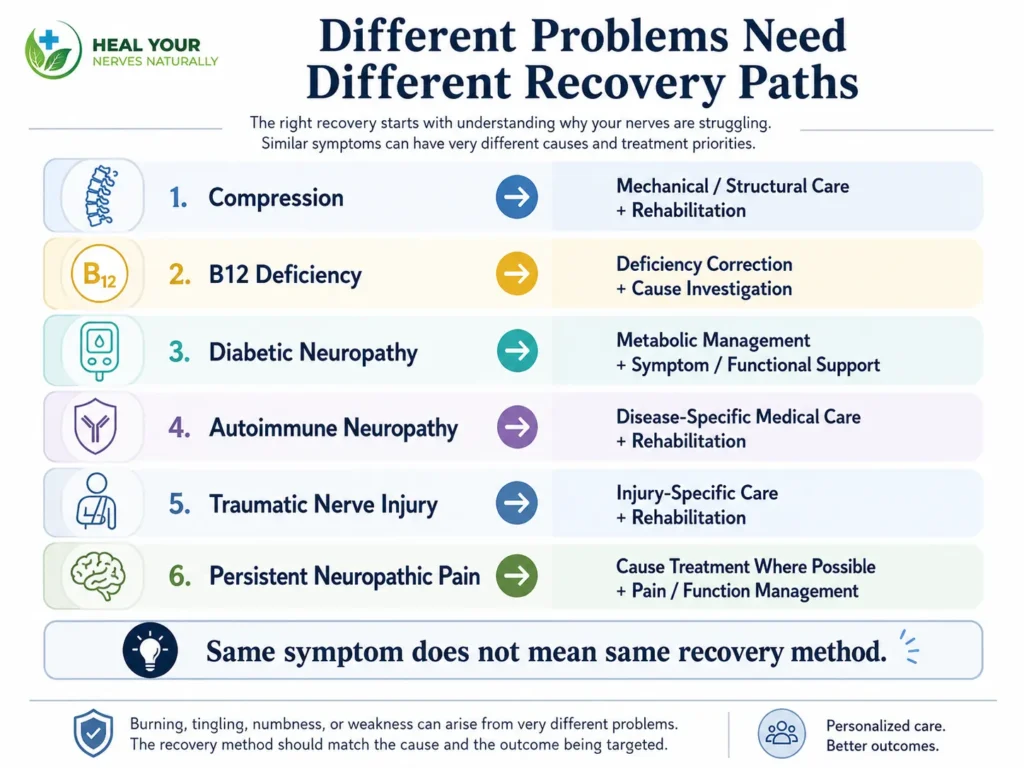
The Same Symptom Can Lead to Very Different Recovery Plans
A useful way to see the difference is to compare the primary recovery question.
| Problem | First recovery question | Common recovery priorities |
|---|---|---|
| Nerve compression | Is ongoing pressure or entrapment still present? | Address mechanical cause, protect the nerve, rehabilitation, symptom management |
| Vitamin B12 deficiency | Is deficiency present, and why? | Correct deficiency appropriately, investigate cause, monitor neurological recovery |
| Diabetic neuropathy | Is the metabolic disease being adequately managed? | Diabetes risk-factor management, foot protection, symptom treatment, activity and functional support |
| Autoimmune neuropathy | Is immune-mediated nerve injury active? | Disease-specific medical treatment, monitoring, rehabilitation, supportive care |
| Traumatic nerve injury | What structure was injured and how severely? | Injury-specific assessment, surgical care when indicated, rehabilitation, protection, functional retraining |
| Persistent neuropathic pain | Is there a treatable underlying cause, and how much is pain limiting life? | Cause-directed care where possible, pain management, sleep/function support, rehabilitation |
The point is not to turn this table into a self-diagnosis tool.
It is to show why a method that is sensible for one person may be almost irrelevant to another person with a similar symptom.
Rehabilitation: Recovery Is More Than Waiting for a Nerve to Heal
One of the easiest mistakes in nerve recovery is to imagine that the only meaningful outcome is structural regeneration.
That view leaves out what people actually need to do with their bodies.
A hand has to grip.
A foot has to tolerate load.
A person may need to walk safely, return to work, use tools, button clothing, drive, write, sleep, or move without constantly protecting the affected area.
Rehabilitation works with those functional demands.
After a peripheral nerve injury, the rehabilitation plan may change over time. Early priorities may involve protection and preventing avoidable secondary problems. Later priorities may involve mobility, motor retraining, strength, sensory re-education, task practice, or return to activity.
Not every intervention has equally strong evidence for every nerve injury. A 2024 clinical practice guideline on peripheral nerve injuries noted that high-quality evidence is limited for many treatment questions, which is one reason individualized clinical judgment remains important.
That uncertainty should be visible rather than hidden.
A recovery page should not make every therapy look equally established simply because all of them can be placed under the word “rehabilitation.”
Who May Be Involved?
The exact team depends on the problem, but nerve recovery can involve several different professionals.
A neurologist or other relevant physician may help clarify diagnosis, progression, cause, and disease-specific treatment.
A physical medicine and rehabilitation clinician may help coordinate functional recovery in selected cases.
A physical therapist may focus on movement, strength, balance, mobility, and graded return to activity.
An occupational therapist may help with hand function, daily activities, task modification, equipment, and adaptation.
A dietitian or nutrition professional may be useful when nutrition, deficiency, metabolic disease, or dietary restriction is genuinely relevant.
A pain specialist or multidisciplinary pain team may become important when persistent pain is the main barrier to function.
A surgeon or structural specialist may be involved when a nerve is severed, severely injured, or compressed in a way that requires procedural assessment.
The useful question is not “Who treats nerves?” as though one profession owns the entire problem.
It is:
Which part of the recovery problem needs expertise right now?
Where Nutrition, Sleep, Circulation, and Stress Regulation Fit
Supportive methods matter most when their role is described accurately.
Nutrition is a good example.
Nerves need normal nutritional adequacy. Defined deficiencies can be neurologically important. Metabolic health matters, especially in diabetes. But food is not a universal treatment for neuropathy, and a supplement is not automatically a regeneration therapy.
The same is true of sleep.
Poor sleep can make pain, fatigue, concentration, emotional regulation, and rehabilitation more difficult. Improving sleep may therefore make recovery easier to live through and may improve a person’s capacity to participate in treatment.
That does not mean sleep alone reverses a compressed nerve or treats an active autoimmune neuropathy.
Circulation and oxygen delivery are also biologically important, but the phrase can become misleading when it is used to imply that every nerve symptom comes from “poor circulation.” Vascular problems can contribute to nerve dysfunction, but many neuropathies have other causes.
Stress regulation deserves similar care.
Stress can alter pain processing, attention, breathing, muscle guarding, sleep, autonomic activity, and symptom burden. It can make an existing problem harder to tolerate.
That is not the same as proving that stress created the nerve lesion.
Supportive methods become more credible, not less, when we stop asking them to do jobs they cannot reliably perform.
Where Nerve Regeneration Fits
Regeneration is one possible biological component of recovery.
It is not the definition of recovery.
Peripheral nerves have some capacity for axonal regeneration, and Schwann cells play an important role in supporting that process. But the clinical result depends on much more than whether an axon is theoretically capable of growing.
The type of injury matters.
So does the severity of axonal damage, whether the nerve remains in continuity, the distance to the target tissue, how long muscles or sensory targets have been denervated, the health of supporting Schwann cells, whether repair was delayed, and whether regenerating fibers reach the correct targets.
A 2024 review of nerve-regeneration physiology emphasized that functional recovery after peripheral nerve injury can remain incomplete despite advances in surgical repair. Regenerative capacity and the support provided by denervated Schwann cells decline over time, denervated muscles can atrophy, and regenerating fibers may not always reconnect with the correct targets.
That is a very different picture from the idea that one nutrient, exercise, device, or supplement simply “switches regeneration on.”
If you want the deeper biology rather than the recovery-method overview, continue with Regeneration Biology, Axonal Regrowth, and Myelin Regeneration.
Is There One Nerve Recovery Protocol?
No single protocol safely applies to every nerve disorder.
That answer may feel unsatisfying when someone wants a clear plan, but it reflects the underlying biology.
A recovery protocol for a traumatic nerve injury cannot simply be copied onto diabetic neuropathy.
A protocol designed around nutritional deficiency is not a treatment for active nerve compression.
A pain-management strategy is not an autoimmune-neuropathy treatment.
Even within one diagnosis, recovery plans can differ because of severity, location, age, medical history, functional goals, treatment timing, and the person’s response.
A more useful way to think about a protocol is:
a structured set of decisions built around a specific problem.
That means sequencing matters.
So does timing.
A method that is useful later may be inappropriate early. A strategy that protects an injured area in the short term may become unnecessarily restrictive if continued after the clinical situation changes. A rehabilitation plan may shift from protection to movement, then to strength, endurance, task practice, and long-term adaptation.
The detailed logic of sequencing belongs in Healing Sequencing and Recovery Phasing.
For a guided overview of how recovery approaches can be organized, see Nerve Recovery Protocols.
The important boundary here is simple:
A useful method is not automatically the right method at every stage.
How Long Does Nerve Recovery Take?
There is no universal nerve-healing timeline.
Some symptoms improve when the underlying cause is corrected. Some nerve injuries recover over many months. Some neuropathies remain chronic. Some conditions improve partially but leave lasting sensory or motor deficits.
The expected course depends on questions such as:
What caused the problem?
Was the nerve compressed, metabolically affected, inflamed, demyelinated, or physically injured?
Is the axon intact?
Was the nerve completely or partially disrupted?
How far would regenerating fibers have to travel?
Is the target muscle or sensory structure still capable of responding?
Is the damaging process still active?
Was treatment delayed?
What does “recovery” mean in this case—less pain, restored strength, better sensation, improved function, or structural repair?
That is why a fixed promise such as “nerves heal in X weeks” is rarely useful across diagnoses.
In traumatic peripheral nerve injury, timely recognition and appropriate treatment matter because delayed recovery can reduce the chance of optimal functional restoration. The 2024 clinical practice guideline on peripheral nerve injuries was developed specifically to improve early recognition and timely treatment.
Recovery is therefore better followed by changes in the person and the condition than by a generic calendar.
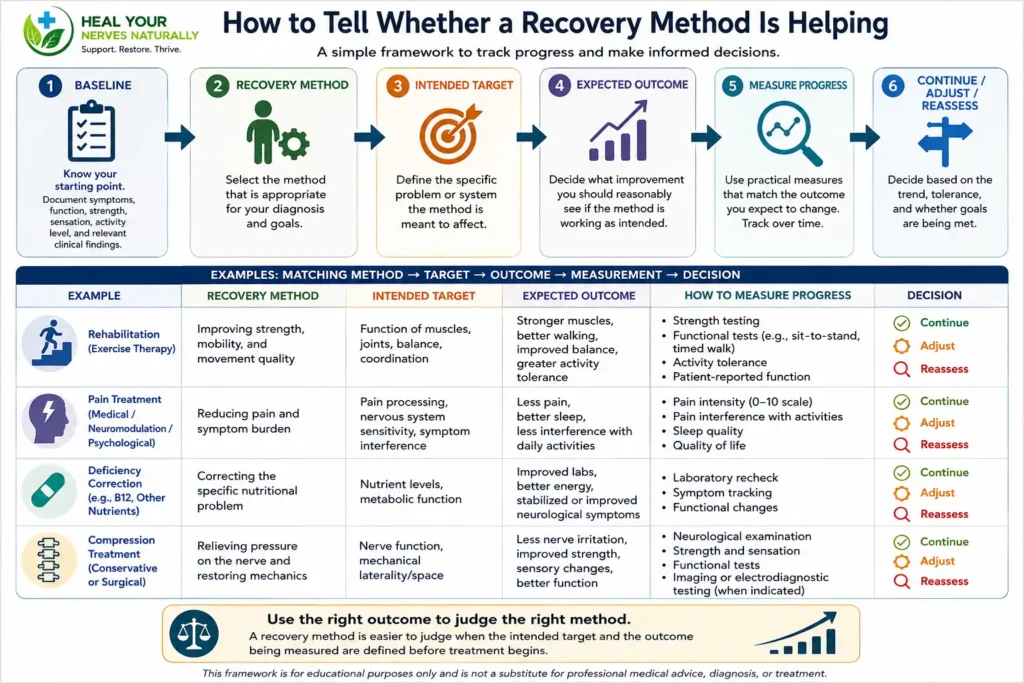
How to Tell Whether a Recovery Method Is Helping
Before deciding whether a method works, define what it was supposed to change.
This sounds obvious, but it prevents a surprisingly common mistake: measuring the wrong outcome.
A pain treatment should not be judged by whether it has regenerated an axon.
A rehabilitation program designed to improve walking should not be judged only by a pain score.
A treatment for B12 deficiency should not be judged solely by whether tingling disappears within a few days.
A diabetes-management strategy should not be reduced to whether neuropathic pain happened to fluctuate that week.
Start with a baseline.
Know Your Starting Point
Depending on the problem, useful baseline information may include:
- where symptoms occur and how they behave;
- strength or practical ability;
- walking, balance, grip, or other relevant function;
- areas of reduced or altered sensation;
- activity tolerance;
- sleep and pain interference;
- use of braces, supports, or adaptations;
- and clinical findings or tests when they are part of care.
Then define the intended target.
If the method targets function, measure function.
If it targets pain, measure pain interference and activity.
If it corrects a deficiency, appropriate clinical and laboratory follow-up may matter.
If it treats a compressed nerve, neurological examination, function, and sometimes testing may be more informative than moment-to-moment symptom checking.
The most useful principle is:
Measure a recovery method by the problem it was intended to change.
When Improvement Can Be Misleading
Progress is not always easy to interpret.
That does not mean improvement should be dismissed. It means the conclusion should match the evidence.
Less pain does not automatically prove structural repair
Pain can improve because of medication, sleep, reduced inflammation, altered nerve signaling, reduced mechanical irritation, better coping, rehabilitation, or other factors.
Improvement is still valuable.
But it may not tell us which structural changes have occurred.
More tingling does not automatically prove new damage
Neurological symptoms can fluctuate.
Activity, position, sleep, temperature, stress, medication timing, and the underlying disorder can all change how symptoms feel.
A change becomes more concerning when it is accompanied by new objective weakness, expanding sensory loss, worsening gait, muscle wasting, or another meaningful neurological change.
Feeling calmer does not mean the nerve has healed
Reduced fear, better emotional regulation, or autonomic settling can reduce symptom burden and improve function.
That is a worthwhile outcome.
It should not be converted into evidence that a compressed, metabolically damaged, or structurally injured nerve has regenerated.
A “healing reaction” should not be used to explain away deterioration
Progressive neurological loss should not be casually reframed as detoxification, a flare that proves treatment is working, or the nervous system “releasing stored stress.”
If function is getting worse, the clinical picture deserves reassessment.
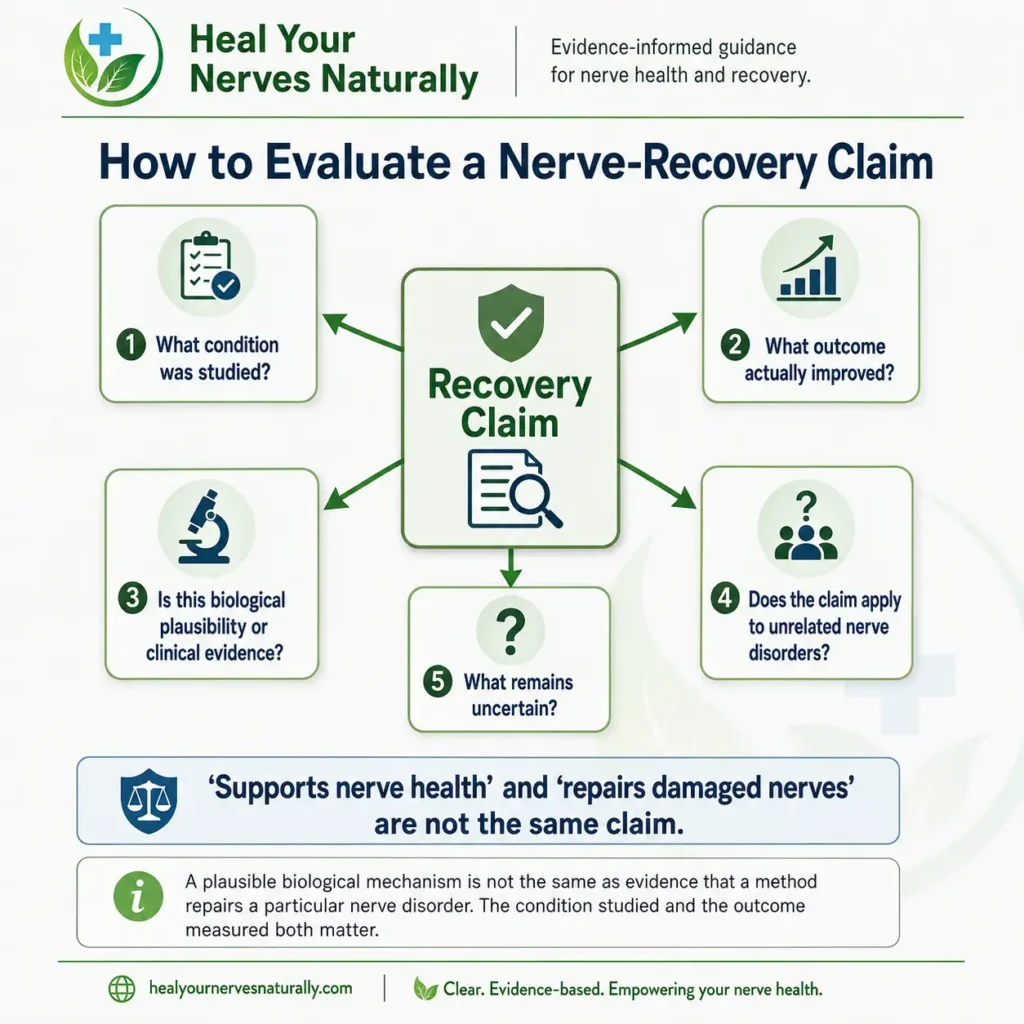
How to Evaluate a Nerve-Recovery Claim Before You Spend Time or Money
Recovery claims are easy to make because the word support can be stretched almost indefinitely.
A product may contain nutrients involved in normal nerve biology.
A device may alter sensation.
An exercise may increase local movement.
A therapy may reduce pain.
None of those observations automatically prove that the intervention regenerates damaged peripheral nerves.
Before accepting a claim, ask a few harder questions.
What exact condition was studied?
Evidence from one type of nerve injury does not automatically apply to diabetic neuropathy, chemotherapy-induced neuropathy, autoimmune neuropathy, or nerve compression.
What actually improved?
Pain?
Strength?
Walking?
Nerve-conduction findings?
A laboratory marker?
Patient-reported function?
Actual structural regeneration?
These outcomes should not be substituted for one another.
Is the claim based on biology or on clinical outcomes?
“Vitamin X participates in nerve metabolism” is a biological fact.
“Therefore high-dose vitamin X repairs neuropathy” is a treatment claim.
The second statement needs its own evidence.
Does the treatment claim to work across unrelated causes?
A method advertised for compression, diabetes, autoimmune disease, chemotherapy injury, nutritional deficiency, and traumatic nerve injury should immediately raise questions.
Those conditions do not share one simple cause.
What is still uncertain?
This is often the part marketing leaves out.
A 2024 clinical practice guideline on peripheral nerve injury noted that high-quality evidence remains limited for many treatment questions. A systematic review of registered clinical trials published in 2024 also highlights how actively the field is still trying to determine which interventions improve meaningful outcomes after peripheral nerve injury.
Uncertainty is not failure.
It is part of responsible medical communication.
When to Continue, Adjust, or Reassess
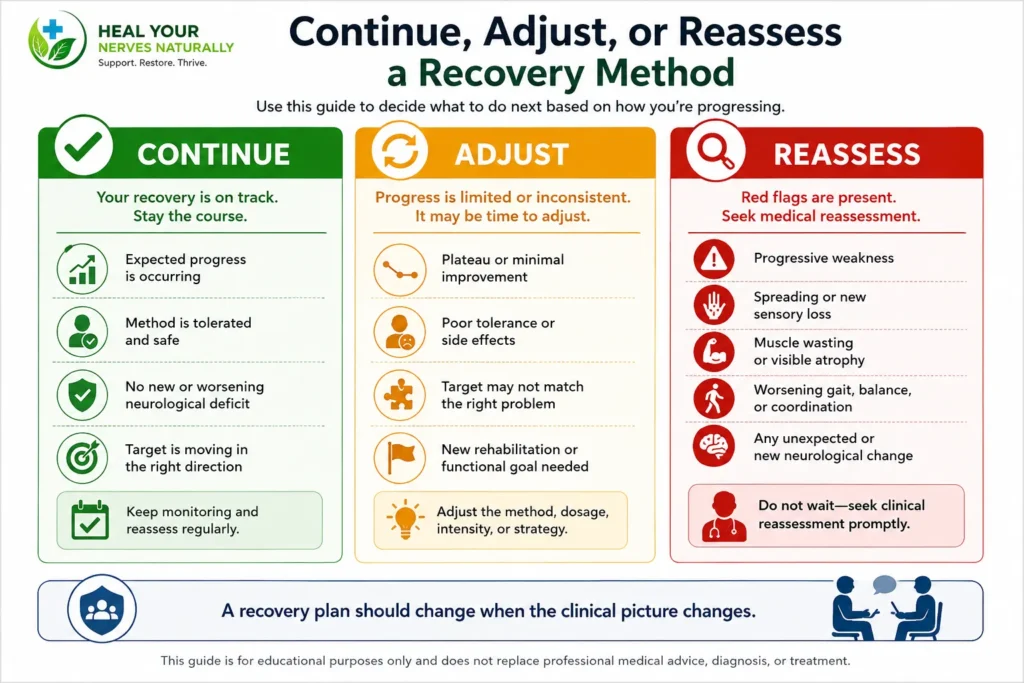
A recovery plan should not continue unchanged simply because it was once reasonable.
Conditions evolve.
So do goals.
Continuing may make sense when
the diagnosis is reasonably clear;
the method has a defined purpose;
the person is tolerating it;
the expected outcome is moving in the right direction;
and there are no new neurological warning signs.
Adjustment may be needed when
progress has plateaued;
the method is difficult to tolerate or sustain;
the treatment target and the measured outcome do not match;
function remains limited despite improvement in symptoms;
or a new phase of rehabilitation requires a different goal.
Medical reassessment matters when
there is new or progressive weakness;
muscle wasting develops or worsens;
sensory loss is spreading;
walking, balance, or coordination deteriorates;
new bowel, bladder, blood-pressure, sweating, or other autonomic problems appear;
pain or neurological symptoms change in an unexpected way;
the diagnosis remains uncertain;
or treatment is not producing the course the clinical team expected.
The National Institute of Neurological Disorders and Stroke emphasizes medical history, neurological examination, and selected testing because many different disorders can produce overlapping peripheral-nerve symptoms.
A recovery method should never become a reason to stop asking whether the diagnosis still fits.
Choosing a Recovery Method in Real Life
The most scientifically interesting method is not always the most useful method for a particular person.
A recovery approach has to fit both the clinical problem and real life.
Before committing to a method, ask:
What diagnosis or problem is this meant to address?
Is it treating the cause, supporting biology, reducing symptoms, restoring function, or helping adaptation?
What evidence supports it for this particular condition—not just for “nerve health” in general?
What should change if it works?
How will that change be measured?
What are the risks, interactions, or reasons it might be inappropriate?
Is the timing right?
Can I realistically follow it?
Time, cost, transportation, treatment frequency, other medical conditions, medication schedules, fatigue, caregiver support, and the ability to continue safely can all affect whether a plan works in practice.
An appropriate recovery method has to make sense in the person’s actual life, not just on paper.
Where “Natural Recovery” Fits
There does not need to be a competition between natural support and medical care.
Nutrition can matter.
Sleep can matter.
Appropriate movement can matter.
Emotional health can matter.
Stress management can matter.
Social support can matter.
Protecting the nerve from avoidable stress can matter.
But those supportive measures should be used for the roles they can actually perform.
If diabetes is damaging nerves, metabolic management matters.
If a vitamin deficiency is present, it needs appropriate correction.
If a nerve is severely compressed, the mechanical problem may need treatment.
If an immune-mediated neuropathy is active, disease-specific medical care may be required.
If a traumatic nerve injury has disrupted continuity, specialist assessment may be time-sensitive.
A natural approach becomes more credible when it does not pretend that every problem can be solved with the same supportive tool.
Frequently Asked Questions About Nerve Recovery Methods
What are nerve recovery methods?
Nerve recovery methods are treatments or supportive strategies used to address different parts of a nerve problem. Depending on the diagnosis, they may treat the underlying cause, reduce mechanical stress, support normal biology, restore function through rehabilitation, reduce symptom burden, or help adaptation when complete recovery is limited.
What helps damaged nerves recover?
There is no single answer because nerve damage has many causes. Recovery may depend on correcting the underlying cause, protecting the nerve from ongoing injury, receiving appropriate medical or surgical treatment when needed, participating in rehabilitation, and maintaining adequate nutrition, sleep, and metabolic health.
Can damaged peripheral nerves regenerate?
Peripheral nerves have some capacity for axonal regeneration, but recovery depends on the type and severity of injury, whether the nerve remains in continuity, distance to the target, timing of treatment, and other biological factors. Functional recovery can remain incomplete even when regeneration occurs.
What are the stages of nerve healing?
There is no universal set of stages that applies to every nerve disorder. Traumatic peripheral nerve injury may involve an injury response, clearance of damaged material, axonal regeneration where possible, reinnervation, remyelination where applicable, and functional retraining. Metabolic, nutritional, immune-mediated, and compressive neuropathies may follow different recovery paths.
Is there one nerve recovery protocol?
No. A useful recovery plan should be built around a specific diagnosis, severity, stage, treatment goal, and response. A protocol for traumatic nerve injury cannot simply be applied to diabetic or autoimmune neuropathy.
Does exercise help nerve recovery?
Exercise and rehabilitation can be important for movement, strength, balance, conditioning, function, and return to activity, but the appropriate program depends on the diagnosis and stage of recovery. Exercise should not be treated as a universal way to regenerate every damaged nerve.
Does nutrition help nerves recover?
Adequate nutrition supports normal nerve biology, and defined deficiencies can be clinically important. Nutrition may also support metabolic health and general recovery. It does not replace treatment of compression, active autoimmune neuropathy, diabetes, traumatic injury, or other disease-specific causes.
Are supplements necessary for nerve recovery?
Not routinely. Supplements can be useful when there is a defined nutritional need, but concentrated nutrient exposure can also be unnecessary or harmful. The reason for supplementation, dose, duration, interactions, and duplication across products all matter.
Does less pain mean a nerve has healed?
Not necessarily. Pain can improve for many reasons, including symptom-focused treatment, better sleep, reduced mechanical irritation, rehabilitation, medication, or changes in pain processing. Less pain is valuable, but it is not automatic proof of structural nerve regeneration.
How do I know if nerve recovery is happening?
The most useful signs depend on the original problem. Clinicians may follow strength, sensation, reflexes, walking, hand function, activity tolerance, pain interference, neurological examination, or selected tests. The outcome should match what the treatment was intended to change.
How long does nerve recovery take?
There is no universal timeline. Recovery depends on cause, severity, nerve structure, distance to the target, whether ongoing injury continues, timing of treatment, and what outcome is being measured. Some problems improve relatively quickly when the cause is corrected; others require many months or remain partly chronic.
When should a recovery method be reassessed?
Reassessment is important when weakness progresses, sensory loss spreads, muscle wasting develops, walking or coordination worsens, new autonomic symptoms appear, the diagnosis remains uncertain, or the course does not fit what the treating team expected.
Continue Learning: Choose the Next Page by the Question You Still Have
If you still do not know what is causing the symptoms, continue with Causes of Nerve Pain and How Nerve Dysfunction Is Diagnosed.
If you want to understand how damaged peripheral nerve tissue may biologically recover, continue with Regeneration Biology and Axonal Regrowth.
If you need to understand nutrition’s role, continue with Nutrition and Nutrition for Nerve Repair.
If your next question is about movement, strength, rehabilitation, or function, continue with Movement Therapy and Exercises.
If pain and sensitivity are the main problem, see Pain Processing and Emotional Regulation and Nerve Sensitivity.
If you want to understand how recovery methods can be ordered and adapted over time, continue with Healing Sequencing, Recovery Phasing, and Nerve Recovery Protocols.
If your symptoms involve a known condition, use the condition-specific guide whenever possible, including Peripheral Neuropathy, Diabetic Neuropathy, Nerve Compression, or Post-Injury Nerve Damage.
Medical Safety Note
This page is for education. It is not a diagnosis, personal rehabilitation plan, or substitute for care from an appropriately qualified healthcare professional.
New, severe, rapidly worsening, or progressive neurological symptoms deserve medical evaluation. This is especially important when symptoms involve significant new weakness, foot drop, loss of hand function, rapidly spreading numbness, major sensory loss, muscle wasting, worsening balance or coordination, new bowel or bladder dysfunction, breathing or swallowing difficulty, facial weakness, difficulty speaking, or other acute neurological changes.
Do not delay appropriate diagnosis or stop prescribed treatment because a supplement, diet, exercise program, regulation practice, device, or other recovery method appears to help symptoms.
Do not assume that worsening neurological function is a “detox reaction,” “healing crisis,” or proof that a recovery method is working.
References and Clinical Sources
- National Institute of Neurological Disorders and Stroke — Peripheral Neuropathy
Overview of peripheral neuropathy types, causes, diagnosis, treatment, symptom management, and peripheral nerve regeneration biology. - National Institute of Neurological Disorders and Stroke — Pain
Background on pain assessment, neurological examination, pain mechanisms, and treatment context. - National Institute of Diabetes and Digestive and Kidney Diseases — Peripheral Neuropathy
Diabetes-related peripheral neuropathy, pain treatment, and the distinction between symptom treatment and existing nerve damage. - Harhaus L, et al. Clinical Practice Guideline: The Treatment of Peripheral Nerve Injuries. Deutsches Ärzteblatt International. 2024.
Evidence-based guideline emphasizing early recognition, timely treatment, functional restoration, and limitations in high-quality evidence for peripheral nerve injury treatment. - Physiology of Nerve Regeneration: Key Factors Affecting Clinical Outcomes. 2024.
Review of axonal regeneration, Schwann-cell support, denervated muscle, timing, and factors limiting functional recovery after peripheral nerve injury. - Elhelali A, Tuffaha S. A Systematic Review of Registered Clinical Trials for Peripheral Nerve Injuries. Annals of Plastic Surgery. 2024.
Review of the clinical-trial landscape for peripheral nerve injury treatments.
Editorial Information
Written by: Heal Your Nerves Naturally Editorial Team
Medical review: Add only if a qualified healthcare professional actually reviews the finished article
Last updated: August 2026
Editorial Approach
This guide separates treatment of the underlying cause, symptom management, functional rehabilitation, biological nerve recovery, and adaptation so that readers do not mistake one outcome for another.
Clinical and therapeutic claims should be updated when major guidelines, systematic reviews, safety warnings, or important condition-specific evidence changes.
The page should not use unverifiable trust badges, star ratings, “medically reviewed” labels, or regeneration claims that exceed the cited evidence.
Production Image Inventory
| # | Visual | Suggested Filename |
| Hero | Nerve Recovery Methods: Different Problems Need Different Paths | nerve-recovery-methods-different-paths-hero.webp |
| 01 | Recovery Is Not One Outcome | nerve-recovery-five-different-outcomes.webp |
| 02 | Different Problems Need Different Recovery Paths | different-causes-different-nerve-recovery-paths.webp |
| 03 | Symptom Relief vs Functional Recovery vs Nerve Regeneration | symptom-relief-function-nerve-regeneration-difference.webp |
| 04 | How to Tell Whether a Recovery Method Is Helping | how-to-measure-nerve-recovery-method-progress.webp |
| 05 | How to Evaluate a Nerve-Recovery Claim | how-to-evaluate-nerve-recovery-claims.webp |
| 06 | Continue, Adjust, or Reassess | continue-adjust-reassess-nerve-recovery-method.webp |
Brand / Visual Production Rule
Use the approved Heal Your Nerves Naturally branding consistently. Keep medical diagrams clean, educational, restrained, and secondary to the actual reasoning.
Do not add fabricated trust elements or unverified claims such as:
- Medically Reviewed
- Trusted by Thousands
- Expert Reviewed
- Trusted Health Education
- star ratings
- certification seals
- “science-backed” badges used as decoration
- testimonials or community claims that are not verified
Trust should come from accurate language, evidence boundaries, source transparency, useful clinical distinctions, and clear navigation to specialist content.