Nerve Health Education for Pain, Tingling, Numbness, and Recovery

Heal Your Nerves Naturally is an educational website for people who want to understand nerve symptoms in a clear and safe way. Many readers arrive here because they feel tingling, numbness, burning, nerve pain, weakness, body sensitivity, sciatic pain, or post-injury nerve changes. However, these symptoms can come from many causes. Therefore, this website does not diagnose, treat, cure, or replace medical care. Instead, it explains nerve health, root causes, nervous system regulation, nutrition, circulation, inflammation, sleep, stress, and recovery-support education in simple language.
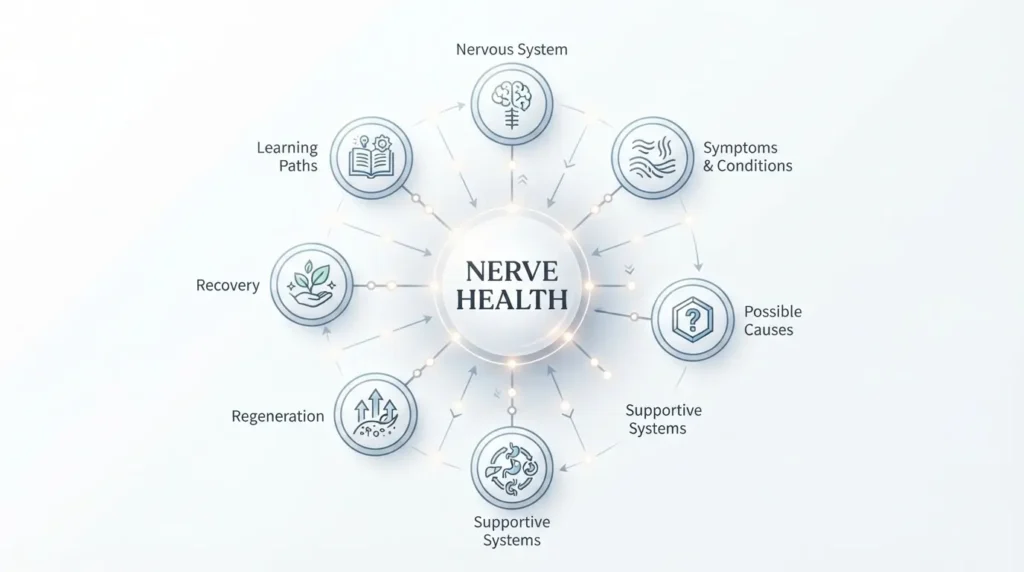
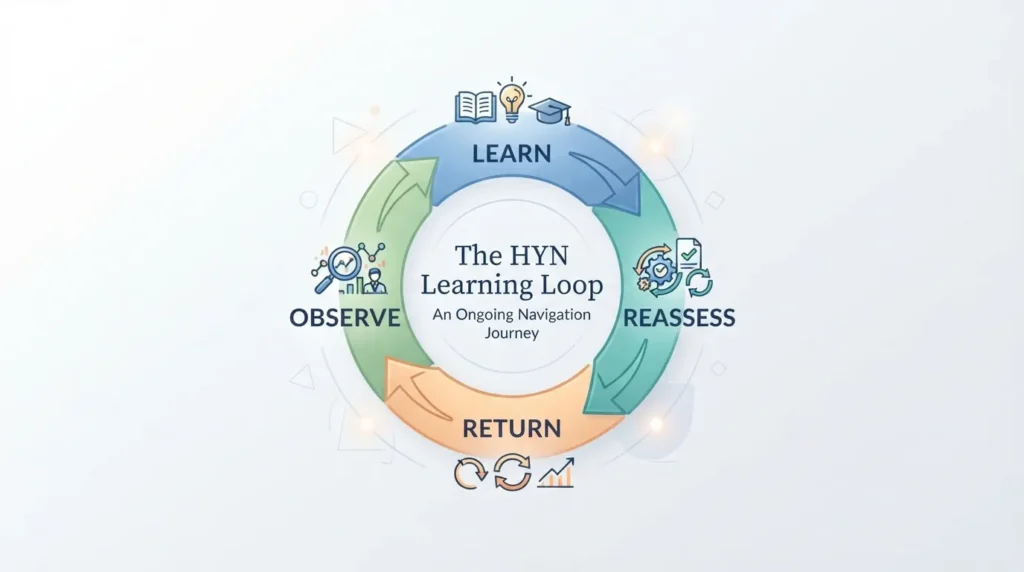
This homepage is your starting point. You can begin with symptoms, then move to conditions, root causes, neurobiology, nutrition, regeneration, and safety guidance. In addition, you can follow the Learning Path if you are not sure where to start. Search topics such as nerve food repair, neurological regulation, autonomic response, axonal regeneration, and recovery protocol are explained here as educational ideas, not treatment promises.
Start the Learning Path
Explore Nerve Conditions
Learn Root Causes

Start Here With Nerve Symptoms
Many people describe nerve problems with everyday words before they know a medical term. For example, they may search for weak nerves symptoms, symptoms of nerve weakness, sensitive nervous system, body sensitivity, stressed nervous system, or stress and nerves. These phrases can be useful starting points. However, they are not medical diagnoses. Because of this, symptom education should stay clear, careful, and safe.
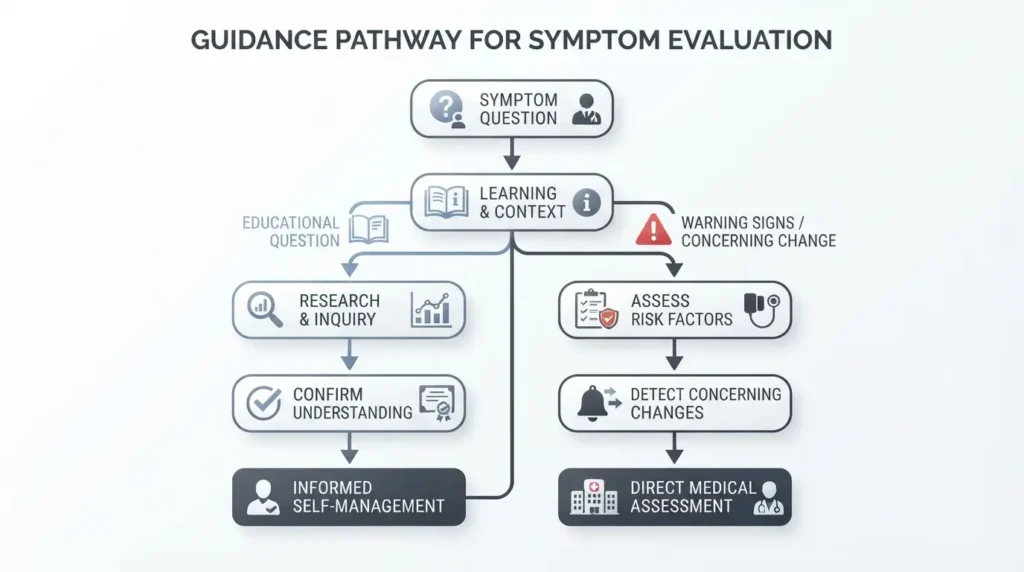
Nerve symptoms may come from compression, diabetes, injury, inflammation, circulation problems, vitamin deficiency, metabolic stress, autoimmune disease, medication effects, or other health conditions. Therefore, one symptom can have more than one possible explanation. This section helps you choose a starting page, but it does not tell you what caused your symptoms. If symptoms are sudden, severe, spreading, or worsening, medical care is important. Also, get help quickly for weakness, balance problems, bladder or bowel changes, injury, chest pain, or trouble breathing.
Symptoms of Nerve Dysfunction
This page explains tingling, numbness, burning, weakness, sensitivity, and nerve pain in safe educational language.
Peripheral Neuropathy
Peripheral neuropathy may involve tingling, numbness, burning pain, weakness, or sensation changes, often in the feet, legs, hands, or arms.
Diabetic Neuropathy
Diabetic neuropathy education explains how long-term blood sugar problems may affect nerves, especially in the feet and legs.
Nerve Compression
Nerve compression may happen when pressure, posture, swelling, tissue tension, or narrowing affects nerve comfort and signaling.
Sciatic Nerve Pain
Sciatic nerve pain education explains symptoms that may travel from the lower back, hip, or buttock into the leg.
Post-Injury Nerve Damage
Post-injury nerve damage education explains how trauma, surgery, pressure, stretching, or tissue injury may affect nerve signals.

Follow a Simple Nerve Health Learning Path
A large nerve-health website can feel confusing at first. Therefore, the Learning Path gives you a simple order. It begins with the nervous system, then moves into root causes, body systems, recovery-support ideas, nervous system regulation, and long-term protection. This path may help readers who search for recovery protocol, recovery protocols, nerve restoration protocol, neural recovery strategies, healing your neurological system, or neurological healing.
However, a recovery protocol on this website does not mean a personal treatment plan. Instead, it means a learning structure. It can help you understand sleep, stress, nutrition, movement, circulation, inflammation, regulation, and recovery capacity. Even so, real medical care depends on diagnosis, symptoms, test results, medication history, and professional guidance. For this reason, the Learning Path is educational only. If you are new to this site, start here first. After that, choose the topic that matches your main question.
Learning Path
Start here if you want a step-by-step route through nerve-health education.
Understanding the Nervous System
This page explains basic nervous system structure, nerve signals, body communication, and sensory processing.
Understanding the Nervous System
Root Causes of Nerve Damage
This guide introduces possible root-cause systems that may affect nerve-health education.
Nervous System Regulation
This page explains activation, settling, sensory load, stress response, and recovery demand.
Nerve Recovery Protocols
This page explains recovery-support education in a structured way, without replacing medical care.

What Is Nervous System Regulation?
Nervous system regulation describes how the body shifts between alertness, protection, rest, and recovery. Readers may also search for what is nervous system regulation, nervous regulation, nerve regulation, neural regulation, neuro regulation, neurological regulation, regulated nervous system, central nervous system regulation, or autonomic nervous system regulation. Although these phrases are not always identical, they often point to the same basic idea: the body needs flexible responses.
A regulated nervous system does not mean a person never feels stress, pain, fatigue, or sensitivity. Instead, it means the body may respond and settle more smoothly after demand. For example, sleep, stress, pain, inflammation, movement, breathing, sensory load, and blood sugar may all influence this process. However, symptoms should not be blamed only on stress or lifestyle. Medical causes can also affect nerve function. Therefore, professional evaluation matters when symptoms are new, severe, persistent, or worsening.
Nervous System Regulation
This page explains activation, settling, stress response, sensory load, and recovery demand.
Autonomic Regulation
This page explains how automatic body regulation may affect heart rate patterns, digestion, temperature, stress response, and recovery demand.
Stress System
This page explains how stress may connect with nervous system stress, muscle tension, sleep disruption, and symptom sensitivity.

Understand Possible Root Causes of Nerve Problems
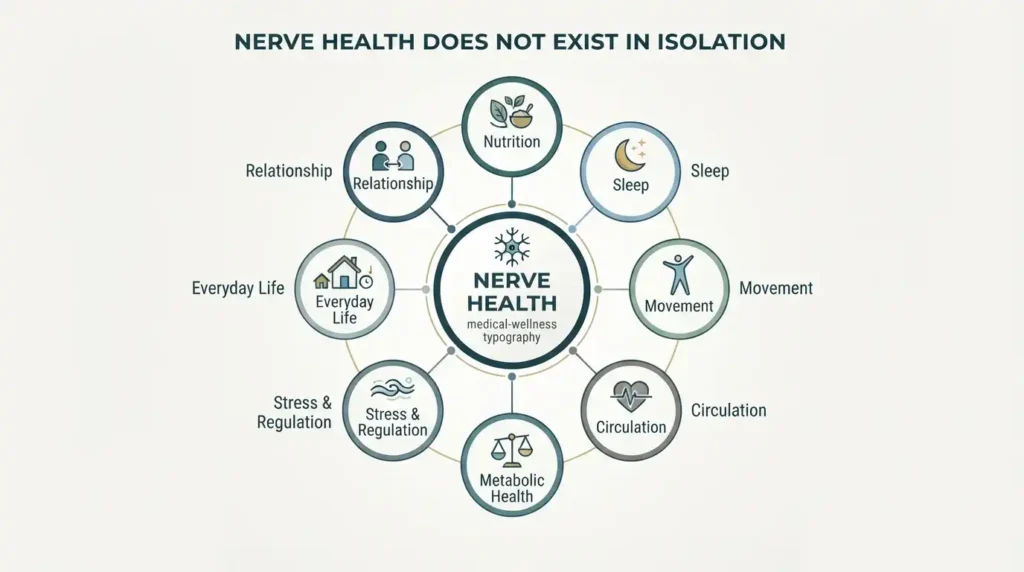
Nerve symptoms often involve more than one body system. For this reason, root-cause education can help readers think more clearly. Possible system layers may include inflammation, metabolism, circulation, nutrition, immune activity, stress response, mechanical pressure, toxins, gut-related patterns, and long-term lifestyle load. However, this does not mean every person has the same cause. Instead, it means nerve health is often connected with the whole body.
This section does not diagnose your symptoms. Rather, it explains possible patterns that may matter in nerve-health education. For example, metabolic damage may be important in diabetes-related nerve problems. Circulation may affect oxygen delivery. Inflammation may influence sensitivity. Mechanical pressure may matter in compression-related symptoms. Meanwhile, stress and lifestyle load may affect sleep, muscle tension, and nervous system regulation. As a result, root-cause learning can guide better questions, but it should not replace medical advice.
Root-Cause Systems
Start here if you want the full root-cause overview.
Inflammatory System
This page explains how inflammatory patterns may connect with nerve sensitivity and body-wide stress signals.
Metabolic Damage System
This page explains how metabolic stress may affect nerve-health education, especially in diabetes-related topics.
Circulatory Impairment System
This page explains how blood flow, oxygen delivery, and vascular support may connect with nerve function.
Nutritional Deficiency System
This page explains how nutritional deficiency may connect with nerves, energy, myelin, and repair-support concepts.
Gut–Nerve Axis
This page explains how gut-related patterns may connect with immune signals, inflammation, metabolism, and nervous system communication.
Lifestyle Degeneration
This page explains how long-term lifestyle strain may affect sleep, movement, circulation, stress load, and recovery capacity.

Learn How the Nervous System Communicates
Many readers ask how the nervous system communicates. Others search how do nerves pass along messages, how does the brain help the nervous system, is the nervous system connected to the brain, or how the nervous system works with other body systems. These questions are useful because nerve symptoms are easier to understand when the communication system is clear. Nerves help the body send information about touch, pain, temperature, movement, pressure, position, organs, and internal body state.
The nervous system also works with many other systems. For example, inflammation may change sensitivity. Blood flow may affect oxygen delivery. Stress hormones may change alertness. Muscle tension may increase mechanical load around nerves. Therefore, nerve-health education should not look at nerves alone. Instead, it should explain how the brain, spinal cord, peripheral nerves, immune signals, blood vessels, muscles, and daily patterns work together.
Neurobiology
Start with the main neurobiology hub to understand nerve function and nervous system education.
Neural Signaling
This page explains how nerve signals help the body communicate sensation, movement, pain, and body-state information.
Brain–Body Integration
This page explains how the brain and body communicate through nerves, hormones, immune signals, stress response, and sensory feedback.
Pain Processing
This page explains how pain processing may involve nerves, the spinal cord, the brain, inflammation, attention, stress, and sensitivity.

Autonomic Response and Body Regulation
Autonomic response is another phrase readers search for. Related searches include autonomic responses, autonomic nervous system response, autonomic activation, autonomic reaction, autonomic nervous system control, and autonomic nervous system regulation. These phrases point to the body’s automatic response systems. The autonomic nervous system helps manage heart rate, digestion, sweating, temperature, blood vessel tone, alertness, and recovery state.
However, autonomic symptoms can be complex. For example, a racing heart, dizziness, sweating, digestive changes, temperature shifts, fatigue, or body sensitivity may have many possible causes. Stress, sleep loss, pain, inflammation, dehydration, medication effects, endocrine problems, and medical conditions may all influence autonomic patterns. Because of this, this website explains autonomic response as education, not self-diagnosis. If symptoms are persistent, unusual, or worrying, professional care is important.
Autonomic Regulation
This page explains automatic body regulation, stress response, and recovery demand.
Chronic Stress and Nervous System Dysregulation
This page explains how long-term stress may influence activation, settling, muscle tension, sleep, and recovery capacity.
Chronic Stress and Nervous System Dysregulation
Mental Stress and Nervous System Load
This page explains how mental demand, worry, attention load, and rumination may affect nervous system load.
Mental Stress and Nervous System Load

Nutrition and Nerve Food Repair Education
Many readers search for nerve food repair, food good for nerves repair, food good for nerve repair, best food for nerve regeneration, best foods for nerve regeneration, best food for nerves repair, or nerve regeneration nutrition. These searches show that people want to understand how food patterns may connect with nerve health. Nutrition may support general health, energy production, blood sugar stability, tissue maintenance, micronutrient availability, and inflammation-related balance.
However, food alone should not be presented as a cure for neuropathy, nerve pain, or nerve damage. On this website, nerve food repair means nutrition-support education. It explains how food patterns, nutrients, metabolic support, and deficiency awareness may fit into a wider learning system. In addition, nutrition is only one layer. Sleep, circulation, movement, stress regulation, inflammation control, diagnosis, and medical care may also matter. Therefore, these pages are useful for learning, but they should not replace professional dietary or medical advice.
Nerve Food Repair
This page explains how nutrition-support education may connect with nerve health, recovery demand, and repair-support biology.
How Nutrition Supports Nerve Repair
This page explains how nutrition may support energy, tissue maintenance, micronutrients, and body-wide recovery-support systems.
How Nutrition Supports Nerve Repair
Micronutrients and Nerve Function
This page explains how vitamins, minerals, and nutrient status may connect with nerve function and nervous system education.
Micronutrients and Nerve Function
Metabolic Support Through Diet Patterns
This page explains how diet patterns may relate to metabolic health, energy balance, and nerve-health education.
Metabolic Support Through Diet Patterns

Nerve Repair, Axonal Regeneration, and Growth Education
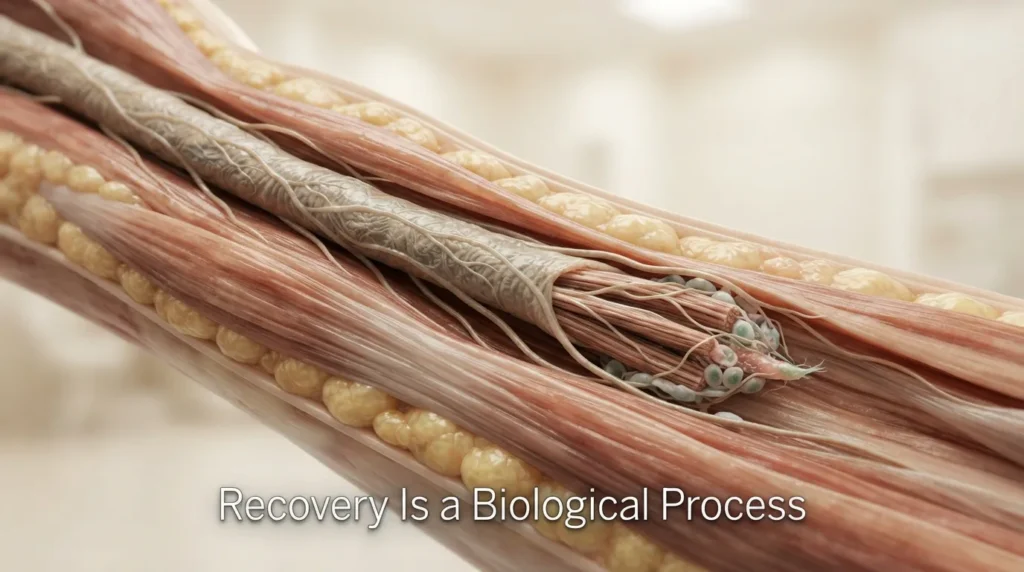
Nerve repair and regeneration are complex topics. Readers often search for axonal regeneration definition, axonal regeneration, axon regeneration steps, axonal regrowth, axon repair, nervous system regeneration, regeneration and repair in the nervous system, biological regeneration, biology regeneration, growth and repair, or what provides new cells for growth and repair. These searches show curiosity about how the nervous system may respond after stress, injury, or damage.
Even so, regeneration must be explained with care. Axonal regeneration means regrowth or repair activity involving axons, which are the long signal-carrying parts of nerve cells. In simple terms, axon regeneration steps may include injury response, cleanup, growth signaling, pathway support, and possible reconnection. However, real recovery varies. It depends on nerve type, injury severity, blood supply, inflammation, metabolic health, medical care, age, and overall condition. Therefore, this section is education only and should not be used to predict personal recovery.
Regeneration Systems
Start with the main regeneration systems hub.
Axonal Regrowth
This page explains axonal regeneration, axonal regrowth, and axon regeneration steps in a safe educational context.
Cellular Repair
This page explains how cellular repair education may connect with nerve-health biology and tissue maintenance.
Myelin Regeneration
This page explains how myelin regeneration education may connect with nerve signal support.
Growth Signals
This page explains how growth signals may relate to nerve repair-support education.
Integration and Stability
This page explains why recovery education also needs stability, pacing, regulation, and whole-system integration.

Myelin, Nerve Signals, and Nervous System Integration
Some readers search for why is myelin important, what is the function of myelin in nerve cells, nervous system integration, integration in the nervous system, integration of the nervous system, integration by the nervous system, integrating center, and nervous pathway. These phrases point to one key idea: nerves do not work alone. They are part of a communication network that connects the brain, spinal cord, peripheral nerves, muscles, organs, immune activity, blood flow, and sensory feedback.
Myelin is often described as an insulating layer around many nerve fibers. It helps nerve signals move more efficiently. However, myelin is only one part of nerve communication. Signal timing, synapses, blood supply, energy production, inflammation balance, and tissue environment also matter. In addition, nervous system integration helps the body combine incoming information and create coordinated responses. Therefore, this topic connects with neural signaling, brain-body integration, autonomic regulation, and myelin education.
Myelin System
This page explains why myelin matters for nerve signal support.
Neural Signaling
This page explains how nerves pass along messages and communicate body information.
System Architecture
This page explains how nervous system parts fit into a larger communication structure.
Brain–Body Integration
This page explains how body systems and the nervous system work together.

Inflammation, Immune Response, and Nerve Sensitivity
Readers may search for inflammation of the nervous system, inflammation nervous system, inflammation of nerve, inflammation of a nerve, inflammation nerves, control of inflammation, neuroinflammation, autoimmune disease of nervous system, autoimmune disease that affects nerves, autoimmune nerve condition, immune system repair, immune recovery, healing immune system, or reset your immune system. These phrases show that many people connect immune activity and inflammation with nerve symptoms.
This topic needs careful wording. Inflammation and autoimmune conditions can be serious, so they should not be self-diagnosed. Also, phrases such as healing immune system or reset your immune system can sound too strong if used as promises. Therefore, this website explains immune and inflammation topics as education only. The goal is to help readers understand how immune signals, tissue stress, and neuroinflammation may relate to nerve sensitivity. It is not to suggest self-treatment. If symptoms are persistent, spreading, severe, or linked with known autoimmune disease, professional care matters.
Neuroinflammation
This page explains how inflammation-related activity may connect with the nervous system.
Inflammation Control
This page explains inflammation-control education in a safe, non-treatment way.
Autoimmune Neuroinflammation
This page explains how autoimmune patterns may relate to nervous system inflammation education.
Immune Repair
This page explains how immune activity may affect tissue cleanup, inflammation resolution, and repair-support biology.
Inflammation Resolution
This page explains how inflammation resolution may support a healthier recovery environment.

Body Systems That May Support Nerve Health
Therapeutic system education looks at daily patterns that may influence nervous system load and recovery demand. These topics include sleep, circadian rhythm, stress, lifestyle healing, movement, posture, oxygen delivery, circulation, inflammation control, nutrition, environmental factors, and cognitive load. However, these pages should not be read as treatment instructions. Instead, they explain how body systems may influence the environment around nerves.
This section may help readers understand why symptoms can sometimes feel worse after poor sleep, high stress, long sitting, low movement, heavy mental demand, or disrupted daily patterns. Still, symptoms should not be blamed only on lifestyle. Medical causes, injuries, metabolic conditions, autoimmune patterns, and structural problems may also be involved. Therefore, this section uses safe educational language. If symptoms are serious, new, or worsening, professional care is still the right step.
Therapeutic Systems
Start with the main therapeutic systems hub.
Sleep & Recovery
This page explains how sleep may connect with nervous system recovery demand and daily symptom sensitivity.
Circadian Rhythm
This page explains how daily timing, light exposure, sleep rhythm, hormones, and energy patterns may influence nerve-health education.
Lifestyle Healing
This page explains how daily habits may connect with stress load, sleep, movement, food patterns, circulation, and nervous system stability.
Movement, Posture, and Nerve Regulation
This page explains how movement and posture may affect nerve comfort, circulation, mechanical load, and body awareness.
Movement, Posture, and Nerve Regulation
Circulation and Oxygenation
This page explains how oxygen delivery and blood flow may connect with nerve function and tissue support.

Nerve Diagnosis, Assessment, Protection, and Safety
Some readers search for how to diagnose nerve damage, neurological tests for nerve damage, nerve health assessment, nerve protection, when to protect a nerve, and nerve integrity. These searches show a need for practical direction. However, diagnosis is not something a website can provide. Nerve symptoms may need medical history, physical examination, neurological testing, blood tests, imaging, nerve conduction studies, electromyography, or other professional evaluation.
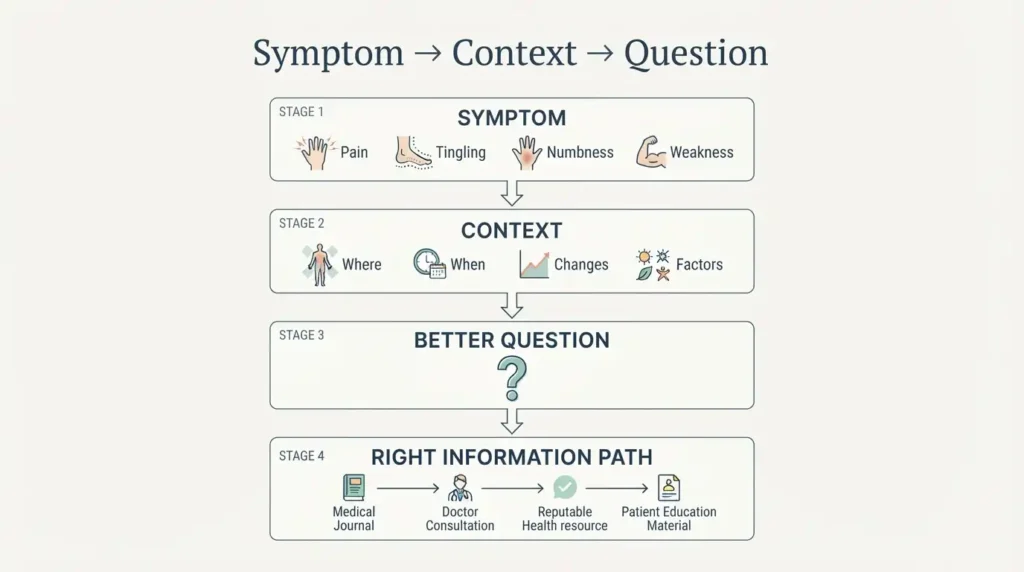
Education can still help you ask better questions. For example, sudden weakness, spreading numbness, loss of balance, severe back pain with leg weakness, bladder or bowel changes, symptoms after injury, or new neurological symptoms should not be ignored. In addition, people with diabetes, autoimmune disease, cancer history, infection risk, medication concerns, or persistent symptoms should speak with a qualified healthcare professional. As a result, protecting a nerve often begins with finding the cause correctly.
Nerve Dysfunction Diagnosis
This page explains why diagnosis matters and why symptoms should not be self-diagnosed from online information alone.
Health Disclaimer
Read the full educational and medical safety disclaimer.
About This Website
Learn more about the educational purpose and editorial approach of this platform.
About Heal Your Nerves Naturally

Frequently Asked Questions
What is nervous system regulation?
Nervous system regulation describes how the body shifts between activation, protection, attention, rest, and recovery. However, it does not mean you never feel stress, pain, or sensitivity. Instead, it means your system may have more flexibility to respond and settle after demand. Sleep, stress, pain, inflammation, movement, breathing, and sensory load may all influence this process. Even so, persistent symptoms still need medical attention when they are new, severe, or worsening.
What foods are good for nerve repair?
Many people search for food good for nerve repair, best food for nerves repair, or nerve regeneration nutrition. In safe educational language, food may support general health, energy production, micronutrient status, blood sugar stability, and tissue maintenance. However, no single food should be presented as a cure for nerve damage, neuropathy, or nerve pain. Therefore, nutrition is one support layer, not a replacement for diagnosis or medical care.
What is autonomic response?
Autonomic response refers to automatic body reactions controlled by the autonomic nervous system. These may involve heart rate, digestion, sweating, temperature, blood vessels, alertness, and recovery state. However, stress, sleep, pain, hydration, medications, illness, and medical conditions may all influence autonomic responses. Because symptoms can have many causes, this topic should be used for education, not self-diagnosis.
What is axonal regeneration?
Axonal regeneration means regrowth or repair activity involving axons, which are the long signal-carrying parts of nerve cells. In simple terms, axon regeneration steps may include injury response, cleanup, growth signaling, pathway support, and possible reconnection. However, recovery depends on nerve type, injury severity, cause, blood supply, inflammation, medical care, and overall health.
What are the stages of nerve healing?
People often search for what are the stages of nerve healing or what are the three stages of nerve healing. In general education, nerve healing may involve injury response, inflammation and cleanup, repair signaling, tissue support, and functional adaptation. Still, every case is different. Therefore, stages should not be used to predict personal recovery without medical evaluation.
How do I know if nerve symptoms need medical care?
Seek medical care promptly if symptoms are sudden, severe, spreading, or worsening. Also get help for weakness, loss of balance, bladder or bowel changes, severe back pain with leg weakness, symptoms after injury, facial drooping, trouble speaking, chest pain, breathing difficulty, fever with neurological symptoms, or any symptom that feels serious or unusual.
Why This Website Exists
Heal Your Nerves Naturally was created to make nerve-health education easier to understand. Many people search online after noticing pain, tingling, numbness, burning feelings, weakness, nerve sensitivity, diabetic neuropathy symptoms, sciatic pain, or post-injury changes. Unfortunately, nerve information can feel confusing, frightening, or too technical. Therefore, this website explains complex topics in a calmer and more organized way.
The goal is not to claim that one food, supplement, exercise, protocol, or lifestyle habit can fix nerve problems. Instead, the goal is to explain how different systems may interact. These systems include neurobiology, root causes, inflammation, circulation, metabolism, nutrition, sleep, stress, movement, immune response, and regeneration biology. As a result, readers can build better basic understanding and know when professional medical support is needed.
MD Hanif Jewel
Founder, Heal Your Nerves Naturally
Heal Your Nerves Naturally was created to make nerve-health education easier to understand for everyday readers. The website focuses on safe educational content, clear explanations, and careful wording. However, it does not replace medical diagnosis, treatment, or professional care.
Thank you for visiting Heal Your Nerves Naturally. I hope this educational platform helps you understand nerve-health topics more clearly and safely.

Author and Editorial Trust Note
This website is written for educational purposes. It uses a cautious and reader-friendly approach to nerve-health topics. Also, the content avoids diagnosis, cure promises, fear-based language, and unsupported treatment claims. Instead, it focuses on clear explanations, safe wording, body-system education, and practical learning structure. Topics such as neurological healing, nerve food repair, nervous system regulation, axonal regeneration, and recovery protocol education are presented as learning concepts, not personal medical instructions.
Because nerve symptoms can come from many causes, readers should use this website as a starting point for understanding. However, it should not replace medical evaluation. Whenever symptoms are new, severe, worsening, spreading, or unusual, professional care is important. In addition, people with diabetes, autoimmune disease, injury history, surgery history, progressive weakness, balance problems, or sudden neurological symptoms should seek qualified medical guidance.
Safety and Education Notice
Heal Your Nerves Naturally is for education only. The information on this website does not diagnose, treat, cure, or prevent disease. Also, it does not replace a doctor, neurologist, physical therapist, dietitian, emergency care, or any qualified healthcare professional. Nerve symptoms can have many possible causes, and some causes need urgent medical attention.
Seek medical care promptly if you have sudden weakness, facial drooping, trouble speaking, loss of balance, severe back pain with leg weakness, loss of bladder or bowel control, spreading numbness, symptoms after injury, chest pain, breathing difficulty, fever with neurological symptoms, rapidly worsening pain, or any symptom that feels serious or unusual. Also seek professional care if you have diabetes, autoimmune disease, cancer history, infection risk, medication-related concerns, or persistent nerve symptoms.
Continue Learning
If you are new to this website, start with the Learning Path. If you already know your main concern, begin with the condition pages. If you want to understand why symptoms may happen, explore Root-Cause Systems. Also, if you want to understand how nerves work, read Neurobiology. For sleep, nutrition, movement, circulation, stress, and inflammation topics, explore Therapeutic Systems. Finally, if you want to understand repair-support biology, continue with Regeneration Systems.
Start the Learning Path
Explore Root-Cause Systems
Explore Neurobiology
Explore Therapeutic Systems
Explore Regeneration Systems
Explore Nerve Conditions