Nerve Compression
Understanding How Pressure on Nerves Develops
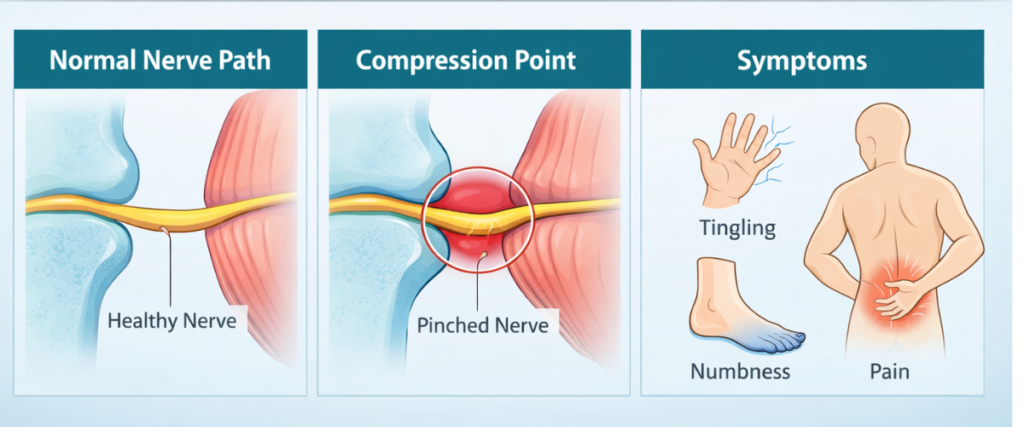
Nerve compression occurs when surrounding tissues place pressure on a nerve. As a result, this pressure may influence how signals travel through the nervous system. Consequently, symptoms such as tingling, numbness, or nerve pain may sometimes appear. In many cases, these symptoms develop gradually rather than suddenly.
What Is Nerve Compression?
Explain
- basic concept
- where it happens
- Why are nerves sensitive to pressure
Example content direction
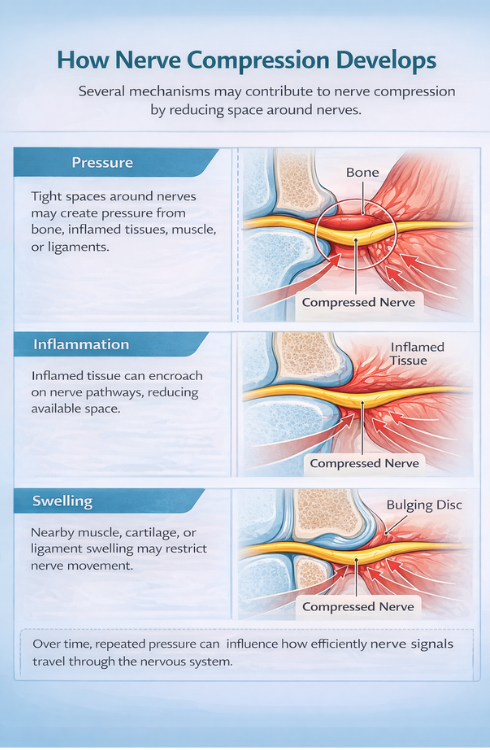
Nerve compression occurs when surrounding tissues, such as bones, muscles, cartilage, or ligaments, apply pressure on a nerve. In other words, the nerve becomes squeezed within the surrounding structures. As a result, the nerve may not function normally. Nerves carry signals between the brain, spinal cord, and the rest of the body. Because of this role, even small pressure can change how those signals travel.. Therefore, even mild compression may affect how nerve signals travel through the body.
When a nerve becomes compressed, the signals traveling through that nerve may become disrupted or slowed. As a result, the affected nerve may not transmit signals efficiently. Consequently, communication between nerves and muscles may begin to change. People may then notice changes in sensation, movement, or internal regulation.
In many situations, nerve compression develops gradually. In fact, many people notice symptoms only after repeated strain over time. For example, repetitive movements, posture patterns, or structural changes in surrounding tissues may contribute to increased pressure around nerve pathways. As a result, pressure around nerve pathways may gradually increase. Consequently, these changes may gradually affect nerve function.
How Nerve Compression Develops
Explain mechanisms
Topics
- pressure from surrounding tissues
- inflammation
- swelling
- structural narrowing
Example direction
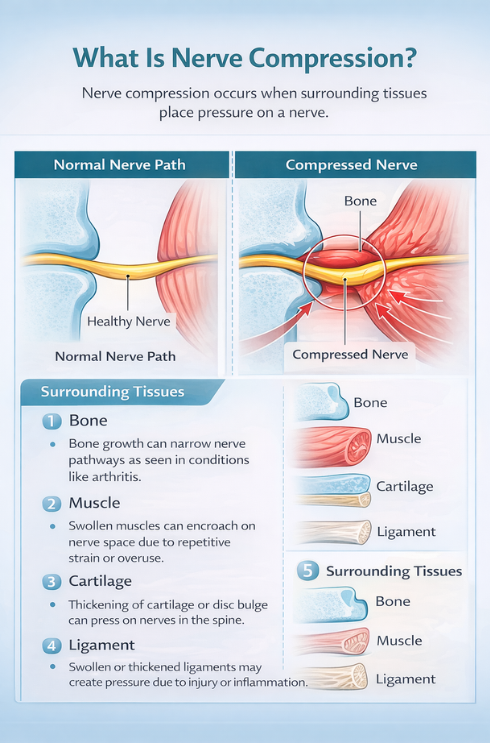
Several biological mechanisms may contribute to nerve compression. In general, these mechanisms involve increased pressure around nerve pathways. In many cases, this pressure develops gradually over time. In fact, the surrounding structures that normally protect nerves can also create pressure when conditions change.
For example, swelling or inflammation in nearby tissues may reduce the available space around a nerve. In addition, fluid buildup in surrounding tissues may increase pressure. Likewise, structural changes in joints or the spine may narrow the pathways where nerves travel.
Over time, repeated pressure can affect how nerve signals move through the nervous system. As a result, nerve communication may become less efficient. Communication between nerves and muscles may gradually change over time. Because of this change, signals between the brain and affected body areas may also become less efficient. As a result, nerve communication may become less efficient. Communication between nerves and muscles may gradually change. Because of this change, signals between the brain and affected body areas may become less efficient. Communication between nerves and muscles may gradually change. As a result, signals between the brain and affected body areas may become less efficient.
Common Symptoms Associated With Nerve Compression
Explain symptoms
Examples
- tingling
- numbness
- burning sensations
- weakness
- radiating pain
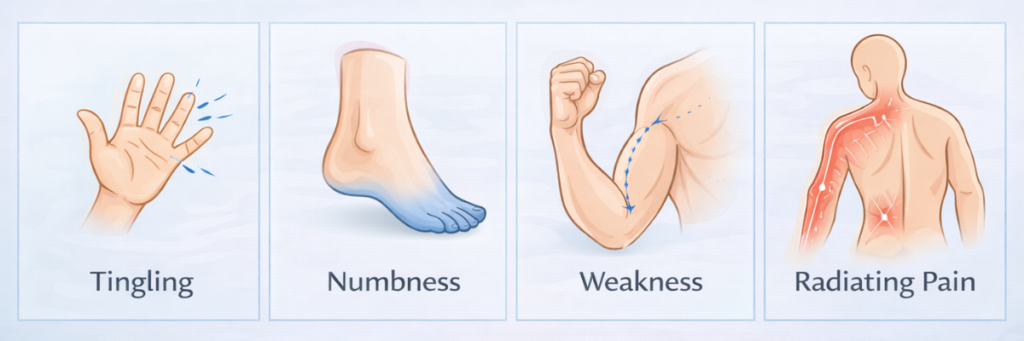
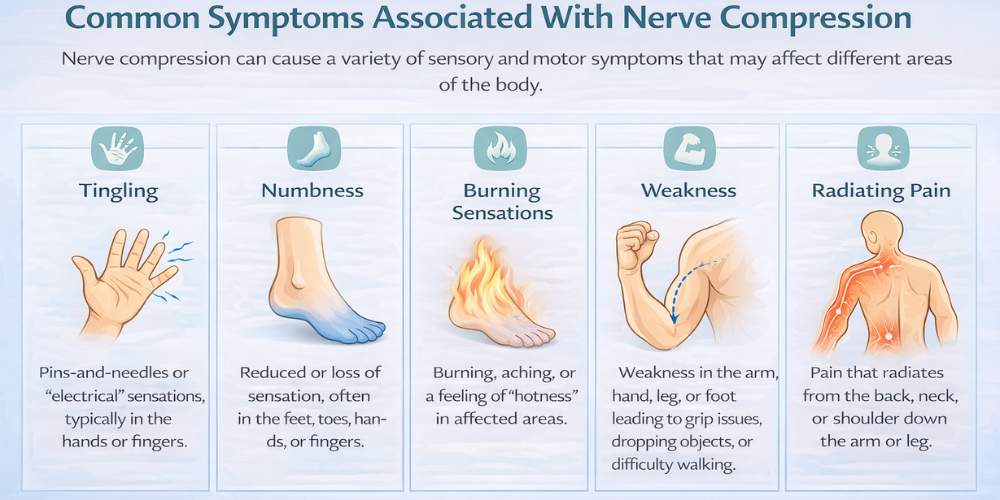
Many symptoms associated with nerve compression overlap with those of nerve dysfunction. For example, people may notice tingling or numbness. In addition, muscle weakness may sometimes develop. Meanwhile, some individuals may also experience burning sensations along the affected nerve pathway. muscle weakness may also develop. In addition, some individuals may notice burning sensations or weakness along the affected nerve pathway.
Possible Causes of Nerve Compression
Explain contributing factors
Examples
- poor posture
- spinal disc pressure
- joint inflammation
- repetitive movements
- injuries
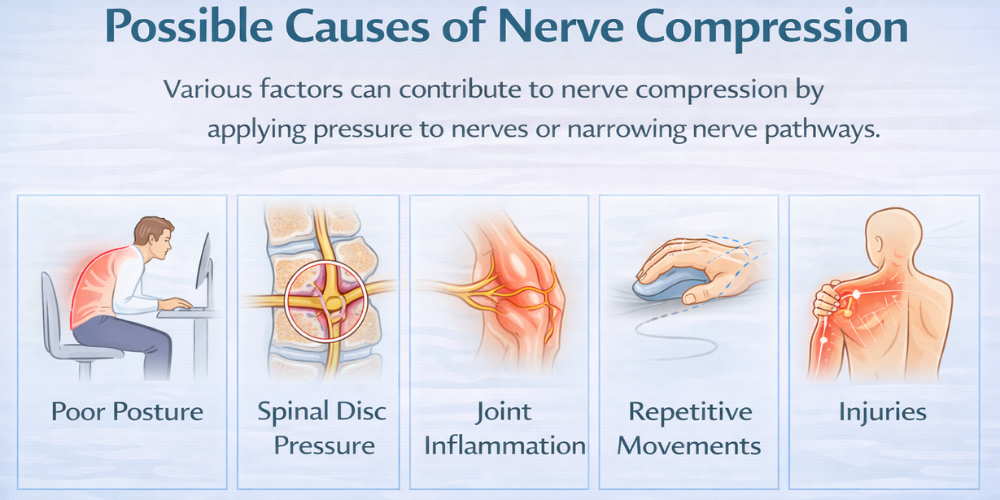
Many factors that lead to nerve compression are also discussed in the broader overview of causes of nerve pain. Therefore, understanding these causes may help explain why nerve pressure develops. In addition, exploring these contributing factors may provide more context about nerve pressure patterns. Understanding these factors may also help clarify why nerve pressure develops.
How Nerve Compression Is Evaluated
Explain
- medical history
- physical examination
- nerve tests
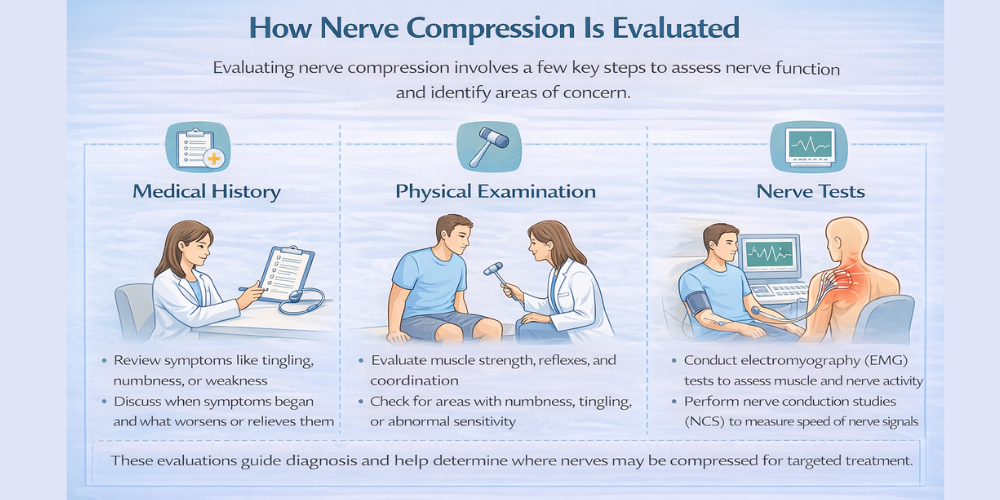
Healthcare professionals may evaluate nerve compression by examining symptoms and reviewing medical history. In addition, neurological examinations may help observe reflexes, muscle strength, and other changes in nerve function. Diagnostic imaging or nerve conduction tests may also help identify areas where nerve signals are affected. For instance, nerve conduction studies measure how efficiently signals travel through nerves and help identify areas where signals slow down.
Supporting a Healthy Nerve Environment
Explain the recovery environment
Topics
- posture awareness
- movement habits
- nervous system regulation
- supportive lifestyle habits
Important rule
Do not promise treatment or cures.
Example direction
While the body’s nervous system has a natural ability to adapt and regulate itself, certain lifestyle patterns may still influence the environment surrounding nerve pathways. For this reason, maintaining supportive habits may help create a healthier nerve environment. Healthy movement patterns may help protect nerve pathways. Reducing repetitive strain may also support overall nervous system health. In addition, consistent daily habits may help support overall nerve function.
Related Nerve Conditions
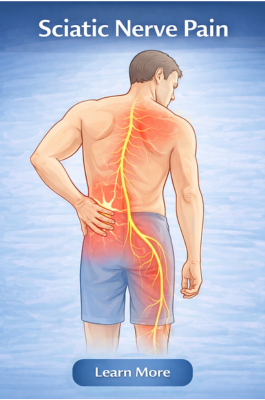
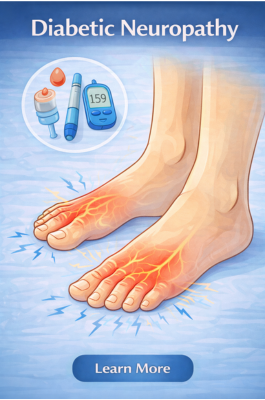
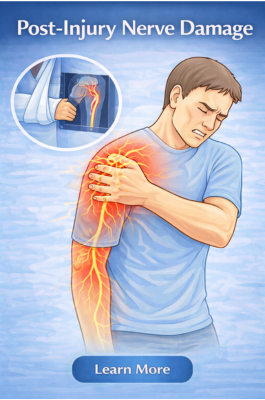
Nerve compression may be linked to several nerve conditions. For instance, sciatica may develop when pressure affects the sciatic nerve. Some forms of neuropathy may also involve similar nerve pressure patterns. Therefore, understanding how these conditions relate to nerve pressure patterns can help build a clearer picture of nervous system health.
Continue Learning About Nerve Health
Safety Notice
This page provides educational information. Diagnosis and treatment decisions require evaluation by a qualified healthcare professional.