Understanding How Diabetes Can Affect Nerve Function
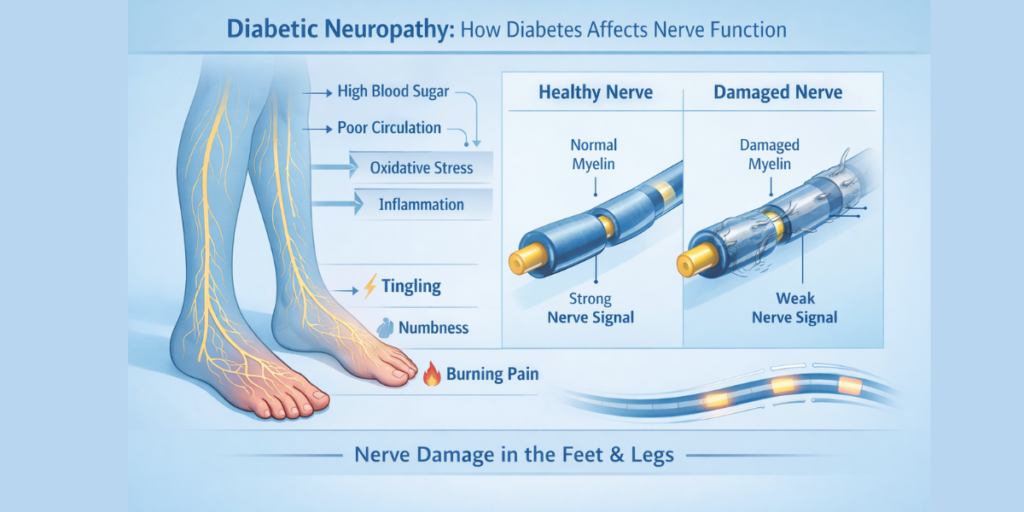
Diabetic neuropathy develops when long-term metabolic changes related to diabetes influence nerve health. Over time, these changes may gradually affect how nerves transmit signals between the brain, spinal cord, and the rest of the body.
In many cases, diabetic neuropathy appears gradually. As nerve function begins to change, people may therefore notice tingling, numbness, burning, or weakness, especially in the feet and legs.
Therefore, understanding how diabetic neuropathy develops can help people recognize early symptoms and better understand how the nervous system responds to long-term metabolic stress.
What Is Diabetic Neuropathy?
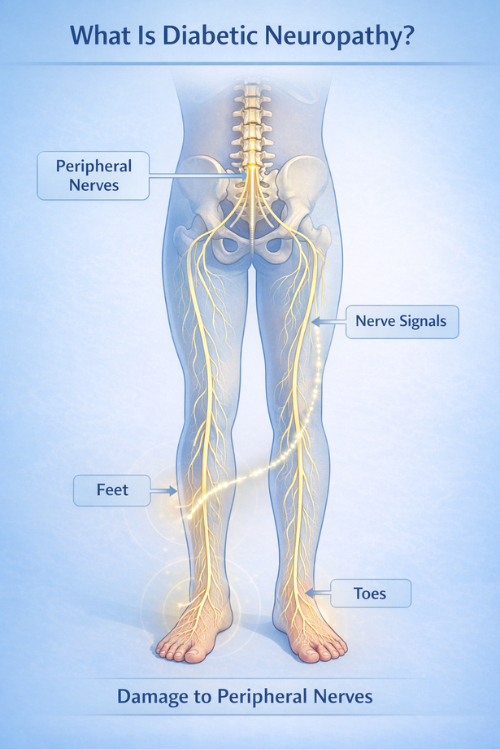
Diabetic neuropathy refers to nerve damage associated with long-term changes related to diabetes. Nerves carry signals between the brain, spinal cord, and different parts of the body. Because of this role, disruptions in nerve function may therefore influence sensation, movement, and internal regulation throughout the body.
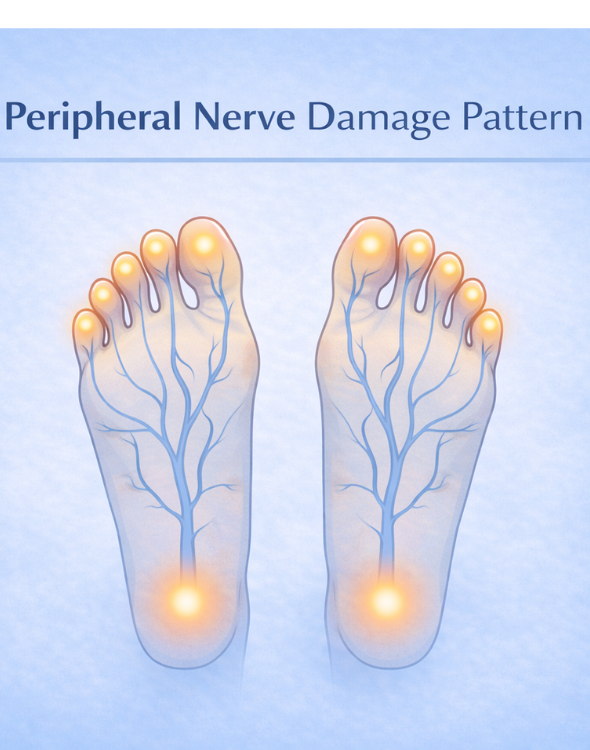
In many situations, diabetic neuropathy primarily affects nerves in the feet and legs first. As a result, early sensory changes may often begin in these areas. As nerve signals gradually change, people may therefore notice numbness, tingling, or reduced sensitivity in these areas.
Over time, nerve changes may influence balance, coordination, or muscle strength. Therefore, understanding diabetic neuropathy can help people better recognize how nerve function may change as metabolic conditions evolve.
How Diabetic Neuropathy Develops
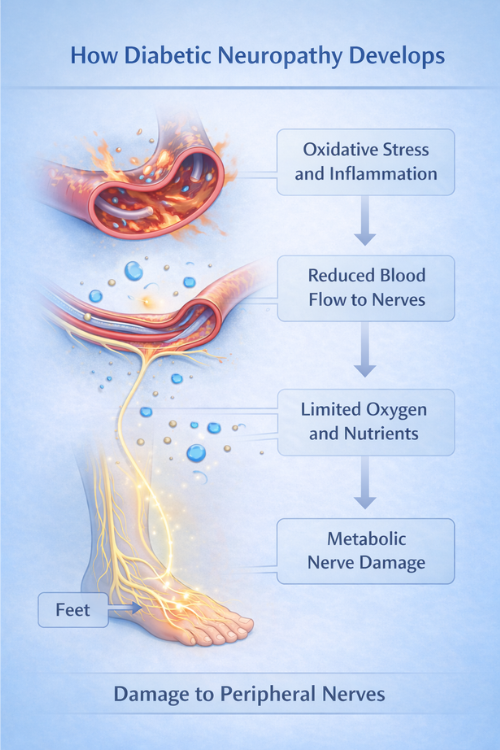
Diabetic neuropathy often develops gradually as metabolic changes influence nerve health. In many cases, long-term fluctuations in blood glucose may affect the small blood vessels that support nerve tissues.
As a result, nerves may receive less oxygen and fewer nutrients. Consequently, nerve signaling may gradually become less efficient over time.
Over time, repeated metabolic stress may influence how nerves communicate with muscles and sensory receptors. As a result, communication between nerve pathways and body tissues may gradually become less reliable. Because of these changes, signals between the brain and affected body areas may therefore become less reliable over time. Your Attractive Heading
Common Symptoms Associated With Diabetic Neuropathy
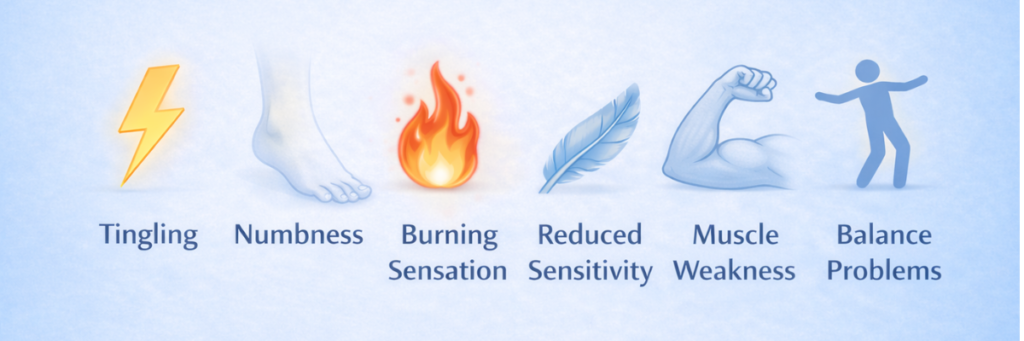
Symptoms of diabetic neuropathy often begin in the feet. For example, tingling or numbness may first appear in the toes or soles. In addition, some individuals may notice burning sensations or reduced sensitivity to temperature. As a result, these sensory changes may gradually become more noticeable during daily activities. Consequently, early patterns in nerve sensation may become easier to observe over time.
As nerve function gradually changes, balance and coordination may also be affected. Consequently, some individuals may notice subtle differences in walking patterns or muscle control. Consequently, people may begin to notice subtle changes in walking patterns or muscle control over time. Meanwhile, sensory changes in the feet may continue to develop gradually. Your Attractive Heading
Therefore, recognizing early changes in sensation or movement may help people better understand how nerve communication evolves over time. Ultimately, this awareness may support better observation of nerve health patterns.
Possible Causes of Diabetic Neuropathy
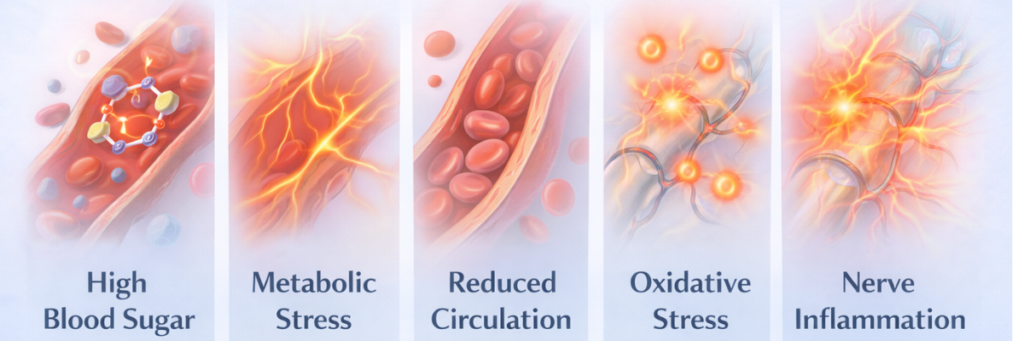
Several biological factors may contribute to diabetic neuropathy. For instance, long-term metabolic stress may influence the small blood vessels that supply nutrients to nerve tissues. As a result, nerve cells may gradually receive less oxygen and fewer essential nutrients. Consequently, nerve signaling efficiency may slowly decline over time.
In addition, inflammation or oxidative stress may also affect the environment surrounding nerve fibers. Because of these influences, nerve signaling may gradually change. Consequently, communication between nerves and surrounding tissues may become less consistent.
Therefore, understanding the broader causes of nerve dysfunction may help explain how diabetic neuropathy develops over time.
How Diabetic Neuropathy Is Evaluated
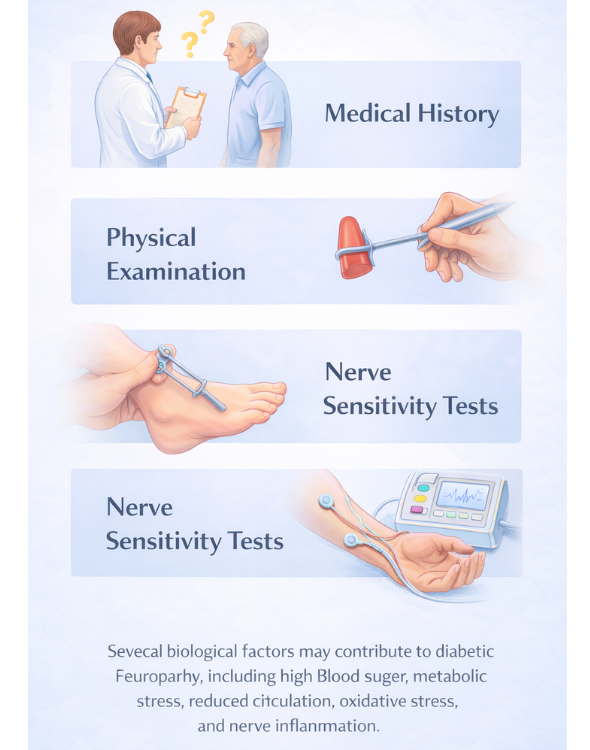
Healthcare professionals may evaluate diabetic neuropathy by reviewing symptoms and medical history. In addition, a physical examination may help identify areas where nerve function has changed. Furthermore, diagnostic testing may provide additional insight into how nerve signals travel through the body.
During evaluation, doctors may also examine reflexes, muscle strength, and sensitivity to touch or temperature. Diagnostic tests may also help measure how efficiently nerve signals travel through the body. In this way, healthcare professionals can better observe how nerve communication may be changing.As a result, healthcare professionals can better understand how nerve communication may be changing. In this way, patterns of nerve dysfunction may become easier to identify.
Supporting a Healthy Nerve Environment
The nervous system constantly adapts to internal conditions within the body. Therefore, maintaining supportive daily habits may influence the environment surrounding nerve pathways. Therefore, maintaining supportive daily habits may influence the environment around nerve pathways. For this reason, maintaining supportive daily habits may influence the environment around nerve pathways.
Healthy movement patterns, balanced nutrition, and supportive lifestyle habits may help maintain overall nerve function. Furthermore, consistent daily habits may support a stable internal environment for nerve communication. In addition, consistent daily habits may contribute to a more stable internal environment for nerve communication. Meanwhile, maintaining metabolic balance may support a more stable environment for nerve communication throughout the body. In addition, reducing repetitive stress and supporting metabolic balance may contribute to a healthier nerve environment. In addition, reducing repetitive stress and supporting metabolic balance may help maintain a healthier internal environment for nerve communication.


Continue Learning About Nerve Health
Safety & Education Notice
This page explains symptoms of nerve dysfunction for educational purposes only. It does not provide medical diagnosis, treatment, or personalized medical advice.
If symptoms are severe, progressive, or unexplained, consult a licensed healthcare professional.