Understanding the Nervous System
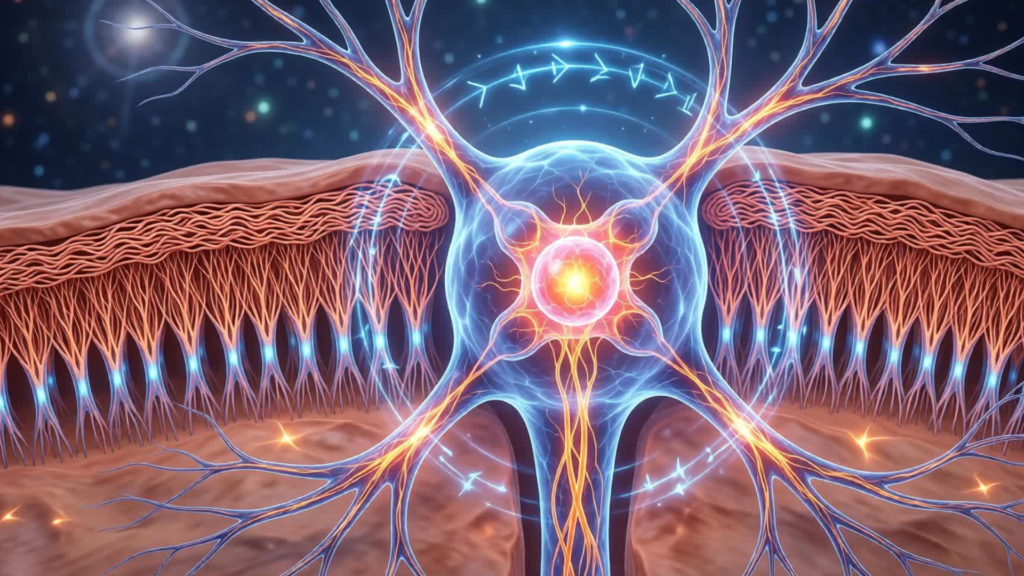
In this Understanding the Nervous System module, we explore how the body’s primary communication network transmits signals between the brain, spinal cord, and peripheral nerves, coordinating sensation, movement, and internal regulation.
The nervous system functions as an integrated signaling infrastructure. Additionally, it continuously gathers information from both the external environment and internal body systems, processes that information, and generates appropriate responses to maintain functional stability. As a result, the body can regulate internal balance while adapting to external demands.
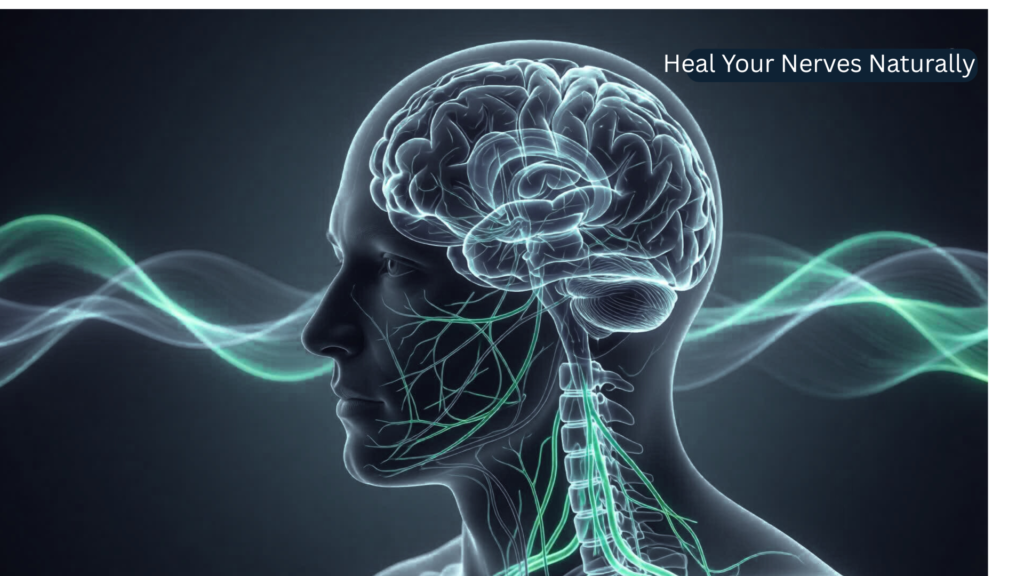
This module introduces the foundational biology of nerve function, helping you understand signal transmission pathways, the development of nerve sensitivity, and the influence of systemic stress on nerve behavior over time. Importantly, this foundation prepares learners for deeper exploration of recovery and protection systems.
Rather than focusing on symptoms alone, this education layer builds structural awareness — explaining how nerve pathways operate, adapt, and respond to environmental and internal factors. In doing so, it shifts attention toward system-level understanding rather than symptom-level interpretation.
Through this foundational perspective, learners gain clarity on how nerve health is maintained and which biological conditions support long-term stability and recovery readiness. Consequently, this knowledge establishes the groundwork for all subsequent learning modules.
Structural Organization in Understanding the Nervous System
To understand nerve function, it is essential to recognize how the nervous system is structurally organized. Broadly speaking, the system is divided into two primary components:
Central Nervous System Structure
This includes the brain and spinal cord. It acts as the command center, processing incoming signals and coordinating outgoing responses. In essence, it directs how the body interprets and reacts to information.
Peripheral Nervous System Network
This includes all nerves extending from the brain and spinal cord into the body. These nerves carry sensory input to the CNS and deliver motor instructions back to muscles and organs. In turn, this enables continuous communication between central processing and physical response.
Together, these two divisions create a continuous communication loop that allows the body to perceive, respond, and regulate itself in real time.
Communication Pathways in Understanding the Nervous System
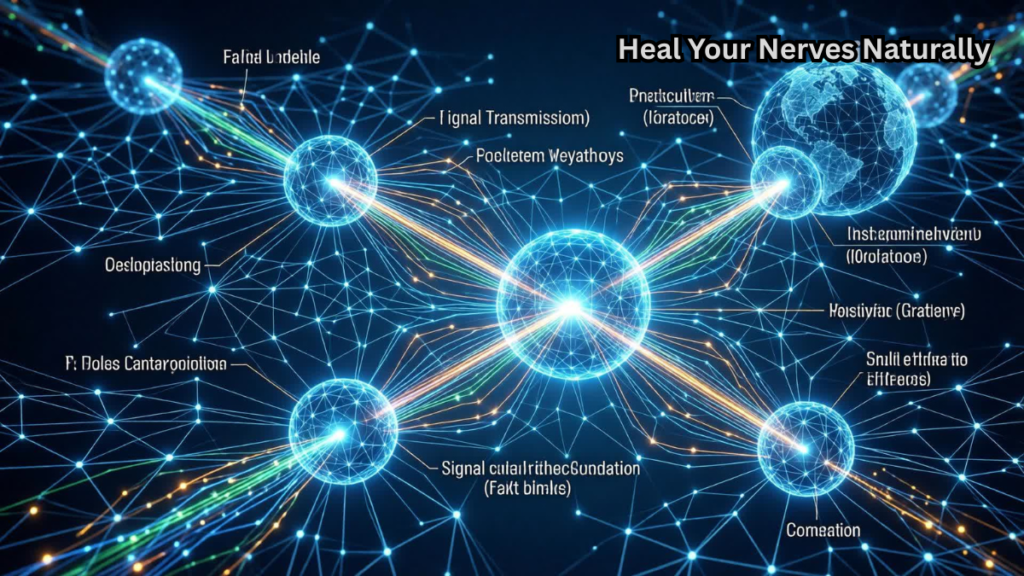
Nerve communication relies on electrochemical signaling. Initially, signals begin as electrical impulses traveling along nerve fibers. When these impulses reach nerve endings, they trigger chemical messengers called neurotransmitters, transmitting signals across synaptic gaps to adjacent cells.
Subsequently, these signals continue across neural networks, enabling complex communication pathways. As a result, information can travel rapidly across interconnected neural systems.
For example:
- Sensory nerves detect temperature, pressure, and pain
- Motor nerves control muscle movement
- Autonomic nerves regulate heart rate, digestion, and breathing
Therefore, nerve signaling is not isolated — it integrates physical sensation, voluntary movement, and automatic internal regulation.
Sensory and Motor Function in Understanding the Nervous System
The nervous system balances two major functional streams. Specifically, these include sensory input and motor output coordination.
Sensory Signal Processing
Carries information from the body to the brain. For instance, sensory receptors detect environmental changes and transmit that data centrally.
Motor Response Coordination
Carries instructions from the brain to the body. Accordingly, muscles and organs respond based on processed neural signals.
These two pathways operate simultaneously. As a result, the body can detect environmental changes and respond instantly.
Consequently, touching a hot surface triggers sensory detection, spinal processing, and motor withdrawal — often before conscious awareness occurs.
This rapid coordination demonstrates how efficiently neural communication protects and stabilizes the body.
Signal Sensitivity and Adaptive Response in Understanding the Nervous System
Nerve sensitivity is not fixed. Instead, it evolves based on biological and environmental conditions.
Repeated stimulation, inflammation, metabolic stress, or prolonged tension can influence how nerves respond to signals. Over time, this may lead to heightened sensitivity or altered signal interpretation.
However, adaptation can also occur in supportive directions.
Under stable conditions — such as adequate oxygenation, balanced nutrition, and reduced systemic stress — nerve signaling stability may improve. In contrast, unstable biological environments may increase signal reactivity.
Thus, nerve behavior reflects both structural design and environmental influence.
Biological Conditions Supporting Stability in Understanding the Nervous System
Importantly, several internal factors influence how effectively nerves function:
- Oxygen delivery to neural tissues
- Nutrient availability for signal metabolism
- Inflammatory load within surrounding tissues
- Hormonal balance and stress chemistry regulation
- Circulatory efficiency
When these biological conditions remain stable, nerve communication tends to operate more efficiently and consistently. As a result, signaling reliability improves.
Ultimately, this reinforces the importance of systemic balance in maintaining long-term neural health.
What You Will Learn in Understanding the Nervous System
Importantly, several internal factors influence how effectively nerves function:
- Oxygen delivery to neural tissues
- Nutrient availability for signal metabolism
- Inflammatory load within surrounding tissues
- Hormonal balance and stress chemistry regulation
- Circulatory efficiency
When these biological conditions remain stable, nerve communication tends to operate more efficiently and consistently. As a result, signaling reliability improves.
Ultimately, this reinforces the importance of systemic balance in maintaining long-term neural health.
Connected Education Systems
- Neurobiology Foundations
- Signal Transmission Systems
- Nerve Sensitivity Mechanisms
- Stress Response Pathways