Understanding Why Pain Can Travel From the Lower Back to the Leg
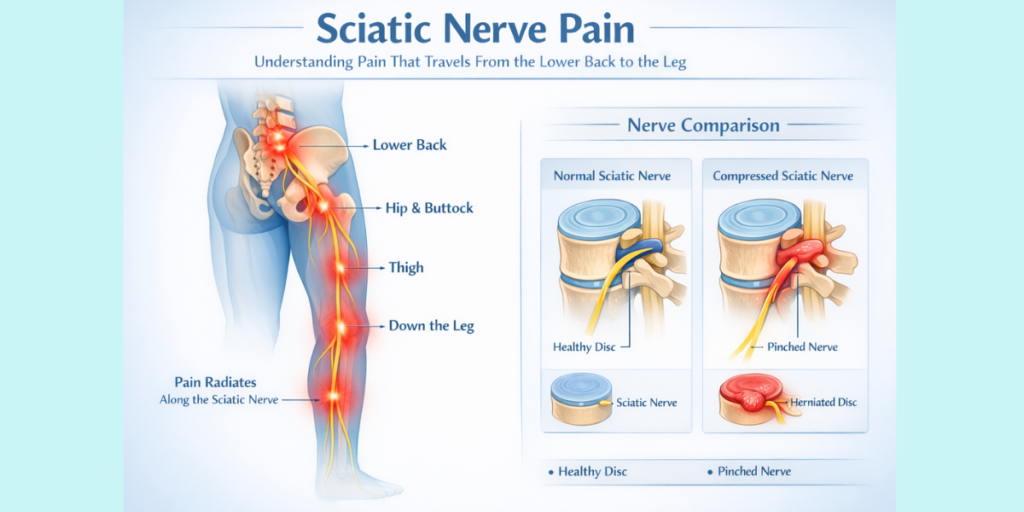
Sciatic nerve pain develops when irritation or pressure affects the sciatic nerve, which is the largest nerve in the body. As a result, pain may travel from the lower back through the hips and down the leg.
In many cases, sciatic nerve pain is associated with nerve compression, inflammation, or structural changes around the spine. Therefore, understanding how sciatic nerve pain develops can help people better recognize symptoms and understand how the nervous system responds to pressure along nerve pathways.
What Is Sciatic Nerve Pain?
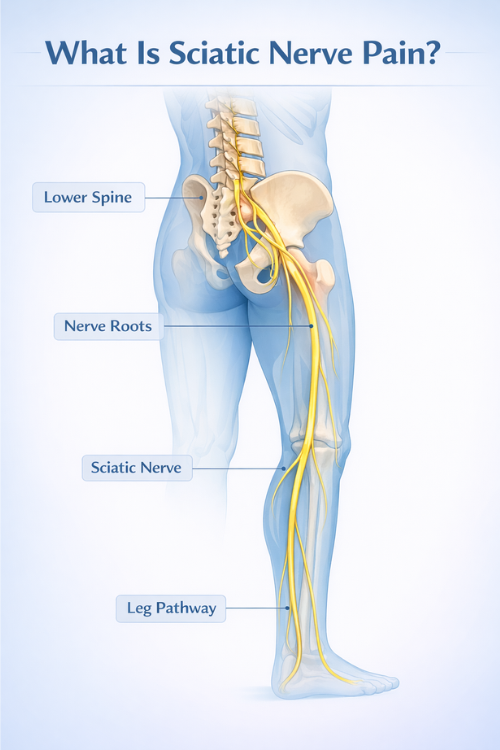
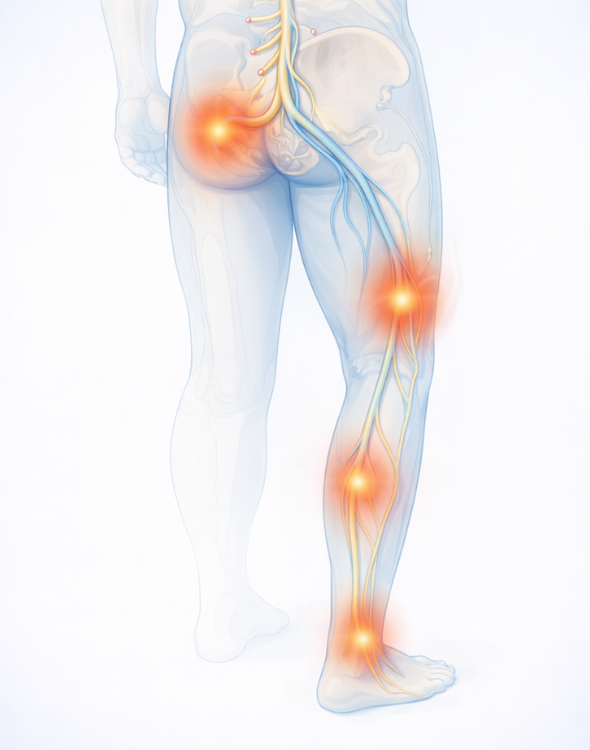
Sciatic nerve pain refers to discomfort or irritation that develops along the pathway of the sciatic nerve. Specifically, the sciatic nerve begins in the lower spine and travels through the hips, buttocks, and down each leg.
Because this nerve carries signals between the spine and the lower body, pressure or irritation along the pathway may influence how nerve signals travel. As a result, people may experience pain, tingling, numbness, or weakness in the leg. In addition, these sensations may change depending on posture or movement.
In many situations, sciatic nerve pain develops gradually. For example, structural changes in the spine, muscle tension, or nerve compression may narrow the spaces where nerves travel. Consequently, pressure around the nerve may affect how signals move through the nervous system.
How Sciatic Nerve Pain Develops
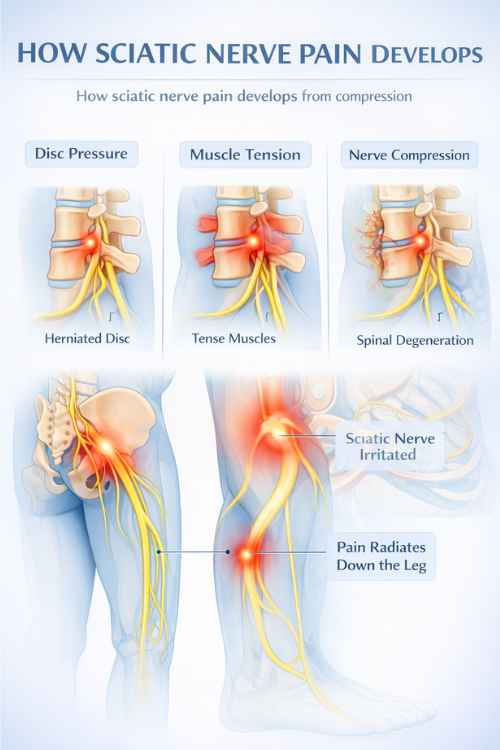
Sciatic nerve pain often develops when surrounding tissues place pressure on the sciatic nerve. In many cases, this pressure occurs near the lower spine where the nerve roots exit the spinal column.
For example, spinal disc pressure, joint inflammation, or muscle tension may reduce the space available for nerves. As a result, the sciatic nerve may become irritated or compressed.
Over time, repeated pressure may influence how efficiently nerve signals travel through the nervous system. Consequently, communication between the brain and the lower body may change. Therefore, symptoms may appear gradually as the nerve pathway becomes more irritated. Because of this change, pain or unusual sensations may travel along the nerve pathway.
Common Symptoms Associated With Sciatic Nerve Pain
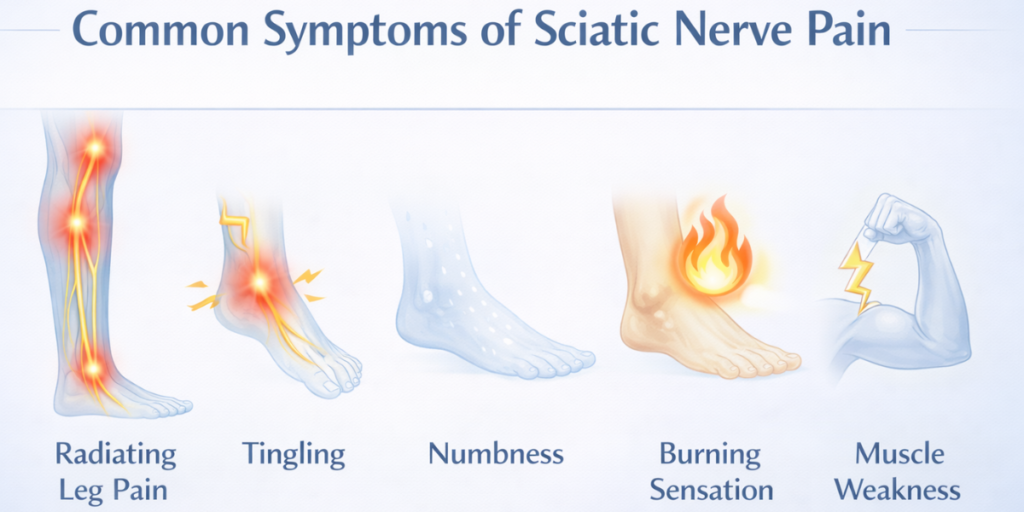
Many symptoms of sciatic nerve pain overlap with those of nerve dysfunction. Therefore, recognizing the overall pattern of symptoms can help people better understand how nerve irritation develops. For this reason, recognizing the overall pattern of symptoms can help people better understand how nerve irritation develops. For example, tingling or numbness may appear in the leg or foot. In addition, some individuals notice burning sensations or muscle weakness along the nerve pathway. As a result, movement or posture may sometimes influence how symptoms appear.
Possible Causes of Sciatic Nerve Pain
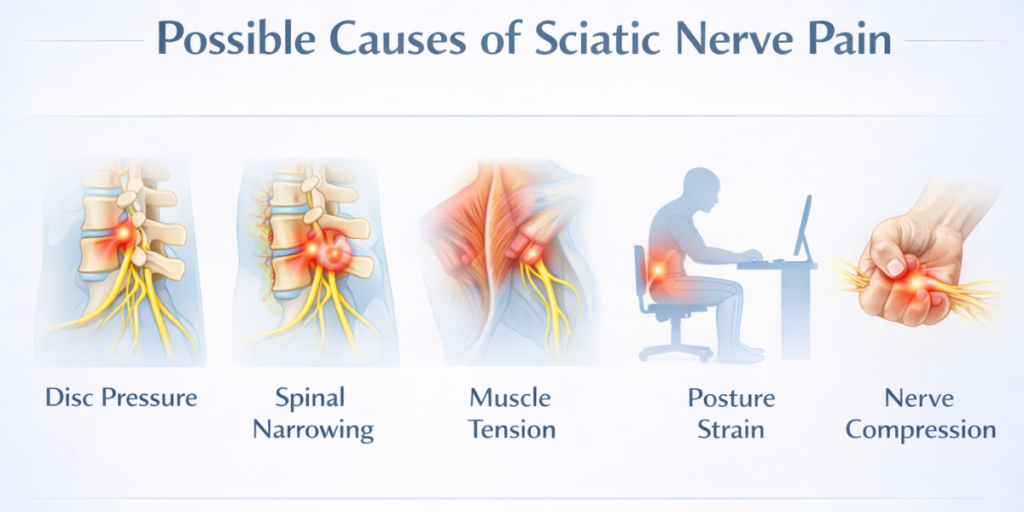
Several factors may contribute to sciatic nerve pain. In many cases, these factors develop gradually as pressure builds around nerve pathways. As a result, the surrounding nerve environment may slowly become more sensitive to irritation. For instance, spinal disc pressure or structural narrowing may influence how much space surrounds nerve pathways. In addition, muscle tension or posture patterns may place pressure on the sciatic nerve. Therefore, understanding the broader causes of nerve pain can help explain how sciatic nerve irritation develops over time.
Furthermore, understanding how different factors interact may help explain why sciatic nerve pain develops differently in each person.
How Sciatic Nerve Pain Is Evaluated
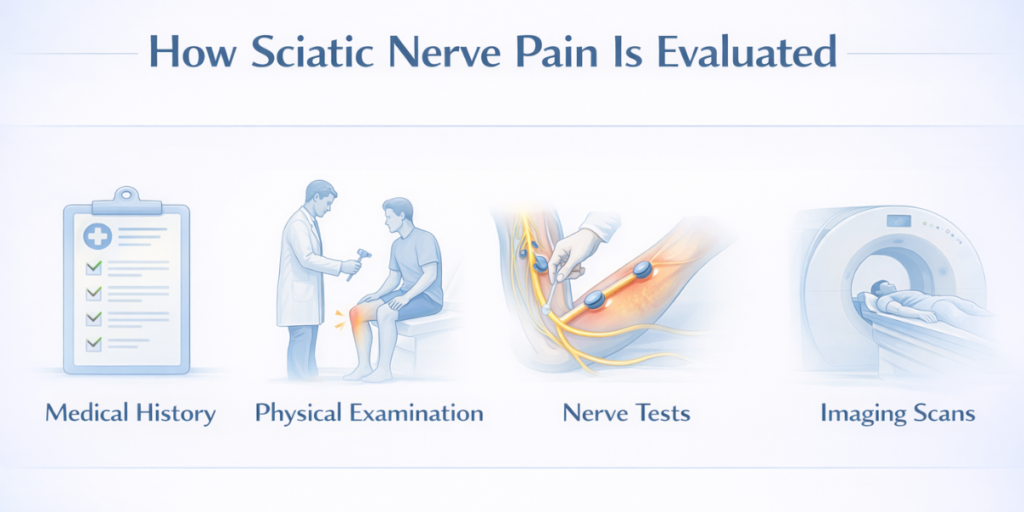
Healthcare professionals often evaluate sciatic nerve pain by reviewing symptoms and medical history. In addition, physical examination and diagnostic tests may help confirm where nerve pressure occurs. In addition, a physical examination may help identify areas where nerve function is affected.
For example, doctors may examine reflexes, muscle strength, and nerve sensitivity. Furthermore, diagnostic imaging or nerve tests may also help identify where nerve pressure occurs.
Supporting a Healthy Nerve Environment
The nervous system has the ability to adapt and respond to different conditions within the body. Therefore, maintaining supportive daily habits may help create a healthier environment for nerve communication. Therefore, maintaining supportive daily habits may influence the environment around nerve pathways.
For example, healthy movement patterns, posture awareness, and balanced lifestyle habits may support overall nervous system function. In addition, reducing repetitive strain may help maintain a healthier environment for nerve communication.
Related Conditions That May Affect the Sciatic Nerve
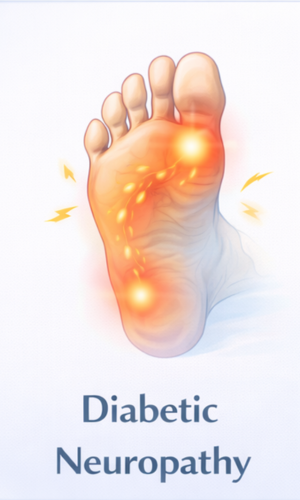
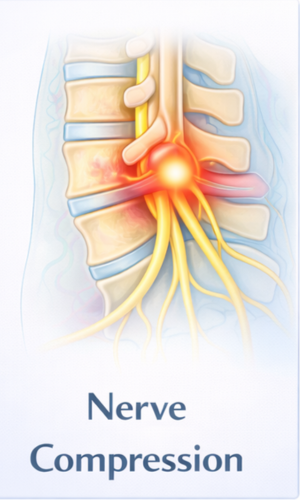
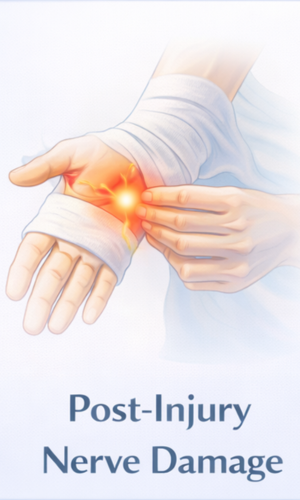
Sciatic nerve pain does not always occur in isolation. In many situations, other nerve conditions may also influence how symptoms develop. As a result, several related nerve conditions may affect how sciatic pain develops, how it is experienced, and how the nervous system responds to irritation.
Conditions such as nerve compression near the spine, diabetic neuropathy affecting peripheral nerves, or nerve damage following physical injury may contribute to nerve dysfunction. Understanding these related conditions can help provide a clearer picture of how nerve pain patterns may develop throughout the body.