Start Healing

Start Learning the Core Topics That Shape Nervous System Health
Use this hub to explore the core topics that influence nervous system health in a calm, structured way. Each section introduces a foundational area—from symptoms and causes to diagnosis and long-term nervous system understanding—helping you understand how these factors interact within broader biological systems. This is educational guidance designed to build clarity and trust, not medical advice or treatment direction.Consequently, this broader view helps place individual symptoms within a systems-based context.
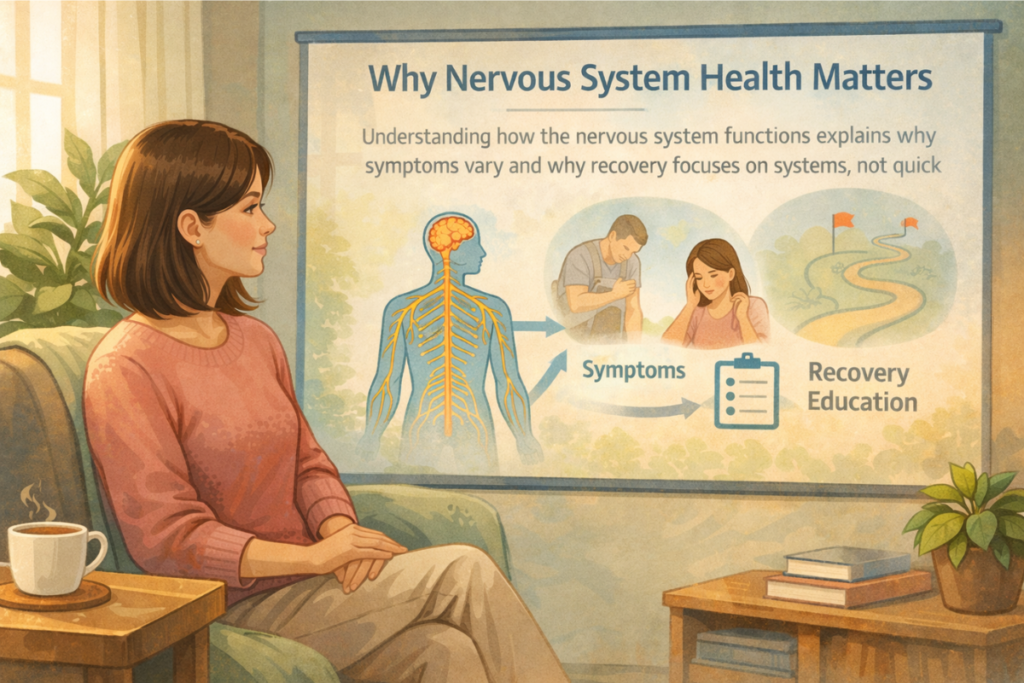
Why Nervous System Health Matters
Nervous system health plays a central role in how the body processes signals, adapts to stress, and maintains internal balance. For this reason, disruptions can influence multiple body systems over time. When the nervous system is under strain, people may experience a wide range of symptoms that are often difficult to interpret without context.
For beginners, therefore, understanding this area provides clarity. It explains why symptoms can appear in different forms and why causes may vary from person to person. In addition, system-based learning encourages a broader perspective rather than focusing on quick fixes.
As a result, this foundational awareness creates a safer starting point. It reduces confusion, builds trust, and guides readers toward structured learning pathways instead of scattered information.
Understanding Nervous System Health
A single symptom or condition does not define nervous system health. Instead, it reflects the overall functional stability of the body’s communication network — influencing how signals are transmitted, processed, and regulated over time. Consequently, understanding these core biological mechanisms helps clarify how nerve function is maintained and which factors may influence long-term system balance.
Signal Communication & Nerve Function
The nervous system operates through electrical and chemical signaling pathways that allow the brain and body to communicate continuously. These signals regulate movement, sensation, reflexes, and internal organ function.
When communication pathways function efficiently, coordination and sensory processing remain stable. However, disruptions in signaling may alter this balance. In particular, stress, inflammation, or physical strain may influence how messages are transmitted and, as a result, contribute to functional imbalance.

Inflammation & Neural Environment
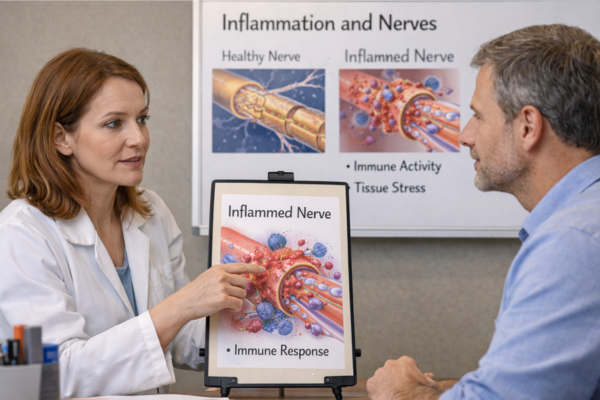
The biological environment surrounding nerves plays a significant role in functional stability. Inflammatory signaling, immune activity, and tissue stress can influence how nerves interact with surrounding structures.
While inflammation is part of the body’s protective response, persistent inflammatory states may affect nerve sensitivity and comfort. Therefore, maintaining internal biological balance is widely discussed within nervous system health research frameworks.
Repair Cycles & Biological Recovery
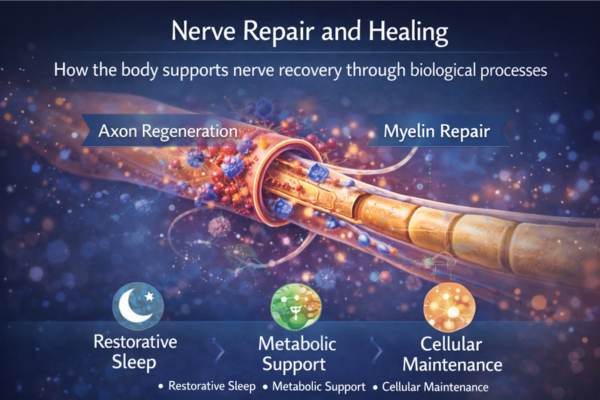
Nervous system health is influenced by the body’s natural repair and maintenance cycles. Cellular restoration, myelin maintenance, and metabolic support processes contribute to long-term neural function. In addition, these mechanisms operate within broader biological systems rather than in isolation.
Although repair processes function continuously, they are affected by sleep cycles, metabolic stability, and overall physiological load. Therefore, understanding these influences helps frame nerve health within a systems-based perspective.
Factors That Influence Nervous System Health
Nervous system health develops within the body’s broader biological environment. Rather than being shaped by a single factor, neural function reflects multiple interacting systems — including stress signaling, nutrition, sleep patterns, and physical load. For example, prolonged stress may influence autonomic balance, while insufficient sleep may alter restoration cycles. In contrast, focusing on a single factor may overlook how these domains interact over time.
As a result, examining these domains together provides a clearer educational foundation for long-term stability.
Stress Signaling and Nervous System Health
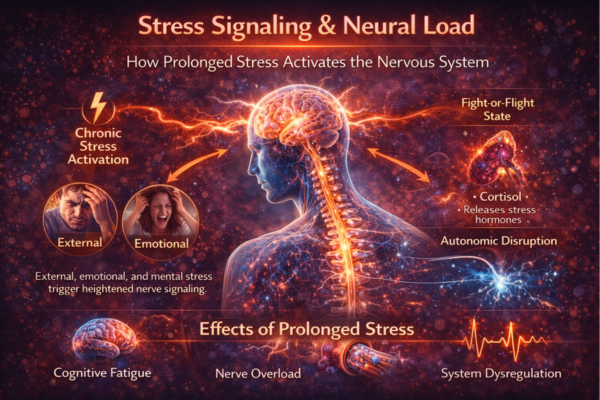
The nervous system continuously interprets and responds to internal and external stress signals. Short-term activation is part of normal survival physiology. However, prolonged stress signaling may place sustained demand on neural communication pathways. As a result, sustained activation can influence overall system balance.
Over time, this heightened activation state can influence autonomic balance, recovery signaling, and overall system regulation — making stress load an important educational factor in nervous system health discussions.
Nutritional Support and Nervous System Health
Nerve tissue depends on a steady supply of micronutrients, fatty acids, and metabolic substrates to maintain signaling efficiency and structural integrity. In addition, nutritional imbalances may influence neurotransmitter activity, myelin maintenance, and cellular repair cycles. Therefore, within nerve health education, nutrition is viewed as part of the broader biological environment supporting neural stability rather than as a standalone solution.
maintenance, and cellular repair cycles. Within nerve health education, nutrition is therefore viewed as part of the biological environment supporting neural stability — rather than as a standalone solution.

Sleep and Nervous System Health Stability
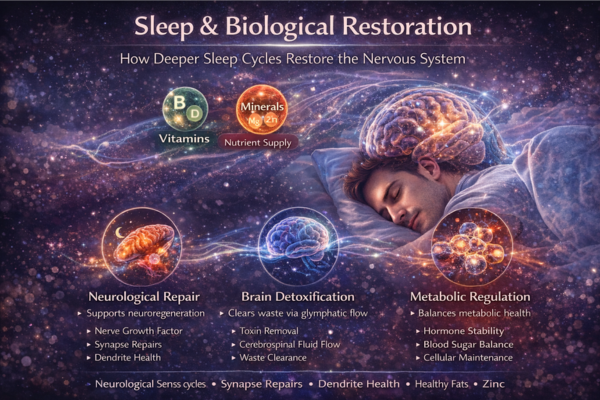
Sleep represents one of the body’s primary restoration windows. During deeper sleep cycles, neurological repair processes, glymphatic clearance, and metabolic regulation mechanisms become more active. In contrast, when sleep patterns are disrupted, these restorative cycles may become less efficient. As a result, neural regulation and system equilibrium may be influenced over time. Meanwhile, consistent sleep patterns support more stable regulatory rhythms.
Physical Load & Structural Influence
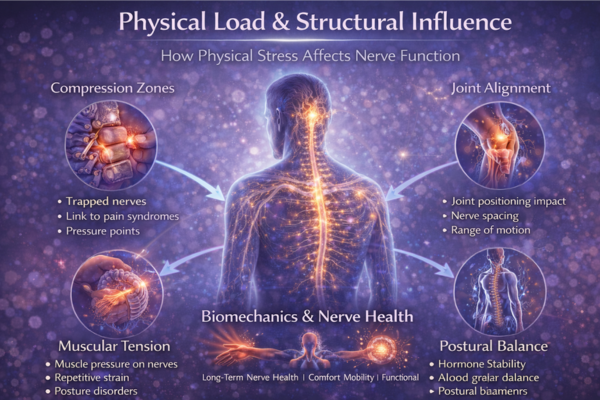
Mechanical strain, posture patterns, and repetitive physical stress can influence how nerves interact with surrounding tissues. Therefore, structural context becomes important when interpreting localized discomfort.
Compression zones, muscular tension, and joint mechanics may affect neural pathways locally. Understanding structural load helps frame nerve health within a biomechanical context — particularly when discussing long-term functional comfort and mobility.
Early Signs That Influence Nervous System Health
Before structural dysfunction develops, the nervous system often expresses subtle functional signals. In many cases, these early indicators are not diagnostic labels but communication cues reflecting shifts in neural regulation, signaling efficiency, or systemic load. Therefore, understanding these signals from an educational perspective can help individuals interpret changes more calmly and accurately over time.
Sensory Processing Changes
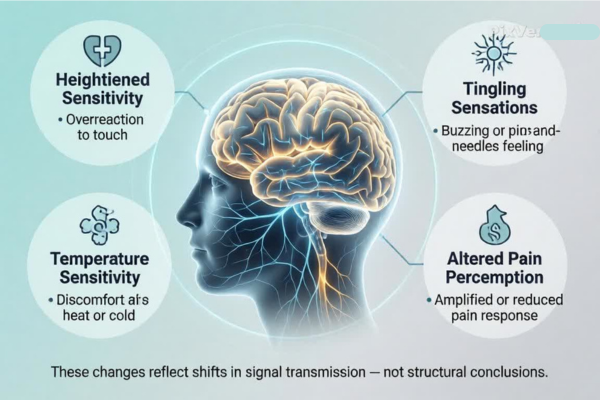
The nervous system signaling influences how sensory information is received and interpreted. When neural pathways are under strain, individuals may notice shifts in sensory perception.
Examples may include:
- Heightened sensitivity to touch
- Tingling or buzzing sensations
- Temperature sensitivity
- Altered pain perception
Therefore, these experiences reflect changes in signal transmission rather than structural conclusions.
Autonomic Pattern Shifts
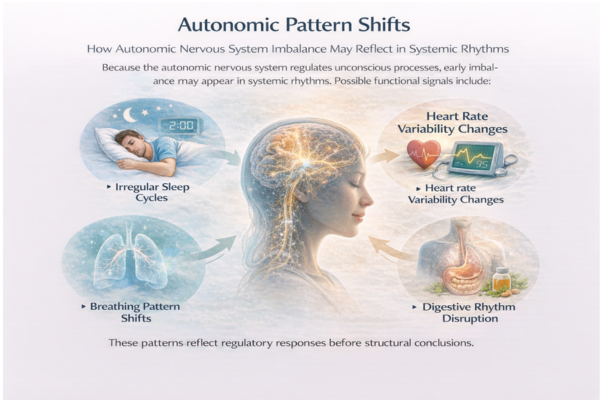
Because the autonomic nervous system regulates unconscious processes, early imbalance may appear in systemic rhythms. For this reason, shifts in sleep, digestion, or heart rate patterns may reflect broader regulatory changes.
Possible functional signals include:
- Irregular sleep cycles
- Heart rate variability changes
- Digestive rhythm disruption
- Breathing pattern shifts
Accordingly, these patterns reflect regulation changes rather than isolated organ dysfunction.
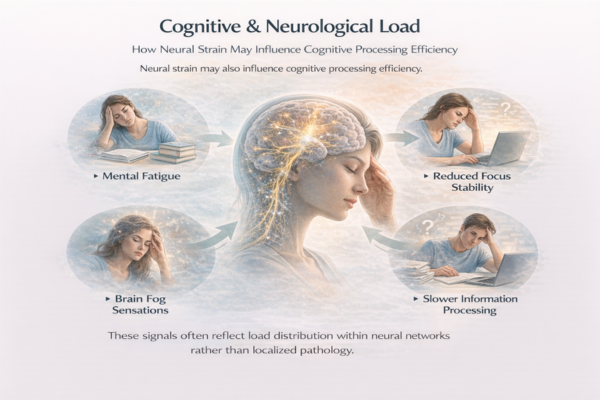
Cognitive & Neurological Load
Neural strain may also influence cognitive processing efficiency. In practice, this may present as reduced focus, mental fatigue, or slower information processing.
Educational examples include:
- Mental fatigue
- Reduced focus stability
- Brain fog sensations
- Slower information processing
Consequently, these signals often reflect load distribution within neural networks rather than localized pathology.
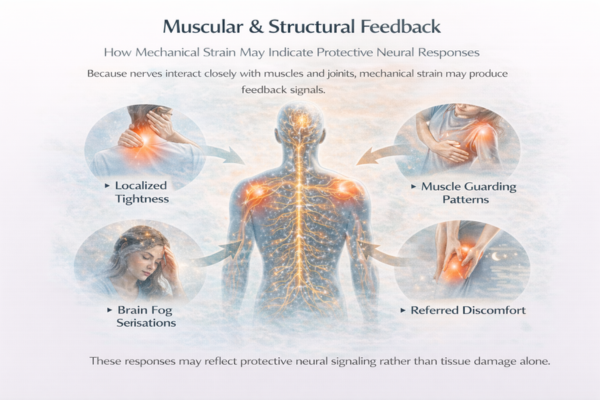
Muscular & Structural Feedback
Because nerves interact closely with muscles and joints, mechanical strain may produce feedback signals.
Examples include:
- Localized tightness
- Muscle guarding patterns
- Referred discomfort
- Mobility hesitation
Therefore, these responses may reflect protective neural signaling rather than tissue damage alone.
When Nervous System Health Requires Evaluation
While many nervous system signals may reflect functional strain or systemic load, certain patterns warrant deeper Moreover, clinical evaluation. Understanding when to move from education into professional assessment helps ensure safety, clarity, and appropriate care pathways. This section does not diagnose conditions — but rather outlines situations where medical insight may be beneficial.
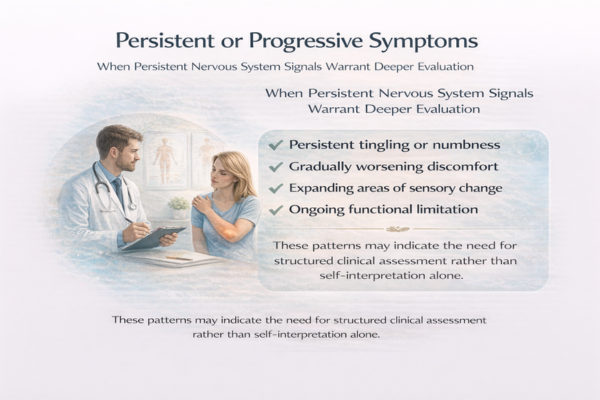
Persistent or Progressive Symptoms
If nervous system–related signals continue over extended periods or gradually intensify, deeper evaluation may help clarify underlying contributors.
Examples include:
- Persistent tingling or numbness
- Gradually worsening discomfort
- Expanding areas of sensory change
- Ongoing functional limitation
Therefore, these patterns may indicate the need for structured clinical assessment rather than self-interpretation alone.
Sudden or Acute Neurological Changes
Sudden neurological changes warrant immediate medical attention and should not be approached through self-education alone.
Educational awareness examples include:
- Sudden limb weakness
- Loss of coordination
- Speech or vision disturbances
- Abrupt sensory loss
Accordingly, these signals require timely professional evaluation to rule out acute neurological events.

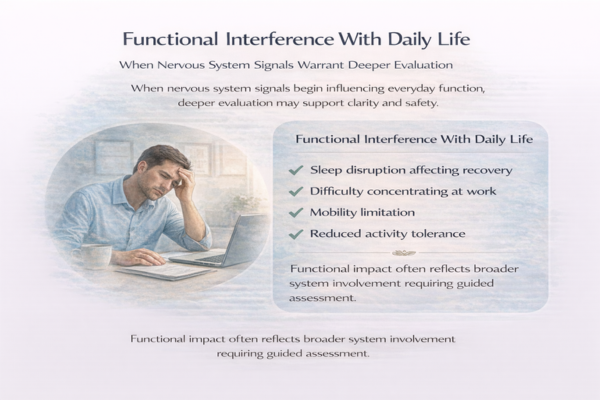
Functional Interference With Daily Life
When nervous system signals begin influencing everyday function, deeper evaluation may support clarity and safety. For example, sleep disruption may affect system regulation, while reduced concentration may influence daily performance. As a result,Consequently, functional impact often reflects broader system involvement requiring guided assessment.
Examples include:
- Consequently, sleep disruption may affect system regulation.
- Difficulty concentrating at work
- Mobility limitation
- Reduced activity tolerance
Functional impact often reflects broader system involvement requiring guided assessment.
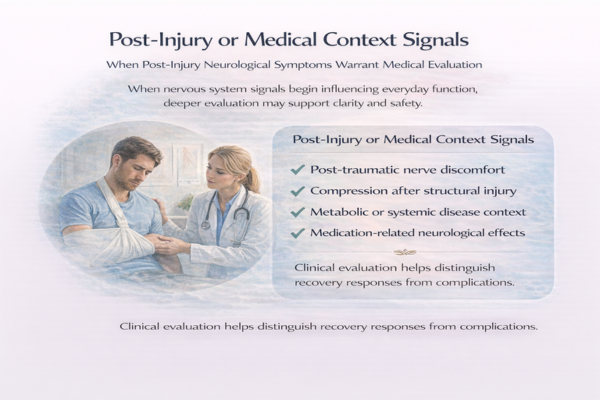
Post-Injury or Medical Context Signals
Neurological symptoms appearing after injury, surgery, or systemic illness may warrant professional review.
Educational contexts include:
- Post-traumatic nerve discomfort
- Compression after structural injury
- Metabolic or systemic disease context
- Medication-related neurological effects
Accordingly, professional assessment supports safer interpretation of neurological changes.
Importantly, seeking evaluation does not imply severe pathology.
Instead, it reflects a proactive approach to understanding nervous system signals within a safe, informed framework.
Therefore, education and clinical care operate best when integrated rather than separated.
Explore Structured Pathways to Deeper Understanding
Understanding nervous system health is an ongoing learning process. After recognizing foundational concepts and early signals, many individuals seek deeper clarity — whether to understand root causes, explore functional health education, or build long-term system resilience. In this way, the pathways below provide structured directions for continued learning within a calm, education-first framework.
Moving Forward With Clarity and Confidence
Understanding nervous system health does not require urgency — it requires clarity. The body’s communication systems are dynamic and responsive, influenced by multiple biological and environmental factors over time. Learning how these systems interact helps replace uncertainty with structured understanding.
Education Before Assumption
Early signals and functional shifts do not automatically indicate severe pathology. In many cases, they reflect adaptive responses within complex regulatory systems. For this reason, approaching nervous system health from an educational perspective helps reduce unnecessary fear while supporting informed awareness.
Approaching nervous system health from an educational perspective helps reduce unnecessary fear while supporting informed awareness.
Stability Develops Gradually
Nervous system regulation and resilience are not built overnight. Stability develops over time within balanced physiological environments. As a result, small improvements in understanding can support better decisions. and informed understanding.
Accordingly, small improvements in understanding often lead to better long-term decision-making.
Integration of Knowledge
Biology, stress physiology, metabolic stability, and structural influences do not operate in isolation. Instead, they interact continuously and influence one another over time.
Therefore, the purpose of this platform is to organize these interactions into a coherent framework — making complex topics accessible without oversimplification.
Your Next Step
When you feel ready to continue, therefore, begin with the direction that matches your current level of understanding.
You may choose to:
- Explore foundational concepts
- Learn about specific conditions
- Understand symptom patterns
- Follow a structured learning pathway
Ultimately, there is no single starting point — only the one that aligns with your current perspective.
This platform provides structured educational insight and does not offer medical diagnosis, treatment, or personalized health directives. Instead, it supports informed awareness through structured understanding.
Nervous system health is best understood within the broader context of how biological systems interact and adapt over time. Therefore, individual symptoms do not tell the full story. Instead, structured education builds perspective; consequently, perspective supports steady, informed decisions.