
Chronic Pain Syndromes: Types, Mechanisms, and How Chronic Pain Is Classified
Educational Health Guide · Evidence-Informed · Updated August 2026
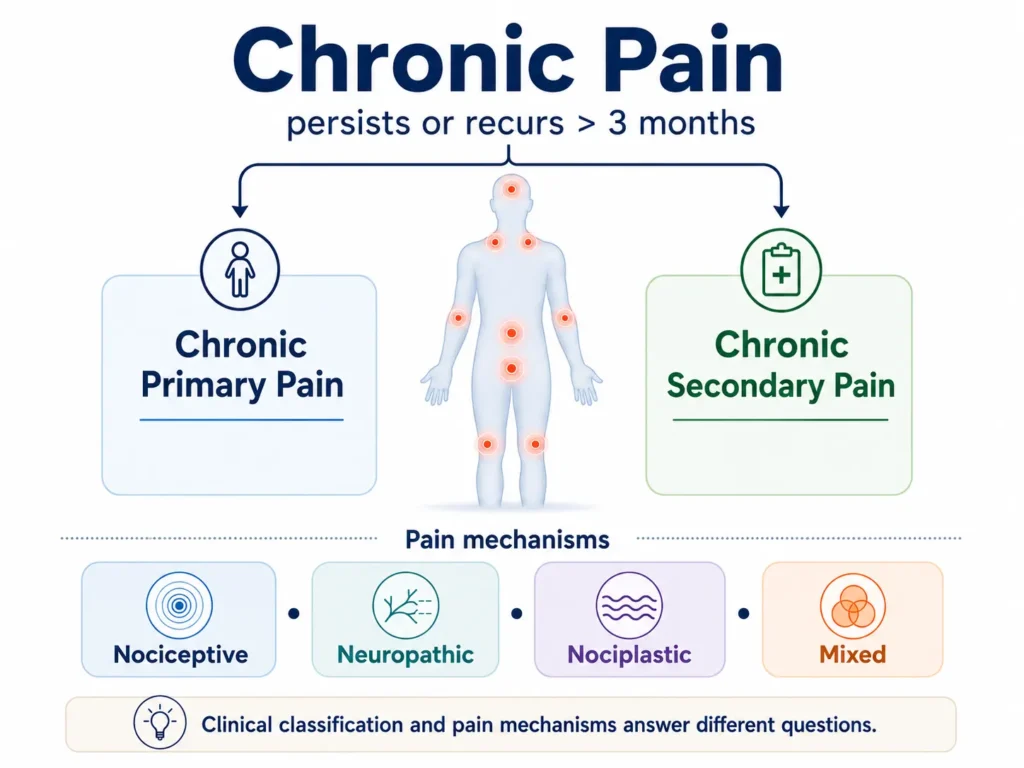
Chronic pain is pain that persists or recurs for longer than three months. But chronic pain is not one single disease, and it is not explained by one single biological mechanism. Modern clinical classification separates chronic pain into chronic primary pain and several forms of chronic secondary pain, while pain science also uses mechanism-based terms such as nociceptive, neuropathic, and nociplastic pain.
Those two systems answer different questions.
A clinical diagnosis or chronic pain category helps describe what condition is being classified. A pain-mechanism term helps describe what biological process may be contributing to the pain experience. A person may also have more than one pain mechanism or more than one chronic pain category at the same time.
This guide explains those distinctions, where chronic nerve pain fits, why pain can become persistent, how chronic pain is evaluated, and why treatment depends on the individual condition rather than on a single universal chronic-pain formula.
Important: This page is educational and is not a diagnostic tool. Persistent, worsening, unexplained, or function-limiting pain deserves appropriate clinical evaluation.
What Is Chronic Pain?
Pain may be acute or chronic.
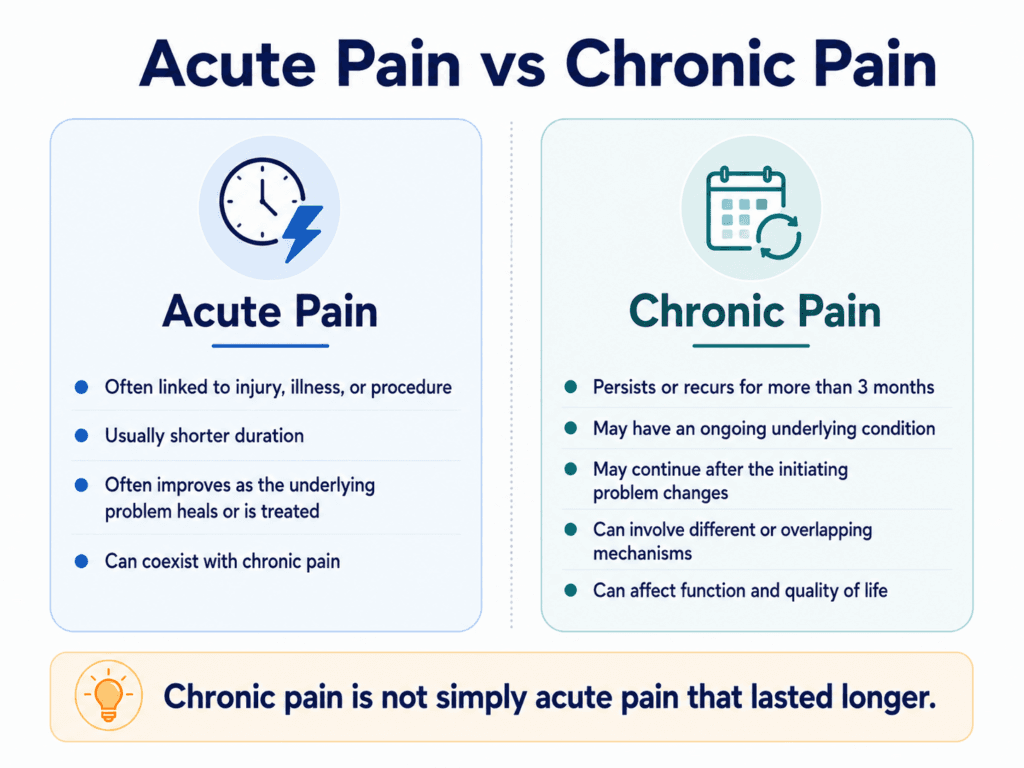
Acute pain usually begins in connection with an injury, illness, procedure, or other identifiable event and often improves as the underlying problem heals or is treated.
Chronic pain persists or recurs for longer than three months. It can continue because an underlying condition remains active, because multiple contributors continue to influence the pain experience, or sometimes even when the original initiating problem has changed or resolved.
Chronic pain can affect much more than pain intensity. Depending on the person and condition, it may affect:
- movement and physical activity,
- sleep,
- work or education,
- mood,
- relationships,
- participation in social roles,
- concentration,
- confidence in movement,
- and overall quality of life.
Pain itself is a sensory and emotional experience, and it is highly individual. Two people with similar injuries or diagnoses may not experience pain in exactly the same way.
This does not mean pain is imaginary or “just psychological.” Biological, psychological, and social factors can all influence pain and disability without making the experience any less real.
What Is a Chronic Pain Syndrome?
The phrase chronic pain syndromes is best understood as an umbrella concept covering multiple chronic pain diagnoses and clinical categories rather than as one universal disease.
Modern ICD-11 chronic pain classification recognizes a structured set of chronic pain categories. Some cases are classified as chronic primary pain, in which chronic pain itself becomes the predominant clinical problem and is not better accounted for by another chronic pain condition. Other cases are classified as chronic secondary pain, in which an underlying disease, injury, or other condition adequately accounts for the pain or its impact.
This distinction matters because different chronic pain conditions can have different:
- causes,
- biological mechanisms,
- patterns of symptoms,
- diagnostic pathways,
- risks,
- and management approaches.
The singular phrase “chronic pain syndrome” may still appear in clinical or coding contexts, but it should not be interpreted to mean that every person with long-lasting pain has one identical syndrome.
The simplest way to think about it
Chronic pain describes pain lasting or recurring beyond three months.
Chronic pain syndromes describe the different clinical ways persistent pain may be classified.
That classification is separate from the question of whether the pain mechanism is primarily nociceptive, neuropathic, nociplastic, or mixed.
Acute Pain vs Chronic Pain
Acute and chronic pain are related, but chronic pain is not simply “acute pain that lasted too long.”
| Acute Pain | Chronic Pain |
|---|---|
| Often begins with an injury, illness, procedure, or other identifiable event | Persists or recurs for more than three months |
| Often improves as the cause heals or is treated | May continue despite treatment, may be driven by an ongoing condition, or may have no single clear explanation |
| Duration is usually shorter | Can persist for months or years |
| Often closely linked to a current tissue or disease process | May involve different or overlapping mechanisms |
| Can occur together with chronic pain | Can flare or coexist with new acute pain |
A person with chronic pain can still develop acute pain. For example, someone with a long-standing pain condition can also experience a new injury.
This is one reason duration alone does not tell clinicians everything they need to know about the cause or mechanism.
How Chronic Pain Is Classified
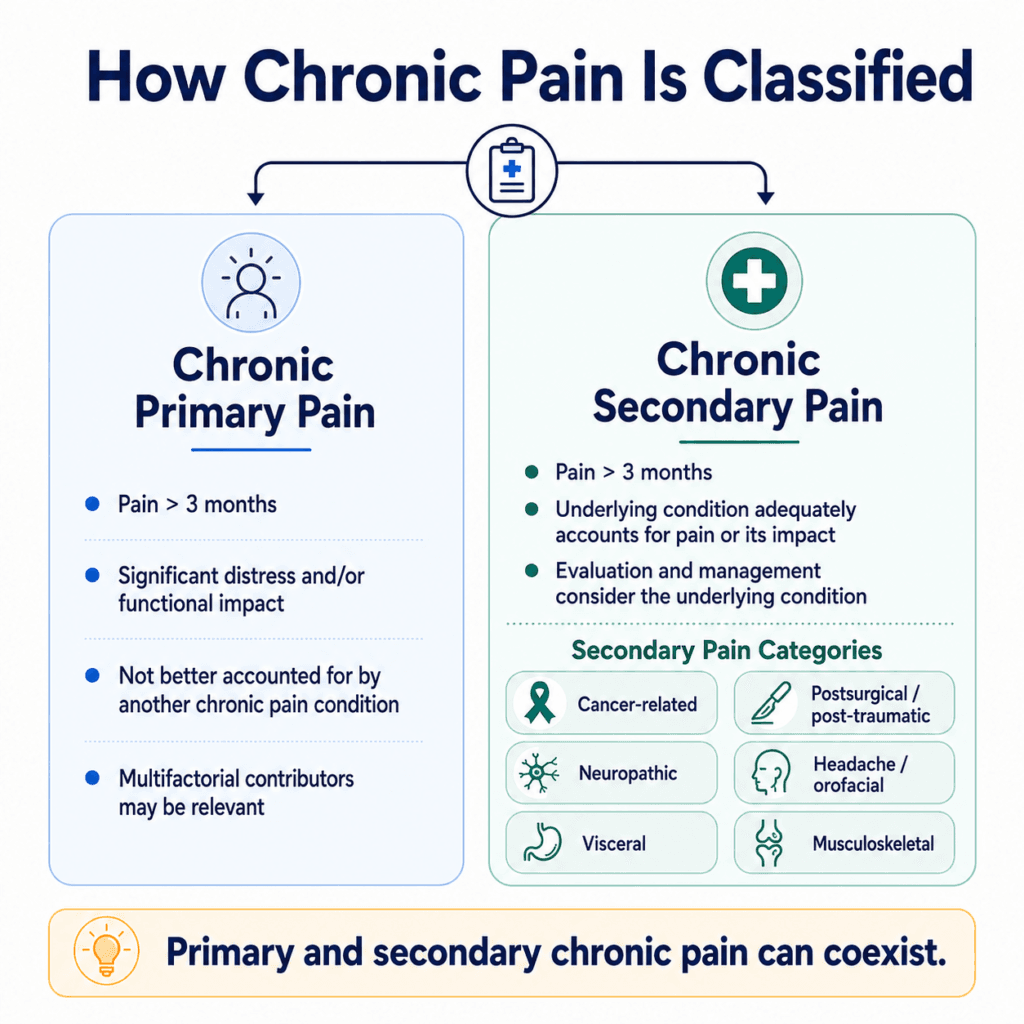
A useful starting point is the distinction between:
- Chronic primary pain
- Chronic secondary pain
These categories are clinical classifications. They are not the same as pain-mechanism terms such as nociceptive, neuropathic, or nociplastic pain.
Chronic primary pain and chronic secondary pain can also coexist.
Chronic Primary Pain
Chronic primary pain refers to chronic pain in one or more anatomical regions that is associated with significant distress and/or functional disability and is not better accounted for by another chronic pain condition.
In practical terms, a clinician may consider chronic primary pain when:
- no clear underlying secondary condition adequately accounts for the pain, or
- the pain or its impact appears out of proportion to an observable injury or disease,
- and the pain is causing meaningful distress or interference with daily life.
Chronic primary pain is considered multifactorial. Biological, psychological, and social factors may all contribute.
That does not mean “there is no cause,” nor does it mean the pain is psychological. It means that a single structural injury or disease may not adequately explain the complete pain presentation.
An important clinical point is that diagnoses can change over time. New symptoms, new examination findings, or new medical information may require reassessment.
Chronic Secondary Pain
Chronic secondary pain is chronic pain in which an underlying condition adequately accounts for the pain or its impact.
Examples can include chronic pain associated with:
- cancer,
- nerve injury or disease,
- musculoskeletal disease,
- visceral disease,
- headache or orofacial disorders,
- or pain following surgery or trauma.
In chronic secondary pain, identifying and addressing the underlying condition is an important part of care when appropriate.
The existence of an underlying condition does not mean pain severity can be predicted perfectly from test results or imaging. Pain remains an individual experience, and functional impact can vary widely among people with similar diagnoses.
Types of Chronic Pain Syndromes
The ICD-11 chronic pain framework includes chronic primary pain along with several major chronic secondary pain categories.
The purpose of this classification is to organize chronic pain clinically. It is not intended to imply that every category has one single mechanism.
Chronic Cancer-Related Pain
Chronic cancer-related pain may be associated with the cancer itself or with aspects of cancer treatment.
This is a distinct clinical context because the underlying disease, treatment history, prognosis, symptom burden, and care priorities can all affect assessment and management.
A general chronic pain article should not replace cancer-specific medical guidance.
Chronic Postsurgical or Post-Traumatic Pain
Some pain persists after surgery or trauma beyond the expected period of tissue healing.
The original event may be clear, but the long-term pain presentation can still involve different mechanisms. Depending on the injury or procedure, nociceptive, neuropathic, or mixed mechanisms may contribute.
Persistent pain after surgery or trauma requires clinical context rather than an assumption that all such pain represents ongoing tissue injury.
Chronic Neuropathic Pain
Chronic neuropathic pain is specifically associated with a lesion or disease of the somatosensory nervous system.
This is a narrower category than chronic pain overall.
Descriptions such as:
- burning,
- electric,
- shooting,
- tingling,
- or pins-and-needles
may occur in neuropathic pain, but those sensations do not prove neuropathic pain by themselves.
A neuropathic pain diagnosis depends on the clinical relationship between the suspected lesion or disease and the pain distribution. History, sensory findings, examination, and selected tests may contribute to diagnostic confidence.
For a deeper explanation of nerve-related chronic pain, see:
Chronic Secondary Headache or Orofacial Pain
Some chronic headache and orofacial pain conditions are classified as secondary when another disorder adequately accounts for the pain.
This area includes multiple distinct diagnoses and should not be reduced to one general chronic-pain mechanism.
Headache or facial pain with unusual, severe, or changing features requires condition-specific evaluation.
Chronic Secondary Visceral Pain
Visceral pain arises in relation to internal organs and may become chronic when an underlying visceral condition adequately accounts for the pain.
The way visceral pain is experienced may differ from pain arising from skin, muscles, joints, or nerves. Location can be difficult to interpret without clinical context, and symptoms should not be self-classified from an online diagram alone.
Chronic Secondary Musculoskeletal Pain
Chronic secondary musculoskeletal pain is associated with an underlying musculoskeletal disease or condition that adequately accounts for the pain or its impact.
Examples of relevant conditions can include certain forms of arthritis and other persistent musculoskeletal disorders.
Again, the diagnostic category does not automatically identify the exact pain mechanism. Inflammation, mechanical factors, nerve involvement, altered nociception, or combinations of mechanisms may be relevant depending on the condition.
Pain Diagnoses and Pain Mechanisms Are Not the Same Thing
This is one of the most important distinctions in chronic pain education.
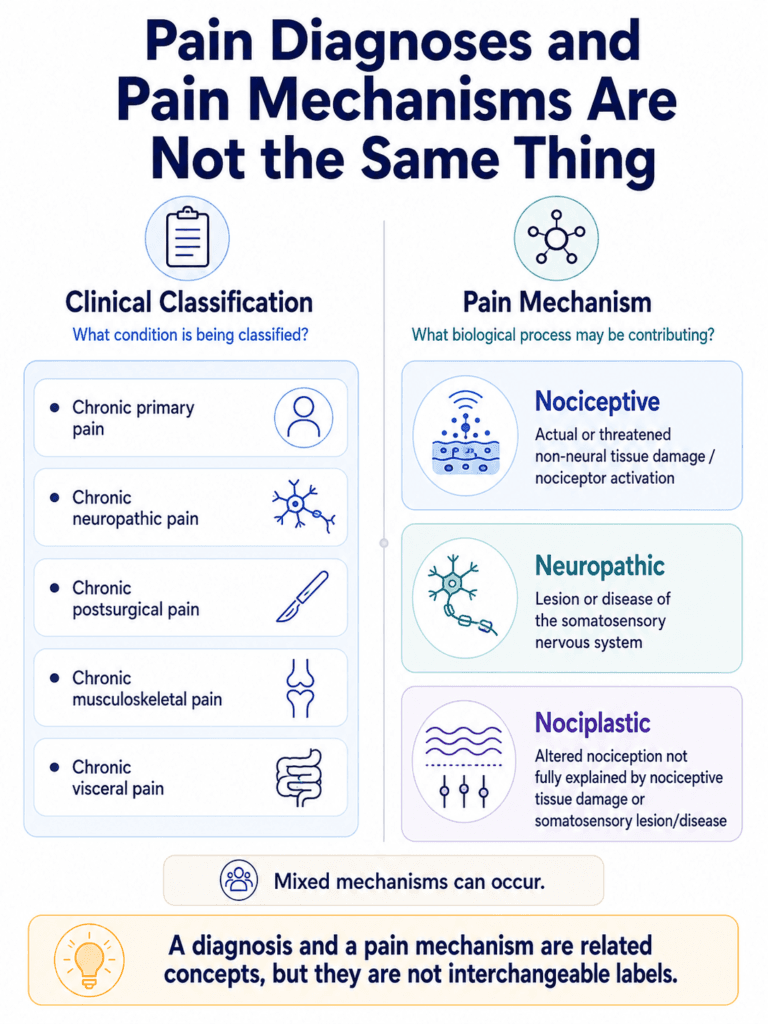
A diagnostic or clinical classification asks:
What chronic pain condition is being classified?
A pain-mechanism classification asks:
What biological pain mechanism appears to be contributing?
These are different questions.
Clinical classification examples
- Chronic primary pain
- Chronic neuropathic pain
- Chronic postsurgical or post-traumatic pain
- Chronic secondary musculoskeletal pain
- Chronic secondary visceral pain
Mechanism descriptors
- Nociceptive pain
- Neuropathic pain
- Nociplastic pain
- Mixed mechanisms
A person may have a clinical diagnosis while also showing evidence that more than one mechanism contributes to the pain experience.
This is why it is misleading to treat “chronic primary,” “neuropathic,” and “nociplastic” as if they were interchangeable labels from a single list.
Nociceptive Pain
Nociceptive pain is pain associated with actual or threatened damage to non-neural tissue and activation of nociceptors.
It can occur with tissue injury, inflammation, or other processes that activate pain-sensing pathways.
Nociceptive pain does not mean that visible structural damage must always appear on routine imaging. Nor does a structural abnormality automatically predict how much pain a person will experience.
Nociceptive describes a mechanism, not simply the result of an X-ray, MRI, or laboratory test.
Neuropathic Pain
Neuropathic pain is pain caused by a lesion or disease of the somatosensory nervous system.
This definition is intentionally specific.
A person may describe pain as burning, tingling, electric, sharp, or shooting, but symptom adjectives alone cannot establish that a nerve lesion or disease is responsible.
Clinical reasoning typically asks whether:
- there is a plausible nervous-system lesion or disease,
- the pain distribution fits the relevant neuroanatomy,
- sensory examination findings support the suspected pathway,
- and appropriate testing adds evidence when needed.
This is why chronic pain and chronic nerve pain should not be used as synonyms.
Nociplastic Pain
Nociplastic pain is a mechanism descriptor used when pain arises from altered nociception and the pain is not fully explained by clear nociceptive tissue damage or by a lesion or disease of the somatosensory system.
It is important to understand what this does not mean.
Nociplastic pain does not mean:
- “nothing is wrong,”
- the pain is imaginary,
- the pain is simply psychological,
- the pain is “all in the brain,”
- or normal imaging automatically proves a nociplastic mechanism.
The concept was introduced to describe a form of pain that is not adequately captured by the older nociceptive-versus-neuropathic distinction.
Nociplastic mechanisms may also overlap with other pain mechanisms.
Mixed Pain Mechanisms
Real clinical pain presentations do not always fit neatly into one mechanism.
A person may have:
- an ongoing tissue or inflammatory driver,
- nerve-related features,
- and altered nociceptive processing
at the same time.
This possibility is one reason treatment should not be based only on a single symptom word, a single scan finding, or an online pain label.
Mechanism-based reasoning can help guide clinical thinking, but it does not replace diagnosis.
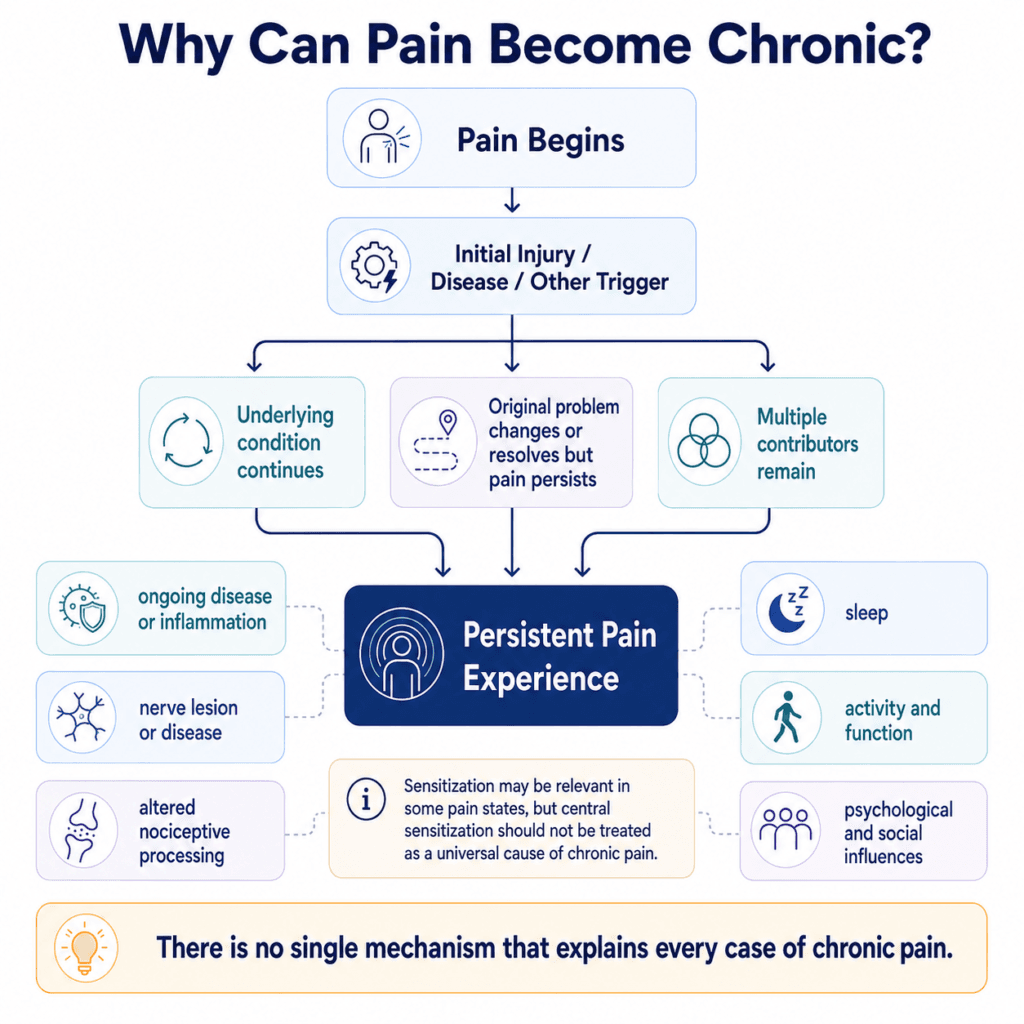
Why Can Pain Become Chronic?
There is no single explanation for every case of chronic pain.
Pain may remain persistent because:
- the underlying disease or injury continues,
- a nerve lesion or disease continues to generate symptoms,
- recurring mechanical or inflammatory factors remain relevant,
- pain processing changes,
- multiple biological and contextual influences interact,
- or the reason remains unclear despite appropriate evaluation.
In some people, pain continues even after the original initiating injury or illness has changed or resolved.
That does not justify the conclusion that the pain is imaginary, nor does it prove one specific mechanism such as central sensitization or nociplastic pain.
A useful principle is:
Persistent pain can have multiple contributors, and the relative importance of those contributors can differ from person to person.
Peripheral and Central Sensitization
Sensitization is a pain-science term referring to increased responsiveness of nociceptive neurons to their normal input.
Peripheral sensitization
Peripheral sensitization refers to increased responsiveness and reduced threshold of nociceptive neurons in the peripheral nervous system.
This can occur in connection with local tissue processes such as inflammation or injury.
Central sensitization
Central sensitization refers to increased responsiveness of nociceptive neurons in the central nervous system to normal or subthreshold input.
The term is useful in neurophysiology, but it is often used too casually in public pain discussions.
Clinical findings such as allodynia or hyperalgesia may be compatible with sensitization, but they are not the same as directly measuring central sensitization.
A 2024 critical review also cautioned against treating central sensitization as a proven universal cause of chronic pain.
The appropriate conclusion is therefore:
Central sensitization is a neurophysiological concept relevant to pain science, but it should not be treated as a universal explanation for chronic pain.
For a deeper explanation of how pain signals are processed through peripheral and central pathways, see:
Chronic Pain and the Nervous System
The nervous system is essential to pain because pain-related signals are detected, transmitted, processed, and interpreted through peripheral and central pathways.
But saying that the nervous system participates in pain is not the same as saying:
“All chronic pain is caused by damaged nerves.”
Chronic pain may involve:
- nociceptive mechanisms,
- neuropathic mechanisms,
- nociplastic mechanisms,
- or combinations of these.
The nervous system may therefore be involved in different ways depending on the condition.
Detailed neurobiology belongs in pain-processing education rather than in a general chronic-pain classification page.
Continue learning:
How Pain Processing Works
Chronic Pain vs Chronic Nerve Pain
These terms overlap, but they are not equivalent.
Chronic pain
Chronic pain is the broad umbrella: pain that persists or recurs for more than three months.
Chronic nerve pain
Chronic neuropathic pain is more specific. It involves a lesion or disease of the somatosensory nervous system and a clinically plausible relationship between that nervous-system problem and the pain.
Therefore:
All chronic neuropathic pain is chronic pain, but not all chronic pain is neuropathic pain.
A person can have chronic pain because of musculoskeletal disease, visceral disease, cancer, postsurgical or post-traumatic factors, neuropathic disease, chronic primary pain, or overlapping mechanisms.
If your main question is specifically about nerve-related pain, use the dedicated guide:
You can also explore:
What Does Chronic Pain Feel Like?
There is no single chronic-pain sensation.
People may describe persistent pain as:
- aching,
- burning,
- throbbing,
- shooting,
- sharp,
- dull,
- tingling,
- electric-like,
- pressure,
- tenderness,
- or sensitivity.
Chronic pain can also occur alongside fatigue, difficulty sleeping, changes in mood, reduced activity, or difficulty participating in normal daily life.
However, symptom quality alone usually cannot identify the underlying pain mechanism.
For example:
- burning does not automatically prove nerve damage,
- tenderness does not automatically prove inflammation,
- and pain with normal imaging does not automatically prove nociplastic pain.
Symptoms are important clinical information, but they must be interpreted within the larger history, examination, and medical context.
What Can Cause or Contribute to Chronic Pain?
Chronic pain can arise in many different settings.
Possible contributors include:
- ongoing musculoskeletal disease,
- arthritis and other inflammatory conditions,
- cancer,
- nerve injury or neurological disease,
- persistent pain following surgery or trauma,
- visceral conditions,
- recurrent headache disorders,
- and other long-term medical problems.
In some people, no single clear cause adequately explains the pain.
The experience and impact of chronic pain can also be influenced by factors such as:
- sleep,
- mood,
- stress,
- activity level,
- previous experiences,
- social circumstances,
- work demands,
- relationships,
- and expectations about pain.
These influences should not be interpreted as proof that psychological or social factors “caused” the pain. Chronic pain is multifactorial, and different contributors can influence severity, disability, coping, and recovery in different ways.
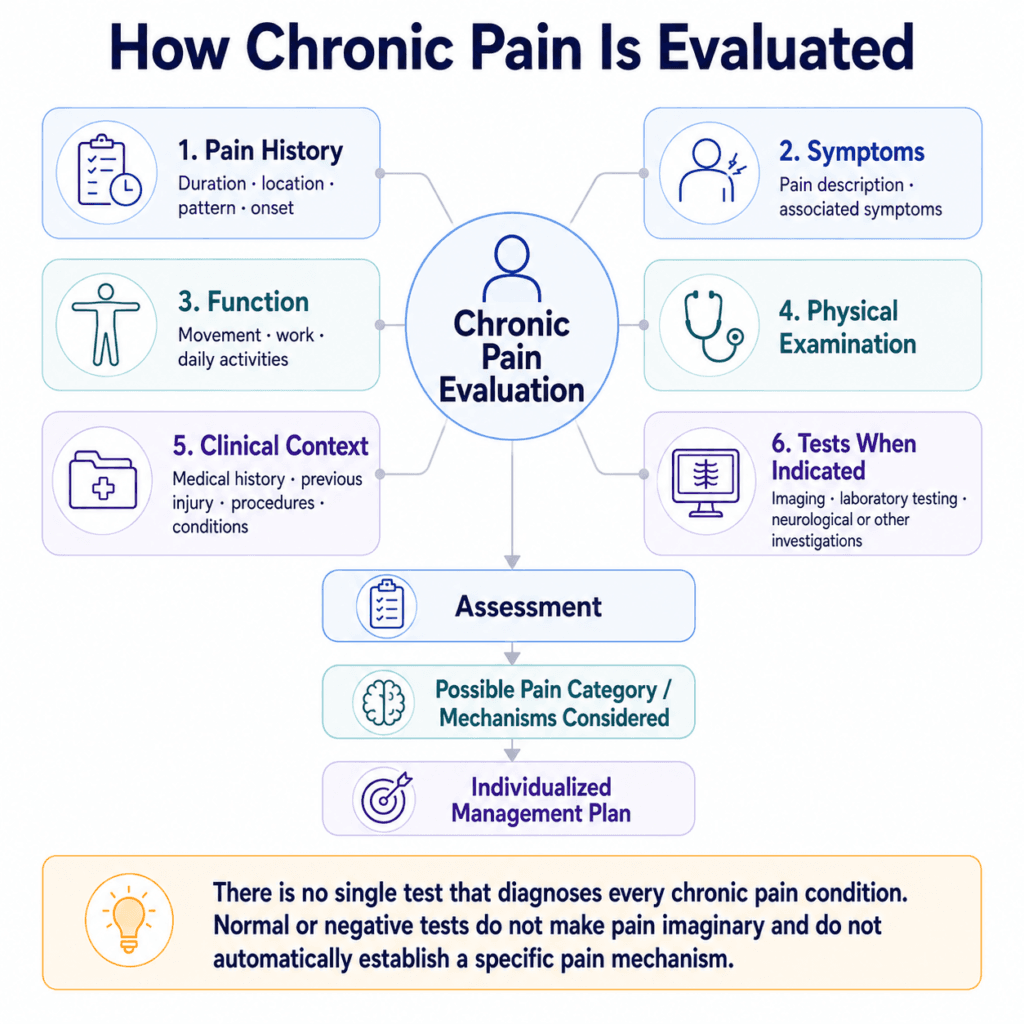
How Chronic Pain Is Evaluated
There is no single universal test that diagnoses every chronic pain condition.
Evaluation begins with the individual.
A person-centred assessment may include:
Medical and pain history
A clinician may ask about:
- when the pain began,
- how long it has been present,
- where it is located,
- whether it spreads,
- whether it is constant or intermittent,
- what makes it better or worse,
- associated symptoms,
- previous injuries, illnesses, procedures, or treatments,
- and relevant medical conditions.
Description of the pain
Pain quality can provide clues, but it is not a diagnosis by itself.
Clinicians may ask whether pain feels aching, burning, electric, stabbing, throbbing, tender, or otherwise unusual.
Functional impact
Assessment should consider what the pain is doing to the person’s life.
That can include:
- sleep,
- walking or movement,
- exercise,
- work,
- education,
- household tasks,
- relationships,
- mood,
- social participation,
- and personal goals.
Physical examination
The examination depends on the pain location and suspected condition.
It may include musculoskeletal, neurological, sensory, vascular, or other relevant examination components.
Tests when clinically indicated
Blood tests, imaging, electrodiagnostic testing, or other investigations may be appropriate depending on the suspected cause.
Tests should answer a clinical question. They are not a universal measure of whether pain is “real.”
Why Tests or Imaging May Not Explain Every Pain Experience
It can be frustrating when pain is persistent but tests do not reveal a clear explanation.
Several principles are important.
First, a reason for chronic pain is not always identified.
Second, a normal or negative test result does not invalidate a person’s pain experience.
Third, no single scan or laboratory test can determine every possible pain mechanism.
At the same time, normal imaging should not be used to jump automatically to a diagnosis such as nociplastic pain or central sensitization.
The meaning of test results depends on:
- what condition was being investigated,
- what test was used,
- how sensitive or specific that test is for the suspected problem,
- the physical examination,
- the symptom pattern,
- and the overall clinical context.
This is why chronic pain evaluation is broader than “find something on a scan.”
How Chronic Pain Is Managed
There is no one treatment plan that applies to every chronic pain syndrome.
Management depends on factors such as:
- the chronic pain category,
- the underlying condition when one is identified,
- suspected pain mechanisms,
- other symptoms,
- functional limitations,
- coexisting medical conditions,
- treatment risks,
- patient preferences,
- and individual goals.
Addressing an underlying condition
When chronic pain is secondary to another condition, management should include appropriate treatment of that underlying condition when possible.
Condition-specific medical guidance may be very different for arthritis, neuropathic pain, cancer-related pain, visceral disorders, headache disorders, or postsurgical pain.
Physical activity and rehabilitation
Appropriate movement, exercise, physical therapy, or rehabilitation may be part of care for some chronic pain conditions.
The type, intensity, and progression should match the person’s diagnosis, function, health status, and tolerance.
Psychological approaches
Selected psychological therapies can be useful components of chronic-pain care, especially when the goals include improving coping, reducing pain-related distress, supporting activity, or improving quality of life.
Their use does not mean the pain is psychological.
Medication and medical treatment
Medication decisions depend heavily on the specific chronic pain condition, mechanism, risks, medical history, and relevant clinical guidelines.
A general education page should not be used to start, stop, or change prescription medication.
Multimodal or multidisciplinary care
Some people benefit from care that combines different approaches, such as:
- medical management,
- physical rehabilitation,
- psychological support,
- occupational strategies,
- self-management education,
- and condition-specific specialist care.
The goal is not always to eliminate every pain sensation. Improving function, sleep, confidence, participation, and quality of life may also be meaningful outcomes.
Living With Chronic Pain: Function Matters Too
Pain intensity is important, but it is not the only outcome that matters.
Chronic pain can influence:
- how much a person moves,
- whether they sleep well,
- whether they can work or study,
- how they participate in family life,
- whether they avoid meaningful activities,
- and how confident they feel managing day-to-day demands.
For some people, quality of life can improve even when pain does not completely disappear.
This is why realistic goals may include:
- increasing comfortable activity,
- improving sleep routines,
- participating more fully in valued activities,
- reducing disability,
- improving coping,
- and developing a sustainable care plan.
A useful care plan should be individualized rather than built around a single pain score.
Common Misunderstandings About Chronic Pain
“Chronic pain is one disease.”
No. Chronic pain is an umbrella concept that includes multiple chronic primary and secondary pain conditions.
“If pain lasts more than three months, it must be chronic pain syndrome.”
Pain lasting or recurring beyond three months meets the time definition of chronic pain, but a specific chronic pain diagnosis requires clinical context.
“Severe pain means severe tissue or nerve damage.”
Pain intensity alone does not identify the mechanism or measure the extent of tissue or nerve damage.
“Burning or tingling proves neuropathic pain.”
No. These symptoms can be relevant clues, but neuropathic pain requires evidence of a lesion or disease of the somatosensory nervous system and a clinically plausible relationship to the pain.
“Normal tests mean nothing is wrong.”
No. A cause may not always be identified, and negative tests should not be used to invalidate a person’s pain.
“Normal imaging means the pain is nociplastic.”
No. Nociplastic pain is a mechanistic descriptor and cannot be established simply because imaging is normal.
“Chronic pain is psychological.”
No. Pain is a real sensory and emotional experience influenced to varying degrees by biological, psychological, and social factors.
“Central sensitization explains all chronic pain.”
No. Central sensitization is an important neurophysiological concept, but it should not be treated as a universal explanation for chronic pain.
“All chronic pain is nerve pain.”
No. Neuropathic pain is only one possible type or mechanism within the broader chronic-pain landscape.
When Chronic Pain Needs Medical Evaluation
Persistent pain lasting more than three months deserves appropriate clinical evaluation, particularly when it is:
- new,
- worsening,
- unexplained,
- changing in character,
- or substantially interfering with daily function.
Clinical evaluation is also important when pain occurs with other concerning symptoms.
Seek urgent medical assessment for severe or rapidly developing problems such as:
- new major neurological weakness or loss of function,
- new loss of bladder or bowel control,
- severe pain following major trauma,
- or other symptoms that may represent a medical emergency.
This is not a complete emergency checklist. Different pain conditions have different warning signs, and condition-specific symptoms require condition-specific medical assessment.
If you believe you may be experiencing a medical emergency, seek local emergency care.
Frequently Asked Questions
What is the difference between chronic pain and chronic pain syndrome?
Chronic pain is pain that persists or recurs for more than three months. “Chronic pain syndromes” refers more broadly to the different clinical categories in which chronic pain may be classified. The singular phrase “chronic pain syndrome” may appear in some clinical contexts, but it is not a universal diagnosis for everyone with persistent pain.
Is chronic pain always caused by nerve damage?
No. Chronic pain may involve nociceptive, neuropathic, nociplastic, or mixed mechanisms. Neuropathic pain specifically requires a lesion or disease of the somatosensory nervous system.
Can chronic pain continue after an injury has healed?
Yes. Chronic pain can persist after the initiating injury or condition has changed or resolved. In other cases, an ongoing disease or injury continues to drive the pain.
Can chronic pain exist when tests are normal?
Yes. A clear cause is not always identified, and negative test results do not make the pain imaginary. However, normal tests also do not establish a specific mechanism such as nociplastic pain.
Is chronic pain the same as chronic neuropathic pain?
No. Chronic pain is the broad category. Chronic neuropathic pain is specifically related to a lesion or disease of the somatosensory nervous system.
Is nociplastic pain the same as central sensitization?
No. Nociplastic pain is a pain-mechanism descriptor. Central sensitization is a neurophysiological term referring to increased responsiveness of nociceptive neurons in the central nervous system. The concepts may be related in some contexts, but they are not interchangeable.
Can primary and secondary chronic pain occur together?
Yes. A person may have chronic primary pain and chronic secondary pain at the same time.
Does stress cause chronic pain?
It is not accurate to treat stress as a universal cause of chronic pain. Stress and other life factors can influence pain experience, coping, sleep, function, and symptom severity, but chronic pain can arise through many different conditions and mechanisms.
Can chronic pain be cured?
That depends on the underlying condition and the individual case. Some causes can improve or resolve, while other chronic pain conditions require ongoing management. Treatment may aim to reduce symptoms and improve function and quality of life even when pain does not completely disappear.
Evidence and Editorial Standards
This guide is designed as medical education, not as diagnosis or individualized treatment.
The core classification and terminology in this page are based primarily on:
- International Association for the Study of Pain (IASP) chronic pain definitions and terminology,
- ICD-11-aligned chronic pain classification,
- NICE guidance on chronic primary and chronic secondary pain,
- National Library of Medicine / MedlinePlus chronic-pain education,
- and peer-reviewed pain-science literature used to clarify the boundaries of nociplastic pain and central sensitization.
The page intentionally avoids claims that:
- all chronic pain has one cause,
- pain severity measures tissue or nerve damage,
- burning pain automatically means neuropathy,
- normal imaging proves nociplastic pain,
- central sensitization universally causes chronic pain,
- psychological or social influences make pain imaginary,
- or a treatment can universally cure chronic pain syndromes.
Key sources
- International Association for the Study of Pain (IASP) — Definitions of Chronic Pain Syndromes
https://www.iasp-pain.org/advocacy/definitions-of-chronic-pain-syndromes/ - International Association for the Study of Pain (IASP) — Pain Terminology
https://www.iasp-pain.org/resources/terminology/ - International Association for the Study of Pain (IASP) — ICD-11 Pain Classification
https://www.iasp-pain.org/advocacy/icd-11-pain-classification/ - NICE NG193 — Chronic pain (primary and secondary) in over 16s
https://www.nice.org.uk/guidance/ng193 - NICE NG193 — Recommendations
https://www.nice.org.uk/guidance/ng193/chapter/recommendations - MedlinePlus — Chronic Pain
https://medlineplus.gov/chronicpain.html - Kosek E. The concept of nociplastic pain—where to from here? PAIN. 2024.
https://pubmed.ncbi.nlm.nih.gov/39560415/ - Velasco E, et al. Is chronic pain caused by central sensitization? A review and critical point of view. Neurosci Biobehav Rev. 2024.
https://pubmed.ncbi.nlm.nih.gov/39278607/
Where to Go Next
Chronic pain is a broad clinical concept. The most useful next step depends on what you are trying to understand.
If you want to understand how pain signals are processed
Read:
This page explores the nervous-system pathways involved in detecting, transmitting, and processing pain-related information.
If your question is specifically about nerve-related chronic pain
Read:
This page focuses more specifically on chronic pain associated with lesions or diseases of the somatosensory nervous system.
If you want to explore diseases that can affect nerves
Read:
If you want to understand common causes of nerve pain
Read:
Final Perspective
Chronic pain is not one disease and does not have one universal mechanism.
The most useful way to understand it is to separate three questions:
- How long has the pain persisted?
- What clinical chronic-pain condition or category best describes it?
- What pain mechanism or combination of mechanisms may be contributing?
Chronic primary and chronic secondary pain describe clinical classification. Nociceptive, neuropathic, and nociplastic pain describe mechanisms. Those frameworks can overlap, but they should not be treated as interchangeable.
For people living with persistent pain, the goal of evaluation is not simply to attach a label. It is to understand the pattern, look for relevant causes, identify functional impact, choose appropriate investigations, and develop a care plan that fits the individual condition and goals.
Educational information cannot determine which chronic pain category or mechanism applies to a specific person. Persistent or concerning pain should be assessed by an appropriate healthcare professional.
Health Disclaimer: This content is for educational purposes only and is not a substitute for professional medical advice, diagnosis, or treatment. For personal medical concerns, consult an appropriately qualified healthcare professional.