
Understanding How Nerves May Be Affected After Physical Injury
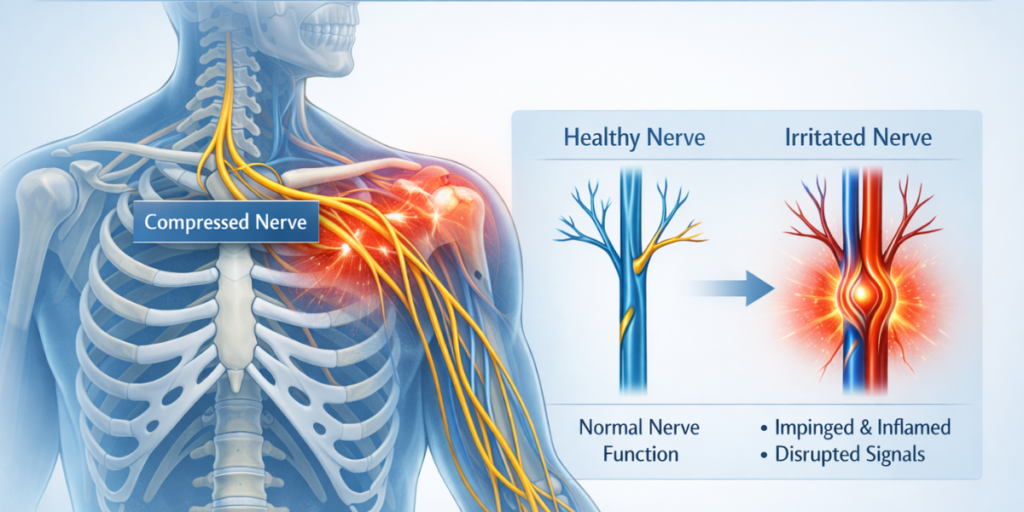
Post-injury nerve damage may occur when a nerve becomes stretched, compressed, or irritated after physical trauma.
Because nerves carry signals between the brain, spinal cord, and the rest of the body, changes around a nerve may influence how those signals travel.
As a result, some people may notice tingling, numbness, weakness, or radiating discomfort in the affected area. In many cases, these symptoms do not appear immediately. Instead, they develop gradually as the surrounding tissues heal.
Understanding how post-injury nerve damage develops can help people recognize how physical trauma may influence nerve pathways and overall nerve function.
What Is Post-Injury Nerve Damage?
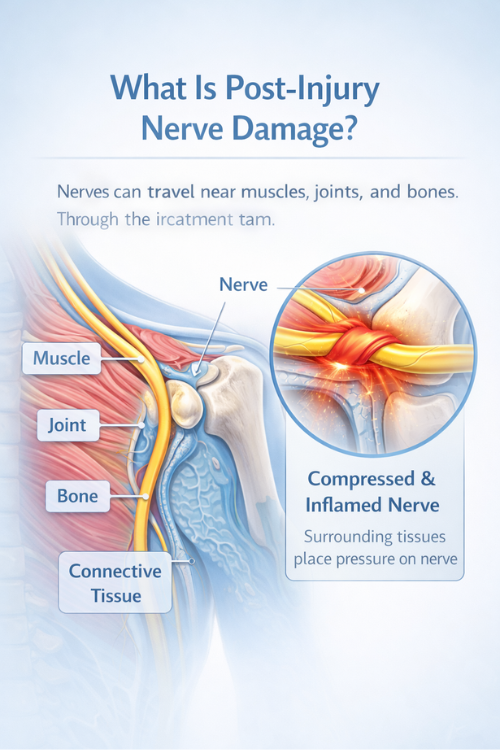
Post-injury nerve damage refers to changes that may occur when nerves are affected after an accident, fall, or physical trauma. Because nerves travel through muscles, joints, and connective tissues, they may become vulnerable during injuries involving these structures.
For example, a sudden impact may stretch a nerve, while swelling in nearby tissues may increase pressure around nerve pathways. As a result, the signals traveling through those nerves may change.
In many situations, nerve changes after injury develop slowly rather than immediately. Consequently, symptoms may appear hours, days, or even weeks after the original injury.
Furthermore, different types of injuries may influence nerves in different ways. For instance, fractures, muscle tears, or joint dislocations may all affect nearby nerve pathways.
How Post-Injury Nerve Damage Develops
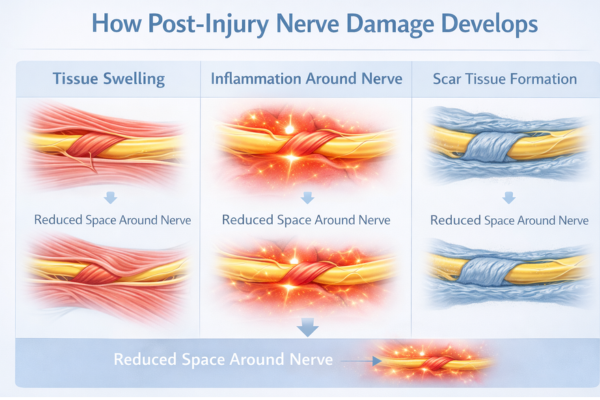
Several biological mechanisms may contribute to post-injury nerve damage. In most cases, these mechanisms involve changes in the tissues surrounding the nerve.
For example, swelling may occur after an injury as part of the body’s natural healing response. However, this swelling may also reduce the space available around nearby nerves. As a result, pressure may increase around the nerve pathway.
Similarly, inflammation may develop in the injured area. Because inflamed tissues often become thicker and more sensitive, this change may also influence how nerves function.
In addition, scar tissue may form during the healing process. While scar tissue helps repair damaged tissues, it may sometimes alter the normal movement of nearby nerves.
Over time, repeated pressure or tension may influence how efficiently nerve signals travel. Consequently, communication between the nervous system and the affected body area may gradually change.
Common Symptoms Associated With Post-Injury Nerve Damage
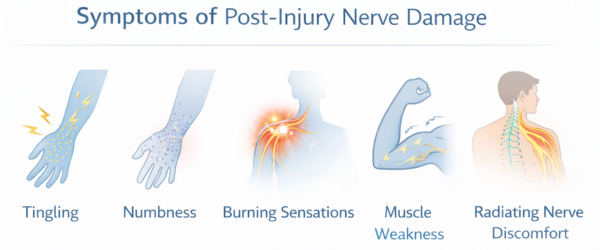
SSymptoms associated with post-injury nerve damage may vary depending on the affected nerve.
However, several common patterns often appear after physical trauma.
For example, many people report tingling sensations in the injured area. This sensation may feel like small electrical signals or pins and needles.
In addition, numbness may develop when nerve signals are reduced or interrupted. As a result, the affected area may feel less sensitive to touch or temperature.
Some individuals also notice burning sensations along the nerve pathway. This feeling may travel along the arm, leg, or other affected region.
Furthermore, muscle weakness may occur when nerve signals that control muscles become disrupted. Consequently, certain movements may feel more difficult. Your Attractive Heading
Finally, radiating discomfort may spread along the path of the affected nerve. For instance, nerve irritation in the shoulder may influence sensations in the arm or hand.
Possible Causes of Post-Injury Nerve Damage
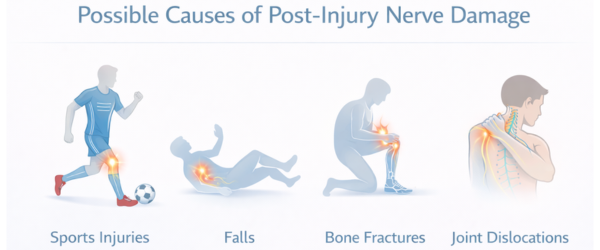
Several types of injuries may contribute to post-injury nerve damage. In many cases, the surrounding tissues that normally protect nerves may also place pressure on them after trauma.
For example, sports injuries may involve sudden movements that stretch nearby nerves. Similarly, falls may create direct impact on joints, muscles, or bones that surround nerve pathways.
Joint dislocations may also influence nerves because they temporarily change the position of the surrounding structures. As a result, nerves passing through that area may become irritated.
In addition, bone fractures may alter the space around nerve pathways. During the healing process, swelling or tissue changes may further influence nerve function.
Repetitive strain injuries may also contribute to nerve irritation over time. For instance, repeated movements may gradually increase tension around certain nerve pathways.
How Post-Injury Nerve Damage Is Evaluated
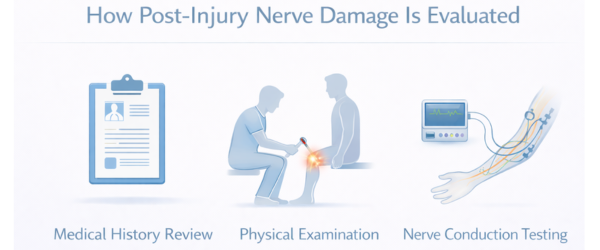
Healthcare professionals may evaluate post-injury nerve damage through several types of observations and assessments.
First, medical history often provides important clues. For example, understanding how the injury occurred may help identify which nerves could be involved.
Next, a physical examination may be performed. During this process, clinicians may observe reflexes, muscle strength, and sensory responses.
In addition, nerve sensitivity tests may help evaluate how well certain nerves respond to stimulation.
Sometimes, nerve conduction studies may also be used. These tests measure how efficiently signals travel through nerve pathways.
Finally, imaging methods such as ultrasound or other scans may help visualize the surrounding tissues. Consequently, healthcare professionals may better understand how nearby structures influence nerve pathways.
Why Nerve Symptoms May Appear Gradually
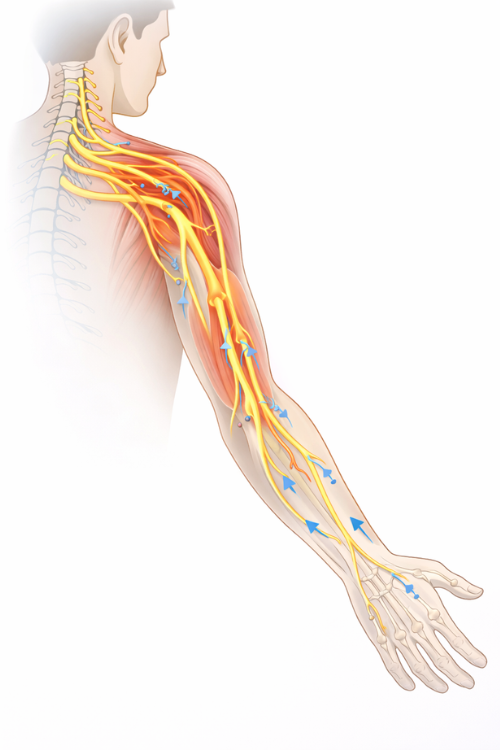
In many cases, nerve-related symptoms do not appear immediately after an injury. Instead, they may develop gradually as the surrounding tissues change during the healing process.
For example, swelling may increase slowly during the first few days after trauma. As this swelling develops, the space around nearby nerves may become more limited.
Similarly, tissue repair may involve changes in muscle tension, joint alignment, or connective tissue structure. Consequently, these changes may influence nerve pathways over time.
Because of these factors, some individuals notice nerve-related sensations only after the body has begun healing from the original injury.
Supporting a Healthy Nerve Environment
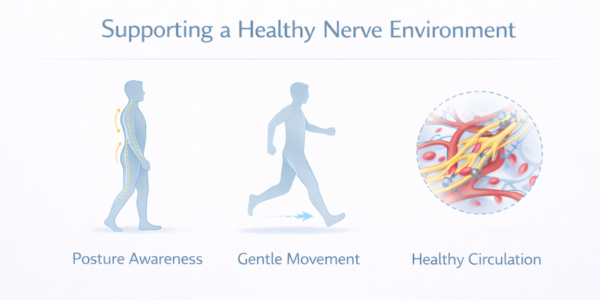
Although the nervous system has a natural ability to adapt and regulate itself, the surrounding environment may influence how nerves function.
For this reason, maintaining supportive daily habits may help create a more balanced environment for nerve pathways.
For example, posture awareness may reduce unnecessary pressure on nerves that travel through joints and muscles. Likewise, gentle movement patterns may help maintain circulation around nerve tissues.
In addition, balanced nutrition may support overall nerve health. Nutrients that support the nervous system may contribute to maintaining healthy nerve function.
Furthermore, managing repetitive strain may help reduce tension around nerve pathways. As a result, nerves may function within a more supportive physical environment.
It is important to remember that this information is educational. Individual health situations may vary significantly.
Continue Learning About Nerve Health
If you want to learn more about nerve health, you may explore the following educational resources:
Related Nerve Conditions
Post-injury nerve damage may sometimes be associated with other nerve-related conditions. For example:
Understanding these conditions may help provide a broader perspective on how nerve pathways may become affected.
Safety & Education Notice
This page explains symptoms of nerve dysfunction for educational purposes only. It does not provide medical diagnosis, treatment, or personalized medical advice.
If symptoms are severe, progressive, or unexplained, consult a licensed healthcare professional.