
Symptoms of Nerve Dysfunction
Early Signs, Patterns, and What They May Indicate
Symptoms of nerve dysfunction can appear in several ways, including tingling, numbness, weakness, nerve pain, or changes in internal regulation. In many cases these symptoms develop gradually, although in some situations they may appear suddenly. Early changes can seem mild, such as occasional tingling or subtle numbness that gradually becomes more noticeable. As the pattern progresses, sensation, movement, or internal regulation may also be affected.
Since nerves control multiple systems throughout the body, disruptions can influence more than one area at the same time. Recognizing these signs early allows for clearer observation and structured understanding.
This page provides educational information only and does not offer diagnosis or treatment advice.
Sensory Symptoms of Nerve Dysfunction
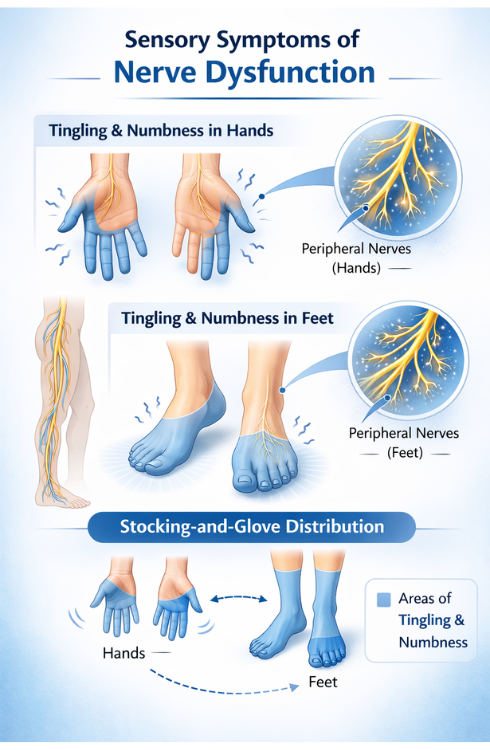
In most cases, sensory changes are the earliest symptoms of nerve dysfunction. Because sensory nerves transmit signals such as temperature, pressure, and pain, even minor disruptions can create noticeable differences.
However, symptoms do not always develop slowly. In certain situations they may appear suddenly instead. At the beginning, these changes may feel mild, such as occasional tingling or subtle numbness. As time passes, the sensations can become more frequent or noticeable.
Typical sensory changes may include:
- Tingling sensations (“pins and needles”)
- Areas of numbness in the hands, feet, arms, or legs
- Burning or heat-like sensations
- Electric shock–like nerve feelings
- Increased sensitivity when the skin is touched
- Reduced ability to sense temperature changes
Initially, these symptoms of nerve damage often begin in the extremities. For instance, many people first notice changes in their toes or fingertips. As a result, a pattern sometimes described as “stocking and glove” distribution may appear.
To better understand why these sensory symptoms develop, it is helpful to explore how nerve signaling works within the nervous system.
However, sensory symptoms may also be connected to underlying biological, metabolic, or mechanical factors. Therefore, exploring potential contributing causes provides a broader context for long-term understanding.
Nerve Pain Symptoms and Radiating Patterns
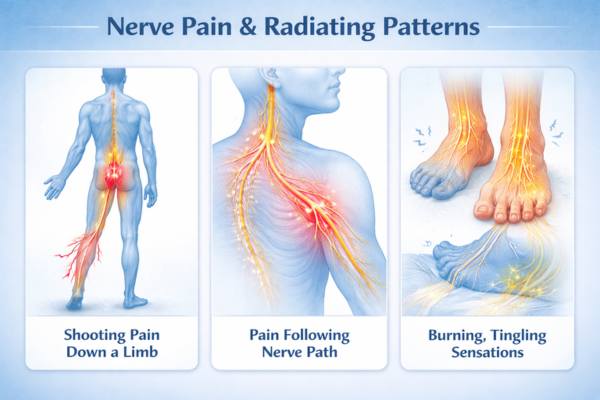
Unlike ordinary muscle soreness, nerve pain symptoms often feel sharp, burning, or shooting in nature. In many cases, the discomfort does not remain localized. Instead, it may travel along a specific nerve pathway. Nerves follow defined routes throughout the body, which is why the pattern of pain can provide important context.
Frequent radiating patterns include:
- Shooting pain that moves down a limb
- Pain triggered by light touch or mild pressure
- Persistent burning sensations
- Increased discomfort during the night
- Pain that follows a recognizable nerve route
Since these symptoms of nerve dysfunction trace nerve pathways, they typically feel different from joint stiffness or muscular strain. Muscular pain usually remains localized, whereas nerve-related pain may spread or shift.
Consequently, observing how the pain behaves — including where it starts, how it travels, and what triggers it — can help build a clearer understanding.
For a deeper explanation of long-term pain mechanisms, you may explore structured education on chronic pain patterns. In addition, those seeking a broader step-by-step overview can begin with the structured learning pathway.
Motor Changes and Muscle-Related Symptoms
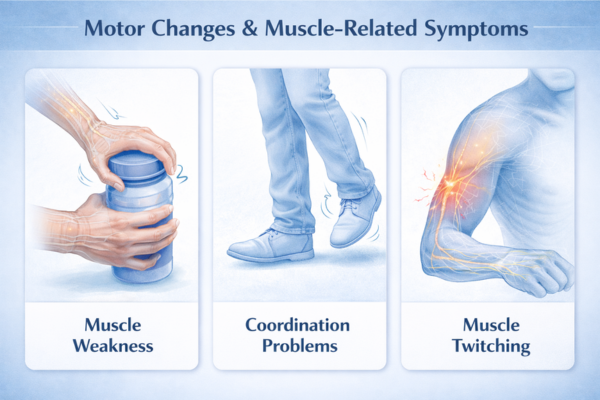
Motor nerves are responsible for controlling muscle movement. Therefore, when motor nerve signaling becomes disrupted, changes in strength, coordination, or muscle control may occur. Unlike sensory symptoms, which affect feeling, motor-related symptoms directly influence how the body moves.
These changes often develop gradually, with subtle weakness appearing during routine tasks. As time passes, movements that once felt effortless may require greater concentration or effort.
Motor-related changes can involve:
- Muscle weakness in the hands, arms, legs, or feet
- Difficulty gripping objects firmly
- Frequently dropping items
- Reduced coordination or balance
- Muscle twitching or small involuntary movements
- Decreased reflex responses
As an illustration, someone may struggle to open jars, hold small objects, or maintain a steady footing while walking. Since motor nerves send signals from the brain and spinal cord to the muscles, even minor disruption can affect precision and strength.
Importantly, not all motor symptoms indicate severe nerve dysfunction. Temporary weakness may sometimes relate to fatigue or other factors. However, if weakness progresses quickly, affects one side of the body, or interferes with daily function, professional medical evaluation becomes especially important.
On the other hand, mild and stable changes may simply require careful observation and structured educational awareness to better understand underlying patterns.
Autonomic Symptoms Linked to Nerve Dysfunction
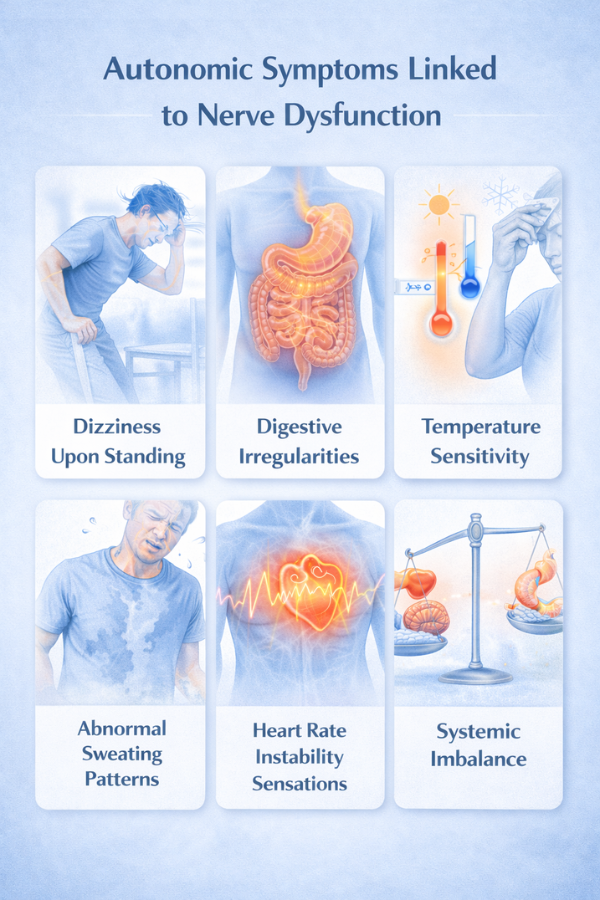
The autonomic nervous system plays a critical role in maintaining the body’s internal balance. Unlike sensory or motor nerves, which control feeling and movement, the autonomic system regulates functions that happen automatically — such as heart rate, digestion, blood pressure, and temperature control.
When autonomic regulation becomes disrupted, symptoms may appear in subtle but noticeable ways. Although these changes often develop gradually, they can sometimes feel unpredictable.
Autonomic-related changes may present as:
- Dizziness or lightheadedness upon standing
- Digestive irregularities, such as bloating or altered bowel patterns
- Sensitivity to heat or cold
- Unusual or excessive sweating
- Sensations of heart rate fluctuation or instability
For example, a person may feel dizzy when standing up quickly because blood pressure regulation momentarily struggles to adjust. Similarly, temperature sensitivity may occur when internal balance mechanisms do not respond efficiently.
Early nerve symptoms can sometimes overlap with stress-related patterns. Because the autonomic system also responds to psychological and physical stress, distinguishing between temporary stress reactions and persistent nerve-related imbalance requires careful observation.
To better understand how this internal balance system functions, you can explore nervous system regulation.
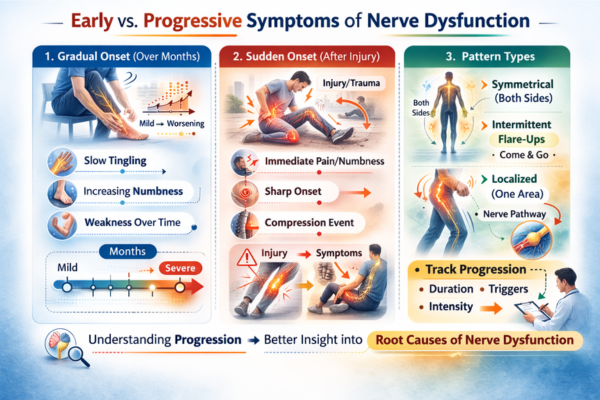
Early vs. Progressive Symptoms of Nerve Dysfunction
Not all symptoms of nerve dysfunction develop in the same way. In fact, understanding how symptoms appear and change over time can provide valuable insight into what may be happening beneath the surface.
Some symptoms emerge slowly and remain subtle for months. Others, however, may appear suddenly, especially after physical injury or acute stress. Therefore, observing the timeline and progression pattern becomes just as important as recognizing the symptoms themselves.
Common progression patterns include:
- Gradual onset over months — Symptoms slowly increase in frequency or intensity. Mild tingling may eventually become persistent numbness.
- Sudden onset after injury — Symptoms may begin immediately or shortly after trauma, such as a fall or compression event.
- Symmetrical presentation (both sides) — Sensations or weakness appear on both sides of the body, often in the hands or feet.
- Intermittent flare-ups — Symptoms come and go. At times, they may improve, while at other times they temporarily intensify.
- Localized compression-related symptoms — Discomfort remains limited to a specific area, often following a single nerve pathway.
Progression patterns vary, so assuming severity too quickly can be misleading. Instead, tracking how symptoms evolve — including their duration, triggers, and intensity — helps build a clearer understanding.
To explore how these patterns connect to underlying mechanisms, you may review potential root causes of nerve dysfunction.
When Symptoms of Nerve Dysfunction Require Medical Attention
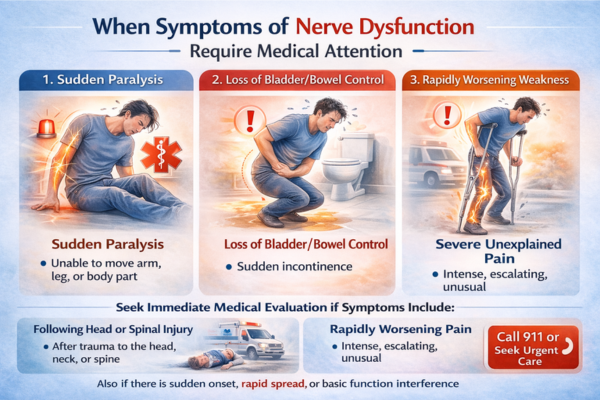
This platform provides educational information only. However, some symptoms can signal a medical emergency or a condition that should be evaluated quickly. Therefore, it is important to know which warning signs should not be ignored.
Seek immediate medical evaluation (emergency services or urgent care) if you notice any of the following:
- Sudden paralysis or inability to move an arm, leg, or part of the body
- Loss of bladder or bowel control, especially if it appears suddenly
- Rapidly worsening weakness, balance problems, or new difficulty walking
- Severe, unexplained pain that is intense, escalating, or feels unusual compared to typical discomfort
- Symptoms following head, neck, or spinal injury, even if they seem mild at first
In addition, urgent evaluation is a good idea if symptoms begin suddenly, spread quickly, or interfere with basic daily function. Early assessment helps ensure serious causes are not missed and supports safer decision-making.
If you want to understand how symptom patterns may connect to contributing factors, you can explore potential root causes of nerve dysfunction.
How Symptoms Connect to Root Causes
Symptoms of nerve dysfunction should be understood as signals rather than final diagnoses. In simple terms, they often indicate that something within the nervous system or the surrounding environment may be out of balance.
Although tingling, pain, weakness, or regulatory changes may feel similar on the surface, the underlying contributors can differ significantly. Understanding potential causes helps explain why similar symptoms can appear in different situations. For this reason, identifying potential root causes becomes an important step in building a structured understanding.
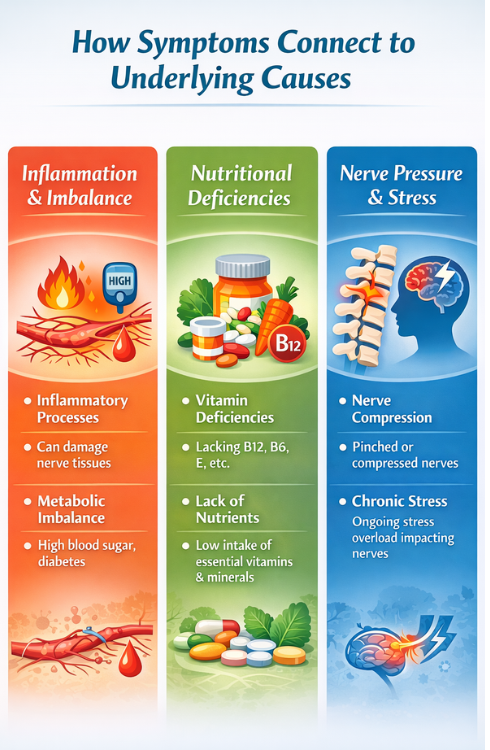
In many situations, these changes may relate to one or more of the following contributing factors:
- Inflammatory processes affecting nerve tissues
- Metabolic imbalances, including blood sugar regulation issues
- Nutritional deficiencies influencing nerve repair and signaling
- Mechanical compression, where a nerve becomes physically restricted
- Chronic stress affecting autonomic nervous system balance
- Systemic conditions that gradually affect nerve function
Gradual numbness in both feet may reflect metabolic or inflammatory patterns, whereas localized pain in one area may suggest mechanical compression. Because different mechanisms can produce similar sensations, context and pattern tracking matter.
Exploring these contributing factors helps clarify long-term recovery education, since a structured approach considers what may be driving the change rather than focusing only on the symptom itself.
To better understand these contributors, you can review potential root causes of nerve dysfunction. In addition, if you prefer a broader step-by-step overview, begin with the structured learning pathway.
Where To Go Next
If you are experiencing symptoms of nerve dysfunction, explore these structured pathways:
Common Questions About Symptoms of Nerve Dysfunction
What are the early symptoms of nerve dysfunction?
Early symptoms of nerve dysfunction may include tingling sensations, mild numbness, burning feelings, or increased sensitivity to touch. These changes often begin gradually, especially in the hands or feet.
Can nerve symptoms appear suddenly?
Yes. Although many nerve symptoms develop slowly, sudden symptoms may occur after injury, compression, infection, or other neurological changes.
When should nerve symptoms be evaluated by a doctor?
Medical evaluation is recommended if symptoms worsen rapidly, affect movement or coordination, involve bladder or bowel control, or occur after head, neck, or spinal injury.
Educational References
The information presented on this page is based on general educational material related to nervous system function and neurological symptoms. For additional medical background, readers may review resources from established medical organizations such as:
National Institute of Neurological Disorders and Stroke (NINDS)
Mayo Clinic – Peripheral Neuropathy Overview
Cleveland Clinic – Nerve Disorders Education
These organizations provide a broader clinical context regarding nerve-related symptoms and neurological health.
Safety & Education Notice
This page explains symptoms of nerve dysfunction for educational purposes only. It does not provide medical diagnosis, treatment, or personalized medical advice.
If symptoms are severe, progressive, or unexplained, consult a licensed healthcare professional.