
Nerve Dysfunction Diagnosis
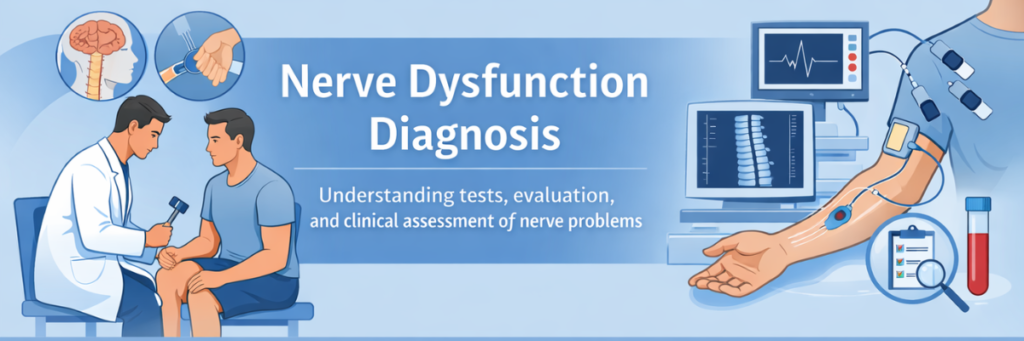
Understanding tests, evaluation, and clinical assessment of nerve problems.
Nerve dysfunction diagnosis refers to the medical process used to evaluate how nerves are functioning in the body. Typically, doctors begin with a review of symptoms and a neurological examination before recommending specific diagnostic tests. As a result, these evaluations help identify possible nerve damage, underlying conditions, and patterns of nervous system dysfunction. In addition, they help doctors understand how nerve signals may be affected.
Because nerves control sensation, movement, and internal regulation, diagnosing nerve problems often requires several types of assessment. Therefore, a clear understanding of nerve dysfunction diagnosis helps patients learn how doctors investigate symptoms and determine the possible causes of nerve disorders.
How Is Nerve Dysfunction Diagnosed?
Nerve dysfunction is diagnosed through a combination of medical history review, neurological examination, and diagnostic testing. Doctors evaluate symptoms such as numbness, weakness, or nerve pain and may use tests like nerve conduction studies, electromyography, imaging scans, or blood tests to assess nerve function.
Common Tests Used in Nerve Dysfunction Diagnosis
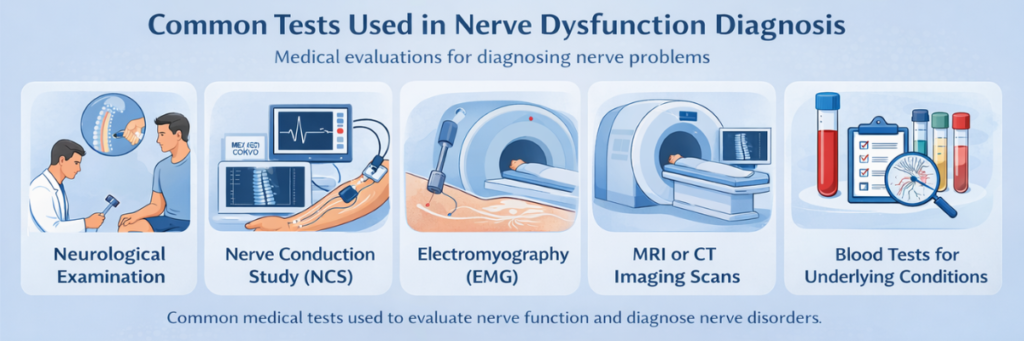
Doctors may use several tests to evaluate nerve function. For example, common diagnostic tests include the following. Overall, these evaluations help doctors better understand how nerves function in different parts of the body.
- Neurological examination
- Nerve conduction study (NCS)
- Electromyography (EMG)
- MRI or CT imaging scans
- Blood tests for underlying conditions
- Autonomic nervous system tests
Step-by-Step Process of Nerve Dysfunction Diagnosis
Medical History Review
Initially, doctors begin nerve dysfunction diagnosis by reviewing symptoms, medical history, lifestyle factors, and potential risk conditions.
Neurological Examination
After that, a neurological exam helps evaluate reflexes, sensation, balance, coordination, and muscle strength.
Diagnostic Testing
When necessary, doctors recommend specialized tests to measure nerve function and electrical signal activity. In this way, doctors can gain more detailed information about nerve performance.
Underlying Cause Investigation
Finally, the last stage of nerve dysfunction diagnosis focuses on identifying conditions that may affect nerves, such as metabolic disorders, compression, or injury.
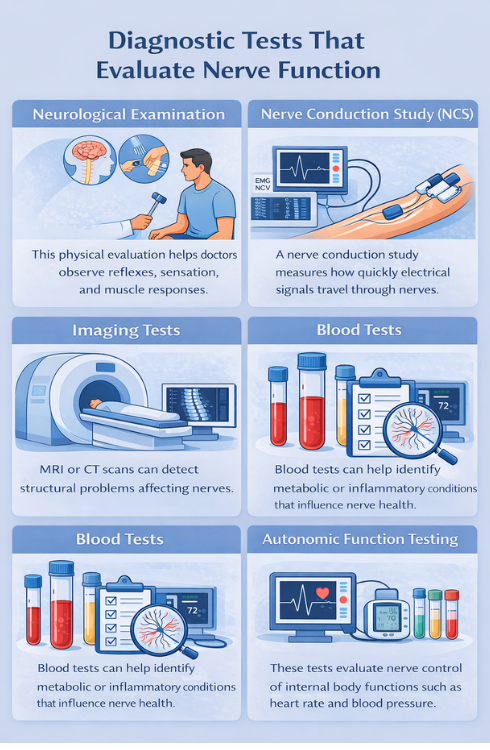
Diagnostic Tests That Evaluate Nerve Function
Neurological Examination
During this evaluation, doctors observe reflexes, sensation, and muscle responses.
Nerve Conduction Study (NCS)
In addition, a nerve conduction study measures how quickly electrical signals travel through nerves.
Electromyography (EMG)
Similarly, electromyography evaluates electrical activity in muscles and may help detect nerve-related abnormalities.
Imaging Tests
In some cases, MRI or CT scans may be used to detect structural problems affecting nerves. For instance, imaging may reveal compression or other structural changes.
Blood Tests
Furthermore, blood tests can help identify metabolic or inflammatory conditions that influence nerve health. Therefore, they may provide useful clues about underlying causes.
Autonomic Function Testing
Meanwhile, these tests evaluate nerve control of internal body functions such as heart rate and blood pressure.
Common Questions About Nerve Dysfunction Diagnosis
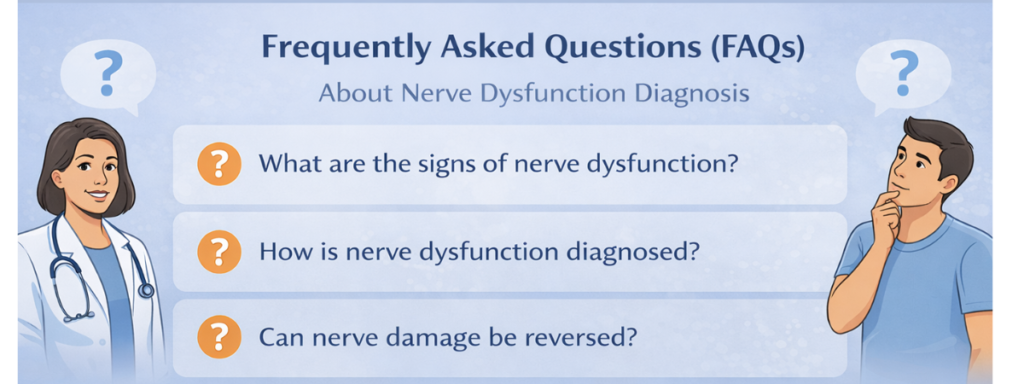
How do doctors test for nerve damage?
Generally, doctors use neurological exams, nerve conduction studies, electromyography tests, imaging scans, and blood tests to evaluate nerve function and identify possible nerve damage. In many cases, several tests are used together to improve diagnostic accuracy.
What doctor diagnoses nerve problems?
Typically, neurologists specialize in diagnosing and evaluating disorders of the nervous system.
Can nerve damage be detected with a blood test?
However, blood tests do not directly detect nerve damage. Instead, they may help identify conditions that can affect nerves.
Understanding Nerve Health
To better understand nerve problems, you may also explore:
Important Medical Note

This page provides educational information about nerve dysfunction diagnosis. However, medical diagnosis and treatment decisions require evaluation by a qualified healthcare professional. Therefore, readers should consult a qualified professional for personal medical advice.