
Manual Therapy and Nerve Health: Understanding Its Supportive Role and Limits
If you are living with nerve-related pain, tingling, numbness, burning, sensitivity, or symptoms that seem to change with movement or pressure, it is understandable to wonder whether hands-on treatment such as massage or another form of manual therapy might help.
You may also be trying to make sense of symptoms that keep returning, deciding whether something you have already tried is worth continuing, or simply looking for a clearer explanation of what manual therapy can and cannot realistically do. That uncertainty can be frustrating, especially when the same symptom can have more than one possible explanation.
The more useful question, therefore, is not simply “Does manual therapy work?” It is: “What role can manual therapy play in supporting nerve health, and what might it realistically change in a particular situation?”
Manual therapy is a broad term. Depending on the clinical context, it can include hands-on approaches such as massage or other soft-tissue techniques, joint mobilisation, spinal manipulation, and forms of neural mobilisation. These approaches are not interchangeable, and the evidence for one technique or condition cannot automatically be applied to every nerve-related problem.
This guide is not here to tell you that every symptom needs hands-on treatment—or that it does not. It is here to help you ask a more useful question before assuming that the treatment, the symptom, and the underlying problem are all the same thing.
That distinction matters because pain, tingling, numbness, burning, weakness, or altered sensation can occur in very different circumstances. A symptom may be associated with a mechanical problem, nerve compression, an injury, a musculoskeletal condition, or a peripheral neuropathy, among other possibilities. The appropriate question therefore depends on the context rather than the symptom label alone.
This guide explains what manual therapy means, why someone with nerve-related symptoms might consider it, what the evidence actually shows, how manual therapy may fit with movement and exercise, what safety issues matter, and where manual therapy reaches its limits.
Symptom → Context → Evidence → Realistic expectation → Observe → Reassess
Manual therapy may have a supportive role in selected situations. That is different from saying that hands-on treatment repairs every nerve problem or changes every underlying cause.
Recognition & definition
What Is Manual Therapy?
What Does Manual Therapy Mean?
Manual therapy refers broadly to hands-on approaches used by trained practitioners as part of care for musculoskeletal, movement-related, or other clinically defined problems. The term does not describe one single treatment.
Depending on the setting, manual therapy may include soft-tissue techniques, massage, joint mobilisation, spinal manipulation, or neural mobilisation. These approaches can have different purposes, mechanisms, risks, and evidence bases.
That is why a question such as “Does manual therapy work?” is too broad to answer responsibly without specifying the intervention, the problem being treated, and the outcome being measured.
What Types of Hands-On Approaches Can It Include?
Soft-tissue approaches may involve hands-on work directed toward muscles and other soft tissues. Massage is one example.
NICE + RESEARCH
Evidence / AuthorityTechnique-specific evidence
Manual therapy includes different intervention categories, and evidence for each technique must be interpreted separately.View source
Joint mobilisation involves controlled manual movement of a joint, generally with the aim of influencing movement or symptoms.
Spinal manipulation is a more specific form of manual intervention directed at spinal joints.
Neural mobilisation is different again. It uses movement-based techniques intended to influence the mechanical and physiological behaviour of neural tissues and their surrounding interfaces. Research in this area is condition- and population-specific.
Is Massage the Same as Manual Therapy?
No. Massage can be one type of hands-on or soft-tissue approach, while manual therapy is a broader category.
NICE
Evidence / AuthorityNational Institute for Health and Care Excellence
Massage is one example of a soft-tissue manual-therapy approach; the terms are not synonymous.View sourceSource attribution does not imply endorsement of HYN.
This distinction matters when reading research. A study of massage for a particular musculoskeletal problem should not automatically be treated as evidence that massage can treat a different nerve condition. Likewise, evidence involving neural mobilisation should not be presented as evidence that every form of massage or manual treatment has the same effect.
How Is It Different From Physiotherapy or Chiropractic Care?
Manual therapy describes an intervention or group of interventions, rather than a single profession.
Physiotherapy can include manual therapy, but it can also include assessment, exercise, movement training, education, functional rehabilitation, and other approaches.
Chiropractic care can also include hands-on treatment, but professional scope and practice vary by jurisdiction and practitioner. It should not automatically be treated as synonymous with manual therapy.
The practical distinction is:
Manual therapy
A broad category of hands-on interventions.
Physiotherapy
A professional healthcare discipline that may include hands-on care along with assessment, exercise, education, and rehabilitation.
Chiropractic care
A professional healthcare context that may include hands-on interventions, with practice varying by jurisdiction and practitioner.
Why Does the Specific Technique Matter?
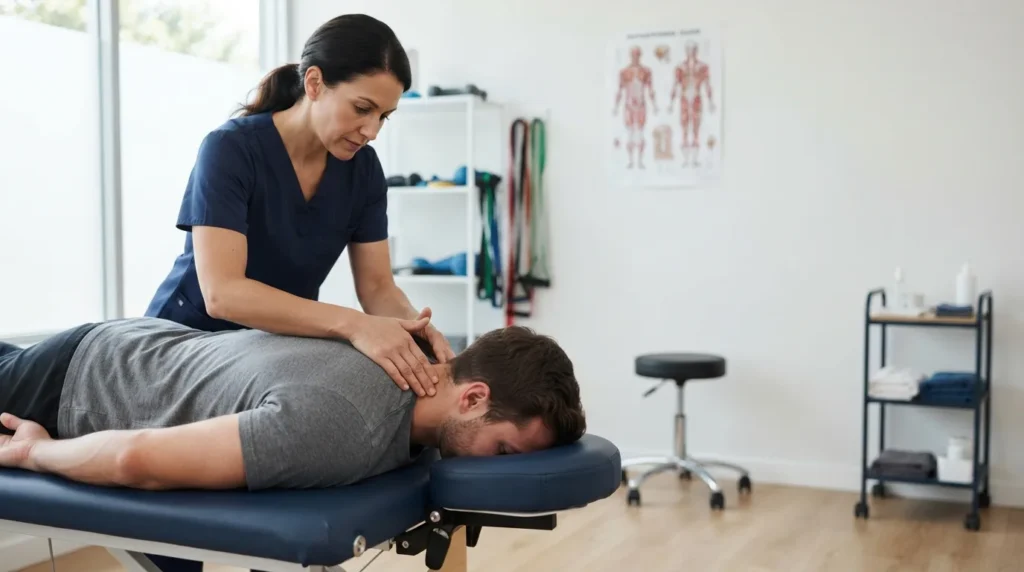
Because the label “manual therapy” tells you very little about what was actually done.
NICE
Evidence / AuthorityNational Institute for Health and Care Excellence
This definition is consistent with NICE terminology for manual therapy.View sourceSource attribution does not imply endorsement of HYN.
Two people can both describe their treatment as manual therapy while receiving very different interventions. Their goals, underlying problems, evidence, and safety considerations may also be different.
This is particularly important with nerve symptoms. A manual approach studied in a specific musculoskeletal or nerve-entrapment population should remain within that evidence boundary unless stronger evidence supports a broader conclusion.
Primary ownership
What Role Can Manual Therapy Play in Supporting Nerve Health?
Why Might Someone Consider Manual Therapy When Nerve Symptoms Are Present?
People often consider manual therapy because a nerve-related symptom occurs alongside pain, stiffness, restricted movement, muscle discomfort, or a problem that appears to change with movement or physical loading.
In some situations, the relevant question may not be whether manual therapy can directly change the nerve itself. Instead, it may be whether a particular hands-on approach can support pain, movement, function, or a mechanical component of a broader rehabilitation plan.
That distinction is central to responsible use of the term supportive.
What Does “Supportive” Mean?
In this context, supportive means that manual therapy may be used as one component of a broader approach when the clinical situation makes that appropriate. It does not mean that the intervention necessarily addresses the underlying cause of a nerve problem.
NICE’s current published guidance for low back pain with or without sciatica illustrates this principle. Manual therapy, including mobilisation, spinal manipulation, and soft-tissue techniques such as massage, is considered as part of a treatment package that includes exercise rather than as a universal stand-alone treatment. The guidance applies to low back pain and sciatica and should not be generalized to every nerve condition. [NICE]
What Might Manual Therapy Support?
Depending on the problem and technique, manual therapy may be considered in relation to:
- pain or symptom experience,
- movement limitations,
- soft-tissue or joint-related factors,
- functional rehabilitation,
- selected mechanical contributors, and
- some condition-specific rehabilitation programmes.
These are possibilities rather than universal outcomes. The evidence must still be interpreted according to the condition, intervention, comparison, outcome, and quality of the research.
Why May the Same Approach Not Fit Every Nerve Problem?
Nerve symptoms are not a single disease category. A symptom can arise in very different contexts, and the meaning of the symptom can change when the underlying cause changes.
For example, manual therapy evidence in carpal tunnel syndrome cannot simply be transferred to diabetic peripheral neuropathy. A mechanical nerve-entrapment problem and a length-dependent peripheral neuropathy raise different questions about cause, treatment, risk, and monitoring.
What Should You Realistically Expect?
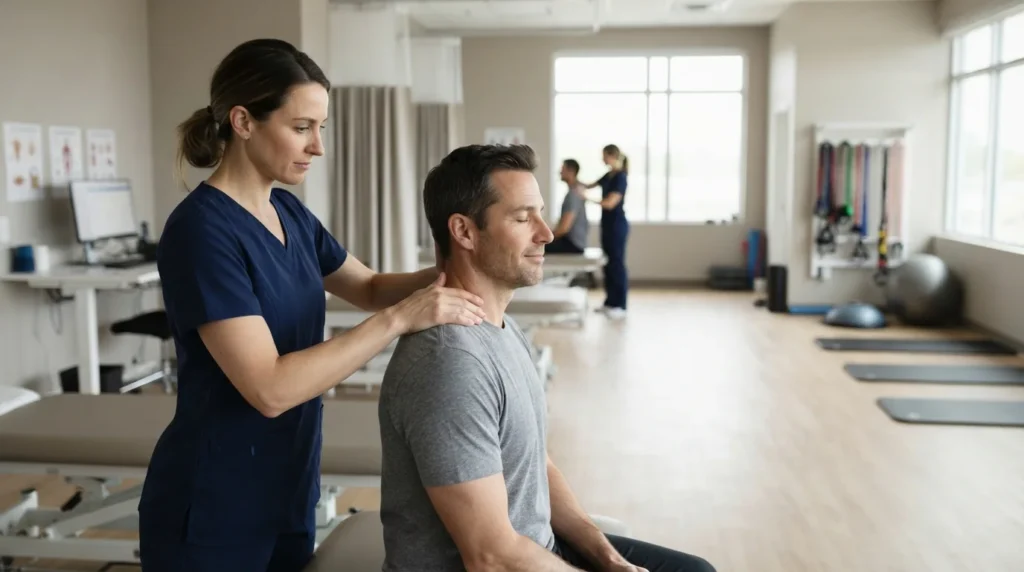
A realistic expectation is that manual therapy, when appropriate, may be one part of symptom management or functional rehabilitation. It is not reasonable to assume that a hands-on technique has repaired a nerve simply because a symptom temporarily feels better.
NICE
Evidence / AuthorityNational Institute for Health and Care Excellence
This supportive-care framing is consistent with current NICE guidance for low-back pain and sciatica.View sourceSource attribution does not imply endorsement of HYN.
Supportive care should be judged by the question it is intended to address—not by a promise that it can solve every part of a nerve-health problem.
User problem recognition
Can Manual Therapy Help With Nerve-Related Pain, Numbness, or Tingling?

What If Pain Is the Main Symptom?
Manual therapy may be considered for pain in some musculoskeletal and nerve-related situations, but the relevant evidence depends on the condition and technique.
Pain is also not a direct measurement of nerve recovery. A change in pain can be useful to observe, but it does not by itself establish what happened to the underlying nerve or why the symptom changed.
What If Numbness or Tingling Is the Main Symptom?
Numbness and tingling deserve additional context because altered sensation can have different causes. The location, onset, progression, associated weakness, injury history, and other symptoms may change what question should be asked next.
NIDDK
Safety / AuthorityNational Institute of Diabetes and Digestive and Kidney Diseases
Numbness and tingling can occur in different clinical contexts; reduced sensation can also change safety considerations around pressure and physical stimulation.View source
If sensation is reduced, hands-on treatment also raises a safety consideration: the person’s normal feedback about pressure, heat, or discomfort may be less reliable.
Why Does the Cause of the Symptom Matter?
A symptom is an entry point, not a diagnosis. Nerve compression, peripheral neuropathy, post-injury nerve problems, musculoskeletal conditions, and other situations can produce overlapping experiences.

This is why HYN separates the supportive-system question from condition-level pages. If the main question is whether a nerve is being compressed, the deeper destination is the Nerve Compression guide. If the concern is a specific condition such as sciatic nerve pain, the condition page owns that deeper explanation.
Can It Provide Temporary Relief Without Changing the Underlying Problem?
Yes, symptom improvement and underlying change are different questions. Pain can change for multiple reasons, and a short-term improvement does not prove that an underlying nerve problem has been corrected.
This distinction is one of the most important ideas in this guide:
Relief is not automatically recovery.
A person can feel better without that improvement establishing that the original cause has changed, that a compressed structure has been corrected, or that damaged nerve tissue has regenerated.
RELIEF ≠ RECOVERY
Evidence boundaryHYN synthesis
A change in symptoms does not by itself establish a change in the underlying nerve problem.
When Should a Symptom Be Assessed Rather Than Simply Treated Hands-On?
New or unexplained neurological symptoms, progressive weakness, worsening neurological changes, significant trauma, or severe or unusual symptoms should change the question from “What technique should I try?” to “Does this need direct assessment first?”
PEER-REVIEWED
EvidenceSystematic review / meta-analysis
This answer is informed by systematic-review evidence on neural mobilisation in selected musculoskeletal pain conditions.View source
This is especially important when symptoms are changing rather than remaining stable, or when there is a meaningful loss of function.
Evidence boundary
What Does the Evidence Actually Show About Manual Therapy?

Why Does Evidence Depend on the Condition, Technique, and Outcome?
Manual therapy research cannot be reduced to a single yes-or-no conclusion because studies investigate different interventions, populations, comparators, and outcomes.
SYSTEMATIC REVIEWS
EvidencePeer-reviewed evidence map
Evidence varies by condition, intervention and outcome; broader massage evidence has not produced high-certainty conclusions across the mapped reviews.View source
A study may measure pain. Another may measure function. Another may examine nerve conduction. Another may evaluate range of motion. Improvement in one outcome does not automatically establish improvement in every other outcome.
What Research Shows in Selected Musculoskeletal and Nerve-Related Problems
A 2024 systematic review and meta-analysis of neural mobilisation included 39 trials in adults with musculoskeletal pain. The review reported some positive findings for pain and function in selected low-back and neck-pain contexts, but it also reported very low confidence in the effect estimates and inconclusive findings for other musculoskeletal conditions. [1]
This is useful evidence, but it is not evidence that all manual therapy techniques improve all nerve problems. Neural mobilisation is a specific intervention, and the populations studied were specific.
What Does the Evidence Suggest for Sciatica?
NICE’s current published guidance for low back pain with or without sciatica states that manual therapy may be considered as part of a treatment package that includes exercise. [NICE] The recommendation does not establish manual therapy as a universal stand-alone treatment for sciatica, nor does it establish that hands-on treatment repairs the underlying nerve.
For readers whose main question is sciatica, the deeper condition-level explanation belongs on the Sciatic Nerve Pain page. This page focuses on the role and limits of manual therapy itself.
What Does Selected Nerve-Entrapment Research Show?
Carpal tunnel syndrome provides a useful example of why evidence must remain condition-specific.
A systematic review and meta-analysis published in 2022 evaluated manual therapy in people with carpal tunnel syndrome. Six studies involving 401 participants were included. The authors reported improvements in several measured outcomes, including pain, physical function, and some nerve-conduction measures. [2]
Those findings are relevant to the population and interventions studied. They do not establish that the same effects occur in every form of peripheral neuropathy, every nerve-compression problem, or every person with numbness or tingling.
What Do We Know About Manual Approaches for Peripheral Neuropathy?
Peripheral neuropathy is a different evidence problem. The condition can have multiple causes and can involve symptoms such as burning, tingling, numbness, pain, weakness, and changes in balance or sensation. The evidence for non-drug approaches is heterogeneous and cannot be represented by one universal manual-therapy conclusion.
SYSTEMATIC REVIEW
EvidencePeripheral-neuropathy research
Evidence for non-pharmacological treatment of painful peripheral neuropathies is intervention-specific and does not establish a universal role for massage.View source
NIDDK notes that peripheral neuropathy can reduce sensation in the feet, which can make it harder to notice pressure or injuries. That safety context matters when considering hands-on treatment, foot massage, or devices that apply pressure, heat, or vibration.
What Can Neural Mobilisation Evidence Tell Us—and What Can It Not Tell Us?
Neural mobilisation research can help answer questions about neural mobilisation in the populations studied. It cannot automatically answer whether ordinary massage, deep-tissue massage, spinal manipulation, or another manual approach will produce the same effect.
It also cannot establish that a person has a particular nerve disorder simply because a technique appears in research involving that disorder.
Why Can Evidence From One Condition Not Be Generalized to Every Nerve Problem?
Because the biological problem, affected tissues, severity, duration, intervention, and outcome can all differ.
Evidence is condition-specific, technique-specific, and outcome-specific. A useful evidence statement preserves those boundaries instead of turning a narrow finding into a universal promise.
What Does the Evidence Not Establish?
The evidence discussed here does not establish that manual therapy universally repairs damaged nerves, regenerates nerves, removes every form of compression, or corrects every underlying cause of nerve symptoms.
Mechanism & practical context
How Might Manual Therapy Support Movement and Mechanical Factors?

How Can Hands-On Treatment Relate to Movement?
Manual therapy is sometimes used in situations where pain, stiffness, or restricted movement affects function. In those settings, a hands-on intervention may be intended to support movement or make movement-based rehabilitation easier to tolerate.
This is different from claiming that the treatment directly repairs neural tissue.
Why Can Stiffness and Soft-Tissue Factors Matter?
Movement is influenced by many interacting structures. Muscles, joints, connective tissues, pain sensitivity, and the nervous system all participate in movement and function.
A person may therefore experience a change in symptoms when movement or physical loading changes, without that observation by itself identifying the exact cause.
Can Manual Therapy Affect Nerve Mobility?
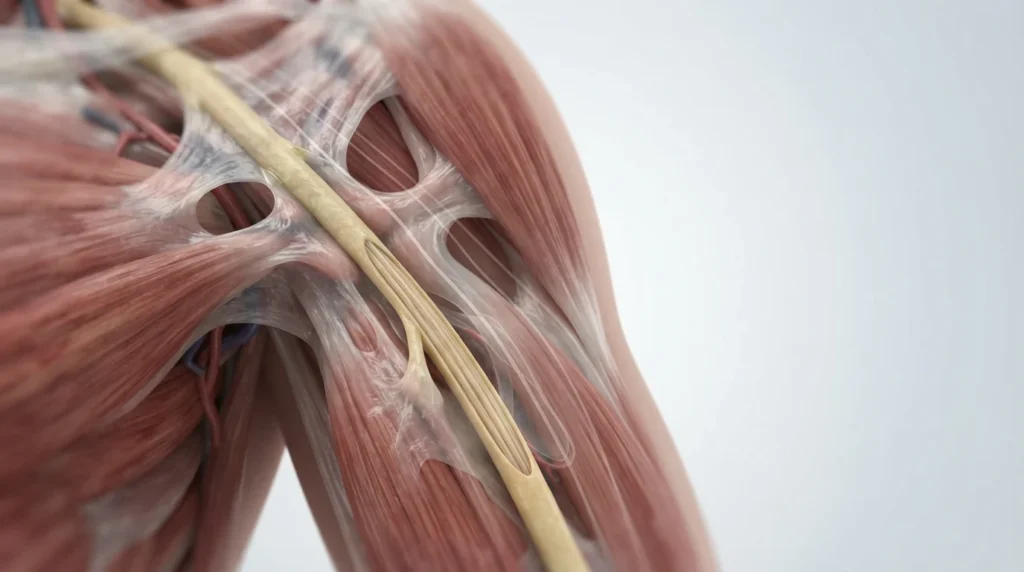
Some manual and movement-based approaches are designed to influence the mechanical relationship between neural tissues and surrounding interfaces. Neural mobilisation is the clearest example of an approach studied specifically in this context.
SYSTEMATIC REVIEW
EvidenceNeural mobilisation research
Evidence concerns specific neural-mobilisation approaches and selected populations, not all manual therapy techniques.View source
However, evidence that a technique can influence neural mobility or symptoms in a selected population should not be converted into the claim that it “releases” or “repairs” every compressed or damaged nerve.
Why Do Mechanical Factors Need Context?
Mechanical factors can be relevant in some nerve problems, but “mechanical” is not synonymous with “the cause.” A person can have symptoms that change with posture or movement for reasons that still require proper assessment.
When Can Movement-Based Care Become the More Relevant Next Step?
If the practical question becomes how to restore movement, build capacity, or progress activity, the deeper destination may be Movement Therapy or the site’s Exercises resource rather than manual therapy alone.
EVIDENCE BOUNDARY
EvidenceMovement and mechanical context
Manual therapy may be used to support movement or symptoms in selected contexts; this does not establish correction of every mechanical cause.
Manual therapy and movement-based care can sometimes be discussed together because they may serve different roles within a broader rehabilitation process.
If your deeper question is whether a mechanical problem may be contributing to the nerve symptoms, continue to the Mechanical Damage System. That page owns the broader root-cause and sustaining-pathway question; this page remains focused on the supportive role and limits of manual therapy.
Contextualize → transfer
Manual Therapy and Nerve Compression: What Is the Supportive Role?
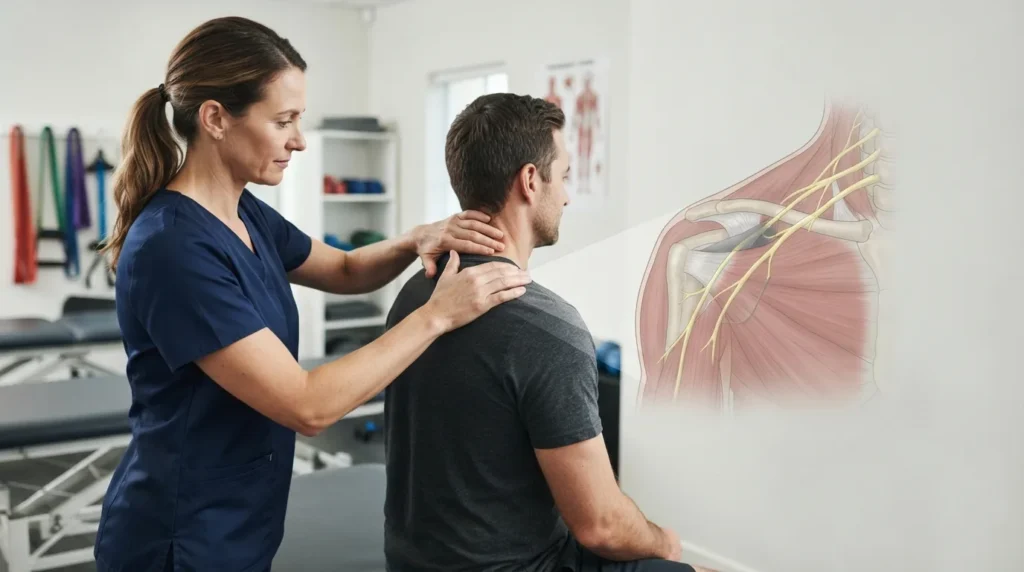
Can Manual Therapy Help When a Nerve Is Irritated or Compressed?
It may be considered in some situations as part of a broader approach, depending on the actual cause, severity, diagnosis, technique, and clinical assessment.
But a manual technique should not be described as a universal method for “releasing a trapped nerve.” Nerve compression is a condition-level question, and the underlying cause determines what needs to be understood and addressed.
What Might It Support?
Depending on the situation, a manual approach may be used alongside movement-based care to address pain, movement limitations, or selected mechanical factors.
What Can It Not Establish or Correct on Its Own?
Improvement after hands-on treatment does not by itself establish that compression has been removed, that a structural problem has been corrected, or that nerve tissue has regenerated.
When to Continue to the Nerve Compression Guide
If the deeper question is whether a nerve is actually compressed, what may be causing that compression, or how nerve compression is assessed, continue to the Nerve Compression guide.
When Does Compression Need Further Assessment?
Persistent or worsening neurological symptoms, progressive weakness, meaningful loss of function, or symptoms following significant trauma can change the assessment context. Those situations should not be reduced to a question about which massage technique to use.
SYSTEMATIC REVIEW
EvidenceCondition-specific entrapment research
Relevant mechanical-interface evidence is concentrated in selected entrapment conditions such as carpal tunnel syndrome and should not be generalized to every “pinched nerve.”View source
Deeper condition question? → Understand nerve compression
Practical combination
How Does Manual Therapy Fit With Exercise and Movement?
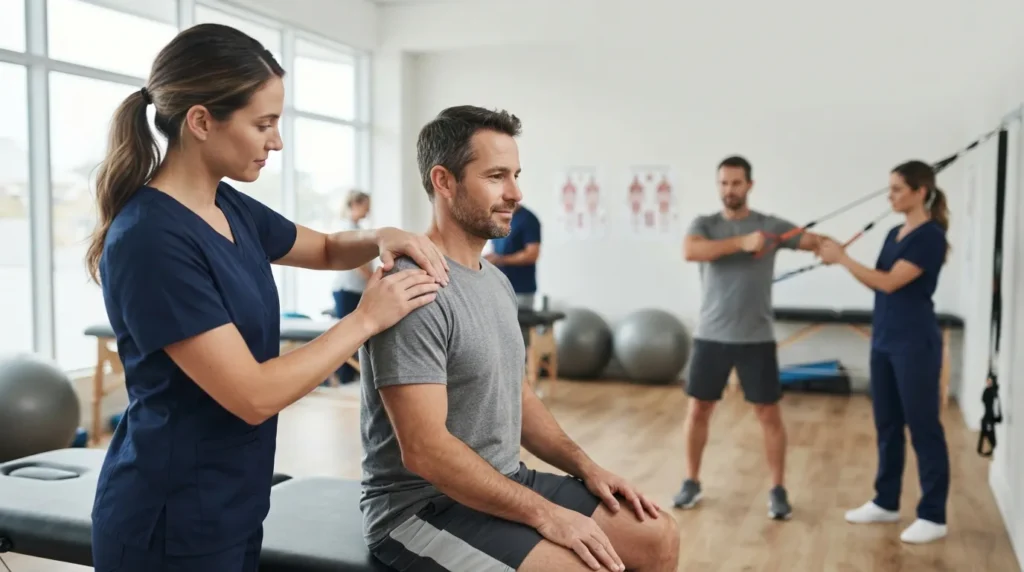
Why Might Manual Therapy and Exercise Be Used Together?
Manual therapy and exercise can serve different purposes. A hands-on intervention may be used to address symptoms or movement limitations, while exercise can be used to build or restore movement capacity, strength, coordination, or function.
NICE
Clinical guidanceNational Institute for Health and Care Excellence
Current NICE guidance places manual therapy within an exercise-containing treatment package for low-back pain with or without sciatica.View sourceSource attribution does not imply endorsement of HYN.
NICE’s guidance for low back pain and sciatica specifically places manual therapy within a treatment package that includes exercise. This is an example of how manual therapy can be positioned as one component rather than automatically treated as the entire intervention.
Is Manual Therapy Enough on Its Own?
Not necessarily. Whether it is appropriate as a stand-alone intervention depends on the condition and treatment goal. There is no general rule that manual therapy alone is sufficient for every nerve-related problem.
NICE
Clinical guidanceNational Institute for Health and Care Excellence
For low-back pain with or without sciatica, NICE places manual therapy within a treatment package that includes exercise.View sourceSource attribution does not imply endorsement of HYN.
Manual Therapy vs Movement-Based Approaches
This does not need to be an either-or question. The more useful question is what role each approach is intended to play for the particular problem being addressed.
Manual therapy
Hands-on intervention that may be used to support selected symptoms, movement, or mechanical factors.
Movement-based care
Uses movement, exercise, and functional activity to address capacity, mobility, strength, or participation.
Assessment
Helps determine what problem is actually being addressed and whether an intervention is appropriate.
Manual Therapy vs Physical Therapy
Manual therapy can be part of physiotherapy, but physiotherapy is broader than manual therapy. It may involve assessment, education, exercise, functional rehabilitation, and other interventions.
WORLD PHYSIOTHERAPY
Professional contextPhysiotherapy practice framework
Manual therapy is an intervention category; physiotherapy is a broader professional practice that may include assessment, exercise, education and rehabilitation.
When Should You Explore Movement Therapy?
If your main question has shifted from “Could hands-on treatment help?” to “How do I understand movement, exercise, or physical function in relation to my symptoms?”, continue to Movement Therapy.
Evidence & safety boundary
Is Manual Therapy Safe When Nerve Symptoms Are Present?
Can Manual Therapy Make Symptoms Worse?
It can. A hands-on approach that is poorly matched to the problem, applied inappropriately, or poorly tolerated may aggravate symptoms. “More pressure” should not be treated as automatically better.
SAFETY
Safety noteReassess worsening or new symptoms
Worsening or new neurological symptoms should prompt reassessment rather than simply increasing treatment intensity.
A new or clearly worsening symptom after treatment is information worth paying attention to rather than automatically interpreting it as proof that the treatment is “working.”
Why Is More Pressure Not Always Better?
Pain and tissue sensitivity vary between people and conditions. Stronger pressure does not automatically produce a better therapeutic effect, and it can be particularly inappropriate when sensation is reduced or when the underlying problem has not been established.
What Changes When Sensation Is Reduced?
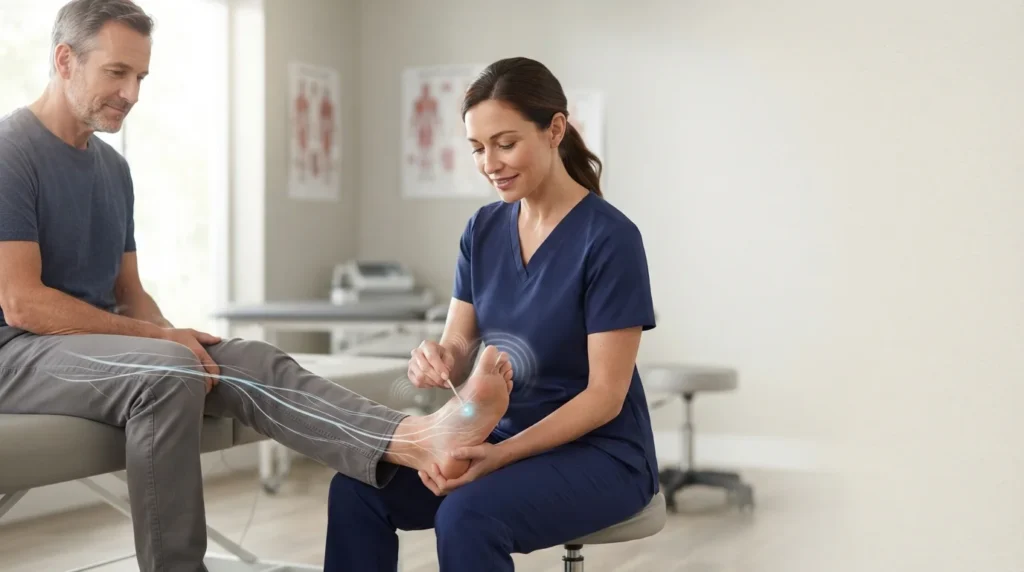
Reduced sensation matters because normal feedback may be less reliable. NIDDK notes that peripheral neuropathy can cause loss of sensation in the feet and that people may not notice pressure or injuries as readily. [3]
NIDDK
Safety / AuthorityNational Institute of Diabetes and Digestive and Kidney Diseases
Reduced sensation can make pressure or injury harder to detect, which is relevant when considering hands-on treatment or physical stimulation.View source
That makes pressure, heat, vibration, and other forms of physical stimulation a safety-sensitive issue when significant sensation loss is present.
What About Deep-Tissue Techniques?
“Deep tissue” is not a guarantee of greater benefit. Whether a technique is appropriate depends on the person, the problem being addressed, sensation, tissue status, and clinical context.
If the reason for a nerve symptom is unclear, increasing the intensity of hands-on treatment is not a substitute for understanding the cause.
What About Foot Massage or Foot Massagers?
Foot massage and foot-massage devices deserve particular caution when sensation is reduced. A person may not accurately perceive excessive pressure, heat, vibration, or tissue irritation.
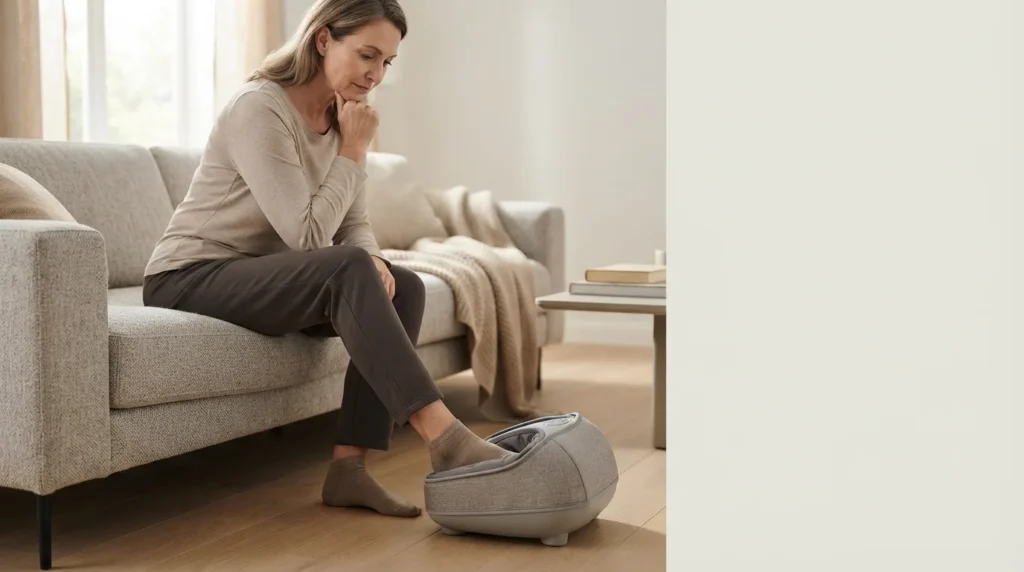
This page therefore does not endorse a particular foot massager or prescribe a pressure, temperature, duration, or device setting. Evidence and safety depend on the underlying condition and the person’s sensory status.
When Should You Stop a Technique?
If a technique produces concerning, severe, persistent, or clearly worsening symptoms, continuing simply because the treatment is supposed to be beneficial is not a safe assumption.
When Should Nerve Symptoms Be Assessed Before Manual Therapy?
Direct assessment becomes particularly important when symptoms are new and unexplained, progressively worsening, associated with significant weakness or functional loss, follow significant trauma, or are severe or unusual.
NICE
Clinical guidanceAssessment context
New or concerning symptoms can change the need for assessment before treatment.View sourceSource attribution does not imply endorsement of HYN.
New / unexplained / worsening neurological change → Consider direct medical assessment before assuming a hands-on treatment is appropriate.
This is an educational safety boundary, not a diagnosis. If symptoms are urgent or severe, seek appropriate medical care rather than relying on online education.
Expectation management
What Can Manual Therapy Realistically Do—and What Can’t It Do?
What It May Support
In selected situations, manual therapy may be used to support symptoms, movement, or function as part of a broader care plan. The evidence is strongest when the intervention and condition are clearly defined.
What It Cannot Establish
A person’s immediate response to treatment cannot by itself establish what happened biologically to a nerve. Feeling less pain does not prove that a damaged nerve has regenerated, that compression has been corrected, or that the underlying cause has disappeared.
Symptom Improvement vs Underlying Change
Symptoms are useful observations, but they are not a complete biological measurement.
Consider two separate questions:
- Did the person feel or function differently after the intervention?
- What changed in the underlying problem that produced the symptom?
The first question may sometimes be answered by observing symptoms and function. The second may require a much deeper clinical assessment and, where appropriate, objective testing.
Relief vs Recovery
Relief describes a change in what someone experiences. Recovery is a broader question about how the underlying problem and function are changing over time.
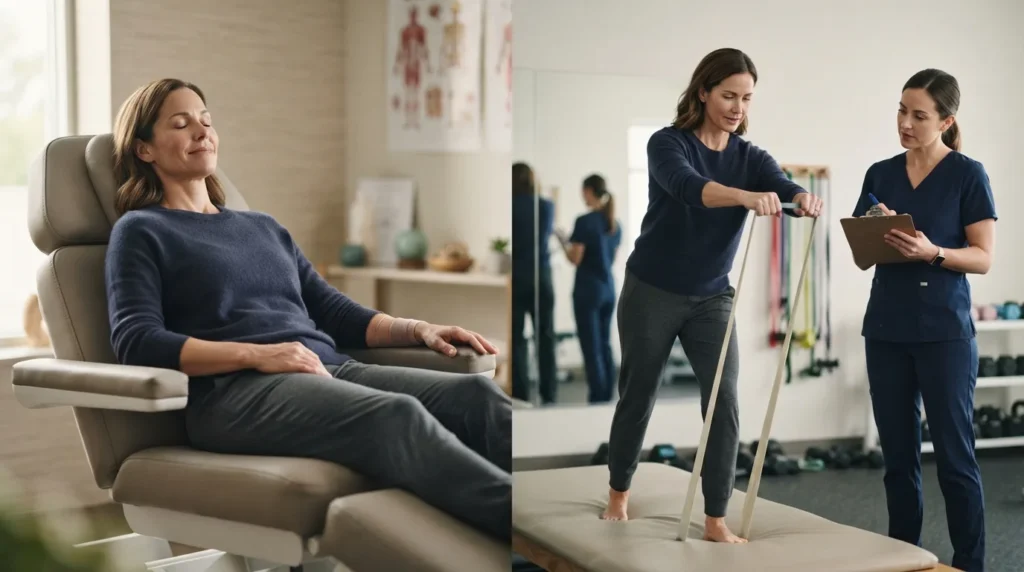
One should not automatically be used as proof of the other.
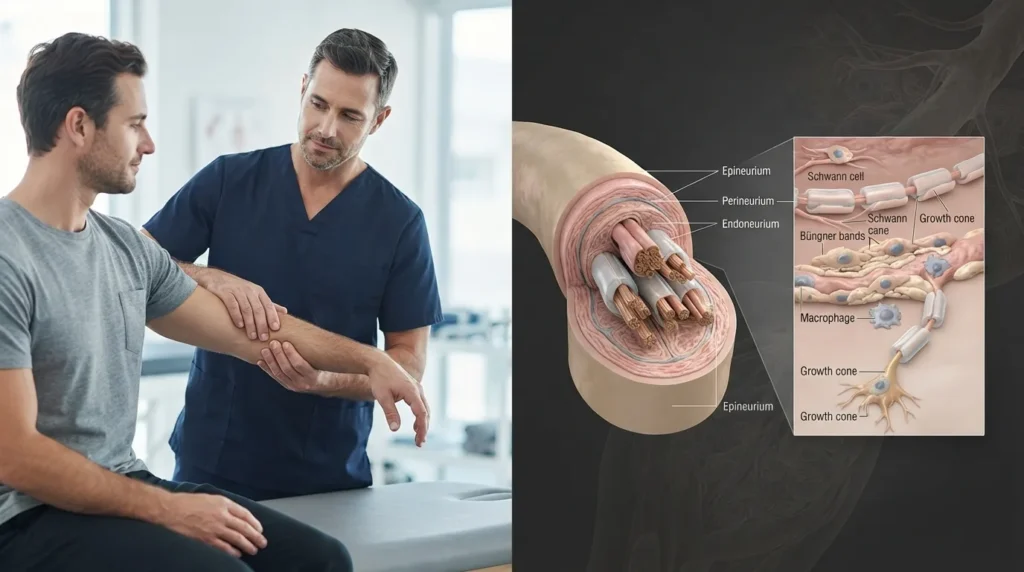
Can Manual Therapy Repair or Regenerate Damaged Nerves?
There is no broad basis for describing manual therapy as a universal method for directly repairing or regenerating damaged nerves.
EVIDENCE BOUNDARY
EvidenceWhat the evidence does not establish
Current evidence does not establish manual therapy as a general treatment for nerve repair or regeneration.
Nerve regeneration is a biological process with its own conditions, limitations, and variability. A supportive intervention may be discussed in the context of recovery without being described as the mechanism that regenerates the nerve.
For the biology of nerve regeneration itself, continue to HYN’s Regeneration system.
Can Manual Therapy Address the Underlying Cause?
That depends entirely on the cause. A hands-on intervention should not be described as addressing an underlying cause simply because symptoms change during or after treatment.
EVIDENCE BOUNDARY
EvidenceCause-specific interpretation
Whether an underlying cause can be changed depends on the specific condition; symptom improvement alone does not establish cause correction.
If the underlying issue is a condition such as nerve compression, peripheral neuropathy, or post-injury nerve damage, the relevant condition-level explanation should remain with the page that owns that topic.
Why Does Feeling Better Not Always Mean the Nerve Has Recovered?
Because symptoms can change without establishing a corresponding biological change in nerve structure or function. Pain, sensitivity, movement, attention, activity, and other factors can influence what a person experiences.
When Should You Reassess the Approach?
Reassess when symptoms are not moving in the expected direction, when function is worsening, when new neurological changes appear, or when repeated treatment produces only temporary changes without a clearer understanding of the underlying problem.
The goal of reassessment is not to decide that manual therapy “failed” or “worked” from one session. It is to ask whether the intervention is addressing the question it was supposed to address.
Long-tail resolution
Frequently Asked Questions About Manual Therapy and Nerve Health
Can Massage Help Sciatica?
Massage or other manual approaches may be considered as part of care for some people with low back pain and sciatica. NICE places manual therapy within a treatment package that includes exercise. That does not mean massage alone treats every cause of sciatica or repairs a nerve.
NICE
Evidence / AuthorityNational Institute for Health and Care Excellence
Consistent with current NICE guidance for low-back pain and sciatica.View sourceSource attribution does not imply endorsement of HYN.
Learn more about sciatic nerve pain.
Can Massage Help a Pinched Nerve?
It may be considered in selected situations, but “pinched nerve” is not a sufficient description of the underlying problem. The cause, location, severity, and neurological findings matter. Manual therapy should not be presented as a guaranteed way to release or correct every compressed nerve.
Is Massage Safe With Peripheral Neuropathy?
Safety depends on the person, severity, sensation, cause, and technique. Reduced sensation can make pressure or injury harder to detect, so peripheral neuropathy should not be treated as a simple massage question.
Explore peripheral neuropathy.
Can Massage Help Burning Feet?
Burning feet can have different causes. Massage may affect how symptoms feel in some circumstances, but symptom relief does not identify or correct the underlying cause. If burning is persistent, unexplained, worsening, or accompanied by numbness or weakness, the underlying problem deserves appropriate assessment.
NIDDK
Safety / Clinical contextPeripheral-neuropathy context
Burning feet can occur in peripheral neuropathy, but the symptom itself does not establish the cause or indicate that massage is an appropriate treatment.View source
Can a Foot Massager Help Neuropathy?
Evidence should not be treated as universal proof that foot-massage devices improve peripheral neuropathy. Reduced sensation also creates a safety issue because pressure, heat, or vibration may be less reliably perceived.
FOOT-MASSAGE RESEARCH
Evidence noteSelected studies
Studies of therapist-administered or self-foot massage do not establish that powered commercial foot-massage devices are effective or appropriate for everyone with neuropathy.View source
Is a Foot Massager Safe With Numb Feet?
Numbness makes safety more complicated because normal sensory feedback can be reduced. NIDDK notes that peripheral neuropathy can cause loss of sensation in the feet and make it harder to notice pressure or injuries. A device should not be assumed safe simply because it is marketed for comfort.
NIDDK
Safety / AuthorityNational Institute of Diabetes and Digestive and Kidney Diseases
Loss of sensation can make pressure or injury harder to detect; a foot-massage device should not be assumed safe simply because it is marketed for comfort.View source
Can Manual Therapy Help After an Injury?
It may be part of rehabilitation in selected situations, but the type and severity of the injury matter. New weakness, significant sensory loss, severe symptoms, or other concerning neurological changes can change the need for assessment.
Learn about post-injury nerve damage.
Can Deep-Tissue Massage Affect a Nerve?
Deep pressure can affect tissues and may alter symptoms, but it should not be assumed to provide a therapeutic benefit simply because it is deeper. If sensation is reduced or the underlying problem is unclear, stronger pressure can be a safety-sensitive choice.
Can Manual Therapy Help Chronic Nerve Symptoms?
Chronic symptoms can have different causes and may require a broader assessment of the condition, function, and factors that maintain the problem. Manual therapy may be one component in selected situations, but chronicity alone does not establish that it is appropriate or sufficient.
EVIDENCE BOUNDARY
EvidenceCondition- and intervention-specific
Evidence for chronic nerve-related symptoms depends on the underlying condition and intervention studied.
What If Symptoms Keep Coming Back After Treatment?
If symptoms improve for a while and then return, it can be tempting to keep repeating the same treatment or to assume that more treatment is automatically the answer. A recurrence is also useful information: it may be a reason to step back, reconsider what problem is being addressed, and decide whether reassessment or a different next step is warranted.
Repeated temporary relief can be useful information, but it should also prompt a reassessment of the question being addressed. Consider whether the underlying cause, movement pattern, load, condition, or other factor still needs to be understood.
What If I Have Tried Other Treatments and Still Have Nerve Symptoms?
Persistent symptoms are a reason to revisit the underlying question, not simply to increase treatment intensity. If the cause remains unclear, or if symptoms are worsening or accompanied by neurological loss, direct assessment may be more important than trying another hands-on technique.
REASSESS
Safety / ReassessmentPersistent symptoms
Persistent or worsening neurological symptoms may warrant reassessment rather than simply repeating or intensifying the same intervention.
Can Massage Improve Circulation?
Massage can influence local sensations and soft tissues, but “improves circulation” is too broad a claim to apply universally. The relevant question depends on what circulation problem is being discussed and whether there is an established medical condition.
Practical action → observation → next step
What to Observe, When to Reassess, and What to Explore Next

You do not need to work out every possible cause on your own. The useful next step is to match the question to the problem: notice what changes, pay attention to symptoms that are new or worsening, and seek the more specific information or assessment when the situation calls for it.
What to Observe After a Session
If manual therapy is being used as part of an appropriate care plan, observation can focus on meaningful changes rather than on whether the treatment simply felt intense.
- Did the symptom change?
- Did movement or function change?
- Was the change temporary or sustained?
- Did a new symptom appear?
- Did the original symptom become more severe?
- Did the change affect everyday activity?
Observation is not a substitute for clinical assessment. It is a way of organizing what happened so that the next question is more useful.
Which Changes Suggest the Approach Is Not Being Tolerated?
Clearly worsening symptoms, new neurological changes, significant functional loss, or severe unexpected symptoms should not automatically be interpreted as a normal treatment response.
When symptoms are concerning, the appropriate next step may be assessment rather than repeating the same technique.
When Should You Reassess Instead of Repeating the Same Approach?
Reassessment becomes especially relevant when the same treatment keeps producing only short-lived relief, symptoms are progressively changing, the underlying cause remains uncertain, or the treatment goal has not been clearly defined.
When Should You Explore Movement or Condition-Specific Information?
Choose the next destination according to the question you now have. Manual therapy may have answered a supportive-care question without answering the condition-level question underneath it.
Learn
Understand the symptom, mechanism, condition, or intervention.
Observe
Notice relevant changes and the context in which they occur.
Reassess
Ask whether the original question has actually been answered.
Return
Continue to the HYN destination that owns the next question.
Your Next HYN Learning Path
I want to understand nerve compression
Explore the condition-level question rather than assuming manual therapy is the answer.Nerve Compression
I want to understand sciatica
Move to the condition-level explanation of sciatic nerve pain.Sciatic Nerve Pain
I want to understand nerve damage after an injury
Explore the injury-specific pathway.Post-Injury Nerve Damage
I want movement-based information
Explore movement as a broader component of physical function.Movement Therapy
I want practical exercise information
Continue to practical exercise discovery rather than treating manual therapy as the entire solution.Exercises
I want to understand peripheral neuropathy
Move to the condition-level information when neuropathy is the central question.Peripheral Neuropathy
Publication Information
Editorial Team: Heal Your Nerves Naturally Editorial Team
Medical Reviewer: Dr. Chinmoy Shaa Poddar
Review Date: 23/09/2026
Last Updated: 23/09/2026
Publication governance is intentionally not presented as completed until the review occurrence/date and update record are verified.
Evidence sources
References
- NICE — Low back pain and sciatica in over 16s: assessment and management (NG59). Current published guidance includes manual therapy as an option within a treatment package that includes exercise for low back pain with or without sciatica. NICE evidence and guideline material.
- Baptista FM, et al. 2024. Effectiveness of Neural Mobilisation on Pain Intensity, Functional Status, and Physical Performance in Adults with Musculoskeletal Pain: A Systematic Review with Meta-Analysis. PubMed PMID 37990512.
- Jiménez-Del-Barrio S, et al. 2022. The effectiveness of manual therapy on pain, physical function, and nerve conduction studies in carpal tunnel syndrome patients: a systematic review and meta-analysis. PubMed PMID 34862562.
- NIDDK — Peripheral Neuropathy. Information on symptoms, reduced sensation, foot problems, and assessment in peripheral neuropathy. NIDDK Peripheral Neuropathy.
- Mak S, et al. 2024. Use of Massage Therapy for Pain, 2018–2023: A Systematic Review. The review mapped 129 systematic reviews and found no conclusions rated as high-certainty evidence. PubMed PMID 39008297.
- Liampas A, et al. 2020. Non-Pharmacological Management of Painful Peripheral Neuropathies: A Systematic Review. This is broader non-pharmacological evidence, not massage-specific evidence. PubMed PMID 32809209.
- Chatchawan U, et al. 2015. Effects of Thai foot massage on balance performance in diabetic patients with peripheral neuropathy: a randomized parallel-controlled trial. The study evaluated a specific therapist-administered Thai foot-massage intervention in 60 people with type 2 diabetes and peripheral neuropathy; it does not establish effectiveness or safety for powered commercial foot-massage devices. PubMed PMID 25892354.
- Sayin-Kasar K, Duru-Asiret G. 2025. The Effect of Foot Self-Massage on Peripheral Neuropathic Pain, Peripheral Skin Temperature and Patient Comfort in Individuals with Diabetes: A Randomized Controlled Trial. The study evaluated self-foot massage in 52 people with type 2 diabetes; its intervention and population should not be generalized to commercial foot-massage devices or all neuropathy. PubMed PMID 40163748.
- Iogna Prat P, et al. 2024. The effectiveness of nerve mechanical interface treatment for entrapment neuropathies in the limbs: A systematic review with meta-analysis. The review included studies of carpal tunnel syndrome and reported low to very low certainty for pooled results. PubMed PMID 38217928.
Evidence is interpreted according to the population, intervention, comparator, outcome, and certainty reported by the source. A study involving one condition or technique should not automatically be generalized to every nerve-health problem.
Start With the Question That Brought You Here
Manual therapy can be part of a broader approach in selected situations, but understanding its role requires more than asking whether massage “works.”
Ask what problem is being addressed, what evidence applies, what the intervention is intended to support, what it cannot establish, and when the situation calls for assessment rather than another hands-on treatment.
Understand Nerve CompressionExplore Movement TherapyExplore Peripheral Neuropathy
Learn → Observe → Reassess → Return