Structured Frameworks for Coordinated Nerve Healing
Nerve Recovery Protocols are structured healing frameworks. They coordinate therapies, nutrition support, nervous system regulation, and lifestyle stabilization across the recovery timeline.
Nerve Recovery Protocols provide structured frameworks that coordinate therapies, nutrition support, nervous system regulation, and lifestyle stabilization across the healing timeline.
Recovery protocols provide structured frameworks that coordinate supportive therapies, biological repair systems, and lifestyle adjustments to support nerve healing over time. These frameworks create organized pathways for coordinated recovery support.
In essence, these frameworks create organized pathways for coordinated recovery support.
Nerve recovery rarely progresses through isolated interventions. Instead, healing capacity improves when multiple supportive systems — including repair nutrition, nervous system regulation, and circulation support These repair processes rely heavily on repair nutrition support that sustains cellular regeneration capacity, inflammation stabilization, and environmental repair. Healing Environment conditions align and function in an integrated manner. As a result, recovery environments become more supportive of long-term nerve stabilization.
This module explores how recovery systems operate within structured, layered, and sequenced frameworks across the healing timeline. In particular, it highlights how coordinated sequencing strengthens repair efficiency. Consequently, staged healing progression becomes more sustainable. Furthermore, it explains how cohesive recovery models organize therapeutic inputs and biological support mechanisms. It explains how cohesive recovery models organize therapeutic inputs and biological support mechanisms. Furthermore, it explains how cohesive recovery models organize therapeutic inputs and biological support mechanisms.
Rather than presenting prescriptive treatment plans, this education layer introduces protocol architecture — helping individuals understand how recovery frameworks function, integrate, and adapt to support long-term nerve stabilization and functional restoration. Overall, this structured perspective strengthens coordinated recovery understanding. Additionally, it helps clarify how coordinated healing frameworks support long-term recovery progression.
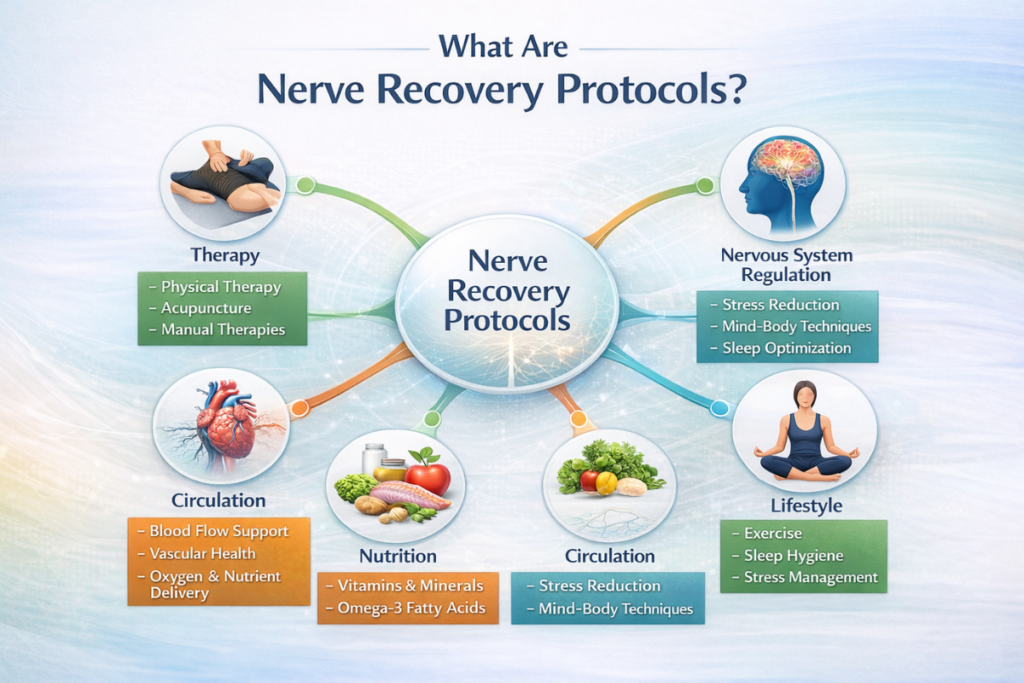
What Recovery Protocols Mean
A recovery protocol refers to a coordinated healing framework where multiple supportive systems work together toward nerve repair and functional stabilization. In essence, it structures how diverse recovery inputs align within a unified model. Additionally, this framework ensures that therapeutic, metabolic, and regulatory systems function in coordinated support. As a result, recovery environments become more organized and biologically supportive. Furthermore, structured integration enhances overall repair readiness and functional resilience over time.
These frameworks commonly integrate:
- Biological repair support
- Nervous system stabilization
- Lifestyle regulation
- Circulation optimization
- Inflammation modulation
When used in isolation, these systems may provide limited benefit. However, structured coordination within a unified framework creates a more supportive biological environment for nerve recovery. As a result, healing systems function more cohesively. Additionally, this alignment strengthens overall repair efficiency. Furthermore, coordinated interaction between metabolic, neurological, and circulatory systems enhances biological stability. In particular, integrated regulation reduces systemic recovery strain. Consequently, functional restoration processes operate more effectively. Over time, such structured integration supports a more sustainable long-term healing progression.
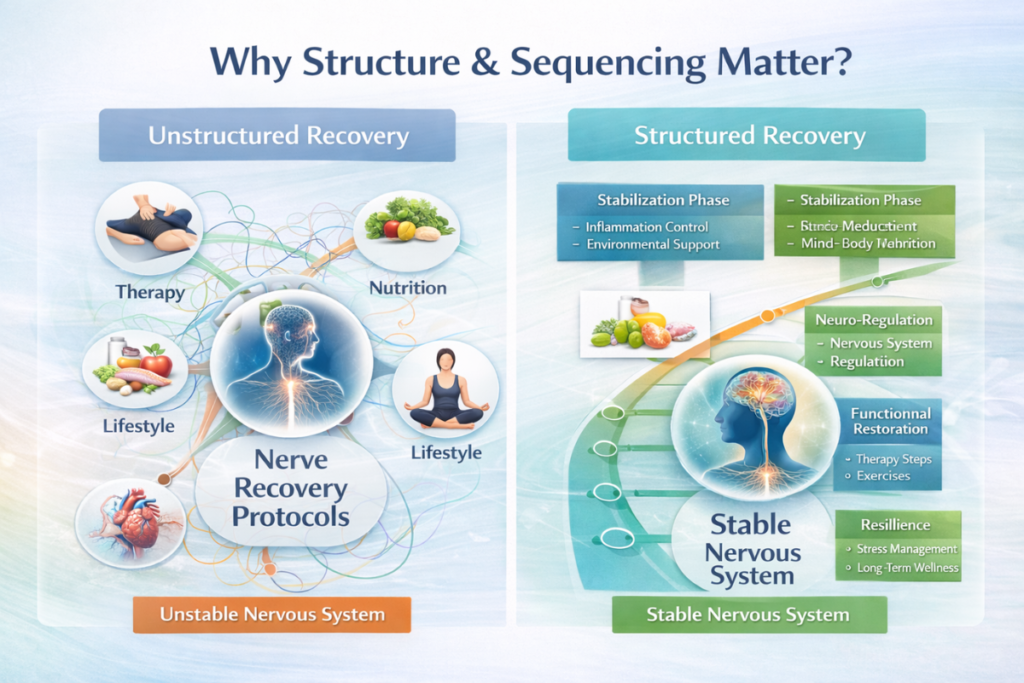
Why Structure & Sequencing Matter
An unstructured recovery approach often leads to fragmented healing inputs. For example, supportive therapies may be applied without alignment or sequencing, where uncoordinated strategies lack timing consideration.
Nerve tissue repair remains energy-dependent, regulation-sensitive, and environment-influenced. Without structural coordination, several limitations may emerge:
- Repair processes may compete for biological resources
- Inflammation may remain unstable
- Nervous system sensitivity may persist
- Recovery progress may plateau
Structured protocols create organized healing conditions where repair systems operate synergistically rather than independently. Therefore, recovery progression becomes more efficient and sustainable.
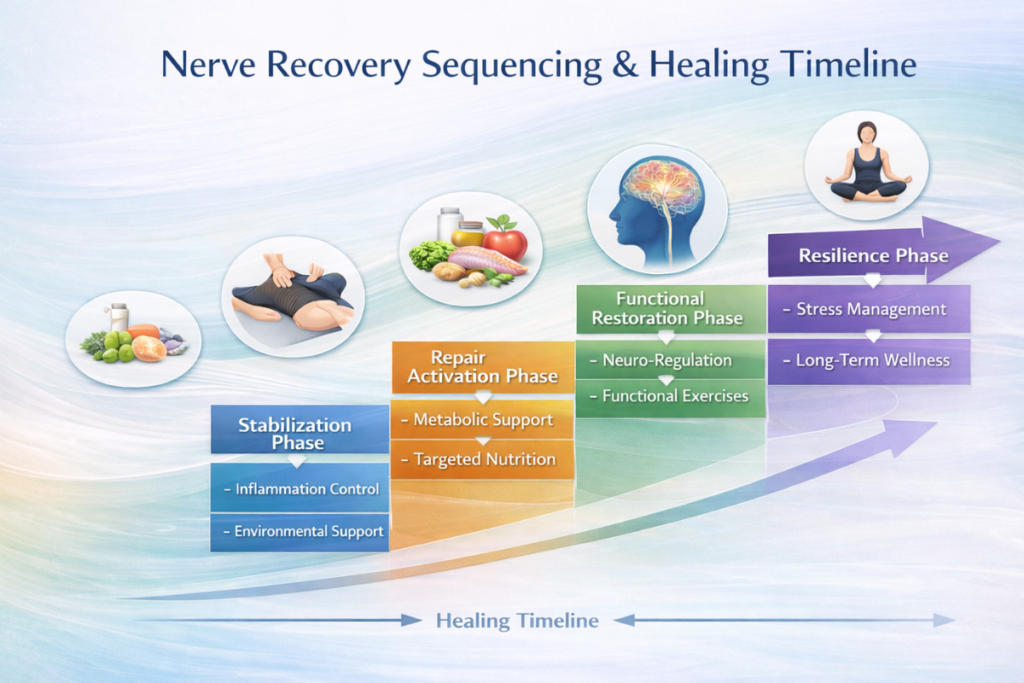
Sequencing & Healing Timeline
Timing plays a critical role in nerve recovery.
Different healing systems become more relevant at different stages of recovery progression. For instance, early stages prioritize stabilization, while later stages emphasize functional restoration. Accordingly, sequencing ensures that biological readiness guides therapeutic integration.
For example:
Stabilization Stage
Focuses on inflammation control, environmental safety, and nervous system calming.
Repair Activation Stage
Emphasizes metabolic repair, targeted nutrition, and circulation support.
Functional Restoration Stage
Supports neuroregulation, movement integration, and signal retraining.
Resilience Development Stage
Centers on stress adaptation, long-term wellness, and relapse prevention.
Sequencing ensures that recovery frameworks support biological systems in the order most conducive to healing readiness and repair efficiency. As a result, staged progression strengthens overall recovery outcomes.
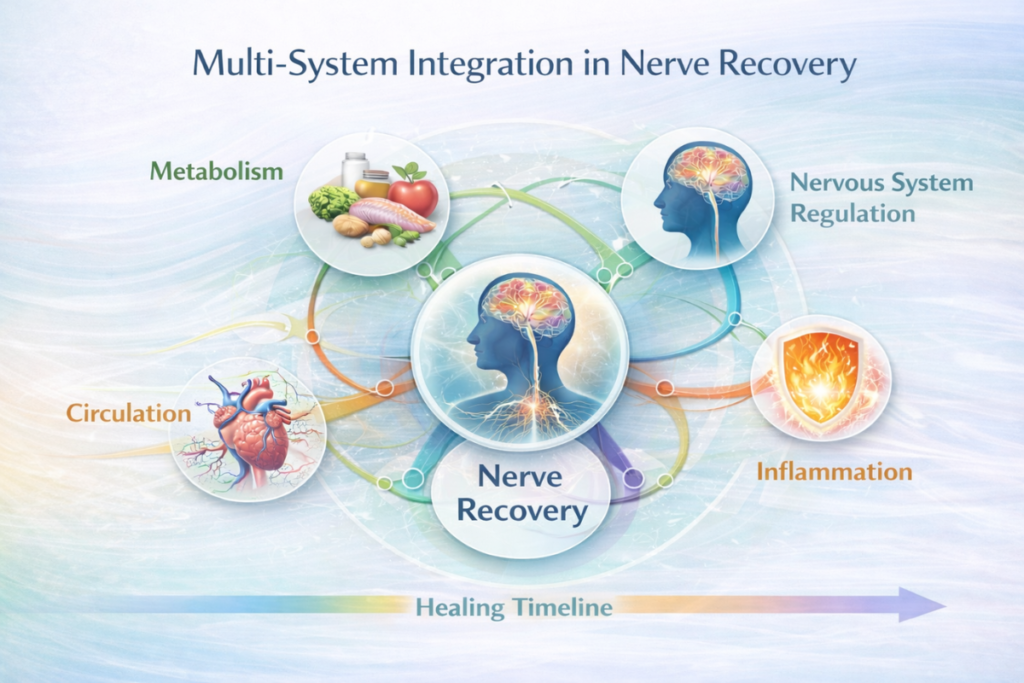
Multi-System Integration
Nerve healing does not rely on a single system — it results from coordinated multi-system cooperation.
Key integrated domains include:
Metabolic repair systems
Circulatory and oxygenation support
Neuroregulation mechanisms
Inflammatory stabilization systems
Lifestyle and behavioral regulation
Recovery protocols organize how these systems interact, ensuring that no single healing domain remains neglected within the broader recovery framework. In addition, this integration supports long-term functional resilience. Ultimately, coordinated systems strengthen recovery sustainability.
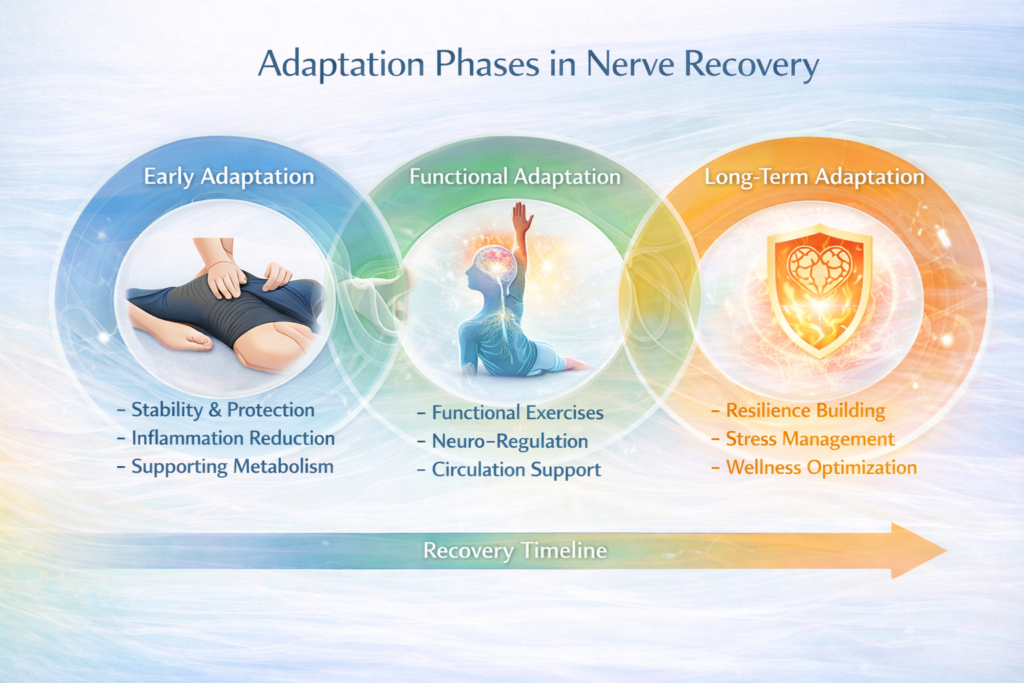
Protocol Adaptation Over Time
Recovery frameworks do not remain static — they evolve as healing progresses.
Adaptation may occur based on:
Symptom pattern changes
Nervous system stabilization markers
Functional improvement indicators
Environmental stress load
Metabolic recovery signals
Understanding protocol adaptability helps individuals recognize that recovery remains dynamic and responsive rather than fixed or linear. Over time, adaptive recovery adjustments strengthen long-term stability. Consequently, recovery frameworks remain responsive to evolving biological needs.
Education Objectives
This module helps you understand:
- How recovery protocols are structured
- Why sequencing matters in nerve healing
- How multiple systems interact within recovery frameworks
- The role of timing in repair progression
- How protocols adapt across healing stages