
Circulation and Oxygenation for Nerve Health: Blood Flow, Nerve Perfusion, Ischemia, and Recovery
Quick Answer: Why Circulation and Oxygenation Matter for Nerve Health
Circulation and oxygenation matter because peripheral nerves are living tissues. They need a continuous supply of blood, oxygen, glucose, and other metabolic resources to maintain electrical signaling, cellular maintenance, and normal function.
Peripheral nerves also have their own vascular network. If blood flow becomes severely or persistently impaired, nerve function can suffer and nerve tissue may eventually be injured. NINDS identifies vascular and blood disorders that reduce oxygen supply as one recognized pathway to peripheral nerve damage.
However, this does not mean that every case of tingling, burning, numbness, cold feet, weakness, or nerve pain is caused by “poor circulation.”
Peripheral neuropathy, nerve compression, radiculopathy, diabetes, autoimmune disease, nutritional imbalance, medication effects, vascular disease, and other disorders can produce overlapping symptoms.
So the most useful question is not:
“How can I boost circulation?”
It is:
“Is impaired blood flow or oxygen delivery actually contributing to my symptoms—and, if so, what is causing it?”
That distinction determines whether the appropriate response is structured movement, cardiovascular risk reduction, foot protection, improved sleep and nutrition—or disease-specific medical care.
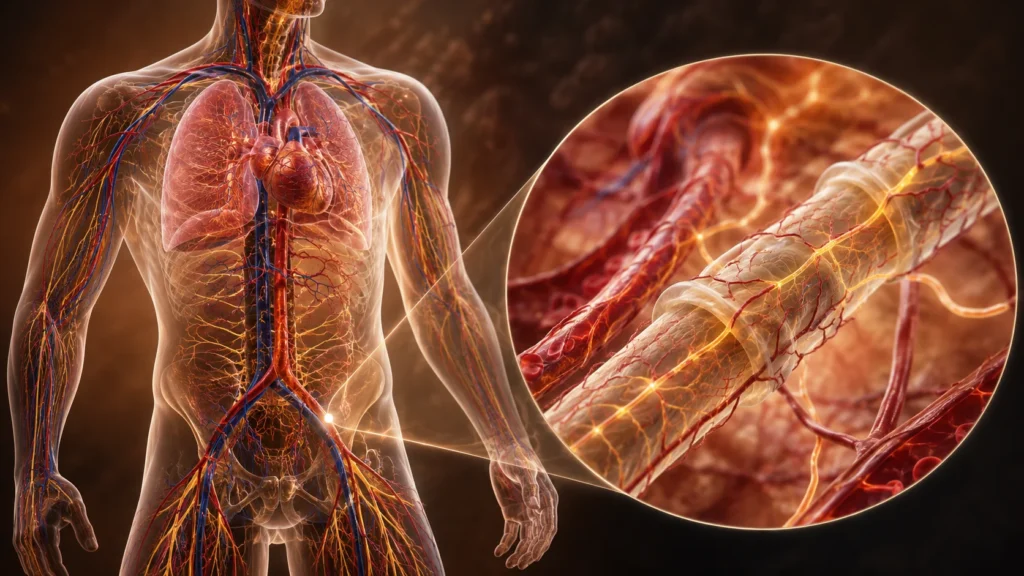
What You Will Learn
This guide explains:
- how peripheral nerves receive blood;
- what the vasa nervorum are;
- why the blood–nerve barrier matters;
- how circulation, perfusion, oxygenation, and oxygen-carrying capacity differ;
- what actually determines tissue oxygen delivery;
- why arterial disease and venous disease are different;
- how macrocirculation differs from microcirculation;
- how ischemia and hypoxia affect nerve tissue;
- why poor circulation and peripheral neuropathy can feel similar;
- how PAD, diabetes, vasculitis, and anemia affect nerves through different pathways;
- what ABI, TBI, Doppler, SpO₂, NCS, and EMG actually tell clinicians;
- why exercise can help without necessarily reopening a narrowed artery;
- which daily habits have meaningful vascular-health value;
- why prolonged sitting and long-distance travel create a different type of circulation concern;
- why compression, heat, massage, and “circulation boosting” require context;
- how sleep affects systemic oxygenation;
- how circulation participates in experimental nerve regeneration;
- and when circulation-related symptoms require urgent medical care.
How This Page Fits Into Our Nerve-Health System
This page sits at the intersection of vascular physiology, nerve function, symptom recognition, recovery support, and everyday decision-making.
The Circulatory Impairment System explores vascular impairment as an upstream contributor to nerve-health problems.
This page focuses on circulation and oxygenation as an integrated physiological and therapeutic system.
For deeper coverage of local small-vessel behavior, see Microcirculation and Nerve Sensitivity.
For the oxygen-transport pathway itself, continue to Oxygen Delivery and Nerve Function.
If your primary concern is established nerve damage rather than vascular physiology, start with Peripheral Neuropathy.
This separation matters because circulation, oxygenation, neuropathy, and nerve regeneration are related subjects—but they are not interchangeable diagnoses or treatments.
Why Circulation and Oxygenation Matter for Peripheral Nerves
A peripheral nerve is often described as an electrical cable.
That analogy is useful—but incomplete.
A cable is passive.
A nerve is alive.
Peripheral nerves contain axons, Schwann cells, connective tissues, extracellular structures, immune cells, and an organized blood supply.
Axons must maintain electrical gradients and transport cellular materials across long distances. Schwann cells help maintain the local nerve environment and participate in repair after injury.
All of that requires energy.
A useful biological model is:
Systemic circulation
↓
Regional arteries
↓
Nerve blood vessels
↓
Microcirculation
↓
Oxygen + metabolic substrates
↓
Cellular energy
↓
Nerve signaling + maintenance + repair biology
Research on local blood flow in peripheral nerves describes distinct epineurial and endoneurial vascular compartments, reinforcing the fact that nerve blood supply has specialized physiology.
However:
Adequate perfusion is necessary. “More circulation” is not automatically better, and a temporary feeling of warmth is not proof of restored nerve blood supply.
This distinction is essential because many consumer health claims jump from “blood flow changed” to “the nerve healed.”
Those are not the same outcome.
How Circulation and Oxygenation Reach Peripheral Nerves
Peripheral nerves have their own organized blood supply.
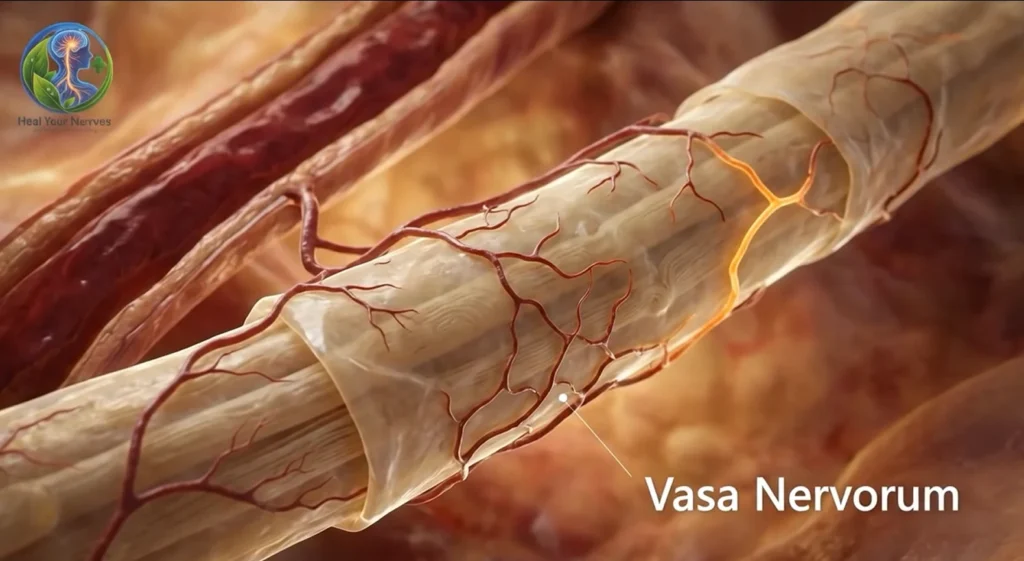
The vessels supplying nerves are commonly described as the vasa nervorum.
A peripheral nerve contains several structural compartments.
The outer nerve trunk is surrounded by the epineurium. Within it are nerve fascicles surrounded by the perineurium. Individual nerve fibers occupy the protected endoneurial environment.
Blood vessels travel through this architecture.
Scientific reviews describe epineurial and endoneurial vascular compartments and specialized regulation of peripheral-nerve blood flow.
That creates an important practical distinction:
Blood flow to an entire leg and blood perfusion inside one specific peripheral nerve are related—but they are not the same measurement.
For more on the local vascular layer, see Microcirculation and Nerve Sensitivity.
Getting blood to the nerve is only part of the story.
The internal environment around nerve fibers must also remain regulated.
Specialized endoneurial microvascular endothelial cells, together with the perineurium, contribute to the blood–nerve barrier.
Tight junctions help regulate movement between circulating blood and the protected endoneurial environment.
A useful conceptual sequence is:
Vasa nervorum
↓
Endoneurial microvessels
↓
Blood–nerve barrier
↓
Controlled exchange
↓
Stable endoneurial environment
↓
Nerve function
A detailed review of the barriers of the peripheral nerve describes how these specialized structures help maintain the internal environment surrounding nerve fibers.
That is why “get more blood to the nerve” is an incomplete model.
Healthy nerve biology requires adequate vascular support and appropriate regulation of the tissue environment.
Blood–nerve barrier alterations have been investigated in several peripheral neuropathies. However, that does not mean every neuropathy is caused by barrier failure—or that a supplement marketed as a circulation booster can repair the blood–nerve barrier.
Nerves need blood supply, but they also need controlled exchange between blood and nerve tissue.
Circulation, Perfusion, and Oxygenation Are Related—but They Are Not Identical
Consumer health discussions frequently mix several physiological terms.
They should be separated.
Circulation
Circulation is the movement of blood through the cardiovascular system.
Perfusion
Perfusion describes blood reaching and passing through a particular tissue or organ.
Oxygenation
Oxygenation refers to oxygen entering the blood and becoming available for transport.
Oxygen-Carrying Capacity
Blood also needs enough functional hemoglobin to transport oxygen effectively.
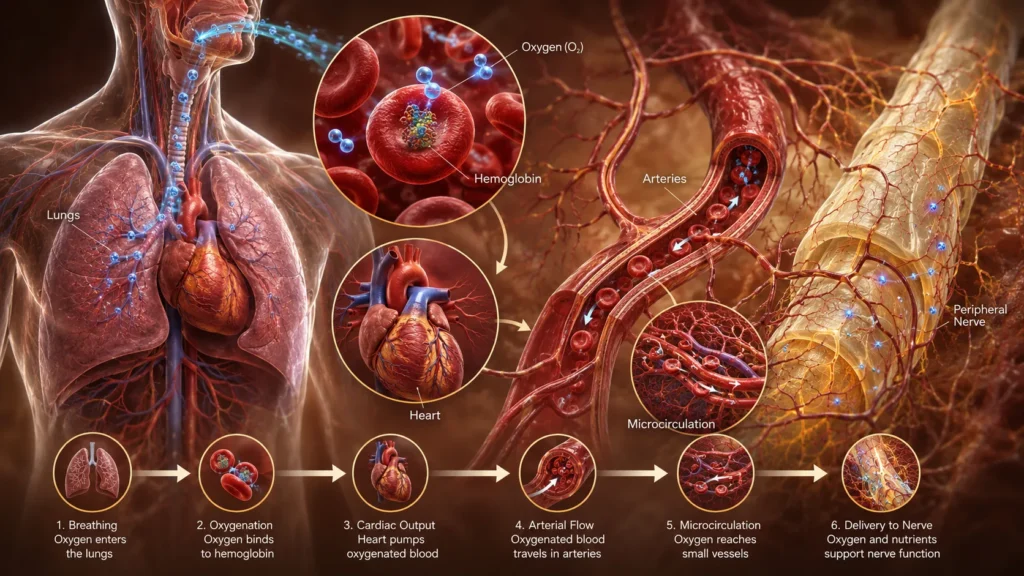
Therefore, tissue oxygen delivery depends on a chain:
Lungs
→ Blood oxygenation
→ Hemoglobin
→ Heart
→ Arteries
→ Arterioles
→ Microcirculation
→ Tissue
A problem at one level does not automatically mean every other level has failed.
Someone may have normal arterial oxygen saturation but reduced foot perfusion because of severe arterial narrowing.
Someone else may have open arteries but reduced oxygen-carrying capacity because of anemia.
Another person may have adequate oxygen saturation and hemoglobin but impaired overall delivery because cardiac output is inadequate.
That is why:
“How do I increase oxygen to my nerves?”
is rarely a one-step question.
Explore this mechanism in greater depth at Oxygen Delivery and Nerve Function.
What Actually Determines Oxygen Delivery to Nerve Tissue?
A normal oxygen-saturation number is only one piece of the system.
At the systemic level, a useful physiological relationship is:
Oxygen Delivery = Cardiac Output × Arterial Oxygen Content
Arterial oxygen content depends mainly on:
- hemoglobin concentration;
- hemoglobin oxygen saturation;
- and, to a much smaller extent, oxygen dissolved directly in plasma.
In simplified form:
Heart pumps enough blood
×
Enough hemoglobin is present
×
Hemoglobin is adequately oxygenated
↓
Systemic oxygen-delivery capacity
Then comes another critical question:
Can that oxygen-containing blood actually reach the local tissue?
For a peripheral nerve, regional arterial supply and microcirculation still matter.
This explains several common misconceptions.
Normal SpO₂ + severe arterial obstruction
does not prove normal foot perfusion.
Normal SpO₂ + significant anemia
does not guarantee normal oxygen-carrying capacity.
Normal hemoglobin + normal oxygen saturation + inadequate cardiac output
can still compromise systemic oxygen delivery.
The more clinically useful question is therefore:
“Is enough oxygen-containing blood actually reaching the tissue that needs it?”
Macrocirculation vs Microcirculation
Circulation exists at different scales.
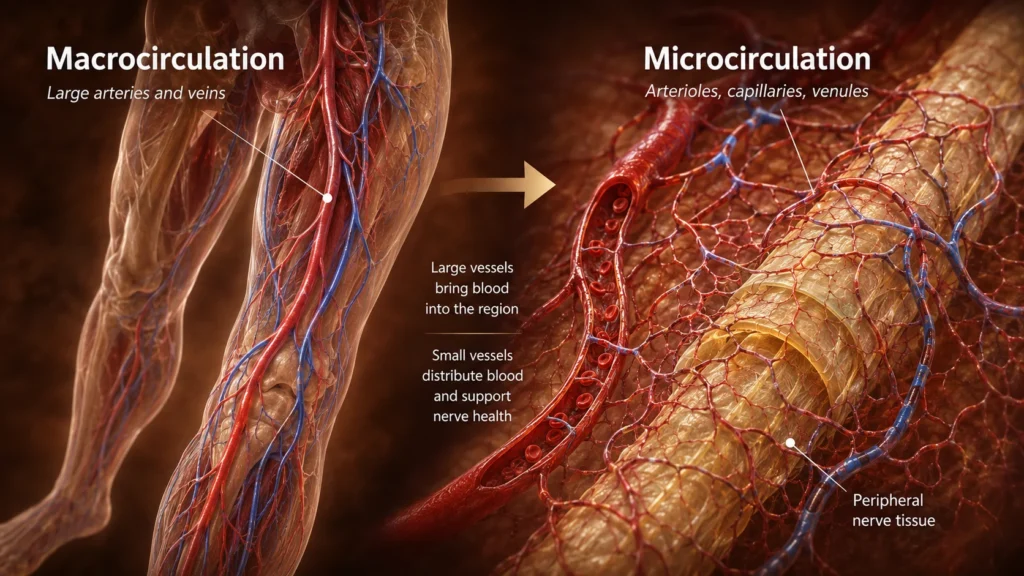
Macrocirculation includes the heart and larger arteries and veins that move blood through the body.
Microcirculation includes smaller arterioles, capillaries, and venules that determine how blood actually reaches local tissue.
A useful analogy is:
Large arteries = highways
Microcirculation = local roads
A highway can deliver traffic into a city, but the local road network still determines whether that traffic reaches a particular neighborhood.
Likewise:
Normal large-vessel flow does not automatically tell us everything about local nerve perfusion.
The reverse is also true.
A small-vessel disturbance is not necessarily the same thing as a major arterial blockage.
This is why Microcirculation and Nerve Sensitivity deserves its own deeper discussion.
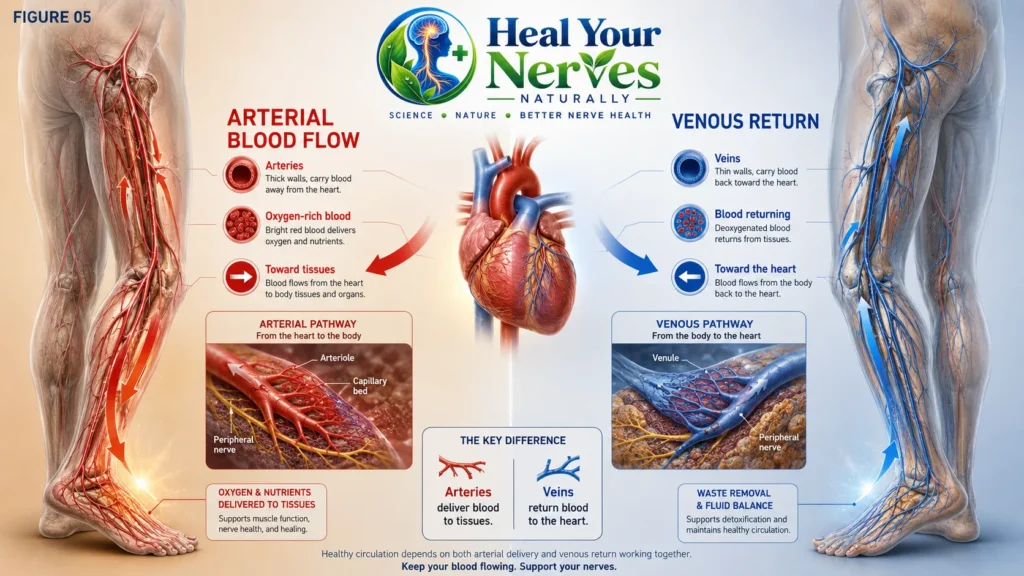
Arterial Circulation Is Not the Same as Venous Circulation
“Poor circulation” is an imprecise phrase.
It can hide very different problems.
Arteries deliver blood toward tissues.
Veins return blood toward the heart.
Peripheral artery disease and venous insufficiency are therefore not the same condition.
Venous disorders can produce:
- swelling;
- heaviness;
- aching;
- skin changes;
- and visible veins.
Arterial disease can reduce downstream perfusion and, when severe, threaten tissue viability.
So:
A swollen leg is not automatically an ischemic leg.
And:
A cold ischemic limb is not simply “bad venous return.”
The treatment logic differs because the physiology differs.
When Circulation and Oxygenation Become Inadequate
If effective nerve perfusion falls, delivery of oxygen, glucose, and other metabolic resources may decline.
If that reduction becomes sufficiently severe or prolonged, nerve function can suffer.
NINDS recognizes vascular and blood problems that reduce oxygen supply as one pathway capable of damaging peripheral nerves.
However, reduced perfusion is not an on/off switch.
The biological effect depends on:
- severity;
- duration;
- location;
- cause;
- collateral circulation;
- tissue metabolic demand;
- oxygen-carrying capacity;
- existing nerve disease;
- cardiovascular health;
- and the wider metabolic environment.
Therefore:
Reduced perfusion does not mean instant nerve death.
A mild temporary change in blood flow is not equivalent to prolonged severe ischemia.
Ischemia and Hypoxia: Two Different Problems
Ischemia means inadequate blood supply.
Hypoxia means inadequate oxygen availability at the tissue level.
Ischemia frequently contributes to hypoxia, but reduced blood flow also limits glucose and other substrates and can impair waste removal.
Meanwhile, hypoxia can occur without a blocked artery.
Anemia is one example.
If too little functional hemoglobin is available, oxygen transport may fall even when arteries remain open.
So:
Blocked blood flow is not the only oxygen problem.
And:
Anemia is not another name for poor circulation.
Oxygen Supply Must Match Oxygen Demand
Tissues continuously use oxygen.
That means tissue oxygenation depends not simply on how much oxygen is delivered, but whether delivery is sufficient for metabolic demand.
The body normally has some ability to compensate through changes in oxygen extraction and blood-flow distribution.
If delivery becomes inadequate relative to demand, cellular dysfunction becomes more likely.
A useful model is:
Oxygen supply
vs
Metabolic demand
↓
Are tissue oxygen needs being met?
This is another reason why circulation cannot be understood from one number alone.
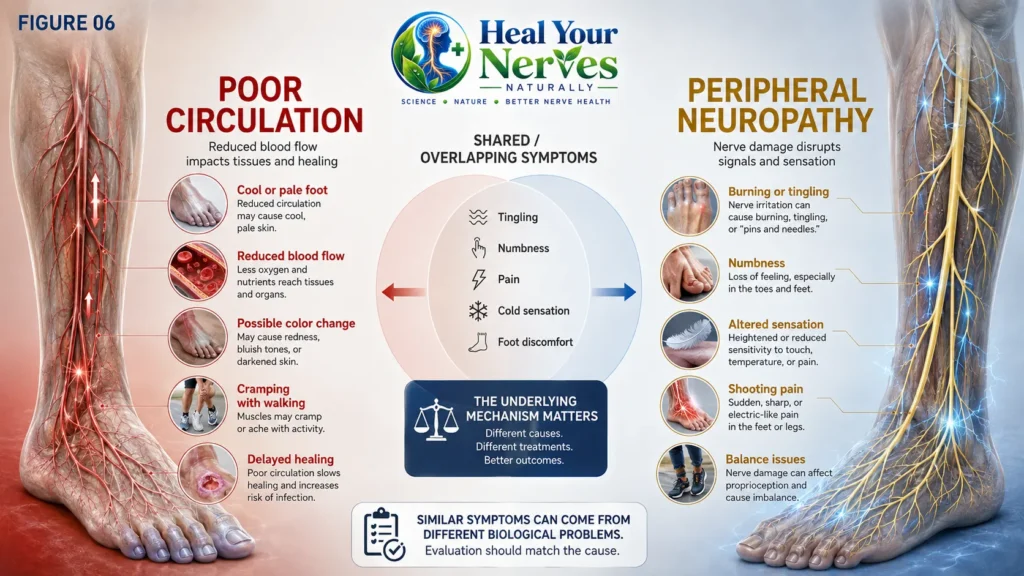
Circulation and Oxygenation vs Peripheral Neuropathy
This distinction matters enormously for people searching for nerve-health information.
Peripheral Neuropathy refers to damage or dysfunction involving peripheral nerves.
A vascular disorder primarily affects blood vessels and tissue perfusion.
They are different conditions.
A person can have neuropathy without significant PAD.
A person can have PAD without neuropathy.
A person can have both.
That overlap is especially important in diabetes.
| Pattern | More Suggestive of Vascular Involvement | More Suggestive of Neurological Involvement |
|---|---|---|
| Repeatable pain or cramping during walking | Can suggest PAD/claudication | Less specific |
| Burning or electric pain | Possible | Common |
| Tingling or numbness | Possible | Common |
| Reduced foot pulses | Raises vascular concern | Neuropathy itself does not reduce arterial pulses |
| Position-related radiating pain | Less typical | May suggest nerve/root involvement |
| Slowly healing wound | Raises perfusion concern | Sensory loss may allow injury to go unnoticed |
| Diagnosis from symptoms alone | No | No |
The most useful line to remember is:
Tingling is a symptom, not an explanation.
For related neurological differentials, see Nerve Compression and Sciatic Nerve Pain.
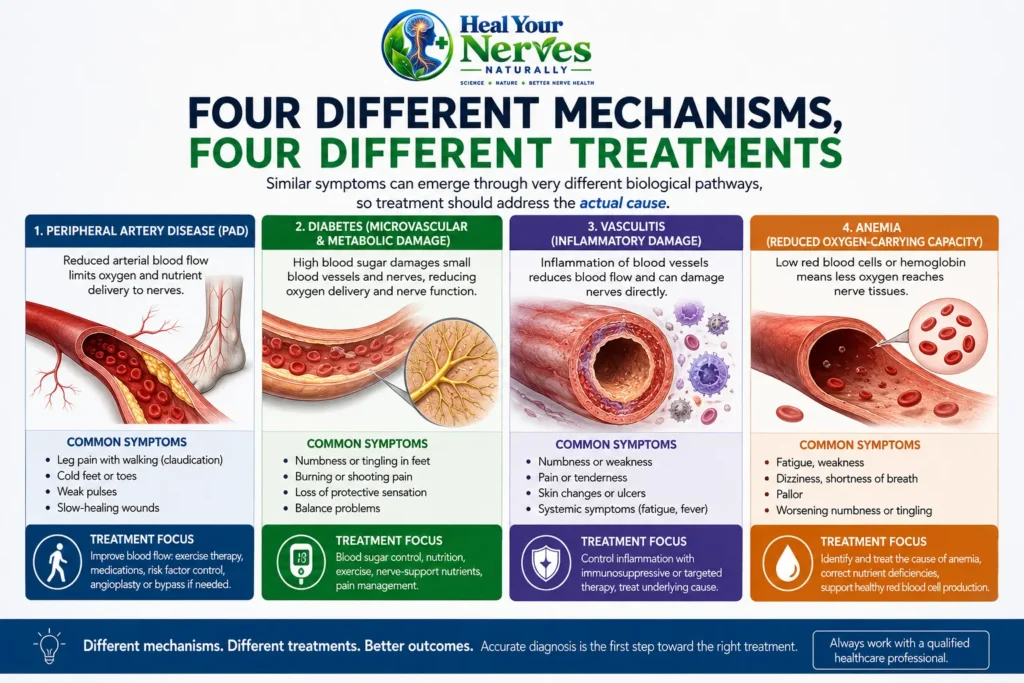
Four Major Pathways That Can Disrupt Circulation and Oxygenation Around Nerves
Not every circulation-related problem works through the same biology.
That is why treatment has to match the mechanism.
Peripheral Artery Disease: More Than a Vague “Circulation Problem”
Peripheral artery disease, or PAD, commonly results from atherosclerotic narrowing or obstruction of arteries supplying the limbs.
The 2024 ACC/AHA multisociety PAD guideline treats PAD as a cardiovascular disease associated not only with impaired walking and limb complications but also with major cardiovascular risk.
Management can include:
- structured exercise;
- smoking cessation;
- cardiovascular risk reduction;
- diabetes management;
- preventive foot care;
- guideline-directed medications;
- and revascularization when clinically indicated.
A Leg Circulation Problem Can Be a Whole-Body Warning
PAD is not only a foot or leg problem.
Atherosclerosis affecting leg arteries can signal broader vascular disease.
The mindset therefore needs to shift from:
“How do I warm up my feet?”
to:
“What does this say about my overall vascular health?”
A useful framework is:
Recognize the limb problem
↓
Assess systemic vascular risk
↓
Address tobacco, blood pressure, cholesterol, glucose, movement, sleep, and nutrition
↓
Use appropriate disease-specific care
No Pain Does Not Always Mean No PAD
PAD can be asymptomatic or present with atypical symptoms.
Therefore:
“My legs do not hurt” is not proof that my arteries are normal.
Risk factors and clinical context still matter.
Walking Pain Can Carry Useful Information
A repeatable pattern of calf, thigh, hip, buttock, or foot discomfort that appears during walking and improves after rest may fit claudication.
However, walking-related pain is not automatically PAD.
Joint disease, spinal stenosis, muscle problems, nerve compression, and other neurological disorders can also cause activity-related symptoms.
The pattern tells a clinician what to investigate.
It does not establish the diagnosis by itself.
How Diabetes Can Affect Circulation and Oxygenation Around Nerves
Diabetes can affect both nerve biology and vascular health.
However:
Diabetic neuropathy is not simply caused by poor circulation.
Its biology is multifactorial.
Someone with diabetes may simultaneously have:
- Diabetic Neuropathy;
- PAD;
- nerve compression;
- kidney disease;
- another neurological disorder;
- or several conditions at once.
The ADA Standards of Care in Diabetes emphasize that diabetic neuropathy requires appropriate diagnostic exclusion and that foot and vascular assessment are important.
The broader glucose and metabolic pathway belongs within the Metabolic Damage System.
Vasculitis and the Vasa Nervorum
Vasculitis involves inflammation of blood vessels.
When vessels supplying peripheral nerves are affected, nerve perfusion can be disturbed and ischemic nerve injury may occur.
This is fundamentally different from lifestyle-associated mild circulation changes.
Painful, rapidly evolving, asymmetric neurological symptoms can sometimes signal inflammatory nerve or vessel disease requiring prompt medical evaluation.
Supportive lifestyle strategies do not replace disease-specific treatment for active vasculitis.
For related pathways, see the Inflammatory System and Neuroinflammation.
Anemia and Oxygen-Carrying Capacity
Anemia creates a different oxygen-delivery problem.
The artery may be open.
Blood may reach the tissue.
Yet oxygen transport can still be reduced if too little functional hemoglobin is present.
Therefore:
Coldness + fatigue ≠ automatically poor circulation
and
Suspected low oxygen delivery ≠ automatically take iron
Iron should be used when the underlying diagnosis supports it.
If a documented nutrient deficiency contributes to neurological dysfunction, targeted Nutritional Therapy is more rational than generic circulation supplementation.
Cold Feet Do Not Automatically Mean Poor Circulation
Feeling cold and having an objectively cold ischemic limb are not the same experience.
Cold feet may occur with:
- environmental exposure;
- altered sensory processing;
- peripheral neuropathy;
- autonomic regulation changes;
- vascular disease;
- endocrine or metabolic disorders;
- or other conditions.
For autonomic mechanisms, see Autonomic Regulation.
A very different pattern is:
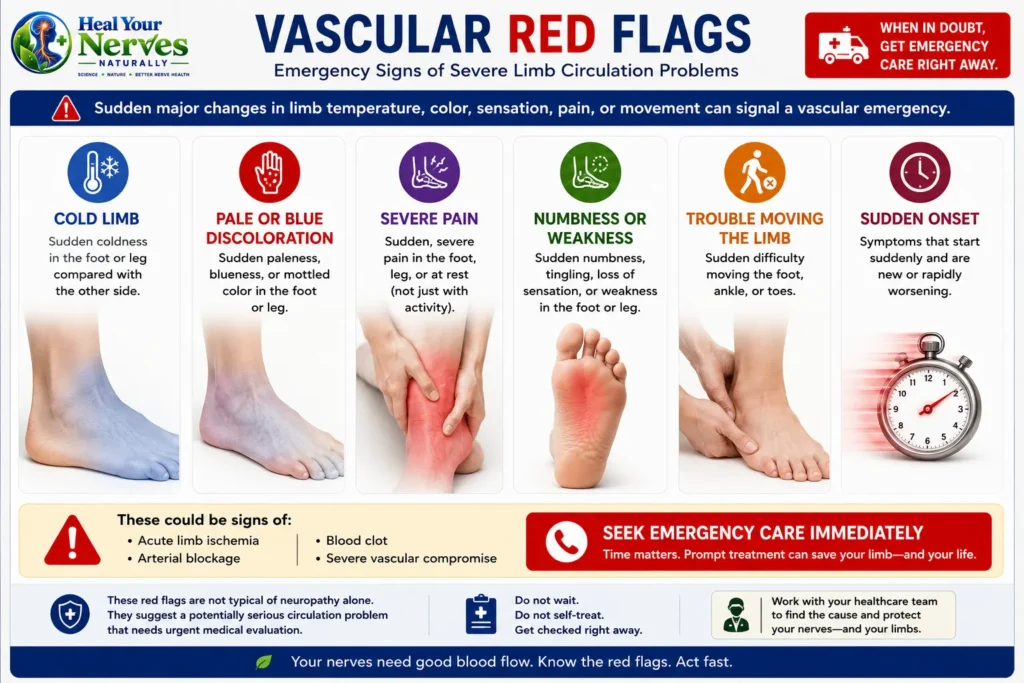
One foot suddenly becomes much colder, paler or blue, painful, numb, weak, or difficult to move.
That can represent acute limb ischemia.
What You Can Do Safely for Ordinary Cold Feet
If there are no red flags and the cold sensation is longstanding rather than sudden, sensible everyday measures may include:
- maintaining a comfortable room temperature;
- using dry, well-fitting socks;
- moving periodically;
- avoiding prolonged immobility;
- protecting feet from cold exposure;
- improving overall cardiovascular habits;
- and evaluating persistent symptoms instead of repeatedly masking them.
If sensation is reduced, avoid very hot water, electric heating pads, or uncontrolled high-temperature exposure.
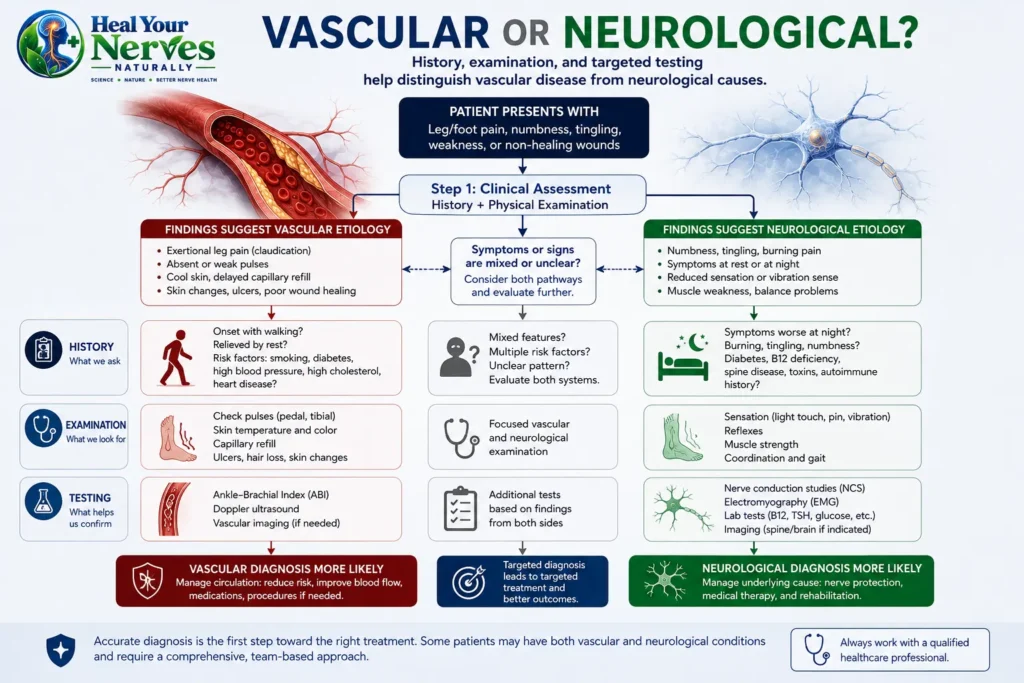
How Clinicians Evaluate Circulation and Oxygenation Problems
Good assessment begins with the pattern.
Clinicians may ask:
- When did symptoms begin?
- Did they start suddenly or gradually?
- Is one side different from the other?
- Does walking trigger symptoms?
- Does rest relieve them?
- Are wounds present?
- Is one foot colder?
- Is there swelling?
- Is there diabetes?
- Is there kidney disease?
- Is there a smoking history?
- Is there back or radiating pain?
- Is weakness progressing?
- Has function changed?
Then the examination looks for both vascular and neurological clues.
Vascular Clues
These may include:
- reduced pulses;
- temperature difference;
- color change;
- skin changes;
- wounds;
- activity-related symptoms;
- delayed healing;
- and signs of impaired tissue perfusion.
Neurological Clues
These may include:
- sensory loss;
- burning or electric pain;
- weakness;
- reflex changes;
- balance disturbance;
- positional symptoms;
- and focal nerve patterns.
The aim is not simply to label someone as having “poor circulation.”
The aim is:
Locate the problem. Identify the mechanism. Match the treatment.
The Ankle-Brachial Index and Why One Test Is Not Always Enough
The ankle-brachial index (ABI) compares systolic blood pressure at the ankle with pressure in the arm.
It is an important first-line physiological test when PAD is suspected.
Depending on the situation, clinicians may also use:
- exercise ABI;
- toe pressure;
- toe-brachial index;
- Doppler waveforms;
- pulse-volume recordings;
- segmental pressure testing;
- transcutaneous oxygen measurements;
- skin perfusion measurements;
- CT angiography;
- MR angiography;
- or invasive angiography.
The 2024 ACC/AHA PAD guideline describes ABI as a diagnostic cornerstone while also emphasizing that additional physiological testing may be necessary in selected patients.
Why ABI Can Be Misleading in Diabetes or Chronic Kidney Disease
In diabetes and chronic kidney disease, arteries can become stiff and difficult to compress with a blood-pressure cuff.
That can produce an artificially high ABI.
When ankle arteries are noncompressible, toe pressures and the toe-brachial index (TBI) can provide useful additional information.
Therefore:
A normal—or unusually high—ABI does not always end the vascular investigation.
Symptoms, examination findings, risk factors, and the clinical question still matter.
What Do the Different Circulation and Nerve Tests Actually Measure?
| Test | Primarily Helps Assess | Does Not Directly Prove |
|---|---|---|
| ABI | Ankle-to-arm arterial pressure relationship / PAD | Direct nerve perfusion |
| Toe pressure / TBI | Distal arterial pressure, especially when ankle vessels are noncompressible | Direct oxygen concentration inside a nerve |
| Doppler / PVR | Flow patterns and physiological evidence of vascular disease | Peripheral neuropathy |
| TcPO₂ / skin perfusion testing | Local tissue-perfusion or wound-healing information | Endoneurial nerve blood flow |
| Pulse oximeter | Estimated arterial oxygen saturation | PAD or normal nerve perfusion |
| Nerve-conduction study | Electrical conduction through selected peripheral nerves | Limb arterial blood flow |
| EMG | Electrical activity in muscle; helps characterize neuromuscular disorders | Tissue oxygen delivery |
The lesson is simple:
Different tests answer different questions.
There is no simple home device that directly tells a consumer whether one specific peripheral nerve has normal endoneurial perfusion.
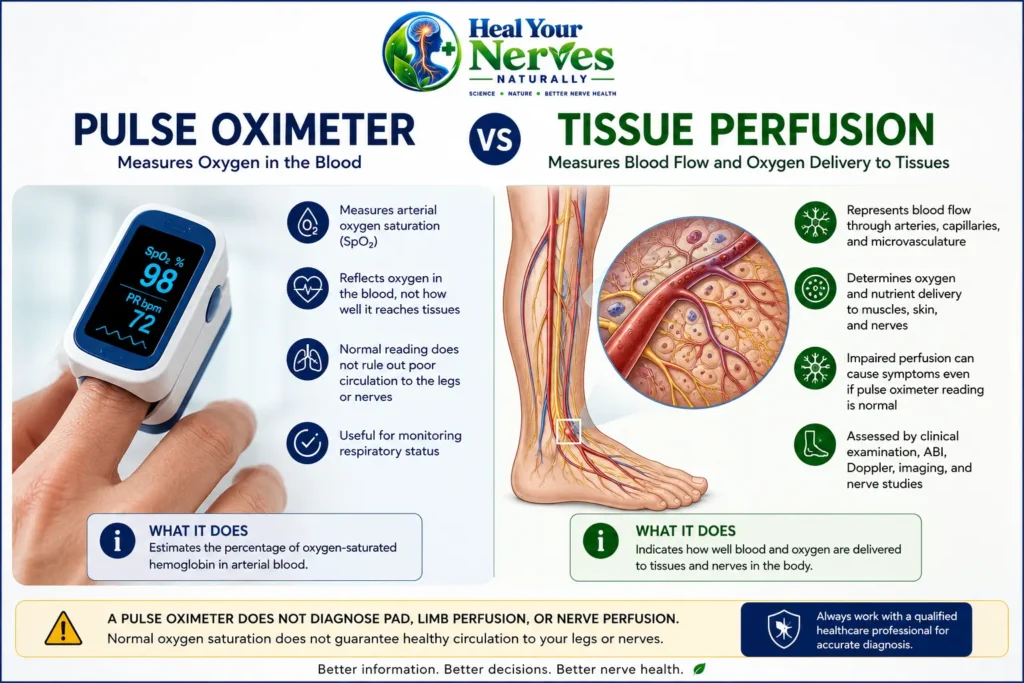
Can a Normal Pulse Oximeter Rule Out Poor Circulation?
No.
A pulse oximeter estimates arterial oxygen saturation, usually reported as SpO₂.
The FDA explains that pulse oximeters estimate oxygen saturation and that factors including poor circulation can affect their accuracy.
A reading of 98% does not prove that:
- a leg artery is fully open;
- foot perfusion is normal;
- microcirculation is normal;
- or a peripheral nerve has normal blood supply.
Therefore:
SpO₂ 98% ≠ proof of normal limb circulation.
How to Support Circulation and Oxygenation Naturally and Safely
On this page, natural support means evidence-aligned habits that improve vascular risk, function, recovery conditions, or safety.
It does not mean avoiding appropriate medical treatment.
The strongest lifestyle interventions are often less glamorous than commercial “circulation boosters.”
They include:
- movement;
- smoking cessation;
- cardiovascular-supportive nutrition;
- healthy sleep;
- glucose and metabolic health;
- blood-pressure and lipid awareness;
- foot protection;
- breaking up prolonged immobility;
- and appropriate rehabilitation.
These habits can produce meaningful health benefits without pretending to “flush oxygen into damaged nerves.”
Exercise and Circulation and Oxygenation
Exercise has strong clinical relevance in PAD.
Structured exercise is considered a core component of PAD care and can improve walking ability, function, and quality of life.
But an important misconception needs correcting:
Exercise does not simply force extra blood into a damaged nerve.
Its benefits can involve:
- skeletal-muscle efficiency;
- mitochondrial adaptation;
- muscle strength and endurance;
- endothelial physiology;
- blood-flow distribution;
- inflammatory signaling;
- metabolic health;
- cardiovascular conditioning;
- and functional adaptation.
The 2024 PAD guideline describes exercise-related improvement as multifactorial rather than simply the result of an artery reopening.
Therefore:
Better walking performance does not prove that a blocked artery has reopened.
And:
Feeling better after exercise does not prove that a damaged nerve has regenerated.
A Practical Natural-Movement Strategy
When vascular disease has been appropriately assessed and exercise is considered safe, a structured program is more evidence-based than simply saying “walk more.”
PAD programs may use repeated walking bouts separated by rest, with gradual progression.
For broader rehabilitation principles, see Movement Therapy.
Unexplained significant exercise-related pain, rapidly worsening weakness, chest symptoms, severe shortness of breath, or new foot problems should not simply be “pushed through.”
Movement Is More Than Exercise: Break Up Long Periods of Sitting
A person can complete a workout and still spend most of the day immobile.
That matters particularly for venous circulation.
During long-distance travel or prolonged sitting, slow venous flow can contribute to DVT risk in susceptible people.
CDC travel guidance recommends moving the legs frequently during prolonged travel and getting up to walk periodically when possible.
Simple movement during long periods of sitting can include:
- standing and walking periodically;
- ankle flexion and extension;
- raising and lowering the heels;
- raising and lowering the toes;
- and gently contracting the calf muscles.
However:
Breaking up prolonged sitting is mainly relevant here to venous stasis and general movement—not proof that sitting was starving a peripheral nerve of oxygen.
Smoking Is One of the Most Important Modifiable Vascular Risks
Smoking deserves more than a passing mention.
CDC cardiovascular guidance describes smoking as a major vascular and cardiovascular risk.
Smoking can:
- damage the vascular lining;
- promote atherosclerotic plaque formation;
- affect blood lipids;
- narrow vessels;
- and increase clotting tendency.
PAD is strongly associated with smoking.
For people who smoke, quitting is therefore one of the highest-value behavioral changes available for long-term vascular health.
Secondhand smoke is also relevant to cardiovascular risk.
Smoking cessation deserves more attention than almost any “circulation supplement.”
Professional cessation support can still fit comfortably within an evidence-based natural-health approach.
Nutrition and Circulation and Oxygenation
Food does not mechanically reopen a severely narrowed artery.
But eating patterns influence systems that determine long-term vascular health, including:
- blood pressure;
- blood lipids;
- glucose regulation;
- body composition;
- inflammation;
- blood-cell production;
- and overall cardiometabolic health.
The American Heart Association’s Life’s Essential 8 emphasizes an overall cardiovascular-supportive dietary pattern.
A useful nerve-and-vascular nutrition framework is:
Build Meals Around Whole Foods
Prioritize vegetables, fruits, legumes, whole grains, nuts, seeds, and appropriate protein sources.
Favor Unsaturated Fats
Use foods such as nuts, seeds, fish, and appropriate plant oils in place of excessive saturated and trans fats.
Support Glucose Regulation
This matters particularly for diabetes, prediabetes, and other metabolic risk.
Maintain Nutrient Adequacy
Hemoglobin production, nerve metabolism, and tissue repair require adequate nutrition.
Avoid Supplement-First Thinking
A food or supplement should not be marketed as if it can:
- dissolve arterial plaque;
- reopen an occluded vessel;
- repair vasculitis;
- or regenerate a damaged nerve.
For deeper nutritional coverage, see Nutrition for Nerve Repair.
Know Your Cardiovascular Risk Factors
Natural health is not only about how you feel.
It is also about what you measure.
Cardiovascular risk is influenced by factors such as:
- blood pressure;
- cholesterol and other blood lipids;
- blood glucose;
- smoking exposure;
- physical activity;
- sleep;
- body weight and body composition;
- kidney disease;
- diabetes;
- age;
- and family history.
Lifestyle change can improve several of these domains.
However, if a diagnosed risk factor remains significantly abnormal despite lifestyle efforts, appropriate treatment should not be rejected merely because it is not “natural.”
Sleep, Oxygenation, and Vascular Health
Sleep belongs in a circulation and oxygenation discussion.
Healthy sleep contributes to cardiovascular regulation and metabolic health.
Practical sleep-support habits include:
- maintaining a regular sleep-wake schedule;
- creating a dark and quiet sleep environment;
- reducing disruptive late-night stimulation;
- obtaining regular daytime activity;
- and addressing persistent insomnia or breathing-related symptoms.
For broader recovery support, see Sleep & Recovery.
Sleep Apnea: A Different Oxygenation Problem
Sleep apnea can repeatedly interrupt airflow while a person sleeps.
NHLBI lists breathing pauses, loud snoring, gasping, and excessive daytime sleepiness or fatigue among common warning clues.
Sleep apnea can interfere with normal overnight oxygenation.
However:
Sleep apnea is not the same as poor arterial circulation in the leg.
And:
Sleep apnea does not automatically explain peripheral neuropathy.
It is a separate physiological problem that deserves appropriate evaluation.
Deep Breathing and Circulation and Oxygenation
Breathing is essential for oxygen uptake.
However, tissue oxygen delivery still depends on:
Lungs
→ Blood
→ Hemoglobin
→ Heart
→ Arteries
→ Microcirculation
→ Tissue
Deep breathing cannot mechanically reopen an occluded artery.
It cannot replace missing hemoglobin.
It cannot suppress active vasculitis.
It cannot decompress a trapped nerve.
Breathing practices may still help with relaxation and autonomic regulation.
That is a different mechanism.
For that pathway, see Nervous System Regulation and Autonomic Regulation.
Massage, Warmth, and Heat
Massage can change local sensation and may alter superficial blood flow.
Warmth can influence local vascular tone.
But:
Warmth is not proof of adequate deep-tissue perfusion.
And:
A warm sensation is not evidence that a damaged nerve has regenerated.
People with neuropathy or reduced protective sensation require extra caution.
If temperature sensation is impaired, excessive heat can cause burns before the person realizes the skin is being injured.
A safer approach is to:
- use mild rather than intense warmth;
- avoid prolonged direct heat;
- check skin regularly;
- and never use heat to delay evaluation of a suddenly pale, blue, cold, painful, numb, or weak limb.
Compression Socks: Helpful for Some Problems, Wrong for Others
Compression can be useful in selected venous and lymphatic conditions.
It is not a universal treatment for “poor circulation.”
An international consensus statement on medical compression recommends considering arterial circulation before compression when arterial impairment is suspected.
Severe PAD can change whether sustained compression is safe.
Poorly fitted or excessive compression can also create local pressure problems and requires additional caution when neuropathy or reduced sensation is present.
Therefore:
A swollen leg does not automatically mean “buy compression socks.”
And:
Suspected arterial disease should be considered before strong compression is used.
New one-sided swelling, warmth, tenderness, or discoloration deserves assessment rather than automatic self-treatment.
One Cold Pale Leg Is Not the Same as One Warm Swollen Leg
This distinction can be lifesaving.
Possible Acute Arterial Problem
A limb that suddenly becomes:
- severely painful;
- colder than the other side;
- pale or blue;
- numb;
- weak;
- or difficult to move
may have an acute arterial blood-flow problem.
That requires emergency assessment.
Possible Deep Vein Thrombosis
A new one-sided leg that is:
- swollen;
- warm;
- painful or tender;
- red or discolored
can raise concern for deep vein thrombosis.
CDC information on blood clots describes these as common DVT features.
A DVT can sometimes lead to pulmonary embolism if part of the clot travels to the lungs.
Symptoms such as sudden difficulty breathing, chest pain, coughing blood, severe lightheadedness, or fainting require immediate medical attention.
Both situations involve circulation.
They are not the same circulation problem.
If You Have PAD, Diabetes, or Reduced Foot Sensation
Foot protection is one of the most practical places where everyday habits can prevent serious harm.
Reduced sensation may allow a person to miss:
- blisters;
- cuts;
- pressure injuries;
- burns;
- cracks;
- infection;
- or a foreign object inside a shoe.
Reduced arterial perfusion can simultaneously make wounds more difficult to heal.
A Practical Foot-Safety Routine
Look
Inspect both feet regularly if sensation is reduced.
Check:
- soles;
- heels;
- between the toes;
- nail edges;
- pressure points;
- and areas where footwear rubs.
Protect
Use well-fitting footwear and clean, dry socks.
Avoid walking barefoot when protective sensation is impaired.
Avoid Excessive Heat
Do not use very hot water or uncontrolled heating devices on numb feet.
Act Early
Do not wait for pain before taking a wound seriously.
Reduced sensation can allow significant injury without proportionate pain.
Seek assessment for:
- an open wound;
- unexplained swelling;
- spreading redness;
- drainage;
- infection;
- new dark or discolored tissue;
- or a wound that fails to heal.
Foot care does not regenerate nerves.
It prevents avoidable secondary injury.
Supplements and “Circulation Boosters”
Some supplements can influence:
- blood pressure;
- vascular signaling;
- platelet activity;
- metabolic markers;
- or subjective sensations.
That does not automatically mean they:
- reopen stenosed arteries;
- restore diseased vasa nervorum;
- correct nerve ischemia;
- repair the blood–nerve barrier;
- or regenerate damaged human nerves.
A useful question is:
“What clinical outcome was actually measured?”
A change in:
- skin warmth;
- nitric oxide;
- blood pressure;
- vascular diameter;
- laboratory markers;
- or subjective sensation
is not equivalent to proven restoration of peripheral nerve perfusion.
The stronger the treatment claim, the stronger the required clinical evidence should be.
“Improved Circulation” Is Not the Same as “Improved Nerve Function”
Health claims become easier to evaluate when outcomes are separated.
An intervention may change:
blood-flow measurements
or
tissue-perfusion measurements
or
oxygen saturation
or
walking performance
or
pain
or
nerve-conduction measurements
These outcomes can be related.
They are not interchangeable.
For example, structured PAD exercise can improve functional performance without proving that an artery physically reopened.
A normal pulse-oximeter reading does not prove normal nerve perfusion.
A warmer foot after massage does not prove nerve regeneration.
Therefore:
The outcome being measured should match the claim being made.
Circulation and Oxygenation in Peripheral Nerve Regeneration
Peripheral nerve regeneration is a multicellular process.
It can involve:
- axons;
- Schwann cells;
- macrophages;
- endothelial cells;
- fibroblasts;
- extracellular matrix;
- molecular signals;
- and vascular structures.
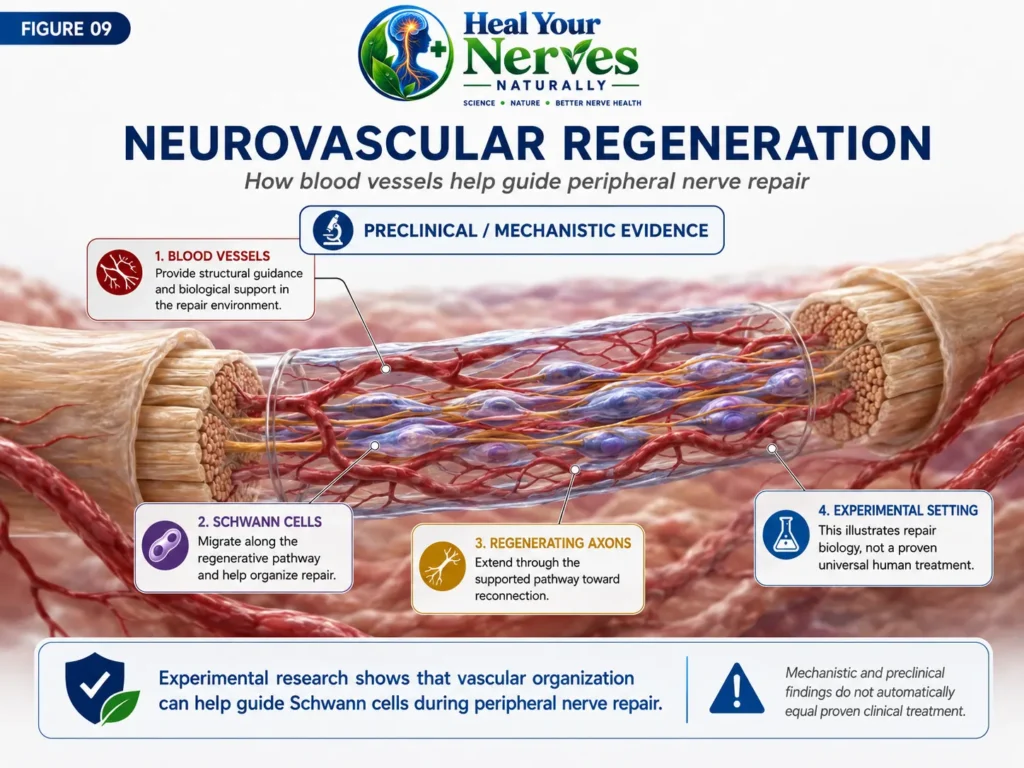
An influential experimental study by Cattin and colleagues showed that macrophage-driven vascular organization helped guide Schwann cells across an experimental nerve-injury bridge, with regenerating axons following the organized pathway.
This is important biology.
But it must be interpreted carefully.
The study does not establish that:
massage + warmth + supplements + increased skin blood flow = regenerated human peripheral nerve
The narrower conclusion is:
Vascular organization participates in peripheral nerve repair biology.
For the broader repair pathway, see Regeneration Biology and Vascular Regeneration.
Evidence Boundary: What Circulation and Oxygenation Research Does Not Prove
This section is essential.
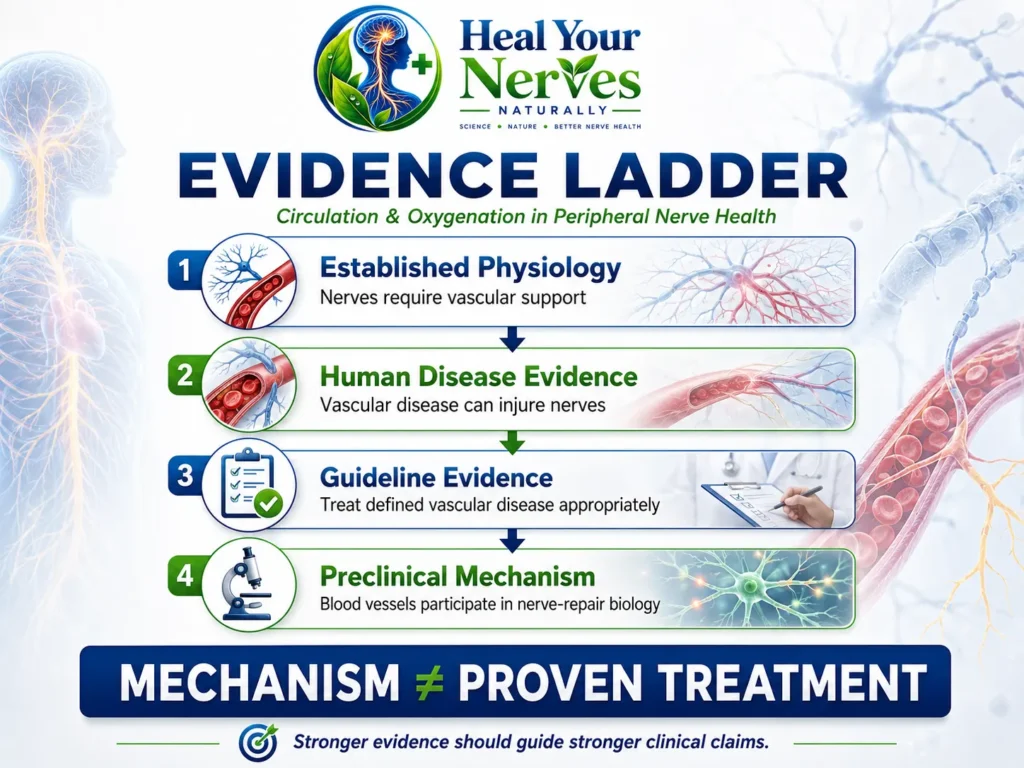
Established Physiology
Peripheral nerves require an organized blood supply and metabolic support.
Human Disease Evidence
Significant vascular and blood disorders can contribute to peripheral nerve injury.
Guideline-Based Evidence
Appropriate vascular management and structured exercise can improve important outcomes in diseases such as PAD.
Preclinical Mechanistic Evidence
Vascular organization participates in experimental peripheral nerve regeneration.
What does not logically follow is:
“Anything that increases circulation regenerates human nerves.”
There is no scientific shortcut from biological mechanism to proven treatment.
Does Supplemental Oxygen or Hyperbaric Oxygen Regenerate Damaged Nerves?
Not as a general rule.
Oxygen therapy and hyperbaric oxygen therapy are medical treatments used for specific indications.
They are not generic methods for “feeding oxygen to neuropathy.”
CMS coverage policy for hyperbaric oxygen therapy illustrates how indication-specific this treatment is.
Selected uses include certain severe ischemic, traumatic, wound, and other defined medical conditions.
That is very different from saying:
“I have numb feet, therefore more oxygen will regenerate my nerves.”
Diagnosis matters.
The mechanism matters.
Clinical evidence matters.
Treat the Cause and Support the Recovery Environment
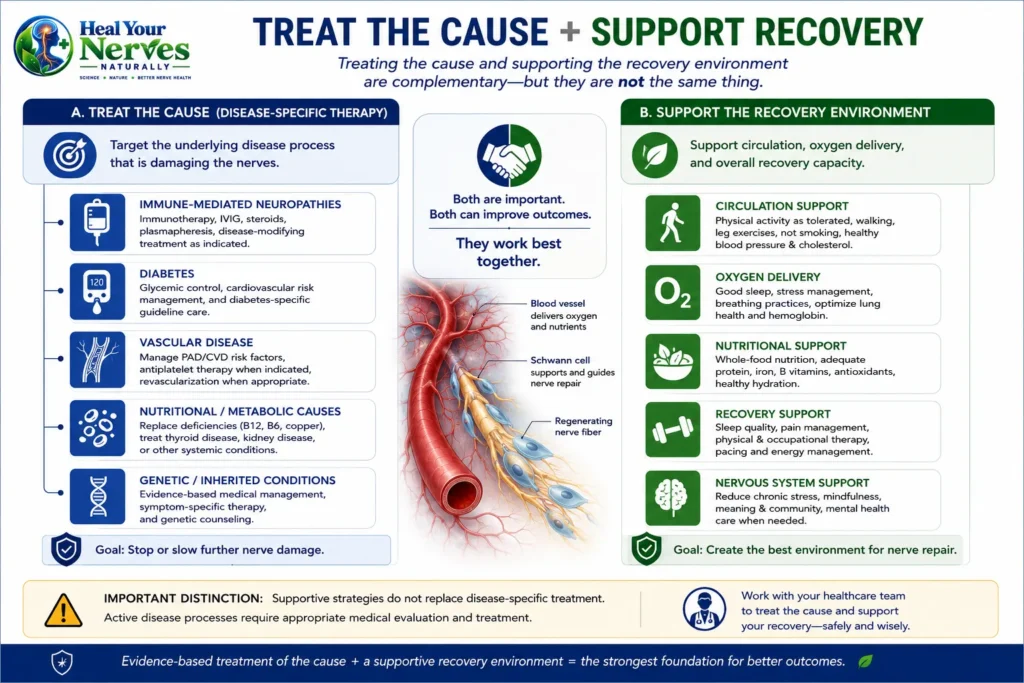
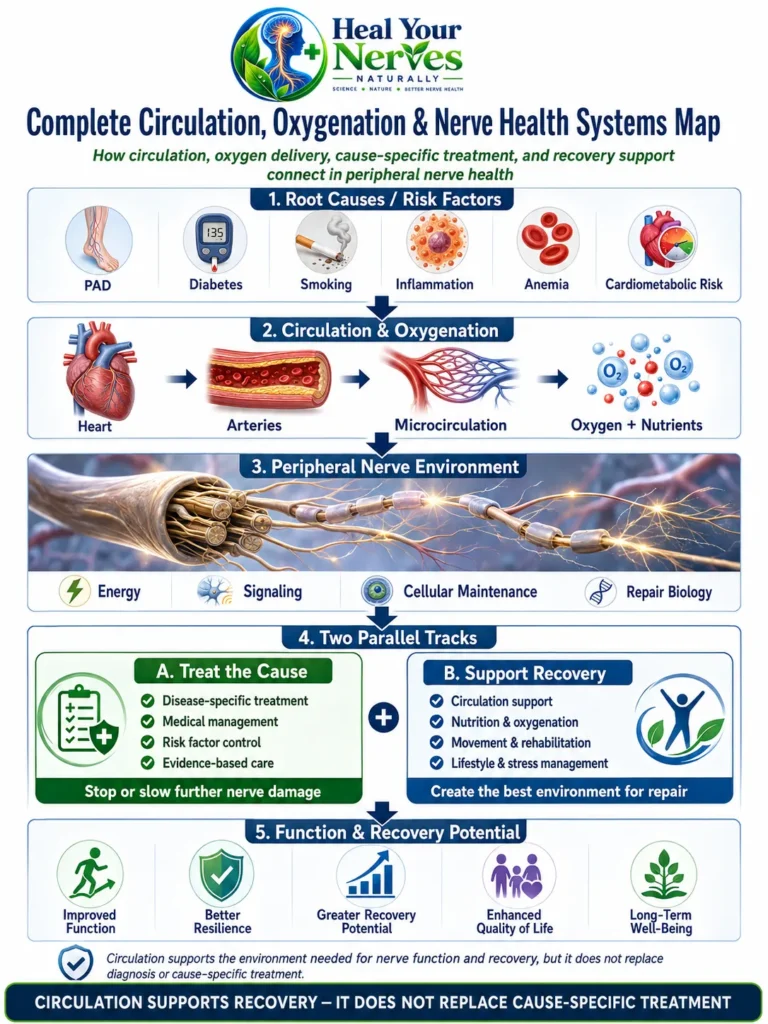
A strong nerve-health plan often needs two parallel tracks.
Track A — Treat the Underlying Cause
Depending on the diagnosis, appropriate care may involve treatment for:
- PAD;
- diabetes;
- vasculitis or another immune-mediated disease;
- anemia;
- nutrient deficiency;
- nerve compression;
- significant injury;
- infection;
- or another defined cause.
Some conditions cannot safely be managed through lifestyle alone.
Track B — Strengthen the Recovery Environment
Evidence-aligned supportive habits may include:
- structured movement;
- physical rehabilitation;
- smoking cessation;
- healthy sleep;
- appropriate nutrition;
- glucose management;
- cardiovascular risk reduction;
- breaking up prolonged immobility;
- safe foot care;
- appropriate footwear;
- maintaining function;
- and adapting activity to symptoms and diagnosis.
For a broader framework, see Nerve Recovery Protocols.
The two tracks work together.
They are not interchangeable.
Supportive natural-health strategies do not replace disease-specific treatment when the underlying condition requires medical therapy.
A Practical Everyday Circulation and Oxygenation Framework
If you want the strongest lifestyle actions rather than vague “circulation hacks,” start here.
1. Move Regularly
Exercise when appropriate, and also break up long periods of sitting.
2. Stop Smoking
For someone who smokes, cessation is one of the highest-value vascular changes available.
3. Build a Cardiovascular-Supportive Eating Pattern
Prioritize whole foods, plants, adequate protein, appropriate unsaturated fats, and good metabolic nutrition—not “artery-cleansing” products.
4. Know Your Numbers
Blood pressure, glucose, and blood lipids can affect vascular risk even when you feel well.
5. Protect Sleep
Sleep is part of cardiovascular and metabolic physiology.
6. Recognize Sleep-Apnea Clues
Loud habitual snoring, witnessed breathing pauses, or repeated gasping deserves attention.
7. Protect Your Feet
Especially when PAD, diabetes, or reduced sensation is present.
8. Do Not Ignore Repeatable Walking Pain
A predictable exertional pattern can carry diagnostic information.
9. Do Not Assume Swelling Means Compression Socks
Understand the cause first.
10. Do Not Use Warmth as Proof of Circulation
Feeling warm does not demonstrate adequate tissue perfusion.
11. Do Not Assume Normal SpO₂ Means Normal Leg Circulation
They measure different things.
12. Know When Self-Care Ends
Sudden major vascular changes require medical assessment—not another home circulation remedy.
A Three-Level Action Guide
Emergency — Act Now
Seek emergency medical care for a limb that suddenly becomes:
- very painful;
- markedly cold;
- pale or blue;
- numb;
- weak;
- or difficult to move.
These can be signs of acute loss of arterial blood flow.
Also seek immediate care for possible pulmonary embolism symptoms such as:
- sudden difficulty breathing;
- chest pain;
- fainting or severe lightheadedness;
- coughing blood;
- or other severe sudden cardiopulmonary symptoms.
Prompt Medical Assessment
Do not delay assessment for:
- new one-sided swelling, warmth, tenderness, or discoloration;
- an open foot wound;
- rapidly worsening neurological symptoms;
- progressive weakness;
- worsening rest pain;
- spreading redness or infection;
- or a wound that is failing to heal.
Routine—but Important—Evaluation
Persistent or recurrent:
- tingling;
- numbness;
- burning;
- unusual cold sensations;
- walking-related leg discomfort;
- balance changes;
- or weakness
may still deserve evaluation even without emergency signs.
This is especially important when diabetes, smoking history, kidney disease, known vascular disease, or other risk factors are present.
Frequently Asked Questions About Circulation and Oxygenation
Can Poor Circulation Damage Nerves?
Yes.
If vascular or blood disorders sufficiently reduce oxygen and metabolic support to peripheral nerves, nerve tissue can be injured.
However, this is only one pathway to neuropathy.
Is Peripheral Neuropathy the Same as Poor Circulation?
No.
Neuropathy is primarily a disorder of peripheral nerves.
Poor arterial circulation primarily affects blood supply.
They can exist independently or together.
Can Circulation Problems Cause Tingling?
They can contribute to sensory symptoms in some situations.
But tingling can also arise from:
- diabetic neuropathy;
- nerve compression;
- radiculopathy;
- nutritional deficiencies;
- autoimmune disorders;
- medications;
- and many other conditions.
Tingling alone does not identify the cause.
Can Diabetes Affect Circulation and Nerves at the Same Time?
Yes.
Diabetes can coexist with neuropathy and PAD.
However, diabetic neuropathy itself is multifactorial and should not be reduced to poor circulation.
Does a 98% Pulse-Oximeter Reading Prove My Circulation Is Normal?
No.
It estimates arterial oxygen saturation.
It does not rule out PAD or prove normal foot or peripheral-nerve perfusion.
Does Walking Improve Circulation and Oxygenation?
Structured exercise can improve walking performance and function in people with chronic symptomatic PAD.
However, improvement does not necessarily mean a blocked artery physically reopened.
Should I Walk Through Leg Pain?
Not blindly.
Some structured PAD exercise programs intentionally use intermittent walking that produces manageable claudication symptoms within a defined treatment program.
Unexplained exertional pain should first be understood.
Does Deep Breathing Increase Oxygen to Damaged Nerves?
Breathing supports oxygen uptake in the lungs.
But tissue oxygen delivery also depends on hemoglobin, cardiac output, arterial supply, and microvascular perfusion.
Deep breathing cannot correct every cause of impaired tissue oxygen delivery.
Can Massage Improve Nerve Circulation?
Massage may change sensation and superficial blood flow.
That does not demonstrate restored endoneurial nerve perfusion.
Massage may provide comfort in appropriate situations, but it should not be presented as a treatment for arterial obstruction or nerve regeneration.
Does Heat Improve Circulation?
Heat can influence local vascular tone.
It does not prove that an underlying vascular obstruction has resolved.
Extra caution is needed when protective sensation is reduced.
Should I Use Compression Socks for Poor Circulation?
Not automatically.
Compression is commonly used for selected venous and lymphatic problems.
Significant arterial disease changes the safety calculation, and poorly fitted compression can create pressure-related problems.
Can Sitting Too Long Reduce Circulation?
Long periods of immobility can slow venous blood flow and contribute to DVT risk in susceptible people.
This is mainly a venous-stasis issue, not proof that sitting automatically causes peripheral-nerve ischemia.
Does Sleep Affect Oxygenation?
Yes.
Sleep-disordered breathing such as sleep apnea can repeatedly interrupt airflow and oxygenation.
Loud snoring, witnessed breathing pauses, gasping, and excessive daytime sleepiness can be clues.
Can Improving Circulation Regenerate Damaged Nerves?
Not necessarily.
Adequate perfusion supports normal nerve biology, and experimental research shows that vascular organization participates in peripheral-nerve repair.
But there is no evidence-based rule that anything that “boosts circulation” regenerates damaged human nerves.
Does Hyperbaric Oxygen Cure Neuropathy?
It should not be presented as a universal neuropathy treatment.
Hyperbaric oxygen is used for selected medical indications.
Its use should be diagnosis-specific and evidence-specific.
Bottom Line: Circulation and Oxygenation for Nerve Health
Circulation and oxygenation form part of the biological environment that allows peripheral nerves to remain alive, metabolically active, and functional.
Peripheral nerves have their own vascular supply.
They also have a protected internal environment supported by the blood–nerve barrier.
Tissue oxygen delivery depends on much more than breathing.
It depends on:
Lungs
→ Oxygen saturation
→ Hemoglobin
→ Cardiac output
→ Arterial supply
→ Microcirculation
→ Local tissue delivery
But circulation is only one part of the nerve-health story.
Poor circulation is not synonymous with neuropathy.
Tingling is not proof of ischemia.
Cold feet are not automatically PAD.
A normal pulse oximeter does not prove normal limb perfusion.
A warm foot after massage is not proof that a damaged nerve has regained normal blood flow.
Improved walking performance does not prove an artery has reopened.
Blood-vessel participation in experimental nerve regeneration does not prove that generic “circulation boosting” regenerates human nerves.
A better framework is:
Identify the symptoms
↓
Determine whether the problem appears vascular, neurological, metabolic, inflammatory, hematologic—or mixed
↓
Use the right test for the right question
↓
Treat the disease-specific cause when necessary
↓
Build strong daily habits around movement, tobacco avoidance, nutrition, sleep, cardiovascular risk, and foot protection
↓
Support rehabilitation and nerve recovery
↓
Recognize when self-care is no longer appropriate
That approach connects naturally with the Circulatory Impairment System, Microcirculation and Nerve Sensitivity, Oxygen Delivery and Nerve Function, Peripheral Neuropathy, Regeneration Biology, and Vascular Regeneration.
The goal is not to chase circulation. The goal is to understand which biological system is impaired, strengthen what can safely be strengthened, and treat what genuinely requires treatment.
Medical Safety Note
This page is intended for health education.
It is not a diagnosis or individualized medical treatment plan.
Persistent or progressive numbness, tingling, burning, weakness, walking-related leg symptoms, wounds that do not heal, significant swelling, or major changes in limb temperature or color deserve appropriate medical evaluation.
A suddenly painful, cold, pale or blue, numb, weak, or difficult-to-move limb can indicate an acute vascular emergency.
New unilateral swelling, warmth, pain, or discoloration can raise concern for DVT.
Sudden difficulty breathing, significant chest pain, coughing blood, fainting, or other severe cardiopulmonary symptoms require emergency medical attention.
Selected Evidence and External Resources
Peripheral neuropathy and vascular causes
NINDS — Peripheral Neuropathy
Peripheral artery disease diagnosis, structured exercise, ABI/TBI, treatment, and foot care
2024 ACC/AHA Multisociety Guideline for Lower-Extremity PAD
Diabetic neuropathy and preventive foot care
ADA — Standards of Care in Diabetes
Pulse-oximeter limitations
FDA — Pulse Oximeter Basics
Peripheral nerve blood flow
PubMed — Local Blood Flow in Peripheral Nerves and Their Ganglia
Peripheral-nerve barrier biology
PMC — Barriers of the Peripheral Nerve
Peripheral nerve regeneration and vascular guidance
Cattin et al. — Macrophage-Induced Blood Vessels Guide Schwann Cell-Mediated Regeneration
Long-distance travel and blood-clot prevention
CDC — Understanding Your Risk for Blood Clots With Travel
DVT and pulmonary embolism
CDC — About Blood Clots
Smoking and cardiovascular disease
CDC — Cigarettes and Cardiovascular Disease
Sleep apnea and oxygenation
NHLBI — Sleep Apnea
Cardiovascular lifestyle framework
American Heart Association — Life’s Essential 8
Medical compression safety
International Consensus Statement — Risks and Contraindications of Medical Compression
Hyperbaric oxygen therapy
CMS — Hyperbaric Oxygen Therapy
Continue Learning
Understand the upstream vascular cause
→ Circulatory Impairment System
Explore local nerve blood flow
→ Microcirculation and Nerve Sensitivity
Understand oxygen transport
→ Oxygen Delivery and Nerve Function
Understand peripheral nerve dysfunction
→ Peripheral Neuropathy
Explore diabetes-related nerve mechanisms
→ Diabetic Neuropathy
Explore movement as a recovery system
→ Movement Therapy
Build the nutritional recovery environment
→ Nutrition for Nerve Repair
Explore nervous-system regulation
→ Nervous System Regulation
Explore nerve-repair biology
→ Regeneration Biology
Explore the vascular-repair layer
→ Vascular Regeneration
Follow the broader recovery framework
→ Nerve Recovery Protocols