
Emotional Regulation and Nerve Sensitivity: How Stress, Emotion, and Pain Processing Interact
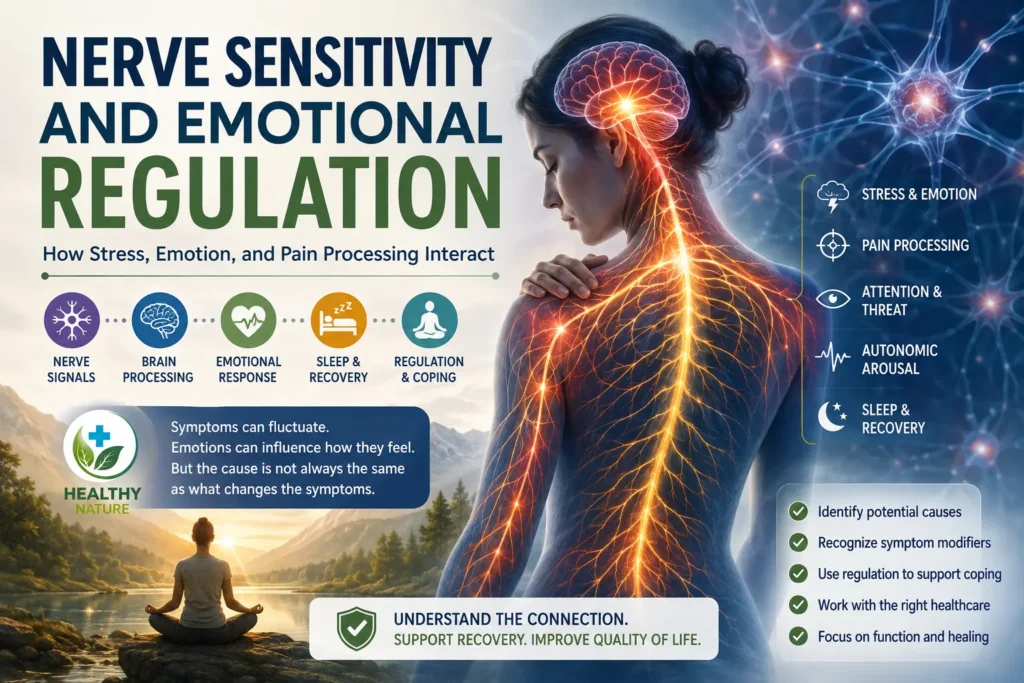
One of the most confusing things about nerve-related symptoms is how much they can change.
Burning may be barely noticeable in the morning and difficult to ignore at night. Tingling may fade into the background while you are busy, then become much more obvious when you lie down. Pain that felt manageable last week may seem stronger after several nights of poor sleep, a frightening medical appointment, an argument, or a period of uncertainty.
That can lead to an uncomfortable question:
If stress or emotion changes my symptoms, does that mean the problem is psychological?
Not necessarily.
But the opposite conclusion—“my symptoms are physical, so emotion cannot possibly influence them”—is also too simple.
The nervous system does not separate sensation, pain, emotion, attention, memory, sleep, movement, and automatic body regulation into independent compartments. These systems communicate constantly.
The International Association for the Study of Pain describes pain as both a sensory and emotional experience and emphasizes that biological, psychological, and social factors can influence it. Importantly, it also distinguishes pain from nociception and states that a person’s report of pain should be respected. Read the IASP definition of pain.
That does not mean pain is imaginary.
It also does not mean anxiety, grief, emotional distress, or chronic stress automatically caused a nerve disorder.
A more useful distinction is this:
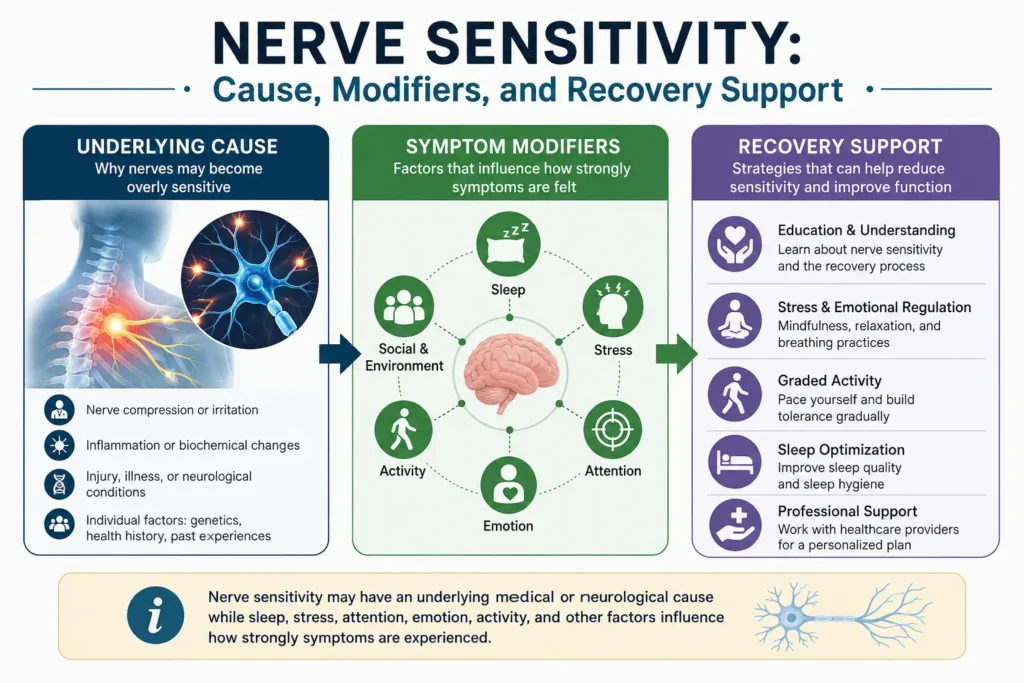
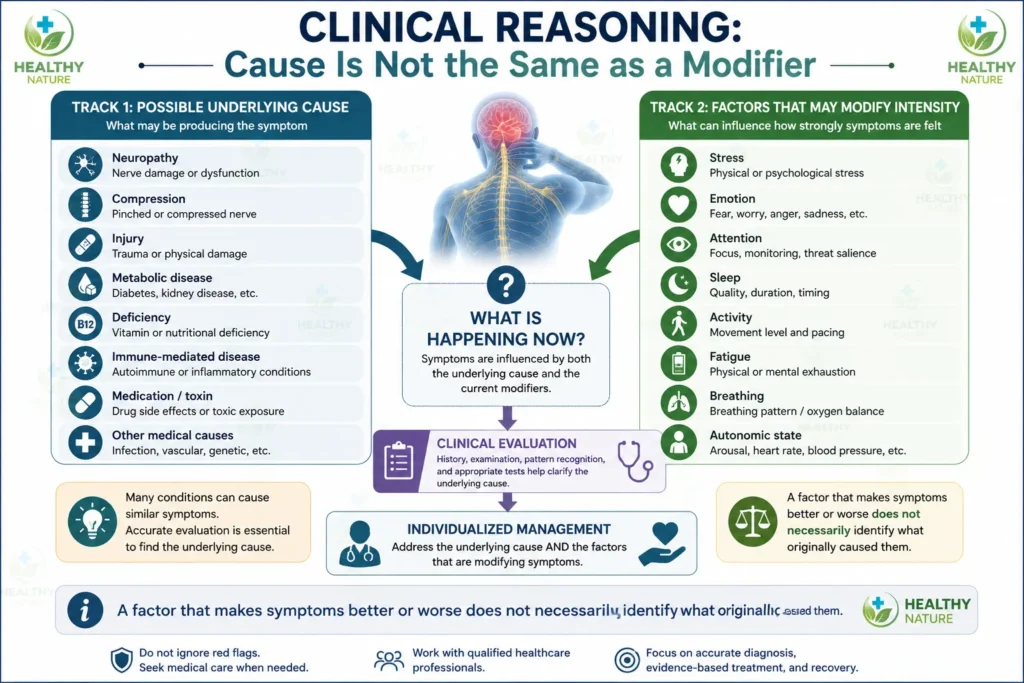
The cause of a symptom and the factors that change its intensity are not necessarily the same thing.
A compressed nerve can hurt more after poor sleep.
Peripheral neuropathy can become harder to tolerate during a stressful period.
A person can become less frightened by a symptom without the underlying neurological condition suddenly disappearing.
And a sensation becoming quieter during relaxation does not prove that there was never a physical problem.
If you are dealing with persistent tingling, numbness, burning, weakness, or unusual sensory changes and do not yet understand what they may represent, begin with Symptoms of Nerve Dysfunction before assuming stress or emotion is the cause.
Quick Answer
Nerve sensitivity is not one diagnosis.
The phrase may describe increased pain, burning, tingling, touch sensitivity, heightened awareness of bodily sensations, pain sensitization, autonomic arousal, or symptoms arising from an actual peripheral nerve disorder.
Stress, emotion, attention, sleep, breathing patterns, and autonomic state may influence how strongly some symptoms are experienced. They do not, by themselves, establish what caused those symptoms.
That difference—cause versus modulation—is central to understanding this page.
Important Evidence Boundary
Stress can influence symptoms without being the original cause of those symptoms.
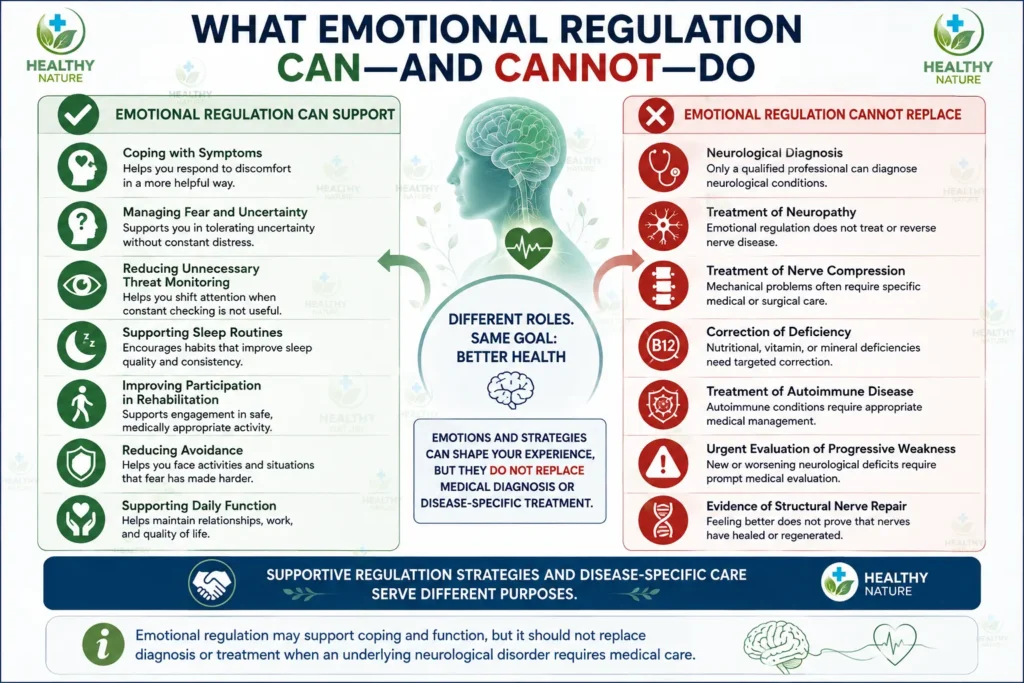
Emotional regulation can support coping, function, and pain management.
It should not be presented as proof that damaged peripheral nerves have healed or as a substitute for diagnosis and disease-specific treatment.
What Does “Nerve Sensitivity” Actually Mean?
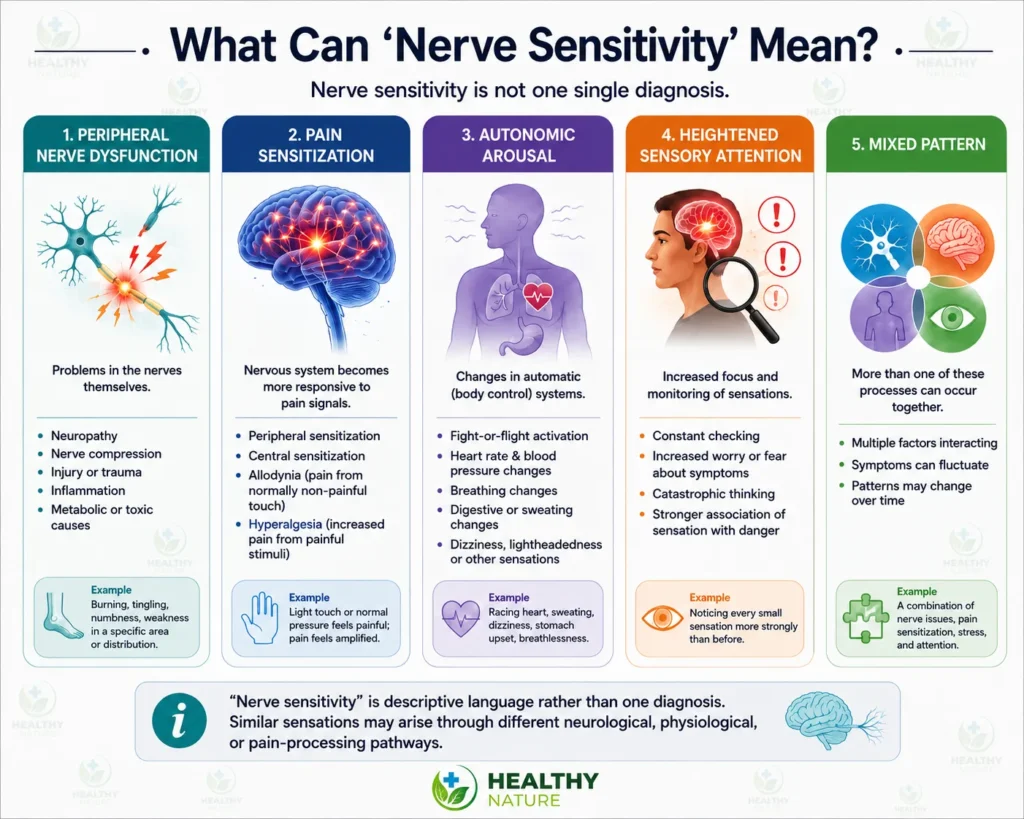
“Nerve sensitivity” sounds like a medical diagnosis, but it is not one.
People use the phrase to describe very different experiences.
One person may mean burning feet.
Another may mean that clothing or bedsheets feel painfully uncomfortable against the skin.
Someone else may describe pins and needles, electric sensations, tenderness, unusual temperature sensitivity, or a body that seems to notice every physical sensation.
Those experiences do not necessarily arise from the same process.
This distinction matters because the word sensitivity tells us something about the experience, but often very little about the cause.
Peripheral Neuropathy Is One Possibility
Peripheral neuropathy refers to disorders involving damage or dysfunction of the peripheral nervous system.
Depending on which nerves are affected, peripheral neuropathy may produce sensory, motor, or autonomic symptoms. NINDS describes more than 100 forms of peripheral neuropathy and notes that symptoms vary according to the nerve fibers and disease process involved.
Sensory symptoms may include:
- burning or shooting pain;
- tingling;
- reduced sensation;
- unusual sensitivity;
- impaired temperature sensation;
- loss of position sense;
- or pain from normally non-painful touch.
Motor involvement can produce weakness, cramping, twitching, or muscle wasting.
Autonomic nerve involvement may alter sweating, digestion, blood-pressure regulation, bladder function, or other automatic processes.
If this is the type of problem you are investigating, see our detailed guide to Peripheral Neuropathy.
But peripheral neuropathy is only one possible explanation for what a person casually calls “sensitive nerves.”
Pain Sensitization Is a Different Concept
NINDS uses the terms peripheral sensitization and central sensitization to describe changes in the peripheral or central nervous system that make a person more sensitive to pain or other sensations.
This is not the same thing as saying that every sensitive sensation comes from central sensitization.
It also does not mean the sensation is psychological.
Terms such as allodynia and hyperalgesia describe particular changes in pain responsiveness.
Allodynia refers to pain from something that would not normally be painful.
Hyperalgesia refers to an increased pain response to something that is already painful.
These describe what the nervous system is doing.
They do not, by themselves, explain why it is doing it.
Sometimes Attention Changes How Noticeable a Sensation Becomes
There is another possibility that is much more ordinary.
A sensation may already exist, but the person begins paying far more attention to it.
Think about a new symptom that has become frightening.
At first, you notice it occasionally.
Then you begin checking it.
Is it still there?
Has it spread?
Does the other foot feel the same?
Is the burning stronger than yesterday?
Does walking change it?
The sensation has now become medically and emotionally important, so attention keeps returning to it.
That does not invent the symptom.
It can, however, make the symptom much harder to ignore.
NINDS notes that brain systems involved in pain overlap with systems involved in attention, memory, fear, anxiety, reward, motivation, and emotion.
For the deeper neurobiology behind this interaction, see Pain Processing.
Before Asking Whether Stress Is the Cause, Separate Three Different Questions
Much of the confusion around nerve sensitivity comes from combining questions that are better kept separate.
Question 1: What Is Producing the Symptom?
This is the cause question.
Depending on the clinical situation, possible explanations might include:
- peripheral neuropathy;
- nerve compression;
- injury;
- diabetes or another metabolic disorder;
- nutritional deficiency or excess;
- medication effects;
- chemotherapy;
- immune-mediated disease;
- infection;
- vascular disease;
- inherited neurological disease;
- musculoskeletal problems;
- or another neurological condition.
NINDS lists a wide range of acquired causes of peripheral neuropathy, including diabetes, trauma, autoimmune disease, vascular problems, nutritional imbalances, toxins, medications, infections, kidney or liver disease, and cancer treatment.
That is why persistent neurological symptoms should not be explained by stress simply because stressful days make them worse.
Our Causes of Nerve Pain guide explores these competing causes in greater detail.
Question 2: What Is Changing the Symptom Today?
This is the modulation question.
Once a symptom exists, its intensity may vary with factors such as:
- sleep;
- physical activity;
- fatigue;
- prolonged posture;
- attention;
- emotional state;
- illness;
- medication timing;
- fear;
- stress;
- environmental conditions;
- or the overall physiological state of the person.
A modifier does not automatically become the underlying cause.
If a known compressed nerve hurts more after a poor night’s sleep, poor sleep did not necessarily create the compression.
If established neuropathic pain becomes harder to tolerate during a stressful week, the stress may be affecting symptom burden without being responsible for the original nerve lesion.
Question 3: What Can Support Function and Recovery?
This is the management question.
The answer depends on what has actually been diagnosed.
For one person, the priority may be treating diabetes.
For another, it may be relieving nerve compression.
Another may need treatment of an immune-mediated neuropathy.
Someone recovering from injury may benefit from rehabilitation.
And a person living with persistent pain may also benefit from better sleep, appropriate activity, psychological support, occupational adaptations, pain-management strategies, or emotional-regulation skills.
The fact that something helps does not prove it was addressing the original cause.
That principle is worth remembering:
Cause, symptom modulation, and recovery support answer different questions.
Emotional Regulation Does Not Mean “Calm Down”
The phrase emotional regulation is often misunderstood.
It does not mean eliminating fear.
It does not mean never becoming angry.
It does not mean suppressing grief.
And it certainly does not mean remaining calm enough to earn recovery.
Emotional regulation describes the ways people recognize, understand, influence, tolerate, express, or respond to emotional experiences.
That can include attention, interpretation, behavior, acceptance, problem-solving, communication, or choosing how to act while an emotion is still present.
Suppose someone develops unexplained numbness and burning.
Fear may be a completely reasonable response.
The useful question is not:
“How can I stop feeling afraid?”
It may be:
“What is the fear leading me to do?”
Perhaps it motivates an appropriate medical appointment.
That can be helpful.
But perhaps it leads to checking the foot every few minutes, avoiding all movement, losing sleep, reading frightening disease stories until 3 a.m., and interpreting every small fluctuation as evidence of neurological deterioration.
The emotion itself has not become the problem.
The pattern surrounding it may have become another layer of difficulty.
For the broader psychological concept—not specifically its relationship with neurological symptoms—see Emotional Regulation.
Physical Symptoms Can Be Influenced by Emotion Without Becoming “Imaginary”
This distinction deserves to be stated plainly.
Pain is real even when emotional context influences it.
IASP defines pain as a sensory and emotional experience. It also emphasizes that pain is personal and influenced to varying degrees by biological, psychological, and social factors.
That does not make pain “all in the mind.”
It tells us that the experience of pain is more complex than a simple meter showing exactly how much tissue damage exists at a given moment.
Consider two evenings.
On one evening, someone is rested, engaged in conversation, and reasonably confident that a painful condition has been medically assessed.
On another, the same person is exhausted, worried about the future, repeatedly checking the painful area, and uncertain whether the symptoms represent something dangerous.
The sensory experience may not feel identical.
That does not require the original physical condition to disappear and reappear.
Context can change how sensory information is processed and experienced.
This is one reason the old “physical versus psychological” argument is so unhelpful.
Human physiology does not respect that artificial boundary.
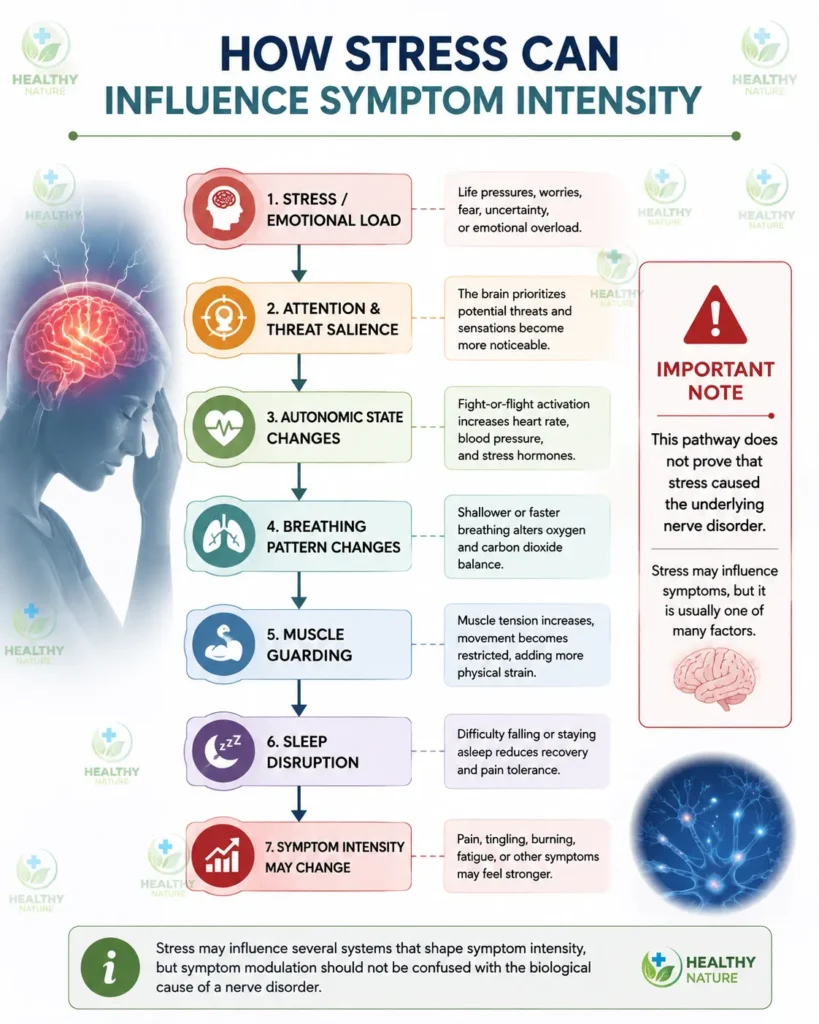
How Can Stress and Emotion Influence Nerve Sensitivity or Pain?
There is no single mechanism that explains every flare.
Several processes may interact.
Attention Can Change What Feels Important
The nervous system receives an enormous amount of sensory information.
Most of it never becomes the center of conscious attention.
But signals associated with possible danger receive priority.
If a tingling sensation becomes linked in your mind with the possibility of permanent nerve damage, that sensation becomes much harder to ignore.
You may begin noticing small changes that previously would have passed unnoticed.
Again, this does not make the symptom unreal.
It changes its salience—how strongly it competes for attention.
Pain-related brain systems overlap with systems involved in attention, memory, fear, emotion, reward, and motivation.
Threat Can Change the Meaning Attached to a Sensation
Compare these two statements:
“My foot is tingling.”
and:
“My foot is tingling, which means my nerves are permanently deteriorating.”
The first is an observation.
The second is an interpretation.
The interpretation might eventually prove correct, incorrect, or partially correct.
But the sensation itself has not established it.
This distinction becomes particularly useful during periods of medical uncertainty.
It allows someone to take symptoms seriously without treating every fluctuation as proof of catastrophe.
Stress Changes Physiology, Not Only Thoughts
Stress involves real biological responses.
Automatic nervous-system activity, breathing, heart rate, blood pressure, muscle tone, alertness, endocrine signaling, and other physiological processes can change when a person perceives challenge or threat.
Pain-processing systems interact with systems involved in fear, anxiety, attention, and emotion.
That makes the statement “stress causes nerve pain” much too broad.
A more accurate statement is:
Stress can alter the physiological context in which pain and sensory information are processed.
How important that is varies from person to person and from condition to condition.
Breathing Changes Can Sometimes Produce Tingling
There is also a very specific mechanism worth understanding.
During anxiety, panic, pain, or other stressful situations, some people begin breathing faster or deeper than their body requires.
Hyperventilation lowers carbon dioxide in the blood and can produce symptoms that include light-headedness, muscle spasms, numbness, and tingling—particularly in the hands, arms, or around the mouth. MedlinePlus also emphasizes that hyperventilation can have medical as well as emotional causes, so new rapid breathing should not automatically be labelled anxiety. Read the MedlinePlus overview of hyperventilation.
This is a good example of why “psychological” versus “physical” is a poor distinction.
An emotional event can alter breathing.
Breathing changes blood chemistry.
Blood-chemistry changes can produce physical sensations.
But persistent tingling still has many other possible causes.
Muscle Guarding Can Add Another Physical Layer
Fear and pain can change movement.
Some people clench the jaw, elevate the shoulders, brace the abdomen, limit joint movement, change gait, or avoid positions they associate with symptoms.
Sometimes protection is appropriate.
Sometimes it persists after it is useful.
For someone who already has a mechanical, musculoskeletal, or nerve-related problem, guarding may add stiffness, muscle pain, fatigue, reduced movement tolerance, or altered load to the original condition.
This is not evidence that the original problem was emotional.
It means a health problem can accumulate additional layers over time.
If symptoms seem strongly linked to pressure, position, or an anatomical nerve distribution, our Nerve Compression guide may be more relevant than assuming a generalized “dysregulated nervous system.”
Sleep Can Change the Entire Experience
Pain can disturb sleep.
Poor sleep can also make pain more difficult to manage.
A 2024 systematic review and meta-analysis involving more than 100,000 participants found prospective associations between sleep problems and chronic musculoskeletal pain, while also finding evidence that pain may contribute to later sleep problems. The strength and certainty varied across outcomes, so this should not be reduced to a simple one-way causal claim.
The practical point is simpler.
After several nights of poor sleep, people may have less physical and emotional capacity for dealing with pain, uncertainty, rehabilitation, and daily demands.
So when someone says:
“My symptoms are worse when I sleep badly,”
that observation may be clinically useful.
It does not mean sleep deprivation originally caused their neuropathy.
For the broader recovery context, see Sleep & Recovery, which already treats sleep as one supportive layer rather than a universal cure.
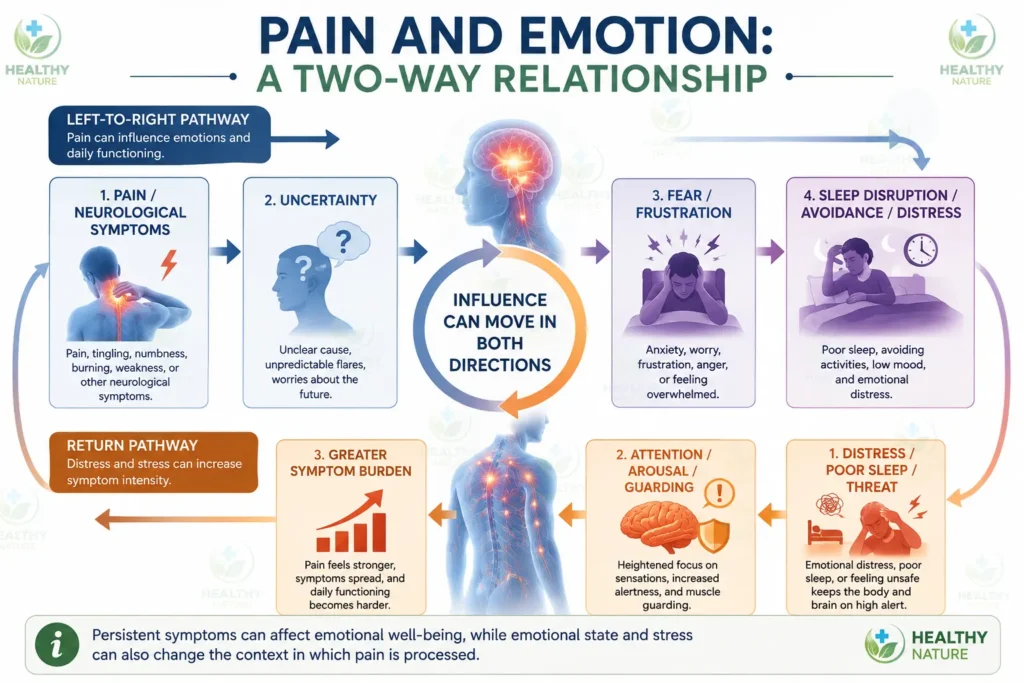
Pain Can Change Emotion Too
The relationship does not run in only one direction.
Someone who has lived with unexplained pain or neurological symptoms for months may become worried, frustrated, angry, exhausted, or afraid.
That emotional response does not automatically predate the physical problem.
Sometimes it is a consequence of living with it.
Persistent pain can affect sleep, relationships, work, movement, independence, confidence, and plans for the future. NINDS notes that pain-related systems overlap with emotion and that chronic pain can have broad effects on function and well-being.
Imagine repeatedly waking at night because your feet burn.
Then imagine being unsure whether the symptom is temporary, progressive, autoimmune, metabolic, structural, or unexplained.
Anxiety in that situation is not surprising.
The mistake would be to observe the anxiety and conclude:
“The anxiety caused the symptoms.”
Sometimes pain increases distress.
Sometimes distress makes pain harder to tolerate.
Sometimes both occur.
That is a bidirectional relationship, not a blame model.
A “Sensitive Nervous System” Can Mean Several Different Things
The internet increasingly uses phrases such as:
“sensitive nervous system”
“dysregulated nervous system”
“overactive nervous system”
or
“stuck in fight-or-flight.”
These phrases can be useful conversational shortcuts.
They can also become misleading when treated as medical diagnoses.
A person using the phrase “sensitive nervous system” might actually be describing any of the following.
Peripheral nerve dysfunction
A peripheral nerve may be compressed, injured, metabolically impaired, inflamed, or otherwise dysfunctional.
Pain sensitization
Pain pathways may become more responsive to sensory input.
Autonomic arousal
Heart rate, sweating, digestion, blood-pressure regulation, breathing, or other automatic functions may be altered.
Sensory hypervigilance
Attention may become unusually focused on bodily sensations, particularly after symptoms have become associated with danger.
A mixed picture
More than one of these processes may occur in the same person.
That is why broad language should lead to better questions, not instant diagnosis.
Our Autonomic Regulation guide explains automatic nervous-system function, while Brain–Body Integration explores how sensory information and body state continually interact.
The site’s own Brain–Body Integration material already makes an important distinction: stronger or more noticeable sensory input does not automatically equal tissue damage.
Nerve Sensitivity Is Not the Same as Peripheral Neuropathy
This distinction deserves special attention because the words are often blurred together online.
Peripheral neuropathy is a family of disorders involving peripheral nerve damage or dysfunction.
“Nerve sensitivity” is descriptive language.
A person may have peripheral neuropathy with severe numbness and relatively little hypersensitivity.
Another person may have burning and allodynia.
A third may feel unusually sensitive without meeting diagnostic criteria for a generalized polyneuropathy.
NINDS describes peripheral neuropathy as a broad group of conditions affecting peripheral nerve signaling, with different sensory, motor, autonomic, length-dependent, and non-length-dependent patterns.
This is why the neurological pattern matters.
So does the time course.
So does the examination.
And, in some cases, so do nerve-conduction studies, EMG, laboratory tests, imaging, autonomic testing, or other investigations.
For the broader process, see How Nerve Dysfunction Is Diagnosed.
What Does the Evidence Actually Support?
This is an area where wording matters.
Research supports the idea that emotion and pain interact.
A 2024 systematic review and meta-analysis of experimental studies found evidence that experimentally induced emotional states can influence experimental pain responses. That does not mean emotion explains every chronic pain disorder, but it supports the broader concept that pain processing is responsive to emotional context.
Research also suggests that emotion-regulation-focused interventions may help some people with chronic pain.
A 2024 systematic review and meta-analysis included eight studies and 902 participants. Compared with treatment as usual, emotion-regulation-skills-focused interventions improved pain intensity at post-treatment and follow-up in the pooled analysis. However, the certainty of evidence ranged from very low to moderate, and the authors emphasized the limited number of studies and the need for better trials.
That is meaningful evidence.
It is also limited evidence.
Those two statements can coexist.
The evidence supports saying:
Emotional regulation may be a useful component of chronic-pain management for some people.
It does not establish that:
poor emotional regulation causes peripheral neuropathy;
stress is the root cause of every nerve symptom;
trauma release regenerates damaged axons;
calming the nervous system treats every neuropathy;
or
symptoms improving with relaxation proves there was no physical disease.
Those are much larger claims.
Psychological Treatment for Pain Does Not Mean the Pain Is Psychological
This misunderstanding can prevent people from using treatments that might help them.
Cognitive behavioral therapy, mindfulness-based approaches, acceptance-oriented treatment, pain psychology, and other psychological interventions can work with:
- fear;
- attention;
- coping;
- behavior;
- activity avoidance;
- sleep;
- distress;
- pain-related beliefs;
- and day-to-day function.
They do not require the assumption that pain is imaginary.
NCCIH summarizes evidence indicating that mindfulness-based interventions and cognitive behavioral therapy can help some people with chronic pain, although effectiveness varies by condition and the quality of evidence is not uniform.
There is a useful analogy here.
Physical therapy after an injury does not imply that weak muscles caused the injury.
Psychological treatment for persistent pain does not imply that thoughts caused the underlying disease.
A treatment can address one component of a health problem without claiming to explain the entire problem.
Can Anxiety Cause Tingling?
Sometimes anxiety-related physiology can contribute to tingling, but that is not a reason to assume that recurring tingling is anxiety.
One clear example is hyperventilation.
Rapid or excessively deep breathing can reduce carbon dioxide levels and produce numbness or tingling, particularly in the arms, hands, or around the mouth. Anxiety or panic can trigger hyperventilation, but medical conditions can also cause rapid breathing.
At the same time, persistent tingling can occur with peripheral neuropathy, nerve compression, nutritional problems, medication effects, diabetes, injury, and many other conditions.
So the useful conclusion is not:
“Tingling means anxiety.”
It is:
“Anxiety-related physiology is one possible explanation in the right context, but persistent or unexplained tingling still deserves appropriate clinical reasoning.”
Can Stress Cause Permanent Nerve Damage?
Ordinary psychological stress should not be used as the default explanation for structural peripheral nerve damage.
Peripheral neuropathy has many recognized causes, including metabolic disease, physical injury, vascular problems, autoimmune conditions, nutritional abnormalities, medications, toxins, infections, hereditary disorders, and some cancer treatments.
Stress may affect:
- pain processing;
- muscle tension;
- sleep;
- attention;
- autonomic activity;
- breathing;
- coping;
- and symptom burden.
Those effects can matter enormously.
But they are not equivalent to demonstrating structural peripheral nerve injury.
If someone develops persistent sensory loss, progressive weakness, muscle wasting, altered reflexes, foot drop, loss of balance, or other neurological deficits, the appropriate response is not simply:
“Try to reduce stress.”
The neurological problem needs to be evaluated.
When Stress Is a Modifier Rather Than the Whole Explanation
Sometimes the pattern itself provides useful clues.
Suppose tingling becomes noticeably stronger during stressful weeks.
That suggests stress may be influencing the symptom.
Now suppose the tingling also consistently follows one particular nerve distribution and becomes worse in a specific posture.
That adds a mechanical clue.
Or suppose burning is worse after poor sleep but the person already has confirmed diabetic neuropathy.
Sleep may be modifying the pain while diabetes remains the underlying disease process.
Or suppose dizziness increases during anxiety, but objective blood-pressure abnormalities occur when standing.
That requires a broader medical evaluation rather than assuming the problem is psychological.
The better framework is:
Underlying cause + symptom modifiers + functional consequences.
Not:
physical or emotional.
When Medical Evaluation Matters More Than Self-Regulation
Emotional regulation should never become a reason to delay appropriate care.
Medical evaluation becomes particularly important when nerve-related symptoms are:
- new and unexplained;
- persistent;
- progressively worsening;
- spreading;
- accompanied by objective weakness;
- associated with significant sensory loss;
- altering gait or coordination;
- producing muscle wasting;
- accompanied by important autonomic changes;
- or occurring in someone with diabetes, autoimmune disease, recent infection, chemotherapy exposure, significant injury, or another relevant medical condition.
NINDS emphasizes medical history, neurological examination, and selected testing in the evaluation of peripheral neuropathy because many disorders can produce overlapping symptoms.
Seek urgent medical attention for sudden or rapidly evolving neurological problems such as major new weakness, facial weakness, difficulty speaking, severe loss of coordination, rapidly worsening walking ability, breathing or swallowing difficulty, or other acute neurological changes.
The key safety rule is simple:
Do not use “nervous system regulation” as a substitute for investigating concerning neurological symptoms.
What Can Emotional Regulation Realistically Help With?
Once medical safety and the underlying condition are being addressed, emotional regulation can have a useful role.
Not because emotions are the hidden cause of every symptom.
Because living with symptoms requires decisions.
A person may need to decide how to respond to a flare.
How much attention to give a sensation.
Whether fear is helping or interfering.
How to tolerate uncertainty.
How to communicate about symptoms.
How to return to medically appropriate activity.
How to cope with pain that has not disappeared.
How to sleep when the body feels uncomfortable.
And how to maintain a life while treatment or recovery takes time.
Those are real clinical and human problems.
They deserve serious attention.
Start by Naming What Is Actually Happening
Sometimes the phrase “I am stressed” is too vague to be useful.
Are you frightened?
Angry?
Frustrated?
Ashamed?
Exhausted?
Grieving lost function?
Uncertain about your diagnosis?
Worried about becoming disabled?
These experiences may require very different responses.
Fear may require information.
Grief may require time and support.
Uncertainty may require a medical plan.
Exhaustion may require changes to sleep or workload.
Anger may need expression or problem-solving.
Regulation begins with accuracy, not forced calm.
Separate the Sensation From the Prediction
This is one of the most practical skills on the page.
Consider:
“The burning in my foot is stronger tonight.”
That is an observation.
Now consider:
“The stronger burning means my nerves have permanently deteriorated today.”
That is a prediction.
It might ultimately prove correct.
But the sensation itself has not established it.
A more accurate response might be:
“The burning is stronger tonight. I can observe the change, look for any genuinely new neurological signs, consider what else has changed, and decide whether the pattern needs medical attention.”
This is not positive thinking.
It is disciplined uncertainty.
And disciplined uncertainty is often much more useful than either catastrophizing or dismissing symptoms.
Reappraisal Is Not Pretending Everything Is Fine
Cognitive reappraisal means reconsidering the meaning attached to a situation.
Suppose the automatic thought is:
“This flare proves I am getting permanently worse.”
A more evidence-based alternative might be:
“The symptoms are stronger today. Flares can have several explanations, and I do not yet have enough information to know what this change means.”
That does not deny the symptom.
It avoids claiming more than the available evidence supports.
For some people, this change alone reduces the amount of fear attached to normal symptom fluctuation.
Acceptance Does Not Mean Giving Up
Acceptance is another word that is easily misunderstood.
It does not mean approving of pain.
It does not mean deciding treatment is pointless.
It does not mean stopping investigation.
In this context, acceptance can mean recognizing what is happening right now without spending all available energy fighting the fact that it exists.
For example:
“This sensation is unpleasant. It is here at the moment. I can respond to it without deciding immediately that it is catastrophic.”
That leaves room for both medical care and emotional flexibility.
What About Reassurance?
Reassurance is useful when it is based on evidence.
“Nothing is wrong” is poor reassurance if nobody has evaluated the problem.
“It’s just anxiety” is poor reassurance when important alternative causes have not been considered.
Evidence-based reassurance sounds different:
“This symptom can have several causes. Your examination and testing have ruled out some important possibilities, and your clinician believes this pattern can be managed safely.”
That is not dismissal.
It is uncertainty being narrowed by evidence.
What If I Keep Checking My Symptoms?
Checking is not automatically unhealthy.
A person with a new medical problem may need to observe changes carefully.
The issue is whether checking is still generating useful information.
There is a difference between noticing:
“My left foot has become objectively weaker over the last three days.”
and checking sensation 40 times in one evening to determine whether the tingling is 5% stronger than it was an hour ago.
The first observation may be clinically important.
The second may simply keep attention locked onto the symptom without changing what should be done.
This is where emotional regulation and attention management can become useful—not to ignore the body, but to distinguish useful monitoring from repetitive threat checking.
Sleep Deserves Its Own Attention
If symptoms reliably become harder to tolerate after poor sleep, sleep is worth addressing as its own problem.
That does not mean sleep caused the neurological disorder.
It means the person may be dealing with two interacting burdens.
Pain can disturb sleep.
Poor sleep may make the following day more difficult.
Emotion, fatigue, activity, and pain can then become harder to manage.
This cycle is one reason our Sleep & Recovery page should be considered a supportive resource rather than a treatment page. The site’s current sleep content itself warns against treating sleep as a cure for nerve symptoms.
When Psychological Support Can Be Useful
A psychologist, therapist, or pain psychologist may be useful when symptoms are creating:
- persistent fear;
- panic;
- depression;
- trauma-related distress;
- severe sleep disruption;
- major avoidance;
- repeated catastrophic thinking;
- difficulty returning to medically safe activities;
- or significant disruption to work, relationships, and daily life.
This is not an admission that the original symptom was psychological.
The goal may be to help someone function better while medical care, rehabilitation, or recovery continues.
NCCIH’s evidence summaries indicate that approaches such as cognitive behavioral therapy and mindfulness-based interventions can improve some chronic-pain outcomes for some patients, while effects vary and evidence quality differs across conditions.
Emotional Regulation and Neuropathic Pain Are Not the Same Thing
These terms answer different questions.
Neuropathic pain refers to pain related to a lesion or disease affecting the somatosensory nervous system.
Emotional regulation refers to how emotional experiences are recognized, managed, tolerated, interpreted, or responded to.
Someone can have genuine neuropathic pain and still notice that stress changes its severity.
Someone can become much better at coping while nerve-related symptoms remain.
Someone can receive effective treatment for the underlying neuropathy but continue to fear movement or future relapses.
And someone can improve emotionally without demonstrating structural nerve regeneration.
These are different layers of the same person’s experience.
For a deeper distinction between disease, pain mechanism, and persistent pain patterns, see Chronic Pain Syndromes.
What Emotional Regulation Cannot Do
This boundary is particularly important on a website called Heal Your Nerves Naturally.
Emotional regulation should not be presented as a substitute for diagnosis or disease-specific treatment.
It cannot reliably:
- diagnose neuropathy;
- identify whether a nerve is structurally damaged;
- decompress a compressed nerve;
- correct vitamin B12 deficiency;
- control diabetes;
- treat an active immune-mediated neuropathy;
- reverse chemotherapy-induced nerve injury;
- repair a severed nerve;
- establish whether myelin or axons have recovered;
- or determine whether new weakness is medically safe.
Similarly:
Feeling calmer does not automatically mean the nerve has healed.
Feeling more pain does not automatically mean new tissue damage has occurred.
Both conclusions require more information.
Where Does “Natural Healing” Fit?
Natural-health language becomes much more useful when it is precise.
Sleep matters.
Adequate nutrition matters.
Movement matters.
Stress management matters.
Social support matters.
Emotional health matters.
Rehabilitation matters.
But none of those should be asked to perform a role they cannot reliably perform.
If a person has diabetes-related neuropathy, metabolic management matters.
If there is a nutritional deficiency, that deficiency needs appropriate identification and correction.
If a nerve is mechanically compressed, the mechanical problem may need treatment.
If an autoimmune neuropathy is active, disease-specific medical therapy may be required.
If persistent pain has become intertwined with fear, poor sleep, inactivity, or avoidance, psychological and behavioral strategies may add another important layer of care.
The strongest model is not:
natural versus medical.
It is:
use the right intervention for the right problem.
That is both safer and more useful.
A Practical Way to Think During a Symptom Flare
When symptoms become stronger, it is easy for several questions to collapse into one frightening conclusion.
Instead, work through them separately.
What actually changed?
Did an existing sensation become more intense?
Or is there genuinely new weakness, sensory loss, coordination difficulty, or another neurological sign?
Is there already a diagnosis?
If so, has the clinician explained whether fluctuations like this are expected?
Are there warning signs?
New weakness, rapidly spreading symptoms, major sensory loss, gait deterioration, breathing problems, swallowing problems, or significant neurological change require a different response from a familiar temporary increase in discomfort.
What else changed?
Was sleep poor?
Was activity unusually high?
Has there been illness?
A medication change?
Prolonged posture?
Significant stress?
An injury?
What is observation and what is prediction?
“My hand is tingling more today.”
is an observation.
“This proves permanent deterioration.”
is a prediction until evidence establishes it.
This reasoning process does not replace medical care.
It helps make the information you bring to medical care more useful.
Why Progress Does Not Always Mean Symptoms Disappear
A person can improve before the symptom reaches zero.
They may still have pain but sleep better.
They may still notice tingling but no longer check it every few minutes.
They may return to activities that have been medically cleared.
They may recognize the difference between a familiar flare and a new neurological problem.
They may communicate more clearly with their clinician.
They may stop allowing every symptom fluctuation to determine the rest of their day.
Those are meaningful changes.
They should not be confused with proof that nerve tissue has regenerated.
But they should not be dismissed merely because symptoms remain.
Function matters too.
What Emotional Regulation Should Never Become
It should never become blame.
People should not be told that they remain in pain because they have failed to:
“release trauma,”
“raise their vibration,”
“calm their vagus nerve,”
“think positively,”
or
“regulate their nervous system correctly.”
Those claims turn complex health problems into judgments about the person experiencing them.
Someone can be psychologically resilient and still develop neuropathy.
Someone can have anxiety and a neurological disease at the same time.
Someone can recover physically while still feeling frightened.
Someone can make tremendous emotional progress while chronic symptoms remain.
Nervous-system health is not a test of emotional virtue.
A More Useful Model for Nerve Sensitivity
Instead of asking:
“Is this physical or emotional?”
try asking:
What is the most plausible medical or neurological explanation for the symptom?
What evidence supports or challenges that explanation?
Are there objective signs of nerve dysfunction?
Which factors make the symptom more or less noticeable?
Are those factors causes, modifiers, consequences, or some combination?
Does anything require medical treatment?
Would rehabilitation, sleep support, pain management, psychological support, or emotional-regulation skills improve function?
Several answers may be true at once.
That is not diagnostic confusion.
It is often an accurate reflection of how complex persistent symptoms become.
Frequently Asked Questions About Nerve Sensitivity and Emotional Regulation
Can stress make nerve sensitivity worse?
Yes, stress can make pain or other sensory symptoms more noticeable or difficult to tolerate for some people. Stress can interact with attention, autonomic activity, breathing, muscle guarding, sleep, and pain-processing systems. That does not establish that stress caused an underlying neuropathy or structural nerve injury.
Can anxiety cause tingling?
Tingling can occur during anxiety-associated hyperventilation because excessive breathing can lower carbon dioxide levels. However, tingling also has many neurological and medical causes, so persistent or recurrent symptoms should not automatically be attributed to anxiety.
Does stress permanently damage peripheral nerves?
Psychological stress should not be used as the default explanation for structural peripheral neuropathy. Peripheral nerve disorders have many recognized metabolic, mechanical, immune, vascular, nutritional, toxic, infectious, treatment-related, and inherited causes.
Can emotional regulation reduce chronic pain?
Some research suggests emotion-regulation-skills-focused interventions can improve certain chronic-pain outcomes. A 2024 meta-analysis reported improvements in pain intensity compared with usual treatment, but the certainty of evidence ranged from very low to moderate and more high-quality trials are needed.
Does emotional regulation heal damaged nerves?
There is no good basis for claiming that emotional regulation alone regenerates structurally damaged peripheral nerves. It may help with coping, fear, sleep, participation in rehabilitation, pain management, and function while appropriate medical care addresses the underlying condition.
Can meditation heal neuropathy?
Meditation and mindfulness may help some people manage chronic pain or psychological distress, but they should not be presented as treatments that reverse peripheral nerve damage. NCCIH notes potential benefit for some chronic-pain outcomes while also emphasizing limitations in the evidence.
Why does my nerve pain seem worse at night?
There is no single explanation. Reduced distraction, sleep disruption, body position, medication timing, and characteristics of the underlying neuropathy may contribute. NINDS notes that neuropathic pain can be worse at night and can disrupt sleep.
Is a “sensitive nervous system” a medical diagnosis?
No. It is broad descriptive language. Depending on the person, it might refer to peripheral neuropathy, pain sensitization, autonomic arousal, sensory hypersensitivity, heightened attention to body sensations, or a combination of processes.
If relaxation reduces symptoms, does that mean nothing is physically wrong?
No. Physical symptoms can fluctuate with sleep, stress, activity, attention, posture, autonomic state, and other factors. Improvement after relaxation does not establish the underlying cause.
Should I still see a doctor if my symptoms seem related to stress?
Persistent, progressive, recurrent, or unexplained neurological symptoms should be evaluated according to their pattern and severity even when stress influences them. This is particularly important when symptoms include weakness, significant sensory loss, gait changes, muscle wasting, or other objective neurological changes.
What Matters Most
Nerve sensitivity becomes easier to understand once one false choice is removed.
You do not have to decide that symptoms are either physical or emotional.
A physical nerve disorder can become more painful after poor sleep.
A person with neuropathic pain can become frightened by that pain.
Fear can increase attention to the symptom.
Attention can make the symptom harder to ignore.
The resulting sleep disruption can increase the burden further.
None of those interactions proves that the original disorder was psychological.
Likewise, learning to respond differently to fear does not automatically repair an injured axon.
The most useful approach is to identify the layers.
What is causing the symptom?
What is modifying it?
What consequences has it created?
Which parts require medical treatment?
Which parts may benefit from rehabilitation, pain management, better sleep, emotional regulation, or psychological support?
Once those questions are separated, emotional regulation stops competing with medical care.
It becomes what it should be:
one potentially useful part of a larger, evidence-aware approach to living with and recovering from difficult symptoms.
Continue Learning
If you want to understand the next layer of this topic, these guides connect directly with the questions discussed above:
- Symptoms of Nerve Dysfunction — understand sensory, motor, and autonomic symptom patterns.
- How Nerve Dysfunction Is Diagnosed — learn how clinicians move from symptoms toward possible causes.
- Peripheral Neuropathy — explore disorders involving peripheral nerve damage or dysfunction.
- Causes of Nerve Pain — compare medical, mechanical, metabolic, inflammatory, and other possible causes.
- Pain Processing — understand how sensory information, context, attention, and nervous-system processing interact.
- Autonomic Regulation — explore automatic regulation of heart rate, blood pressure, digestion, sweating, and related functions.
- Brain–Body Integration — understand continuous communication between sensory input, body state, and brain processing.
- Emotional Regulation — explore emotional awareness, response flexibility, and coping outside the narrower nerve-sensitivity context.
- Sleep & Recovery — learn how sleep can interact with pain, fatigue, stress, and recovery capacity.
- Chronic Pain Syndromes — distinguish disease diagnoses from pain mechanisms and persistent pain patterns.
- Mental Health & Stress — explore the broader relationship between mental health, stress, and physical well-being.
Medical Safety Note
This article is intended for education and is not a substitute for diagnosis or treatment from a qualified healthcare professional.
Nerve-related symptoms may have many causes, and changes associated with stress or emotion should not automatically be interpreted as psychological.
New, severe, rapidly worsening, or progressive neurological symptoms—particularly significant weakness, major sensory loss, difficulty walking, new loss of coordination, facial weakness, difficulty speaking, swallowing problems, breathing difficulty, or other rapidly evolving neurological changes—require appropriate medical evaluation.
Do not stop prescribed medication, begin restrictive protocols, or postpone medical care because a symptom appears to change with relaxation, stress, sleep, or emotional state.
References and Clinical Sources
- International Association for the Study of Pain — IASP Pain Terminology — definition of pain and its biological, psychological, and social influences.
- National Institute of Neurological Disorders and Stroke — Pain — pain processing, pain-related brain systems, and peripheral/central sensitization.
- National Institute of Neurological Disorders and Stroke — Peripheral Neuropathy — peripheral neuropathy symptoms, causes, diagnostic evaluation, and nerve-fiber patterns.
- Norman-Nott N, et al. Emotion regulation skills-focused interventions for chronic pain: A systematic review and meta-analysis — evidence on emotion-regulation-focused interventions and chronic pain outcomes.
- Mikkelsen MB, et al. The effect of experimental emotion induction on experimental pain: A systematic review and meta-analysis — research on experimentally induced emotion and pain responses.
- Runge N, et al. The bidirectional relationship between sleep problems and chronic musculoskeletal pain — systematic review and meta-analysis examining prospective sleep–pain relationships.
- National Center for Complementary and Integrative Health — Chronic Pain and Complementary Health Approaches — evidence summaries for selected nonpharmacological approaches to chronic pain.
- National Center for Complementary and Integrative Health — Meditation and Mindfulness — current evidence and limitations regarding mindfulness and pain-related outcomes.
- MedlinePlus — Hyperventilation — physiological effects of overbreathing, including possible numbness and tingling.
Editorial Information
Written by: Heal Your Nerves Naturally Editorial Team
Medically reviewed by: Add only if a qualified healthcare professional actually reviews this article
Last updated: August 2026