Autonomic Response and Regulation: How the Autonomic Nervous System Works
Educational Health Guide · Evidence-Informed · Updated August 2026
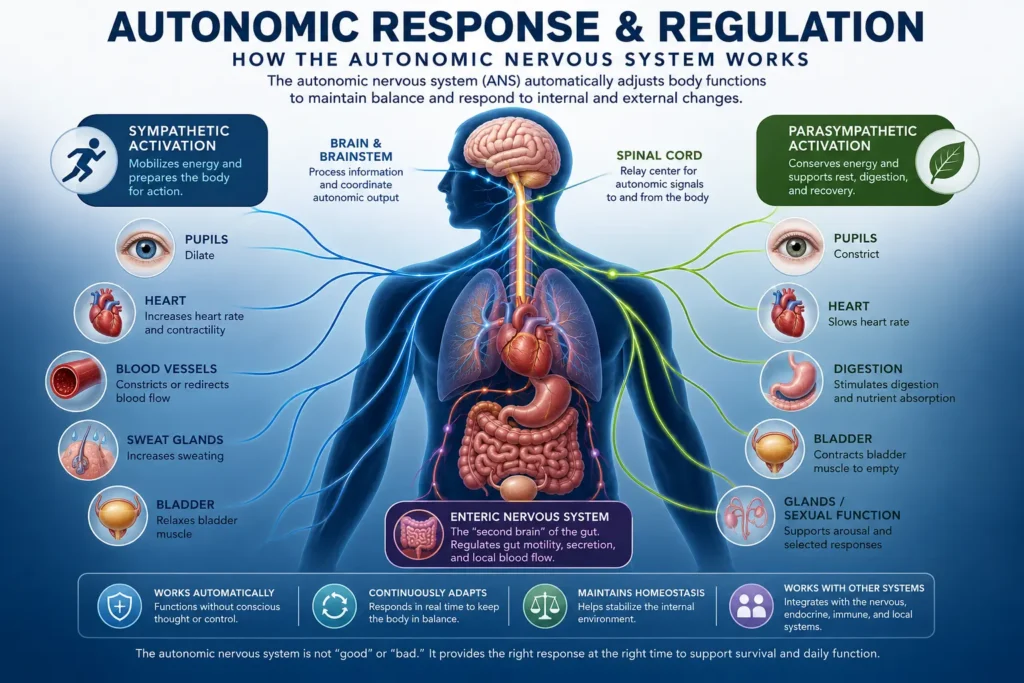
An autonomic response is an automatic physiological adjustment that helps the body respond to changing internal or external conditions. These responses can influence heart rate, blood pressure, digestion, sweating, pupil size, bladder function, and other processes that usually occur without deliberate control.
Autonomic regulation is the ongoing coordination behind those responses. Rather than keeping the body in one fixed state, the autonomic nervous system continually adjusts organ activity to match changing needs. It can increase activity in one system, reduce activity in another, and coordinate different responses at the same time.
This is why autonomic regulation is not simply a matter of being “stressed” or “relaxed.” The sympathetic, parasympathetic, and enteric divisions of the autonomic nervous system work as parts of a larger regulatory network involving the brain, brainstem, spinal cord, peripheral nerves, sensory input, and target organs.
This page explains the physiology of autonomic responses, what the autonomic nervous system regulates, how autonomic reflexes work, and why temporary autonomic changes should not automatically be interpreted as dysautonomia or another medical disorder.
Safety note: Symptoms such as fainting, chest pain, severe shortness of breath, sudden weakness, severe or rapidly worsening dizziness, new loss of bladder or bowel control, confusion, or other acute neurological changes require appropriate medical evaluation. This guide is educational and is not a diagnostic tool.
An autonomic response is an involuntary change in body function produced through autonomic pathways.
The word autonomic refers to processes that are largely regulated without conscious effort. You do not normally need to decide how quickly your heart should beat from moment to moment, how much your pupils should dilate in a dim room, how blood vessels should respond when you stand, or how intestinal movement should be coordinated after a meal.
Instead, sensory information about the body and environment is continuously gathered and processed. Autonomic pathways then help adjust target organs and tissues.
A simple example is standing up.
When a person moves from lying down to standing, gravity temporarily changes how blood is distributed. Stretch-sensitive receptors in major arteries detect the pressure change. Signals travel to cardiovascular control centers in the brainstem. Autonomic output is then adjusted to help maintain blood pressure and blood flow.
That rapid adjustment is an example of an autonomic response.
Other everyday autonomic responses include:
changes in heart rate during physical activity
changes in blood-vessel tone when posture changes
pupil dilation or constriction
sweating when body temperature rises
changes in digestion before and after eating
bladder storage and emptying
changes in salivation
changes in airway tone
adjustments associated with emotional or physical stress
An autonomic response is therefore not one single “stress response.” It is a broad category of automatic physiological adjustments.
Autonomic regulation is the process through which the nervous system adjusts involuntary body functions to help maintain physiological stability.
The body is constantly changing. Activity level changes. Temperature changes. Blood pressure changes. Food enters the digestive tract. Fluid balance changes. Emotional events occur. Pain signals appear. Sleep and wake states alternate.
The autonomic nervous system helps coordinate responses to these changing demands.
This regulation is often described in relation to homeostasis—the maintenance of internal conditions within workable ranges despite ongoing change.
Autonomic regulation does not mean keeping heart rate, blood pressure, digestion, or other functions constant. Healthy physiology requires variation. Heart rate should increase during exercise. Sweating should increase during heat exposure. Pupils should change with light. Digestion should change around meals.
The goal is not stillness. It is context-appropriate adjustment.
This distinction matters because online discussions sometimes use “regulation” as if it means staying calm all the time. Physiologically, that is too narrow. A well-functioning autonomic system must be capable of both activation and restraint, depending on the situation.
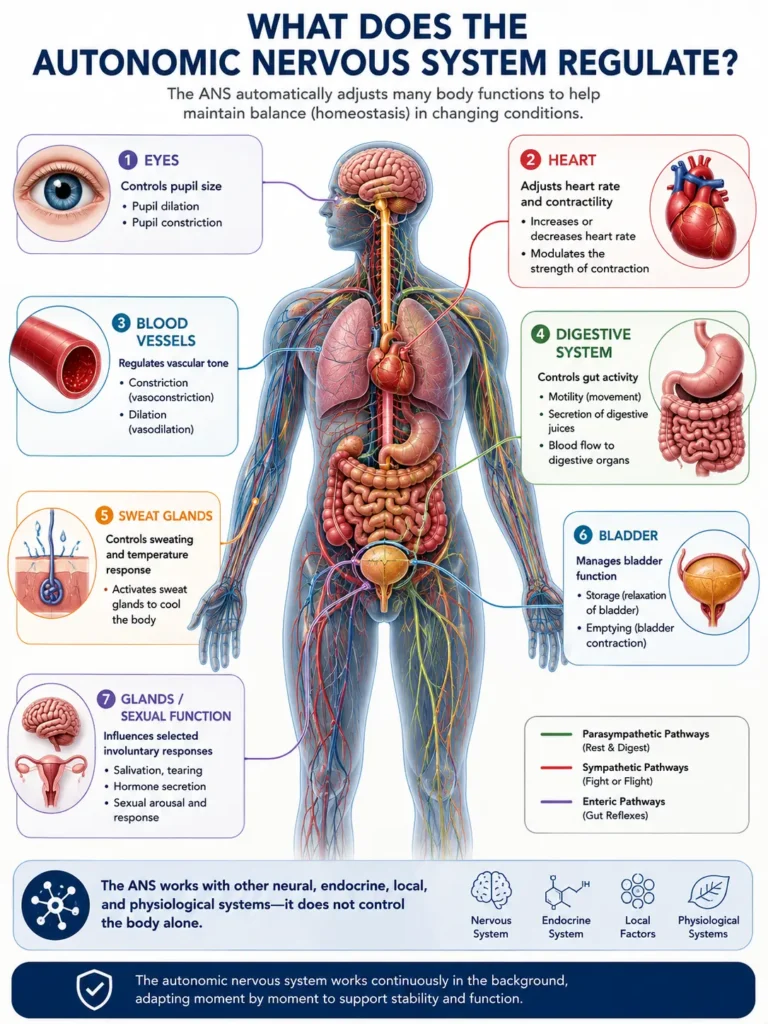
What Does the Autonomic Nervous System Regulate?
The autonomic nervous system influences many organs and tissues throughout the body.
Body Function
Examples of Autonomic Influence
Heart
Heart rate and contractile activity
Blood vessels
Vascular tone and blood-pressure responses
Digestive system
Motility, secretion, blood flow, and coordination with the enteric nervous system
Sweat glands
Sweating and thermoregulatory responses
Eyes
Pupil dilation and constriction
Bladder
Storage and emptying functions
Salivary and other glands
Secretory activity
Airways
Changes in airway smooth muscle tone
Sexual function
Autonomic components of arousal and response
Metabolic and homeostatic systems
Coordination with central regulatory and endocrine networks
These systems are not regulated by the autonomic nervous system in isolation. Endocrine signaling, local tissue mechanisms, the somatic nervous system, respiratory control networks, immune signaling, and higher brain processes can also contribute.
The autonomic nervous system is best understood as one major regulatory network within a much larger physiological system.
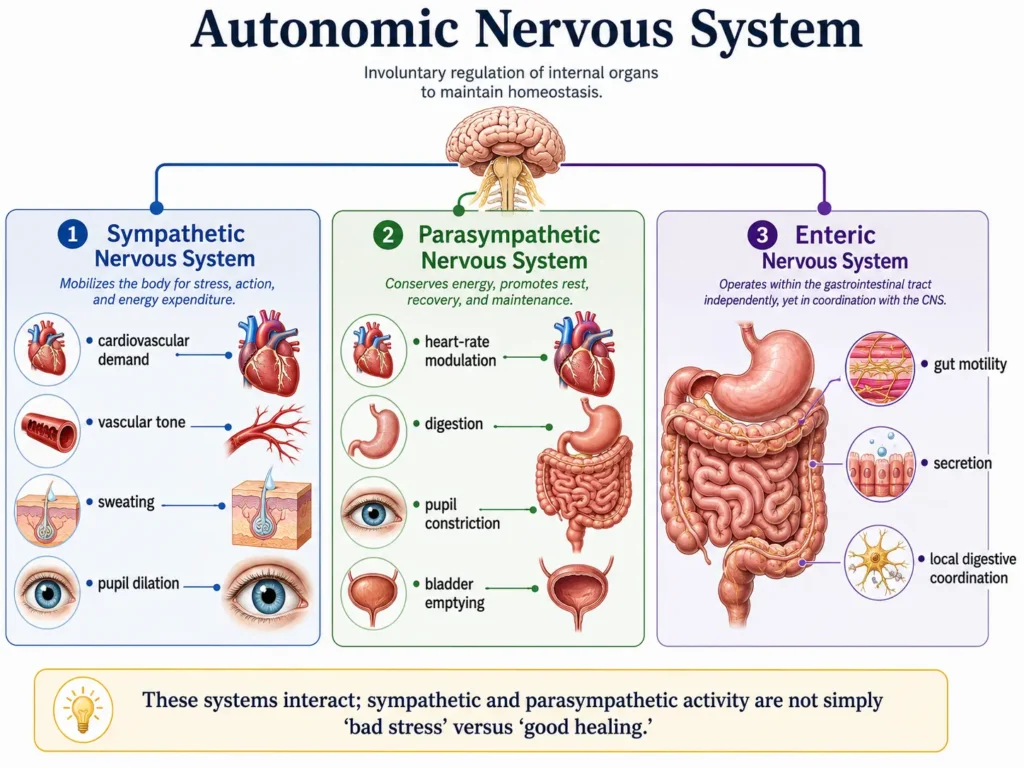
The autonomic nervous system is commonly described through three anatomically distinct divisions:
The three major divisions of the autonomic nervous system and examples of the body functions they influence.
Sympathetic nervous system
Parasympathetic nervous system
Enteric nervous system
The first two provide major autonomic pathways between the central nervous system and organs. The enteric nervous system is an extensive neural network within the gastrointestinal tract that can coordinate many digestive functions locally while also receiving sympathetic and parasympathetic input.
Sympathetic Nervous System
The sympathetic nervous system helps adjust physiology when the body needs to meet demand.
Its activity can contribute to:
increased heart rate and cardiac contractility
changes in vascular tone
pupil dilation
changes in airway tone
reduced gastrointestinal motility in some contexts
increased sweating
changes that help redistribute physiological resources during activity or stress
The sympathetic system is often called the “fight-or-flight” system. That phrase is useful as a simple introduction, but it is incomplete.
Sympathetic activity is not limited to emergencies. Sympathetic nerves contribute to normal moment-to-moment regulation, including vascular tone, posture-related blood-pressure responses, temperature regulation, and many routine bodily adjustments.
Therefore, sympathetic activation is not automatically harmful.
The question is whether autonomic activity is appropriate for the body’s current needs and whether regulatory systems can continue adapting as conditions change.
Parasympathetic Nervous System
The parasympathetic nervous system contributes to many functions associated with resting and homeostatic conditions.
It can influence:
heart rate
pupil constriction
salivation
gastrointestinal activity
bladder emptying
aspects of sexual function
The vagus nerve is a major parasympathetic pathway to thoracic and abdominal organs, although parasympathetic function is broader than the vagus nerve alone.
The parasympathetic system is often described as “rest and digest.” Again, this is a useful teaching phrase, but it should not be interpreted as meaning that parasympathetic activity is a universal “healing mode.”
Parasympathetic pathways regulate specific organs and functions. Nerve regeneration, tissue repair, immune activity, sleep, metabolism, and recovery depend on many biological systems—not a single autonomic switch.
Enteric Nervous System
The enteric nervous system is a network of neurons within the gastrointestinal tract.
It contains sensory neurons, interneurons, and motor neurons that help coordinate processes such as:
intestinal motility
secretion
local blood-vessel tone
fluid transport
responses to mechanical and chemical conditions inside the gut
The enteric nervous system can perform substantial local processing, but it also interacts with the central nervous system through sympathetic and parasympathetic pathways.
This is one reason digestion is not simply “turned on” or “turned off” by stress. Gastrointestinal function reflects local enteric circuits, autonomic input, hormones, food composition, inflammation, microbiome-related factors, and other influences.
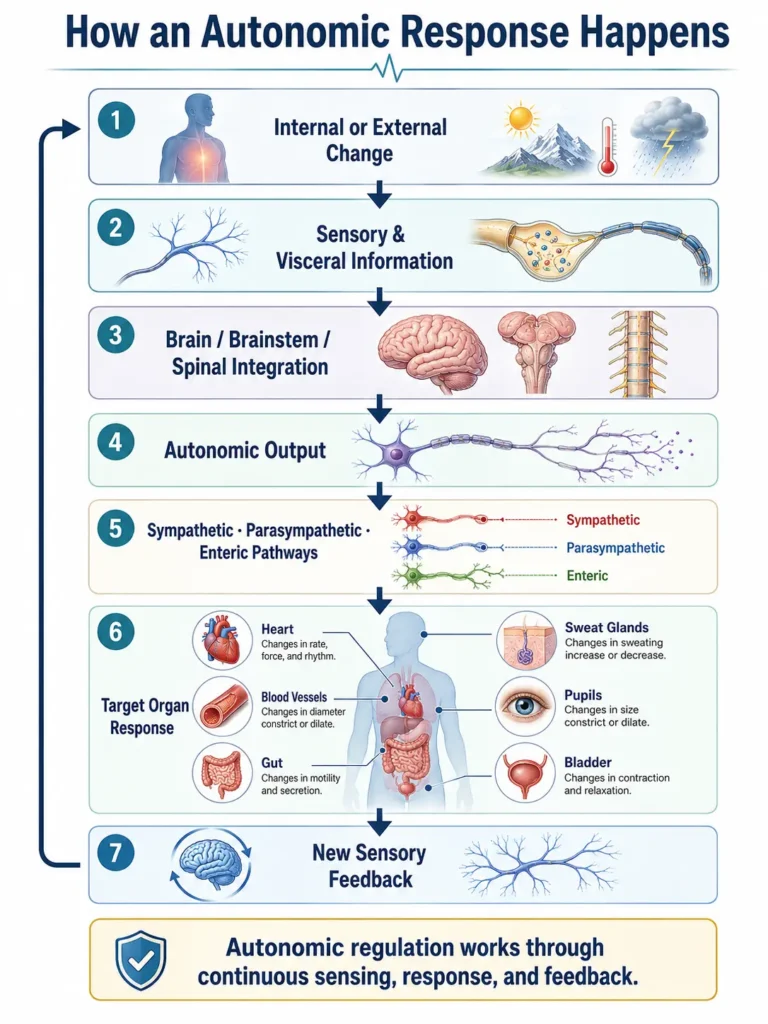
An autonomic response can be understood as a feedback process.
Internal or External Change ↓ Sensory / Visceral Information ↓ Central Processing and Integration ↓ Autonomic Output ↓ Target Organ Response ↓ New Sensory Feedback
A simplified physiological pathway showing how sensory information can be integrated and translated into autonomic organ responses and new feedback.
The exact pathway depends on the function involved.
For example, blood-pressure regulation uses pressure-sensitive receptors and cardiovascular reflex circuits. Temperature regulation uses thermal information and hypothalamic control. Digestion uses extensive enteric circuits as well as autonomic and hormonal input.
A general autonomic response may include:
1. A Change Is Detected
The change may involve:
blood pressure
temperature
blood chemistry
organ stretch
pain or tissue signals
posture
activity
emotional or environmental input
2. Sensory Information Reaches Regulatory Networks
Signals can travel through peripheral sensory pathways to the spinal cord and brainstem.
Visceral sensory information carried by the vagus nerve and other pathways is especially important for internal-organ regulation.
3. The Nervous System Integrates the Information
The brainstem and hypothalamus are major centers for autonomic regulation.
Other regions—including cortical and limbic networks—can influence autonomic output in relation to behavior, emotion, attention, and context.
4. Autonomic Output Changes
Sympathetic or parasympathetic pathways can alter organ activity.
In the gastrointestinal system, enteric networks can also generate and coordinate local responses.
5. The Response Produces New Feedback
The resulting changes are sensed again.
This feedback allows regulation to continue rather than ending after one response.
Many autonomic responses operate through reflex pathways.
A reflex does not require a person to consciously choose every step. Sensory input can trigger organized physiological output through neural circuits.
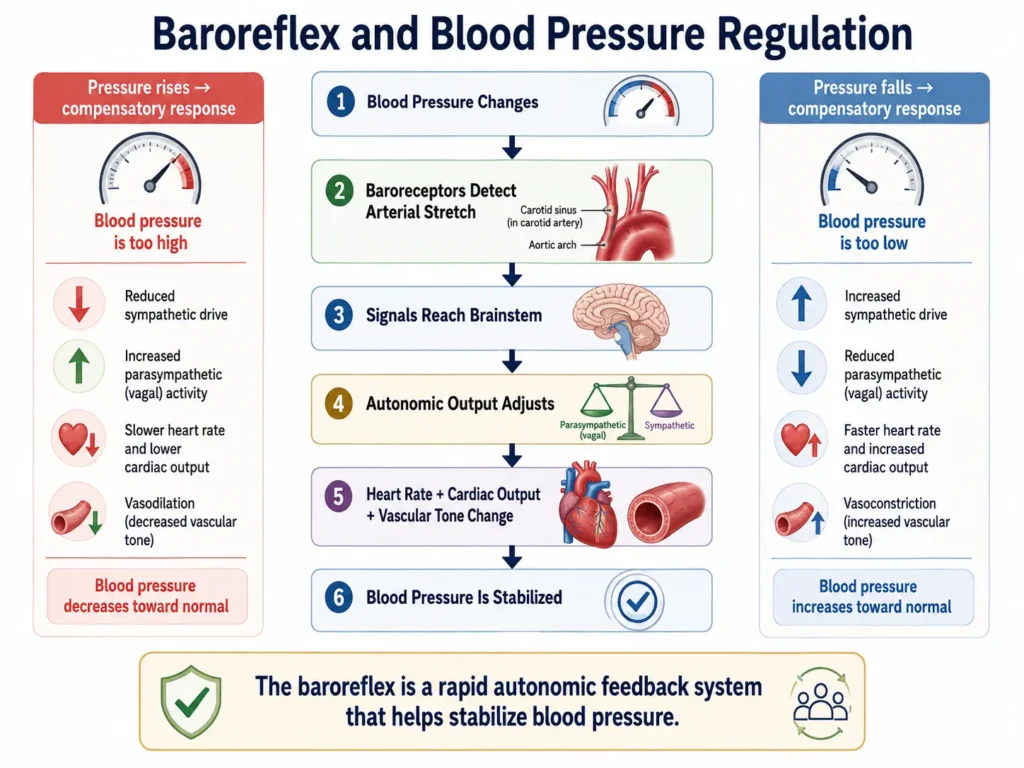
One of the clearest examples is the baroreflex, which helps regulate blood pressure over short time scales.
A simplified baroreflex pathway showing how pressure-sensitive receptors, the brainstem, heart, and blood vessels work together to stabilize blood pressure.
Baroreceptors are stretch-sensitive sensory receptors in areas including the carotid sinuses and aortic arch. When arterial pressure changes, the amount of stretch changes. The resulting sensory information is relayed to the brainstem.
Autonomic output then changes heart and blood-vessel activity in a direction that helps oppose the original pressure disturbance.
For example:
Blood pressure rises → baroreceptor firing increases → central autonomic output changes → sympathetic vascular drive is reduced and cardiac regulation changes → pressure is pushed back toward a more appropriate range
When blood pressure falls, the response shifts in the opposite direction.
The baroreflex is a useful model because it shows what autonomic regulation actually looks like: continuous sensing, integration, output, and feedback.
Although the autonomic nervous system includes peripheral nerves and ganglia, autonomic regulation is not purely a peripheral process.
The brain and spinal cord are deeply involved.
The hypothalamus is an important integrating center for visceral and homeostatic functions. It communicates with brainstem nuclei and spinal autonomic pathways.
The brainstem contains circuits involved in cardiovascular control, respiratory regulation, swallowing, gastrointestinal reflexes, and other visceral functions.
Higher brain regions can also influence autonomic responses. Emotional context, attention, behavior, pain, and learned associations can change autonomic output through central networks.
This is why an autonomic response can occur during:
exercise
standing
heat exposure
eating
pain
fear
anticipation
embarrassment
excitement
These situations do not all represent disease. They show that autonomic regulation is integrated with both internal physiology and behavior.
Stress can produce clear autonomic responses, but the stress response is broader than the autonomic nervous system alone.
A sudden challenge can rapidly change:
heart rate
vascular tone
sweating
pupil size
gastrointestinal activity
alertness
breathing pattern
Sympathetic pathways are important in many of these rapid responses.
At the same time, stress also engages endocrine pathways, including the hypothalamic-pituitary-adrenal system. Cortisol is therefore not simply an “autonomic hormone.” Autonomic and endocrine stress responses interact but are not identical systems.
Short-term stress responses are normal and can be adaptive.
Problems may arise when there is persistent illness, pain, sleep disruption, psychological stress, medication effects, endocrine disease, autonomic neuropathy, or other conditions that repeatedly alter regulatory demands.
It is therefore more accurate to ask why autonomic responses are occurring than to assume that all sympathetic activation is harmful.
For broader education about regulation capacity, stress load, sleep, environmental demands, and recovery patterns, continue to:
Cardiovascular regulation is one of the clearest examples of autonomic physiology.
The heart receives sympathetic and parasympathetic input.
Sympathetic activity can increase heart rate and contractile activity. Parasympathetic cardiac activity—particularly through the vagus nerve—can slow heart rate.
Blood vessels are also strongly influenced by sympathetic pathways, which contribute to vascular tone and rapid blood-pressure regulation.
The Baroreflex Example
When blood pressure changes, baroreceptors provide rapid sensory feedback.
That information reaches central cardiovascular control circuits. Autonomic output is then adjusted to influence:
heart rate
cardiac output
vascular resistance
This helps stabilize pressure during ordinary changes such as posture and movement.
However, dizziness, palpitations, fainting, or blood-pressure changes should not automatically be labeled “autonomic dysregulation.” Dehydration, anemia, medications, cardiac conditions, endocrine problems, infection, blood loss, and many other causes may produce similar symptoms.
Persistent or concerning cardiovascular symptoms deserve medical assessment.
Breathing and Autonomic Function
Breathing is unusual because it is both automatic and partly voluntary.
You normally breathe without thinking about it, but you can also intentionally change breathing for a period of time.
Basic respiratory rhythm is generated by neural networks in the brainstem. Chemoreceptors and other sensory systems provide information about oxygen, carbon dioxide, pH, lung mechanics, and metabolic demand.
Respiratory control then adjusts the activity of breathing muscles.
Autonomic and respiratory systems interact closely. Heart rate, vascular function, airway tone, emotional state, and breathing can influence each other.
However, it is too simplistic to say that “the autonomic nervous system controls breathing” as if breathing were produced by one autonomic switch.
Breathing practices may change physiological state in some contexts, but this page does not present breathing exercises as a treatment for autonomic disease or neurological symptoms.
Digestive regulation involves the enteric nervous system, sympathetic and parasympathetic pathways, hormones, local tissue signaling, and the physical and chemical effects of food.
The enteric nervous system can coordinate many gastrointestinal processes within the gut wall.
These include:
motility
secretion
local blood flow
transport of fluid and electrolytes
responses to stretch and chemical contents
Parasympathetic pathways generally support many gastrointestinal activities, while sympathetic activation can reduce certain digestive functions during some forms of demand.
But digestive symptoms are not specific markers of autonomic dysfunction.
Bloating, nausea, constipation, diarrhea, appetite changes, reflux, and abdominal discomfort can arise from many gastrointestinal, metabolic, medication-related, infectious, inflammatory, dietary, and neurological causes.
The gut–autonomic relationship is real, but it should not be used for self-diagnosis.
When body temperature rises, central thermoregulatory systems can increase sweating and alter skin blood flow to help dissipate heat.
Human thermoregulatory sweating is unusual because sweat glands are activated mainly by sympathetic cholinergic nerve fibers. In other words, the pathway is sympathetic, but its major transmitter at the sweat gland is acetylcholine.
Temperature regulation also depends on:
hypothalamic integration
skin and core thermal information
blood flow
environmental temperature
humidity
hydration
metabolic heat production
Abnormal sweating can occur for many reasons and is not by itself proof of autonomic disease.
Medication effects, endocrine disorders, fever, menopause, anxiety, environmental heat, infection, neurological disease, and other factors may contribute.
Autonomic regulation extends beyond the heart, gut, and sweat glands.
Pupils
Sympathetic pathways contribute to pupil dilation.
Parasympathetic pathways contribute to pupil constriction.
Pupil responses also depend on light, visual focus, medications, and neurological pathways.
Bladder
Bladder function requires coordination among autonomic, somatic, spinal, and higher brain systems.
During storage, sympathetic and somatic mechanisms help maintain continence. During urination, parasympathetic activity contributes to bladder contraction while coordinated sphincter changes allow emptying.
Glands and Sexual Function
Autonomic pathways also contribute to salivary secretion and sexual responses.
These examples reinforce an important principle:
The autonomic nervous system is a distributed organ-regulation network—not simply a stress-control system.
Body-system map showing several automatic physiological functions influenced by autonomic nervous system pathways.
Autonomic Function and Nerve Symptoms
Autonomic state can influence symptom experience, but that relationship must be interpreted carefully.
Pain, dizziness, fatigue, palpitations, sweating, digestive changes, temperature sensitivity, tingling, and other symptoms can occur alongside autonomic changes.
However, these symptoms are nonspecific.
For example:
pain can increase heart rate and sweating
anxiety can increase autonomic arousal
dehydration can produce dizziness and tachycardia
fever can change heart rate and sweating
medications can alter blood pressure, heart rate, digestion, or sweating
peripheral neuropathy can sometimes involve autonomic fibers
cardiac or endocrine disease may produce symptoms that resemble autonomic problems
This means it is often incorrect to reason:
“I have these symptoms, therefore my autonomic nervous system is dysregulated.”
A more accurate approach is:
Symptoms may involve autonomic responses, but the underlying cause still needs to be understood.
Autonomic physiology can help explain why body functions change. It does not replace diagnosis.
Autonomic responses can be influenced by many normal and medical factors.
Examples include:
posture
physical activity
temperature
hydration
sleep loss
acute pain
emotional stress
illness
medications
alcohol
endocrine changes
blood loss or anemia
diabetes
neurological disease
autonomic neuropathy
Because so many factors can change autonomic function, symptoms should be interpreted in context.
A temporary increase in heart rate after standing, exercise, heat exposure, or emotional stress can be physiologically appropriate.
Persistent, severe, unexplained, or disabling symptoms require a different level of evaluation.
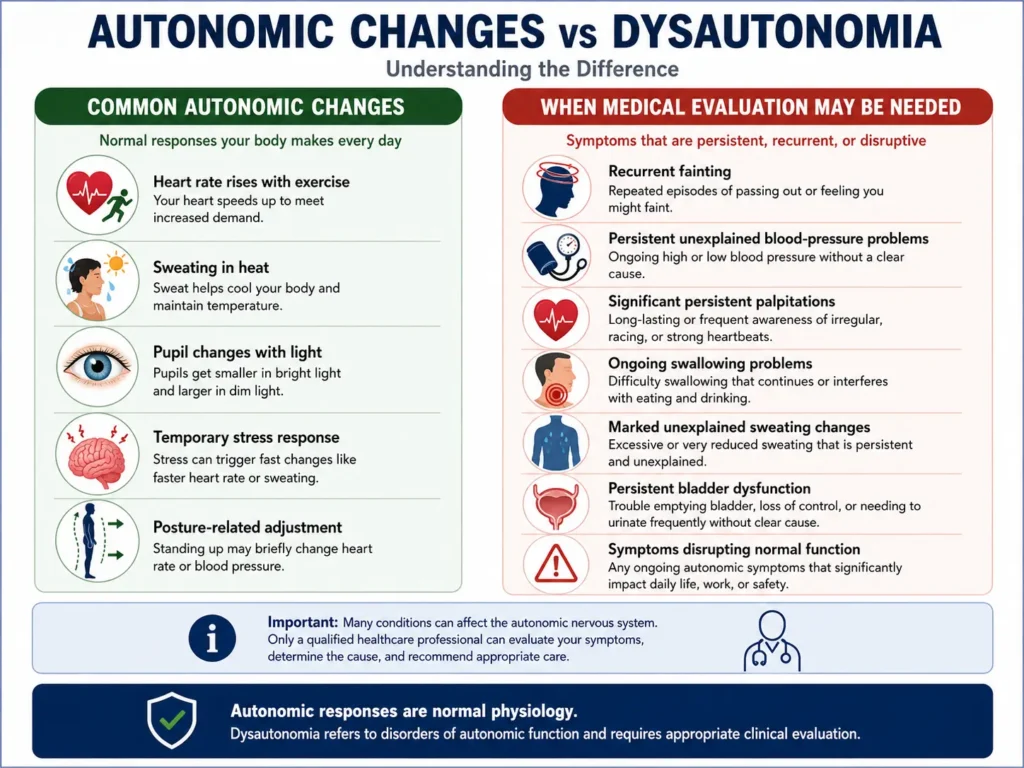
Autonomic Changes Are Not the Same as Dysautonomia
Dysautonomia is an umbrella term for disorders involving abnormal autonomic nervous system function.
Educational comparison between common physiological autonomic responses and persistent or disruptive symptoms that may warrant medical evaluation.
It is not the same as:
feeling stressed
having a fast heart rate once
having occasional digestive discomfort
feeling “wired”
having poor sleep
sweating during anxiety
feeling dizzy after dehydration
Autonomic nervous system disorders can affect blood pressure, heart function, breathing, swallowing, sexual function, digestion, sweating, and other involuntary processes.
They can occur as primary disorders or as complications of other diseases.
For example, autonomic dysfunction can occur in association with conditions such as diabetes and some neurological diseases.
Diagnosis may require clinical history, physical examination, medication review, blood-pressure and heart-rate measurements, laboratory testing, cardiovascular evaluation, or specialized autonomic testing depending on the symptoms.
Do not use a wellness concept such as “dysregulation” as a substitute for a medical diagnosis.
Common Misunderstandings About Autonomic Regulation
Misunderstanding 1: The Sympathetic Nervous System Is Bad
Clarification: Sympathetic activity is essential for normal physiology. It helps support responses to exercise, posture, temperature, and other demands. The issue is not simply whether sympathetic activity occurs, but whether the overall response fits the situation.
Misunderstanding 2: The Parasympathetic Nervous System Is a Healing Switch
Clarification: Parasympathetic pathways influence specific functions such as heart rate and digestion. Tissue repair and nerve regeneration depend on many biological systems. Parasympathetic activity should not be presented as a direct nerve-repair treatment.
Misunderstanding 3: Autonomic Regulation Means Staying Calm
Clarification: Autonomic regulation means adapting appropriately. A healthy system may need to increase heart rate, sweating, vascular tone, or alertness under certain conditions.
Misunderstanding 4: Every Racing Heart or Dizzy Spell Is Dysautonomia
Clarification: No. These symptoms can have many causes. Persistent or concerning symptoms require medical assessment rather than self-diagnosis.
Misunderstanding 5: Breathing Exercises Can Reset the Autonomic Nervous System
Clarification: Breathing interacts with autonomic and cardiovascular physiology, but “reset” is not a precise medical concept. Breathing exercises should not be treated as a cure for autonomic disorders.
Clarification: Autonomic regulation affects physiological functions, but it should not be described as a proven mechanism for repairing damaged axons or rebuilding myelin. Nerve recovery depends on the type, location, severity, and cause of injury as well as clinical management and biological repair processes.
Questions Readers Commonly Ask
What is an autonomic response?
An autonomic response is an involuntary physiological adjustment produced through autonomic pathways. Examples include changes in heart rate, blood-vessel tone, sweating, pupil size, digestion, and bladder activity.
What is autonomic regulation?
Autonomic regulation is the ongoing coordination of automatic body functions in response to changing internal and external conditions.
What does the autonomic nervous system regulate?
It influences heart rate, blood pressure, blood-vessel tone, digestion, sweating, pupil responses, bladder function, glands, aspects of sexual function, and other involuntary processes.
What are the three divisions of the autonomic nervous system?
The autonomic nervous system is commonly described as having sympathetic, parasympathetic, and enteric divisions.
Is sympathetic activation unhealthy?
Not by itself. Sympathetic activity is part of normal physiology and helps the body respond to exercise, posture, temperature, and other demands.
Is the parasympathetic nervous system responsible for healing?
Parasympathetic pathways support particular resting and visceral functions, but healing and nerve repair depend on many systems. It is not accurate to describe the parasympathetic system as a universal healing switch.
Can stress affect autonomic responses?
Yes. Physical and psychological stress can change heart rate, vascular tone, sweating, gastrointestinal activity, breathing patterns, and other physiological functions. Stress responses also involve endocrine pathways, not only the autonomic nervous system.
Are autonomic symptoms the same as dysautonomia?
No. Temporary autonomic changes are common. Dysautonomia refers to disorders of autonomic function and may require clinical evaluation and testing.
Can autonomic problems cause dizziness or fainting?
Some autonomic disorders can affect blood-pressure and heart-rate regulation and may contribute to dizziness or fainting. However, these symptoms also have many other possible causes and should not be self-diagnosed.
Can autonomic regulation repair nerve damage?
Autonomic regulation should not be presented as a direct treatment for nerve damage. Structural nerve repair depends on the nature and cause of the injury and may require medical treatment, rehabilitation, time, and other forms of support.
Evidence and Editorial Standards
This guide follows an evidence-bounded educational approach.
Claims about autonomic physiology are based primarily on established anatomy and physiology references from the U.S. National Library of Medicine and related biomedical literature.
The page intentionally separates:
established autonomic physiology
educational interpretation
medical disorders
broader nervous-system regulation concepts
It does not assume that nonspecific symptoms prove autonomic dysfunction.
It also avoids presenting sympathetic activity as inherently harmful, parasympathetic activity as a universal healing state, breathing exercises as a nervous-system “reset,” or autonomic regulation as a proven nerve-regeneration treatment.
This page is for educational purposes only. It does not diagnose, treat, cure, or prevent disease and is not a substitute for professional medical advice, diagnosis, or treatment.
Autonomic-type symptoms can have many possible causes.
Seek urgent medical care for severe, sudden, or rapidly worsening symptoms such as:
chest pain
severe trouble breathing
fainting with concerning symptoms
sudden weakness
sudden severe numbness
new loss of bladder or bowel control
severe loss of coordination
sudden vision changes
confusion
rapidly changing neurological symptoms
Contact a qualified healthcare professional for persistent or unexplained symptoms such as recurrent fainting, marked blood-pressure changes, persistent palpitations, significant swallowing problems, unexplained changes in sweating, ongoing bladder dysfunction, or other symptoms that interfere with daily function.
Do not stop prescribed medication, begin aggressive supplements, attempt “detox” protocols, use extreme breathing practices, or delay medical care based on information from this page.
Return to the Neurobiology hub to continue through the larger nerve-health knowledge system.
Final Perspective
Autonomic regulation is not a switch between “stress” and “healing.” It is a continuous physiological process that helps the body adjust involuntary functions to changing demands.
An autonomic response may change heart rate, blood pressure, digestion, sweating, pupil size, bladder function, or other organ activity. These responses are coordinated through sympathetic, parasympathetic, enteric, central, and peripheral neural pathways.
Understanding this physiology can make nervous-system symptoms less mysterious without oversimplifying them.
The most useful question is not simply, “Is my nervous system regulated?”
A better question is:
What function is changing, what may be driving that change, and does the pattern require medical evaluation?
That approach keeps autonomic regulation grounded in physiology, context, and safe health education.