
Nutritional Deficiency and Nerve Damage: How Low Nutrient Status Can Affect Nerves
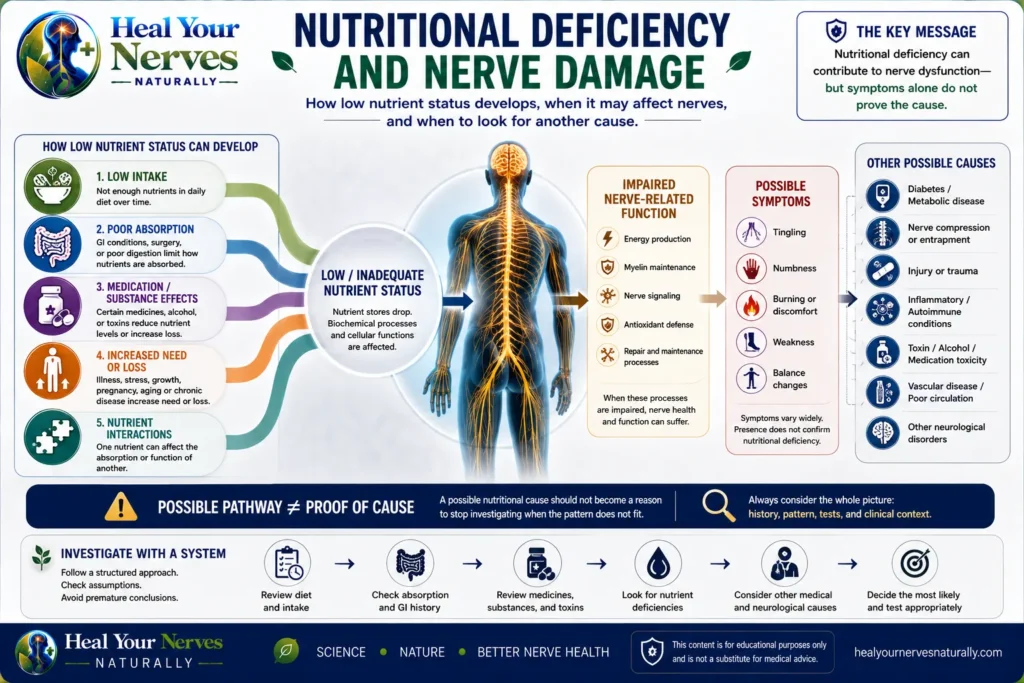
If you are wondering whether nutritional deficiency and nerve damage could be connected because you have tingling, numbness, weakness, an unexpected lab result, or a history that may affect nutrient status, start here: a deficiency question is a cause-tracing problem, not a vitamin-shopping problem.
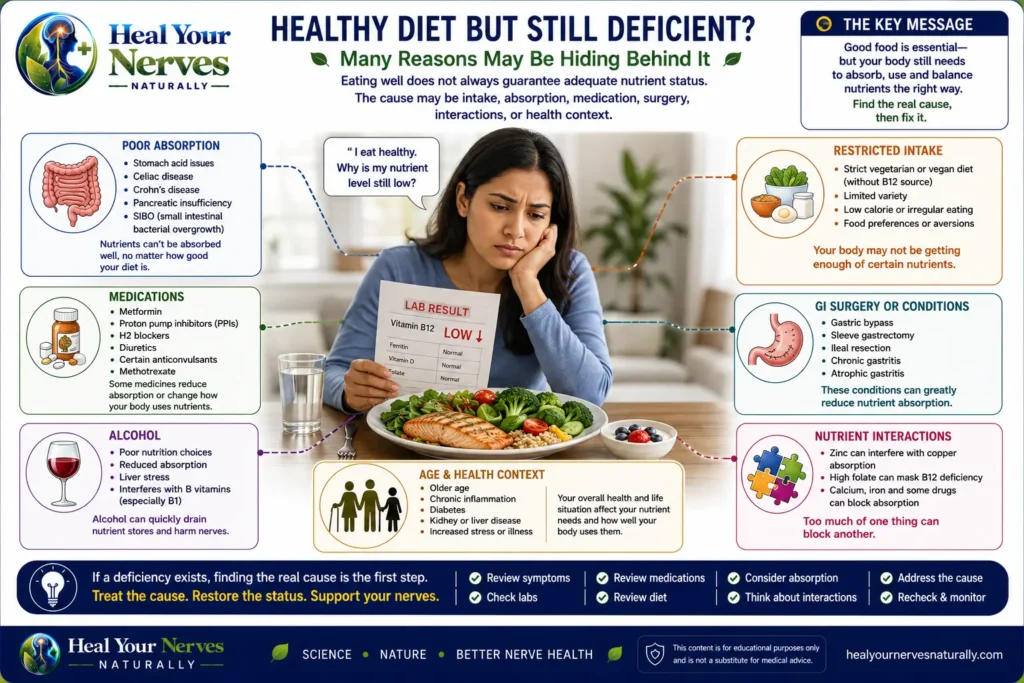
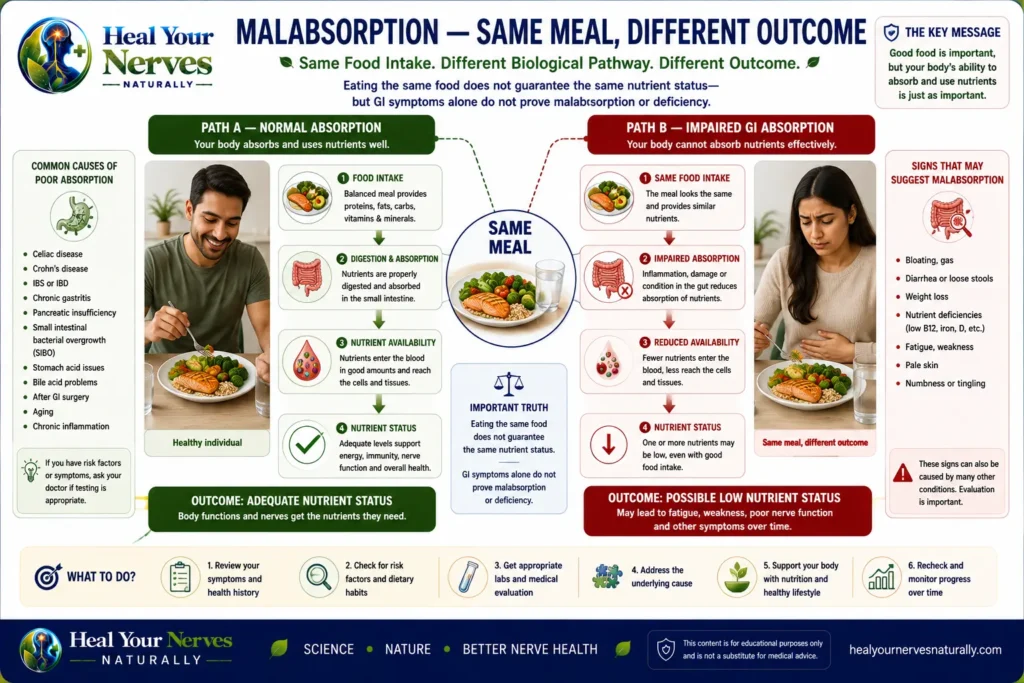
A person can eat a reasonably healthy diet and still develop a nutritional deficiency because intake is only one part of the story. Absorption problems, gastrointestinal disease or surgery, medicines, alcohol exposure, nutrient interactions, and other health circumstances can also change nutrient status.
At the same time, tingling, numbness, burning, weakness, and balance changes do not prove that nutritional deficiency is the cause. Diabetes, nerve compression, injury, medications or toxins, autoimmune disease, and other neurological conditions can produce similar symptoms.
Therefore, the useful questions are not simply “Which vitamin should I take?” Instead, ask:
- Is there a realistic reason my nutrient status could be low?
- Is the problem low intake, poor absorption, a medicine, surgery, alcohol exposure, or something else?
- Which deficiencies have a well-established neurological connection?
- Does my symptom pattern fit a nutritional cause, or is another explanation more plausible?
- If a deficiency is corrected, what should I monitor next?
- When should I stop assuming nutrition and ask for broader medical investigation?
This page answers those questions in practical, real-life language. It can help you understand where nutritional deficiency and nerve damage may connect, where that connection becomes uncertain, and what information can make the next clinical decision more useful.
Safety first: New, rapidly worsening, severe, or one-sided neurological symptoms; major weakness; new trouble walking; loss of bladder or bowel control; facial droop; speech difficulty; or other acute neurological changes need prompt medical assessment. Do not wait for a food or supplement experiment.
This page is part of the Root Cause Systems framework. Its job is to help you trace why nutrient status became inadequate and whether that pathway plausibly belongs in the investigation of nerve symptoms.
What this page helps you do: trace low intake, malabsorption, medicines, surgery, alcohol, nutrient interactions and other deficiency pathways; recognize when several deficiencies may share one cause; compare nutrition with other plausible explanations; and prepare a more useful clinical conversation.
What this page does not do: diagnose peripheral neuropathy, interpret every laboratory marker in depth, prescribe replacement doses or injection schedules, interpret EMG/NCS, diagnose MS/ALS/diabetic neuropathy, or predict an exact recovery timeline. For nutrient-status interpretation use Micronutrients for Nerve Health; for mechanism use Micronutrients and Nerve Function.
Find Your Situation
- “I eat normally or healthily—why would I still be deficient?” → Go to intake versus absorption
- “B12 is the concern, but my situation is complicated.” → Go to the B12 cause pathway
- “Several nutrients are low at the same time.” → Go to multiple deficiencies
- “I had bariatric or gastrointestinal surgery.” → Go to post-surgical nutrient risk
- “I have diabetes, take metformin and now have tingling.” → Go to the dual-cause scenario
- “My lab level improved but my symptoms did not.” → Go to correction versus recovery
- “I want to prepare for an appointment.” → Go to the clinician checklist
Nutritional Deficiency and Nerve Damage: The Core Pathway
Nutritional neuropathy usually begins before the symptom appears. The problem starts earlier in the intake, absorption, availability, or nutrient-status pathway.
A useful model is:
Low intake / poor absorption / impaired availability / medication effect / increased loss or requirement / nutrient interaction
↓
Inadequate nutrient status
↓
Normal cellular or nervous-system processes are disrupted
↓
Neurological dysfunction may develop
↓
Symptoms may appear
This is a plausible pathway, not proof that nutrition caused any particular symptom. In other words, nutritional deficiency and nerve damage may be connected when the biological pathway and the clinical evidence fit together, but the symptom alone cannot establish that link.
The National Institute of Neurological Disorders and Stroke lists nutritional or vitamin imbalances among many possible causes of peripheral neuropathy, alongside metabolic disease, vascular problems, autoimmune disease, toxins, injury and other conditions.
That wider context matters. It keeps nutritional deficiency and nerve damage in proportion: important when the evidence fits, but never the only explanation to consider.
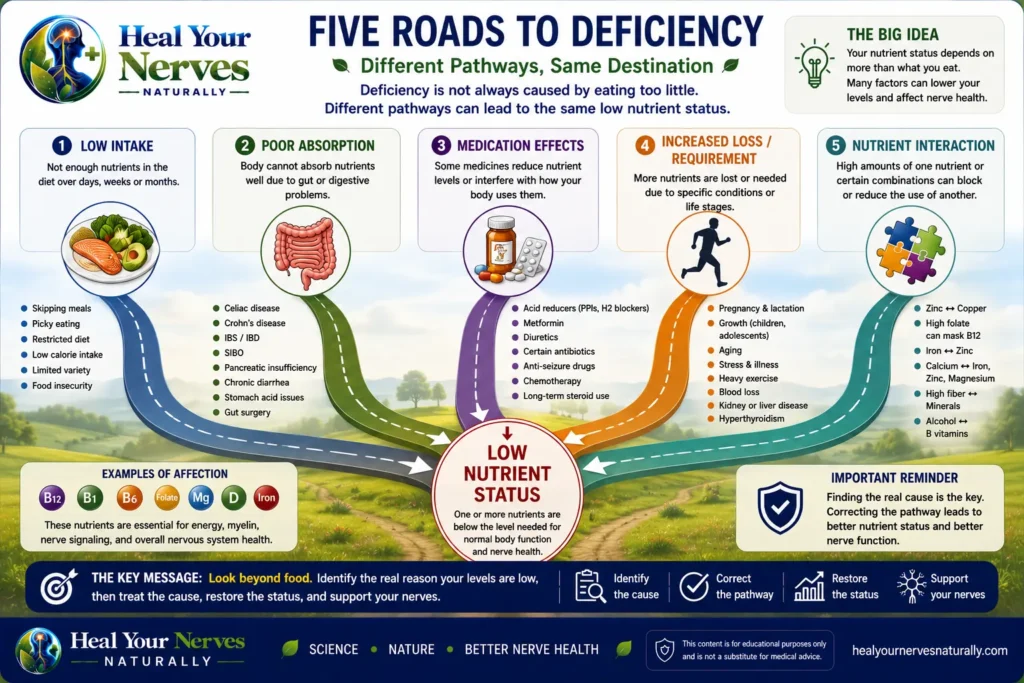
Five Common Causes of Nutritional Deficiency
People often use the word “deficiency” as if it always means “you did not eat enough.”
That is only one route.
Nutritional Deficiency From Low Intake
This can happen with:
- very low food intake;
- food insecurity;
- highly repetitive diets;
- restrictive eating;
- vegan or vegetarian diets without reliable B12 planning;
- eating disorders;
- prolonged illness reducing appetite;
- difficulty shopping, cooking or feeding oneself.
The real-life pattern may be less dramatic than obvious starvation.
For example:
Tea and biscuits in the morning, a small snack at lunch and one limited meal at night can feel like “I eat every day,” while still creating a poor nutrient pattern over time.
Nutritional Deficiency From Poor Absorption
A person can eat a nutrient and still absorb less than expected.
Relevant contexts can include:
- coeliac disease;
- inflammatory bowel disease;
- stomach or intestinal surgery;
- bariatric surgery;
- autoimmune gastritis;
- disorders affecting fat absorption;
- significant chronic gastrointestinal disease.
This is particularly important for B12 and for fat-soluble vitamin E.
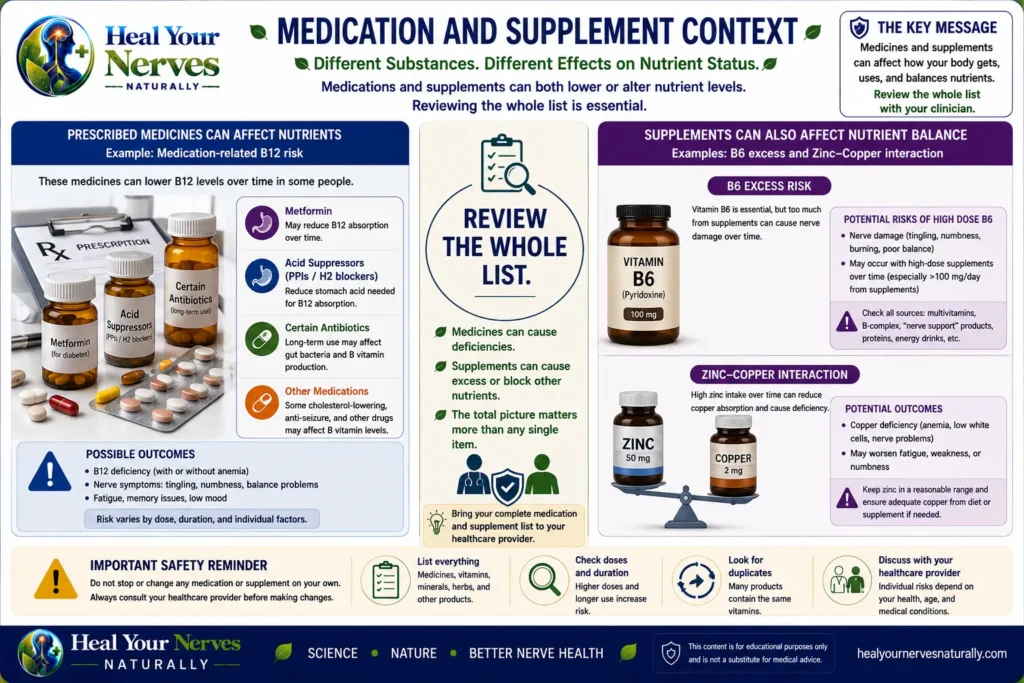
Nutritional Deficiency and Medication-Related Risk
Some medicines can influence nutrient absorption or status.
For vitamin B12, the NIH Office of Dietary Supplements notes that metformin can reduce B12 absorption and serum concentrations, while gastric-acid inhibitors can interfere with food-bound B12 absorption. NICE guidance also lists metformin, H2-receptor antagonists and proton-pump inhibitors among B12 risk factors.
This does not mean those medicines are “bad” or that you should stop them.
The correct decision is:
Recognize the risk, then review nutrient status when clinically appropriate.
Nutritional Deficiency When Needs, Losses, or Life Stage Changes
Some health situations can increase the chance of poor status because intake falls, needs change or nutrient losses become greater.
The exact pathway depends on the nutrient and the condition.
This is a section where we avoid broad claims. Not every symptom, illness or life stage automatically increases every micronutrient requirement.
Pregnancy and breastfeeding are useful examples of why life stage matters without turning every symptom into a deficiency. Nutrient requirements and B12 testing context can differ, while fatigue, weakness or tingling during pregnancy or postpartum can also have many non-nutritional explanations. If pregnancy, breastfeeding or recent postpartum status is part of the story, treat it as clinical context rather than trying to interpret a generic internet range on your own. For the status/testing side, use Micronutrients for Nerve Health.
Nutritional Deficiency From Nutrient Interactions
The clearest example in this topic is zinc and copper.
The NIH copper fact sheet notes that high zinc intake can interfere with copper absorption and excessive zinc supplement use can contribute to copper deficiency.
That means a supplement intended to “help” can become part of the deficiency pathway.
Nutritional Deficiency Even When You Eat Normally
This is one of the most useful questions on the page.
Instead of defending or criticizing the diet, trace the pathway.
Nutritional Deficiency and Your Real Food Pattern
“Healthy” can mean many things.
Someone may eat vegetables, fish and home-cooked meals but still have:
- very little total food;
- almost no B12 source;
- low variety;
- long periods of restriction;
- inconsistent access to food.
Nutritional Deficiency and Absorption Problems
If food intake looks reasonable, the next question is:
Can the body access what is being eaten?
For B12, absorption requires a series of digestive steps involving the stomach, intrinsic factor and the small intestine.
For vitamin E, fat absorption matters.
For several deficiencies, gastrointestinal disease or surgery can change risk.
Read Gut Axis: Digestion, Absorption and Nutrient Bioavailability for the nutrition-specific side, and Gut–Nerve Axis for broader gut-related pathways affecting nerve health.
Vitamin B12, Nutritional Deficiency, and Nerve Damage
B12 is one of the best-established vitamin-related causes of neurological problems.
The NIH B12 fact sheet and NICE B12 guideline are useful primary sources for deficiency, risk factors, testing and management.
What Can Cause This Nutritional Deficiency?
Possible pathways include:
- diet low in B12;
- vegan diets without reliable fortified foods or supplementation;
- difficulty absorbing food-bound B12;
- autoimmune gastritis;
- gastrointestinal surgery;
- terminal ileal disease or resection;
- some bariatric procedures;
- long-term metformin use;
- acid-suppressing medicines in relevant contexts;
- recreational nitrous oxide exposure, which can inactivate B12 in the body;
- other conditions affecting absorption.
NICE makes an especially useful real-life point: even when diet appears to be the suspected cause, diet may not be the only cause.
Can neurological symptoms happen without anemia?
Yes.
NICE specifically advises not to rule out B12 deficiency only because anemia or macrocytosis is absent.
That matters because neurological symptoms may lead people to think:
“If my blood count is normal, nutrition cannot be involved.”
That is too simple.
What symptoms can occur?
B12 deficiency can be associated with altered sensation and other neurological findings.
But the correct way to use that information is:
Symptoms can raise suspicion; they do not confirm the cause.
If you need help interpreting B12 status, borderline results, supplements before testing or MMA concepts, use Micronutrients for Nerve Health.
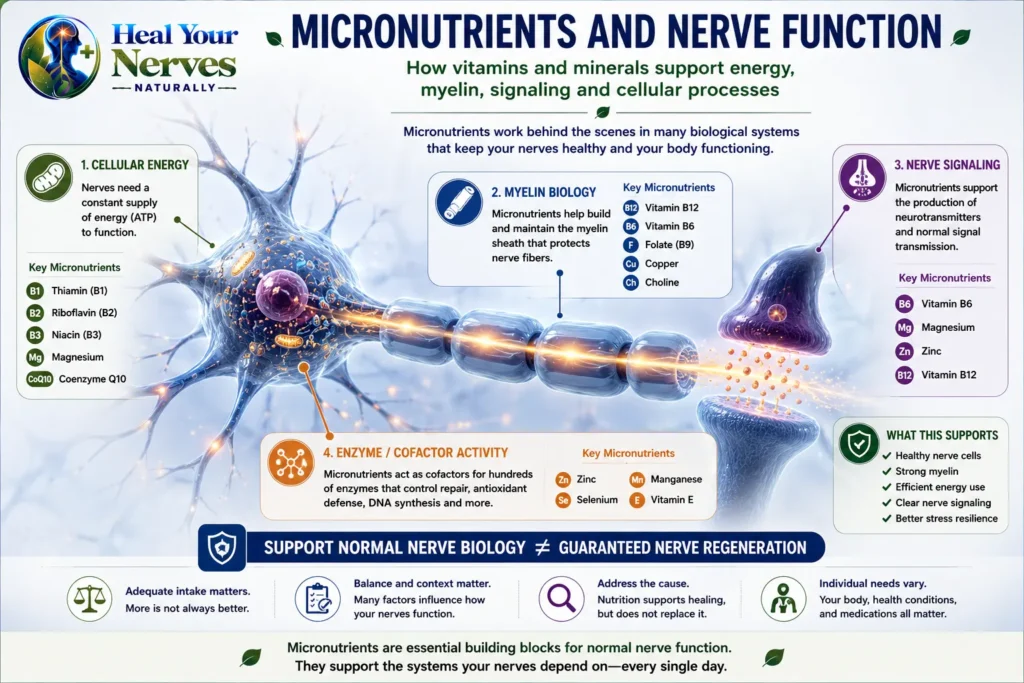
If you want the myelin/function mechanism, read Micronutrients and Nerve Function.
Nitrous oxide changes the B12 question
This deserves special attention because the pathway is different from simply “not eating enough B12.”
Recreational nitrous oxide can inactivate B12 in the body. NICE guidance therefore treats nitrous-oxide-related B12 deficiency differently from ordinary B12 testing: total or active B12 can look reassuring even when functional B12 activity is impaired, so NICE recommends MMA or homocysteine-based assessment in this specific context.
The real-life question is not:
“My B12 number looks normal, so am I safe?”
It is:
“Could nitrous oxide exposure have changed how B12 is functioning, and does this need prompt clinical assessment?”
If nitrous oxide use is part of the history and neurological symptoms such as numbness, tingling, weakness, walking difficulty or balance change are present, disclose the exposure clearly to the clinician. Do not try to hide it or compensate by simply taking larger and larger amounts of B12 on your own.
For the test-interpretation side, return to Micronutrients for Nerve Health.
Thiamin (Vitamin B1) Deficiency: Think About the Whole Clinical Context
Thiamin deficiency can affect the peripheral and central nervous systems.
The NIH thiamin fact sheet provides a primary reference, while clinical reviews of nutritional neuropathies describe B1 as one of the important nutrient deficiencies linked to peripheral nerve disease.
Situations that raise concern
- severe nutritional restriction;
- prolonged vomiting;
- alcohol dependence;
- bariatric surgery;
- severe malnutrition;
- major GI problems.
A person with high thiamin-risk history plus severe weakness, confusion, marked balance problems or eye-movement abnormalities should not wait for a home nutrition experiment.
This is a good example of why “easy first steps” have limits.
Sometimes the safe first step is clinical care.
Vitamin B6: Deficiency Is Not the Only Nutritional Risk
This page is about deficiency pathways, but B6 requires a safety exception.
B6 deficiency can occur in certain settings, but excess B6 can also cause neuropathy.
The NIH B6 fact sheet and the EFSA scientific opinion support the neuropathy risk from excessive exposure. Upper-intake guidance is not identical across authorities: the older U.S. Food and Nutrition Board UL is 100 mg/day for adults, while EFSA set an adult UL of 12 mg/day in 2023. These values are safety ceilings used by authorities, not targets for self-treatment.
So if a person with tingling is taking:
- a multivitamin;
- a B-complex;
- a magnesium product with B6;
- a “nerve support” formula;
the question should not be only:
“Which vitamin am I deficient in?”
It should also be:
“Could I be getting too much of something?”
For total-exposure and supplement-label review, use Micronutrients for Nerve Health and Supplement Intelligence.
Copper Deficiency: When Zinc and Absorption Enter the Story
Copper deficiency is less familiar to many users than B12 deficiency, but it matters because neurological problems can occur.
Relevant contexts include:
- malabsorption;
- certain GI surgeries;
- excessive zinc exposure;
- other specific medical conditions.
High-dose zinc is particularly important because it can reduce copper absorption.
Real-life example
Someone starts zinc during a period of frequent colds.
Later they add:
- an immune formula;
- a multivitamin;
- zinc lozenges.
They may not realize all three contain zinc.
The issue is not “zinc is dangerous.”
The issue is total exposure over time and the biological interaction with copper.
Do not start copper automatically because you take zinc. Review the amounts and the reason for supplementation.
Vitamin E Deficiency: When Fat Absorption Changes the Risk
Vitamin E deficiency is uncommon in healthy people with normal absorption.
The NIH vitamin E fact sheet notes that fat-malabsorption disorders increase deficiency risk and that deficiency can include neurological manifestations such as peripheral neuropathy and ataxia.
That means the real question is often:
“Why is vitamin E low?”
rather than:
“How much vitamin E should I take?”
If the underlying issue is malabsorption, simply adding a standard supplement without addressing the cause may not solve the full problem.
Folate, Magnesium, Vitamin D and Other Nutrients: Keep the Evidence Proportionate
Not every nutrient deserves the same amount of attention.
Folate
Folate deficiency matters, but large folate intake can complicate recognition of B12-related disease by improving megaloblastic anemia without correcting neurological damage. See the NIH folate fact sheet.
Magnesium
Magnesium is important for normal nerve and muscle function, but “magnesium supports nerve function” should not become “my numbness must be magnesium deficiency.”
Vitamin D
Low vitamin D may coexist with many health conditions, but it should not be presented as a universal cause or treatment of neuropathy.
The practical rule is:
Give the strongest attention to the nutrients and pathways with the strongest causal and clinical relevance to the user’s situation.
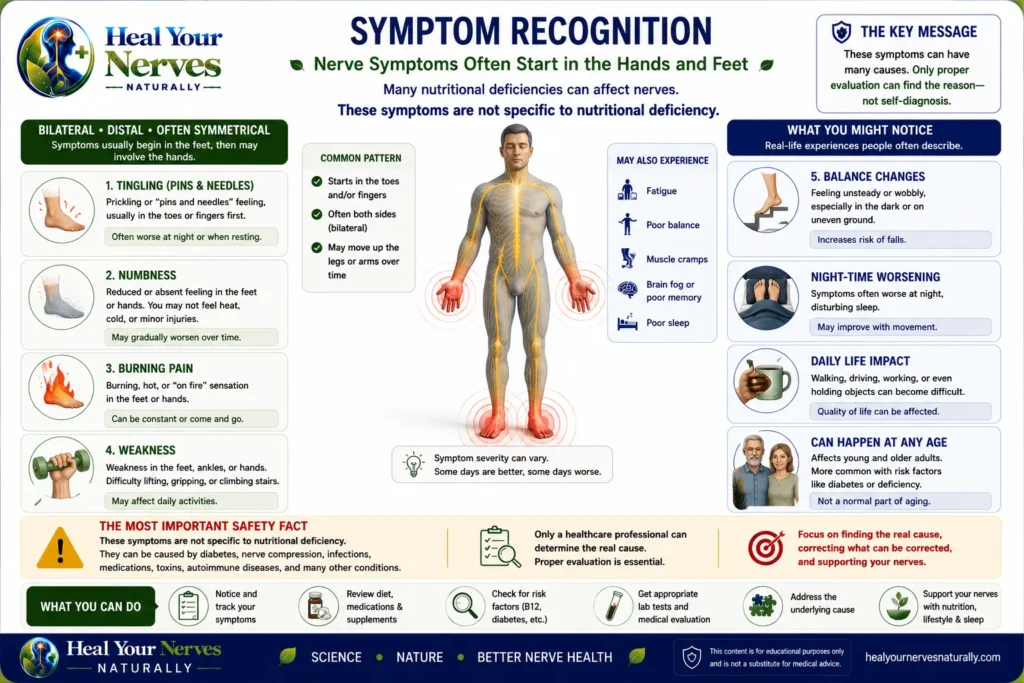
Nutritional Deficiency and Nerve Symptoms: What Can It Feel Like?
“Nutritional neuropathy” is not one single symptom pattern.
Depending on the nutrient, severity, duration and tissues affected, symptoms can vary.
Possible peripheral nerve symptoms may include:
- tingling;
- pins and needles;
- numbness;
- burning or altered sensation;
- reduced vibration or position sense in some disorders;
- weakness;
- gait or balance problems;
- reduced reflexes in some patterns.
Clinical reviews such as Nutritional Peripheral Neuropathies and Nutritional Neuropathies describe several nutrient-related neuropathy patterns.
But symptom overlap is substantial.
You cannot look at “burning feet” and know which nutrient is low.
You cannot look at “numb hands” and know nutrition is the cause.
Nutritional Deficiency and Nerve Damage: Why Symptoms Are Not Enough
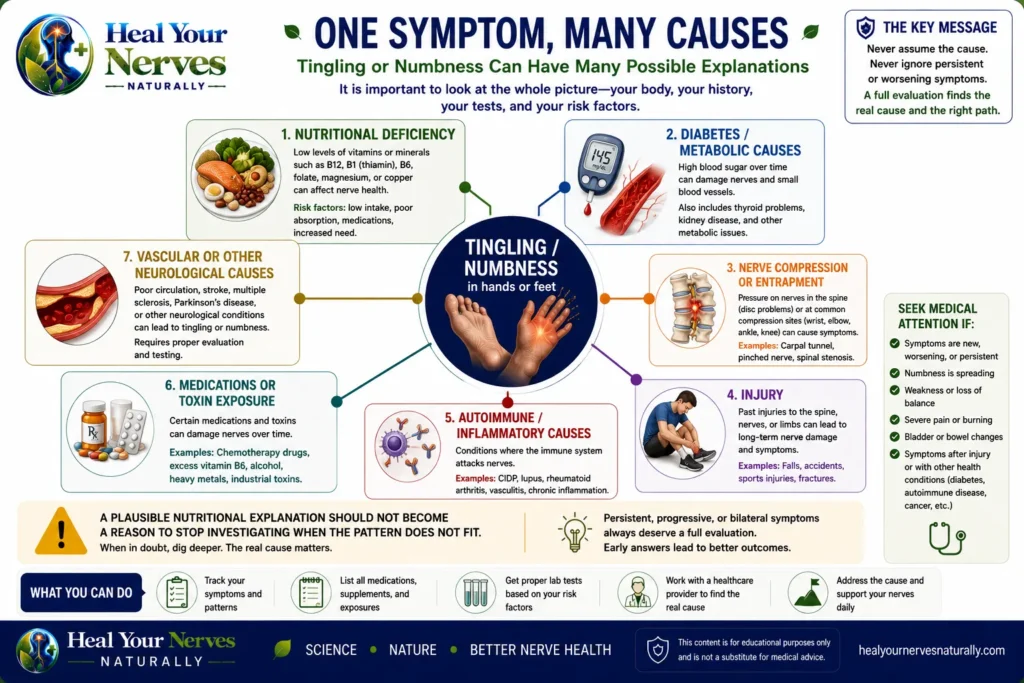
Suppose someone has numb feet.
Nutrition is one branch of the investigation.
Other possibilities can include:
- diabetes or metabolic dysfunction;
- nerve compression;
- injury;
- autoimmune or inflammatory disease;
- toxins or medication effects;
- vascular problems;
- kidney disease;
- inherited neuropathies;
- other neurological disorders.
NINDS emphasizes this broad range of potential causes.
This is one of the most important safety ideas on the page. When thinking about nutritional deficiency and nerve damage, a plausible nutritional explanation should remain only one branch of the investigation until the wider picture supports it:
A plausible nutritional explanation should not become a reason to stop investigating when the pattern does not fit.
For condition-level education, see Peripheral Neuropathy.
For broader investigation context, see Nerve Dysfunction Diagnosis.
For a practical route through multiple possible causes, use Root Causes of Nerve Damage.
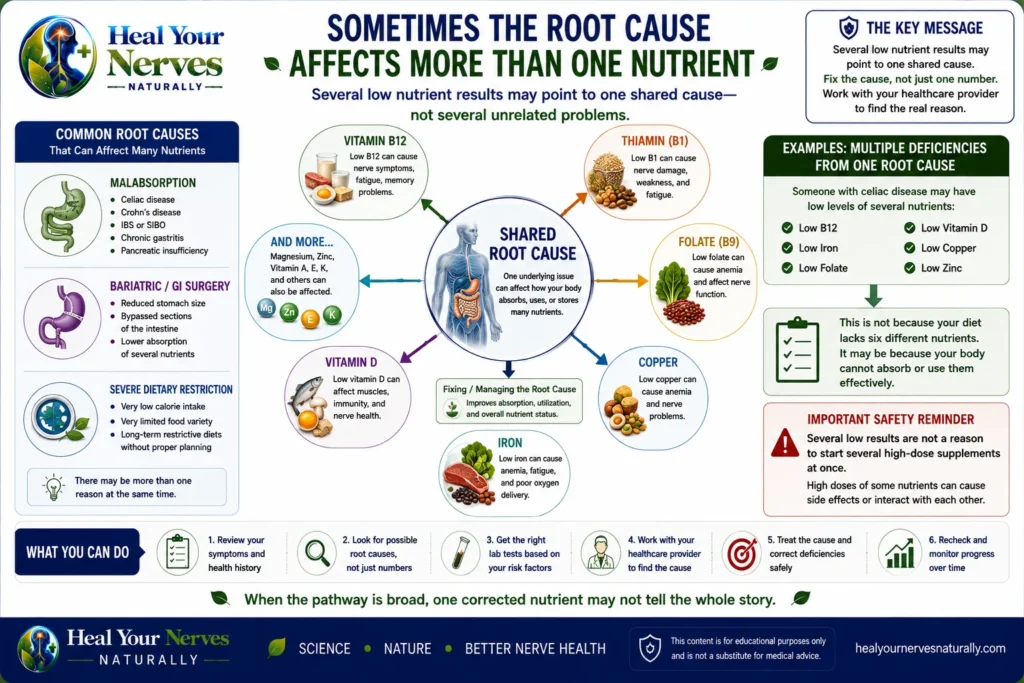
Nutritional Deficiency Can Affect More Than One Nutrient
A person with severe malnutrition, significant malabsorption or bariatric surgery may not have one isolated deficiency.
Clinical reviews of nutritional neuropathies describe contexts where several nutrient abnormalities can coexist.
This matters because single-nutrient thinking can create false confidence.
Example:
A user finds low B12, starts B12 and assumes the investigation is finished.
But if the real background problem is significant malabsorption, other nutrients may also need attention.
The correct principle is:
When the cause can affect multiple nutrients, think pattern—not one laboratory value.
“My B12, vitamin D and iron are all low. Which one is causing my symptoms?”
Sometimes that question cannot be answered neatly from the lab sheet alone.
Several abnormal results may mean:
- one broad cause is affecting intake or absorption;
- more than one deficiency is clinically relevant;
- some abnormalities are unrelated to the neurological symptoms;
- or the nerve symptoms have another cause altogether.
A practical response is:
- Do not assign every symptom to the most famous nutrient.
- Ask whether the abnormalities share a plausible root cause—such as severe restriction, malabsorption or surgery.
- Separate neurological symptoms from non-neurological symptoms instead of forcing one explanation to cover everything.
- Bring the full set of results, not one highlighted value, to the clinical review.
- Reassess after appropriate correction: if biochemical status improves but function does not, the causal model may need to change.
Several low results are a reason to look for the pattern behind them—not a reason to start several high-dose supplements at once.
How Do You Know Whether Nutritional Deficiency Is Really the Cause?
This is harder than “low level = cause.”
A stronger causal case usually becomes more plausible when several pieces fit:
- a relevant symptom pattern;
- a documented or strongly suspected deficiency;
- a realistic pathway explaining why the deficiency developed;
- no better explanation for the neurological problem;
- clinical findings consistent with the deficiency;
- appropriate response to treatment over time, while recognizing recovery may be incomplete.
A weaker causal case may look like:
- vague symptoms;
- no meaningful risk factors;
- a result that is not clearly deficient;
- multiple competing explanations;
- a supplement started before proper assessment;
- no improvement despite correction;
- or a symptom pattern that points elsewhere.
This is why diagnosis is not a single-number exercise. A stronger conclusion about nutritional deficiency and nerve damage usually comes from several pieces of evidence pointing in the same direction.
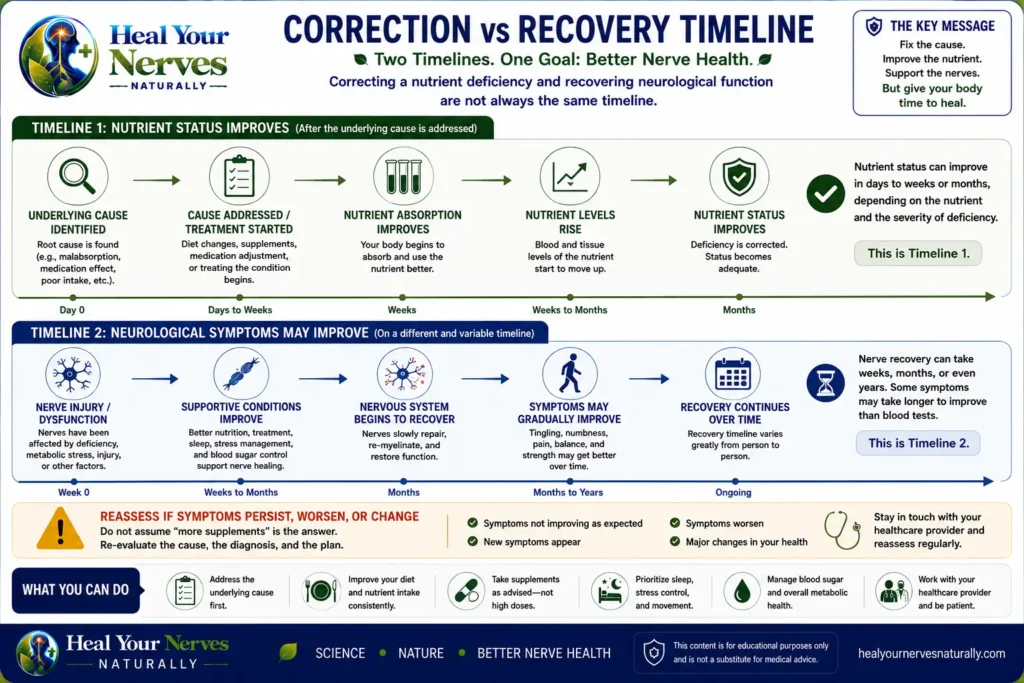
Nutritional Deficiency Corrected but Symptoms Remain: What Does That Mean?
It can mean several things.
Possibility 1: Nerve recovery is slower than nutrient correction
A blood level may change before neurological tissue recovers.
NICE notes that response to B12 replacement varies by cause and that symptoms may take longer to disappear than the laboratory deficiency takes to correct.
Possibility 2: The deficiency caused injury that needs time to recover
The nervous system does not necessarily normalize the moment the biochemical problem is corrected.
Possibility 3: There is another ongoing cause
For example:
- diabetes remains uncontrolled;
- compression continues;
- another deficiency exists;
- medication or toxin exposure continues;
- an inflammatory condition remains active.
Possibility 4: Nutrition was never the main cause
A deficiency can be real and still not explain every symptom.
That is why reassessment matters.
If Money, Testing or Specialist Access Is Limited, What Should Come First?
Real people do not have unlimited access to laboratory panels, specialists, or supplements. Therefore, good sequencing matters. This section cannot choose medical tests for you, but it can help you avoid spending money in the least useful order.
First: protect safety
If symptoms are rapidly progressive, causing major weakness, changing walking or balance, or otherwise raising a neurological red flag, the first priority is medical assessment—not buying nutrients.
Second: collect what already exists
Before paying for something new, gather:
- previous lab reports;
- medicine lists;
- supplement labels;
- surgery/GI history;
- diet pattern;
- symptom timeline.
Sometimes the most useful missing information is already sitting in an old report or on a bottle label.
Third: remove avoidable confusion
If four products contain B6, or several products contain zinc, you may have an exposure problem that does not require another expensive supplement to identify.
Fourth: ask which unanswered question would change the decision
Examples:
- Would knowing B12 status change what happens next?
- Is malabsorption the real concern?
- Is the symptom pattern more consistent with diabetes or compression?
- Is the current supplement list itself creating risk?
That makes the clinical conversation more focused.
Fifth: use ordinary food where the problem really is diet
If the issue is low variety or missed meals rather than a diagnosed malabsorption disorder, practical ordinary-food changes may be more useful than expensive “nerve formulas.”
Limited resources make good sequencing more important—not less.
A Practical Nutritional Deficiency Review Before Your Next Appointment
This is not a self-diagnosis tool. Instead, use it to collect information that can make the next clinical conversation more focused.
Step 1 — Write down the symptom pattern
Record:
- when it started;
- where it occurs;
- whether both sides are affected;
- whether it is numbness, burning, tingling, weakness or balance change;
- whether it is getting worse;
- whether movement or posture changes it;
- whether daily activities are affected.
Step 2 — Write down your real diet
Not “I eat healthy.”
Write what you actually ate for several days.
Look for:
- low total intake;
- restricted food groups;
- lack of reliable B12 sources;
- very low variety;
- prolonged fasting or skipped meals;
- heavy alcohol intake;
- major recent weight loss.
Step 3 — List every medicine
Include prescribed and over-the-counter medicines.
Do not stop them.
The purpose is to identify context worth discussing.
Step 4 — List every supplement and dose
Include:
- multivitamin;
- B-complex;
- magnesium;
- zinc;
- vitamin D;
- “nerve support” formulas;
- energy products;
- powders and fortified drinks.
This can reveal B6 or zinc exposure that a “deficiency-only” mindset misses.
Step 5 — Review GI history
Ask:
- chronic diarrhea?
- coeliac disease?
- inflammatory bowel disease?
- bariatric surgery?
- stomach or intestinal surgery?
- fat-malabsorption condition?
- prolonged vomiting?
- other major digestive disease?
Step 6 — Collect previous lab results
Bring the actual results if possible, not only “the doctor said it was normal.”
Include dates and note whether supplements were already being taken.
Step 7 — Decide which question you are actually asking
It may be:
“Am I deficient?”
“Why am I deficient?”
“Could this explain the nerve symptoms?”
“Could supplements be causing the problem?”
“Why am I still symptomatic after treatment?”
Those are different questions and may need different answers.
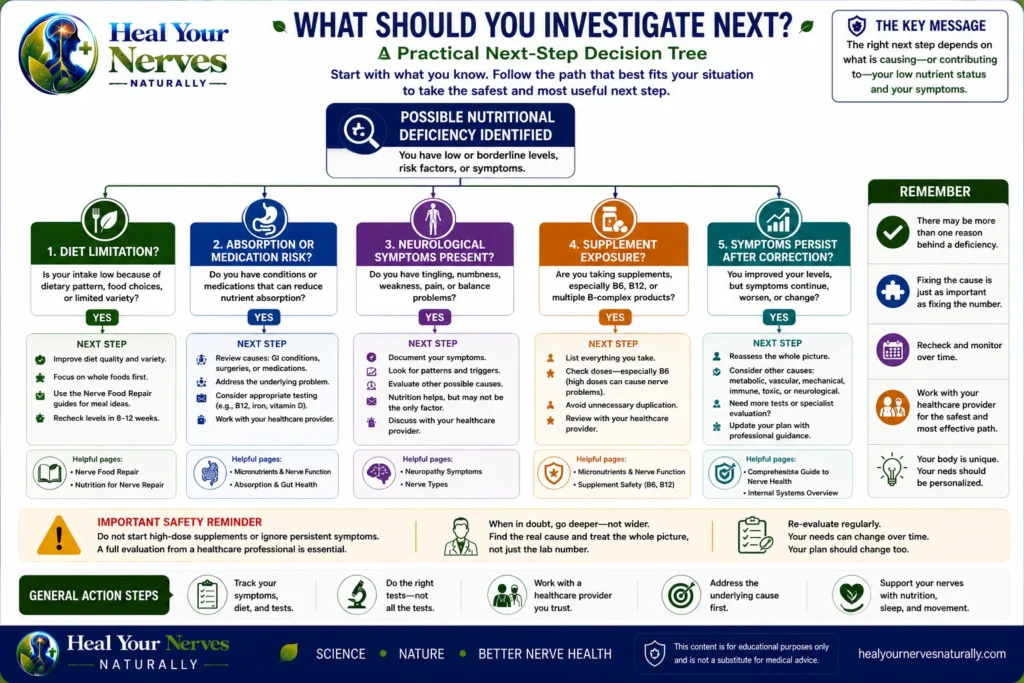
Nutritional Deficiency After Bariatric or Gastrointestinal Surgery
Bariatric surgery is an important example of why nutritional neuropathy should be approached as a system.
Surgery can change:
- stomach size;
- acid exposure;
- food intake;
- transit;
- contact with absorptive surfaces;
- tolerance of certain foods;
- supplement requirements.
Depending on the procedure and the person, risk can involve more than one nutrient.
Clinical reviews of nutritional neuropathies repeatedly identify bariatric surgery as an important context for B-vitamin and other nutrient deficiencies.
The practical mistake to avoid
A person develops tingling after surgery, finds a low B12 value and starts B12.
That may be appropriate if B12 deficiency is confirmed—but the investigation should not automatically end there.
If the surgery creates a broader malabsorption or intake problem, other nutrients may deserve assessment too.
This is why we use:
common root cause → possible multiple nutrient effects
rather than:
one symptom → one vitamin.
When symptoms after bariatric surgery deserve prompt attention
Neurological symptoms after bariatric surgery deserve a lower threshold for professional assessment, especially if they occur with:
- prolonged vomiting;
- rapid weight loss;
- severe weakness;
- gait changes;
- confusion;
- poor supplement adherence;
- inability to tolerate food.
The goal is early recognition, not fear.
Nutritional Deficiency in Older Adults: Look Beyond Food Intake
Age itself does not mean a person is deficient.
But older adults may have more of the circumstances that change nutrient risk:
- lower food intake;
- limited food variety;
- difficulty shopping or cooking;
- acid-suppressing medicines;
- metformin;
- gastrointestinal disease;
- prior surgery;
- frailty;
- multiple medications.
For B12 in particular, reduced ability to release and absorb food-bound B12 can become relevant.
This is another reason to avoid simplistic advice such as:
“Just eat more B12-rich food.”
Food is important, but the pathway may be more complicated.
Nutritional Deficiency and Medication Risk: Do Not Blame the Medicine
This deserves its own section because online nutrition content often mishandles it.
If a medicine is associated with lower nutrient status, three bad conclusions can follow:
- “The medicine is toxic.”
- “I should stop it.”
- “A supplement will cancel out the problem.”
None of those conclusions automatically follows.
A better sequence is:
Recognize the association → assess individual risk → test when appropriate → treat confirmed deficiency appropriately → review medicine only with the prescribing team when clinically relevant.
For B12, both NIH and NICE recognize medication-related risk from metformin and acid-suppressing drugs.
That information should help a user ask a better question—not stop an important medicine.
Nutritional Deficiency, Diabetes, Metformin, and New Tingling
This is one of the most realistic situations in nerve-health care.
A person with type 2 diabetes develops tingling or numbness in the feet. The obvious conclusion is:
“It must be diabetic neuropathy.”
But if that person also takes metformin, B12 belongs in the clinical context. The UK MHRA safety advice on metformin and reduced vitamin B12 says metformin can commonly reduce B12 levels and advises testing B12 when deficiency is suspected, including in people with new-onset neuropathy. It also emphasizes that these symptoms can be caused by diabetes or other conditions.
So the safe interpretation is not:
“It is diabetes.”
or
“It is B12.”
It is:
“Both pathways may deserve consideration, and more than one cause can coexist.”
What you can do before the appointment
Bring:
- how long you have had diabetes;
- how long you have taken metformin and the current dose;
- the date the tingling/numbness started;
- whether symptoms are symmetrical;
- any previous B12 results;
- all B12-containing supplements;
- and any GI or dietary risk factors.
Do not stop metformin on your own. MHRA advice specifically says metformin can usually be continued while B12 deficiency is investigated and corrected when appropriate.
For B12 status interpretation, use Micronutrients for Nerve Health. For the condition-level pathway, use Diabetic Neuropathy.
Nutritional Deficiency, Diabetes, or Compression: How the Questions Differ
Several different causes can produce tingling or numbness.
The symptom may sound similar while the causal pathway is completely different.
Nutritional Deficiency Pathway
Questions include:
- Is a relevant nutrient actually low?
- Why is it low?
- Is there poor intake or absorption?
- Is a medicine or supplement interaction involved?
- Does the clinical pattern fit?
Diabetes/metabolic pathway
Questions include:
- How long has diabetes or glucose dysregulation been present?
- Is the pattern consistent with diabetic neuropathy?
- What is the metabolic and vascular context?
- Are other causes also present?
For condition-level information, see Diabetic Neuropathy.
Mechanical/compression pathway
Questions include:
- Does posture change the symptom?
- Is one nerve distribution involved?
- Did symptoms begin after injury or repetitive load?
- Is there weakness in a pattern suggesting compression?
- Is there neck, back, wrist or other local mechanical context?
For condition-level orientation, see Nerve Compression.
Why this comparison matters
A user can have more than one cause.
For example:
diabetes + B12 deficiency
compression + poor nutrition
bariatric surgery + B6 overexposure from supplements
Real-life medicine does not always provide one clean explanation.
That is why the goal is not to find the first plausible cause.
It is to build the best-supported causal picture.
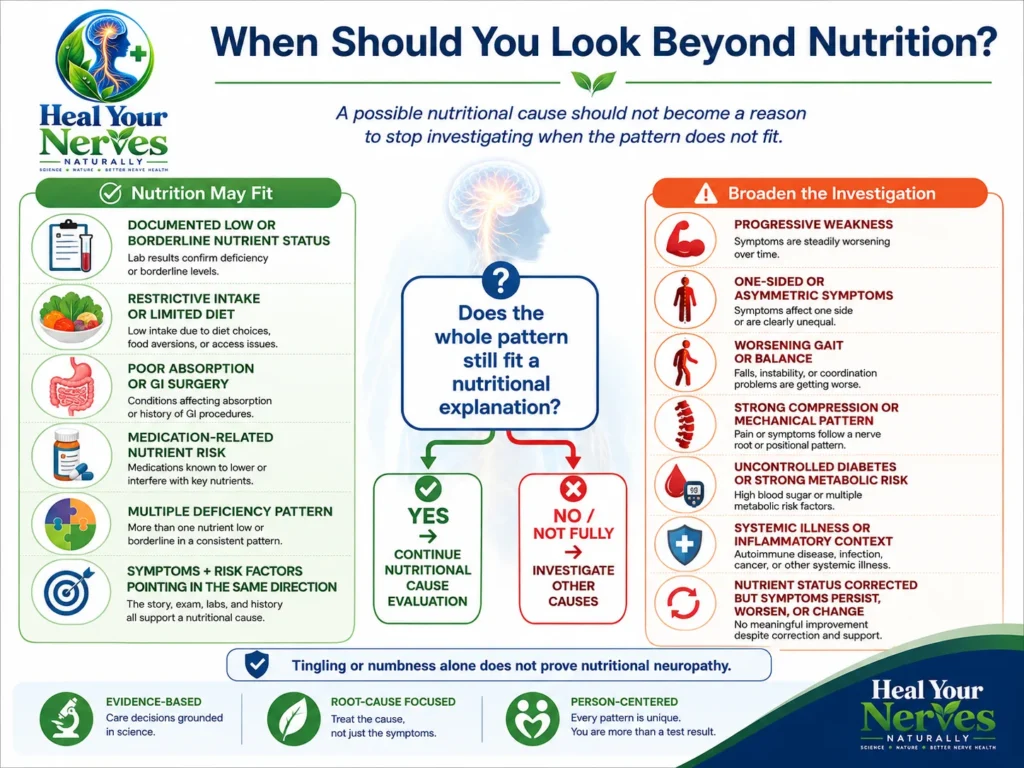
Nutritional Deficiency and Nerve Damage: When to Look Beyond Nutrition
Stop and widen the investigation when:
- neurological symptoms are rapidly progressing;
- weakness is significant;
- gait or balance changes are new or worsening;
- symptoms are strongly one-sided;
- symptoms clearly follow a mechanical injury or positional compression pattern;
- diabetes or another established neuropathy risk is present;
- there are systemic signs suggesting inflammatory, autoimmune, infectious or other disease;
- symptoms continue despite appropriate correction of a confirmed deficiency;
- the nutritional evidence is weak;
- you are using nutrition to avoid seeking evaluation for concerning symptoms.
This is not a failure of “natural healing.”
It is good cause-finding.
The goal is not to prove that nutrition caused the problem. The goal is to decide whether nutritional deficiency and nerve damage are genuinely connected in this situation—or whether the investigation needs to move in another direction.
The goal is to find the most accurate explanation and the safest path forward.
What to Bring to a Clinician if You Suspect Nutritional Deficiency
You can make the appointment more useful by bringing organized information.
Bring your supplement list
Include exact:
- product names;
- serving sizes;
- amounts;
- frequency.
Photos of Supplement Facts panels can be useful.
Bring your medicine list
Include:
- prescriptions;
- over-the-counter medicines;
- duration of use.
Bring actual lab reports
Not only a summary such as “my B12 was normal.”
Include:
- date;
- result;
- unit;
- reference range;
- whether you were taking supplements at the time.
Bring a short symptom timeline
Write:
- when symptoms began;
- what changed around that time;
- where symptoms occur;
- whether they are worsening;
- whether strength or balance changed;
- whether symptoms are symmetrical;
- whether position changes them.
Bring relevant history
Mention:
- vegan/restricted diet;
- bariatric surgery;
- GI surgery;
- chronic diarrhea;
- coeliac disease;
- inflammatory bowel disease;
- prolonged vomiting;
- alcohol use;
- major weight loss.
This does not diagnose the cause.
It makes the clinical conversation more efficient and more precise.
Four useful questions to ask before you leave
You do not need to ask twenty questions. These four often clarify the decision:
- Which cause is currently most plausible, and what evidence supports it?
- Is there another important cause we still need to rule out?
- What change should I watch for that would make you reassess the plan?
- When should I seek help sooner instead of waiting for routine follow-up?
If B12 is part of the discussion, also say clearly whether you started B12 before testing and show the exact product or injection history.
Nutritional Deficiency Follow-Up: A Simple Observation Log
This is not a treatment schedule.
It is a structured observation tool to use after you and your healthcare team have already decided what is appropriate. The point is consistency, not reaching a conclusion by a fixed number of days.
Track symptoms consistently
Use the same simple scale each day for:
- numbness;
- tingling;
- burning;
- weakness;
- balance;
- sleep disruption;
- ability to walk or use the hands normally.
Track function, not only sensation
Ask:
- Can I button clothes normally?
- Can I feel the floor under my feet?
- Has my walking changed?
- Can I grip objects normally?
- Am I dropping things?
- Can I stand with the same confidence?
Function can be more meaningful than chasing tiny day-to-day changes in sensation.
Do not expect a straight line
Symptoms can fluctuate.
One good day does not prove recovery.
One bad day does not prove treatment failure.
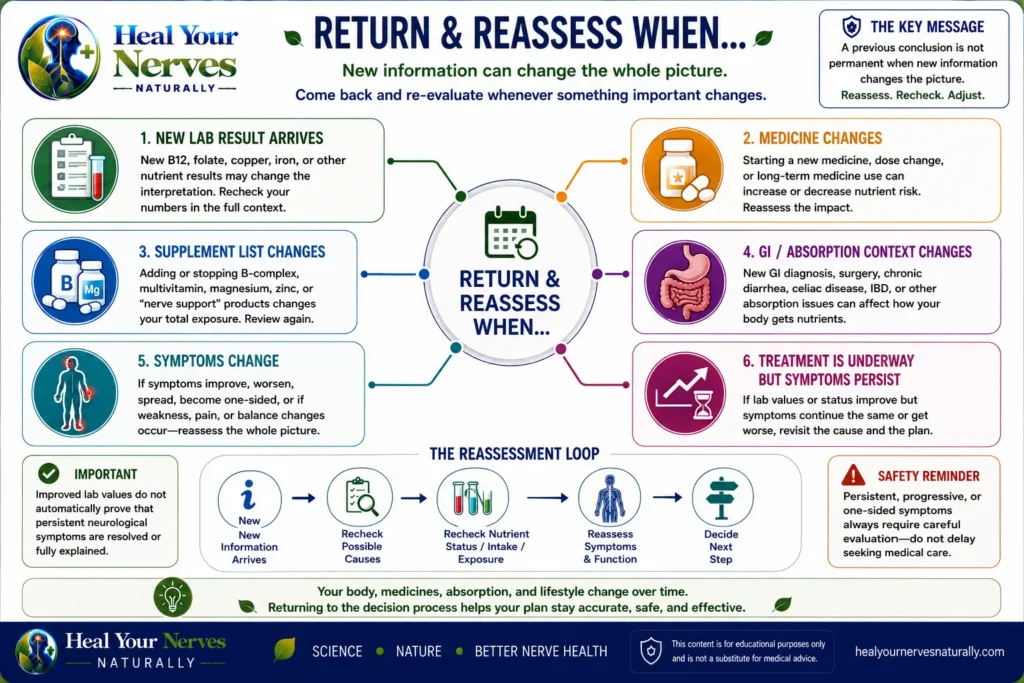
Return for reassessment when the pattern changes
Come back to the decision process when:
- a new lab result arrives;
- a medicine changes;
- a new supplement is added;
- symptoms spread;
- weakness appears;
- balance worsens;
- symptoms remain despite biochemical correction;
- a new GI diagnosis explains absorption risk.
That is how “return” becomes useful rather than repetitive.
Common Questions About Nutritional Deficiency and Nerve Damage
Which vitamin deficiency causes numbness in hands and feet?
Several nutritional problems can affect peripheral nerves, especially B12 deficiency and severe deficiencies involving other relevant nutrients. But numbness in the hands and feet has many non-nutritional causes.
Do not use the symptom alone to choose a vitamin.
Which vitamin deficiency causes nerve damage?
B12 and thiamin deficiencies are among the important established examples, while copper and vitamin E deficiency can also produce neurological problems in relevant contexts. B6 is unusual because excess exposure is also a known neuropathy risk.
Can B12 deficiency cause nerve damage without anemia?
Yes. Absence of anemia or macrocytosis does not rule out B12 deficiency.
Can a healthy diet still lead to B12 deficiency?
Yes, if absorption is impaired or another risk factor is present. Metformin, gastric-acid suppression, autoimmune gastritis, GI surgery and other absorption-related conditions can be relevant.
Can a vegan diet cause B12 deficiency?
A vegan diet can be low in reliable natural B12 sources unless fortified foods or appropriate supplementation are used. But a vegan diet should not automatically be blamed for every low B12 result; absorption and other causes may also matter.
Can bariatric surgery cause nutritional neuropathy?
Bariatric surgery can increase risk for several nutrient deficiencies, and neurological complications are a recognized concern. People with neurological symptoms after bariatric surgery need a broader clinical nutrient assessment rather than a one-vitamin guess.
Can too much B6 look like nutritional neuropathy?
Yes. Excess B6 exposure can cause sensory neuropathy, which is why the full supplement list matters.
Can zinc supplements cause nerve problems?
High zinc exposure can reduce copper absorption and lead to copper deficiency, which can have neurological effects. The issue is usually the interaction and exposure pattern, not ordinary dietary zinc.
Will correcting a deficiency reverse nerve damage?
Sometimes symptoms improve when a causal deficiency is treated, but recovery is not guaranteed and the timeline varies. Duration and severity of deficiency, underlying nerve injury and other causes all matter.
Why do symptoms remain after my B12 level rises?
Possible reasons include slower neurological recovery, another ongoing cause, more than one deficiency, or the possibility that B12 deficiency was not the main explanation.
Should I take several nerve vitamins just in case?
That approach can create unnecessary exposure and make the picture harder to interpret. B6 excess and zinc–copper interaction are two reasons to review what you actually need before building a supplement stack.
What to Remember About Nutritional Deficiency and Nerve Damage
If you remember only seven things, remember these:
- Nutritional deficiency is a pathway, not just a low food intake.
- Eating enough and absorbing enough are different questions.
- B12 deficiency can have neurological relevance even without obvious anemia.
- Medicines and GI history can matter to nutrient status.
- B6 excess and zinc–copper interaction show why supplements can also create problems.
- Tingling or numbness does not prove nutritional neuropathy.
- Correcting nutrient status and recovering nerve function are not the same timeline.
Nutritional Deficiency and Nerve Damage: Choose Your Next Step
I want to understand which micronutrient may be low, adequate or excessive.
→ Micronutrients for Nerve Health
I want to understand why B12, B1, B6, copper and other nutrients matter inside nerves.
→ Micronutrients and Nerve Function
I want practical food changes.
→ Nerve Food Repair
I want a sustainable overall eating pattern.
→ Nutrition for Nerve Repair
I want to understand digestion and absorption.
→ Gut Axis
I want to evaluate supplement dose, duplication and interactions.
→ Supplement Intelligence
I want to understand peripheral neuropathy as a condition.
→ Peripheral Neuropathy
I want to explore other root causes.
→ Root Causes of Nerve Damage
I want to understand how nerve repair actually works.
→ Regeneration Biology
References and Evidence
Primary Clinical and Public-Health Guidance
- NINDS — Peripheral Neuropathy
- NIH Office of Dietary Supplements — Vitamin B12: Fact Sheet for Health Professionals
- NICE — Vitamin B12 Deficiency in Over 16s: Diagnosis and Management
- MHRA — Metformin and Reduced Vitamin B12 Levels: Advice for Monitoring Patients at Risk
- NIH Office of Dietary Supplements — Dietary Supplements and Life Stages: Pregnancy
- NIH Office of Dietary Supplements — Thiamin: Fact Sheet for Health Professionals
- NIH Office of Dietary Supplements — Vitamin B6: Fact Sheet for Health Professionals
- EFSA Journal — Scientific Opinion on the Tolerable Upper Intake Level for Vitamin B6
- Therapeutic Goods Administration — Peripheral Neuropathy With Supplementary Vitamin B6
- NIH Office of Dietary Supplements — Copper: Fact Sheet for Health Professionals
- NIH Office of Dietary Supplements — Vitamin E: Fact Sheet for Health Professionals
- NIH Office of Dietary Supplements — Folate: Fact Sheet for Health Professionals ### Supporting Clinical Reviews
- PubMed — Nutritional Peripheral Neuropathies
- PubMed — Nutritional Neuropathies
- PMC — Nutritional Neuropathies
Medical disclaimer: This page is for general health education and cannot diagnose nutritional neuropathy or determine the cause of neurological symptoms. Do not stop prescribed medicines or self-treat significant neurological symptoms with high-dose supplements. Seek professional medical evaluation for persistent, progressive, severe or function-limiting symptoms.