
Metabolic Support Through Diet Patterns: A Clear Guide for Nerve Health Education
Metabolic Support Through Diet Patterns
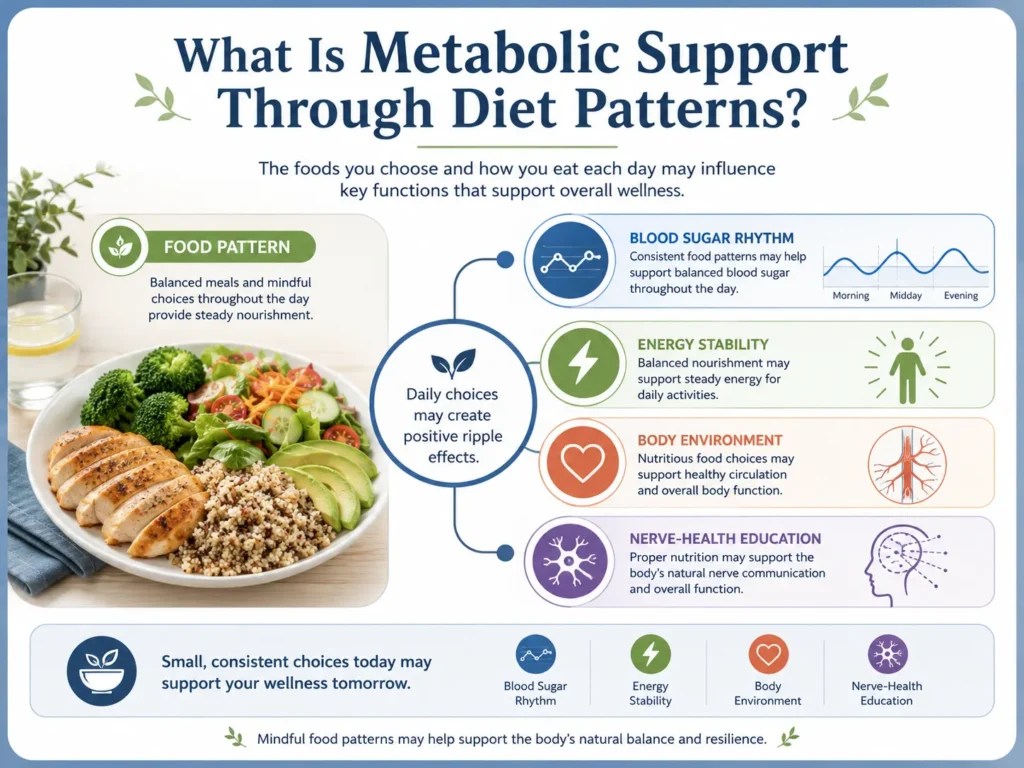
Metabolic Support Through Diet Patterns explains how daily food patterns may connect with blood sugar rhythm, energy stability, circulation demand, inflammation load, and nerve-health education. Metabolism is the way the body uses food, stores energy, manages blood sugar, and supports normal body functions. Because nerves are active tissues, they work inside a larger body environment. That environment may be shaped by meals, hydration, sleep, stress, movement, blood flow, medical conditions, and recovery demand.
However, this page is not a diabetes diet plan, weight-loss plan, supplement guide, or treatment protocol. It does not claim that diet patterns cure neuropathy, reverse nerve damage, fix nerve pain, or replace medical care. Nerve symptoms can have many causes, including diabetes, nerve compression, injury, inflammation, medication effects, alcohol misuse, low vitamin levels, toxins, or other medical conditions. Therefore, diet patterns should be understood as one support layer, not the full answer.

Quick Navigation
What Is Metabolic Support Through Diet Patterns?
Metabolic Support Through Diet Patterns means using food-pattern education to understand how repeated meals may affect blood sugar rhythm, energy use, fullness, inflammation load, and body stability. It does not mean one perfect diet. Instead, it focuses on patterns over time. These patterns may include food variety, meal timing, fiber intake, protein balance, hydration, and fewer highly irregular eating habits. In simple terms, the goal is to understand the body environment created by daily eating patterns.
This topic matters because nerves do not function separately from the rest of the body. They depend on blood flow, oxygen delivery, nutrient availability, energy production, and stable internal regulation. For example, long-term high blood sugar can damage nerves in people with diabetes. At the same time, not every tingling or burning feeling comes from blood sugar. Because of this, the safest message is balanced. Diet patterns may connect with nerve-health education, but symptoms still need proper context and professional guidance.
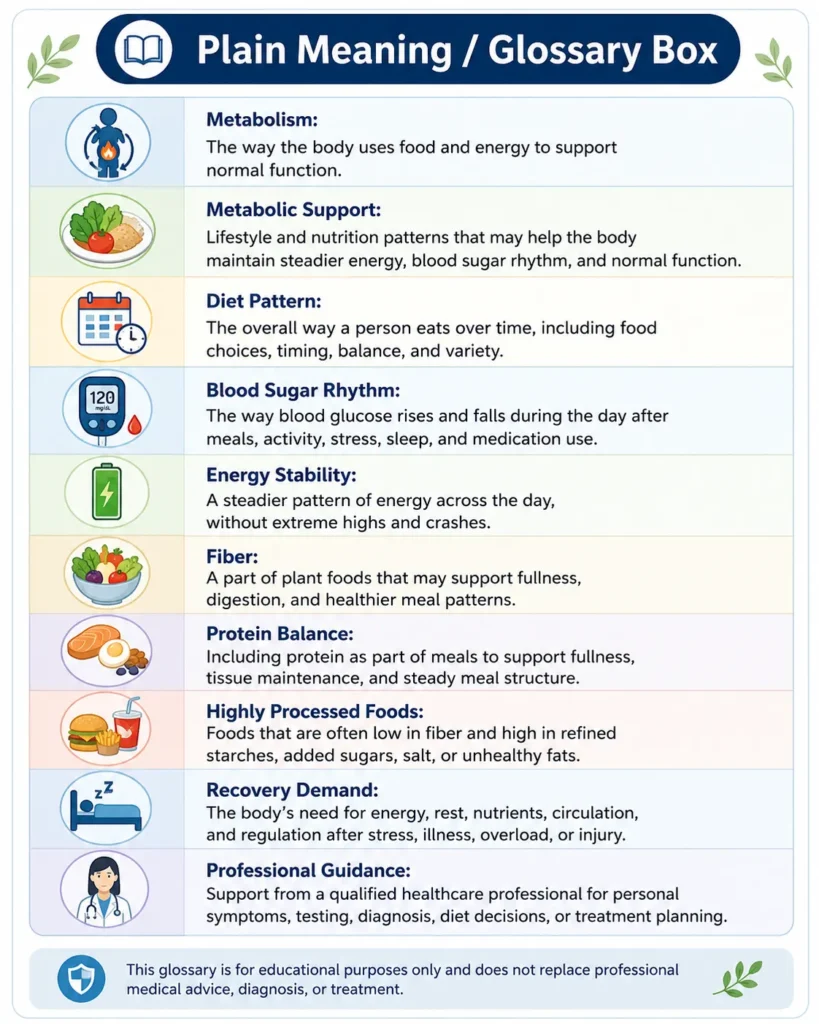
Plain Meaning / Glossary Box
Metabolism: The way the body uses food and energy to support normal function.
Metabolic Support: Lifestyle and nutrition patterns that may help the body maintain steadier energy, blood sugar rhythm, and normal function.
Diet Pattern: The overall way a person eats over time, including food choices, timing, balance, and variety.
Blood Sugar Rhythm: The way blood glucose rises and falls during the day after meals, activity, stress, sleep, and medication use.
Energy Stability: A steadier pattern of energy across the day, without extreme highs and crashes.
Fiber: A part of plant foods that may support fullness, digestion, and healthier meal patterns.
Protein Balance: Including protein as part of meals to support fullness, tissue maintenance, and steady meal structure.
Highly Processed Foods: Foods that are often low in fiber and high in refined starches, added sugars, salt, or unhealthy fats.
Recovery Demand: The body’s need for energy, rest, nutrients, circulation, and regulation after stress, illness, overload, or injury.
Professional Guidance: Support from a qualified healthcare professional for personal symptoms, testing, diagnosis, diet decisions, or treatment planning.
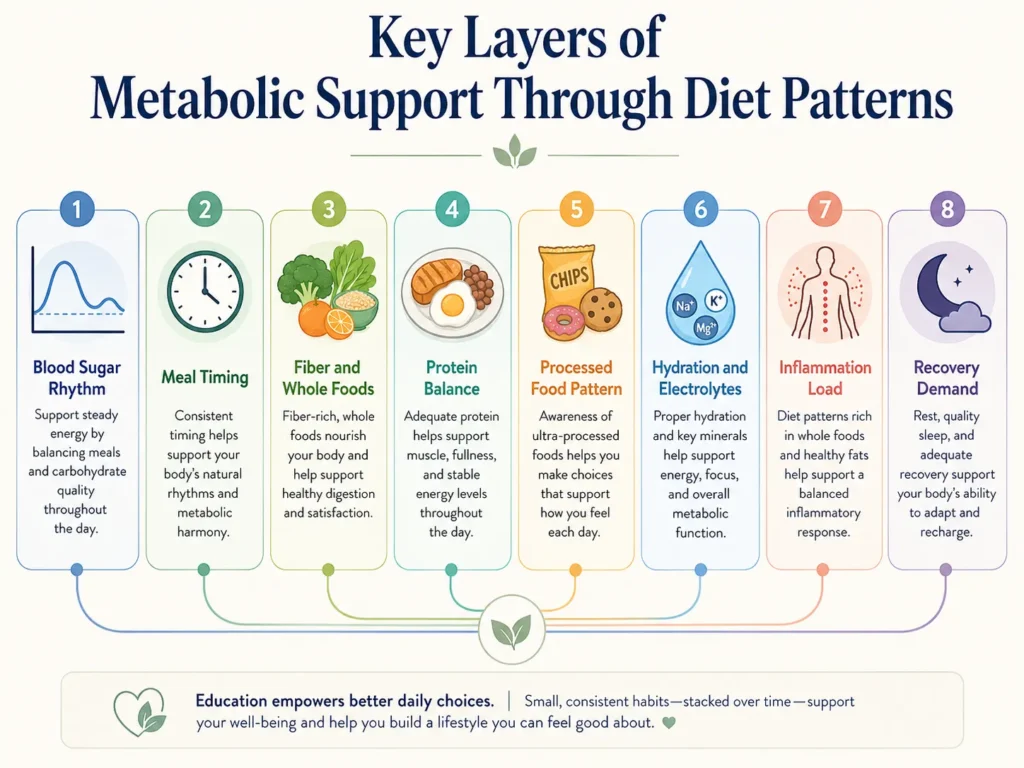
How Metabolic Support Through Diet Patterns Works
Metabolic Support Through Diet Patterns works by looking at repeated eating habits instead of isolated foods. First, meals provide carbohydrates, proteins, fats, vitamins, minerals, fiber, and water. After that, the body digests and absorbs those nutrients. Then, those nutrients enter energy pathways, blood sugar regulation, blood circulation, tissue maintenance, and normal nervous system activity. Because these processes happen together, food patterns may shape the background environment in which nerves work.
A balanced meal pattern may help the body avoid extreme swings in hunger, energy, and blood sugar. For example, meals that include fiber-rich foods, protein, and healthy fats may feel steadier for many people than meals made mostly of refined carbohydrates or sugary drinks. However, individual responses vary. Diabetes, medications, digestive problems, activity level, sleep, stress, and illness can all change how the body responds. Therefore, this page should avoid strict promises and instead explain that diet patterns may support a steadier body environment.
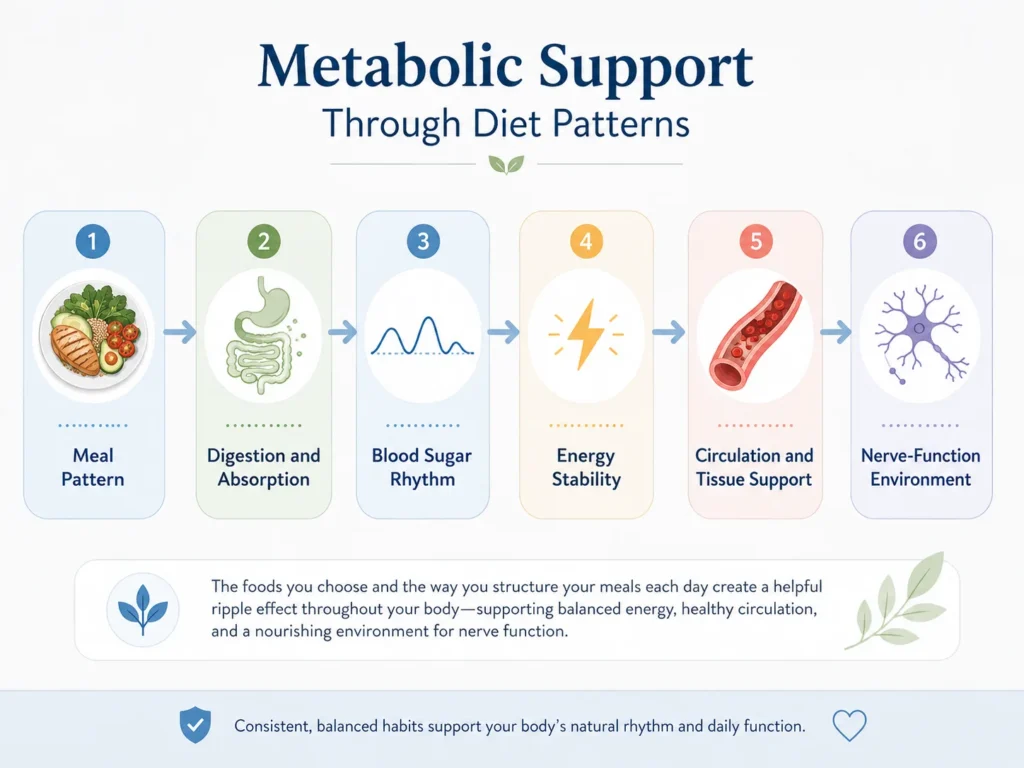
Key Layers of Metabolic Support Through Diet Patterns
Blood Sugar Rhythm Layer in Metabolic Support Through Diet Patterns
Blood sugar rhythm is one of the most important layers in metabolic support. After a meal, blood sugar naturally rises. Then, the body uses insulin and other systems to move glucose into cells for energy or storage. In a healthy pattern, this rhythm usually moves within a manageable range. However, blood sugar rhythm can become harder to manage in diabetes, prediabetes, high stress, poor sleep, illness, low activity, or irregular eating patterns.
This matters for nerve-health education because diabetes is a major nerve-health topic. Long-term high blood sugar can injure nerves, especially in diabetic neuropathy. Even so, this page should not give diabetes treatment instructions. Instead, it should explain that blood sugar rhythm belongs in the wider body environment. A safe message is that balanced eating patterns may help support blood sugar awareness. However, people with diabetes should follow their clinician’s plan, monitor as advised, and work with qualified professionals.
Meal Timing Layer in Metabolic Support Through Diet Patterns
Meal timing may affect hunger, energy, and blood sugar rhythm. Some people feel better with regular meals because they avoid long gaps that lead to overeating, weakness, or energy crashes. Other people may need different timing because of work schedules, medication use, blood sugar conditions, digestion, sleep patterns, or medical advice. Therefore, meal timing should be explained as a flexible body-rhythm layer, not as one fixed rule for everyone.
For this reason, this page should not promote one timing method as best. It should avoid saying that skipping meals, fasting, or eating at a certain hour is always helpful or harmful. Instead, it should explain that timing can be part of a person’s wider metabolic pattern. Readers with diabetes, hypoglycemia, eating disorder history, pregnancy, kidney disease, or medication use should be careful with major timing changes. Professional guidance matters because personal needs can be very different.
Fiber and Whole Food Layer in Metabolic Support Through Diet Patterns
Fiber-rich foods may support a steadier meal pattern. These foods often include vegetables, fruits, beans, lentils, oats, whole grains, nuts, and seeds. Because fiber slows digestion and supports fullness, it can help many people build more balanced meals. In addition, fiber-rich foods often bring vitamins, minerals, water, and plant compounds into the diet. Therefore, this layer works best as part of overall food quality, not as a single solution.
However, fiber should not be described as a cure for nerve symptoms. It is only one part of diet quality. Also, some people with digestive conditions may need personalized guidance before changing fiber intake. For example, some people may feel bloating or discomfort if they increase fiber too quickly. A safe educational message is that fiber-rich foods may support general metabolic health when they fit a person’s needs. They can be part of a balanced pattern that also includes protein, healthy fats, hydration, and food variety.
Protein Balance Layer in Metabolic Support Through Diet Patterns
Protein helps support fullness, tissue maintenance, and meal balance. When meals contain enough protein, some people feel more stable energy and less hunger between meals. Protein can come from many sources, including fish, poultry, eggs, dairy, beans, lentils, tofu, nuts, seeds, and other foods. Because protein can slow digestion when included with meals, it may help create a steadier meal structure for some readers.
Still, protein needs vary. Age, body size, activity level, kidney health, medical conditions, and personal diet patterns all matter. Therefore, this page should not give exact protein targets. Instead, it should explain the general role of protein in meal structure. Readers with kidney disease, diabetes complications, digestive conditions, or special medical diets should follow professional advice. The goal is not to push a high-protein diet. Rather, the goal is to explain protein as one balancing layer inside metabolic support.
Highly Processed Food Pattern Layer
Highly processed food patterns may create a higher metabolic load for some people. These patterns may include frequent sugary drinks, refined snacks, low-fiber meals, high-salt foods, and large portions of refined carbohydrates. Over time, this type of pattern may affect blood sugar rhythm, weight, cholesterol, blood pressure, and energy stability. However, the page should avoid blame because eating patterns are shaped by cost, stress, access, work schedules, family needs, culture, and convenience.
Therefore, a helpful tone is practical and respectful. Instead of telling readers to eat perfectly, the page can encourage small pattern changes. For example, adding protein, fiber, vegetables, beans, oats, nuts, or water may be more realistic than focusing only on restriction. In addition, readers can learn to notice patterns that leave them tired, overly hungry, or less steady. This approach supports awareness without guilt. It also keeps the page aligned with safe education instead of strict diet rules.
Hydration and Electrolyte Layer
Hydration can affect energy, circulation, digestion, and comfort. Water helps the body carry nutrients, regulate temperature, and support normal function. Electrolytes such as sodium, potassium, magnesium, and calcium also help body processes, including muscles and nerves. Because of this, hydration belongs in a metabolic support page. However, it should be framed as general body support, not as a treatment for nerve symptoms.
At the same time, hydration advice must stay safe. More water is not always better for everyone. Some people with kidney disease, heart failure, blood pressure issues, medication use, or electrolyte problems need individualized guidance. Also, electrolyte drinks can contain sugar, sodium, or additives that may not fit every person’s needs. Therefore, readers should avoid using online hydration tips as medical advice. When medical conditions are present, professional guidance is the safer path.
Inflammation Load Layer
Diet patterns may connect with inflammation load in a broad educational way. A pattern rich in vegetables, fruits, legumes, whole grains, nuts, seeds, and healthy fats may support general health. Meanwhile, frequent sugary drinks, refined snacks, and low-fiber meals may increase metabolic strain for some people. Because inflammation, metabolism, and recovery demand can interact, food quality can be included as one background layer in nerve-health education.
However, inflammation is complex. It is not controlled by food alone. Infection, autoimmune disease, injury, sleep loss, stress, toxins, obesity, medications, and chronic disease can also affect inflammatory activity. Therefore, this page should avoid saying that diet “turns off inflammation.” The better wording is that diet patterns may be one part of the body environment. They may work alongside sleep, movement, stress regulation, circulation, and medical care when needed.
Recovery Demand Layer
Recovery demand describes the body’s need for rest, energy, nutrients, oxygen delivery, circulation, and regulation after stress, illness, injury, or overload. Diet patterns may connect with recovery demand because the body uses food to support normal function. However, recovery is not controlled by food alone. Sleep, stress, blood sugar, movement, inflammation, circulation, injury, medications, and medical conditions can all shape recovery.
Because of this, this page should connect diet patterns with a wider recovery system. A safe message is that metabolic support may help the body’s working environment. It may support energy rhythm and general function, but it does not promise nerve repair or symptom relief. In addition, readers should understand that ongoing or worsening nerve symptoms need proper evaluation. Diet education can support learning, but it should not delay medical care.
Real-Life Symptom Language Bridge
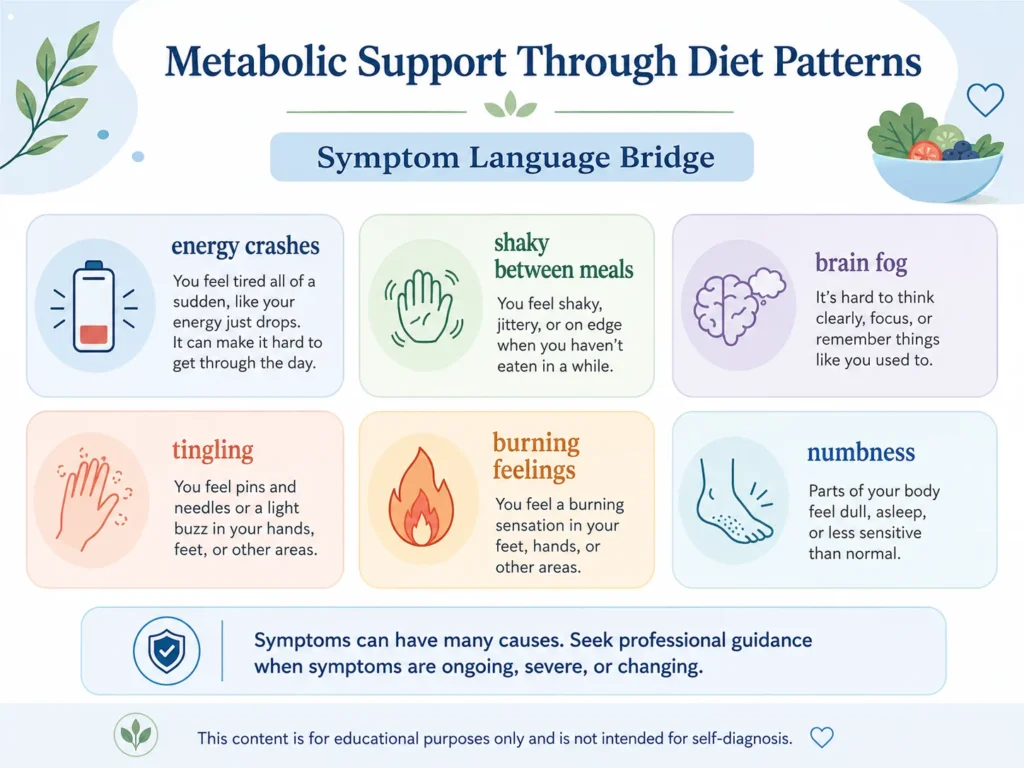
Some readers may search for Metabolic Support Through Diet Patterns because they feel tired after meals, shaky between meals, foggy, weak, heavy, hungry often, or sensitive to sugar changes. Others may search because they have tingling, burning feelings, numbness, nerve pain, or diabetic neuropathy concerns. These questions are understandable. However, symptoms like these can have many causes. Fatigue may come from sleep loss, stress, anemia, thyroid problems, infection, medication effects, depression, inflammation, diabetes, or other conditions.
Likewise, tingling and numbness may involve nerve compression, diabetes, low vitamin B12, injury, autoimmune disease, toxins, alcohol misuse, kidney disease, or other medical causes. Therefore, this page should help readers understand one possible layer without encouraging self-diagnosis. Food patterns may affect energy and blood sugar rhythm, but they do not explain every symptom. Readers should seek medical care for symptoms that are sudden, severe, spreading, unusual, or worsening. They should seek urgent care for sudden weakness, severe numbness, chest pain, trouble breathing, loss of bladder or bowel control, or fast neurological changes.
Metabolic Support Through Diet Patterns Interactions
Nutrition Supports Nerve Repair and Metabolic Support Through Diet Patterns
Metabolic Support Through Diet Patterns connects closely with How Nutrition Supports Nerve Repair because that page explains the wider nutrition system. This page narrows the focus toward blood sugar rhythm, energy stability, meal balance, food quality, and metabolic load. Together, they can help readers understand how nutrition may fit inside a larger nerve-health education path. However, both pages should avoid treatment promises because nutrition may support the body environment but does not guarantee symptom relief.
Nerve Food Repair and Metabolic Support Through Diet Patterns
Metabolic Support Through Diet Patterns also connects with Nerve Food Repair because that page can help readers understand food patterns in a practical way. This page can then explain why those patterns may matter for energy rhythm, blood sugar rhythm, inflammation load, and recovery demand. However, “nerve food” should not be used as cure language. Instead, the safer wording is that food patterns may support the body environment connected with nerve-health education.
Micronutrients and Nerve Function Interaction
Metabolic Support Through Diet Patterns should connect with Micronutrients and Nerve Function because micronutrients explain vitamins and minerals, while this page explains the wider eating pattern. For example, a diet pattern may provide fiber, protein, vitamins, minerals, and fluids. However, nutrient status also depends on absorption, medical conditions, medications, and testing. Therefore, micronutrients and diet patterns should both be explained carefully.
Blood Sugar and Diabetic Neuropathy Interaction
Blood sugar is an important bridge between metabolic health and nerve-health education. Diabetic Neuropathy is the strongest related condition because long-term high blood sugar can injure nerves. However, this page should not replace a diabetes care plan. People with diabetes should work with qualified professionals for blood sugar targets, medication use, meal planning, and monitoring.
Circulation and Oxygen Delivery Interaction
Metabolic patterns may connect with Oxygen Delivery and Nerve Function because blood sugar, cholesterol, blood pressure, hydration, movement, and inflammation can all affect the wider delivery system. Since nerves need oxygen and nutrients, circulation belongs in the larger nerve-health education map. However, circulation problems can be serious, so this page should not suggest that diet patterns alone solve them.
Sleep, Stress, and Daily Rhythm Interaction
Sleep and stress can affect metabolic rhythm. Poor sleep may affect hunger, energy, and blood sugar regulation. Stress may also influence eating patterns, cravings, muscle tension, and body load. Because of this, diet patterns should not be separated from daily rhythm. This section should connect with Daily Patterns and Nervous System Stability, Sleep & Recovery, and Stress System because they help readers understand the larger lifestyle rhythm.
Practical Daily-Life Examples
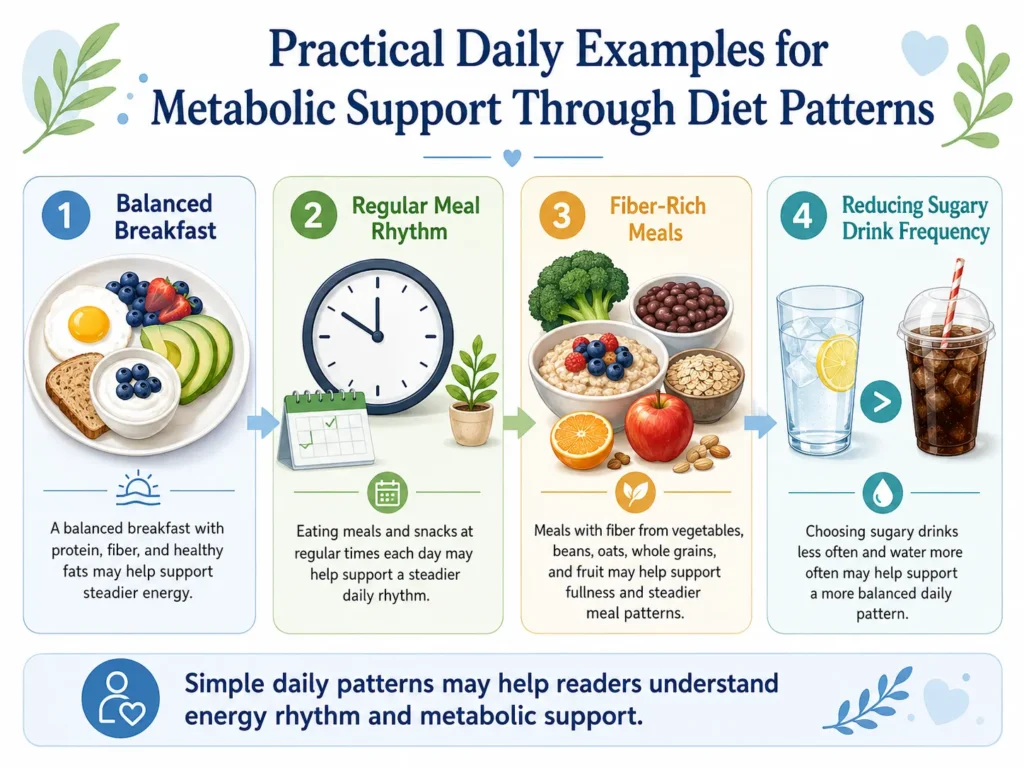
A first example is the breakfast pattern. Some people start the day with only sweet tea, refined bread, or a sugary snack. This may feel quick, but it may not provide enough fiber or protein for steady energy. A more balanced pattern might include protein, fiber-rich carbohydrates, and healthy fats. However, personal needs vary. Therefore, the goal is not to create a perfect meal rule. Instead, the goal is to help readers understand how meal structure may influence energy rhythm.
A second example is meal skipping. A person may skip lunch because of work, then feel shaky, tired, or very hungry later. As a result, they may eat a large evening meal or choose quick processed foods. This does not mean they have a disease. It simply shows how timing can affect energy and appetite. A third example is snack stacking. A reader may drink sweet beverages, eat low-fiber snacks, and then feel repeated energy highs and lows. Instead of using shame, this page can suggest awareness and small practical changes.
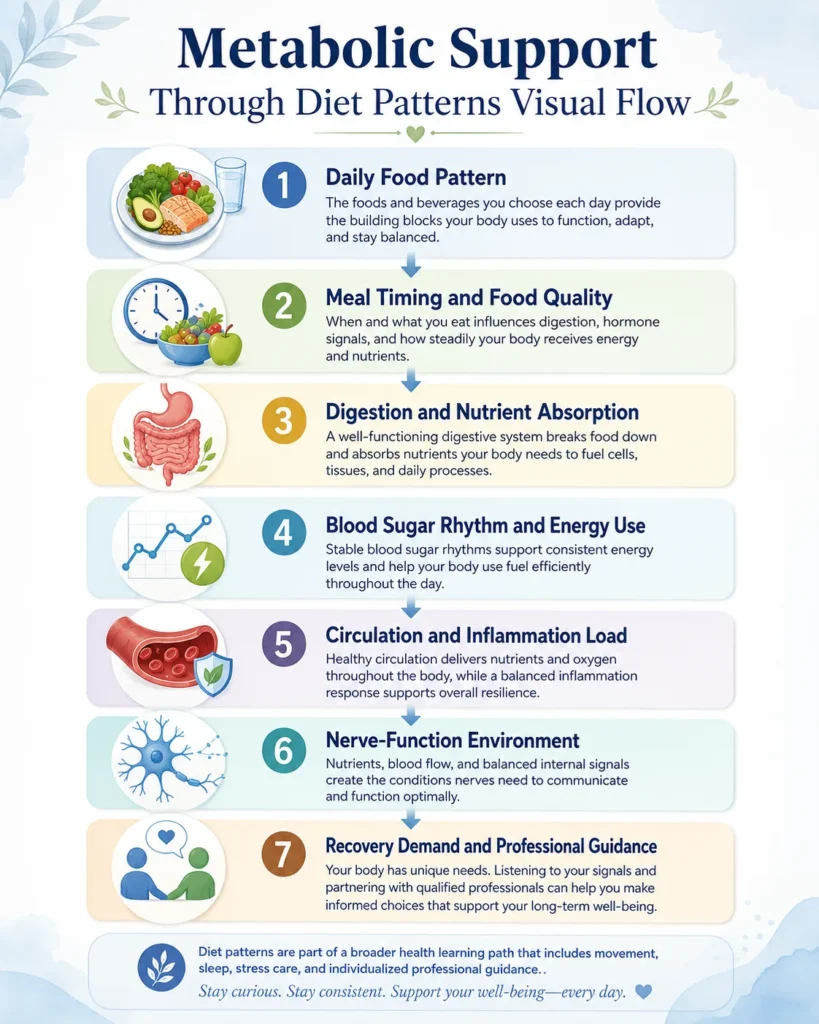
Metabolic Support Through Diet Patterns Visual Flow
Daily food pattern
↓
Meal timing and food quality
↓
Digestion and nutrient absorption
↓
Blood sugar rhythm and energy use
↓
Circulation, inflammation load, and tissue support
↓
Nerve-function environment
↓
Recovery demand and professional guidance when needed
This visual flow is an educational model. It shows how diet patterns may connect with the body environment that surrounds nerves. Food choices and meal timing influence digestion and nutrient absorption. Then, those patterns may affect blood sugar rhythm, energy use, circulation, and recovery demand. However, this flow is not a treatment plan. It does not mean diet will fix nerve symptoms. It also does not mean symptoms should be self-diagnosed as blood sugar problems. Instead, the flow helps readers understand why metabolic support belongs in a broader nerve-health learning path.
Why Metabolic Support Through Diet Patterns Matters for Recovery
Metabolic Support Through Diet Patterns matters for recovery because the body needs steady energy, nutrients, hydration, circulation, and regulation to carry out normal repair and maintenance processes. When food patterns are highly irregular, low in nutrients, or mostly made of refined foods, some people may experience more energy swings, hunger changes, or body load. In this way, diet patterns may influence the background conditions that support daily function and recovery demand.
However, recovery is not controlled by diet alone. Nerve-related recovery may involve injury type, compression, blood sugar history, inflammation, sleep quality, stress load, movement, circulation, medical conditions, medications, and age. Because of this, this page should avoid strong recovery claims. The balanced message is simple. Diet patterns may support the body’s working environment. They may help readers understand energy rhythm, blood sugar rhythm, and recovery demand. However, they do not replace diagnosis, treatment, rehabilitation, medication, blood sugar management, or professional medical care when needed.
Common Misunderstandings About Metabolic Support Through Diet Patterns
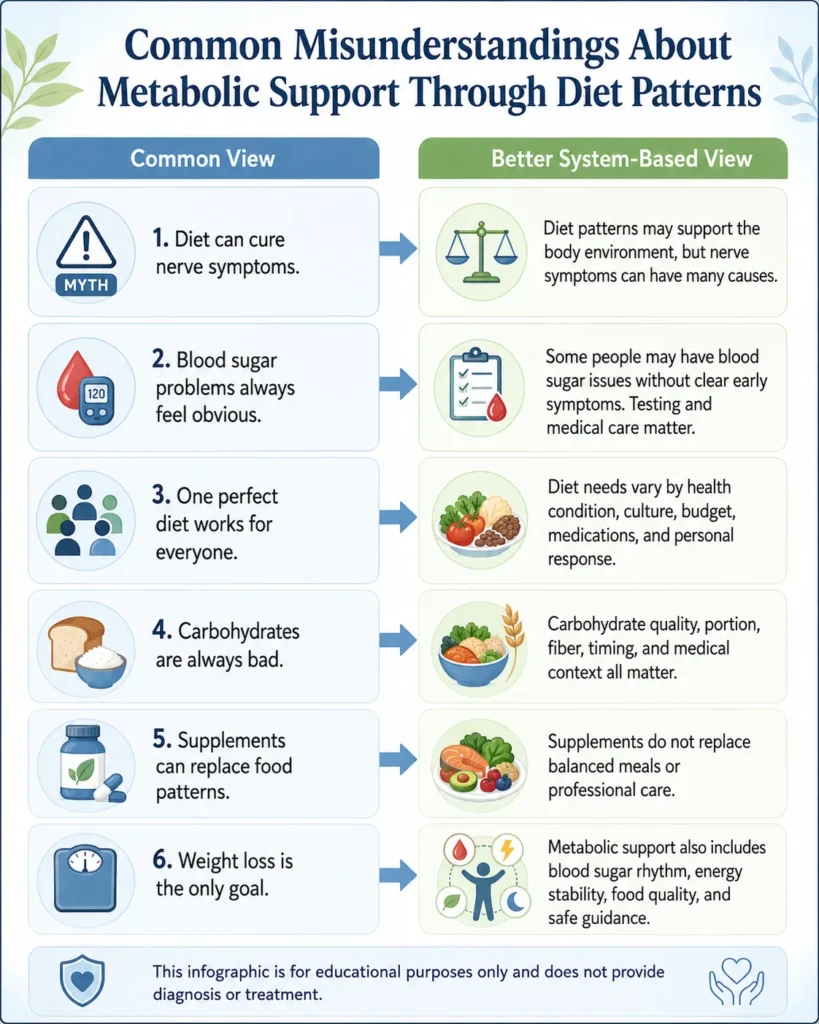
| Common View | Better System-Based View |
|---|---|
| Diet can cure nerve symptoms. | Diet patterns may support the body environment, but nerve symptoms can have many causes. |
| Blood sugar problems always feel obvious. | Some people may have blood sugar issues without clear early symptoms. Testing and medical care matter. |
| One perfect diet works for everyone. | Diet needs vary by health condition, culture, budget, medications, and personal response. |
| Carbohydrates are always bad. | Carbohydrate quality, portion, fiber, timing, and medical context all matter. |
| Supplements can replace food patterns. | Supplements do not replace balanced meals or professional care. |
| Weight loss is the only goal. | Metabolic support also includes blood sugar rhythm, energy stability, food quality, and safe guidance. |
Misunderstanding 1: Diet can cure nerve symptoms.
This is too simple. Diet patterns may support general health and metabolic rhythm, but they do not explain every nerve symptom. Tingling, numbness, burning feelings, weakness, or pain may involve many causes. Therefore, diet should be discussed as one possible layer, not as the main answer for everyone.
Misunderstanding 2: Blood sugar problems always feel obvious.
Blood sugar problems may not always be easy to recognize from symptoms alone. Some people may feel tired, thirsty, hungry, or foggy. Others may have no clear symptoms. Therefore, testing and professional guidance are important when diabetes or prediabetes is suspected.
Misunderstanding 3: Carbohydrates are always bad.
Carbohydrates are not all the same. Vegetables, fruits, beans, lentils, oats, and whole grains contain carbohydrates along with fiber and nutrients. Sugary drinks and refined snacks are different. Therefore, a better message is to understand quality, portion, timing, and personal medical context.
Misunderstanding 4: One diet pattern works for everyone.
People have different needs. Culture, budget, food access, work schedule, health conditions, medications, digestion, allergies, and personal goals all matter. Therefore, this page should avoid one-size-fits-all diet rules.
Misunderstanding 5: Supplements replace diet patterns.
Supplements may be useful in some deficiency states, but they do not replace food patterns or medical care. In addition, some supplements can interact with medications or medical conditions. Therefore, supplement decisions should be guided when symptoms or conditions are present.
Related Condition Connections
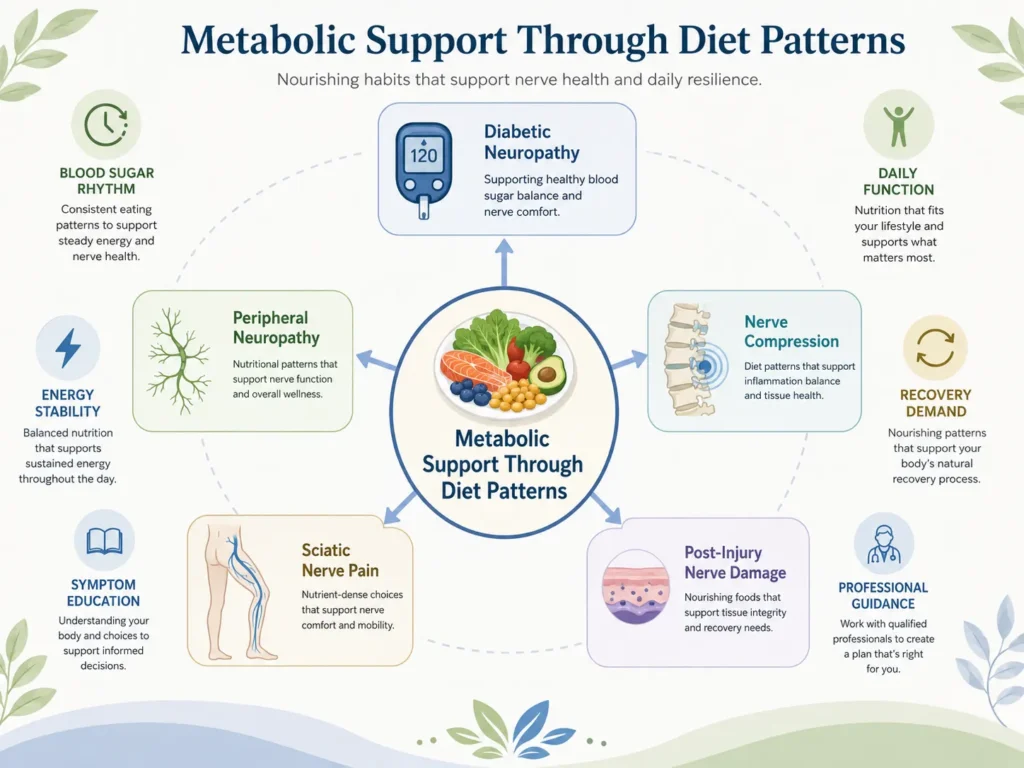
Metabolic Support Through Diet Patterns may connect with several condition pages in an educational way. Diabetic Neuropathy is the strongest bridge because diabetes and long-term high blood sugar can affect nerves. However, this page should not imply that diet patterns cure diabetic neuropathy. Instead, it should use safe anchor text such as learn about diabetic neuropathy education or explore how diabetes may affect nerve function.
Peripheral Neuropathy may also connect because metabolic conditions, diabetes, vitamin issues, toxins, injuries, and other causes may be involved. However, this page should not suggest that every peripheral neuropathy symptom comes from diet or blood sugar. Use safe anchor text such as learn about related nerve symptoms or explore peripheral neuropathy education.
Nerve Compression may connect because tingling or numbness can come from pressure rather than metabolic health. This helps readers avoid assuming that every symptom comes from food or blood sugar. Use safe anchor text such as understand nerve pressure symptoms or explore a related condition page.
Sciatic Nerve Pain may connect through daily function, movement, inflammation load, and symptom education. However, this page should not imply that diet patterns directly treat sciatica. Use safe anchor text such as learn about sciatic nerve pain patterns or explore related nerve pain education.
Post-Injury Nerve Damage may connect through recovery demand and tissue support. Still, injury-related nerve symptoms need proper medical context. Use safe anchor text such as explore post-injury nerve education or learn about recovery demand after nerve injury.
How This Topic Connects With Other Nerve Health Pages
Metabolic Support Through Diet Patterns belongs inside the broader Therapeutic Systems learning area because it explains one support system, not a disease. It connects closely with How Nutrition Supports Nerve Repair because that page explains the wider nutrition system. It also connects with Nerve Food Repair because that page helps readers understand food patterns in a recovery-support context. Together, these pages can guide readers from broad nutrition education into more specific metabolic learning.
This topic also connects with Micronutrients and Nerve Function, Oxygen Delivery and Nerve Function, Microcirculation and Nerve Sensitivity, Inflammation Control, Sleep & Recovery, and Daily Patterns and Nervous System Stability. Together, these pages help readers understand how food patterns, blood sugar rhythm, nutrients, circulation, inflammation load, sleep, stress, and recovery demand may interact with nerve-health education. For symptom education, readers may also explore Diabetic Neuropathy and Peripheral Neuropathy.
Metabolic Support Through Diet Patterns FAQ
Can diet patterns support metabolic health?
Diet patterns may support metabolic health by helping readers understand food quality, meal timing, fiber, protein balance, hydration, and blood sugar rhythm. However, personal needs vary, especially for people with diabetes, kidney disease, digestive conditions, medication use, or other medical concerns.
Can diet patterns improve nerve symptoms?
This page does not claim that diet patterns improve, cure, or reverse nerve symptoms. Nerve symptoms can have many causes. Diet patterns may support the body environment, but symptoms should be evaluated when they are ongoing, severe, unusual, or worsening.
Is blood sugar rhythm connected with nerve health?
Blood sugar rhythm is an important educational topic because diabetes and long-term high blood sugar can damage nerves. However, people with diabetes need professional medical guidance for blood sugar targets, medication decisions, monitoring, and meal planning.
Are carbohydrates bad for nerve health?
Carbohydrates are not all bad. The body uses glucose for energy. The quality, amount, timing, and fiber content of carbohydrates matter. Whole foods such as vegetables, fruits, beans, lentils, oats, and whole grains are different from sugary drinks or highly refined snacks.
Should I follow a special diet for neuropathy?
This page does not provide a neuropathy diet plan. People with neuropathy or nerve symptoms should seek qualified medical guidance. A healthcare professional or registered dietitian can help personalize food choices based on diagnosis, labs, medications, and overall health.
Can skipping meals affect energy?
Skipping meals may affect hunger, energy, mood, and blood sugar rhythm for some people. However, the effect depends on the person, health conditions, medications, activity level, and eating pattern. People with diabetes or hypoglycemia should follow professional guidance.
When should symptoms be checked urgently?
Seek urgent medical care for sudden weakness, loss of bladder or bowel control, chest pain, difficulty breathing, severe numbness, severe pain, rapidly worsening symptoms, or sudden neurological changes.
Continue Learning
Continue with How Nutrition Supports Nerve Repair to understand how food, nutrients, energy, blood sugar, and recovery demand may connect with nerve-health education.
Next, explore Nerve Food Repair to learn how food patterns may fit into recovery education without treatment promises.
Then, read Micronutrients and Nerve Function to understand vitamins, minerals, food variety, testing, and supplement safety.
For delivery-system context, continue with Oxygen Delivery and Nerve Function and Microcirculation and Nerve Sensitivity.
For rhythm and recovery context, read Sleep & Recovery, Stress System, and Daily Patterns and Nervous System Stability.
For condition education, visit Diabetic Neuropathy and Peripheral Neuropathy.
Sources / References
NIDDK — Healthy Living with Diabetes
NIDDK explains that food choices, amount, and timing are parts of a meal plan. It also explains that healthy foods and drinks can help keep blood glucose, blood pressure, and cholesterol in recommended ranges.
CDC — Diabetes Meal Planning
CDC explains that a meal plan helps guide when, what, and how much to eat while helping people get nutrition and keep blood sugar levels on target.
CDC — Healthy Eating and Diabetes
CDC explains that healthy eating is important for managing blood sugar and that food amount and timing can help blood sugar stay in the target range.
MedlinePlus — Diabetic Diet
MedlinePlus explains that healthy eating for diabetes includes a variety of foods from different food groups, including fruits, vegetables, whole grains, proteins, and low-fat or nonfat dairy.
Mayo Clinic — Diabetic Neuropathy Symptoms and Causes
Mayo Clinic explains that diabetic neuropathy is nerve damage that can happen with diabetes and that high blood sugar over time can injure nerves throughout the body.
Mayo Clinic — Peripheral Neuropathy Symptoms and Causes
Mayo Clinic explains that peripheral neuropathy can involve numbness, tingling, burning pain, sensitivity, weakness, and coordination changes. It also explains that diabetes is one common cause.
Author / Editorial Trust Note
This article was created for educational purposes by Heal Your Nerves Naturally. It was written with safety-focused wording, simple language, non-diagnostic framing, and source-based education. The goal is to help readers understand how metabolic support, diet patterns, blood sugar rhythm, energy stability, food quality, circulation, inflammation load, and recovery demand may connect with nerve-health education.
This page does not claim medical review unless a qualified reviewer is officially added by the website. It does not diagnose, treat, cure, or prevent disease. Readers should use this page as a learning guide. They should contact a qualified healthcare professional for personal symptoms, diagnosis, diet planning, testing, medication decisions, or treatment decisions.
For more context, readers may visit the About page, Health Disclaimer, and Contact page.
Educational Trust Note
Heal Your Nerves Naturally explains nerve-health topics in calm and simple language. The goal is to help readers understand body systems without fear, overpromising, or self-treatment claims. Because nerve symptoms can have many causes, no single page should be used as a full explanation for a person’s symptoms.
This page uses careful phrases such as “may support,” “may connect with,” “one possible layer,” and “body environment.” These phrases are intentional. They help protect readers from oversimplified conclusions and keep the content aligned with safe health-information standards.
Safety & Education Notice
This page is for educational purposes only. It does not diagnose, treat, cure, or prevent disease. It is not a substitute for professional medical advice, diagnosis, diet planning, medication guidance, or treatment.
Seek urgent medical care for severe, sudden, unusual, or worsening symptoms, including sudden weakness, loss of bladder or bowel control, chest pain, difficulty breathing, severe numbness, severe pain, or rapidly changing neurological symptoms.
Because this topic may involve blood sugar, diabetes, diet patterns, nerve symptoms, metabolic health, medication use, supplements, or medically sensitive body systems, readers should not use this information to self-diagnose, start a diet plan, stop medication, change diabetes treatment, follow protocols, or delay professional care.