
Nerve Disorders
Nerve disorders affect how signals travel between the brain, spinal cord, and the rest of the body. These signals control movement, sensation, and many automatic body functions.
When nerve communication changes, the body may respond differently. As a result, individuals may notice unusual sensations, weakness, or changes in coordination.
These peripheral nerves connect the central nervous system to muscles and internal organs. Because of this complex network, nerve signals travel continuously between the brain and different parts of the body.
Under normal circumstances, these signals move smoothly along nerve pathways. For example, nerve signals allow the body to detect temperature, pressure, and pain.
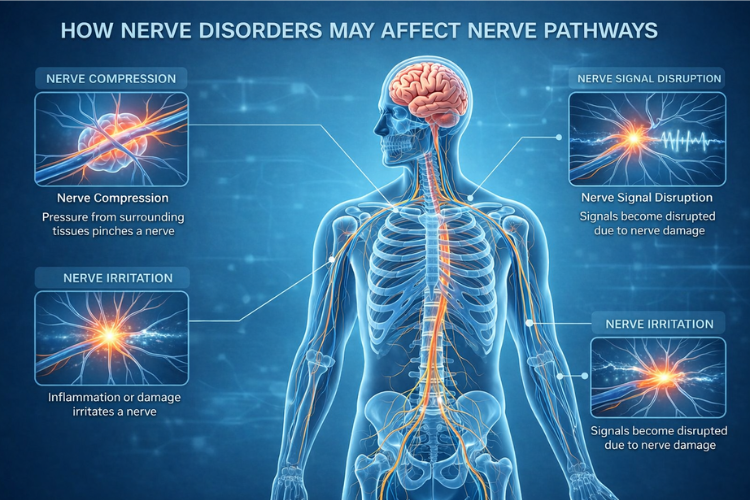
At the same time, nerves coordinate muscle movement and many automatic body functions. However, irritation, inflammation, or compression may disrupt this process.
When signal transmission becomes disrupted, communication between nerves may change. As a result, unusual sensations may begin to appear.
For instance, some people may notice tingling in the hands or feet. Additionally, numbness or changes in sensitivity may occur.
In some situations, symptoms develop gradually over time. In other cases, symptoms may appear after injury or prolonged pressure on a nerve.
Because nerve pathways extend throughout the entire body, several different types of nerve disorders may develop. Therefore, symptoms often depend on which nerve pathway is affected.
Explore This Page:
What Are Nerve Disorders
Nerve disorders refer to conditions that affect how nerve signals travel throughout the body. These signals help control sensation, movement, and many automatic body functions.
When nerve pathways are affected, signal transmission may change. As a result, individuals may notice sensations such as tingling, numbness, or changes in muscle control.
Peripheral nerves connect the brain and spinal cord to muscles and internal organs. Because of this network, signals travel continuously between different parts of the body.
Under normal conditions, these signals move smoothly along nerve pathways. However, irritation, inflammation, or compression may disrupt this process.
Consequently, nerve communication may become less efficient. For example, some individuals may experience unusual sensations, reduced sensitivity, or muscle weakness.
In some cases, symptoms develop gradually over time. In other cases, they may appear after injury or prolonged pressure on a nerve.
Because nerves extend throughout the entire body, different types of nerve disorders may develop. Therefore, symptoms often depend on which nerve pathway is affected.
How Nerve Disorders Develop
Nerves transmit electrical signals between the brain, spinal cord, muscles, and sensory receptors. Under normal circumstances, these signals travel smoothly along nerve pathways.
However, pressure, irritation, or inflammation may interrupt these pathways. As a result, signal transmission may change.
When nerve signals change, the body may interpret sensations differently. For example, tingling or numbness may appear along the affected nerve pathway.
Meanwhile, some individuals may notice muscle weakness. Additionally, others may experience increased sensitivity to touch or temperature.
Because nerve communication supports both sensation and movement, disruptions in these signals may influence how the body responds.
Common sensations associated with nerve signal disruption may include:
- tingling sensations
- numbness
- radiating discomfort
- muscle weakness
- altered sensitivity
In many cases, these sensations develop when signals cannot travel normally along nerve pathways.
Consequently, communication between nerves and surrounding tissues may become less efficient. In turn, changes in nerve signaling may lead to noticeable sensory or muscular responses.
Therefore, learning how different nerve disorders develop can help explain why these sensations sometimes appear.
Common Symptoms Associated With Nerve Disorders
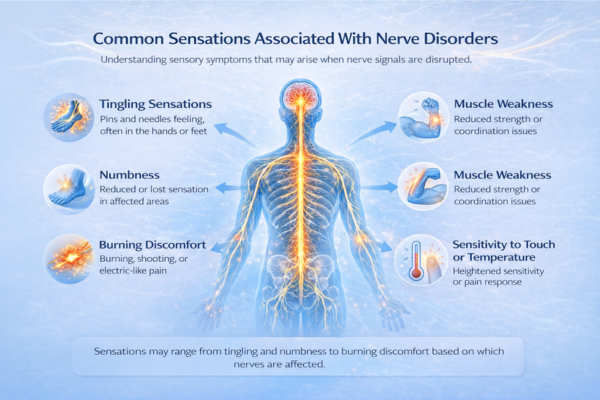
Common Sensations Associated With Nerve Disorders
People experiencing nerve-related changes may notice several different sensations. However, the pattern often depends on which nerves are affected.
For example, common sensations may include:
- tingling sensations in the hands or feet
- numbness or reduced sensation
- burning or electric-like discomfort
- muscle weakness
- sensitivity to touch or temperature
In some situations, these sensations appear gradually. Additionally, symptoms may change throughout the day depending on activity levels or nerve irritation.
Under normal circumstances, nerve signals travel smoothly between the brain and the rest of the body. However, irritation, inflammation, or compression may interrupt this communication.
As a result, signals may travel differently along nerve pathways. Consequently, the body may interpret these signals as unusual sensations.
Explore Nerve Conditions
Explore common nerve conditions to understand how different factors may affect nerve function and nervous system activity. Your Attractive Heading
Peripheral Neuropathy
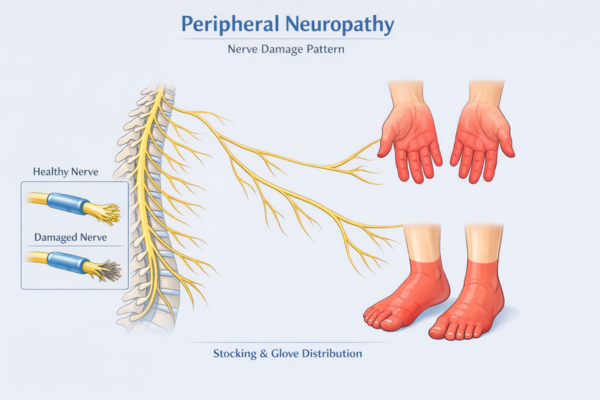
Peripheral neuropathy refers to changes affecting nerves outside the brain and spinal cord. These nerves carry signals between the central nervous system and the rest of the body.
When these nerves become irritated or stressed, signal transmission may change. As a result, people may notice tingling, numbness, or changes in sensitivity, especially in the hands or feet.
Because these nerves travel long distances, even small disruptions may affect how the body senses touch, temperature, or movement.
Diabetic Neuropathy
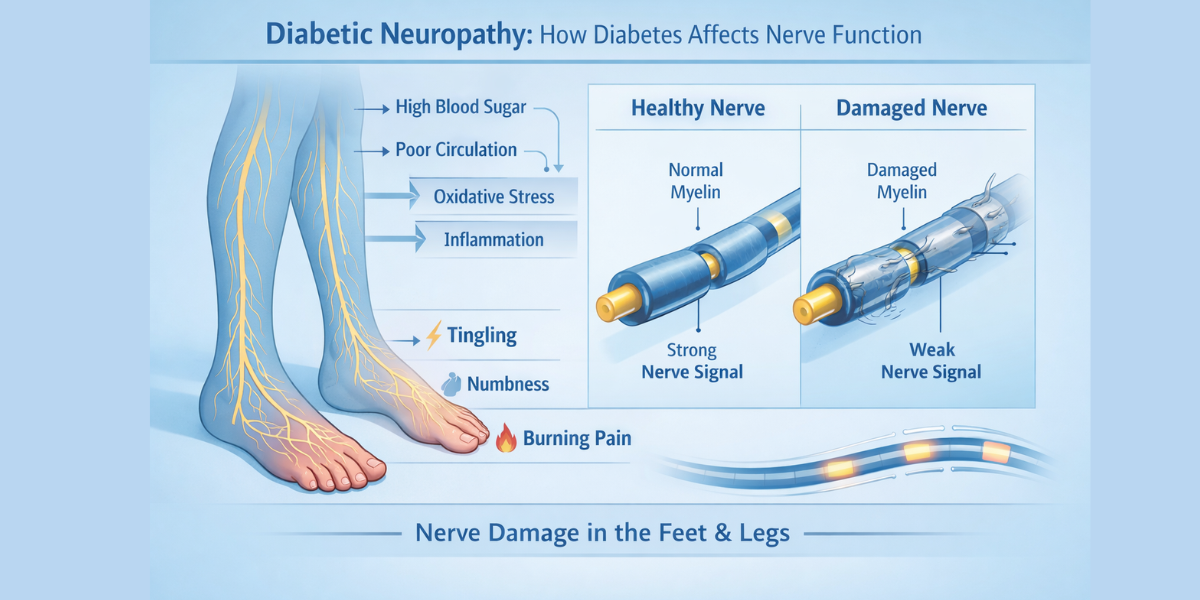
Diabetic neuropathy may develop when long-term metabolic changes affect nerve health. Over time, these changes may influence how nerve signals travel through the body.
As a result, individuals may notice tingling, numbness, burning, or reduced sensitivity. In many cases, these sensations begin in the feet or lower legs and may gradually spread.
Because nerves rely on stable metabolic balance, ongoing metabolic stress may affect how signals move through the nervous system.
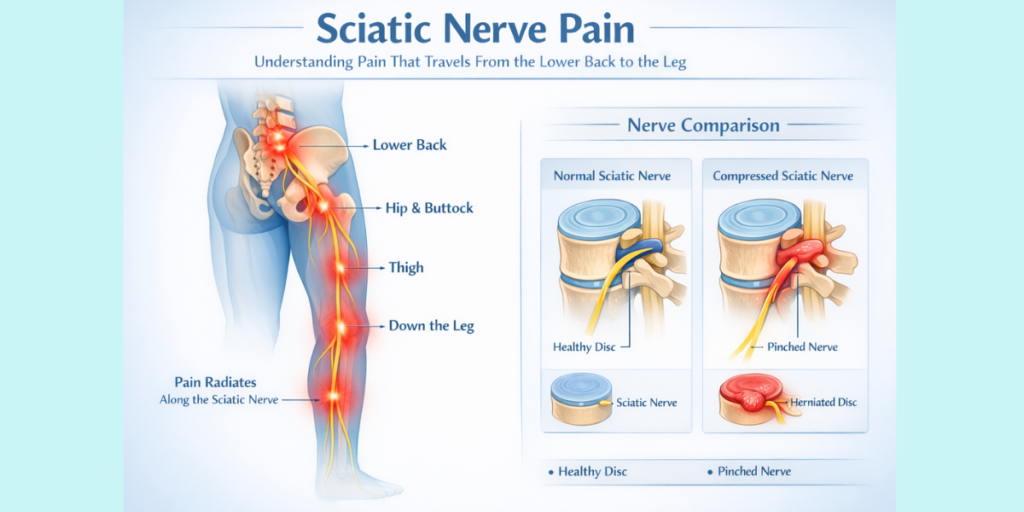
Sciatic Nerve Pain
Sciatic nerve pain develops when pressure or irritation affects the sciatic nerve. This nerve runs from the lower back through the hips and down the leg.
When this pathway is affected, nerve signals may change. As a result, pain may travel from the lower back through the hip and along the leg.
In addition to pain, some individuals may notice tingling, numbness, or burning sensations along the affected pathway.
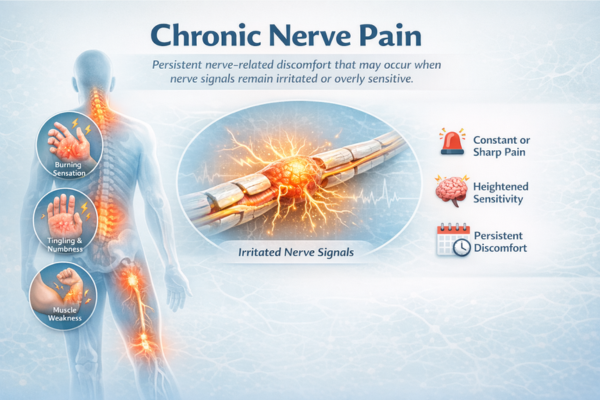
Chronic Nerve Pain
Chronic nerve pain refers to long-lasting nerve-related discomfort. It may develop when nerve signals remain irritated or overly sensitive over time.
As a result, individuals may notice burning pain, tingling, electric-like sensations, or unusual sensitivity in certain areas of the body.
Because these signals stay active for longer periods, the discomfort may persist or return over time.
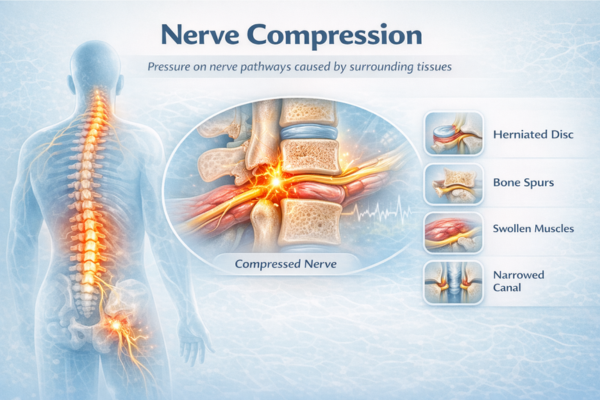
Nerve Compression
Nerve compression occurs when surrounding tissues place pressure on a nerve. This pressure may affect how signals travel through the nerve pathway.
As a result, individuals may notice tingling, numbness, radiating discomfort, or weakness in the affected area.
Because nerves need open pathways to function properly, even mild pressure may change how signals move through the body.
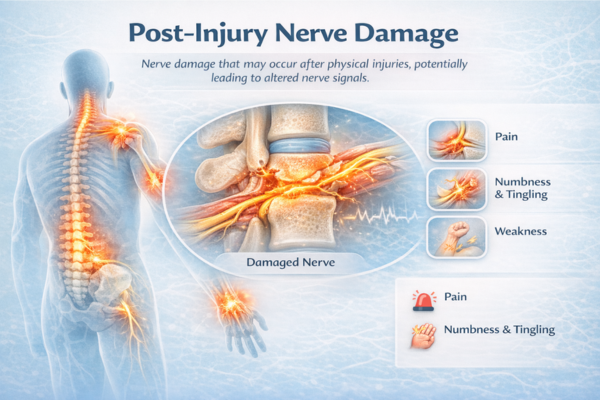
Post-Injury Nerve Damage
Post-injury nerve damage may occur when nerves become stretched, compressed, or irritated after physical trauma.
As a result, individuals may notice tingling, numbness, weakness, or radiating discomfort near the affected area.
Because nerve signals may be disrupted after injury or repeated strain, these changes can affect how signals travel through the body.
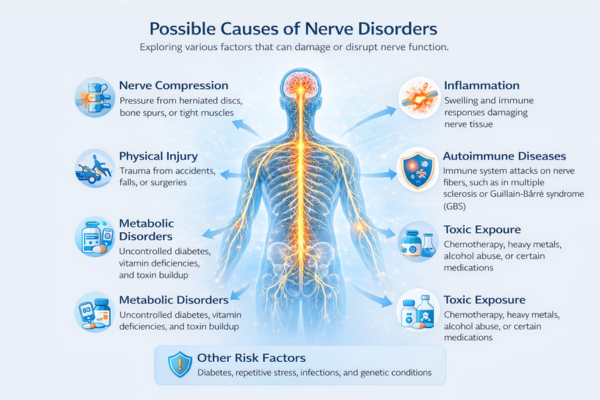
Possible Causes of Nerve Disorders
Several factors may influence nerve function and signal transmission. For example, metabolic stress, inflammation, or physical injury may affect how nerves communicate throughout the body.
Because nerves extend throughout the body, different factors may affect different nerve pathways. As a result, symptoms may appear in different areas depending on which nerves are involved.
Common influences include:
• metabolic stress affecting nerve cells
• inflammation around nerve pathways
• physical injury affecting nerve tissue
• nutritional imbalance influencing nerve metabolism
For this reason, the location of nerve disruption often determines the pattern of symptoms a person may notice.
Examples of influences that may affect nerve pathways include:
• Metabolic influences – changes in metabolism that may affect nerve cells and signal transmission
• Inflammation around nerve pathways – swelling or irritation that may interfere with normal nerve communication
• Physical injury – trauma or repetitive strain that may affect nerve tissue or nearby structures
• Nutritional imbalance – deficiencies in certain nutrients that support nerve health
Because nerves are distributed throughout the body, these influences may affect different nerve pathways depending on where the disruption occurs.
Supporting a Healthy Nerve Environment
Although nerve disorders may develop for many different reasons, everyday lifestyle habits may still influence the environment surrounding nerve tissue.
In educational discussions about nerve health, several supportive factors are often highlighted. These factors do not directly treat nerve conditions; however, they may contribute to maintaining a balanced nervous system environment.
For example, balanced nutrition may help support normal nerve metabolism and cellular energy processes. Similarly, regular physical movement may help maintain healthy circulation, which supports the delivery of oxygen and nutrients to nerve tissues.
Adequate sleep is also considered important for nervous system recovery. During restful sleep, the body performs many restorative processes that support overall neurological balance.
In addition, stress-management practices may help support the regulation of the nervous system. Techniques such as relaxation practices, breathing exercises, or mindful movement are often discussed in educational contexts related to nerve health.
Taken together, these lifestyle factors may help support overall nerve function. While they do not replace medical evaluation or treatment, maintaining a stable lifestyle environment may contribute to a healthier nervous system.
Continue Your Learning Journey
Explore additional educational topics related to nerve health and nervous system function.
Related Conditions
Related Nerve Conditions
Several conditions are commonly discussed in connection with nerve function and nerve-related sensations. Each condition explores how different factors may influence nerve pathways and how changes in nerve communication may lead to noticeable symptoms in various areas of the body.
Explore the following educational pages to learn more about specific nerve conditions and how they may affect nerve signaling.
Therefore, learning about the possible causes of nerve disorders can help explain why certain symptoms may develop in different parts of the body.
Safety & Education Notice
This page provides educational information about nerve-related symptoms.
It does not offer medical diagnosis, treatment, or personalized medical advice.
If symptoms are severe, persistent, progressive, or unexplained, please consult a licensed healthcare professional.