
Metabolic Damage System
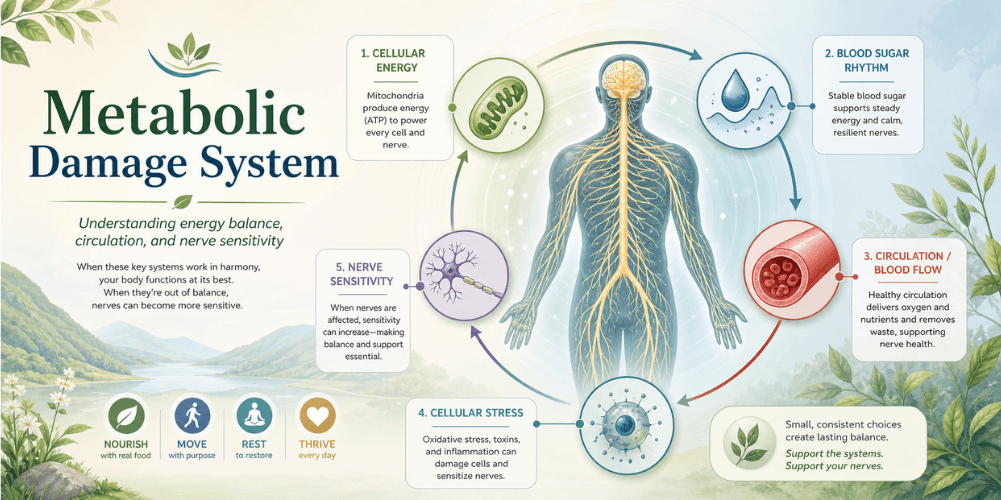
The Metabolic Damage System helps explain how energy imbalance, blood sugar patterns, cellular stress, and circulation may influence nerve sensitivity over time. In addition, it shows why metabolism is not only about weight or digestion, but also about how cells receive, use, and manage energy.
This page explains the Metabolic Damage System as an educational model, not as a diagnosis. In other words, it helps readers understand how metabolic stress can connect with nerve function, inflammation, nutrition, circulation, and long-term recovery-related learning.
Quick Navigation
What Is the Metabolic Damage System?
The Metabolic Damage System refers to the body’s internal network for managing energy, fuel, blood sugar levels, cellular stress, and tissue support. It is not a single organ or a simple process. Instead, it involves multiple components, including the liver, muscles, fat tissue, blood vessels, hormones, mitochondria, and the nervous system.
Metabolism is the process by which the body converts food and stored energy into usable fuel. Every cell requires energy to function, repair, communicate, and adapt. Therefore, when metabolic balance becomes unstable, various body systems may experience negative effects.
Understanding the Metabolic Damage System is crucial for nerve health education, as nerves need a steady supply of energy, oxygen, blood flow, and cellular support. Nerve cells are highly active communicators and can be sensitive to long-term changes in fuel supply, blood sugar patterns, oxidative stress, and circulation.
A simple way to visualize the Metabolic Damage System is to think of the body as an energy grid. When energy delivery is consistent, communication flows smoothly. However, if the grid becomes unstable, signals may become less efficient and more reactive.
How the Metabolic Damage System Works
The Metabolic Damage System works through several connected layers. These include fuel intake, blood sugar regulation, insulin signaling, mitochondrial energy production, blood vessel support, and cellular stress response.
The first layer is fuel availability. The body receives energy from food and stored reserves. Then it breaks this fuel down into usable forms that cells can access.
The second layer is regulation. The body must decide how much fuel should stay in the blood, how much should enter cells, and how much should be stored. This process helps maintain a steady internal environment.
The third layer is cellular energy production. Inside cells, mitochondria help convert fuel into energy. When this process works well, cells have the energy needed for repair, signaling, and adaptation.
The fourth layer is stress management. If fuel patterns become unstable, cells may experience oxidative stress, inflammatory signaling, or reduced energy efficiency. Over time, this may increase system load.
When these layers lose balance, metabolic stress may develop. As a result, the body may struggle to maintain stable energy, circulation, and nerve communication.
System Interactions: Network Thinking
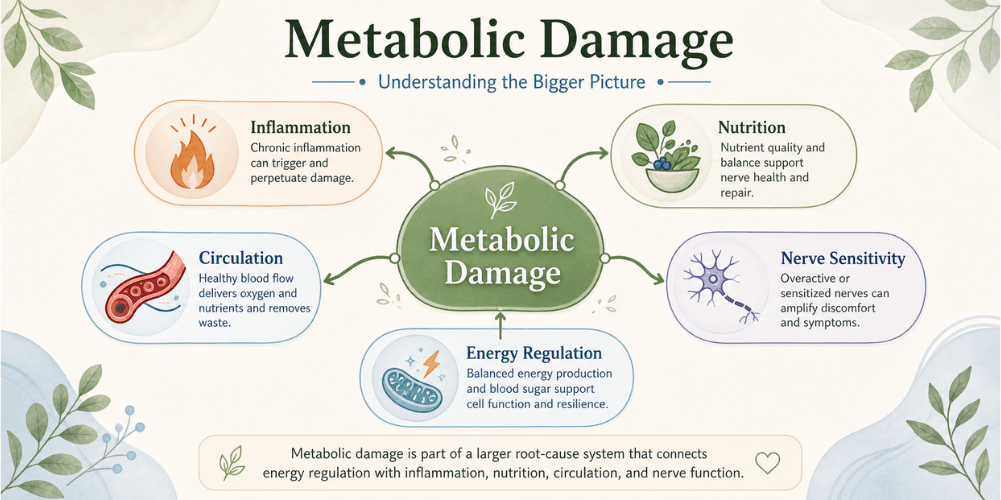
The Metabolic Damage System does not operate in isolation; it is interconnected with various other systems that affect nerve health, sensitivity, and recovery.
Nervous System
The nervous system relies on a steady supply of energy and stable signaling. However, increased metabolic stress can make nerve pathways more susceptible to issues such as sensitivity, fatigue, and altered signal processing.
Inflammatory System
Metabolic imbalances can have an impact on inflammation. For instance, unstable fuel patterns, cellular stress, and oxidative pressure may heighten inflammatory signaling. Consequently, metabolism and inflammation often mutually reinforce each other.
Nutritional System
Nutrition provides essential materials required for energy production, cellular repair, and regulation. Nevertheless, inconsistent or low-quality nutritional habits can hinder the maintenance of metabolic balance.
Circulatory System
The circulatory system is responsible for delivering oxygen and nutrients to tissues. When blood vessel function becomes impaired, nerves may receive less consistent support. Thus, circulation and metabolism are closely related.
Regeneration Systems
Recovery and regeneration require energy. If the body experiences metabolic stress, its capacity for repair processes may weaken. Therefore, maintaining metabolic health is crucial for long-term recovery and system management.
By understanding these connections, readers can appreciate that metabolism is not an isolated subject. Rather, it intertwines energy, inflammation, circulation, nutrition, and nerve function within a larger framework of understanding.
Patterns That Influence the Metabolic System
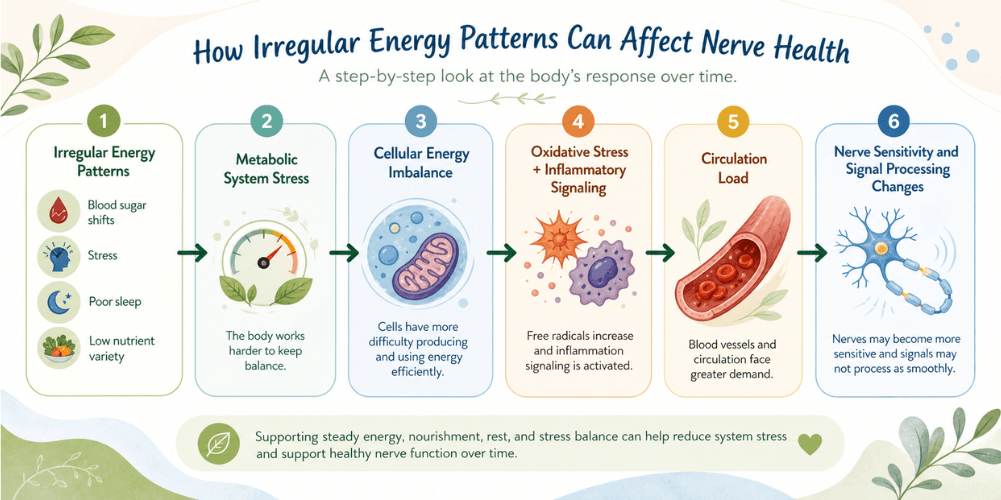
Understanding metabolic stress is often made easier by recognizing patterns. A pattern is something that repeats over time and gradually shapes the body’s responses.
Blood Sugar Patterns
Blood sugar patterns significantly affect the availability of fuel in the bloodstream. When blood sugar levels rise and fall sharply, the body needs to work harder to maintain balance. Over time, this imbalance may increase overall system stress. It’s important to note that a single meal doesn’t determine everything. Instead, repeated patterns play a more crucial role. The body reacts to its daily rhythms, including food timing, sleep, stress levels, movement, and overall energy demand.
Diet Patterns
Dietary patterns influence nutrient availability, energy stability, and cellular support. For example, a diet with irregular timing or a lack of nutrient variety may lead to inconsistent energy regulation. This section does not provide specific dietary instructions but rather highlights how nutrition patterns can affect metabolic behavior.
Stress Patterns
Stress impacts metabolism through hormones, sleep disruption, changes in appetite, and energy demands. When stress is prolonged, the body may remain in a heightened state of alertness, making metabolic regulation more challenging.
Sleep Patterns
Sleep plays a critical role in regulating energy balance, hormone rhythms, and nervous system recovery. Poor sleep can disrupt blood sugar rhythms, hunger signals, stress levels, and cellular recovery, making it an essential aspect of metabolic health.
Movement Patterns
Movement affects energy expenditure, circulation, muscle activity, and glucose management. Insufficient movement can reduce energy flexibility, while inconsistent overexertion may increase the stress load on the body. The focus here is on understanding how these patterns interact within the system, rather than giving advice.
Environmental and Lifestyle Factors
Environmental stressors, irregular routines, prolonged screen time, poor recovery practices, and chronic pressure can all contribute to metabolic load. Think of the body like a battery: if energy is consumed faster than it can be restored, the system may become unstable.
Connection to Nerve Function
The Metabolic Damage System connects to nerve function through energy supply, oxygen delivery, blood vessel support, cellular stress, and signal processing. Nerves need consistent resources to send and receive signals efficiently.
When metabolic balance becomes unstable, nerves may experience a less supportive environment. For example, long-term high blood sugar and high blood fats are recognized factors in diabetic neuropathy, where nerve damage can develop over time.
Blood vessel support is also important. Small blood vessels help supply nerves with oxygen and nutrients. When these vessels are stressed, nerve cells may receive less consistent support, which can affect nerve function over time.
Metabolic stress may also influence oxidative stress. Oxidative stress occurs when reactive molecules exceed the body’s ability to manage them. Research reviews connect oxidative stress and mitochondrial dysfunction with peripheral nerve stress, especially in diabetes-related contexts.
For visitors, the important idea is simple: nerves are energy-sensitive. They need stable fuel, oxygen, and cellular support. Therefore, metabolic imbalance can become part of a larger root-cause education model.
Visual System Flow
Use this visual model as an infographic section on the page:
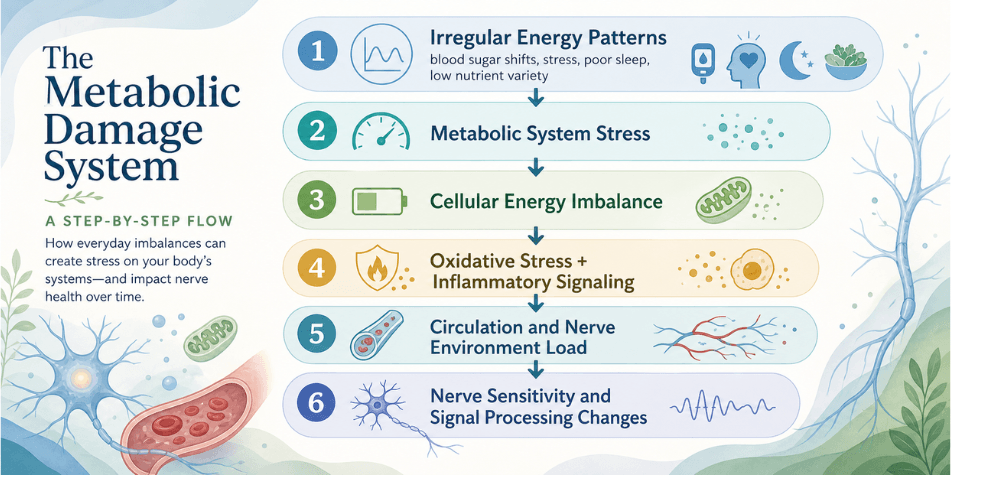
This diagram shows how repeated metabolic pressure may influence the internal environment around nerves. It does not show a direct disease pathway. Instead, it explains how energy imbalance may interact with inflammation, circulation, and nerve sensitivity over time.
A helpful analogy is a power supply. When the power supply is steady, the system can communicate more smoothly. However, when the power supply becomes unstable, signals may become less efficient or more reactive.
This visual model helps readers understand metabolism without fear. It shows metabolism as part of a larger body communication system.
Why This System Matters for Recovery
The Metabolic Damage System is crucial for recovery because repair, regulation, and nerve stability require energy. Recovery involves more than just addressing a single symptom or body part; it relies on how effectively the body manages fuel, oxygen, inflammation, sleep, stress, and cellular repair.
When metabolism is balanced, cells have better access to energy and support. Additionally, the body can handle stress more efficiently, maintaining a more stable internal environment.
However, if metabolic stress remains elevated, the body may become less adaptable. This can lead to increased inflammatory signaling, greater circulation load, and heightened nerve sensitivity. Consequently, recovery processes may feel less stable and more challenging to navigate.
This page does not recommend specific treatments, diets, supplements, or protocols. Instead, it highlights the importance of understanding metabolism within a root-cause education framework.
Gaining insight into this system also enhances website navigation, allowing visitors to explore topics such as metabolic damage, inflammation, nutrition, circulation, regeneration, and therapeutic systems for a more comprehensive understanding.
Common Misunderstandings
Misunderstanding 1: Metabolism is only about weight
Metabolism is not only about body weight. It also includes energy production, blood sugar regulation, cellular fuel use, hormone signaling, and tissue support.
Misunderstanding 2: Blood sugar only matters for diabetes
Blood sugar is especially important in diabetes, but energy stability matters for the entire body. Nerves, muscles, brain cells, and blood vessels all depend on steady fuel regulation.
Misunderstanding 3: Metabolic damage happens suddenly
Metabolic stress usually develops through repeated patterns over time. Diet rhythm, stress, sleep, movement, inflammation, and circulation may all contribute to the larger picture.
Misunderstanding 4: One food or one habit explains everything
The Metabolic Damage System is shaped by multiple interacting factors. Therefore, it is better to understand patterns than to blame a single trigger.
Misunderstanding 5: Metabolic imbalance always creates obvious symptoms
Some metabolic stress may be hard to notice at first. It may appear as low energy, sensitivity, slow recovery, or general system load rather than one clear sign.
Continue Learning
To understand how the Metabolic Damage System fits into the larger nerve health education model, continue with these related pages:
- Root-Cause Systems
- Inflammatory System
- Therapeutic Systems
- Regeneration Systems
- Conditions
- Neurobiology
- Nutritional Intelligence
- Recovery Engineering
Related Systems
The Metabolic Damage System connects closely with other system-level pages:
- Inflammatory System
- Nutritional Deficiency System
- Circulatory Impairment System
- Toxic Load System
- Mechanical Damage System
- Stress System
- Autoimmune Patterns
- Lifestyle Degeneration
These related systems help explain how nerve health is shaped by multiple overlapping processes. In addition, they allow visitors to continue exploring the root-cause layer step by step. As a result, readers can move from one system to another and build a clearer understanding of how metabolism, inflammation, nutrition, circulation, and stress work together.
Safety & Education Notice
This content is for educational purposes only. It does not provide medical advice, diagnosis, treatment, or personal health instructions.
Metabolic imbalance, nerve pain, neuropathy, blood sugar problems, and related symptoms can have many possible causes. Anyone experiencing new, severe, worsening, or persistent symptoms should consult a qualified healthcare professional.
Heal Your Nerves Naturally is an educational platform designed to help visitors understand nerve health concepts, body systems, and recovery-related learning topics in a calm and structured way.