
Lifestyle Healing: A Simple Nerve Health Guide
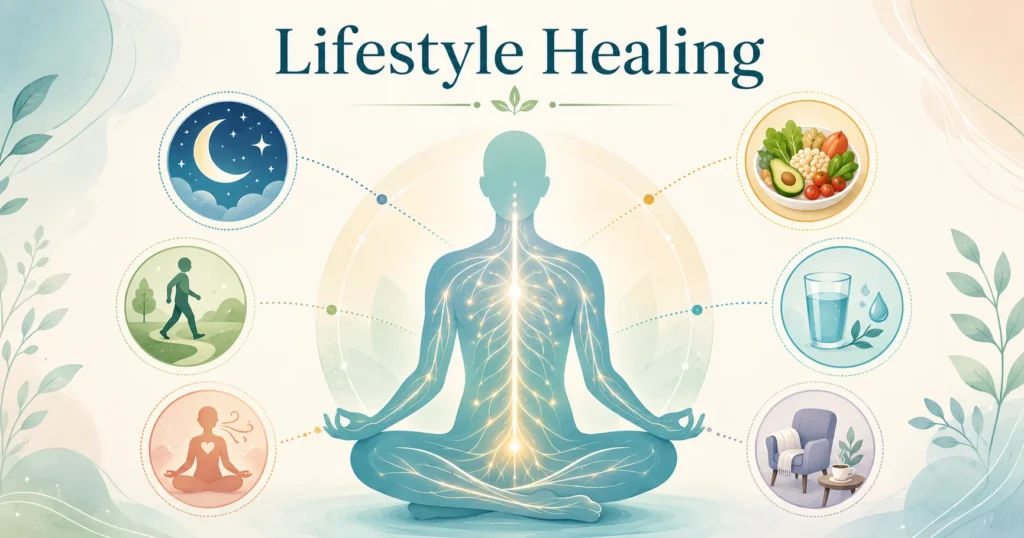
Lifestyle Healing means learning how daily life may affect the body, nervous system comfort, and recovery demand. It includes sleep, stress, food rhythm, hydration, movement, posture, rest, and the environment around a person. However, this page is not a treatment plan, and it should not be used to diagnose symptoms or replace medical care. Instead, it gives readers a safe way to notice how daily patterns may shape body load over time. For example, poor sleep may make the body feel tense, while long sitting may make the back, hips, legs, neck, or shoulders feel stiff. In addition, high stress may disturb breathing, energy, appetite, and sleep quality. Because of this, Lifestyle Healing can help readers understand daily rhythm in a calm and practical way. Still, nerve pain, tingling, numbness, burning, weakness, or fast symptom changes may have many causes. Therefore, this guide should support awareness, not fear, blame, self-treatment, or delayed professional care.
Quick Navigation
What Is Lifestyle Healing?
Lifestyle Healing is a simple way to understand how daily habits may affect the way the body feels. It includes sleep, meals, movement, hydration, stress, rest, work pace, screen use, and daily routine. In simple terms, the body often responds to repeated patterns, not only single events. For example, poor sleep may raise body stress, while high stress may disturb breathing, energy, and sleep quality. Also, long sitting may reduce movement and increase stiffness in some people. Because of this, Lifestyle Healing can support nerve-health education by helping readers notice how daily rhythm connects with body load. However, one habit does not explain every symptom. Nerve pain, tingling, numbness, burning, fatigue, weakness, or unusual discomfort may have many possible causes. Therefore, this page should be used as a learning guide only. It can help readers understand lifestyle-related patterns, but it should not replace medical advice, diagnosis, testing, or treatment.
Plain Meaning of Lifestyle Healing
Plainly, Lifestyle Healing means learning from daily rhythm without turning lifestyle into a cure claim. The phrase can sound powerful, so it needs careful explanation. Here, it does not mean that better habits cure nerve problems or remove the need for medical care. Instead, it means that daily patterns may influence body stress, energy demand, sleep quality, circulation, muscle tension, and nervous system sensitivity. For example, someone may notice that tingling, burning, numbness, discomfort, or sensitive nerves feel worse after poor sleep, long sitting, heavy stress, or irregular meals. However, that pattern does not prove the cause. In addition, symptoms may come from diabetes, nerve pressure, injury, infection, immune activity, medicine effects, nutrient issues, or other health conditions. Because of this, Lifestyle Healing should be understood as one education layer inside a bigger health picture. It helps readers observe patterns safely, while still respecting professional medical guidance.
How Lifestyle Healing Works
Lifestyle Healing works by showing how rhythm and body demand may interact during daily life. First, the body needs regular signals such as sleep timing, food rhythm, light exposure, movement, hydration, and rest. These signals can help the body feel more settled. Next, repeated pressure may disturb that rhythm. For example, poor sleep, long sitting, rushed meals, heavy screen use, worry, and low recovery time may increase body demand. As a result, the body may feel more alert, muscles may feel tighter, and energy may feel lower. Meanwhile, a tired or tense body may make normal daily tasks feel harder. Over time, this cycle may affect comfort and recovery demand in different ways. However, lifestyle is not the only reason symptoms happen. Therefore, this page does not claim that lifestyle explains every nerve problem. Instead, it teaches readers to notice daily patterns while seeking medical help when symptoms are severe, sudden, unusual, or worsening.
Key Layers of Lifestyle Healing
Lifestyle Healing has several connected layers, and these layers often work together rather than separately. Sleep may affect stress, stress may affect breathing, movement may affect circulation, and food rhythm may affect energy. In the same way, hydration, posture, environment, screen use, and recovery breaks may shape how much demand the body carries during the day. Because of this, the whole lifestyle pattern matters more than one perfect habit. A person may sleep better but still feel tense if stress is high. Another person may move more but still feel drained if meals, water, and rest are irregular. Therefore, this topic should be explained with balance and flexibility. It is not about strict routines, guilt, or unrealistic rules. Instead, it is about understanding the body’s daily setting. When readers can see how different layers connect, they may understand nerve-health education in a safer and more human way.
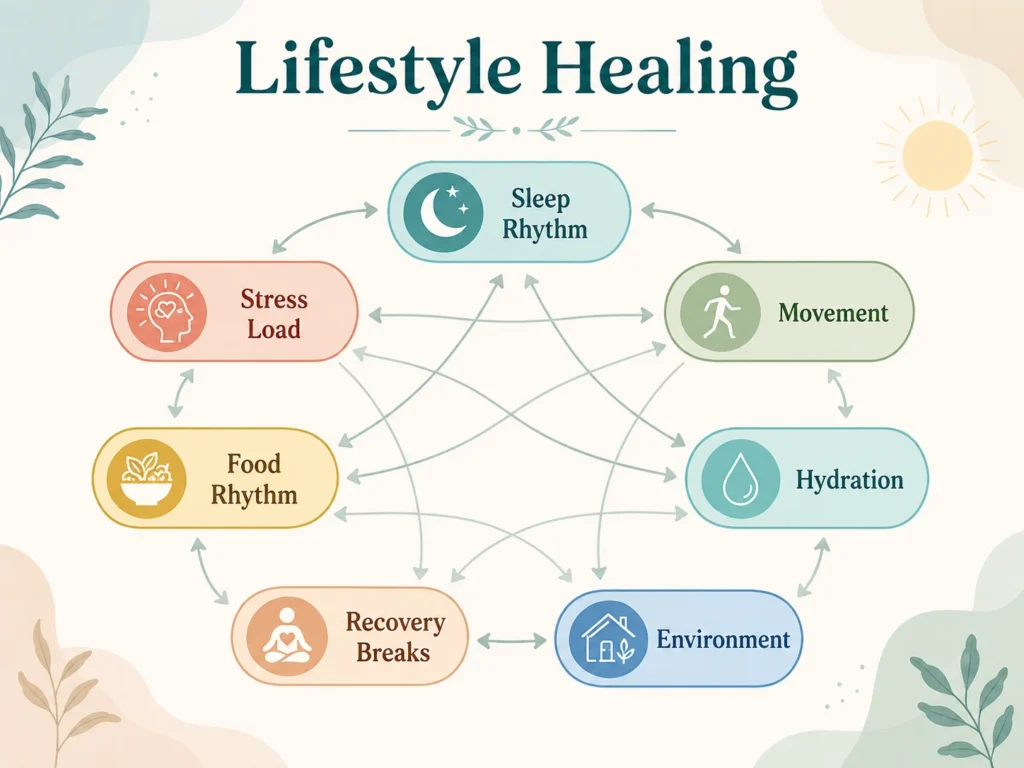
Sleep Rhythm Layer in Lifestyle Healing
Sleep is one of the main Lifestyle Healing layers because the body uses sleep time to rest, reset, and restore energy. During sleep, the brain and body move through important recovery patterns. However, poor sleep may raise body stress, reduce patience, change mood, and make discomfort feel harder to manage. As a result, some readers may notice more tension, fatigue, or sensitivity after restless nights. In addition, irregular sleep timing may disturb the body’s daily rhythm. Because of this, sleep rhythm matters in nerve-health education. Still, poor sleep does not prove the cause of nerve symptoms. It is only one possible layer that may increase body demand. Therefore, this section should guide awareness without making treatment claims. If sleep problems are severe, long-lasting, or connected with breathing problems, strong pain, anxiety, medication changes, or other symptoms, readers should seek professional guidance.
Stress Load Layer in Lifestyle Healing
Stress is a normal body response, and small amounts of stress may help a person focus, act, or solve problems. However, when stress stays high for too long, the body may remain in a more alert state. As a result, breathing may become shallow, muscles may tighten, sleep may become lighter, and energy may feel less stable. Also, worry, deadlines, emotional pressure, financial concerns, and constant screen use may add to the same stress load. Because of this, Lifestyle Healing includes stress education as a major layer. Still, stress should not be blamed for every symptom. Nerve-related signs can have many causes, and some need medical testing or urgent care. Therefore, the goal is not to tell readers that stress is the only reason they feel discomfort. Instead, the goal is to help them understand how stress load may combine with sleep, movement, posture, and recovery demand.
Movement Layer in Lifestyle Healing
Movement helps the body use energy, change posture, support circulation, and reduce the strain that may build from long sitting. However, movement should fit the person, the condition, and the level of symptoms. For some people, gentle walking, light stretching, or short sitting breaks may feel helpful. For others, severe pain, weakness, dizziness, injury, or heart-related symptoms may require medical guidance before changing activity. Because of this, Lifestyle Healing should not promote hard exercise as a universal answer. Instead, movement is best explained as a flexible daily signal. Small movement breaks may help some readers notice stiffness, posture strain, or low energy patterns. At the same time, movement should not be used to push through serious symptoms. Therefore, this layer should stay safe, practical, and non-judgmental. The message is simple: movement can be part of daily rhythm, but it must be appropriate for the individual.
Food Rhythm Layer in Lifestyle Healing
Food rhythm can affect daily energy, hunger, mood, digestion, and steadiness. Because nerves work inside the whole body, energy patterns may matter in nerve-health education. However, food should not be presented as a cure for nerve symptoms. Nutrition is only one layer among sleep, stress, movement, hydration, circulation, and recovery. For example, irregular meals may leave some people feeling tired, shaky, unfocused, or less steady during the day. Still, that does not mean food is the only cause of discomfort. In addition, people may have different medical needs, cultural food patterns, budgets, and health conditions. Therefore, strict diet rules are not the goal of this page. Instead, the goal is simple learning. A safer message is that regular, balanced food patterns may support general body rhythm, while medical nutrition concerns should be discussed with a qualified professional.
Hydration Layer in Lifestyle Healing
Hydration is another Lifestyle Healing layer because water supports many body functions, including digestion, circulation, temperature balance, and fluid movement. Also, hydration may influence how steady the body feels during daily activity. However, water needs are not the same for everyone. Some people may need more fluids because of heat, sweating, activity, or diet, while others may need medical guidance because of kidney, heart, blood pressure, or medication-related concerns. Because of this, the page should not give strict water rules. Instead, hydration should be explained as one part of daily rhythm. For example, a person may notice that low fluid intake, skipped meals, and long work hours combine with fatigue or tension. Still, hydration does not diagnose or treat nerve symptoms. Therefore, this section should stay general, safe, and flexible. It should encourage awareness without telling readers to force fluid intake or ignore medical advice.
Recovery Break Layer in Lifestyle Healing
Recovery breaks help the body shift from constant demand toward a calmer rhythm. These breaks may include quiet time, slow breathing, light walking, gentle stretching, posture changes, screen breaks, or simply stepping away from pressure for a short time. However, recovery does not always mean doing nothing. Sometimes, it means lowering demand in a way that fits the person. For example, a short walk may feel better than sitting under stress, while another person may need quiet rest after a tiring day. Because of this, recovery breaks should be presented as flexible tools for awareness, not strict rules. In addition, people with severe symptoms, dizziness, weakness, chest pain, breathing trouble, or sudden changes should not rely on breaks instead of medical care. Therefore, this layer should help readers understand daily load while keeping safety clear. The main goal is to support rhythm, not promise recovery.
Environment Layer in Lifestyle Healing
The body responds to its surroundings throughout the day. Light, noise, screens, posture, temperature, air quality, work pace, and social stress may all affect body load. For example, bright screens at night may disturb sleep timing, while long work hours may increase fatigue and tension. Also, a noisy or rushed environment may keep the body more alert. Because of this, environment is part of Lifestyle Healing. It can shape how easy or difficult it feels for the body to rest, move, focus, and recover. However, environmental changes should not be treated as medical treatment. They are only one practical awareness layer. In addition, some readers may not have full control over their work, home, or caregiving environment. Therefore, this section should avoid blame. A safer approach is to help readers notice what can be adjusted gently, such as screen timing, sitting breaks, light exposure, or evening calm.
Lifestyle Healing and Body Systems
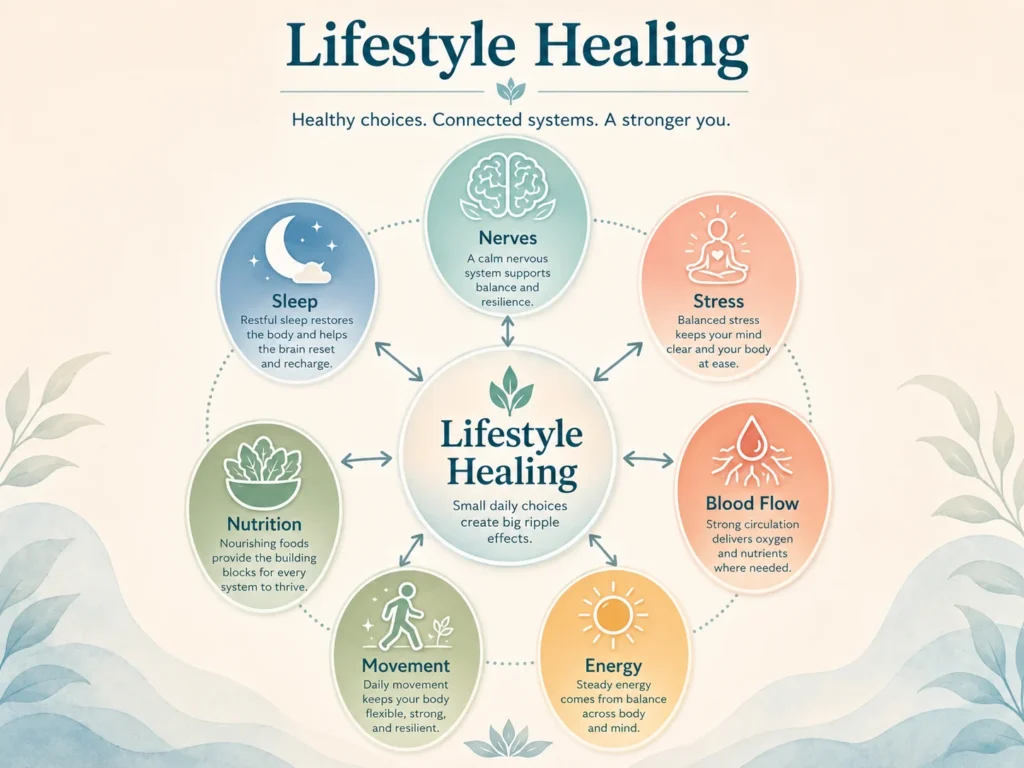
Daily habits connect with many body systems, so Lifestyle Healing should not be seen as one simple habit or one quick solution. Sleep, stress response, blood flow, immune signals, energy production, digestion, breathing, posture, and nerve signaling may all interact. At the same time, no single system explains every symptom. Instead, a safer view looks at body demand and daily rhythm together. For example, poor sleep may raise stress load, stress may tighten muscles, muscle tension may affect comfort, and discomfort may make sleep harder again. Because of this, the body may work in cycles rather than straight lines. However, these connections are educational, not diagnostic. They help readers understand why lifestyle can matter without claiming that lifestyle is the only answer. Therefore, this section should guide readers toward a whole-body view while keeping medical safety clear.
Lifestyle Healing and the Nervous System
The nervous system responds to many daily signals, including sleep, stress, movement, food rhythm, hydration, posture, and surroundings. These signals may affect how alert, calm, tired, tense, or sensitive the body feels. At the same time, the nervous system may also affect habits. For example, stress may disturb sleep, then poor sleep may lower energy, and low energy may reduce movement. Because of this, lifestyle and the nervous system can influence each other in both directions. However, this does not mean lifestyle alone causes nerve symptoms. Nerve pain, tingling, numbness, burning, weakness, or fast changes may need professional evaluation. Therefore, Lifestyle Healing should be used to understand patterns, not to replace medical care. A safe message is that daily rhythm may shape the setting in which nerves function, while diagnosis and treatment decisions belong with qualified healthcare professionals.
Lifestyle Healing and the Stress System
The stress system helps the body respond to demand, pressure, and change. In short bursts, this response can be useful. However, when the body stays under high demand for long periods, stress may keep muscles tense, breathing shallow, sleep light, and energy unstable. For example, worry, deadlines, poor sleep, long sitting, and constant screen use may build together. As a result, the body may need more recovery time. Because of this, Lifestyle Healing connects strongly with stress education. Still, stress should not become a blame label for every symptom. Some nerve-related symptoms may come from medical conditions that need care. Therefore, this section should explain stress load carefully. It can show how stress may add to body demand, but it should not suggest that stress management replaces diagnosis, treatment, or urgent help when symptoms are serious.
Lifestyle Healing and Circulation
Circulation brings oxygen and nutrients to tissues and helps remove waste products. Movement, posture, hydration, breathing, and general activity may all connect with circulation in everyday life. Because nerves depend on the wider body environment, circulation can be part of nerve-health education. For example, long sitting may reduce movement, while gentle activity may help some people feel less stiff. However, circulation-related symptoms must be handled carefully. Sudden weakness, chest pain, trouble breathing, severe numbness, severe pain, cold or discolored limbs, or fast symptom changes should not be treated as lifestyle issues. Instead, these signs may need urgent medical care. Therefore, this section should connect lifestyle and circulation in a safe way. The page can explain that daily rhythm may influence comfort and body demand, while also making it clear that serious symptoms should never be ignored.
Lifestyle Healing and Energy
Energy affects how steady, comfortable, and resilient the body feels during the day. Sleep, meals, hydration, movement, stress, rest, and recovery breaks can all affect energy demand. When daily rhythm is steadier, some people may feel more stable and less drained. However, irregular habits may make the body work harder. For example, poor sleep may reduce energy, skipped meals may affect steadiness, and stress may use more body resources. Because of this, Lifestyle Healing connects with recovery demand. Still, low energy can have many causes, including medical conditions, medication effects, nutrient problems, infections, sleep disorders, mood conditions, or other health issues. Therefore, this page should not explain fatigue through lifestyle alone. Instead, the safe message is that daily habits may influence energy patterns, but persistent, severe, unusual, or worsening fatigue should be discussed with a healthcare professional.
Lifestyle Healing and Inflammation
Inflammation is part of the body’s defense system, so it is not always bad. However, poor sleep, high stress, low movement, irregular meals, and ongoing energy strain may add to body load in some situations. This does not mean lifestyle causes inflammation in every person, and it does not mean lifestyle changes can treat inflammatory disease. Instead, daily patterns may influence the wider body environment in different ways. Because of this, Lifestyle Healing can connect with inflammation education, but the language must stay safe. Readers should not assume that nerve symptoms are caused by inflammation or that lifestyle changes can control medical inflammation. Therefore, this section should teach the concept without making medical promises. A balanced view is best: inflammation is complex, daily load may matter, and personal medical concerns should be reviewed with a qualified healthcare professional.
Daily Patterns and Nerve Function
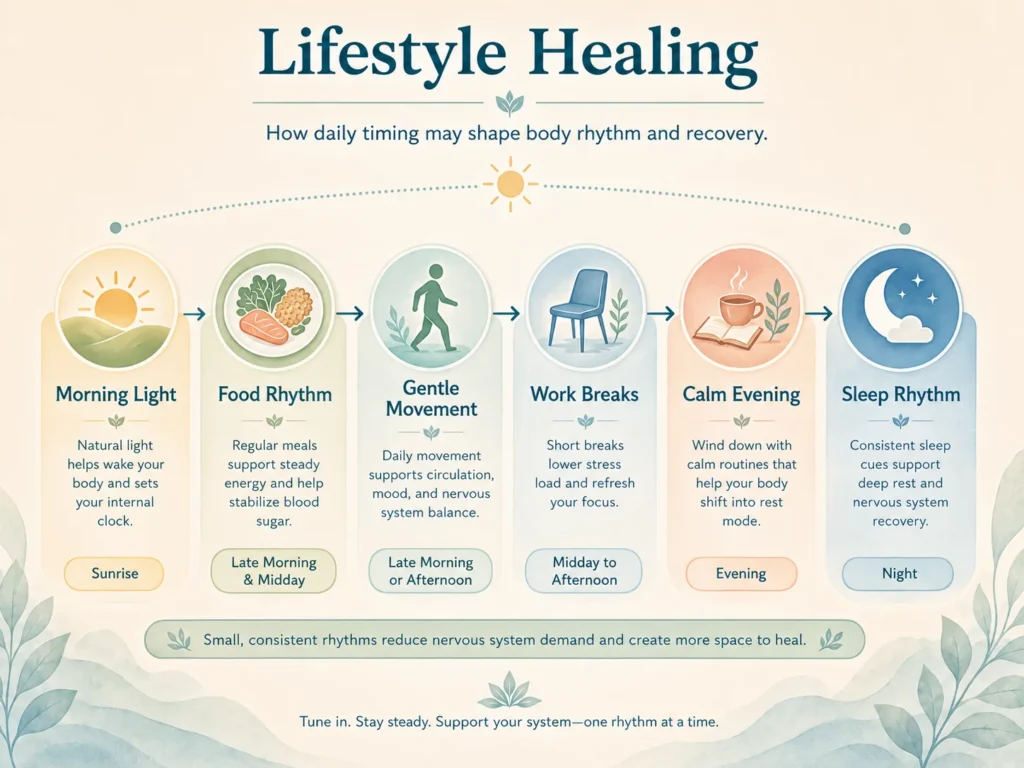
Daily habits do not diagnose nerve problems, but they may shape body stress, comfort, and recovery demand. Sleep timing is one pattern. For example, changing bedtime often may disturb rhythm and make mornings feel harder. Movement timing is another pattern. In contrast, light movement breaks may help the body shift demand after long sitting. Food rhythm may also matter because irregular meals may affect daily energy. However, no diet should be promised as a cure. Stress recovery is important too, because a busy day with no break may keep the body alert. In addition, evening routine can affect sleep, especially when late work or heavy screen use continues close to bedtime. Because of this, Lifestyle Healing is mainly about patterns, not perfection. Still, one habit rarely explains everything. Therefore, this section should help readers observe their daily rhythm while avoiding self-diagnosis or blame.
Poor Sleep Pattern
Poor sleep may make the body feel more sensitive, tired, tense, or less steady during the day. Also, stress may feel harder to manage after a restless night. In addition, poor sleep may affect mood, focus, appetite, and movement choices. Because of this, sleep pattern is a useful Lifestyle Healing topic. However, sleep problems can have many causes. Pain, stress, breathing problems, medication effects, caffeine, screen habits, work schedules, anxiety, illness, and other issues may all play a role. Therefore, readers should not assume poor sleep is only a lifestyle weakness. Instead, they can use this section to notice patterns and seek help when needed. A safe message is that sleep rhythm may affect body load, while severe or ongoing sleep problems should be discussed with a professional.
Long Sitting Pattern
Long sitting may reduce movement, increase stiffness, and place repeated demand on the back, hips, legs, neck, shoulders, or wrists. Also, sitting for long periods may make posture less varied, which can affect comfort for some people. Because of this, sitting patterns are useful to observe. For example, a person may notice more stiffness after long computer work or long travel. However, sitting alone does not explain every symptom. Numbness, weakness, sharp pain, fast changes, or severe discomfort may need medical review. Therefore, this section should not blame sitting for all nerve-related problems. Instead, it can encourage safe awareness. Small posture changes, gentle walking breaks, and better work pacing may support daily rhythm for some readers, but they should not replace care when symptoms are serious.
High Stress Pattern
Stress can change breathing, sleep, appetite, muscle tone, attention, and energy. Over time, these changes may raise body demand and make daily discomfort feel harder to manage. Therefore, stress is not only mental; it can affect the whole body. For example, a reader may notice tight shoulders, shallow breathing, poor sleep, or lower energy during stressful weeks. However, stress should not be used as a simple explanation for every symptom. Nerve symptoms may involve medical causes that need testing, diagnosis, or treatment. Because of this, Lifestyle Healing should explain stress as one layer, not the whole answer. A safer approach is to help readers notice stress patterns, recovery gaps, and body signals while still encouraging medical guidance for severe, sudden, unusual, or worsening symptoms.
Irregular Meal Pattern
Irregular meals may affect daily energy, focus, hunger, mood, and digestion. For example, some people may feel tired, shaky, unfocused, or less steady when meals are skipped or delayed. Because of this, food rhythm belongs inside Lifestyle Healing. However, this page should not promote strict rules, fear-based eating, or cure claims. Food needs can vary widely depending on health conditions, culture, budget, appetite, medication, and personal goals. Therefore, the goal is not perfection. Instead, the goal is education and awareness. Readers can learn that food rhythm may influence body load, while medical nutrition needs should be discussed with a qualified professional. This is especially important for people with diabetes, kidney disease, digestive disorders, eating concerns, or medication-related food requirements.
Low Recovery Space Pattern
A full day with no recovery space may keep the body busy, tense, and less settled. Work, screens, worry, sitting, poor sleep, noise, and emotional pressure may combine into one larger daily load. As a result, the body may feel less calm and more sensitive. Because of this, recovery space matters in Lifestyle Healing. However, recovery does not need to be complicated. It may include short pauses, quiet breathing, light movement, stretching, posture changes, sunlight, hydration, or screen breaks. Still, these ideas are not medical treatment. They are simple ways to understand demand and rhythm. Therefore, readers should not rely on recovery breaks if symptoms are severe, sudden, unusual, or worsening. In those situations, professional guidance is important.
Lifestyle Healing and Real-Life Symptoms
Some readers may notice nerve pain, tingling, numbness, burning, discomfort, fatigue, body tension, or sensitive nerves. However, these symptoms can have many causes, so they should not be explained by lifestyle alone. For example, symptoms may relate to diabetes, nerve compression, injury, immune activity, infection, low nutrients, medication effects, circulation problems, spine issues, or other health conditions. Because of this, Lifestyle Healing is only one education layer. It may help readers think about daily load, sleep rhythm, stress, posture, movement, food rhythm, hydration, and recovery demand. Still, it should not be used for self-diagnosis. In addition, readers should not stop medicine, start supplements, follow extreme routines, or delay medical care based on lifestyle information. Therefore, this section should stay very clear: daily patterns may matter, but symptoms deserve proper attention when they are severe, sudden, unusual, persistent, or getting worse.
Lifestyle Healing and Nerve Function
Nerves work inside the whole body, and they depend on oxygen, nutrients, energy, blood flow, steady signals, and a supportive body environment. Therefore, daily habits may matter in nerve-health education. Lifestyle Healing may connect with sensitivity, tingling, burning, numbness, fatigue, stiffness, and body-wide discomfort through layers such as sleep, stress, movement, hydration, food rhythm, and recovery space. However, these signs can have many causes. For this reason, readers should not assume lifestyle is the only answer. In simple terms, daily patterns may shape the setting in which nerves function, but they do not replace medical care. Because of this, the safest message is balanced: lifestyle awareness may help readers understand their body better, while professional guidance is needed for diagnosis, treatment decisions, severe symptoms, or fast changes. This keeps the page helpful without creating false hope or unnecessary fear.
Lifestyle Healing Visual Flow
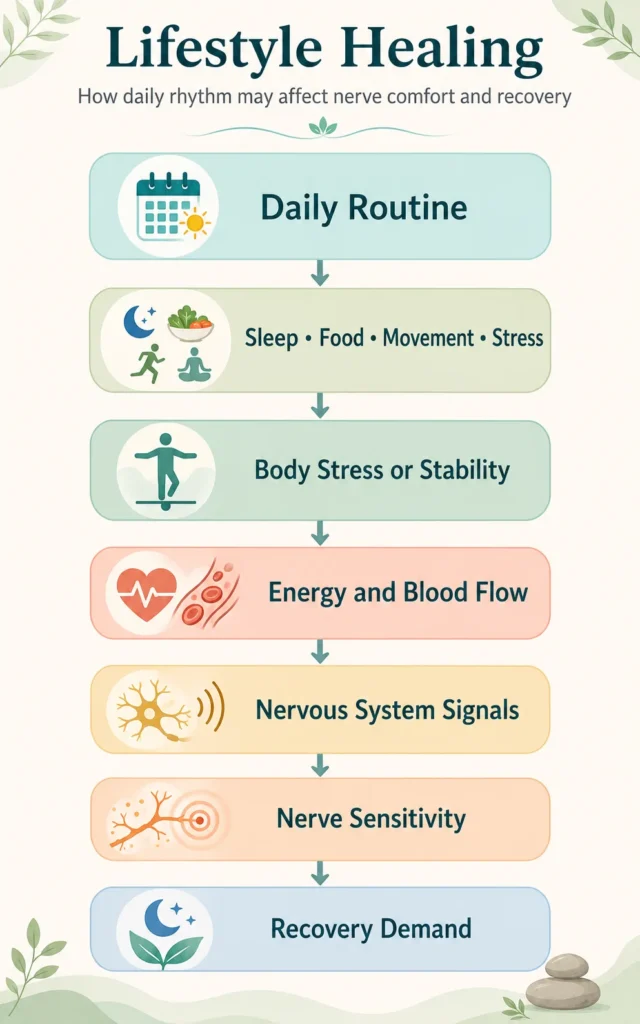
Daily Routine
↓
Sleep, Food, Movement, Stress, Hydration, and Environment
↓
Body Stress or Body Stability
↓
Energy, Blood Flow, Muscle Tone, and Nerve Signals
↓
Nerve Sensitivity and Recovery Demand
↓
Lifestyle Learning and Safer Daily Rhythm
This visual flow is not always straight. Instead, it may work like a cycle where one pattern affects another. For example, stress may disturb sleep, then poor sleep may lower energy, and low energy may reduce movement. After that, reduced movement may increase stiffness, while stiffness may make daily tasks feel harder. As a result, the body may feel more sensitive or less settled. However, each person has a different pattern, and this flow should not be used to diagnose symptoms. Therefore, the visual should be understood as a learning map only. It can help readers see how daily rhythm, body load, and recovery demand may connect. Still, symptoms such as sudden weakness, severe numbness, chest pain, trouble breathing, bladder or bowel changes, or fast nerve changes require urgent medical attention.
Image Placement: Add infographic after this section.
Image Prompt: Create a clean vertical flow infographic titled “Lifestyle Healing Visual Flow.” Use rounded boxes and soft arrows: Daily Routine → Sleep, Food, Movement, Stress, Hydration, and Environment → Body Stress or Body Stability → Energy, Blood Flow, Muscle Tone, and Nerve Signals → Nerve Sensitivity and Recovery Demand → Lifestyle Learning and Safer Daily Rhythm. Use calm colors, simple icons, and a modern educational wellness style. Avoid cure claims, disease imagery, pain visuals, and complex anatomy.
Why Lifestyle Healing Matters for Recovery
Recovery often needs more than one habit because the body works through rhythm, energy, blood flow, rest, immune signals, and nervous system stability. However, this does not mean lifestyle guarantees recovery or cures nerve problems. Instead, daily patterns may affect recovery demand in different ways. For example, poor sleep may make the body work harder, while long sitting may increase stiffness. In addition, high stress may keep muscles tense, and irregular meals may affect energy steadiness. Because of this, Lifestyle Healing can help readers understand why small daily patterns may matter over time. Still, the goal is not fear or perfection. The goal is awareness. When readers understand patterns, they may be better prepared to ask useful questions, notice warning signs, and seek professional care when needed. Therefore, this section should support calm education, not medical promises.
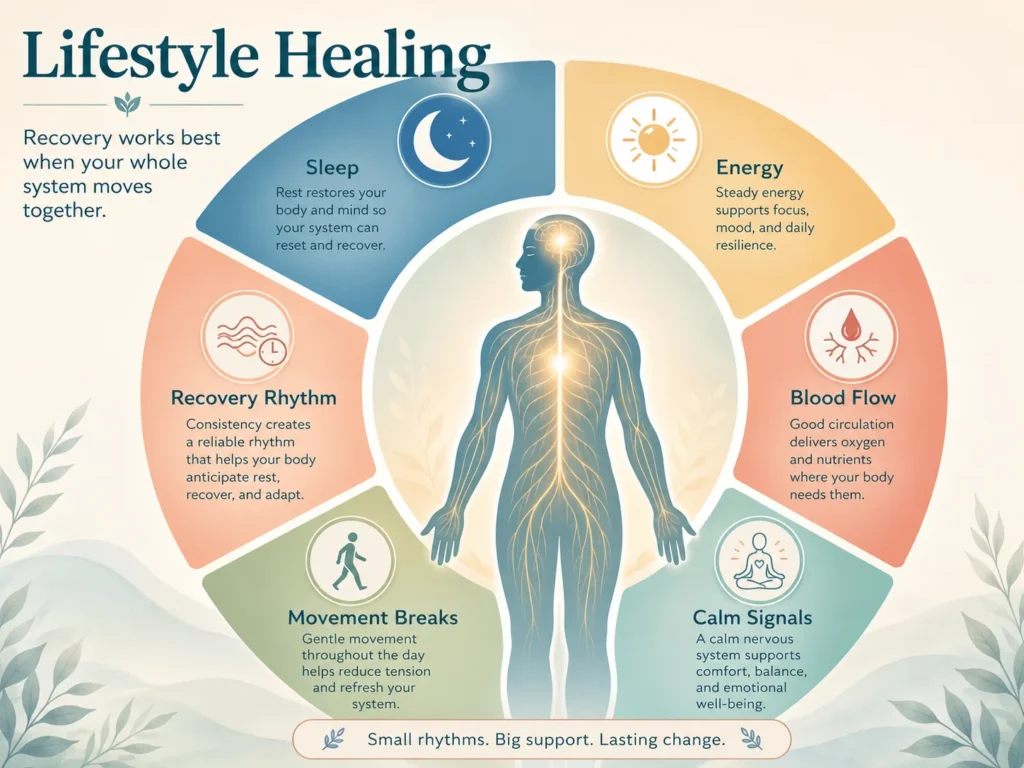
System Coordination
Recovery depends on coordination between many body systems. Sleep, stress response, blood flow, immune signals, energy, movement, posture, hydration, and nerve signals may all play a part. Because of this, recovery can feel complex, especially when several daily pressures build at the same time. For example, a person may sleep poorly, sit for long hours, skip meals, and feel stressed during the same week. As a result, body demand may feel higher. However, one habit rarely controls everything. Therefore, Lifestyle Healing should not tell readers to fix only one behavior. Instead, it should help them understand how systems may interact. This is more realistic and more UX friendly because it matches real life. It also avoids blame and keeps the page educational.
Energy Demand
Cells need energy to work, and the body also needs energy for repair, movement, thinking, digestion, and recovery. When sleep is poor, stress is high, or meals are irregular, the body may feel less steady. As a result, recovery may feel slower or daily tasks may feel heavier. However, this does not mean recovery is impossible, and it does not mean lifestyle is the only factor. Low energy can have many causes, including medical conditions, medication effects, nutrient issues, sleep disorders, infections, or emotional strain. Therefore, this section should explain energy demand carefully. Lifestyle Healing may help readers notice daily energy patterns, but persistent or severe fatigue should not be ignored. A safe message is that energy rhythm matters, while medical concerns deserve professional attention.
Blood Flow
Blood flow carries oxygen and nutrients to tissues and helps remove waste. Movement, posture, hydration, and breathing may connect with this process in daily life. Therefore, circulation is part of Lifestyle Healing because it links daily activity with comfort and recovery demand. For example, gentle movement breaks may help some readers feel less stiff after long sitting. However, circulation symptoms must be treated seriously. Sudden weakness, chest pain, trouble breathing, severe numbness, severe pain, or fast changes should not be managed through lifestyle tips. Instead, these symptoms may need urgent care. Because of this, the page should explain blood flow in a balanced way. It can show how daily rhythm may support general body function while clearly warning readers not to delay professional help when symptoms are severe or sudden.
Nervous System Stability
A sensitive nervous system may react strongly to stress, poor sleep, pain, fatigue, or environmental demand. For example, a loud setting, a stressful day, or a restless night may feel heavier when the body is already tired. Because of this, a calmer rhythm may reduce body demand for some people. However, this is not a cure claim. Nervous system stability can be influenced by many factors, including medical conditions, injury, inflammation, blood sugar patterns, medication, sleep disorders, and emotional stress. Therefore, Lifestyle Healing should not suggest that calm routines solve every nerve problem. Instead, it should explain that daily rhythm may be one supportive education layer. This keeps the message safe, helpful, and realistic for readers.
Repeated Daily Load
Daily load may build over time when stress, poor sleep, long sitting, rushed meals, low hydration, and limited recovery breaks happen repeatedly. However, the goal is not fear. Instead, the goal is awareness. When readers understand repeated load, they may see why small patterns can feel important. For example, one late night may not matter much, but many late nights may increase fatigue. In the same way, one long sitting period may not explain symptoms, but repeated sitting with low movement may add stiffness for some people. Because of this, Lifestyle Healing is most useful when it looks at patterns over time. Still, symptoms should not be blamed on lifestyle without proper evaluation. Therefore, this section should guide reflection while protecting readers from self-diagnosis.
Helpful Lifestyle Awareness vs Unsafe Lifestyle Claims
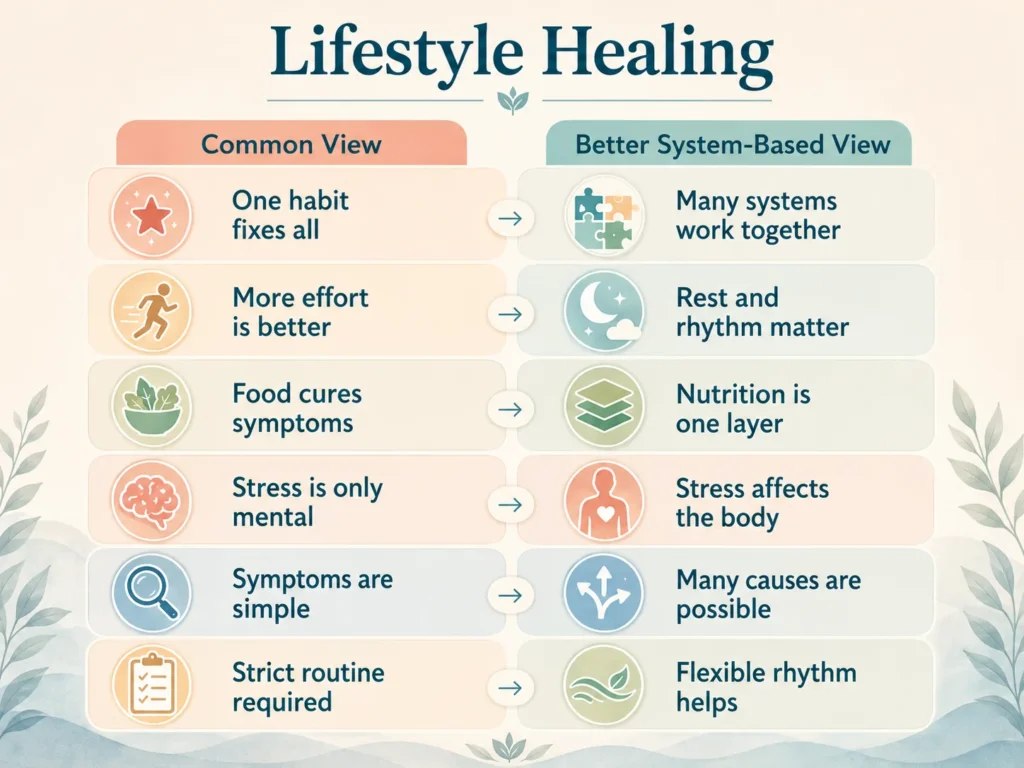
| Helpful Lifestyle Awareness | Unsafe Lifestyle Claims |
|---|---|
| Daily habits may affect body load. | Lifestyle changes cure nerve problems. |
| Sleep, stress, movement, and food rhythm may matter. | One habit explains every symptom. |
| Gentle pattern tracking can support education. | Symptoms can be self-diagnosed at home. |
| Medical care is still important. | Better routines replace professional advice. |
| Recovery needs a whole-body view. | Strict routines guarantee recovery. |
This comparison helps readers understand the page’s purpose more clearly. Lifestyle Healing is not meant to create fear, guilt, or false hope. Instead, it gives a safer way to learn how daily patterns may interact with the body. Helpful awareness uses careful language such as “may affect,” “can connect,” and “may shape body demand.” Unsafe claims use absolute language such as “cure,” “guarantee,” “always,” or “replace medical care.” Because nerve-related symptoms can be complex, this distinction is important for trust and user experience. Readers should feel supported, not blamed. Therefore, the page should continue using calm, educational, and non-diagnostic wording. This also helps the content stay aligned with a health education website.
Common Misunderstandings About Lifestyle Healing
Lifestyle Healing can be useful when it is explained safely, but it can also be misunderstood. Therefore, this section should correct common mistakes without sounding harsh or repetitive. One misunderstanding is that Lifestyle Healing is a treatment plan. It is not. It is an education topic that helps readers understand daily patterns and body load. Another misunderstanding is that better habits can replace medical care. Daily habits may matter, but they do not replace diagnosis, treatment, or professional advice. A third misunderstanding is that lifestyle means strict routines. In reality, this topic is about rhythm, flexibility, and recovery capacity, not perfection. Also, nerve symptoms do not always come from lifestyle. They may involve injury, diabetes, nerve pressure, infection, low nutrients, medicine effects, immune activity, or other causes. Because of this, lifestyle should not be blamed for every symptom. Finally, rest does not always mean doing nothing. Sometimes, rest means lowering demand in a safe and realistic way.
Lifestyle Healing FAQ
Is Lifestyle Healing a medical treatment?
No. Lifestyle Healing is for education only. It helps explain how sleep, stress, movement, hydration, food rhythm, posture, environment, and recovery breaks may shape daily body load. However, it is not a treatment plan, and it does not diagnose, treat, cure, or prevent disease. Therefore, readers should use this page as a learning guide, not as medical advice. Personal symptoms should be discussed with a qualified healthcare professional.
Can daily habits affect nerve sensitivity?
Daily habits may affect sleep, stress, blood flow, energy, muscle tension, and body load. Because nerves work inside the whole body, these patterns may matter in nerve-health education. Still, this does not prove one cause. Nerve sensitivity can have many medical and non-medical contributors. Therefore, readers should not assume that lifestyle alone explains tingling, burning, numbness, weakness, or pain.
Does lifestyle cause nerve symptoms?
No. Lifestyle should not be presented as the cause of nerve symptoms. Nerve symptoms can have many possible causes, including diabetes, nerve compression, injury, infection, immune activity, low nutrients, medication effects, circulation problems, and other health issues. Therefore, Lifestyle Healing is only one possible education layer. It may help readers notice daily patterns, but it should not be used for self-diagnosis.
Can sleep help the nervous system?
Sleep helps the body restore energy and supports brain and body function. Because of this, sleep rhythm matters in nerve-health education. However, sleep is not a cure claim, and poor sleep does not explain every symptom. If sleep problems are severe, ongoing, or connected with breathing trouble, strong pain, anxiety, or medication effects, readers should seek professional guidance.
Is movement always safe?
Not always. Movement should fit the person, their symptoms, and their medical situation. Gentle walking, stretching, or sitting breaks may help some people, but severe pain, weakness, dizziness, chest pain, breathing trouble, injury symptoms, or fast nerve changes need professional guidance. Therefore, this page should not tell readers to push through symptoms.
When should someone seek urgent care?
Seek urgent medical care for severe, sudden, unusual, or worsening symptoms. These may include sudden weakness, bladder or bowel loss, chest pain, trouble breathing, severe numbness, severe pain, fast nerve changes, fainting, confusion, or symptoms after injury. Because these signs may be serious, readers should not wait, self-diagnose, or rely on lifestyle changes.
Continue Learning
Readers can continue learning through related education paths on the website. Root-Cause Systems can help them understand how body-wide patterns may affect nerve sensitivity and recovery demand. Therapeutic Systems can show how sleep, stress, movement, circulation, and daily rhythm may shape body load. Regeneration Systems can explain how recovery depends on repair, blood flow, energy, inflammation resolution, and stability. Conditions pages can help readers learn about specific nerve-related topics in a safe and non-diagnostic way. Finally, the Learning Path can guide readers step by step through basic nerve-health education. Because Lifestyle Healing connects with many topics, this section should help readers move naturally to the next useful page. However, each link should stay educational. The goal is to guide learning, not to push fear, promise recovery, or suggest self-treatment.
Related Systems
Lifestyle Healing connects with several related systems. Stress System explains how stress may affect sleep, energy, tension, breathing, and nerve sensitivity. Sleep & Recovery explains how sleep rhythm may affect restoration and recovery demand. Circadian Rhythm explains how daily timing, light, meals, and rest may affect body rhythm. Daily Patterns and Nervous System Stability can explain how repeated habits may shape body load. Movement, Posture, and Nerve Regulation can show how sitting, posture, and activity may affect daily comfort. Nerve Food Repair can connect food quality with energy and repair demand. Circulation & Oxygenation can explain how oxygen and blood flow may support recovery capacity. Inflammation Control can explain the wider view of inflammatory load. Recovery Cycles can show how recovery depends on timing, rest, rhythm, and system coordination. Together, these related systems help readers understand Lifestyle Healing as one part of a larger education map.
Related Condition Connections
Lifestyle Healing does not diagnose any condition, and it should not explain nerve symptoms by itself. However, it may help readers understand one lifestyle-related layer that can connect with body stress, nerve sensitivity, energy demand, and recovery load. Peripheral Neuropathy is a condition-focused education page that may help readers understand nerve symptoms in a wider way. Diabetic Neuropathy is a medical condition topic, so readers should use it for education only and follow professional guidance. Nerve Compression may involve pressure on nerves, but lifestyle education should not replace diagnosis or treatment. Sciatic Nerve Pain may involve several factors, so readers should avoid self-diagnosis. Post-Injury Nerve Damage needs careful education because injury-related symptoms should be discussed with a healthcare professional. Therefore, condition links should guide learning while keeping safety language clear.
Sources / References
MedlinePlus — Healthy Sleep
MedlinePlus — Healthy Living
CDC — Physical Activity Basics
NIDDK — Healthy Eating and Physical Activity for Life
Mayo Clinic — Stress Management Basics
NINDS — Peripheral Neuropathy
Educational Trust Note
This page is part of the Heal Your Nerves Naturally education system. It helps readers understand daily patterns, body stress, recovery demand, and nerve sensitivity in a safe and non-diagnostic way. However, it does not diagnose, treat, cure, or prevent disease. Also, it does not replace medical advice, diagnosis, or treatment. Because nerve-related symptoms can have many causes, readers should use this page for general education only. For more context, readers can review the About page, Health Disclaimer, and Contact page. In addition, they should speak with a qualified healthcare professional about personal medical concerns, severe symptoms, sudden changes, medication questions, supplement use, or condition-specific care.
Author / Editorial Note
This article was prepared for general nerve-health education. It uses safe, non-diagnostic, and non-treatment language so readers can understand Lifestyle Healing without fear, blame, or false promises. However, this page does not claim doctor review unless a qualified medical reviewer is clearly listed. The content is designed to explain daily rhythm, body load, stress, sleep, movement, food rhythm, hydration, and recovery demand in a simple way. Still, personal symptoms can be complex and may need professional evaluation. Therefore, readers should use this article as education only. They should not use it to diagnose symptoms, replace medical care, stop medicine, begin supplements, follow strict routines, or delay professional support.
Safety & Education Notice
This page is for educational purposes only. It does not diagnose, treat, cure, or prevent disease. Also, it is not a substitute for medical advice, diagnosis, or treatment. Seek urgent medical care for severe, sudden, unusual, or worsening symptoms. These may include sudden weakness, bladder or bowel loss, chest pain, trouble breathing, severe numbness, severe pain, fast nerve changes, fainting, confusion, or symptoms after injury. Because this topic may involve sensitive symptoms, readers should not self-diagnose. They should not stop medicine, start supplements, follow extreme routines, change diabetes care, ignore medical instructions, or delay professional care. Instead, personal medical concerns should be discussed with a qualified healthcare professional.