
Autoimmune Nerve Disorders: Types, Symptoms, Diagnosis, and Treatment
Numbness, tingling, burning pain, unusual sensitivity, muscle weakness, balance problems, or unexplained changes in blood pressure and digestion can all occur when nerves are not functioning normally.
But those symptoms raise a more important question:
What is actually affecting the nerves?
For some people, the immune system is part of the answer.
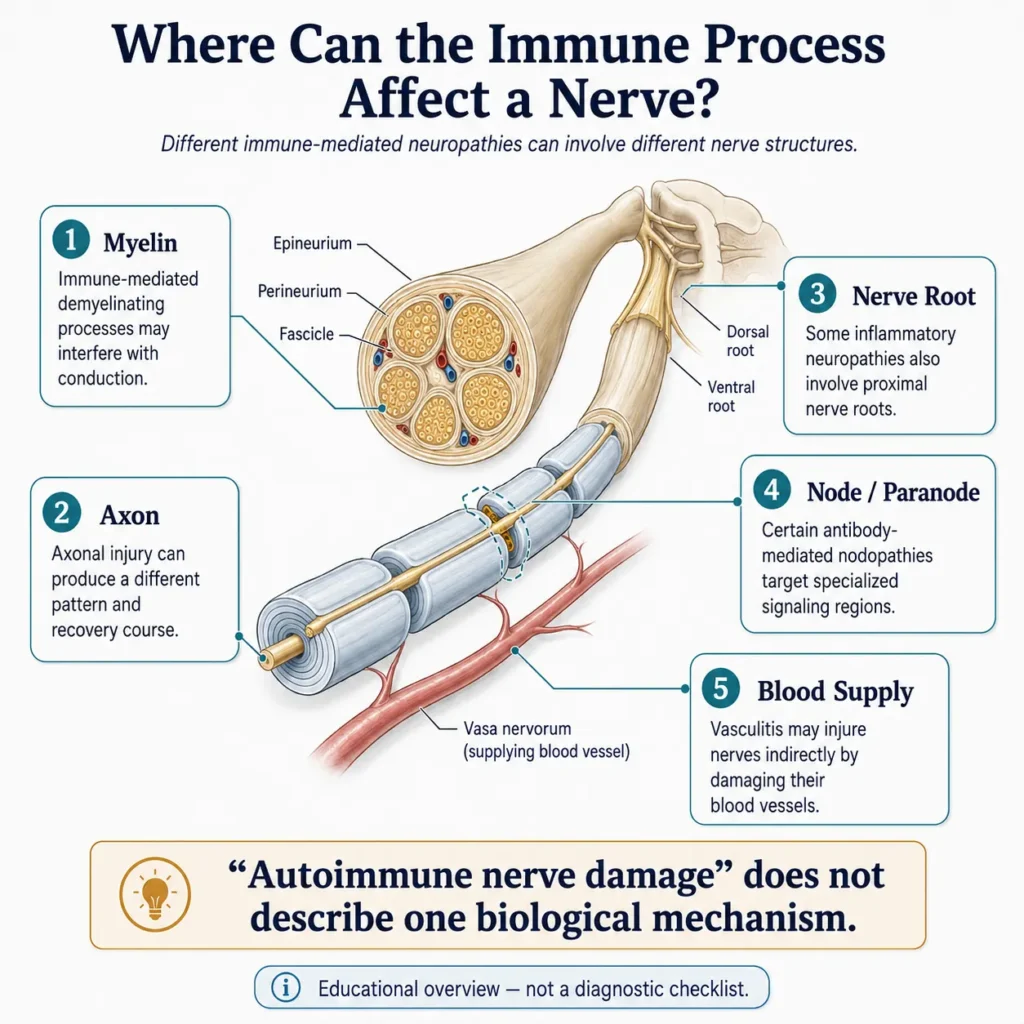
Autoimmune and immune-mediated nerve disorders are a group of conditions in which abnormal immune activity contributes to dysfunction or injury involving parts of the peripheral nervous system. Depending on the condition, the process may involve the nerve roots, myelin, axons, specialized structures that help nerves conduct signals, autonomic ganglia, or even the small blood vessels that supply nerves.
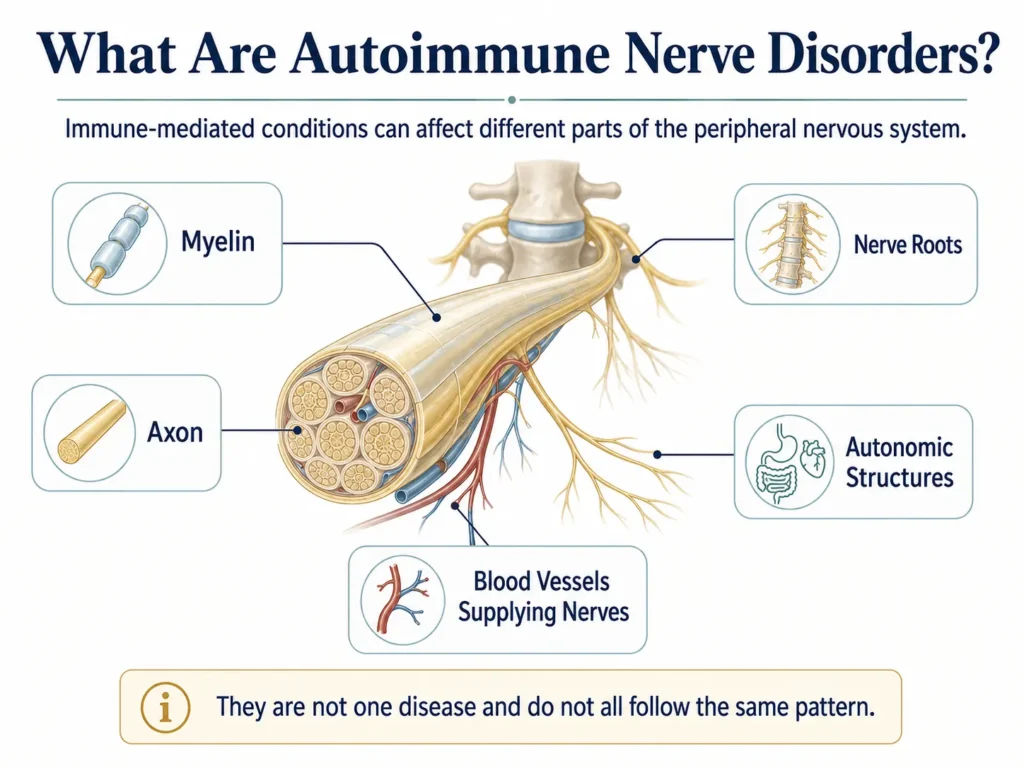
That does not mean “autoimmune neuropathy” is one disease.
It is an umbrella concept covering several disorders that can behave very differently.
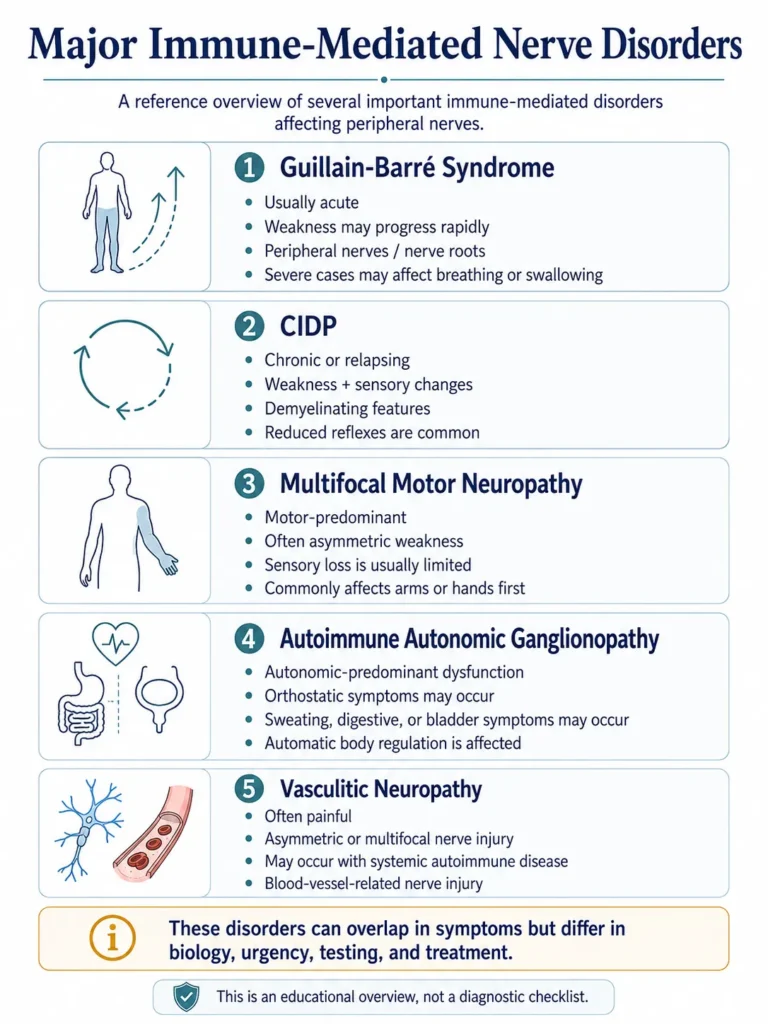
Guillain-Barré syndrome, for example, can progress over days. Chronic inflammatory demyelinating polyradiculoneuropathy—CIDP—usually develops over a longer period or follows a relapsing course. Multifocal motor neuropathy primarily affects motor nerves. Autoimmune autonomic ganglionopathy can disrupt automatic body functions, while vasculitic neuropathy can injure nerves by interfering with their blood supply.
Systemic autoimmune diseases such as Sjögren disease or systemic vasculitis may also involve peripheral nerves.
The most important point to understand at the beginning is this:
Symptoms alone cannot tell you whether a nerve problem is autoimmune.
Burning feet do not prove autoimmunity. Neither does tingling, fatigue, inflammation, dizziness, weakness, or even an abnormal antibody result by itself.
Many non-autoimmune problems can produce similar neurological symptoms. Understanding the pattern—and ruling out competing explanations—is central to an accurate diagnosis.
If you are starting with the broader picture, our guide to nerve disorders and the major ways nerves can become dysfunctional provides useful background.
What Does “Autoimmune Nerve Disorder” Mean?
The immune system normally protects the body from infections and other threats. In autoimmune disease, components of that immune response become misdirected toward the body’s own tissues.
The National Institute of Arthritis and Musculoskeletal and Skin Diseases describes autoimmune diseases as conditions in which the immune system attacks healthy tissues rather than restricting its response to foreign threats.
When peripheral nerves become involved, however, the biological target is not the same in every disease.
That distinction matters.
Myelin Can Be Affected
Myelin forms an insulating layer around many nerve fibers and helps electrical signals travel rapidly and efficiently.
Some acquired immune-mediated neuropathies interfere with peripheral myelin. When conduction becomes slowed or blocked, weakness, sensory changes, and reduced reflexes may occur.
CIDP is an important example of an immune-mediated neuropathy in which demyelinating features can be central to the diagnostic pattern.
But “demyelinating neuropathy” and “autoimmune neuropathy” are not interchangeable labels. A neurologist still has to determine why demyelination is occurring and whether the full clinical picture fits a particular disease.
You can explore the underlying biology in our guide to the myelin system and its role in nerve signaling.
Axons Can Be Injured
The axon is the long portion of a nerve cell that carries electrical information toward its target.
Axonal injury is biologically different from damage that mainly affects myelin.
This difference can influence:
- the pattern of neurological deficits;
- findings on nerve-conduction testing;
- the speed of recovery;
- and the likelihood of persistent disability.
This is why the phrase “nerve damage” is often too broad to be clinically useful on its own.
Two people may both be told that they have nerve damage while the actual biology—and therefore the outlook—differs substantially.
For a deeper explanation of what happens when nerve fibers attempt to repair, see axonal regrowth and peripheral nerve regeneration.
Nerve Roots May Be Involved
Some immune-mediated neuropathies extend beyond distal nerves and also involve nerve roots near the spinal cord.
That is why conditions such as GBS and CIDP may be described as polyradiculoneuropathies.
The term reflects the anatomical pattern: multiple peripheral nerves and nerve roots may be involved.
Nodes and Paranodes Can Become Immune Targets
Nerve conduction also depends on highly specialized structures where myelin and axons interact.
Research has identified antibodies directed against proteins around these nodal and paranodal regions, including neurofascin, contactin-1, and Caspr1.
These disorders are increasingly described as autoimmune nodopathies.
They are important because some can resemble classical CIDP or GBS while differing in biology and treatment response. A recent peer-reviewed overview discusses how autoimmune nodopathies have emerged as a distinct group of antibody-mediated neuropathies. See The Discovery of Autoimmune Nodopathies and the Impact of IgG4 Antibodies.
For patients, the practical lesson is more important than the terminology:
Two neuropathies can look similar at first and still turn out to be biologically different diseases.
Autonomic Ganglia Can Be Affected
Peripheral nerves do more than carry sensation and move muscles.
The autonomic nervous system helps regulate processes that normally happen without conscious effort, including:
- blood-pressure control;
- sweating;
- digestion;
- bladder function;
- and aspects of heart-rate regulation.
Autoimmune autonomic ganglionopathy, or AAG, is a rare disorder involving autonomic signaling. Ganglionic acetylcholine receptor antibodies are found in a proportion of affected patients and may provide useful diagnostic information in the correct clinical context.
A detailed review is available through PubMed: Autonomic Ganglia, Acetylcholine Receptor Antibodies, and Autoimmune Ganglionopathy.
Because autonomic symptoms have many possible causes, dizziness on standing, digestive problems, abnormal sweating, or changes in heart rate should not automatically be labelled autoimmune dysautonomia.
Our separate guide to autonomic regulation and nervous system balance explains the broader physiology without assuming an autoimmune cause.
The Blood Supply to a Nerve Can Be Damaged
Sometimes the immune system does not primarily attack the nerve fiber or its myelin.
Instead, inflammation affects the blood vessels that supply the nerve.
This is one of the mechanisms involved in vasculitic neuropathy.
Reduced blood supply can produce ischemic nerve injury, often resulting in an asymmetric or multifocal pattern. Pain may be prominent.
This illustrates an important principle:
“Autoimmune nerve damage” does not always mean antibodies are directly attacking nerve fibers.
The pathway to nerve dysfunction depends on the underlying disease.
Autoimmune Neuropathy Is Not One Clinical Pattern
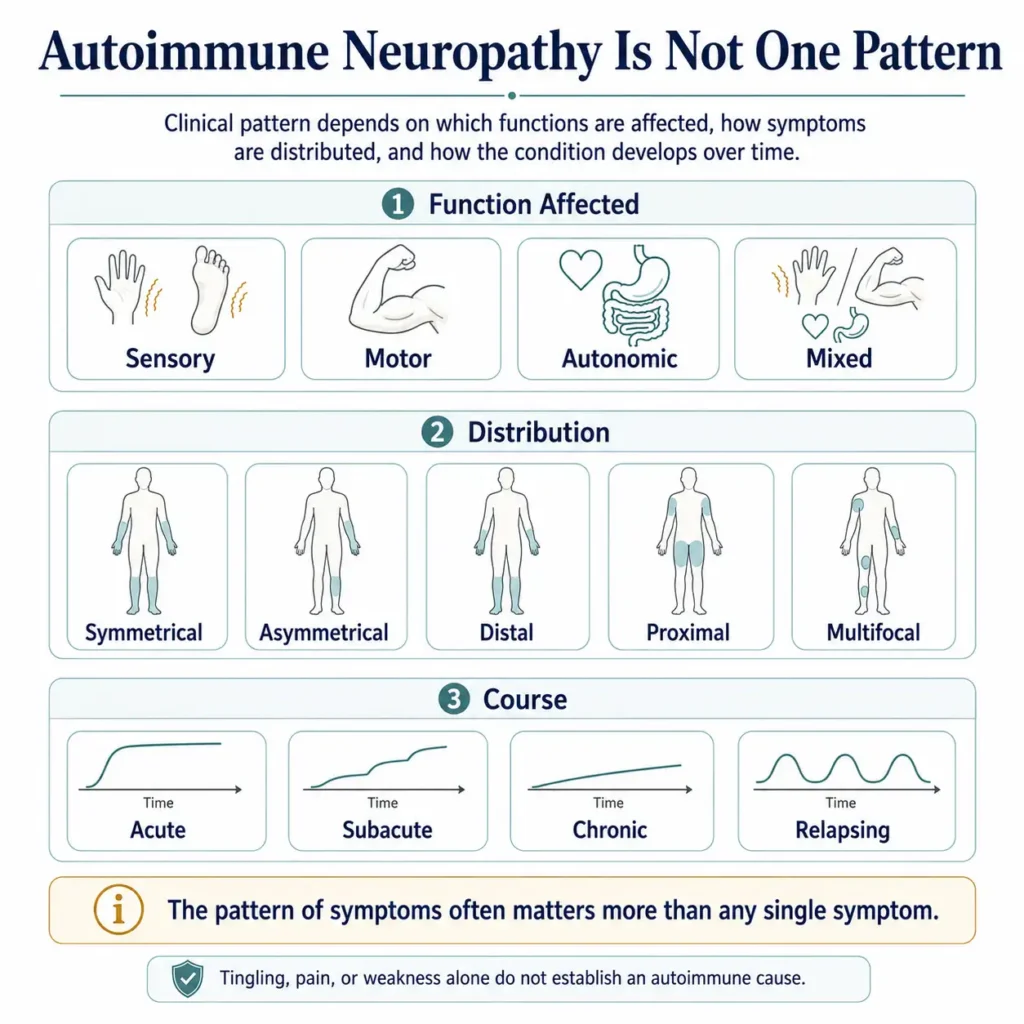
One reason immune-mediated neuropathies can be difficult to diagnose is that they do not all behave alike.
A neurologist may consider several dimensions at the same time.
Which Type of Nerve Function Is Affected?
A neuropathy may be predominantly:
- sensory;
- motor;
- autonomic; or
- mixed.
Someone with a sensory neuropathy may primarily notice pain or numbness.
Someone with a motor neuropathy may primarily develop weakness.
A person with autonomic involvement may experience problems with blood-pressure regulation, digestion, sweating, or other automatic functions.
The word “neuropathy” alone does not tell us which of these systems is most affected.
How Are the Symptoms Distributed?
Distribution provides another diagnostic clue.
A neuropathy may be:
- symmetrical or asymmetrical;
- distal or proximal;
- limited to one nerve;
- spread across several separate nerves;
- or generalized across many peripheral nerves.
These differences can help separate one disease pattern from another.
How Quickly Did the Problem Develop?
Time course can be especially informative.
Symptoms may develop:
- acutely over hours or days;
- subacutely over several weeks;
- gradually over months;
- chronically over years;
- or in episodes of relapse and improvement.
Rapidly spreading weakness after an infection creates a very different clinical concern from slowly progressive tingling in both feet over several years.
Major Autoimmune and Immune-Mediated Nerve Disorders
There are many immune-mediated neuropathies, but a few conditions are particularly important for understanding the category.
Guillain-Barré Syndrome
Guillain-Barré syndrome (GBS) is a rare immune-mediated disorder affecting the peripheral nervous system.
According to the World Health Organization’s Guillain-Barré syndrome fact sheet, weakness often begins in the legs and can spread to the arms and face. Some people also experience sensory symptoms or pain.
In severe disease, nerves controlling swallowing or breathing can be affected.
GBS commonly develops after an infection, although a preceding infection is not identified in every patient.
The course is typically much more rapid than in most chronic neuropathies.
How GBS Is Evaluated
The diagnosis begins with the neurological pattern.
Clinicians may use:
- neurological examination;
- nerve-conduction studies and electromyography;
- cerebrospinal-fluid analysis;
- and additional investigations when the presentation is atypical.
The 2023 European Academy of Neurology/Peripheral Nerve Society guideline for Guillain-Barré syndrome provides evidence-based recommendations covering diagnosis, treatment, and prognosis.
How GBS Is Treated
Disease-directed treatment may include:
- intravenous immunoglobulin, or IVIG;
- or plasma exchange.
Supportive monitoring is equally important because breathing, swallowing, heart rate, and blood-pressure regulation can be affected in severe cases.
When GBS Becomes an Emergency
Rapidly progressing weakness is not something to monitor casually at home.
Urgent evaluation is particularly important when weakness:
- spreads over hours or days;
- moves from the legs toward the upper body;
- interferes with walking;
- affects the face;
- interferes with swallowing;
- or is accompanied by breathing difficulty.
CIDP: A Chronic Immune-Mediated Neuropathy
Chronic inflammatory demyelinating polyradiculoneuropathy, better known as CIDP, generally follows a longer course than GBS.
People may experience:
- progressive weakness;
- sensory loss or tingling;
- reduced reflexes;
- problems walking;
- difficulty using the hands;
- or periods of improvement followed by worsening.
But chronic neuropathy alone does not equal CIDP.
Accurate diagnosis requires the neurological phenotype to fit the disorder and usually depends heavily on electrodiagnostic evidence.
The current EAN/PNS guideline on CIDP diagnosis and treatment emphasizes clinical features, nerve-conduction findings, exclusion of important mimics, and the selective use of supportive tests.
Treatment Is Diagnosis-Specific
Evidence-based treatments for CIDP can include:
- IVIG;
- corticosteroids;
- and plasma exchange in appropriate circumstances.
Some patients need maintenance therapy.
The important lesson is not simply that immune treatment exists.
It is that immune treatments are not interchangeable across all neuropathies.
A treatment appropriate for CIDP may not be appropriate for another disorder that initially resembles CIDP.
Autoimmune Nodopathies: Why More Precise Diagnosis Matters
Autoimmune nodopathies deserve special attention because they demonstrate how neurological classification changes as medical knowledge improves.
Some patients previously placed within the broader CIDP spectrum were found to have antibodies against proteins at the node or paranode.
These may include targets such as:
- neurofascin-155;
- contactin-1;
- Caspr1;
- and other neurofascin-related proteins.
Patients may experience combinations of:
- severe weakness;
- sensory loss;
- sensory ataxia;
- tremor;
- neuropathic pain;
- and other neurological abnormalities.
Some antibody-mediated nodopathies respond differently from classical CIDP.
That is one reason modern neuromuscular medicine increasingly tries to define the disease more precisely than simply labelling every chronic immune-mediated demyelinating neuropathy “CIDP.”
For further technical detail, see this PubMed review on autoimmune nodopathies.
Multifocal Motor Neuropathy
Multifocal motor neuropathy (MMN) is an immune-mediated neuropathy that predominantly affects motor nerves.
One clue is that weakness is often asymmetric.
For example, one hand or forearm may become noticeably weaker before other areas are affected.
Sensory loss is usually much less prominent than it is in many sensorimotor polyneuropathies.
This matters because MMN can resemble disorders with very different causes and prognoses.
Electrodiagnostic studies can help identify patterns such as motor conduction block and distinguish MMN from other neurological diseases.
Recognizing the correct disease matters because MMN is potentially treatable.
Autoimmune Autonomic Ganglionopathy
In autoimmune autonomic ganglionopathy, the most obvious problem may not be pain or limb weakness.
Instead, the body’s automatic regulatory systems can become impaired.
Possible symptoms include:
- severe dizziness or faintness when standing;
- abnormal drops in blood pressure;
- reduced or abnormal sweating;
- severe constipation or gastrointestinal dysmotility;
- bladder dysfunction;
- dry eyes or dry mouth;
- and other autonomic disturbances.
Ganglionic acetylcholine receptor antibodies can support the diagnosis in some patients, but not everyone with the disease has detectable antibodies.
Equally important, autonomic symptoms are not specific to AAG.
Similar problems can occur with:
- diabetes;
- medication effects;
- neurodegenerative disease;
- other neuropathies;
- cardiovascular problems;
- dehydration;
- and several other conditions.
This is why a symptom such as orthostatic dizziness should not be converted directly into an autoimmune diagnosis.
Vasculitic Neuropathy and Mononeuritis Multiplex
Vasculitis involves inflammation of blood vessels.
When the small blood vessels supplying peripheral nerves become affected, the nerve can lose adequate blood flow and become injured.
The resulting pattern can be very different from a common symmetrical polyneuropathy.
One important presentation is mononeuritis multiplex, where several separate nerves become affected in an irregular or asymmetric pattern.
Pain may be severe.
Weakness or sensory loss may appear in different areas at different times.
Vasculitic neuropathy may occur:
- as part of systemic vasculitis;
- alongside another connective-tissue or autoimmune disease;
- or, in some cases, predominantly within the peripheral nervous system.
A review of the clinical evaluation and management of these disorders is available through PubMed: Peripheral Neuropathies Associated With Vasculitis and Autoimmune Connective Tissue Disease.
Systemic Autoimmune Diseases Can Also Affect Peripheral Nerves
A person does not need to have a disease whose name includes the word “neuropathy” for autoimmune disease to affect nerves.
Peripheral nerve involvement may occur in conditions such as:
- Sjögren disease;
- systemic lupus erythematosus;
- rheumatoid arthritis;
- systemic vasculitis;
- and other connective-tissue or inflammatory diseases.
Sjogren Disease Is a Useful Example
Sjögren disease is often associated with dry eyes and dry mouth, but neurological complications can also occur.
Peripheral nerve involvement may include several different phenotypes rather than one uniform “Sjögren neuropathy.”
A systematic review and meta-analysis of peripheral neuropathy associated with primary Sjögren syndrome found multiple forms of peripheral nerve involvement.
This distinction is clinically important.
A person may have:
one diagnosis describing the systemic autoimmune disease
and
another diagnosis describing the type of neuropathy it has produced.
The two are related, but they are not interchangeable.
What Does Autoimmune Neuropathy Feel Like?
There is no single sensation that identifies autoimmune neuropathy.
Symptoms depend on the type of nerve fiber involved, where the problem is located, and how the disease develops.
Sensory Symptoms
Possible sensory symptoms include:
- numbness;
- tingling;
- pins and needles;
- burning pain;
- electric or shooting sensations;
- unusual sensitivity to touch;
- reduced temperature sensation;
- loss of vibration sensation;
- reduced awareness of foot or limb position;
- or imbalance related to sensory loss.
These symptoms can also occur in many non-autoimmune neuropathies.
The NINDS overview of peripheral neuropathy describes the wide range of sensory, motor, and autonomic symptoms that peripheral nerve disorders can produce.
For a broader symptom-based explanation, see Symptoms of Nerve Dysfunction.
Weakness and Other Motor Symptoms
Motor nerve involvement may cause:
- difficulty climbing stairs;
- difficulty getting up from a chair;
- reduced grip strength;
- dropping objects;
- foot drop;
- frequent tripping;
- difficulty raising the arms;
- reduced reflexes;
- or muscle wasting in some chronic conditions.
The rate of progression can be as important as the weakness itself.
Weakness spreading over several days demands a very different response from mild weakness that has remained stable for years.
Autonomic Symptoms
When autonomic nerves are involved, a person may experience:
- dizziness when standing;
- fainting;
- abnormal sweating;
- altered gastrointestinal motility;
- bladder problems;
- changes in sexual function;
- abnormal blood-pressure regulation;
- or disturbances in heart-rate control.
Again, none of these symptoms automatically proves autoimmunity.
Similar Symptoms Can Have Very Different Causes
This is one of the most useful distinctions a person investigating neuropathy can understand.
The same symptom can occur through many different disease processes.
Tingling may occur with:
- nerve compression;
- diabetes;
- vitamin deficiency;
- medication toxicity;
- inherited neuropathy;
- autoimmune disease;
- or several other conditions.
Burning pain can occur in both autoimmune and non-autoimmune neuropathies.
Weakness can arise from nerves, muscles, the neuromuscular junction, the spinal cord, the brain, or systemic illness.
That is why diagnosis is not simply a process of finding a disease that could cause the symptom.
The goal is to determine which explanation best fits the entire pattern.
Important alternative causes of peripheral nerve dysfunction can include:
- diabetes and other metabolic disorders;
- vitamin deficiencies or excesses;
- nerve compression;
- physical injury;
- medication toxicity;
- chemotherapy;
- alcohol-related neuropathy;
- infections;
- kidney or liver disease;
- abnormal blood proteins;
- inherited neuropathies;
- and other neurological conditions.
Our overview of the causes of nerve pain explores these competing pathways in more detail.
If symptoms follow the distribution of a compressed peripheral nerve or nerve root, the guide to nerve compression may also help clarify the difference.
What Causes Autoimmune Nerve Disorders?
There is no single answer.
Different immune-mediated neuropathies have different biological drivers.
In some cases, a preceding trigger can be identified.
GBS, for example, frequently develops after an infection. WHO notes that bacterial and viral infections can precede the syndrome.
In other conditions, no clear initiating event is found.
Autoimmune disease more broadly appears to involve interactions among:
- immune regulation;
- genetic susceptibility;
- environmental factors;
- infections;
- and disease-specific biological processes.
What should be avoided is collapsing all of this complexity into one universal explanation.
Claims such as:
- “stress caused the autoimmune neuropathy,”
- “toxins are the root cause,”
- “inflammation proves autoimmunity,”
- or “the immune system simply needs to be reset”
go beyond what the evidence can establish for an individual patient.
Our Autoimmune Patterns page explores broader immune-system concepts, while Neuroinflammation looks specifically at inflammatory processes within nervous-system biology.
Neither concept should be treated as a universal explanation for every nerve symptom.
How Are Autoimmune Nerve Disorders Diagnosed?
There is no single test that diagnoses every autoimmune neuropathy.
Evaluation usually begins with the clinical pattern and becomes more specific as evidence is gathered.
For a broader overview of this process, see How Nerve Dysfunction Is Diagnosed.
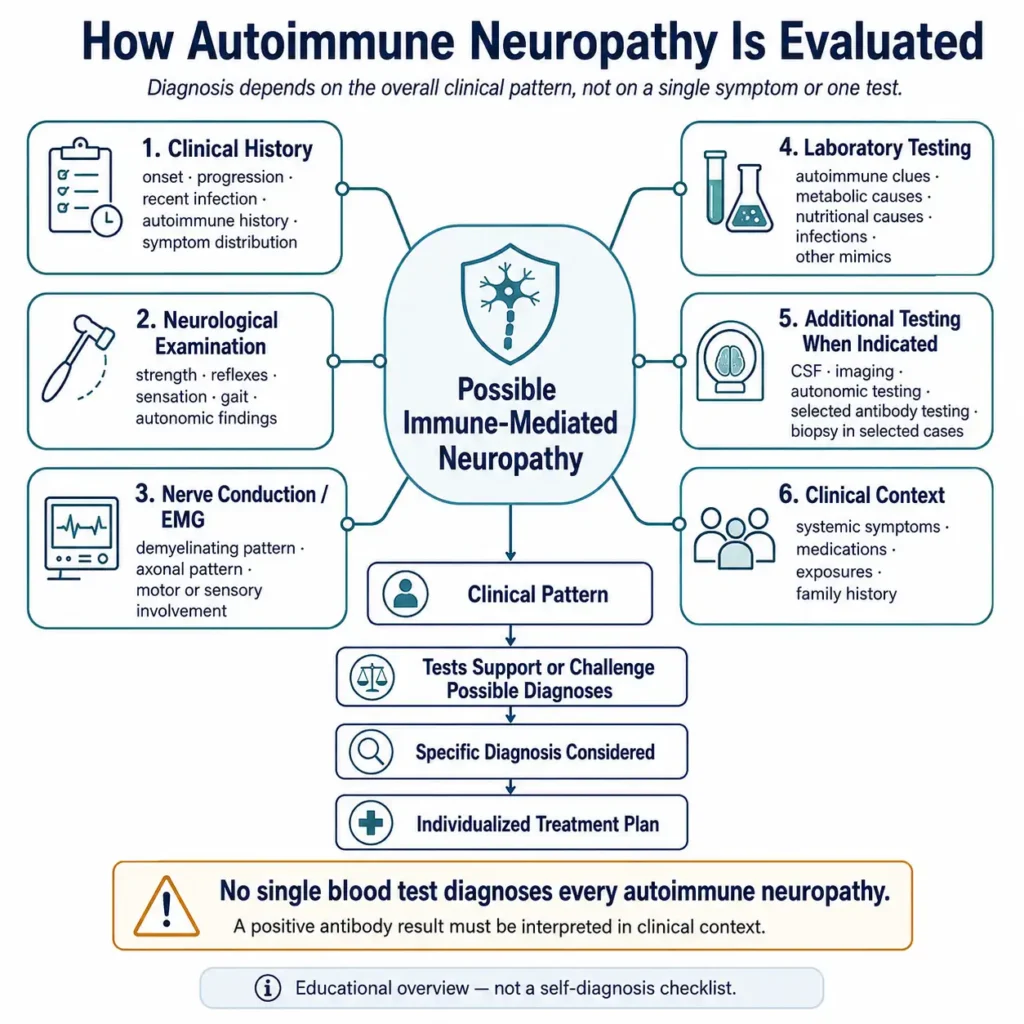
Medical and Neurological History
A clinician may ask:
- When did the symptoms begin?
- Did they appear suddenly or gradually?
- Are they worsening?
- Are they constant or episodic?
- Are both sides of the body affected similarly?
- Is weakness present?
- Are sensory symptoms predominant?
- Are there autonomic symptoms?
- Was there a recent respiratory or gastrointestinal infection?
- Is there a known autoimmune disease?
- Are there systemic symptoms such as rash, joint inflammation, fever, dry mouth, or unexplained weight loss?
- Has the person received chemotherapy?
- What medications and supplements are being used?
- Is there a family history of neuropathy?
These details help clinicians define the pattern before interpreting laboratory tests.
The Neurological Examination
A neurological examination can provide clues that symptoms alone cannot.
Depending on the problem, a clinician may assess:
- muscle strength;
- reflexes;
- pinprick sensation;
- temperature sensation;
- vibration;
- position sense;
- coordination;
- gait;
- balance;
- cranial nerve function;
- and selected autonomic findings.
For example, reduced reflexes combined with a particular pattern of weakness may suggest a different diagnostic pathway from normal reflexes with isolated sensory complaints.
Nerve-Conduction Studies and EMG
Electrodiagnostic testing is particularly important in many suspected immune-mediated neuropathies.
Nerve-conduction studies and electromyography can help clinicians determine whether the pattern appears primarily:
- demyelinating;
- axonal;
- motor;
- sensory;
- or mixed.
They may also help identify whether the problem is:
- generalized;
- confined to certain nerves;
- affecting nerve roots;
- or occurring in a distribution suggesting another disorder.
Electrodiagnostic evidence is particularly important in the evaluation of conditions such as CIDP and GBS. The EAN/PNS guidelines for CIDP and GBS explain how these findings fit into modern diagnostic criteria.
Blood Tests: Valuable, but Easy to Misinterpret
Blood testing may be extremely useful.
It can also create unnecessary confusion when one result is interpreted outside the broader clinical picture.
Depending on the suspected condition, clinicians may investigate:
- glucose metabolism;
- vitamin deficiencies;
- thyroid function;
- infections;
- inflammatory markers;
- systemic autoimmune markers;
- abnormal blood proteins;
- disease-associated antibodies;
- kidney or liver disease;
- or other neuropathy mimics.
But laboratory results require context.
A Positive Autoantibody Does Not Automatically Equal Disease
Some autoantibodies are strongly associated with particular diseases.
Others are less specific.
The significance of an antibody therefore depends on:
- which antibody was found;
- the level or titer;
- the testing method;
- and whether the person’s clinical syndrome actually matches the disease.
A Negative Antibody Does Not Automatically Exclude Autoimmunity
Not every immune-mediated neuropathy has a known disease-specific antibody.
Some affected people may be seronegative.
Elevated Inflammatory Markers Do Not Prove Autoimmune Neuropathy
Inflammatory markers can rise for many reasons.
The more useful question is not:
“Was something abnormal on the autoimmune panel?”
The better question is:
“Does this result make sense alongside the neurological symptoms, examination, electrodiagnostic findings, and other evidence?”
Cerebrospinal Fluid Testing
A lumbar puncture can provide additional evidence in selected neuropathies.
For example, cerebrospinal-fluid findings can support diagnoses such as GBS or CIDP.
But cerebrospinal fluid does not replace the clinical picture.
An abnormal protein level alone does not establish either diagnosis, and normal results at certain stages do not necessarily exclude disease.
The modern GBS diagnostic framework is discussed in the 2023 EAN/PNS guideline.
Does MRI Diagnose Autoimmune Neuropathy?
Usually not by itself.
MRI may be helpful when clinicians need to evaluate:
- the spinal cord;
- nerve roots;
- nerve plexuses;
- structural compression;
- inflammatory changes in selected locations;
- or alternative causes of neurological symptoms.
But many peripheral neuropathies do not produce a diagnostic MRI finding.
A normal MRI therefore does not mean nerve symptoms are imaginary.
It also does not automatically establish an autoimmune or nociplastic explanation.
When Is a Nerve Biopsy Needed?
Nerve biopsy is not a routine test for every person with suspected autoimmune neuropathy.
It is usually reserved for selected circumstances.
One important example is suspected vasculitic neuropathy, where tissue evidence may help establish vascular inflammation when the result would materially affect treatment.
The decision has to balance the potential diagnostic value against the fact that nerve biopsy is an invasive procedure.
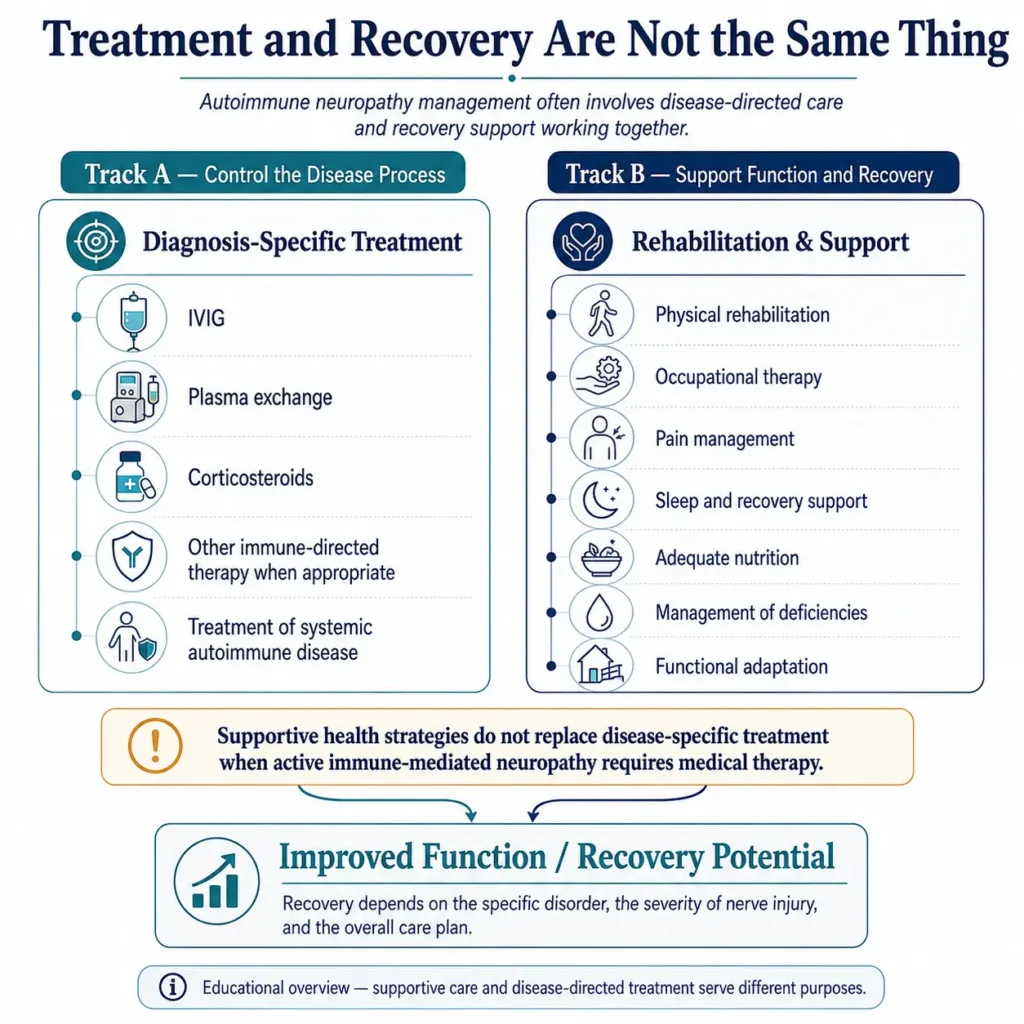
How Are Autoimmune Nerve Disorders Treated?
There is no universal treatment for “autoimmune neuropathy.”
Treatment depends on the actual diagnosis.
That distinction is central to safe care.
Immune-Directed Treatment
Depending on the disease, treatment may involve:
- intravenous immunoglobulin;
- plasma exchange;
- corticosteroids;
- immunosuppressive therapy;
- B-cell-directed treatment;
- or other disease-specific immunomodulatory therapies.
For GBS, WHO and international neurological guidelines support IVIG and plasma exchange as established disease-directed approaches.
For CIDP, the EAN/PNS guideline supports IVIG or corticosteroids as major initial treatment options, with plasma exchange used when clinically appropriate.
These examples also demonstrate why diagnosis matters.
The existence of immune treatment does not mean every neuropathy should receive immune treatment.
Treating an Underlying Systemic Autoimmune Disease
When neuropathy occurs as part of a systemic autoimmune disease, treatment may need to address two related problems:
- the peripheral nerve disorder; and
- the broader autoimmune disease.
This may require collaboration between several specialties.
Depending on the condition, care may involve:
- neurology;
- rheumatology;
- immunology;
- rehabilitation medicine;
- hematology;
- or other specialties.
Rehabilitation Is Part of Neurological Care
Controlling immune activity does not instantly restore lost function.
After a significant neuropathy, rehabilitation can become an important part of recovery.
Depending on the person’s deficits, this might include:
- physical therapy;
- occupational therapy;
- balance training;
- gait rehabilitation;
- carefully selected strengthening;
- orthoses;
- mobility aids;
- or adaptations for daily activities.
The appropriate level of activity depends on the disease, severity, and recovery phase.
Pain and Other Symptoms May Need Separate Treatment
Even when the underlying immune disorder is treated, symptoms do not always resolve at the same speed.
A person may continue to experience:
- neuropathic pain;
- fatigue;
- sleep disruption;
- cramps;
- weakness;
- orthostatic symptoms;
- gastrointestinal problems;
- or bladder dysfunction.
Treatment therefore often has two goals running in parallel:
control the underlying disease process
and
help the person function as well as possible while recovery occurs.
Where Do Nutrition, Sleep, Exercise, and Lifestyle Fit?
This question deserves a careful answer.
Nutrition matters.
Sleep matters.
Physical activity matters.
Metabolic health matters.
But none should be assigned a role that evidence does not support.
A nutritionally adequate diet can help prevent or correct deficiencies and support general health.
Sleep can influence fatigue, cognition, rehabilitation capacity, and overall wellbeing.
Appropriate physical activity may help maintain mobility, conditioning, and function.
What these measures cannot do is substitute for disease-specific treatment of a serious active immune-mediated neuropathy.
There is no established:
- diet;
- supplement;
- detox program;
- fasting protocol;
- or “immune reset”
that should replace medical treatment for disorders such as GBS, CIDP, MMN, vasculitic neuropathy, autoimmune nodopathy, or autoimmune autonomic ganglionopathy.
Someone experiencing progressive neurological weakness should not postpone neurological assessment while experimenting with supplements or restrictive diets.
For evidence-aware supportive strategies, see Nutrition for Nerve Repair.
Can Nerves Recover After Autoimmune Injury?
Sometimes they can recover substantially.
But the answer depends on what was injured.
The phrase “nerve damage” includes several different biological situations.
If the main problem is loss or disruption of myelin, improvement may occur as the disease is controlled and remyelination takes place.
When axons themselves are lost, recovery may take considerably longer.
Axonal regrowth also depends on factors such as:
- where the injury occurred;
- whether the nerve’s supporting structures remain intact;
- the distance the regenerating axon must travel;
- the severity of injury;
- and whether the damaging process is still active.
Recovery may therefore depend on:
- the exact diagnosis;
- demyelinating versus axonal injury;
- severity;
- duration of active disease;
- degree of axonal loss;
- recurrent immune activity;
- general medical health;
- and rehabilitation.
WHO notes that many people with GBS recover, although recovery may take time and some people experience persistent neurological symptoms.
Chronic disorders such as CIDP can behave differently and may require ongoing treatment.
For more on the biology rather than the diagnosis, see Regeneration Biology and the broader Nerve Healing Guide.
Autoimmune Neuropathy and Chronic Pain Are Not the Same Thing
Some autoimmune neuropathies can produce chronic neuropathic pain.
But the reverse assumption is not valid.
Chronic pain does not automatically indicate autoimmune disease.
Neuropathic pain can result from:
- diabetes;
- nerve trauma;
- compression;
- chemotherapy;
- infection;
- inherited neuropathy;
- metabolic disease;
- and several other neurological causes.
Likewise, a person with an autoimmune neuropathy may have major weakness or autonomic dysfunction with relatively little pain.
This is because a disease diagnosis and a pain mechanism answer different questions.
Neuropathic pain refers to pain caused by a lesion or disease of the somatosensory nervous system.
Autoimmune neuropathy refers to an underlying disease process in which immune activity contributes to peripheral nerve dysfunction.
The two concepts can overlap without becoming the same concept.
Our Chronic Pain Syndromes guide explains this diagnosis-versus-mechanism distinction in much greater detail, while Pain Processing explores how pain signals are processed.
When Nerve Symptoms Need Urgent Medical Evaluation
Most chronic tingling or stable peripheral neuropathy symptoms are not neurological emergencies.
Some patterns are different.
Seek prompt or urgent medical evaluation for symptoms such as:
- rapidly progressive muscle weakness;
- weakness spreading from the legs toward the upper body;
- rapidly worsening difficulty walking;
- new facial weakness;
- difficulty swallowing;
- difficulty speaking because of muscle weakness;
- new breathing difficulty;
- rapidly evolving neurological symptoms following an infection;
- or severe neurological symptoms accompanied by marked autonomic instability.
GBS is particularly important because weakness can progress quickly and may involve breathing or swallowing.
The World Health Organization advises prompt treatment and monitoring because severe GBS can become life-threatening.
What Information Is Useful at a Neurology Appointment?
You do not need to diagnose yourself before seeing a clinician.
What helps more is a clear history.
Consider writing down:
- when the first symptom appeared;
- which symptom appeared first;
- whether symptoms are worsening;
- whether they occur on both sides;
- whether weakness is present;
- whether walking has changed;
- whether symptoms fluctuate;
- any recent infections;
- known autoimmune conditions;
- diabetes or metabolic disease;
- current medications;
- current supplements;
- previous chemotherapy;
- possible toxin exposures;
- previous neurological tests;
- and relevant family history.
Questions you may find useful include:
What pattern of neuropathy do my symptoms and examination suggest?
Does testing point more toward demyelination, axonal injury, or another process?
What common non-autoimmune causes have been investigated?
Would additional antibody testing change the diagnosis or treatment?
Is there evidence that an immune-mediated disease is currently active?
Could some of my current symptoms represent residual nerve injury rather than ongoing immune activity?
These questions tend to generate more useful clinical information than simply asking whether an “autoimmune test” was positive.
Frequently Asked Questions About Autoimmune Nerve Disorders
Is Peripheral Neuropathy Usually Autoimmune?
No.
Autoimmune disease is one possible category among many.
Peripheral neuropathy can also result from diabetes, nutritional problems, inherited disorders, medications, toxins, infections, compression, trauma, chemotherapy, metabolic disease, and other causes.
The NINDS Peripheral Neuropathy overview provides a broader introduction to these causes.
Can Autoimmune Neuropathy Cause Burning Pain?
Yes.
Some immune-mediated neuropathies can produce burning, electric, shooting, or hypersensitive pain.
But burning pain alone cannot identify the cause.
It also occurs in many non-autoimmune neuropathies.
Can Autoimmune Disease Cause Numbness and Tingling?
Yes.
Systemic or neurological autoimmune diseases can affect peripheral nerves and produce sensory symptoms.
However, numbness and tingling are among the least specific neurological symptoms.
They should be interpreted according to their distribution, duration, associated findings, and medical context.
Can Autoimmune Neuropathy Cause Muscle Weakness?
Yes.
Weakness is particularly important in conditions such as GBS, CIDP, and multifocal motor neuropathy.
The rate of progression is clinically important.
Rapidly progressing weakness requires much more urgent evaluation than long-standing stable weakness.
Can Autoimmune Disease Affect Small Nerve Fibers?
Yes.
Small-fiber neuropathy can occur with some systemic autoimmune disorders, including Sjögren disease.
However, small-fiber neuropathy has numerous other possible causes.
Its presence alone does not establish autoimmunity.
The systematic review of primary Sjögren syndrome-related peripheral neuropathy illustrates how varied autoimmune-associated neuropathy phenotypes can be.
Can Autoimmune Disease Affect Autonomic Nerves?
Yes.
Autoimmune autonomic ganglionopathy directly affects autonomic signaling, while other autoimmune or immune-mediated diseases may also produce autonomic neuropathy.
However, autonomic symptoms themselves are not evidence of an autoimmune cause.
Is CIDP the Same as Guillain-Barré Syndrome?
No.
They are both immune-mediated peripheral nerve disorders and can share certain clinical features, but their typical courses differ substantially.
GBS generally develops acutely.
CIDP generally follows a chronic, progressive, or relapsing course.
The distinction matters because diagnostic criteria, monitoring, treatment strategy, and prognosis differ.
Can a Blood Test Diagnose Autoimmune Neuropathy?
Usually not by itself.
Some disease-associated antibodies can be highly informative in the right clinical context.
But diagnosis normally depends on the combination of:
- symptoms;
- neurological examination;
- nerve-conduction findings;
- laboratory testing;
- and other investigations when appropriate.
Can You Have Autoimmune Neuropathy With Negative Autoimmune Blood Tests?
Yes.
Not every immune-mediated neuropathy has an established antibody that can be detected with routine testing.
A negative panel therefore cannot universally exclude immune-mediated disease.
Testing has to be selected and interpreted according to the neurological syndrome being investigated.
Can Autoimmune Neuropathy Be Cured?
There is no single answer because autoimmune neuropathy is not one disease.
Some acute disorders may improve substantially after treatment.
Some chronic disorders relapse or require maintenance therapy.
In other cases, immune activity can be controlled while residual nerve injury continues to produce symptoms.
Prognosis should therefore be discussed for the specific diagnosis, not for the broad label “autoimmune neuropathy.”
What Type of Doctor Treats Autoimmune Neuropathy?
A neurologist is usually central to diagnosis and management.
For complex peripheral neuropathy, a neurologist specializing in neuromuscular disease or peripheral nerves may be particularly helpful.
If the neuropathy occurs as part of a systemic autoimmune condition, a rheumatologist or another specialist may also be involved.
What Matters Most
Autoimmune nerve disorders should not be reduced to the idea that “inflammation is attacking the nerves.”
The biology is more diverse than that.
Immune activity may affect:
- myelin;
- axons;
- nerve roots;
- nodal and paranodal proteins;
- autonomic ganglia;
- or the blood vessels supplying nerves.
Some disorders develop rapidly.
Others progress slowly.
Some primarily cause weakness.
Others primarily affect sensation, balance, pain, or autonomic function.
And many non-autoimmune conditions can create remarkably similar symptoms.
That is why an accurate diagnosis depends on more than finding one abnormal marker or matching symptoms to a list.
The clinically useful questions are:
Which part of the nervous system is affected?
What pattern does the neurological dysfunction follow?
Is the injury primarily demyelinating, axonal, vascular, autonomic, or mixed?
What competing causes have been considered?
Is an immune-mediated process still active?
And which treatment is appropriate for the specific disorder that has actually been identified?
Those questions move the conversation from a vague symptom label toward a meaningful diagnosis—and from diagnosis toward an individualized treatment and recovery plan.
Continue Learning
If you want to place this condition within the wider nerve-health picture, these guides are the most relevant next steps:
- Nerve Disorders: Understanding the Major Categories of Nerve Disease
- Symptoms of Nerve Dysfunction
- Causes of Nerve Pain
- How Nerve Dysfunction Is Diagnosed
- Peripheral Neuropathy
- Chronic Pain Syndromes
- Autoimmune Patterns
- Neuroinflammation
- Myelin System
- Regeneration Biology
- Nerve Healing Guide
Medical Safety Note
This article is intended for education and is not a substitute for diagnosis or treatment from a qualified healthcare professional.
New or rapidly progressive weakness, breathing difficulty, swallowing difficulty, rapidly worsening walking problems, or other rapidly progressing neurological symptoms require prompt medical evaluation.
References and Clinical Sources
- World Health Organization — Guillain-Barré Syndrome
- National Institute of Neurological Disorders and Stroke — Guillain-Barré Syndrome
- National Institute of Neurological Disorders and Stroke — Peripheral Neuropathy
- NIAMS — Autoimmune Diseases Overview
- European Academy of Neurology/Peripheral Nerve Society Guideline on CIDP Diagnosis and Treatment
- European Academy of Neurology/Peripheral Nerve Society Guideline on Guillain-Barré Syndrome
- Primary Sjögren Syndrome-Related Peripheral Neuropathy: Systematic Review and Meta-Analysis
- Autonomic Ganglia, Acetylcholine Receptor Antibodies, and Autoimmune Ganglionopathy
- Peripheral Neuropathies Associated With Vasculitis and Autoimmune Connective Tissue Disease
- The Discovery of Autoimmune Nodopathies and the Impact of IgG4 Antibodies
Editorial Information
Written by: Heal Your Nerves Naturally Editorial Team
Medically reviewed by: Add only if a qualified clinician actually reviews this article
Last updated: August 2026