Trauma and Stress Healing
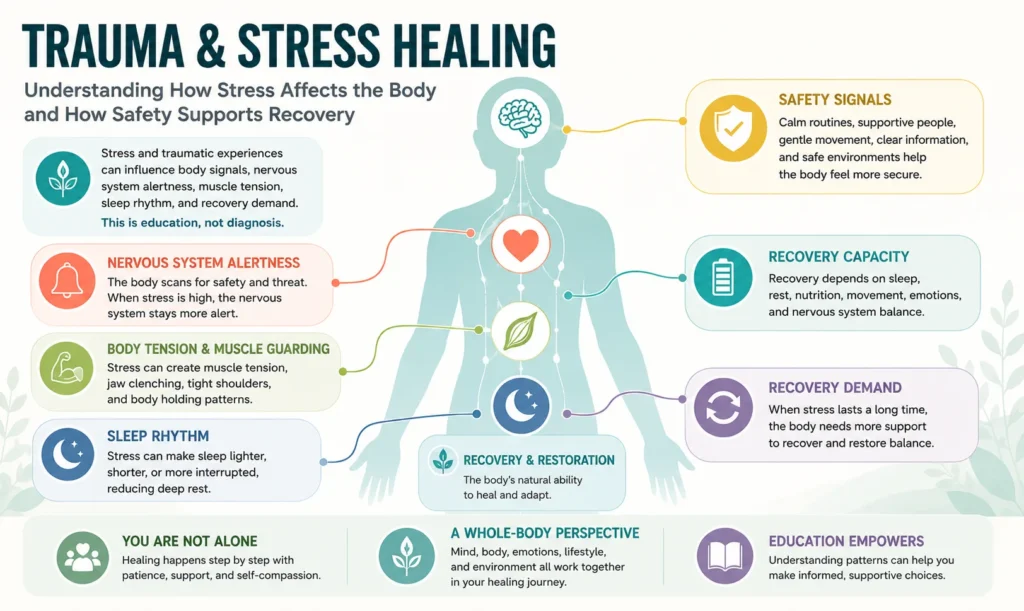
Trauma and Stress Healing is a therapeutic systems topic that explains how stressful or threatening experiences may shape body signals, nervous system alertness, muscle tension, sleep rhythm, and recovery demand. This page does not diagnose trauma, PTSD, anxiety, nerve damage, or any medical condition. Instead, it offers a calm educational view of how stress patterns may interact with nerve-health learning.
From a system perspective, trauma and stress are not only “mental” experiences. They may involve the brain, autonomic nervous system, hormones, muscles, sleep, immune signals, and daily behavior patterns. Because of this, long-term stress load may influence how safe, settled, tense, or reactive the body feels over time.
However, this topic must be handled carefully. Trauma history, severe emotional distress, panic, self-harm thoughts, sudden neurological symptoms, or worsening physical symptoms need qualified professional support. Therefore, this page focuses on education, not self-treatment.
Quick Navigation
What Is Trauma and Stress Healing?
Trauma and Stress Healing refers to an educational way of understanding how the body may respond after repeated stress, emotional overload, unsafe experiences, shock, loss, injury, or long-term pressure. In this context, “healing” does not mean a guaranteed cure. Instead, it refers to learning how the body’s safety systems, stress response, and recovery capacity may interact.
In simple terms, the body has systems that help it detect danger, prepare for action, and return toward rest. When stress is short-term, this response can be useful. However, when stress continues or when trauma leaves the body feeling unsafe, the nervous system may stay more alert than usual.
This topic matters for nerve-health education because stress load may influence sleep quality, muscle tension, breathing pattern, sensory sensitivity, digestion, immune activity, and energy rhythm. These patterns do not prove that trauma caused nerve symptoms. However, they may help readers understand one possible layer of body-wide demand.
A useful analogy is a smoke alarm. A smoke alarm is helpful when there is real danger. However, if it becomes too sensitive, it may react to small signals. In a similar way, a stressed nervous system may become more protective, reactive, or sensitive, even when the situation is not immediately dangerous.
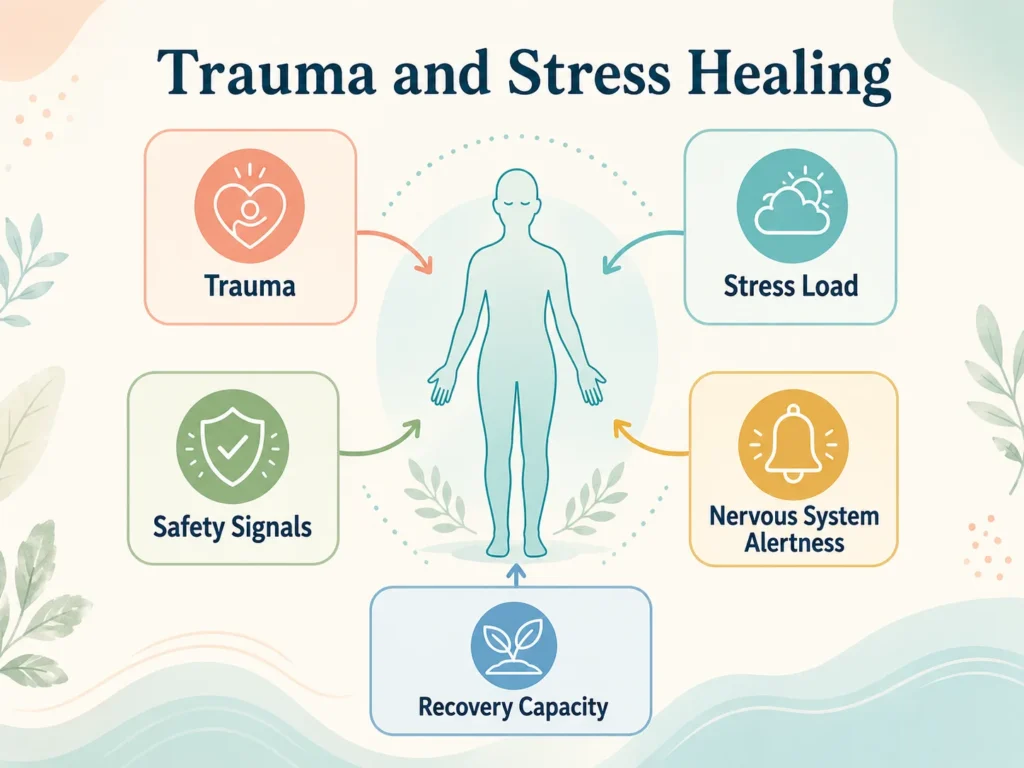
Plain Meaning / Glossary Box
Trauma
Trauma can mean an experience that overwhelms a person’s sense of safety or control. It may be emotional, physical, sudden, repeated, or long-lasting.
Stress Load
Stress load means the total pressure the body and mind are carrying. It may include work stress, emotional stress, pain, poor sleep, injury, conflict, or uncertainty.
Nervous System Alertness
Nervous system alertness means the body is more prepared for danger, action, protection, or escape. This may involve tension, fast thoughts, shallow breathing, or sensitivity.
Recovery Capacity
Recovery capacity means the body’s ability to settle, repair, rest, adapt, and return toward a steadier state after demand.
Safety Signals
Safety signals are cues that tell the nervous system the environment is calmer. These may include steady routines, supportive relationships, predictable surroundings, rest, and gentle body awareness.
How Trauma and Stress Healing Works
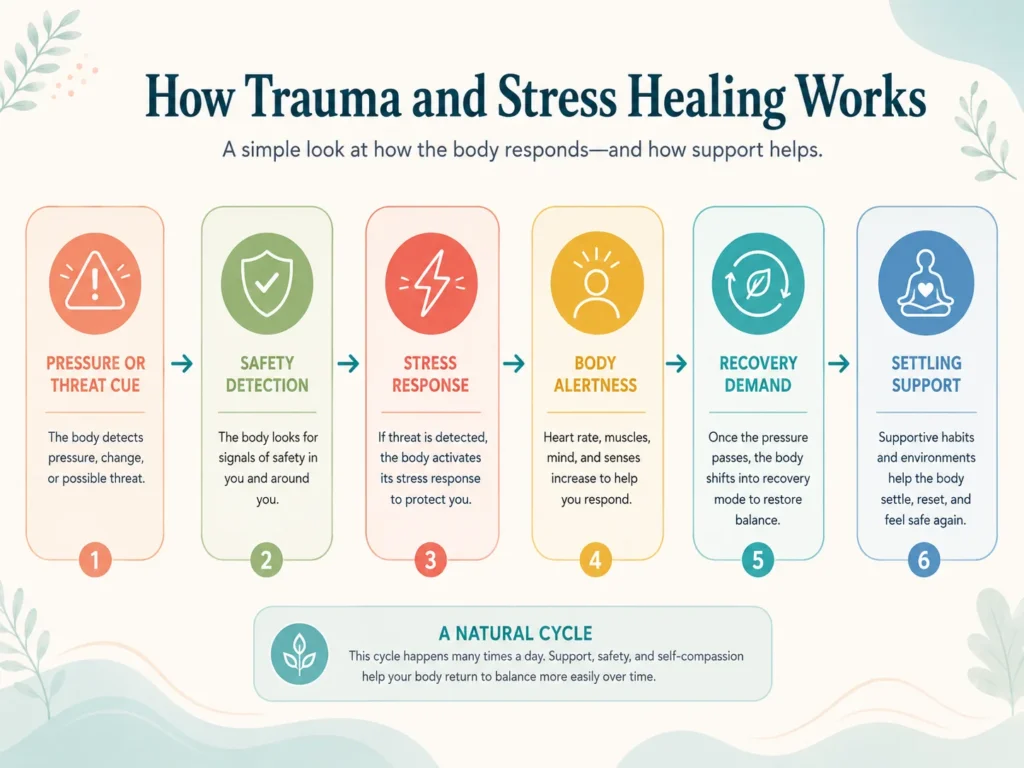
First, the body detects pressure, threat, pain, conflict, uncertainty, or emotional overwhelm. This detection may happen through thoughts, memory, body sensations, sound, movement, or environment. Next, the stress system may prepare the body for protection by increasing alertness, muscle readiness, heart rate, and attention.
As a result, the body may shift away from deep rest and toward action. This does not mean the body is broken. Instead, it means the body is trying to protect itself. However, when this pattern repeats often, the system may have fewer opportunities to settle.
Over time, repeated stress may interact with sleep, digestion, immune signaling, pain processing, circulation, and energy rhythm. For this reason, Trauma and Stress Healing must be understood as a whole-body education topic, not only an emotional topic.
At the same time, professional support may be important for people with trauma symptoms, severe distress, PTSD symptoms, panic, depression, or unsafe thoughts. Education can help explain patterns, but it should not replace qualified care.
Key Layers of Trauma and Stress Healing
Safety Detection Layer
The nervous system constantly scans for safety and threat. This happens partly through conscious thinking, but also through body signals and automatic responses. For example, a loud sound, conflict, pain flare, crowded space, or memory may make the body feel more alert.
This safety detection system can be useful. However, after trauma or long stress, it may become more sensitive. As a result, the body may respond strongly to small cues. From an educational view, this may increase body tension, sensory load, and recovery demand.
Autonomic Response Layer
The autonomic nervous system helps manage automatic body functions such as heart rate, digestion, sweating, breathing rhythm, and internal balance. During stress, the body may shift toward a more activated state. Meanwhile, rest, digestion, and deeper repair rhythms may become less dominant.
This does not mean every symptom is caused by stress. However, autonomic activity may influence how the body feels during pressure. For this reason, Trauma and Stress Healing connects strongly with Autonomic Regulation, Sleep & Recovery, and Stress System education.
Muscle Tension Layer
Stress and trauma may show up through the body. Many people notice jaw tightness, shoulder tension, chest tightness, clenched hands, back stiffness, or restless movement during stressful periods. These patterns may become habitual when the body stays guarded for long periods.
Muscle tension can also increase mechanical load. For example, a tense neck or rounded posture may affect comfort, breathing, and movement quality. Therefore, this layer connects with Movement Posture Nerve Regulation and Mechanical Damage System education without suggesting one direct cause.
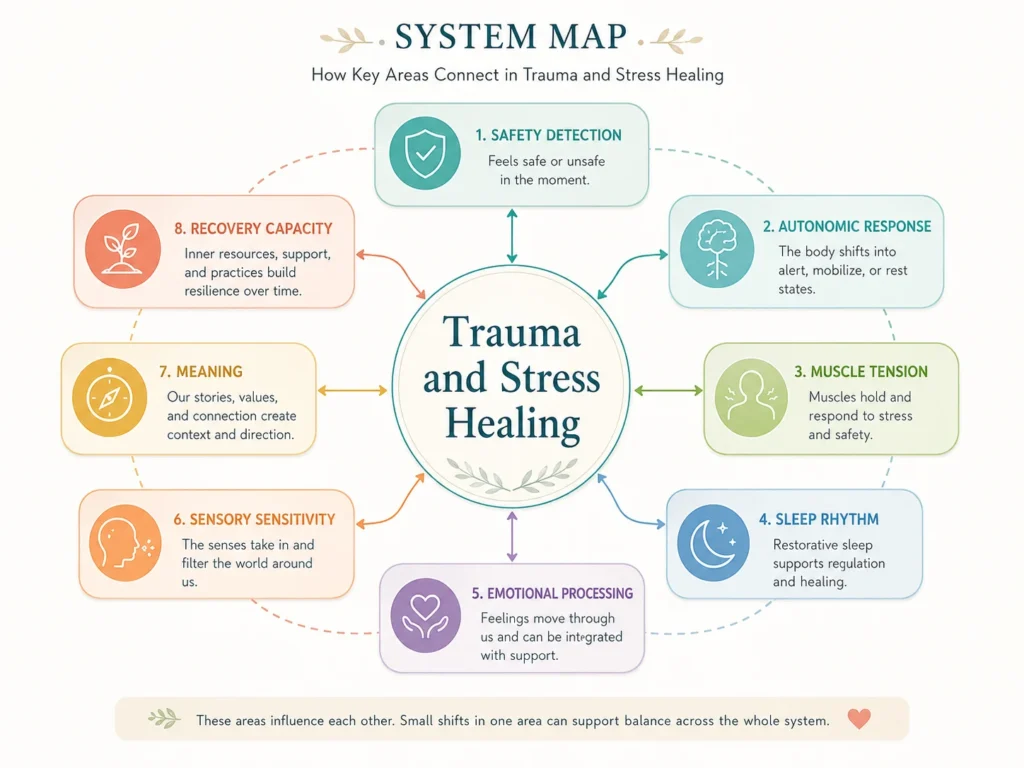
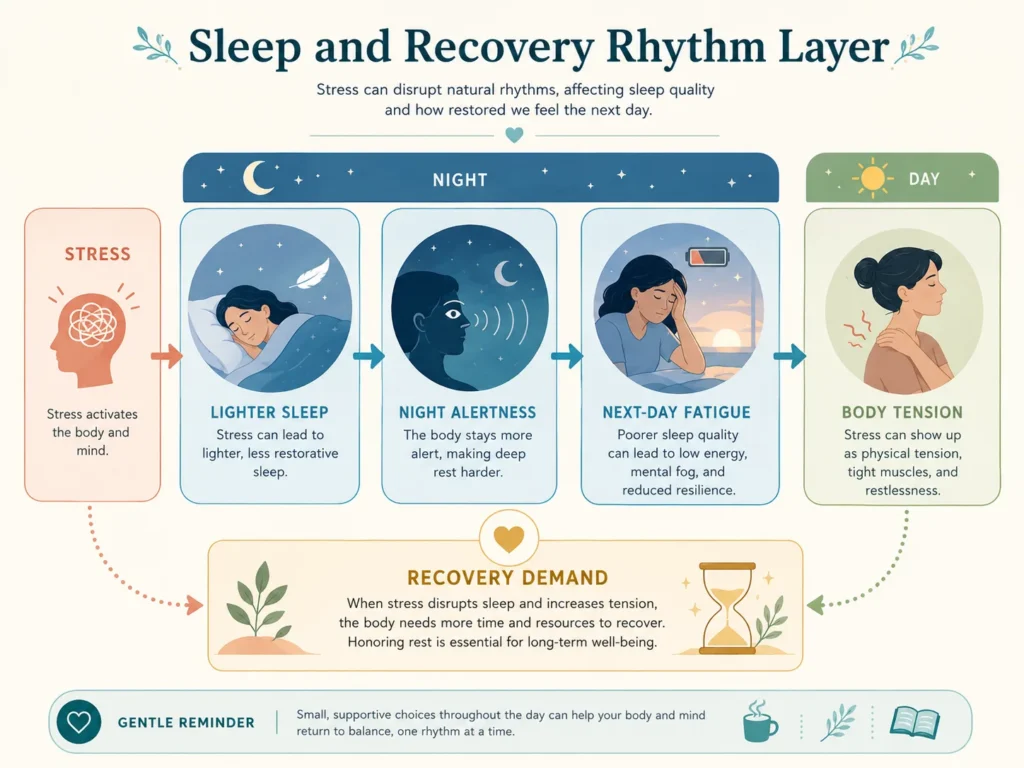
Sleep and Recovery Rhythm Layer
Stress can make sleep lighter, shorter, or more interrupted. In addition, traumatic stress may make the body more watchful at night. This may reduce the feeling of deep rest, even when a person spends enough hours in bed. As a result, next-day fatigue, tension, emotional sensitivity, and body awareness may feel stronger.
Sleep is one of the body’s major recovery windows. Therefore, poor sleep rhythm may increase recovery demand. This page does not claim that sleep fixes trauma or nerve symptoms. Instead, it explains why sleep rhythm belongs inside a wider stress and recovery education map. Readers can continue with the Sleep & Recovery page to understand how rest rhythm may connect with nervous system stability and recovery education.
Emotional Processing Layer
Trauma and stress may affect emotions such as fear, anger, sadness, shame, grief, irritability, or numbness. These emotional patterns are not signs of weakness. Instead, they may reflect how the brain and body are trying to organize difficult experiences.
In many cases, emotions also affect body signals. For example, fear may increase tension, while grief may reduce energy. Because of this, Emotional Regulation and Human Systems education may help readers understand the human side of nerve-health learning.
Sensory Sensitivity Layer
When the nervous system is under load, ordinary sensations may feel stronger. Light, sound, touch, temperature, pain, or internal body sensations may become harder to ignore. This does not prove nerve damage, but it may show that the system is carrying higher demand.
This layer matters because many readers search for sensitive nerves, burning feelings, tingling, numbness, nerve pain, or body sensitivity. These symptoms can have many causes. Therefore, they should be checked medically when sudden, severe, spreading, or unexplained.
Meaning and Control Layer
Stress often becomes heavier when a person feels trapped, unsupported, confused, or powerless. On the other hand, clear education, safe support, and predictable next steps may reduce confusion. This does not cure trauma, but it may help a person understand what is happening.
Meaning and control are human-system factors. They can influence how a person responds to symptoms, uncertainty, and recovery demand. For this reason, Trauma and Stress Healing connects with Motivation, Meaning & Purpose, Stress & Coping, and Learning Path education.
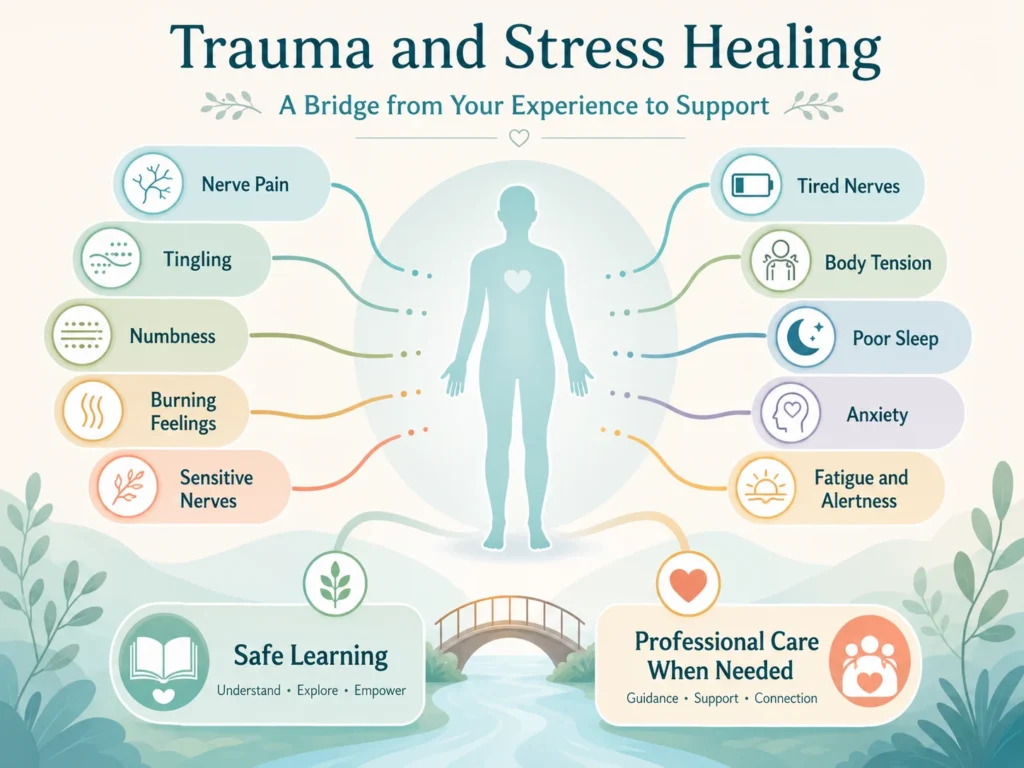
Real-Life Symptom Language Bridge
Some readers may search this topic because they notice nerve pain, tingling, numbness, burning feelings, sensitive nerves, tired nerves, body tension, poor sleep, anxiety, fatigue, or a body that feels constantly on alert. These symptoms can have many possible causes, including medical, neurological, metabolic, inflammatory, mechanical, emotional, and lifestyle-related patterns.
Therefore, Trauma and Stress Healing should never be used as the only explanation. Sudden weakness, severe numbness, loss of balance, bladder or bowel changes, chest pain, difficulty breathing, symptoms after injury, or rapidly changing neurological symptoms need urgent medical care.
At the same time, stress education may help readers understand why the body can feel more reactive during high demand. From a safe educational view, trauma and stress may be one possible layer in a larger nerve-health picture. For a broader overview of warning signs and symptom patterns, readers can continue with the Symptoms of Nerve Dysfunction page.
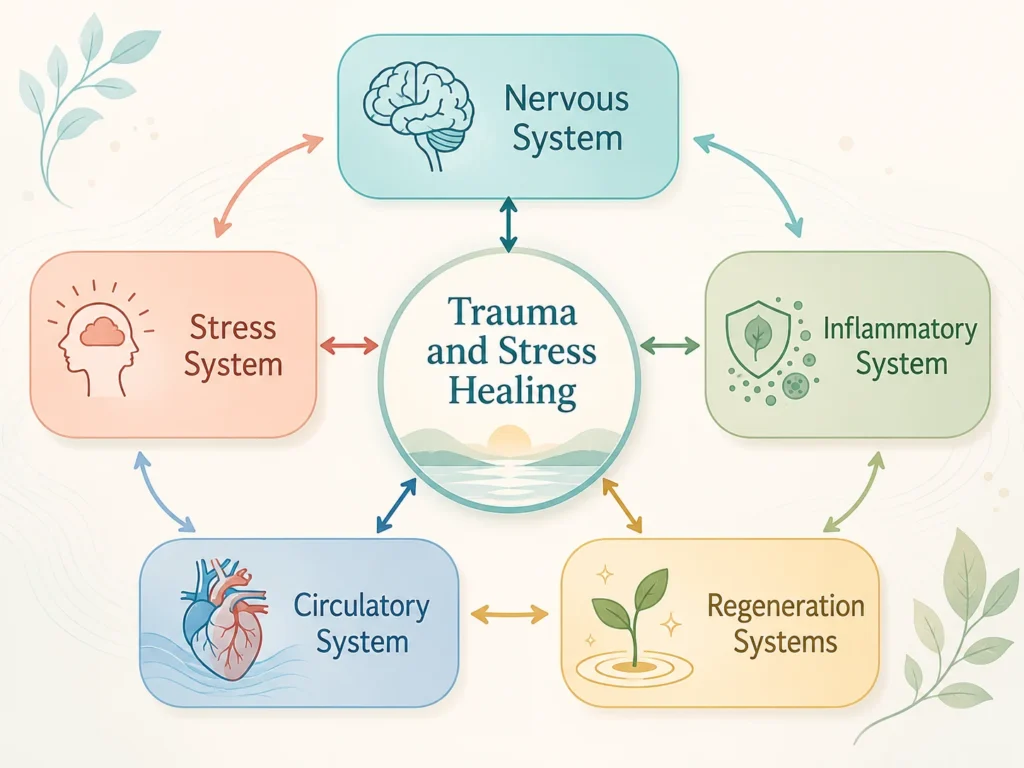
Trauma and Stress Healing Interactions
Nervous System Interaction
The nervous system helps detect signals, process sensations, guide movement, and coordinate body responses. Stress and trauma may influence how alert or guarded this system feels. Meanwhile, ongoing pain or sensory discomfort may also increase stress.
This is a two-way relationship. Stress may increase sensitivity, and symptoms may increase stress. Because of this, education should avoid blame. A person is not “causing” symptoms by feeling stressed. Instead, the body may be managing several connected loads at once.
Stress System Interaction
The Stress System includes body pathways that respond to demand, pressure, and threat. When stress is short-term, the system may help the body act quickly. However, long-term stress may keep the body in a more activated rhythm.
Trauma and Stress Healing belongs closely beside the Stress System page. The Stress System explains the body-wide response, while this page explains how trauma and stress load may shape safety, sensitivity, and recovery patterns over time.
Inflammatory System Interaction
Stress may interact with immune and inflammatory signaling. This does not mean stress directly causes inflammation in every person. However, stress load can be part of a wider body environment that includes immune activity, sleep disruption, and recovery demand.
Because inflammation can also influence nerve sensitivity, this interaction should be explained carefully. It is best understood as a network relationship, not a simple one-cause answer.
Circulatory System Interaction
Stress can influence heart rate, blood vessel tone, breathing rhythm, and muscle readiness. These changes may affect how the body distributes oxygen and energy during demand. In short bursts, this can be normal and useful.
However, repeated activation may interact with fatigue, tension, and recovery rhythm. For this reason, Trauma and Stress Healing connects with Circulation & Oxygenation, Oxygen Delivery and Nerve Function, and Microcirculation and Nerve Sensitivity.
Regeneration Systems Interaction
Recovery requires coordination between rest, energy, cellular repair, circulation, immune signaling, and nervous system stability. If stress load stays high, the body may have more demand to manage before deep recovery feels available.
This does not mean stress blocks all recovery. Instead, it means repeated stress may influence recovery capacity. Therefore, Trauma and Stress Healing should link naturally with Recovery Cycles, Integration and Stability, and Regeneration Systems education.
Patterns That Influence Trauma and Stress Healing
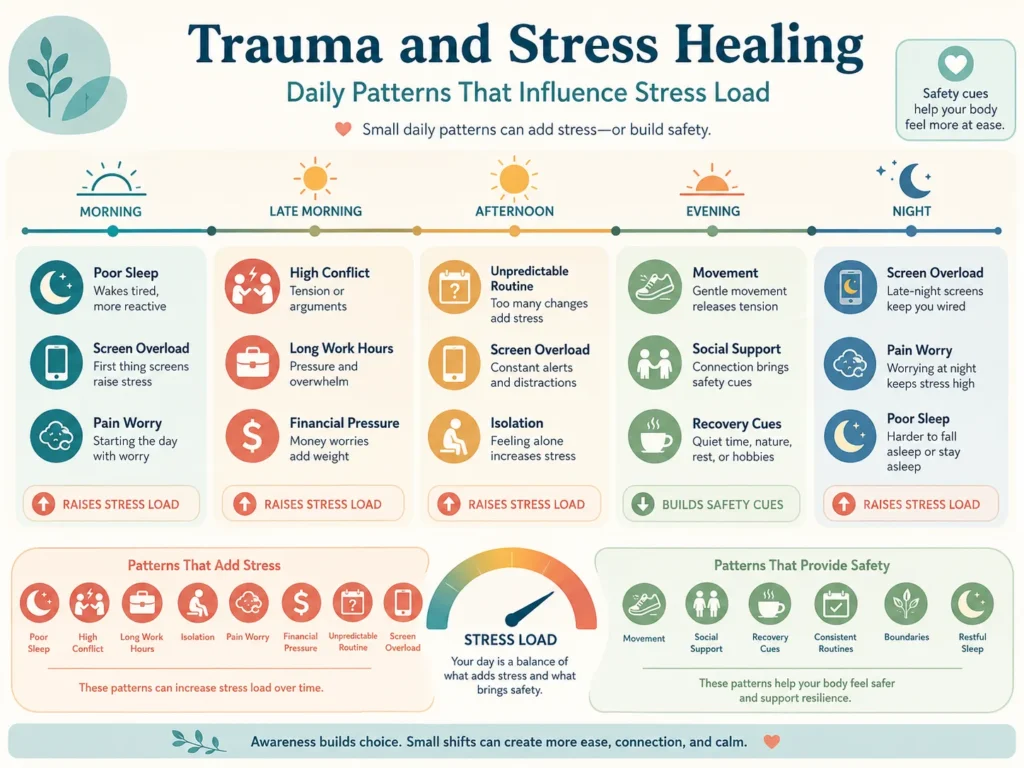
Daily patterns may shape how the stress system behaves. For example, poor sleep, high conflict, long work hours, isolation, pain worry, financial pressure, and unpredictable routines may keep the body more alert. Meanwhile, steady routines and safe support may give the system more predictable cues.
Movement patterns also matter. Long sitting, guarded posture, shallow breathing, or muscle bracing may increase body load. However, movement should not be presented as a trauma treatment. It is better explained as one possible body-signal layer.
Nutrition, hydration, light exposure, social connection, and screen overload may also influence energy rhythm and stress tolerance. These are not cures. Instead, they are daily-life factors that may affect the body’s overall demand.
Another important pattern is mental overload. For example, repeated worry, rumination, symptom checking, and fear-based searching may keep the mind focused on possible danger. This can make the body feel more alarmed, especially when symptoms are new or confusing. Readers can learn more about this related layer on the Mental Stress and Nervous System Load page. Clear education can help reduce confusion, but professional evaluation is still important when symptoms are new, severe, persistent, or worsening.
Trauma and Stress Healing and Nerve Function
Trauma and stress may connect with nerve function through alertness, muscle tension, sleep disruption, pain processing, circulation, and sensory sensitivity. However, this connection should be explained with care. Stress does not automatically mean nerve damage, and nerve symptoms should not be dismissed as “just stress.”
Nerves send, receive, and process signals throughout the body. When the body is under high demand, signal processing may feel more intense. For example, touch, temperature, pressure, or pain may feel stronger during periods of poor sleep or emotional overload.
In addition, long-term stress may increase guarding behavior. A person may move less, breathe shallowly, sleep poorly, or hold more tension. These patterns may increase body load and reduce comfort. Therefore, Trauma and Stress Healing belongs in a larger nerve-health education pathway.
Still, medical evaluation matters. Tingling, numbness, burning, weakness, balance changes, or pain can come from many causes. This page helps readers understand one possible body-wide layer, but it does not diagnose or explain symptoms alone.
Practical Daily-Life Examples
Stress and Night Alertness
A person may feel exhausted but still unable to sleep deeply. From a system view, the body may still be scanning for safety. As a result, next-day fatigue, tension, and sensitivity may feel stronger.
Conflict and Muscle Bracing
After a stressful conversation, someone may notice tight shoulders, jaw tension, or chest pressure. This does not prove injury. However, it may show how emotional stress can appear through the body.
Pain Worry and Sensory Focus
When nerve discomfort appears, a person may focus closely on every sensation. As a result, small changes may feel more alarming. Education can help create context, while medical care helps rule out serious causes.
Unpredictable Routine and Recovery Demand
Irregular sleep, skipped meals, long sitting, and constant screen time may increase body load. Over time, the nervous system may have fewer steady recovery cues. This is why the Daily Patterns and Nervous System Stability page can be a helpful next step.
Supportive Environment and Safety Signals
A calm room, predictable schedule, trusted person, gentle movement, or clear information may act as safety cues. These cues do not cure trauma, but they may help the body feel less overloaded.
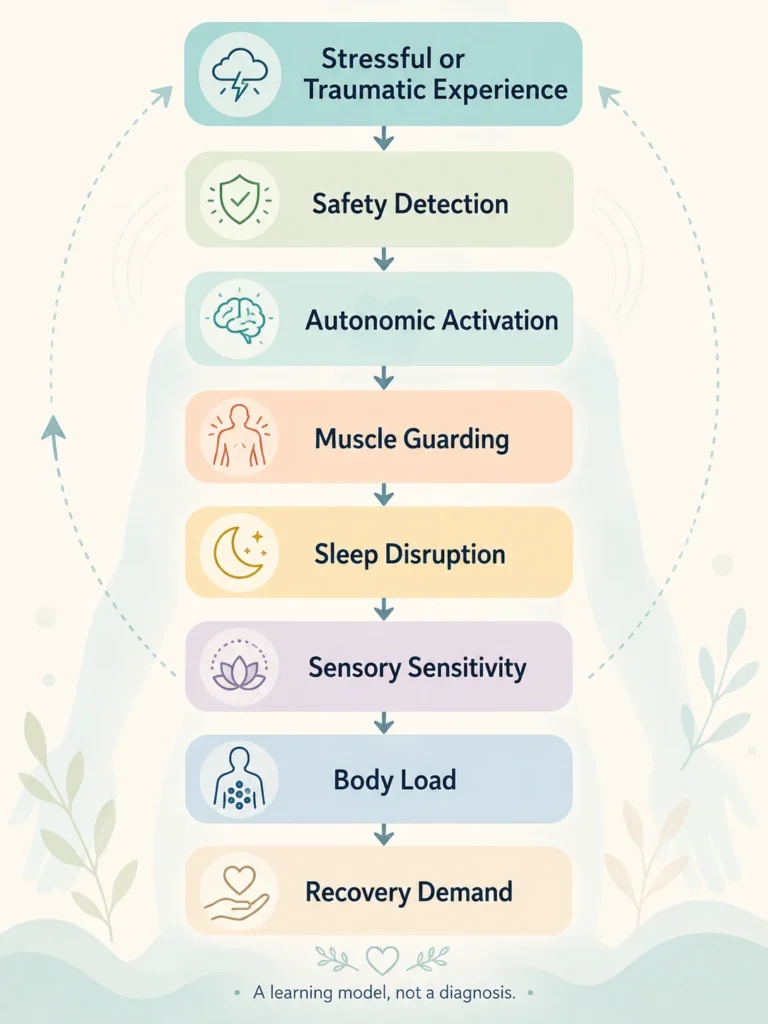
Trauma and Stress Healing Visual Flow
Stressful or Traumatic Experience
↓
Safety Detection and Alert Response
↓
Autonomic Activation and Muscle Guarding
↓
Sleep Disruption, Sensory Sensitivity, and Energy Demand
↓
Higher Body Load and Recovery Demand
↓
Need for Safety, Support, Rest Rhythm, and Professional Care When Needed
This flow is not always linear. Some people may move through the cycle quickly, while others may stay in certain stages longer. Also, different people may respond in different ways depending on health history, support, sleep, pain, environment, and medical conditions.
This visual flow is only an educational model. It should not be used to diagnose trauma, PTSD, neuropathy, anxiety, depression, or any nervous system condition.
Why Trauma and Stress Healing Matters for Recovery
Recovery Requires System Coordination
Recovery is not controlled by one system alone. It may involve the nervous system, immune system, circulatory system, sleep rhythm, metabolism, emotional processing, and daily behavior. Therefore, trauma and stress education helps readers see the bigger picture.
Recovery Requires Energy and Regulation
The body needs energy to adapt, repair, and settle. However, repeated stress may use energy for alertness, tension, and protection. As a result, recovery may feel harder when the body is constantly managing demand.
Recovery Requires Delivery and Clearance
Circulation helps deliver oxygen and nutrients while supporting waste removal. Stress-related tension, shallow breathing, and low movement may interact with this system. This does not mean stress causes poor circulation, but it may influence the body environment.
Recovery Requires Nervous System Stability
Stable nervous system signaling may help the body respond without staying overactivated. However, trauma and stress may make signals feel louder, faster, or harder to settle. For this reason, nervous system stability is an important educational concept.
Recovery May Be Influenced by Repeated Stress
Repeated stress can increase recovery demand. However, the goal is not to blame the reader. The goal is to understand patterns gently and build a safer learning path.
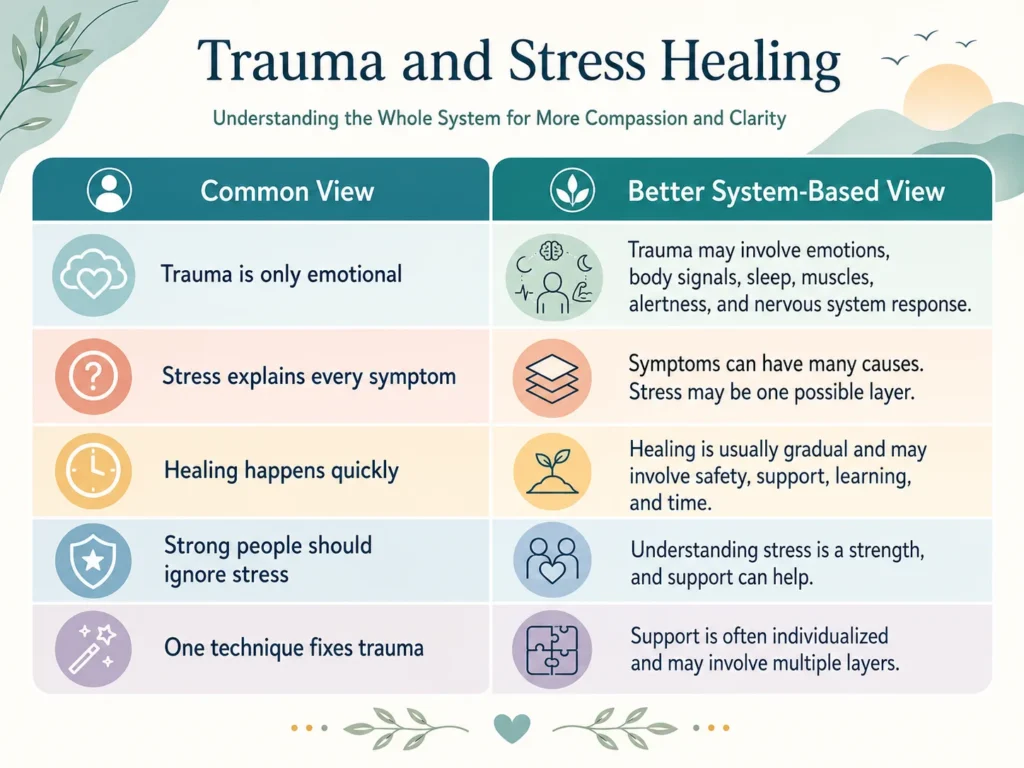
Common Misunderstandings About Trauma and Stress Healing
| Common View | Better System-Based View |
|---|---|
| Trauma is only emotional. | Trauma may involve emotions, body signals, sleep, muscles, alertness, and nervous system response. |
| Stress explains every nerve symptom. | Nerve symptoms can have many causes and may need medical evaluation. Stress is only one possible layer. |
| Healing means symptoms disappear quickly. | Healing is better understood as a long-term process of safety, support, regulation, learning, and care when needed. |
| Strong people should ignore stress. | Ignoring stress may increase body load. Understanding stress is a strength, not a weakness. |
| One technique fixes trauma. | Trauma support often requires a careful, individualized, professional, and safety-focused approach. |
Related Condition Connections
Trauma and Stress Healing may help readers understand one possible body-wide layer behind sensitivity, body tension, poor sleep, and stress-related symptom awareness. However, it should not be used to explain or diagnose any condition.
Peripheral Neuropathy may involve nerve symptoms such as numbness, tingling, burning, weakness, or pain. Trauma and stress education may help readers understand how stress load can affect comfort and sensitivity, but it does not replace medical evaluation.
Diabetic Neuropathy requires careful medical management and professional guidance. Stress education may support understanding of body load, but it does not treat diabetes or nerve damage.
Sciatic Nerve Pain may involve nerve irritation or compression patterns. Stress-related guarding and muscle tension may be one possible comfort layer, but structural and medical causes must be considered.
Post-Injury Nerve Damage may involve trauma to tissues or nerves. Emotional stress after injury may influence recovery experience, but symptoms after injury should be assessed by a qualified professional.
Nerve Compression may relate to mechanical pressure, posture, movement, or tissue irritation. Stress may influence tension and guarding, but it should not be treated as the main explanation without proper assessment.
Topic Cluster Placement
Parent / Cornerstone Page: Therapeutic Systems
Supporting Pages:
Stress System
Chronic Stress and Nervous System Dysregulation
Mental Stress and Nervous System Load
Sleep & Recovery
Daily Patterns and Nervous System Stability
Condition / Symptom Bridge Page: Symptoms of Nerve Dysfunction
Related Future Child Pages:
Trauma Stress and Nervous System Activation
Recovery Capacity and Nervous System Resilience
Trauma and Stress Healing FAQ
Can trauma affect the body?
Yes. Traumatic or stressful experiences may affect emotions, sleep, muscle tension, alertness, and body comfort. However, body symptoms can have many causes, so medical evaluation may be needed.
Does stress cause nerve pain?
Stress should not be treated as the only cause of nerve pain. Nerve pain may involve injury, compression, diabetes, autoimmune patterns, nutritional issues, inflammation, or other causes. Stress may be one possible layer in the wider picture.
Is Trauma and Stress Healing a treatment page?
No. This page is educational only. It explains body-system patterns and does not provide trauma therapy, mental health treatment, medical advice, or a recovery protocol.
When should someone seek professional help?
Professional help is important when trauma symptoms, panic, depression, unsafe thoughts, severe distress, or daily functioning problems are present. Urgent medical care is needed for sudden or severe neurological symptoms.
Can daily routines help the body feel safer?
Predictable routines may provide safety cues for some people. However, routines are not a replacement for professional care when trauma, mental health symptoms, or serious physical symptoms are present.
Why does stress make symptoms feel stronger?
Stress may increase attention, muscle tension, alertness, and sensory sensitivity. As a result, symptoms may feel more noticeable. Still, new or worsening symptoms should be checked medically.
Continue Learning
Therapeutic Systems — Explore how daily body patterns, stress load, sleep rhythm, movement, and recovery education may connect with nerve-health learning.
Stress System — Learn how the body’s stress response may interact with nervous system sensitivity and recovery demand.
Chronic Stress and Nervous System Dysregulation — Continue with a deeper look at long-term stress load and nervous system patterns.
Mental Stress and Nervous System Load — Learn how worry, attention load, rumination, and mental pressure may affect body demand.
Learning Path — Follow a structured nerve-health education journey.
Sources / References
NIMH — Coping With Traumatic Events
MedlinePlus — Stress
NCBI Bookshelf — Physiology, Stress Reaction
NINDS — Peripheral Neuropathy
NCCIH — Stress
MedlinePlus Medical Encyclopedia — Stress and Your Health
Author / Editorial Trust Note
This article was created for Heal Your Nerves Naturally as an educational resource. It was written with safety-focused wording, non-diagnostic language, and source-based health education. The page does not claim medical review, does not provide trauma therapy, and does not replace professional medical or mental health care.
For more information about the website’s purpose, readers can visit: About. Health Disclaimer. Contact
Educational Trust Note
This page is designed to help readers understand Trauma and Stress Healing from a system-based educational view. It explains how stress load, safety signals, sleep rhythm, muscle tension, and nervous system response may interact with nerve-health learning.
However, this page does not diagnose, treat, cure, or prevent disease. It does not provide trauma therapy, mental health treatment, medical advice, or a personal recovery plan. Readers with trauma symptoms, severe distress, neurological symptoms, or medical concerns should speak with qualified professionals.
Safety & Education Notice
This page is for educational purposes only. It does not diagnose, treat, cure, or prevent disease. It is not a substitute for professional medical advice, diagnosis, or treatment.
Seek urgent medical care for severe, sudden, unusual, or worsening symptoms, including sudden weakness, loss of bladder or bowel control, chest pain, difficulty breathing, severe numbness, severe pain, or rapidly changing neurological symptoms.
Because this topic may involve trauma, emotional distress, mental health symptoms, and medically sensitive body systems, readers should not use this information to self-diagnose, stop medication, begin supplements, follow self-treatment protocols, or delay professional care.