
Recovery Capacity and Nervous System Resilience: A Calm Educational Guide
Recovery Capacity and Nervous System Resilience explains how the body may respond after stress, overload, poor sleep, emotional pressure, or nervous system activation. This page is for education only. It does not diagnose trauma, PTSD, anxiety, nerve damage, burnout, depression, or any medical condition.
Recovery capacity means the body’s ability to rest, settle, and handle daily demand. In simple words, it is the body’s available space for recovery. When stress load is high, this space may feel smaller.
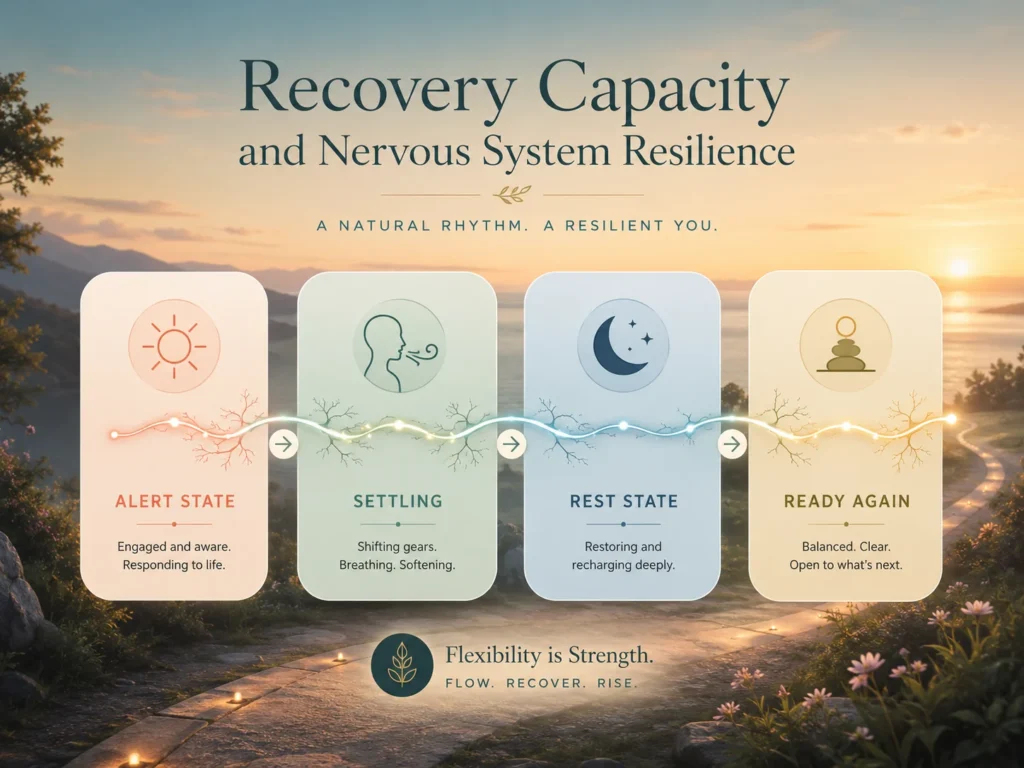
Nervous system resilience means the body may become more flexible over time. A resilient nervous system can become alert when needed. Then, when the pressure becomes lower, it may move back toward a calmer state.
However, resilience does not mean ignoring symptoms. It also does not mean forcing the body to push through serious warning signs. Some symptoms need medical care, mental health care, or urgent support.
For this reason, this page explains recovery capacity as one body-system layer. It shows how sleep, stress load, safety, daily rhythm, support, and symptom awareness may shape recovery needs.
The goal is simple. Readers can learn why the body may feel tired, sensitive, tense, or slow to settle after stress. At the same time, they should seek professional help when symptoms are serious, unsafe, persistent, or worsening.
Quick Navigation
What Is Recovery Capacity and Nervous System Resilience?
Recovery Capacity and Nervous System Resilience means the body has a certain amount of space for rest, repair, and settling after stress. This recovery space can change from day to day.
For example, poor sleep, illness, pain, worry, conflict, emotional pressure, or daily overload may make the body feel less able to recover. When demand stays high for too long, normal tasks may feel harder than usual.
As a result, small problems may feel bigger. A person may feel tired, tense, sensitive, slow to settle, or less able to handle daily pressure.
Recovery capacity is not about weakness. Instead, it is about how much demand the body is carrying and how much rest or support it may need.
Nervous system resilience means flexibility. A flexible nervous system can become alert when needed. Then, after the pressure lowers, it can move back toward a steadier state.
This does not mean the body must stay calm all the time. Instead, resilience means the body can shift between activity and rest more smoothly.
However, resilience is not the same as toughness. A strong person may still need sleep, support, care, safety, and time.
Therefore, this page explains resilience as a calm education topic. It is not a message to push through symptoms or ignore warning signs.
Plain Meaning / Glossary Box
This section explains the main terms in simple language. It can help readers understand Recovery Capacity and Nervous System Resilience without feeling confused by technical words.
Recovery capacity means the body’s ability to rest, settle, restore, and handle stress load. In simple words, it is the amount of “recovery space” the body has. This space may feel bigger on some days and smaller on others.
For example, good sleep, calm rhythm, and support may help the body feel more able to recover. However, poor sleep, pain, worry, conflict, illness, or heavy responsibility may reduce that space.
Nervous system resilience means the body’s ability to respond to demand and then return toward a steadier state. It is not about being perfect. Instead, it is about flexibility.
Stress load means the total pressure on the body and mind. This may include emotional stress, poor sleep, pain, too much noise, too many tasks, or ongoing worry.
Recovery demand means what the body may need after stress load. It may include rest, sleep, safety, support, quiet time, and a steadier daily rhythm.
Nervous system flexibility means the body can shift between alertness and settling. For example, the body may become active during a challenge. Then, when the pressure lowers, it may move back toward calm.
In simple words, Recovery Capacity and Nervous System Resilience explains how much room the body has to recover. It also explains why rest, rhythm, safety, sleep, and support may matter.
How Recovery Capacity and Nervous System Resilience Works
Recovery Capacity and Nervous System Resilience may work through several connected body pathways. These pathways may include sleep, stress response, breathing rhythm, muscle tension, emotional load, attention, digestion, immune signals, and daily energy.
First, the body uses energy to respond to stress. This response can be helpful for a short time. For example, it may help a person stay alert during pressure, danger, or heavy demand.
However, when stress stays high for too long, the body may have less energy left for recovery. As a result, the person may feel tired, tense, sensitive, or slow to settle.
Next, sleep and daily rhythm may affect recovery capacity. Good sleep gives the body time to rest and restore. Poor sleep may make the next day feel harder.
Because of this, small triggers may feel stronger after a poor night of sleep. The body may also need more time to calm down after normal daily pressure.
In addition, emotional load can affect the nervous system. Worry, fear, grief, conflict, or uncertainty may keep the body more alert than usual.
Therefore, recovery may feel slower when the body carries both physical and emotional demand. Even so, low recovery capacity is not a diagnosis.
It is only a simple way to understand body-wide demand. This page explains how stress, sleep, emotion, and daily rhythm may shape recovery needs without giving treatment advice or recovery promises.
Key Layers of Recovery Capacity and Nervous System Resilience
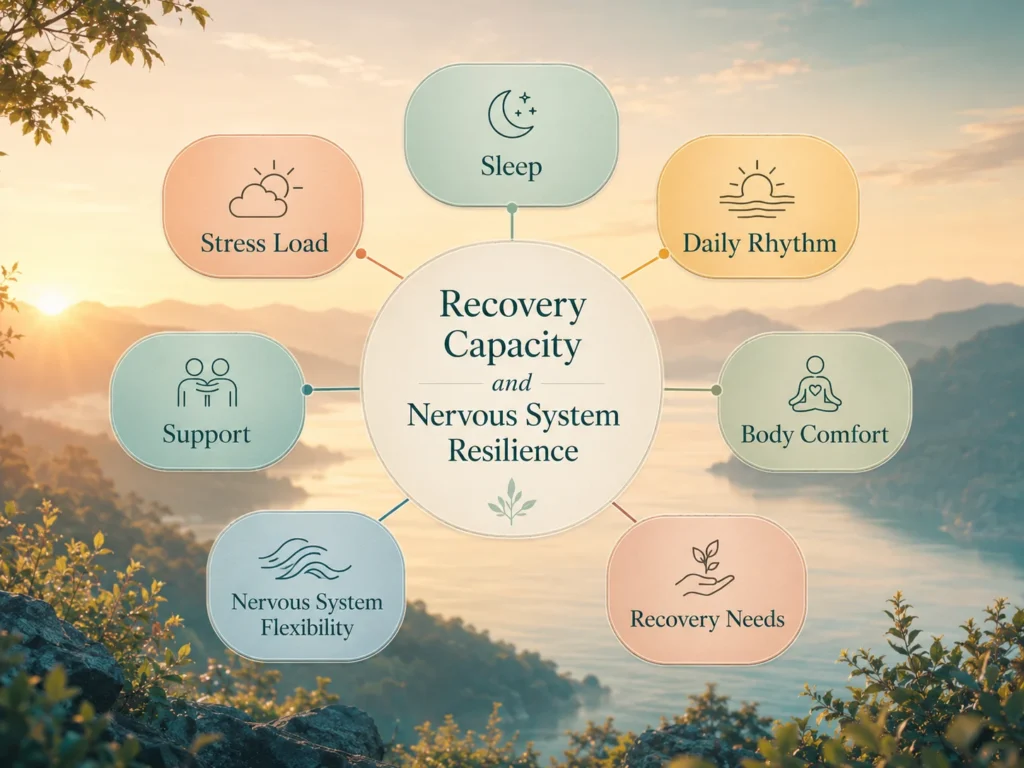
Recovery Capacity and Nervous System Resilience can be understood through several simple layers. These layers may work together. However, each person may feel them in a different way.
First, there is the sleep and rest layer. Sleep gives the body time to restore energy and settle stress signals. When sleep is short, light, or broken, recovery capacity may feel lower the next day.
Next, there is the stress-load layer. Ongoing pressure may keep the body more alert than usual. As a result, the nervous system may have less time to return toward a calmer state.
Another important layer is body comfort. Pain, muscle tension, digestive discomfort, sensory overload, or fatigue may add more demand to the body. Over time, this may reduce the body’s available recovery space.
In addition, support can make a difference. Safe relationships, calm routines, and professional care when needed may help reduce overload. Still, support is not a cure and should not replace medical care when symptoms are serious.
Finally, nervous system flexibility matters. A flexible system can respond to demand and then return toward steadiness. Therefore, recovery capacity is not about pushing through. It is about understanding the body’s load, rest needs, and support needs in a safer way.
Sleep and Rest Layer
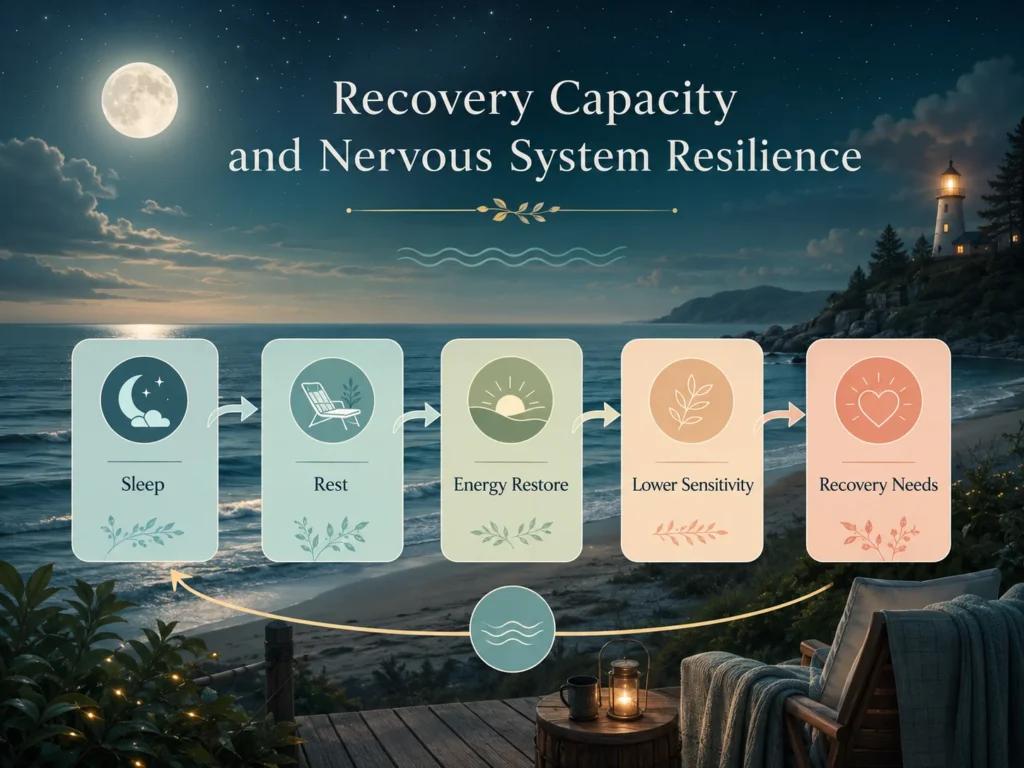
The sleep and rest layer is one of the most important parts of recovery capacity. Sleep gives the body time to restore energy, settle stress signals, and support daily function.
When sleep is steady, the next day may feel easier. A person may feel calmer, clearer, and more able to handle normal daily demand.
However, stress can disturb sleep. A person may fall asleep late, wake often, or feel tired in the morning. As a result, the body may have less time to recover.
Poor sleep may also increase sensitivity. Sounds, body signals, emotional stress, or pain may feel stronger when the body has not rested well.
Still, sleep problems can have many causes. Stress is only one possible layer. Therefore, ongoing sleep problems should not be explained from one article alone.
If poor sleep affects work, mood, safety, daily routine, or body comfort, a qualified healthcare professional can help review the situation.
This section is for education only. It explains why rest may matter for recovery capacity and nervous system resilience. However, it does not give sleep treatment instructions, cure claims, or personal medical advice.
Stress Load Layer
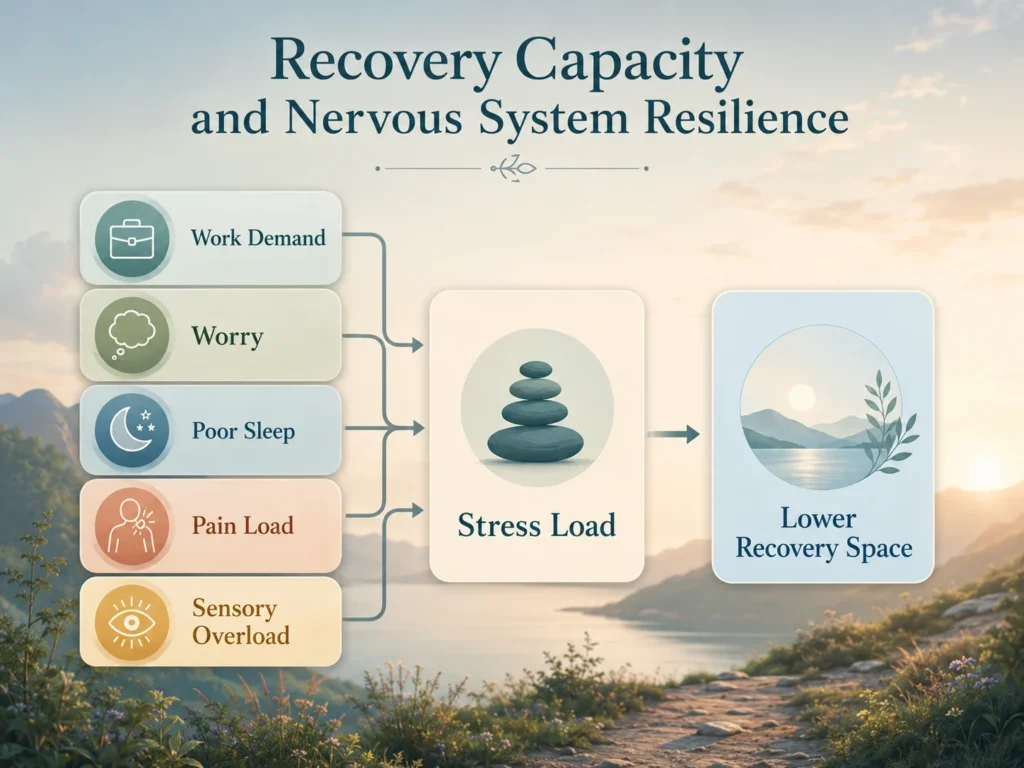
The stress load layer explains how daily pressure may affect recovery capacity. Stress load means the total demand placed on the body and mind.
This demand may come from work, family responsibility, worry, conflict, grief, pain, money pressure, illness, poor sleep, or too much stimulation. Over time, these pressures may build up.
At first, the body may respond by becoming more alert. This response can be useful during short-term demand. For example, it may help a person focus, react, or handle pressure for a short time.
However, when stress continues for too long, the body may stay activated longer than needed. As a result, recovery capacity may feel lower.
Because of this, a person may feel tense, tired, restless, sensitive, or less able to handle small problems. This does not mean the person is weak. Instead, it may mean the body is carrying more demand than usual.
For this reason, this page explains stress load as a body-system factor. It can help readers understand stress without blame.
Even so, education does not replace professional care. If symptoms become serious, unsafe, new, worsening, or hard to manage, medical or mental health support may be needed.
Nervous System Flexibility Layer
The nervous system flexibility layer explains how the body moves between activity and rest. A flexible nervous system can become alert when needed. Then, when the pressure lowers, it can move back toward a calmer state.
After long stress, this shift may feel harder. The body may stay alert even after the demand has passed. As a result, a person may feel “stuck on,” tense, easily startled, tired, or slow to recover.
However, this does not mean the person is weak. It may mean the body is carrying more stress load than usual. The nervous system may need more time, rest, safety, and support to settle.
Nervous system flexibility can also change from day to day. Sleep, pain, stress, illness, emotional load, daily rhythm, and support may all affect how flexible the system feels.
For this reason, one habit cannot fix everything. Instead, recovery capacity depends on many connected layers working together.
A calm and realistic view can help readers avoid self-blame. It can also help them understand why rest, rhythm, support, and professional care may matter.
Even so, serious, persistent, worsening, or unsafe symptoms should not be ignored. When symptoms become difficult to manage, a qualified healthcare professional or licensed mental health professional can help review the situation.
Real-Life Symptom Language Bridge
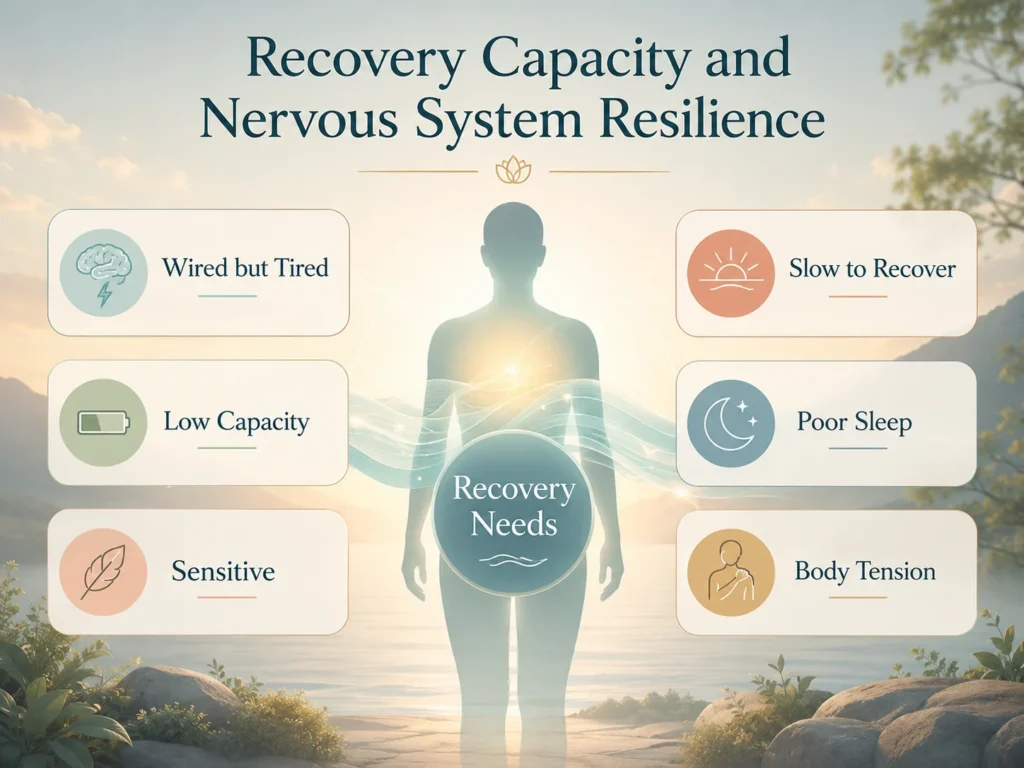
Some readers may search for Recovery Capacity and Nervous System Resilience because they feel drained, tired, tense, or easily overwhelmed. They may also feel overstimulated, easily triggered, or unable to bounce back after stress.
For example, some people may describe the feeling as “wired but tired,” “low capacity,” “burned out,” “sensitive,” or “unable to settle.” These phrases are not diagnoses. However, they can describe how the body may feel when stress load is high.
Some readers may also notice body symptoms. These may include nerve pain, tingling, numbness, burning feelings, weakness, body sensitivity, headaches, tight muscles, poor sleep, fatigue, or changes in comfort.
These symptoms can feel confusing. Stress load and body function can affect each other. For example, poor sleep may make pain feel stronger. Muscle tension may increase discomfort. Worry may keep the body more alert.
However, these symptoms can also have other causes. Nerve-related symptoms may connect with diabetes, vitamin deficiency, thyroid problems, injury, nerve compression, autoimmune disease, infection, medication effects, circulation problems, or other health conditions.
Therefore, this page explains only one possible layer. It helps readers understand how low recovery capacity may affect body comfort and sensitivity.
Even so, serious symptoms should not be ignored. Sudden, severe, spreading, worsening, or unusual symptoms should be checked by a qualified healthcare professional.
Recovery Capacity and Nervous System Resilience Interactions
Recovery Capacity and Nervous System Resilience may connect with many body systems. Sleep, stress response, automatic body regulation, muscle tone, immune signals, blood flow, digestion, attention, and sensory processing may all affect recovery capacity.
These systems do not work alone. Instead, they communicate with each other throughout the day. Because of this, pressure in one area may add demand to another area.
For example, poor sleep may make the next day feel harder. A person may feel more tired, sensitive, or less comfortable. In addition, muscle tension may increase body discomfort.
Then, body discomfort may make the brain more alert. As a result, sleep may become harder again. This kind of loop can make recovery feel slower during high-stress periods.
However, this loop does not prove a diagnosis. It only shows how body systems may interact. Therefore, this page uses a calm education-based view.
Readers who want the broader parent topic can continue with Trauma and Stress Healing.
To understand the previous step in this cluster, readers can explore Trauma Stress and Nervous System Activation.
For the automatic body-response layer, readers can continue with Autonomic Regulation.
Together, these pages help readers understand how stress, activation, sleep, body comfort, and recovery needs may connect. Still, education should not replace professional care when symptoms are serious, persistent, unsafe, or worsening.
Patterns That Influence Recovery Capacity and Nervous System Resilience
Several daily-life patterns may influence Recovery Capacity and Nervous System Resilience. These patterns do not explain everything. However, they may add demand to the body when the nervous system is already under stress.
Sleep disruption is one important pattern. When sleep is poor, the nervous system may get less time to settle and restore. As a result, the next day may feel harder.
High mental load may also add pressure. Worry, conflict, isolation, sensory overload, irregular routines, pain flares, low movement, and repeated stress may increase body demand.
In addition, too much screen time, ongoing fear, overwork, low rest time, and unpredictable routines may make recovery capacity feel lower. These patterns may keep the body more alert than usual.
However, this section is not a recovery protocol. It is not telling readers to fix trauma, pain, or nerve symptoms by themselves.
Instead, it explains why daily context may matter when the body is already carrying stress load. Some readers may need professional support. This may include medical care, trauma-informed therapy, crisis support, social support, medication review, sleep evaluation, or other guidance.
A calmer routine may support a safer daily environment. Still, routines are not a cure for trauma, PTSD, nerve symptoms, or any medical condition.
Therefore, the safest message is simple. Daily patterns may affect recovery capacity, but serious, persistent, unsafe, or worsening symptoms should be discussed with a qualified professional.
Recovery Capacity and Nerve Function
Recovery Capacity and Nervous System Resilience may affect how the body feels nerve-related sensations. However, low recovery capacity does not prove nerve damage by itself.
When the nervous system is overloaded, the brain may notice body signals more strongly. As a result, a normal feeling, muscle tension, pain signal, or existing nerve irritation may feel louder than usual.
Poor sleep may also make discomfort harder to tolerate. In addition, stress load may increase body tension and sensitivity. Because of this, some readers may notice more burning, tingling, numbness, tightness, or sensitivity during high-demand periods.
Still, nerve symptoms should never be dismissed as “just stress.” Peripheral neuropathy and other nerve conditions can have medical causes. Therefore, these symptoms may need proper evaluation.
A safer way to understand this topic is simple. Lower recovery capacity may increase nervous system load. Then, nervous system load may affect how symptoms feel.
Even so, diagnosis requires professional care. This is especially important when symptoms include weakness, spreading numbness, balance problems, symptoms after injury, or sudden nerve-related changes.
Readers who want to understand symptom words more clearly can continue with Symptoms of Nerve Dysfunction.
This related page can help readers learn about symptom language without guessing the cause. It also supports safer education by showing when symptoms may need professional attention.
Practical Daily-Life Examples
A person may feel exhausted after a stressful week. The tasks may not look extreme from the outside. However, the body may still need more recovery because stress load has built up over time.
For example, someone may sleep poorly after conflict, worry, grief, or heavy responsibility. As a result, the next day may feel harder. Normal sounds, body signals, or simple tasks may feel stronger than usual.
Another person may feel tension in the jaw, neck, shoulders, back, or limbs. This may happen when the body stays alert for too long. The tension may feel like pressure, tightness, heaviness, or tiredness.
In addition, some people may feel more sensitive after poor sleep or emotional stress. They may feel slower to recover, easier to overwhelm, or less able to handle small daily problems.
However, body symptoms should not be guessed too quickly. Tingling, numbness, burning, weakness, dizziness, hearing changes, or balance problems should not be labeled as stress without proper care.
Therefore, these examples are for education only. They can help readers understand recovery capacity in daily life while still protecting safety.
If symptoms are severe, new, spreading, worsening, or unsafe, a qualified healthcare professional should review the situation.
Recovery Capacity and Nervous System Resilience Visual Flow
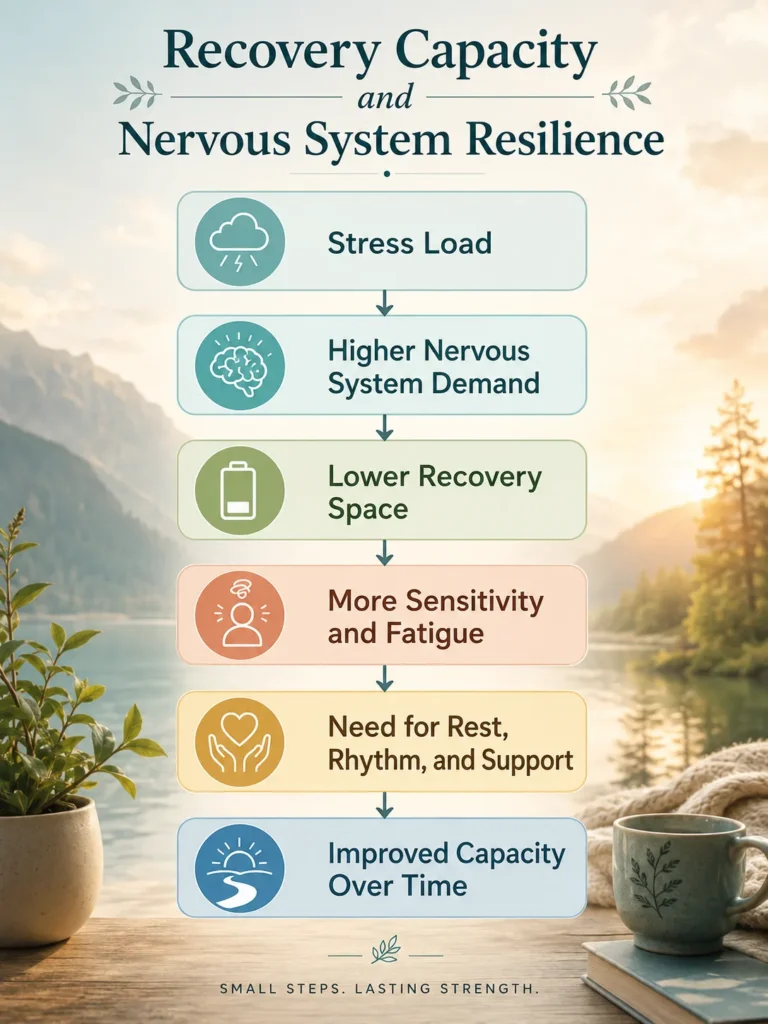
Recovery Capacity and Nervous System Resilience can be understood as a simple body-system flow. This flow shows how stress load may affect the body’s recovery space.
First, stress load may increase demand on the nervous system. The body may need more energy to stay alert, respond to pressure, and handle daily tasks.
Next, sleep, rest, and daily rhythm may become more important. When recovery time is low, the body may feel more tired, tense, sensitive, or easily overwhelmed.
After that, the nervous system may need more support to settle. This does not mean the person is weak. Instead, it may mean the body is carrying more demand than usual.
The flow can look like this:
Stress Load
↓
Higher Nervous System Demand
↓
Lower Recovery Space
↓
More Sensitivity and Fatigue
↓
Need for Rest, Rhythm, and Support
↓
Improved Capacity Over Time
This flow is for education only. It does not diagnose trauma, PTSD, nerve damage, anxiety, burnout, or any medical condition.
It also does not promise recovery. Stress load can be one layer in a wider body system.
For this reason, serious, sudden, worsening, or unusual symptoms should be discussed with a qualified healthcare professional or licensed mental health professional.
Why Recovery Capacity and Nervous System Resilience Matters
Recovery Capacity and Nervous System Resilience matters because recovery education is not only about one symptom. The body often needs several forms of support at the same time.
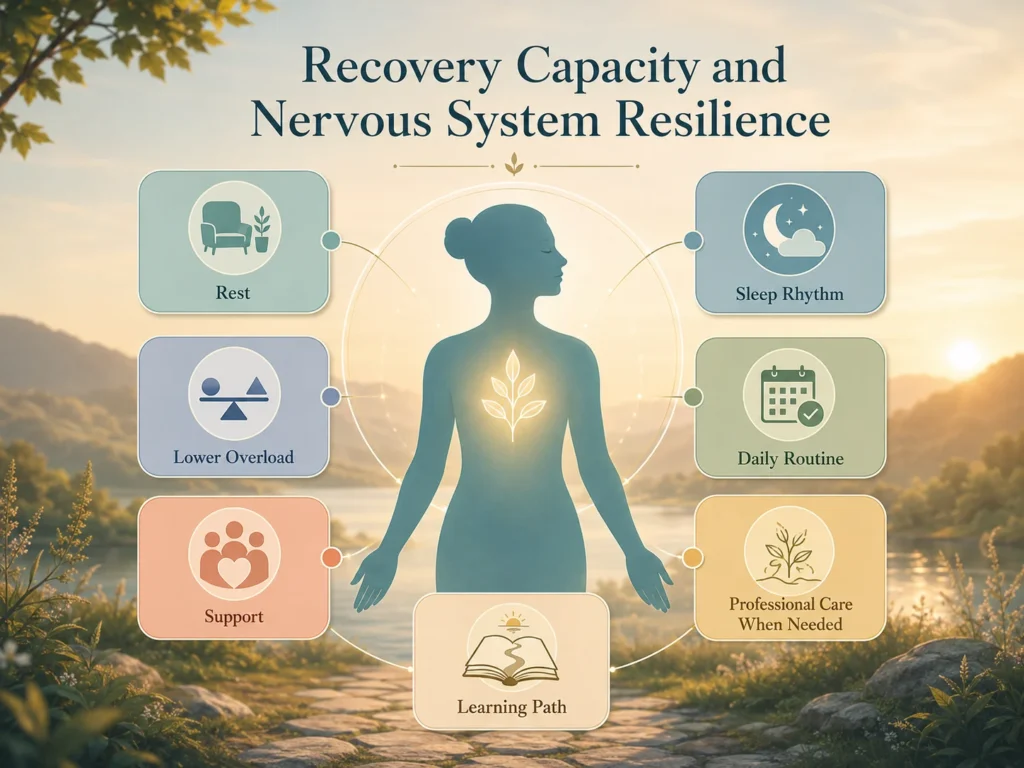
For example, the body may need better sleep, a steadier daily rhythm, lower overload, safe support, and clearer understanding. These layers can help readers understand why recovery may feel slower during stressful periods.
When readers understand recovery capacity, they may stop blaming themselves. Feeling tired, tense, sensitive, or slow to recover does not mean someone is weak.
Instead, these feelings may show that the body is carrying a high load. The nervous system may need more rest, rhythm, safety, and support before it feels steady again.
This topic is also important because resilience is often misunderstood. Some people think resilience means pushing through everything. Others think one habit or one technique can fix low capacity.
However, both ideas are too simple. A balanced view is safer and more helpful. Recovery capacity may depend on sleep, stress load, body comfort, emotional pressure, support, and professional care when needed.
Therefore, this page supports calm education, not pressure. It does not promise quick healing. It also does not provide treatment instructions, trauma-processing steps, supplement protocols, or cure claims.
The goal is simple. Readers can learn how recovery capacity may work while still respecting the need for professional diagnosis, medical review, or mental health support when symptoms are serious, persistent, unsafe, or worsening.
Common Misunderstandings About Recovery Capacity and Nervous System Resilience
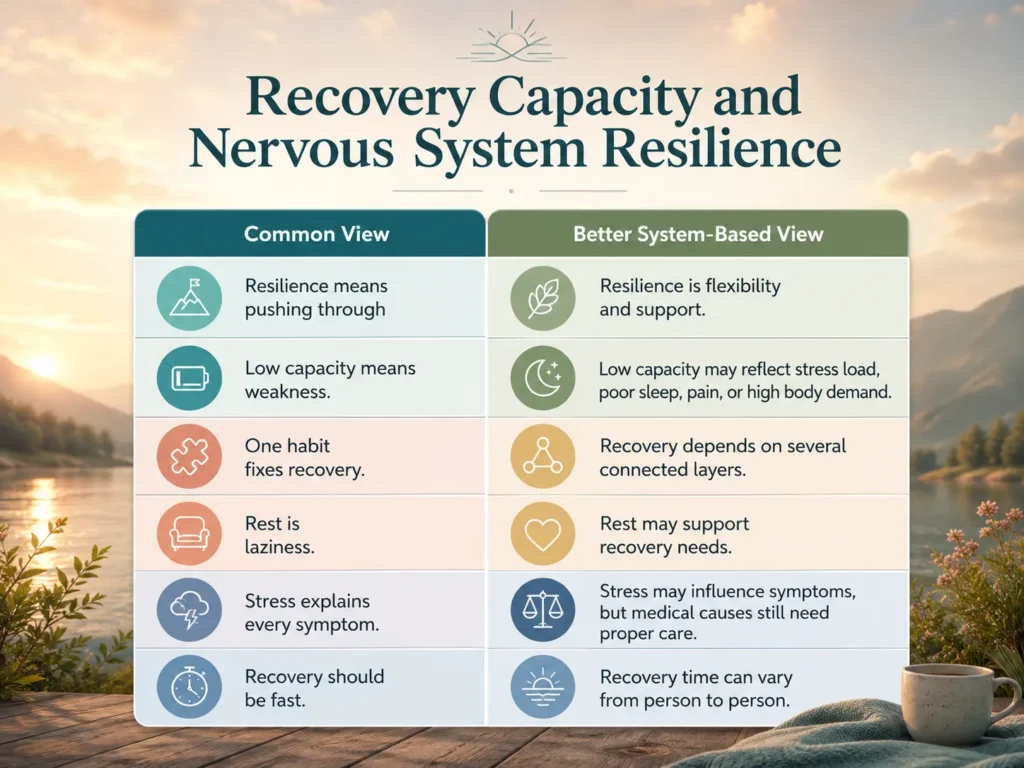
| Common View | Better System-Based View |
|---|---|
| Resilience means pushing through. | Resilience means flexibility, support, and the ability to settle after demand. |
| Low capacity means weakness. | Low capacity may reflect high stress load, poor sleep, pain, or other body demand. |
| One habit fixes recovery. | Recovery capacity depends on many connected layers. |
| Rest is laziness. | Rest may help the nervous system recover from demand. |
| Stress explains every symptom. | Stress may influence symptoms, but medical causes still need proper care. |
| Recovery should be fast. | Recovery needs can vary from person to person. |
Related Condition Connections
Recovery Capacity and Nervous System Resilience may connect with several condition pages. However, it should not be used to explain any condition by itself.
Some readers with Peripheral Neuropathy may also feel fatigue, poor sleep, stress, or sensitivity. In these cases, recovery capacity may affect how the body feels during daily life.
Readers with Diabetic Neuropathy may also notice changes in comfort, sleep, body sensitivity, or recovery needs. However, diabetic neuropathy can have specific health causes, so it should not be explained through stress or recovery capacity alone.
In addition, people with Nerve Compression may feel pain, pressure, tingling, numbness, or sensitivity. Recovery capacity may shape how symptoms feel, but it does not explain the nerve pressure itself.
Readers with Sciatic Nerve Pain may also experience poor sleep, fear of movement, body tension, or stress-related sensitivity. Because of this, recovery capacity can be a useful supporting topic.
People with Post-Injury Nerve Damage may also notice stress, worry, body guarding, or higher recovery demand after an injury. Still, injury-related symptoms need careful attention and proper guidance when symptoms are serious, new, or worsening.
Even so, these conditions can have specific health causes. For example, nerve symptoms may relate to blood sugar changes, nerve pressure, injury, inflammation, circulation issues, or other medical factors.
Therefore, Recovery Capacity and Nervous System Resilience should be used as a supporting education topic only. It can help readers understand stress load, sleep, sensitivity, and recovery needs. However, it should not replace medical evaluation or condition-specific guidance.
Topic Cluster Placement
Recovery Capacity and Nervous System Resilience belongs inside the Therapeutic Systems cluster. It connects closely with the broader Trauma and Stress Healing page.
This page explains what may happen after stress activation. It shows why the body may need rest, support, rhythm, safety, sleep, and lower overload after heavy stress.
Because of this, it works as a follow-up topic after Trauma Stress and Nervous System Activation. That page explains how the nervous system may become more alert after stress. This page explains why the body may then need more recovery space.
Readers can also explore the Stress System page to understand how long-term stress may affect body load. This connection is helpful because recovery capacity often becomes lower when stress load stays high for too long.
For long-term stress patterns, readers can continue with Chronic Stress and Nervous System Dysregulation. That page explains how ongoing stress may affect body alertness, sleep, sensitivity, and nervous system balance.
Sleep is another important connection. The Sleep & Recovery page explains why rest, rhythm, and recovery needs matter for nervous system education.
Finally, readers who want a guided path through the website can continue with the Learning Path page. It helps visitors move step by step through related nerve-health education.
Together, these pages help readers understand stress load, nervous system activation, recovery capacity, sleep, and safer learning. However, this cluster should stay educational only. It should not give treatment instructions, recovery promises, or cure claims.
Recovery Capacity and Nervous System Resilience FAQ
Can recovery capacity change from day to day?
Yes. Recovery capacity may change based on sleep, stress load, pain, illness, emotional pressure, rest, support, and daily rhythm. This page explains the topic for education only.
Does low recovery capacity mean I am weak?
No. Low recovery capacity does not mean weakness. It may reflect high body demand, poor sleep, emotional load, pain, illness, or ongoing stress.
Can stress reduce nervous system resilience?
Stress may affect how flexible the nervous system feels. When stress stays high, the body may have less time to settle. However, stress is not the only possible cause of symptoms.
Can sleep support recovery capacity?
Sleep can support health and emotional well-being. Poor sleep may make the body feel more sensitive, tired, or overloaded. Ongoing sleep problems should be discussed with a qualified professional.
Is this page giving treatment advice?
No. This page does not provide treatment advice, trauma therapy, supplement protocols, recovery promises, or medical instructions. It only provides calm education.
When should someone seek urgent help?
Seek urgent help if symptoms include thoughts of self-harm, feeling unsafe, chest pain, fainting, sudden weakness, spreading numbness, loss of balance, bladder or bowel changes, severe confusion, symptoms after injury, or rapidly worsening symptoms.
Continue Learning
Readers can continue learning through related pages on Heal Your Nerves Naturally. These pages explain stress load, nervous system activation, sleep recovery, symptom patterns, and safe nerve-health education.
Each page adds one more layer of understanding. Together, they can help readers see the body as a connected system. However, these pages do not diagnose symptoms or provide treatment advice.
A good next step is Trauma and Stress Healing. This page gives the broader parent view of trauma-related stress and explains how stress may affect both body and mind.
Readers can also continue with Trauma Stress and Nervous System Activation. That page explains how the nervous system may become more alert, tense, or sensitive after intense stress.
For long-term stress patterns, readers can visit Chronic Stress and Nervous System Dysregulation. It explains how ongoing stress may affect nervous system balance, body alertness, sleep, sensitivity, and recovery needs.
Sleep is another helpful topic. The Sleep & Recovery page explains why rest, rhythm, and recovery needs matter for nervous system education.
In addition, readers who want to understand automatic body responses can continue with Autonomic Regulation. This page explains the body-response layer, including alertness, breathing rhythm, and settling.
Finally, the Learning Path gives visitors a simple way to move through the website step by step. It can help readers continue learning without feeling overwhelmed.
Together, these pages support calm education. Still, readers should seek professional care when symptoms are serious, persistent, unsafe, worsening, or difficult to manage.
Sources / References
The following sources were used to support this educational page. These references help readers learn more about stress, trauma response, sleep, and nervous system health from trusted health-information organizations.
For trauma-related stress education, readers can visit the National Institute of Mental Health — Coping With Traumatic Events page. This source explains how people may respond after traumatic or highly stressful events.
Readers who want to learn more about PTSD can also review the National Institute of Mental Health — Post-Traumatic Stress Disorder page. This source gives a broader overview of PTSD symptoms, risk factors, and professional care options.
For simple stress education, MedlinePlus — Stress is a helpful source. It explains stress in a clear way and connects stress with body and mind responses.
In addition, MedlinePlus Medical Encyclopedia — Stress and Your Health explains how stress may affect health and daily function. This source can help readers understand why stress load should be taken seriously.
For sleep education, readers can review CDC — About Sleep. This source explains why sleep matters for health, daily function, and well-being.
Readers can also visit the broader CDC — Sleep page for more sleep-related education and public health information.
Finally, the National Institute of Neurological Disorders and Stroke provides trusted information about the brain, nerves, and nervous system conditions.
These sources are used for education only. They do not replace medical care, mental health care, diagnosis, emergency support, or personal guidance from a qualified professional.
Author / Editorial Trust Note
This page is part of Heal Your Nerves Naturally. The website shares calm and structured education about nerve health, body systems, stress load, and recovery-related learning.
This article helps readers understand Recovery Capacity and Nervous System Resilience in a simple way. It explains how stress, sleep, body tension, sensitivity, support, and daily rhythm may affect recovery needs.
The page is written for education only. It does not provide diagnosis, treatment, trauma therapy, supplement advice, or personal medical instructions.
In addition, this content is not meant to replace medical care or mental health support. A qualified professional can review personal history, symptoms, risk factors, and test results when needed.
This topic is handled with careful language because stress, trauma, recovery, and nervous system symptoms can feel sensitive. Some symptoms may feel emotional. Others may feel physical.
In many cases, body and mind may both be involved. For this reason, the page encourages readers to seek qualified professional care when symptoms are severe, persistent, worsening, unsafe, or hard to manage.
Every section is written to support safe learning. The content avoids fear-based language, cure claims, recovery promises, and self-treatment instructions.
The goal is simple. Readers can use this page to understand the topic more clearly, ask better questions, and seek the right support when needed.
Educational Trust Note
This page is for education only. It should not replace medical care, mental health care, trauma therapy, diagnosis, or emergency support.
Recovery capacity can feel different from person to person. Some people may feel tired, tense, sensitive, or slow to settle after stress. Others may notice poor sleep, body discomfort, low energy, or changes in daily function.
However, nerve-related symptoms can have many causes. They may come from nerve irritation, blood sugar changes, immune issues, circulation changes, injury, sleep problems, medication effects, or other health conditions.
Because of this, it is not safe to explain every symptom through stress or recovery capacity alone. Stress load may be one part of the picture, but it should not be used as the only explanation.
The safest way to use this page is as a learning guide. It can help readers understand possible body-system connections in a calm and simple way.
In addition, this page may help readers ask better questions when they speak with a qualified healthcare professional or licensed mental health professional.
A professional can review personal history, symptoms, risk factors, and test results. Then, they can decide what type of care or support may be appropriate.
The goal of this page is simple. It supports safer understanding, not self-diagnosis.
Safety & Education Notice
Recovery Capacity and Nervous System Resilience is a sensitive topic. This page is for education only. It helps readers understand how stress load, poor sleep, body tension, sensitivity, and daily demand may affect recovery needs.
This page does not diagnose PTSD, trauma, anxiety, panic disorder, neuropathy, nerve damage, burnout, depression, or any medical condition. It also does not provide trauma therapy, treatment steps, recovery promises, cure claims, supplement protocols, or self-diagnosis advice.
Recovery needs can differ from person to person. For example, some people may feel tired, tense, easily startled, sensitive, or unable to settle. Others may notice sleep problems, low energy, body discomfort, or emotional overload.
However, these signs can also have other health causes. For this reason, it is not safe to guess the cause from one article.
Please seek urgent help if you feel unsafe, have thoughts of self-harm, feel out of control, or experience severe panic. Also seek urgent help for chest pain, fainting, sudden weakness, spreading numbness, loss of balance, bladder or bowel changes, severe back pain with leg weakness, confusion, symptoms after injury, or rapidly worsening symptoms.
If symptoms affect your sleep, work, relationships, daily routine, or sense of safety, consider speaking with a qualified healthcare professional or licensed mental health professional.
Education can help readers understand their body better. Still, professional care is important when symptoms are serious, persistent, unsafe, worsening, or hard to manage.
This page should be used as a calm learning guide. It can help readers ask better questions, understand recovery capacity more clearly, and seek the right support when needed.