
| Reading time: 20–25 minutes |
| Evidence level: Educational, evidence-informed |
| Last updated: July 2026 |
Chronic Nerve Pain: A Complete Guide to Causes, Symptoms, Treatment & Whole-Person Recovery
Chronic nerve pain is more than pain that lasts for a long time. It reflects ongoing changes in how the nervous system detects, processes, and responds to sensory information. Unlike pain that serves as a temporary warning after an injury, chronic nerve pain can continue long after the original tissue damage has healed or may develop because of disease, injury, or dysfunction affecting the nerves themselves.
Within the Human Systems framework, chronic nerve pain is best understood as a whole-person condition rather than a problem affecting only a single nerve. The nervous system interacts continuously with the brain, immune system, circulation, movement, sleep, emotions, cognition, nutrition, and everyday habits. Changes within any of these interconnected systems may influence how pain is experienced, how the body adapts, and how recovery progresses over time.
Nerves act as the body’s communication network. They carry information about touch, temperature, pressure, movement, and pain between different parts of the body and the brain. When nerves become injured, inflamed, compressed, or otherwise impaired, these signals may become distorted. Instead of transmitting accurate information, damaged nerves may generate abnormal electrical activity, causing sensations such as burning, tingling, stabbing pain, electric shock-like feelings, numbness, or heightened sensitivity to normally harmless touch.
Chronic nerve pain can develop from many different underlying conditions. Diabetes, peripheral neuropathy, autoimmune disorders, shingles, chemotherapy, vitamin deficiencies, traumatic injuries, spinal conditions, and inherited neurological disorders are only a few of the many possible contributors. In some individuals, no single cause can be clearly identified despite careful evaluation.
Modern neuroscience shows that chronic nerve pain involves more than injured nerves alone. Over time, the brain and spinal cord may also become more sensitive to incoming pain signals through processes such as neuroplasticity and central sensitization. These adaptive—but sometimes maladaptive—changes can amplify pain perception even when the original injury has stabilized. Understanding these mechanisms helps explain why chronic nerve pain is often complex and why successful management frequently requires addressing multiple biological, psychological, and lifestyle factors together.
Although chronic nerve pain can significantly affect quality of life, many people continue to improve their symptoms, physical function, and daily participation through evidence-based medical care, rehabilitation, healthy lifestyle practices, and individualized recovery strategies. Recovery does not always mean eliminating every symptom; it often involves improving function, reducing pain severity, increasing resilience, and supporting the nervous system’s capacity to adapt over time.
This guide explores chronic nerve pain from a whole-person perspective. You’ll learn what chronic nerve pain is, how it develops, common causes and symptoms, how the nervous system changes during persistent pain, current evidence on diagnosis and treatment, and how chronic nerve pain interacts with the broader Human Systems that influence long-term health and recovery.
In This Guide, You’ll Learn
- What chronic nerve pain is and how it differs from other types of pain.
- How damaged or dysfunctional nerves generate persistent pain signals.
- The biological processes involved in chronic neuropathic pain.
- Common causes, risk factors, and symptoms.
- The differences between acute pain and chronic nerve pain.
- How chronic nerve pain affects the nervous system over time.
- The relationship between chronic nerve pain and neuroplasticity.
- How chronic nerve pain interacts with other Human Systems, including cognition, emotional regulation, movement, sleep, circulation, nutrition, and recovery.
- Evidence-based approaches to diagnosis, treatment, rehabilitation, and self-management.
- Common misconceptions about chronic nerve pain.
- Practical strategies that may support long-term adaptation, function, and quality of life.
Chronic Nerve Pain at a Glance
| Feature | Overview |
|---|---|
| Medical Name | Chronic neuropathic pain |
| Primary System | Somatosensory nervous system |
| Common Symptoms | Burning, tingling, numbness, electric shock-like pain, weakness |
| Duration | Usually persists for more than three months |
| Common Causes | Diabetes, nerve compression, shingles, chemotherapy, autoimmune disorders, trauma |
| Diagnosis | Medical history, neurological examination, laboratory tests, imaging, nerve conduction studies, EMG |
| Treatment | Medications, rehabilitation, movement therapy, lifestyle strategies, multidisciplinary care |
| Recovery | Depends on the underlying cause and severity of nerve injury |
| Human Systems Involved | Nervous System, Movement Therapy, Mental Recovery, Nutrition, Circulation, Emotional Regulation, Habits, Recovery Engineering |
Key Takeaway
Chronic nerve pain is more than long-lasting pain. It reflects changes in the way the nervous system processes sensory information. Although it can significantly affect daily life, modern research shows that the nervous system remains adaptable. Through evidence-based treatment, rehabilitation, healthy lifestyle practices, and individualized care, many people can improve function, reduce symptoms, and support long-term recovery.
Why This Matters
Understanding chronic nerve pain as a whole-person Human System condition helps explain why successful management often requires more than treating a single symptom. Nerves interact continuously with the brain, immune system, circulation, movement, sleep, nutrition, emotions, cognition, and everyday behaviors. Recognizing these connections encourages a comprehensive, evidence-informed approach that supports not only pain reduction but also improved function, resilience, and overall well-being.
Quick Navigation
- What Is Chronic Nerve Pain?
- Signs & Symptoms
- Causes & Risk Factors
- Diagnosis
- Pain Mechanisms Explained
- Chronic Nerve Pain and Human Systems
- Human Systems Interactions
- Real-Life Examples
- Treatment Options
- Prevention & Risk Reduction
- Frequently Asked Questions
- Continue Learning
- Sources & References
What Is Chronic Nerve Pain?
Chronic nerve pain, also called chronic neuropathic pain, is persistent pain that results from damage, disease, or dysfunction affecting the somatosensory nervous system—the network responsible for detecting touch, temperature, pressure, vibration, and painful stimuli. Unlike pain that occurs as a normal response to a recent injury, chronic nerve pain arises because the nerves themselves are no longer transmitting information accurately.
In a healthy nervous system, sensory nerves detect changes in the environment and send electrical signals through the spinal cord to the brain. These signals help the brain determine whether a sensation is harmless, potentially harmful, or requires immediate action. When this communication system is disrupted by injury or disease, abnormal nerve signals may continue even when no new tissue damage is occurring. As a result, the brain may perceive ongoing pain despite the absence of an immediate physical threat.
From the Human Systems perspective, chronic nerve pain is not simply a problem affecting one nerve or one part of the body. It represents changes occurring across multiple interconnected systems, including the peripheral nerves, spinal cord, brain, immune system, circulatory system, endocrine system, and the behavioral and psychological systems that influence adaptation and recovery. These systems continuously interact, meaning that chronic nerve pain is best understood as a whole-person condition rather than an isolated symptom.
Unlike acute pain, which usually serves as a protective warning that encourages healing, chronic nerve pain often continues beyond the expected period of recovery. For many individuals, the nervous system becomes increasingly sensitive over time, amplifying pain signals through processes such as peripheral sensitization, central sensitization, and neuroplasticity. These adaptive changes can make ordinary sensations—such as light touch, clothing against the skin, or gentle movement—feel uncomfortable or painful.
Chronic nerve pain may affect almost any part of the body depending on which nerves are involved. Some people experience burning pain in the feet due to diabetic peripheral neuropathy, while others develop shooting pain along the leg from nerve root compression, persistent facial pain following nerve injury, or widespread neuropathic symptoms after certain autoimmune or infectious diseases. Although the location and cause may differ, the underlying feature is altered nerve signaling rather than pain generated solely by damaged muscles, joints, or skin.
The condition also varies considerably between individuals. Two people with the same diagnosis may experience very different symptoms, pain intensity, functional limitations, and recovery patterns. Factors such as genetics, nervous system sensitivity, sleep quality, physical activity, emotional well-being, underlying medical conditions, and social support all contribute to how chronic nerve pain develops and how it is experienced.
Importantly, chronic nerve pain does not always indicate that the body is continuing to sustain damage. In many cases, the nervous system has become more efficient at generating pain signals even after the original injury has stabilized. Understanding this distinction is one of the most important advances in modern pain science because it helps explain why persistent pain sometimes continues despite healing of the initial tissue injury.
Current research also emphasizes that chronic nerve pain is neither “imagined” nor “just psychological.” The pain reflects genuine biological changes within the nervous system. At the same time, psychological, behavioral, and environmental factors can influence how pain is processed, interpreted, and managed. Recognizing these interactions supports a more comprehensive approach to treatment that addresses the whole person rather than focusing exclusively on one anatomical structure.
Because chronic nerve pain often involves multiple biological and behavioral mechanisms, effective management frequently combines medical evaluation, treatment of the underlying cause whenever possible, rehabilitation, physical activity, sleep optimization, nutritional support, stress management, and education about pain neuroscience. Rather than relying on a single intervention, long-term improvement often results from addressing the many Human Systems that contribute to pain, function, and resilience.
Chronic Nerve Pain in Plain Language
At its simplest, chronic nerve pain means that the nerves or the nervous system continue sending pain signals for months or longer because the communication system itself has been affected.
Instead of acting like a temporary alarm that switches off after healing, the nervous system may remain unusually sensitive or continue producing abnormal signals. This can cause pain even when there is little or no ongoing tissue injury.
People living with chronic nerve pain often describe sensations such as:
- Burning pain
- Electric shock-like pain
- Sharp or stabbing sensations
- Tingling (“pins and needles”)
- Numbness
- Increased sensitivity to touch
- Pain from normally non-painful activities, such as wearing clothes or light pressure
The symptoms may come and go, remain constant, or fluctuate throughout the day.
For example:
- A person with diabetes may develop burning pain and numbness in the feet because high blood sugar has gradually damaged peripheral nerves.
- Someone recovering from shingles may continue experiencing nerve pain long after the skin rash has healed.
- A spinal disc pressing on a nerve root may cause shooting pain that travels from the lower back into the leg.
- Following chemotherapy, some individuals develop tingling, numbness, or persistent pain due to treatment-related nerve injury.
Although these conditions have different causes, they share one important feature: the nervous system itself is contributing to the ongoing pain experience.
Understanding chronic nerve pain as a condition involving the entire Human Systems network—not simply injured nerves—helps explain why successful recovery often requires improving overall nervous system health, physical function, emotional resilience, sleep, nutrition, movement, and healthy daily habits alongside appropriate medical care.
How Chronic Nerve Pain Develops
Chronic nerve pain does not usually begin as a permanent condition. In many cases, it starts with an injury, illness, or disease that affects the nerves or the nervous system. While some people recover as the underlying condition heals, others develop persistent changes in how the nervous system processes pain. Over time, these changes can allow pain to continue long after the original trigger has resolved.
Within the Human Systems framework, chronic nerve pain develops through the interaction of multiple biological systems rather than a single event. Nerve cells, the spinal cord, the brain, the immune system, circulation, metabolism, sleep, movement, and psychological adaptation all influence how pain evolves. This explains why two people with similar nerve injuries may have very different recovery experiences.
Rather than viewing chronic nerve pain as a single disease, it is more accurate to understand it as an adaptive—but sometimes maladaptive—process involving changes throughout the nervous system.
Step 1: A Trigger Affects the Nervous System
For many people, chronic nerve pain begins when the somatosensory nervous system is injured or disrupted.
Common triggers include:
- Diabetes-related nerve damage
- Physical trauma
- Surgery
- Nerve compression
- Herniated spinal discs
- Autoimmune disorders
- Viral infections such as shingles
- Chemotherapy
- Vitamin deficiencies
- Toxic exposures
- Stroke or spinal cord injury
These conditions may directly damage nerve fibers or interfere with their ability to transmit normal electrical signals.
Normally, nerves carry accurate sensory information to the brain. After injury, however, damaged nerves may begin generating abnormal impulses that the brain interprets as pain.
Step 2: Damaged Nerves Begin Sending Abnormal Signals
Healthy nerves communicate using carefully regulated electrical and chemical signals.
When nerves become injured, several changes may occur:
- Damaged nerve fibers may fire spontaneously.
- Pain receptors become more easily activated.
- Injured nerves may become hypersensitive.
- Neighboring healthy nerves may also become affected.
- Abnormal communication develops between sensory nerve fibers.
Instead of responding only to harmful stimuli, damaged nerves may begin producing pain signals without an obvious external cause.
People often notice symptoms such as:
- Burning sensations
- Electric shock-like pain
- Tingling
- Sharp stabbing pain
- Crawling sensations
- Intermittent shooting pain
These symptoms reflect altered nerve communication rather than new tissue injury occurring every moment.
Step 3: Peripheral Sensitization Increases Pain Sensitivity
After nerve injury, the area surrounding damaged nerves often becomes more sensitive.
This process is known as peripheral sensitization.
Inflammatory chemicals released during injury can lower the activation threshold of pain receptors.
As a result:
- Mild stimulation may trigger pain.
- Pain lasts longer than expected.
- Previously harmless sensations become uncomfortable.
- Nerves respond more strongly than before.
This heightened sensitivity may persist even after the initial injury has largely healed.
Peripheral sensitization represents one of the earliest biological mechanisms involved in the transition from acute to chronic nerve pain.
Step 4: The Spinal Cord Amplifies Incoming Pain Signals
Pain signals do not travel directly from injured nerves to conscious awareness.
Instead, they first pass through the spinal cord, where they are continuously filtered, modified, and regulated.
When pain persists for weeks or months, spinal cord neurons may gradually become increasingly responsive.
This process contributes to:
- Greater pain amplification
- Expanded pain areas
- Increased responsiveness to stimulation
- Reduced filtering of incoming pain signals
The spinal cord begins transmitting stronger pain messages to the brain than would normally occur.
Step 5: Central Sensitization Develops
One of the most important discoveries in modern pain science is central sensitization.
Central sensitization refers to increased sensitivity within the central nervous system, particularly the spinal cord and brain.
Over time:
- Pain pathways become more efficient.
- The nervous system responds more rapidly to sensory input.
- Harmless stimuli may become painful (allodynia).
- Painful stimuli may feel more intense than expected (hyperalgesia).
In other words, the brain’s “volume control” for pain may become turned up.
Importantly, central sensitization does not mean the pain is imagined.
Instead, it reflects measurable biological changes within the nervous system that influence how pain signals are processed.
Not everyone with chronic nerve pain develops central sensitization, but it is considered an important mechanism in many persistent pain conditions.
Step 6: Neuroplasticity Reinforces Pain Pathways
The nervous system is highly adaptable.
This ability to reorganize itself is called neuroplasticity.
Neuroplasticity is usually beneficial because it supports:
- Learning
- Memory
- Skill development
- Recovery after injury
However, persistent pain can also reshape neural networks.
Repeated pain signaling may strengthen certain pain pathways, making them easier to activate.
This does not mean permanent damage is occurring.
Rather, it reflects the nervous system adapting to repeated input.
Fortunately, neuroplasticity also works in the opposite direction.
Evidence suggests that rehabilitation, exercise, pain education, healthy sleep, stress reduction, and appropriate medical treatment may help encourage healthier patterns of nervous system activity over time.
Step 7: Multiple Human Systems Begin Interacting
As chronic nerve pain persists, it rarely affects only the nerves themselves.
Instead, many interconnected Human Systems become involved.
For example:
| Human System | Contribution to Chronic Nerve Pain |
|---|---|
| Nervous System | Generates and processes pain signals. |
| Immune System | Inflammatory responses may influence nerve sensitivity. |
| Circulation & Oxygenation | Supports nerve health through oxygen and nutrient delivery. |
| Movement Therapy | Reduced movement may contribute to stiffness, weakness, and reduced function. |
| Cognitive Systems | Thoughts, expectations, learning, and attention influence pain perception. |
| Emotional Regulation | Stress, anxiety, frustration, and resilience affect adaptation to persistent pain. |
| Sleep | Poor sleep may increase pain sensitivity and reduce recovery capacity. |
| Nutrition | Supports nerve repair, metabolism, and overall neurological health. |
| Habits | Daily behaviors gradually influence long-term recovery or persistent symptoms. |
These interactions explain why chronic nerve pain is considered a whole-person condition rather than simply a localized nerve problem.
Why Recovery Differs Between Individuals
No two people develop chronic nerve pain in exactly the same way.
Recovery depends on many interacting factors, including:
- The underlying cause
- Which nerves are affected
- Duration of symptoms
- Age
- Overall health
- Sleep quality
- Physical activity
- Nutrition
- Other medical conditions
- Access to appropriate treatment
- Individual biological differences
Because of this complexity, treatment plans should be individualized rather than assuming one approach works for everyone.
A Human Systems Perspective
Within the Human Systems framework, chronic nerve pain develops through continuous interaction between biology, behavior, and environment.
A simplified model looks like this:
Trigger (injury, disease, or nerve dysfunction)
↓
Abnormal nerve signaling
↓
Peripheral sensitization
↓
Spinal cord amplification
↓
Central sensitization
↓
Neuroplastic changes
↓
Interactions with sleep, movement, emotions, cognition, nutrition, and habits
↓
Persistent pain and functional changes
↓
Recovery and adaptation remain possible through evidence-based interventions
This model emphasizes that chronic nerve pain is not a single event but an evolving process. It also highlights an encouraging principle of modern neuroscience: because the nervous system remains adaptable throughout life, many of the processes that contribute to persistent pain can also become targets for recovery, rehabilitation, and long-term improvement.
Key Takeaways
Chronic nerve pain develops gradually through a series of interconnected biological and behavioral processes rather than from one isolated cause.
The transition from acute nerve injury to persistent pain may involve:
- Damage or dysfunction affecting the nervous system.
- Abnormal electrical activity within injured nerves.
- Peripheral sensitization that increases nerve sensitivity.
- Central sensitization within the spinal cord and brain.
- Neuroplastic changes that strengthen pain pathways.
- Ongoing interactions with sleep, movement, cognition, emotional regulation, nutrition, and daily habits.
Understanding these mechanisms provides the foundation for modern, evidence-informed approaches to prevention, treatment, rehabilitation, and long-term recovery.
How the Nervous System Changes During Chronic Pain
The nervous system is designed to help protect the body. When an injury or illness occurs, specialized sensory nerves detect potential danger and send signals to the spinal cord and brain. Normally, these protective pain signals decrease as healing progresses and the perceived threat to the body diminishes.
In chronic nerve pain, however, the nervous system itself undergoes biological changes that can alter how pain is generated, transmitted, processed, and regulated. These changes do not necessarily indicate ongoing tissue damage. Instead, they reflect adaptations within the peripheral nerves, spinal cord, brain, and supporting cells that influence how the body interprets sensory information.
From the Human Systems perspective, these neurological changes interact continuously with sleep, movement, emotional regulation, cognition, immune activity, circulation, nutrition, and daily behaviors. Together, these interconnected systems help explain why chronic nerve pain often becomes a whole-person condition rather than a problem affecting only one nerve.
The following sections explore the major nervous system changes that current neuroscience has identified in persistent neuropathic pain.
Peripheral Nerves Become More Sensitive
For many people, chronic nerve pain begins with changes in the peripheral nervous system, which includes the nerves outside the brain and spinal cord.
Following injury or disease, affected nerves may undergo structural and functional changes.
Researchers have observed that damaged nerves may:
- Fire electrical signals spontaneously.
- Become hypersensitive to stimulation.
- Develop abnormal ion channel activity.
- Produce pain without an external trigger.
- Communicate abnormally with neighboring nerve fibers.
Instead of accurately reporting information about the environment, these altered nerves may continuously send danger signals to the central nervous system.
As a result, sensations that would normally feel harmless—such as clothing brushing against the skin or a gentle breeze—may become uncomfortable or painful.
The Spinal Cord Becomes More Responsive
Pain signals entering the spinal cord are not transmitted unchanged.
The spinal cord acts as an important processing center that can either amplify or reduce incoming sensory information before it reaches the brain.
When pain persists over weeks or months, neurons within the spinal cord may become increasingly excitable.
This increased responsiveness can lead to:
- Stronger pain transmission.
- Lower pain thresholds.
- Larger areas of perceived pain.
- Increased responsiveness to repeated stimulation.
Scientists often describe this process as one component of central sensitization, where the central nervous system becomes more efficient at producing pain responses.
Importantly, these changes represent altered information processing rather than evidence that new tissue injury is occurring continuously.
The Brain Reorganizes Through Neuroplasticity
One of the most important discoveries in neuroscience is that the brain remains adaptable throughout life.
This ability to reorganize itself is called neuroplasticity.
Under normal circumstances, neuroplasticity allows people to:
- Learn new skills.
- Form memories.
- Recover after neurological injury.
- Adapt to changing environments.
Persistent pain can also influence neuroplasticity.
Repeated pain signals may strengthen neural pathways involved in pain processing, making them easier to activate over time.
Researchers have found changes in brain regions involved in:
- Sensory perception.
- Attention.
- Emotion.
- Memory.
- Decision-making.
- Learning.
- Movement planning.
These changes do not mean the brain is permanently damaged.
Instead, they demonstrate that the nervous system adapts to repeated experiences—including persistent pain.
Because neuroplasticity remains active throughout life, many rehabilitation strategies aim to encourage healthier patterns of nervous system activity through movement, education, gradual exposure, and evidence-based therapy.
Pain Processing Becomes More Efficient
As chronic pain continues, the nervous system may become increasingly efficient at recognizing and responding to pain-related information.
This can result in:
- Faster activation of pain pathways.
- Stronger responses to smaller stimuli.
- Longer-lasting pain signals.
- Increased awareness of painful sensations.
In some individuals, the nervous system begins prioritizing pain-related information over other sensory input.
This helps explain why persistent pain can sometimes dominate attention and become difficult to ignore, even during everyday activities.
The Brain’s Pain Modulation System May Become Less Effective
Pain is not controlled only by signals traveling upward from injured tissues.
The brain also sends descending pathways back to the spinal cord that help regulate how much pain reaches conscious awareness.
These pathways can:
- Reduce pain signals.
- Amplify pain signals.
- Filter unnecessary sensory information.
- Adjust pain responses according to context.
In healthy conditions, these descending systems help prevent excessive pain.
During chronic nerve pain, however, this natural modulation may become less efficient in some individuals.
As a result:
- Pain inhibition decreases.
- Pain amplification increases.
- Everyday sensations become more noticeable.
- Recovery may take longer.
Researchers continue studying why these regulatory systems change and how rehabilitation can help improve their function.
Glial Cells Become More Active
For many years, neuroscience focused primarily on neurons.
Today, researchers recognize that glial cells—the supporting cells of the nervous system—also play important roles in chronic pain.
Glial cells help:
- Support neurons.
- Maintain healthy nerve environments.
- Remove cellular waste.
- Participate in immune responses.
- Regulate communication between nerve cells.
After nerve injury, glial cells may become activated.
Activated glial cells release signaling molecules that can:
- Increase inflammation.
- Enhance pain transmission.
- Promote central sensitization.
- Influence recovery processes.
Although research continues, glial activation is now considered one of several biological contributors to persistent neuropathic pain.
The Brain Continues Interpreting Context
Pain is more than a simple signal traveling from nerves to the brain.
The brain continuously evaluates incoming information alongside many other factors, including:
- Previous experiences.
- Expectations.
- Attention.
- Emotional state.
- Sleep quality.
- Environmental context.
- Current physical health.
This process does not mean pain is “all in the mind.”
Rather, it reflects the normal way the brain integrates information from multiple Human Systems before generating the conscious experience of pain.
For example:
- Poor sleep may increase pain sensitivity.
- Persistent stress may make pain feel more overwhelming.
- Feeling safe during rehabilitation may reduce protective responses.
- Positive recovery experiences may gradually improve nervous system regulation.
These interactions illustrate why whole-person approaches are increasingly emphasized in modern pain management.
The Nervous System Remains Adaptable
Perhaps the most encouraging finding from contemporary neuroscience is that the nervous system continues changing throughout life.
Although chronic pain involves biological adaptations, these adaptations are not necessarily permanent.
Research suggests that nervous system function may improve through combinations of:
- Treating underlying medical conditions.
- Physical rehabilitation.
- Regular movement.
- Healthy sleep.
- Balanced nutrition.
- Stress management.
- Pain neuroscience education.
- Psychological support when appropriate.
- Gradual return to meaningful activities.
Improvement often occurs gradually rather than overnight, reflecting the nervous system’s ongoing capacity for adaptation.
Chronic Pain as a Human Systems Process
Within the Human Systems framework, changes in the nervous system interact continuously with many other biological and behavioral systems.
| Human System | Interaction with Chronic Nerve Pain |
|---|---|
| Nervous System | Processes and transmits pain signals. |
| Cognitive Systems | Influence attention, learning, beliefs, and pain interpretation. |
| Emotional Regulation | Affects coping, resilience, and adaptation. |
| Movement Therapy | Supports healthy nervous system adaptation through safe, progressive movement. |
| Circulation & Oxygenation | Provides oxygen and nutrients essential for nerve function. |
| Nutrition | Supports metabolic and neurological health. |
| Sleep | Helps regulate pain processing, learning, and recovery. |
| Habits | Daily routines reinforce long-term recovery behaviors. |
| Recovery Engineering | Integrates sustainable strategies that support nervous system adaptation over time. |
Rather than functioning independently, these systems continuously influence one another throughout recovery.
Key Takeaways
Chronic nerve pain reflects biological changes throughout the nervous system rather than ongoing tissue injury alone.
Current neuroscience suggests that persistent neuropathic pain may involve:
- Increased sensitivity of peripheral nerves.
- Amplification of pain signals within the spinal cord.
- Neuroplastic changes in the brain.
- Reduced efficiency of natural pain inhibition.
- Activation of glial cells and neuroimmune processes.
- Continuous interaction with cognition, emotions, sleep, movement, nutrition, and daily habits.
Understanding these nervous system changes provides a scientific foundation for evidence-based treatment and reinforces an important message: the nervous system remains capable of adaptation, making improvement and meaningful recovery possible for many individuals through comprehensive, individualized care.
Causes of Chronic Nerve Pain
Chronic nerve pain is not a disease in itself. Instead, it is a symptom or consequence of an underlying process that affects the somatosensory nervous system. Many different medical conditions can injure nerves directly, interfere with their function, or alter how the nervous system processes sensory information.
Some causes primarily damage the peripheral nerves, while others affect the brain, spinal cord, or both. In many individuals, several contributing factors coexist, making chronic nerve pain a multifactorial condition rather than one with a single identifiable cause.
Within the Human Systems framework, understanding the underlying cause is an important first step because effective treatment often begins by addressing the biological process responsible for the nerve dysfunction whenever possible.
The following sections summarize the most common causes of chronic nerve pain.
Diabetes and Diabetic Neuropathy
Diabetes is one of the leading causes of chronic nerve pain worldwide.
Persistently elevated blood glucose levels can gradually damage small blood vessels that supply peripheral nerves with oxygen and nutrients. Over time, this may impair nerve function and contribute to the development of diabetic peripheral neuropathy.
People with diabetic neuropathy often experience:
- Burning pain in the feet or hands
- Tingling or “pins and needles”
- Numbness
- Electric shock-like sensations
- Reduced ability to detect temperature or injury
- Balance problems
Symptoms usually begin in the feet and progress gradually upward in a “stocking” pattern, although individual experiences vary.
Good blood glucose management, regular foot care, physical activity, and appropriate medical treatment may help reduce the risk of progression and improve long-term outcomes.
Peripheral Nerve Injury
Direct injury to a peripheral nerve can disrupt normal communication between the affected body part and the brain.
Nerve injuries may occur because of:
- Traumatic accidents
- Sports injuries
- Deep cuts or lacerations
- Fractures
- Surgical procedures
- Crush injuries
Depending on the severity of the injury, damaged nerves may regenerate slowly, recover partially, or develop persistent neuropathic pain.
Some individuals experience ongoing burning pain, numbness, weakness, or abnormal sensitivity even after surrounding tissues have healed.
Nerve Compression
Nerves may become compressed by surrounding tissues, reducing their ability to function normally.
Common compression disorders include:
- Herniated spinal discs
- Degenerative spinal conditions
- Carpal tunnel syndrome
- Cubital tunnel syndrome
- Tarsal tunnel syndrome
- Thoracic outlet syndrome
Compression may initially cause intermittent tingling or numbness.
If pressure persists, nerve irritation and chronic neuropathic pain may gradually develop.
Early diagnosis and appropriate treatment often improve the chances of recovery.
Autoimmune Disorders
In autoimmune diseases, the immune system mistakenly attacks healthy tissues, including components of the peripheral or central nervous system.
Examples include:
- Autoimmune peripheral neuropathies
- Chronic inflammatory demyelinating polyneuropathy (CIDP)
- Vasculitic neuropathy
- Lupus-related neuropathy
- Sjögren syndrome-associated neuropathy
Inflammation may damage the protective myelin sheath surrounding nerves or the nerve fibers themselves, disrupting normal signal transmission.
Symptoms vary widely depending on the nerves involved and the underlying autoimmune condition.
Chemotherapy-Induced Peripheral Neuropathy
Certain chemotherapy medications can damage peripheral nerves.
This condition is known as chemotherapy-induced peripheral neuropathy (CIPN).
Symptoms often include:
- Tingling
- Burning pain
- Numbness
- Increased sensitivity
- Difficulty with balance
- Reduced fine motor control
Symptoms may develop during treatment or appear after therapy has ended.
Not every person receiving chemotherapy develops neuropathy, and symptom severity varies considerably.
Postherpetic Neuralgia
Some people continue experiencing nerve pain after recovering from shingles.
This condition is called postherpetic neuralgia.
The virus responsible for shingles can damage sensory nerves during infection.
Even after the skin rash disappears, affected nerves may continue generating abnormal pain signals.
Pain is often described as:
- Burning
- Sharp
- Stabbing
- Electric shock-like
- Extremely sensitive to light touch
Older adults are generally at higher risk than younger individuals.
Vitamin Deficiencies
Healthy nerves require an adequate supply of vitamins and nutrients.
Deficiencies involving nutrients such as:
- Vitamin B12
- Vitamin B1 (thiamine)
- Vitamin B6 (both deficiency and excessive intake)
- Vitamin E
- Copper
may contribute to nerve dysfunction.
Identifying and correcting nutritional deficiencies early may help prevent further nerve damage in some cases.
Alcohol-Related Neuropathy
Long-term excessive alcohol use may contribute to chronic nerve pain through several mechanisms.
Alcohol can:
- Directly damage nerve tissue
- Contribute to nutritional deficiencies
- Interfere with nerve metabolism
- Increase oxidative stress
Symptoms often develop gradually and typically affect the feet before progressing upward.
Reducing alcohol consumption and improving nutritional status may help support recovery when appropriate.
Infections
Several infections can affect the nervous system and contribute to chronic neuropathic pain.
Examples include:
- Shingles
- HIV
- Lyme disease
- Hepatitis C
- Leprosy (in endemic regions)
Some infections damage nerves directly, while others trigger inflammatory or immune-mediated responses affecting nerve function.
Early diagnosis and treatment may reduce the risk of long-term complications.
Stroke and Spinal Cord Injury
Damage to the central nervous system may also cause chronic nerve pain.
After a stroke or spinal cord injury, the brain’s normal processing of sensory information can change.
Some individuals develop:
- Central neuropathic pain
- Burning sensations
- Hypersensitivity
- Pain triggered by normally harmless stimulation
Unlike peripheral neuropathy, these symptoms originate from changes within the brain or spinal cord rather than peripheral nerves.
Genetic and Inherited Disorders
Certain inherited neurological conditions increase the likelihood of developing neuropathic pain.
Examples include:
- Charcot–Marie–Tooth disease
- Hereditary sensory neuropathies
- Some rare metabolic disorders
These conditions affect nerve development or long-term nerve function.
Although they cannot usually be cured, supportive management may improve quality of life and functional ability.
Idiopathic Neuropathy
Despite modern diagnostic testing, the underlying cause of chronic nerve pain cannot always be identified.
When no clear explanation is found, clinicians may use the term idiopathic neuropathy.
Researchers believe multiple factors—including genetics, aging, metabolism, immune activity, and environmental exposures—may contribute in some individuals.
Ongoing medical evaluation may occasionally identify a cause that was not initially apparent.
Multiple Factors Often Work Together
For many people, chronic nerve pain develops through the interaction of several contributing factors rather than one isolated cause.
For example, an individual may have:
- Diabetes and vitamin B12 deficiency
- Age-related nerve changes and spinal degeneration
- Autoimmune disease combined with nerve compression
- Previous nerve injury alongside poor sleep and reduced physical activity
Recognizing these combined influences helps healthcare professionals develop more individualized management plans.
Chronic Nerve Pain Is Not Always Linked to the Severity of Nerve Damage
An important finding from modern pain research is that the intensity of chronic nerve pain does not always correspond directly to the amount of visible nerve damage.
Some individuals with relatively mild nerve injury experience severe pain, while others with more extensive nerve damage report little or no pain.
This difference reflects the complexity of pain processing within the nervous system, including factors such as:
- Peripheral sensitization
- Central sensitization
- Neuroplasticity
- Descending pain modulation
- Sleep quality
- Emotional health
- Cognitive processing
- Overall nervous system adaptability
Pain is therefore influenced by the entire Human Systems network rather than nerve injury alone.
Human Systems Perspective
Within the Human Systems framework, chronic nerve pain rarely has a single cause.
Instead, it often develops through interactions between:
| Human System | Potential Contribution |
|---|---|
| Nervous System | Nerve injury, altered signaling, neuroplasticity |
| Immune System | Inflammation and autoimmune activity |
| Circulation & Oxygenation | Reduced blood flow affecting nerve health |
| Nutrition | Vitamin deficiencies and metabolic health |
| Movement Therapy | Mechanical compression, mobility, physical conditioning |
| Cognitive Systems | Pain interpretation, learning, expectations |
| Emotional Regulation | Stress adaptation and coping |
| Habits | Sleep, physical activity, smoking, alcohol use, and other long-term lifestyle behaviors |
Understanding these interactions supports a comprehensive approach to prevention, diagnosis, treatment, and long-term recovery.
Key Takeaways
Chronic nerve pain can arise from many different conditions that affect the peripheral or central nervous system.
Common causes include:
- Diabetes
- Peripheral nerve injuries
- Nerve compression disorders
- Autoimmune diseases
- Chemotherapy
- Shingles
- Vitamin deficiencies
- Alcohol-related neuropathy
- Infections
- Stroke and spinal cord injury
- Genetic neurological disorders
- Idiopathic neuropathy
Although the underlying causes vary, all can disrupt normal nerve signaling and contribute to persistent neuropathic pain. Identifying the underlying cause is an essential step toward developing an individualized, evidence-informed treatment and recovery plan.
Risk Factors for Chronic Nerve Pain
Not everyone who experiences a nerve injury or neurological disease develops chronic nerve pain. Some individuals recover with few lasting symptoms, while others experience persistent pain that continues for months or even years. This variation reflects the complex interaction of biological, medical, psychological, environmental, and lifestyle factors that influence how the nervous system responds to injury and adapts over time.
A risk factor is a characteristic or condition that increases the likelihood of developing chronic nerve pain. Risk factors do not directly cause neuropathic pain, but they may increase vulnerability by affecting nerve health, healing capacity, inflammation, metabolism, or nervous system function.
Within the Human Systems framework, risk factors rarely act in isolation. Instead, they often accumulate and interact across multiple body systems, shaping both the development of chronic nerve pain and the potential for recovery.
Age
Advancing age is one of the strongest risk factors for many forms of chronic nerve pain.
As people grow older, natural biological changes may affect:
- Peripheral nerve function
- Blood circulation
- Tissue repair
- Muscle strength
- Balance
- Metabolic health
- Immune regulation
Older adults are also more likely to develop conditions associated with neuropathic pain, such as diabetes, spinal degeneration, shingles, and vascular disease.
However, chronic nerve pain is not considered a normal part of aging. Many older adults maintain healthy nervous system function throughout life.
Diabetes and Poor Blood Glucose Control
Diabetes significantly increases the risk of developing peripheral neuropathy.
Persistently elevated blood glucose levels may:
- Damage small blood vessels that nourish nerves
- Increase oxidative stress
- Promote chronic inflammation
- Disrupt normal nerve metabolism
- Slow nerve repair
The risk generally increases with:
- Longer duration of diabetes
- Poor glycemic control
- Coexisting cardiovascular disease
- Kidney disease
Careful management of blood glucose may reduce the likelihood of progressive nerve damage.
Cardiovascular and Circulatory Disorders
Healthy nerves depend on a continuous supply of oxygen and nutrients.
Conditions that impair circulation may compromise nerve health, including:
- Peripheral artery disease
- Hypertension
- Atherosclerosis
- Heart disease
- Chronic kidney disease
Reduced blood flow may increase vulnerability to nerve dysfunction and delay recovery after injury.
Obesity and Metabolic Syndrome
Excess body weight and metabolic dysfunction have been associated with an increased risk of chronic neuropathic pain.
Possible contributing mechanisms include:
- Chronic low-grade inflammation
- Insulin resistance
- Impaired circulation
- Increased mechanical stress
- Reduced physical activity
- Changes in nerve metabolism
Maintaining overall metabolic health may support healthier nerve function.
Nutritional Deficiencies
Nerves require adequate nutrition to function properly.
Deficiencies involving nutrients such as:
- Vitamin B12
- Vitamin B1
- Folate
- Vitamin E
- Copper
may increase susceptibility to neuropathy.
Poor nutrition may result from:
- Restrictive diets
- Malabsorption disorders
- Gastrointestinal disease
- Long-term alcohol use
- Certain medications
Early identification and correction of nutritional deficiencies may help protect nerve health.
Smoking
Smoking affects nearly every organ system, including the nervous system.
Tobacco use may:
- Reduce blood flow to nerves
- Increase oxidative stress
- Promote inflammation
- Delay tissue healing
- Worsen vascular disease
Smoking has been associated with poorer outcomes in several chronic pain conditions.
Stopping smoking supports overall cardiovascular and neurological health, regardless of age.
Excessive Alcohol Consumption
Long-term heavy alcohol use increases the risk of neuropathy through multiple pathways.
Alcohol may:
- Directly damage nerve tissue
- Contribute to vitamin deficiencies
- Interfere with nutrient absorption
- Alter metabolism
- Increase oxidative stress
The likelihood of alcohol-related neuropathy generally increases with prolonged excessive consumption.
Autoimmune and Inflammatory Conditions
Chronic inflammatory diseases may increase the likelihood of neuropathic pain.
Examples include:
- Lupus
- Sjögren syndrome
- Rheumatoid arthritis
- Vasculitis
- Chronic inflammatory demyelinating polyneuropathy (CIDP)
Inflammation affecting nerves or their protective coverings may disrupt normal sensory signaling.
Previous Nerve Injury
Individuals who have experienced prior nerve injuries may have an increased risk of developing persistent neuropathic pain.
Examples include:
- Traumatic injuries
- Surgical nerve damage
- Repetitive strain injuries
- Severe burns
- Crush injuries
The severity, location, and duration of nerve injury all influence recovery.
Certain Medications and Medical Treatments
Some medications have the potential to affect nerve health.
Examples include:
- Certain chemotherapy drugs
- Some antimicrobial medications
- Selected immunomodulatory therapies
- Rare medication-related toxic neuropathies
Healthcare professionals carefully balance these risks against the expected benefits of treatment.
Patients should never discontinue prescribed medications without medical guidance.
Sleep Disturbances
Sleep and pain influence one another in both directions.
Persistent sleep problems may contribute to:
- Increased pain sensitivity
- Reduced pain inhibition
- Impaired emotional regulation
- Slower recovery
- Increased fatigue
- Reduced physical resilience
Likewise, chronic nerve pain often disrupts sleep, creating a cycle that may reinforce persistent symptoms.
Supporting healthy sleep is therefore an important component of comprehensive pain management.
Physical Inactivity
Regular movement helps support healthy nervous system function.
Prolonged inactivity may contribute to:
- Muscle weakness
- Reduced flexibility
- Poor circulation
- Decreased physical confidence
- Lower functional capacity
For people living with chronic nerve pain, carefully individualized physical activity may improve function without requiring pain to disappear first.
Activity programs should be adapted to each person’s abilities and medical condition.
Chronic Stress
Persistent psychological stress influences many biological systems involved in pain regulation.
Long-term stress may affect:
- Autonomic nervous system activity
- Hormonal regulation
- Sleep quality
- Immune function
- Pain perception
- Recovery behaviors
Stress does not directly cause neuropathic pain, but it may influence how pain is experienced and managed over time.
Developing effective stress-management strategies can support overall well-being and recovery.
Mental Health Conditions
People living with chronic pain may also experience conditions such as:
- Anxiety disorders
- Depression
- Trauma-related symptoms
These conditions do not mean pain is psychological.
Instead, persistent pain and emotional health influence one another through shared biological pathways involving the nervous system, endocrine system, and immune system.
Recognizing these interactions allows treatment plans to address the whole person rather than focusing only on physical symptoms.
Genetic Susceptibility
Researchers continue investigating why some individuals develop chronic nerve pain while others recover after similar injuries.
Genetic differences may influence:
- Pain sensitivity
- Inflammatory responses
- Nerve regeneration
- Drug metabolism
- Neuroplasticity
Genetics is only one part of a much larger picture and does not determine an individual’s future outcome.
Multiple Risk Factors Often Combine
Most people living with chronic nerve pain have more than one contributing risk factor.
For example, an individual may simultaneously have:
- Diabetes
- Obesity
- Poor sleep
- Reduced physical activity
- Vitamin B12 deficiency
- Smoking history
These combined influences may increase vulnerability more than any single factor alone.
Human Systems Perspective
Within the Human Systems framework, risk factors interact across multiple biological and behavioral systems rather than affecting nerves independently.
| Human System | Examples of Risk Factors |
|---|---|
| Nervous System | Previous nerve injury, neurological disease, aging |
| Circulation & Oxygenation | Vascular disease, hypertension, smoking |
| Nutrition | Vitamin deficiencies, poor dietary quality, metabolic dysfunction |
| Movement Therapy | Physical inactivity, muscle deconditioning |
| Cognitive Systems | Unhelpful pain beliefs, reduced self-efficacy, cognitive overload |
| Emotional Regulation | Chronic stress, anxiety, depression, reduced resilience |
| Habits | Smoking, excessive alcohol use, poor sleep habits, sedentary lifestyle |
| Recovery Engineering | Limited access to rehabilitation, inconsistent treatment adherence, inadequate self-management strategies |
Viewing risk factors through this whole-person lens encourages prevention strategies that support overall health rather than targeting a single symptom.
Can Risk Factors Be Modified?
Some risk factors, such as age or inherited genetics, cannot be changed.
However, many others are modifiable, meaning they can often be improved through healthy lifestyle choices, appropriate medical care, and individualized rehabilitation.
Examples of modifiable risk factors include:
- Blood glucose management
- Smoking cessation
- Limiting excessive alcohol use
- Improving nutritional status
- Maintaining regular physical activity
- Optimizing sleep
- Managing cardiovascular risk factors
- Treating vitamin deficiencies
- Following evidence-based rehabilitation plans
- Addressing chronic stress and emotional well-being
Reducing modifiable risk factors does not guarantee that chronic nerve pain will improve, but it may support healthier nervous system function and contribute to better long-term outcomes.
Key Takeaways
Chronic nerve pain develops through the interaction of many biological and lifestyle influences rather than a single risk factor.
Important factors associated with increased risk include:
- Advancing age
- Diabetes and poor metabolic health
- Cardiovascular disease
- Nutritional deficiencies
- Smoking
- Excessive alcohol use
- Autoimmune diseases
- Previous nerve injury
- Certain medications
- Poor sleep
- Physical inactivity
- Chronic stress
- Mental health conditions
- Genetic susceptibility
Understanding these risk factors supports early prevention, timely diagnosis, and comprehensive management while reinforcing a central principle of the Human Systems framework: improving overall health can strengthen the body’s capacity to protect, adapt, and recover—even when some risk factors cannot be changed.
Common Symptoms of Chronic Nerve Pain
Chronic nerve pain can affect much more than the sensation of pain itself. Because the nervous system communicates with virtually every part of the body, nerve dysfunction may influence sensation, movement, balance, sleep, emotional well-being, cognitive function, and overall quality of life.
The symptoms of chronic nerve pain vary considerably between individuals. Some people experience mild tingling that gradually progresses over time, while others develop severe burning pain, numbness, muscle weakness, or extreme sensitivity to touch. The location, intensity, and pattern of symptoms depend on the underlying cause, the nerves involved, the duration of the condition, and individual differences in nervous system function.
Within the Human Systems framework, these symptoms represent the combined effects of changes occurring across multiple interconnected systems rather than within the nerves alone.
Sensory Symptoms
Sensory symptoms are the hallmark of chronic neuropathic pain. They develop because damaged or dysfunctional nerves no longer transmit sensory information accurately.
Burning Pain
Many people describe chronic nerve pain as a persistent burning sensation.
The pain may feel as though:
- The skin is on fire.
- Warm liquid has been poured over the affected area.
- Heat is trapped beneath the skin.
Burning pain commonly affects the feet, legs, hands, or arms but may occur anywhere in the body depending on which nerves are involved.
For some individuals, the sensation is continuous, while others experience intermittent flare-ups.
Electric Shock-Like Pain
Damaged nerves sometimes generate sudden bursts of abnormal electrical activity.
People often describe these episodes as:
- Electric shocks
- Lightning-like pain
- Brief stabbing sensations
- Sudden shooting pain
These episodes may occur spontaneously or be triggered by movement, touch, coughing, or changes in body position.
Sharp or Stabbing Pain
Some individuals experience brief but intense stabbing sensations.
This pain may:
- Come without warning
- Last only seconds
- Occur repeatedly throughout the day
- Vary in frequency and intensity
Although short-lived, repeated stabbing pain can significantly interfere with daily activities.
Tingling (“Pins and Needles”)
Tingling is one of the earliest symptoms of many neuropathies.
People often describe it as:
- Pins and needles
- Tiny vibrations
- Crawling sensations
- Mild buzzing
Initially, tingling may occur only occasionally but may become more persistent if nerve dysfunction progresses.
Numbness
Not all nerve damage causes increased sensation.
Some damaged nerves lose their ability to transmit sensory information effectively, resulting in numbness.
People may notice:
- Reduced ability to feel touch
- Difficulty sensing temperature
- Decreased awareness of injuries
- Reduced vibration sensation
Numbness increases the risk of unnoticed cuts, burns, pressure injuries, and balance problems, particularly in the feet.
Allodynia
Allodynia refers to pain caused by stimuli that would not normally be painful.
Examples include:
- Clothing touching the skin
- Light brushing
- Bed sheets resting on the feet
- Gentle pressure
- Cool air moving across the skin
Allodynia occurs because the nervous system has become unusually sensitive to sensory input.
Hyperalgesia
Hyperalgesia means that painful stimuli produce a stronger pain response than expected.
For example:
- A small cut may feel unusually painful.
- Minor bumps may produce severe discomfort.
- Routine medical procedures may feel more painful than normal.
Hyperalgesia reflects increased sensitivity within pain-processing pathways.
Motor Symptoms
Although chronic nerve pain primarily affects sensory nerves, some conditions also involve motor nerves.
Motor symptoms may include:
Muscle Weakness
People may notice difficulty:
- Climbing stairs
- Standing from a chair
- Gripping objects
- Lifting items
- Walking long distances
Weakness may result from nerve dysfunction, reduced activity, or muscle deconditioning.
Muscle Cramps and Twitching
Some individuals develop:
- Muscle cramps
- Fasciculations (muscle twitching)
- Muscle stiffness
- Involuntary contractions
These symptoms occur because damaged nerves may disrupt normal communication with muscles.
Reduced Coordination
Nerves provide important information about body position and movement.
When sensory feedback becomes impaired, people may experience:
- Poor coordination
- Difficulty judging foot placement
- Reduced hand dexterity
- Slower reaction times
Balance and Walking Difficulties
Healthy balance depends on accurate sensory information from the feet, muscles, joints, inner ear, eyes, and brain.
Peripheral neuropathy may reduce sensation in the feet, making balance more difficult.
People may notice:
- Feeling unsteady
- Frequent stumbling
- Difficulty walking in the dark
- Increased risk of falls
- Needing to watch their feet while walking
Balance problems become more common as sensory loss progresses.
Autonomic Symptoms
Some neuropathies affect the autonomic nervous system, which regulates involuntary body functions.
Possible symptoms include:
- Abnormal sweating
- Dry skin
- Heat intolerance
- Cold intolerance
- Digestive problems
- Constipation
- Diarrhea
- Bladder dysfunction
- Sexual dysfunction
- Changes in blood pressure
- Dizziness when standing
Not everyone with chronic nerve pain experiences autonomic symptoms.
Sleep Disturbances
Persistent nerve pain commonly interferes with healthy sleep.
People may have difficulty:
- Falling asleep
- Staying asleep
- Finding comfortable sleeping positions
- Returning to sleep after awakening
Poor sleep may, in turn:
- Increase pain sensitivity
- Reduce daytime energy
- Affect concentration
- Slow recovery
Pain and sleep often influence one another in a continuous cycle.
Cognitive Symptoms
Living with chronic pain can influence cognitive function.
Some individuals report:
- Difficulty concentrating
- Reduced attention
- Slower information processing
- Memory lapses
- Mental fatigue
These changes are often related to the combined effects of persistent pain, disrupted sleep, emotional stress, medications, and the brain’s continuous effort to process pain signals.
They do not necessarily indicate permanent cognitive impairment.
Emotional Symptoms
Persistent pain affects emotional well-being in many people.
Common emotional responses include:
- Frustration
- Anxiety
- Worry about the future
- Irritability
- Reduced motivation
- Sadness
- Feelings of isolation
These responses are understandable reactions to living with an ongoing health condition.
They do not mean that chronic nerve pain is “psychological.” Rather, emotional health and pain processing influence each other through shared biological pathways.
Functional Symptoms
Beyond pain itself, chronic nerve pain often affects daily life.
People may experience difficulty with:
- Walking
- Working
- Household tasks
- Exercise
- Driving
- Social activities
- Hobbies
- Self-care
- Caring for family members
The degree of functional limitation varies greatly between individuals.
Many people continue to participate in meaningful activities with appropriate treatment, rehabilitation, and adaptations.
Symptom Patterns Can Vary
No single symptom pattern fits everyone.
Symptoms may:
- Remain stable for years.
- Improve gradually.
- Fluctuate from day to day.
- Occur in episodes or flare-ups.
- Affect one side of the body or both.
- Begin in the feet and progress upward.
- Follow the course of a specific nerve.
Changes in symptoms should always be discussed with a qualified healthcare professional, especially if they are sudden, rapidly progressive, or associated with significant weakness or loss of function.
Human Systems Perspective
Within the Human Systems framework, the symptoms of chronic nerve pain extend beyond the nervous system because persistent pain influences many interconnected systems.
| Human System | Common Symptom Effects |
|---|---|
| Nervous System | Burning pain, tingling, numbness, hypersensitivity, abnormal signaling |
| Movement Therapy | Weakness, reduced mobility, impaired balance, decreased physical function |
| Cognitive Systems | Difficulty concentrating, mental fatigue, altered attention |
| Emotional Regulation | Anxiety, frustration, emotional distress, reduced resilience |
| Circulation & Oxygenation | Poor circulation may contribute to slower nerve recovery in some conditions |
| Nutrition | Nutritional deficiencies may worsen nerve function and symptoms |
| Habits | Sleep disruption, reduced activity, lifestyle adaptations |
| Recovery Engineering | Functional limitations requiring individualized rehabilitation strategies |
This whole-person perspective highlights why effective management often addresses not only pain itself but also sleep, movement, nutrition, emotional health, and daily function.
Key Takeaways
Chronic nerve pain produces a wide range of symptoms that extend beyond persistent pain alone.
Common symptoms include:
- Burning pain
- Electric shock-like sensations
- Tingling and numbness
- Allodynia and hyperalgesia
- Muscle weakness
- Balance and coordination problems
- Sleep disturbances
- Cognitive difficulties
- Emotional challenges
- Reduced physical function
Because symptoms differ between individuals and may involve multiple Human Systems, comprehensive assessment and individualized care are essential. Recognizing these symptoms early can help guide appropriate evaluation, treatment, rehabilitation, and long-term self-management while supporting improvements in both function and quality of life.
Types of Chronic Nerve Pain
Chronic nerve pain is not a single condition. Instead, it describes a group of disorders that arise when different parts of the nervous system become damaged, diseased, or dysfunctional. The type of chronic nerve pain depends on which nerves are affected, where the damage occurs, and the underlying cause.
Understanding these different types helps explain why symptoms, treatment approaches, and recovery experiences vary from one person to another.
Within the Human Systems framework, these classifications emphasize that chronic nerve pain can involve the peripheral nervous system, the central nervous system, or interactions between both.
Peripheral Neuropathic Pain
Peripheral neuropathic pain develops when damage affects the peripheral nervous system—the network of nerves outside the brain and spinal cord.
This is the most common form of chronic nerve pain.
Common causes include:
- Diabetes
- Vitamin deficiencies
- Autoimmune disorders
- Chemotherapy
- Alcohol-related nerve damage
- Infections
- Physical trauma
Symptoms often include:
- Burning pain
- Tingling
- Numbness
- Electric shock-like sensations
- Muscle weakness
- Reduced balance
The hands and feet are most frequently affected because the longest peripheral nerves are generally the most vulnerable to injury.
Central Neuropathic Pain
Central neuropathic pain originates from damage within the brain or spinal cord rather than the peripheral nerves.
Possible causes include:
- Stroke
- Multiple sclerosis
- Spinal cord injury
- Brain injury
- Certain neurological diseases
Because the central nervous system processes all incoming sensory information, damage in these areas may produce persistent pain even when the peripheral nerves themselves remain intact.
Symptoms vary widely but may include:
- Burning pain
- Extreme sensitivity
- Pain triggered by light touch
- Temperature-related pain
- Persistent discomfort affecting large areas of the body
Central neuropathic pain often requires specialized evaluation because its mechanisms differ from peripheral neuropathy.
Radicular Pain (Radiculopathy)
Radicular pain occurs when a spinal nerve root becomes compressed, inflamed, or irritated as it exits the spinal column.
Common causes include:
- Herniated discs
- Degenerative spinal disease
- Spinal stenosis
- Bone spurs
Unlike generalized peripheral neuropathy, radicular pain usually follows the pathway of a single nerve root.
Typical examples include:
- Sciatica affecting the lower back and leg
- Cervical radiculopathy affecting the neck, shoulder, and arm
Symptoms may include:
- Shooting pain
- Electric shock sensations
- Tingling
- Numbness
- Muscle weakness
Treatment focuses on addressing both nerve irritation and the underlying spinal condition.
Small Fiber Neuropathy
Small fiber neuropathy primarily affects the small sensory nerve fibers responsible for pain, temperature sensation, and some autonomic functions.
Possible causes include:
- Diabetes
- Autoimmune diseases
- Genetic disorders
- Infections
- Metabolic disorders
- Idiopathic causes
Common symptoms include:
- Burning feet
- Stabbing pain
- Heat sensitivity
- Tingling
- Reduced temperature sensation
- Autonomic symptoms such as abnormal sweating or dizziness
Because routine nerve conduction studies may appear normal, diagnosis often requires specialized testing.
Large Fiber Neuropathy
Large fiber neuropathy affects nerves responsible for:
- Vibration sensation
- Joint position awareness
- Muscle control
- Reflexes
People may experience:
- Balance problems
- Muscle weakness
- Difficulty walking
- Reduced coordination
- Loss of vibration sensation
- Falls
Many neuropathies affect both large and small nerve fibers simultaneously.
Focal Neuropathy
A focal neuropathy affects one specific nerve.
Examples include:
- Carpal tunnel syndrome (median nerve)
- Ulnar neuropathy
- Peroneal nerve palsy
- Bell’s palsy (facial nerve)
Symptoms are limited to the area supplied by the affected nerve.
Depending on the nerve involved, individuals may experience:
- Pain
- Tingling
- Weakness
- Muscle wasting
- Reduced sensation
Some focal neuropathies improve after relieving nerve compression or treating the underlying cause.
Multifocal Neuropathy
Multifocal neuropathy involves damage affecting multiple individual nerves in different parts of the body.
Rather than developing in a symmetrical pattern, symptoms may appear unpredictably.
Possible causes include:
- Vasculitis
- Autoimmune disorders
- Diabetes
- Certain infections
Symptoms differ according to which nerves are involved.
Generalized Polyneuropathy
Polyneuropathy refers to widespread damage affecting many peripheral nerves simultaneously.
This is among the most common forms of chronic neuropathy.
Symptoms usually begin in the feet before gradually progressing upward.
Common features include:
- Symmetrical numbness
- Burning pain
- Tingling
- Weakness
- Reduced balance
Polyneuropathy develops in many conditions, including:
- Diabetes
- Kidney disease
- Alcohol-related neuropathy
- Nutritional deficiencies
- Inherited disorders
Postherpetic Neuralgia
Postherpetic neuralgia develops after infection with the virus responsible for shingles.
Although the skin rash eventually heals, damaged sensory nerves may continue generating abnormal pain signals.
Symptoms may include:
- Severe burning pain
- Extreme sensitivity to touch
- Electric shock sensations
- Persistent itching
- Pain lasting months or years
Older adults have a greater risk of developing postherpetic neuralgia than younger individuals.
Trigeminal Neuralgia
Trigeminal neuralgia affects the trigeminal nerve, which supplies sensation to the face.
It is one of the most severe forms of neuropathic facial pain.
People often describe:
- Sudden electric shock-like facial pain
- Brief but extremely intense attacks
- Pain triggered by speaking, chewing, brushing teeth, or touching the face
Although attacks are usually brief, they may occur repeatedly throughout the day.
Treatment often differs from other neuropathic pain conditions and may include medications or specialized procedures.
Chemotherapy-Induced Peripheral Neuropathy (CIPN)
Some cancer treatments may damage peripheral nerves during or after chemotherapy.
Symptoms commonly include:
- Tingling
- Burning pain
- Numbness
- Weakness
- Difficulty with fine motor skills
- Balance problems
The severity varies depending on:
- The chemotherapy drug
- Treatment duration
- Individual susceptibility
Symptoms sometimes improve after treatment ends, although recovery may be gradual.
Phantom Limb Pain
Some individuals continue experiencing pain after an arm or leg has been amputated.
This condition is known as phantom limb pain.
People may feel:
- Burning
- Cramping
- Twisting sensations
- Electric shocks
- Pain appearing to come from the missing limb
Research suggests phantom limb pain reflects changes in both the peripheral and central nervous systems, including neuroplasticity within the brain.
Complex Regional Pain Syndrome (CRPS)
Complex Regional Pain Syndrome is a chronic pain condition that may develop after injury, surgery, fracture, or other trauma.
Although its exact mechanisms remain under investigation, CRPS is believed to involve interactions between:
- Peripheral nerves
- Central nervous system
- Immune responses
- Autonomic nervous system
Possible symptoms include:
- Severe burning pain
- Swelling
- Skin color changes
- Temperature changes
- Reduced movement
- Extreme sensitivity
Early recognition and multidisciplinary treatment may improve outcomes.
Mixed Neuropathic Pain
Some individuals experience more than one type of neuropathic pain simultaneously.
For example, a person with diabetes may also have:
- Lumbar spinal stenosis
- Vitamin B12 deficiency
- Carpal tunnel syndrome
In these situations, symptoms may overlap, making diagnosis more complex.
A comprehensive evaluation helps identify all contributing factors.
Human Systems Perspective
Within the Human Systems framework, different types of chronic nerve pain affect multiple interconnected systems rather than isolated nerves.
| Human System | Examples of Related Pain Types |
|---|---|
| Nervous System | Peripheral neuropathy, central neuropathic pain, trigeminal neuralgia |
| Movement Therapy | Radiculopathy, motor neuropathy, CRPS affecting mobility |
| Circulation & Oxygenation | Diabetic neuropathy influenced by vascular health |
| Nutrition | Vitamin deficiency neuropathies |
| Immune System | Autoimmune neuropathies, inflammatory neuropathies |
| Recovery Engineering | Mixed neuropathic pain requiring individualized rehabilitation |
| Cognitive & Emotional Systems | Pain adaptation regardless of neuropathy type |
This perspective reinforces that although neuropathic pain conditions differ in cause and presentation, they often require comprehensive, whole-person management.
Why Classification Matters
Correctly identifying the type of chronic nerve pain helps healthcare professionals:
- Determine the underlying cause.
- Select appropriate diagnostic tests.
- Identify potentially reversible conditions.
- Develop individualized treatment plans.
- Estimate prognosis.
- Monitor recovery over time.
Because many neuropathic conditions share similar symptoms, diagnosis often requires a detailed medical history, physical examination, and, when appropriate, laboratory or neurological testing.
Key Takeaways
Chronic nerve pain includes a diverse group of conditions that affect different parts of the nervous system.
Major clinical types include:
- Peripheral neuropathic pain
- Central neuropathic pain
- Radiculopathy
- Small fiber neuropathy
- Large fiber neuropathy
- Focal neuropathy
- Polyneuropathy
- Postherpetic neuralgia
- Trigeminal neuralgia
- Chemotherapy-induced peripheral neuropathy
- Phantom limb pain
- Complex Regional Pain Syndrome (CRPS)
Although these conditions differ in their causes and presentation, they all involve abnormal processing of sensory information within the nervous system. Understanding the specific type of neuropathic pain is an important step toward accurate diagnosis, evidence-based treatment, and personalized long-term recovery.
How Chronic Nerve Pain Is Diagnosed
Diagnosing chronic nerve pain involves much more than identifying where a person feels pain. Because neuropathic pain can arise from many different diseases affecting the peripheral or central nervous system, healthcare professionals aim to determine whether the pain is truly neuropathic, what is causing it, how severe it is, and whether any underlying condition requires prompt treatment.
Unlike a broken bone or a skin injury, chronic nerve pain cannot usually be confirmed with a single test. Instead, diagnosis combines a detailed medical history, physical and neurological examination, laboratory investigations, imaging studies when appropriate, and specialized neurological testing.
Within the Human Systems framework, diagnosis also considers how chronic nerve pain affects movement, sleep, emotional well-being, cognition, daily function, and overall quality of life. This whole-person assessment helps guide individualized treatment rather than focusing only on the nerves themselves.
The Diagnostic Process Begins with Medical History
The first and often most important step is obtaining a thorough medical history.
Healthcare professionals typically ask about:
- When symptoms first began
- Whether symptoms developed suddenly or gradually
- The location of pain
- The quality of pain (burning, stabbing, electric shock-like, tingling)
- Whether symptoms are constant or intermittent
- Factors that improve or worsen symptoms
- Previous injuries or surgeries
- Medical conditions such as diabetes or autoimmune disease
- Family history of neurological disorders
- Current medications
- Occupational exposures
- Alcohol and tobacco use
- Sleep quality
- Physical activity
- Impact on daily life
This information often provides important clues about the underlying cause.
For example, burning pain that begins in both feet and slowly progresses upward may suggest peripheral neuropathy, while shooting pain radiating from the lower back into one leg may indicate lumbar radiculopathy.
Describing Symptoms Helps Guide Diagnosis
People experience neuropathic pain differently.
Healthcare professionals often ask patients to describe sensations using their own words.
Common descriptions include:
- Burning
- Electric shocks
- Tingling
- Pins and needles
- Stabbing pain
- Crawling sensations
- Numbness
- Increased sensitivity
- Pain from light touch
These symptom patterns help distinguish neuropathic pain from other types of pain, such as inflammatory or musculoskeletal pain.
Physical and Neurological Examination
A neurological examination helps evaluate how well the nervous system is functioning.
The examination may include assessment of:
Sensation
Clinicians may test:
- Light touch
- Pinprick sensation
- Temperature
- Vibration
- Joint position sense
These tests help identify which sensory pathways are affected.
Muscle Strength
Muscle testing evaluates whether motor nerves have also been affected.
Weakness may suggest:
- Peripheral nerve injury
- Nerve root compression
- Spinal cord disease
- Neuromuscular disorders
Reflexes
Deep tendon reflexes provide valuable information about nerve function.
Reduced or absent reflexes may occur in several peripheral neuropathies.
Abnormally increased reflexes may suggest involvement of the central nervous system.
Coordination and Balance
Healthcare professionals may observe:
- Walking pattern (gait)
- Standing balance
- Heel-to-toe walking
- Coordination tests
- Ability to stand with eyes closed (Romberg test)
Difficulty maintaining balance may indicate impaired sensory nerve function.
Identifying the Pattern of Symptoms
One of the most valuable parts of diagnosis is recognizing symptom patterns.
Examples include:
| Pattern | Possible Cause |
|---|---|
| Symptoms beginning in both feet | Peripheral polyneuropathy |
| Pain following a single nerve | Focal neuropathy |
| Pain radiating down one arm or leg | Radiculopathy |
| Facial electric shock pain | Trigeminal neuralgia |
| Pain after shingles | Postherpetic neuralgia |
| Pain after stroke | Central neuropathic pain |
Pattern recognition often guides further testing.
Laboratory Testing
Blood tests help identify medical conditions that may contribute to neuropathic pain.
Common laboratory investigations may include:
- Blood glucose or HbA1c
- Vitamin B12 levels
- Folate
- Thyroid function tests
- Kidney function
- Liver function
- Complete blood count
- Electrolytes
- Inflammatory markers
- Autoimmune antibody testing when indicated
- Protein electrophoresis in selected patients
Laboratory testing helps detect potentially reversible causes of neuropathy.
Nerve Conduction Studies (NCS)
Nerve conduction studies evaluate how quickly electrical signals travel through peripheral nerves.
Small electrical impulses stimulate nerves while recording their responses.
NCS can help identify:
- Peripheral neuropathy
- Nerve compression
- Demyelinating disorders
- Focal nerve injuries
However, normal nerve conduction studies do not completely exclude neuropathy, particularly small fiber neuropathy.
Electromyography (EMG)
Electromyography (EMG) measures the electrical activity of muscles.
EMG is often performed together with nerve conduction studies.
It helps evaluate:
- Muscle function
- Motor nerve injury
- Radiculopathy
- Neuromuscular disorders
EMG provides information about whether symptoms originate from nerves, muscles, or both.
Quantitative Sensory Testing (QST)
Quantitative sensory testing evaluates how individuals respond to different sensory stimuli.
Testing may assess perception of:
- Temperature
- Pressure
- Vibration
- Pain thresholds
QST can provide additional information regarding sensory nerve function but is generally considered a complementary test rather than a stand-alone diagnostic tool.
Skin Biopsy
For suspected small fiber neuropathy, routine nerve conduction studies may appear normal.
In selected cases, clinicians may perform a small skin biopsy to measure intraepidermal nerve fiber density.
Reduced nerve fiber density supports the diagnosis of small fiber neuropathy.
This test is typically reserved for situations where clinical findings and routine testing do not fully explain symptoms.
Imaging Studies
Imaging is not required for every person with chronic nerve pain.
However, imaging may help identify structural causes when clinically appropriate.
Examples include:
- MRI of the spine
- MRI of the brain
- CT scans
- Ultrasound for peripheral nerve compression
Imaging may reveal:
- Herniated discs
- Spinal stenosis
- Tumors
- Stroke
- Multiple sclerosis
- Nerve entrapment
Imaging findings must always be interpreted alongside symptoms and examination because many structural changes occur naturally with aging and do not necessarily cause pain.
Specialized Testing
Depending on the suspected diagnosis, additional investigations may include:
- Autonomic nervous system testing
- Genetic testing
- Cerebrospinal fluid analysis
- Nerve biopsy (rarely)
- Infectious disease testing
- Metabolic evaluations
These tests are usually reserved for complex or uncommon neurological disorders.
Differential Diagnosis
Many conditions can resemble chronic neuropathic pain.
Healthcare professionals consider alternative or coexisting diagnoses such as:
- Musculoskeletal pain
- Arthritis
- Tendon disorders
- Fibromyalgia
- Vascular disease
- Vitamin deficiencies
- Functional neurological disorders
- Medication side effects
- Central nervous system diseases
Accurate diagnosis often requires considering multiple possibilities before confirming the underlying cause.
Red Flags That Require Prompt Medical Evaluation
Some symptoms may indicate serious neurological conditions requiring urgent assessment.
These include:
- Rapidly progressing weakness
- Loss of bladder or bowel control
- Saddle numbness
- Sudden paralysis
- Sudden loss of sensation
- Difficulty walking that rapidly worsens
- Severe back pain with neurological deficits
- New symptoms following significant trauma
- Fever accompanied by neurological symptoms
- Unexplained weight loss with persistent neurological symptoms
These findings do not necessarily indicate chronic nerve pain alone and should be evaluated promptly.
Human Systems Perspective
Within the Human Systems framework, diagnosis extends beyond identifying damaged nerves.
A comprehensive evaluation also considers:
| Human System | Diagnostic Considerations |
|---|---|
| Nervous System | Neurological examination, nerve conduction studies, EMG, imaging |
| Movement Therapy | Mobility, gait, balance, strength, physical function |
| Circulation & Oxygenation | Diabetes, vascular disease, peripheral circulation |
| Nutrition | Vitamin deficiencies, metabolic disorders |
| Cognitive Systems | Pain education needs, cognitive impact, attention and memory changes |
| Emotional Regulation | Psychological well-being, coping strategies, stress responses |
| Habits | Sleep, smoking, alcohol use, physical activity |
| Recovery Engineering | Functional goals, rehabilitation planning, long-term self-management |
This whole-person approach helps identify not only the biological cause of chronic nerve pain but also the factors that influence recovery and quality of life.
Why Early Diagnosis Matters
Timely diagnosis can provide several important benefits:
- Identifying treatable causes before further nerve damage occurs.
- Preventing complications through early intervention.
- Guiding appropriate medications and rehabilitation.
- Supporting personalized recovery plans.
- Improving long-term functional outcomes.
- Providing education that helps people better understand their condition.
While not every cause of chronic nerve pain can be reversed, early evaluation often improves opportunities for effective management and symptom control.
Key Takeaways
Diagnosing chronic nerve pain requires a comprehensive assessment rather than a single test.
The evaluation typically includes:
- Detailed medical history
- Physical and neurological examination
- Laboratory investigations
- Nerve conduction studies
- Electromyography (EMG)
- Imaging when appropriate
- Specialized testing in selected cases
- Assessment of function, sleep, emotional well-being, and quality of life
Because chronic nerve pain has many possible causes, accurate diagnosis is essential for developing an individualized, evidence-informed treatment plan. A whole-person evaluation, consistent with the Human Systems framework, helps ensure that both the underlying neurological condition and the broader factors influencing recovery are recognized and addressed.
Chronic Nerve Pain by the Numbers
Chronic nerve pain is a significant public health concern that affects millions of people worldwide. Although prevalence varies depending on the population studied and the diagnostic criteria used, research consistently demonstrates that neuropathic pain is common and often associated with reduced quality of life, disability, and increased healthcare utilization.
Current evidence suggests that:
- Approximately 7–10% of adults may experience neuropathic pain during their lifetime.
- Diabetic peripheral neuropathy affects a substantial proportion of people living with diabetes, making it one of the most common causes of chronic nerve pain.
- Neuropathic pain frequently coexists with sleep disturbances, fatigue, anxiety, depression, and reduced physical function.
- Many individuals live with symptoms for months or years before receiving a definitive diagnosis.
- Chronic neuropathic pain contributes to reduced work productivity, increased healthcare costs, and lower health-related quality of life.
Although these statistics highlight the widespread impact of chronic nerve pain, outcomes vary considerably. Early diagnosis, treatment of underlying conditions, rehabilitation, and healthy lifestyle practices can improve long-term function and quality of life for many individuals.
Pain Mechanisms Explained
One of the most important advances in modern neuroscience is the understanding that pain is not produced by damaged tissues alone. Instead, pain is an experience created by the nervous system after it receives, processes, and interprets information from throughout the body.
This distinction is especially important for understanding chronic nerve pain.
When a person develops neuropathic pain, the nervous system itself becomes part of the problem. Damaged nerves, changes within the spinal cord, alterations in brain networks, immune activity, and neuroplastic adaptations may all contribute to persistent pain. As a result, pain can continue even when the original injury has healed or stabilized.
Within the Human Systems framework, these mechanisms are not isolated biological events. They interact continuously with movement, circulation, sleep, nutrition, emotional regulation, cognition, stress, and daily habits. Understanding these mechanisms helps explain why chronic nerve pain often requires a comprehensive, individualized approach rather than a single treatment.
Not All Pain Is the Same
Although people commonly use the word pain to describe many different experiences, medical science recognizes several distinct pain mechanisms.
Understanding these mechanisms helps explain why treatments that work for one type of pain may be less effective for another.
The three primary pain mechanisms are:
- Nociceptive pain
- Neuropathic pain
- Nociplastic pain
Some individuals experience only one mechanism, while many develop combinations of two or even all three.
Nociceptive Pain
Nociceptive pain is the body’s normal protective pain response.
It occurs when specialized sensory receptors called nociceptors detect actual or potential tissue damage.
Common examples include:
- Cuts
- Burns
- Broken bones
- Muscle strains
- Surgical wounds
- Arthritis-related inflammation
In these situations:
Tissue injury
↓
Pain receptors activate
↓
Signals travel through healthy nerves
↓
Brain perceives pain
↓
Protective behaviors occur
Nociceptive pain generally improves as healing progresses.
Its primary purpose is protection.
Neuropathic Pain
Neuropathic pain develops when the somatosensory nervous system itself becomes damaged or dysfunctional.
Instead of accurately transmitting sensory information, injured nerves begin producing abnormal electrical activity.
Examples include:
- Diabetic neuropathy
- Postherpetic neuralgia
- Trigeminal neuralgia
- Chemotherapy-induced neuropathy
- Radiculopathy
- Peripheral nerve injuries
Unlike nociceptive pain:
- Pain may occur without ongoing tissue injury.
- Damaged nerves may fire spontaneously.
- Ordinary touch may become painful.
- Symptoms may persist for months or years.
Neuropathic pain is the primary focus of this guide.
Nociplastic Pain
Researchers have also identified a third mechanism called nociplastic pain.
In nociplastic pain, there is altered pain processing within the nervous system, but no clear evidence of ongoing tissue injury or nerve damage sufficient to explain the severity of symptoms.
Examples may include some cases of:
- Fibromyalgia
- Certain chronic widespread pain syndromes
- Some persistent musculoskeletal pain conditions
Current research in this field continues to evolve.
Some people living with chronic nerve pain may also develop nociplastic mechanisms over time.
Comparing the Three Pain Mechanisms
| Feature | Nociceptive Pain | Neuropathic Pain | Nociplastic Pain |
|---|---|---|---|
| Primary cause | Tissue injury | Nervous system injury or dysfunction | Altered pain processing |
| Protective purpose | Yes | No | No |
| Ongoing tissue damage required | Usually | Not necessarily | No clear evidence |
| Examples | Sprains, fractures, burns | Peripheral neuropathy, shingles, radiculopathy | Fibromyalgia, some chronic pain syndromes |
These mechanisms are not mutually exclusive.
For example, a person with diabetic neuropathy and knee arthritis may experience both nociceptive and neuropathic pain simultaneously.
Peripheral Sensitization
One of the earliest biological changes in chronic nerve pain is peripheral sensitization.
Following injury or disease, damaged nerves become increasingly responsive.
Inflammatory chemicals released during tissue injury may lower the activation threshold of sensory nerve endings.
As a result:
- Smaller stimuli trigger pain.
- Pain lasts longer.
- Sensitivity increases.
- Nerves fire more easily.
Peripheral sensitization helps explain why even gentle stimulation may become uncomfortable after nerve injury.
Although initially protective, persistent peripheral sensitization may contribute to ongoing neuropathic pain.
Central Sensitization
Perhaps the most influential concept in modern pain neuroscience is central sensitization.
Central sensitization refers to increased responsiveness within the brain and spinal cord.
Over time:
- Pain pathways become stronger.
- The spinal cord amplifies incoming signals.
- Pain thresholds decrease.
- Harmless sensations may become painful.
- Pain spreads beyond the original injury.
Researchers sometimes compare this process to increasing the volume on a speaker.
The incoming signal has not necessarily become larger.
Instead, the nervous system has become more responsive to it.
Importantly:
Central sensitization does not mean pain is imaginary.
It reflects measurable biological changes within the central nervous system.
Neuroplasticity
The nervous system continuously changes throughout life.
This remarkable ability is known as neuroplasticity.
Neuroplasticity supports:
- Learning
- Memory
- Skill acquisition
- Recovery after injury
However, repeated pain signals may also strengthen neural pathways involved in pain processing.
Repeated activation leads to:
Repeated pain signals
↓
Repeated neural activation
↓
Strengthened pain pathways
↓
More efficient pain transmission
Fortunately, neuroplasticity works both ways.
Evidence suggests that rehabilitation, physical activity, healthy sleep, education, and gradual exposure to meaningful activities may encourage healthier patterns of nervous system organization over time.
Descending Pain Modulation
Pain does not travel in only one direction.
The brain continuously sends signals back down to the spinal cord.
These descending pathways can either:
- Reduce pain signals.
- Increase pain signals.
- Filter unnecessary information.
- Adjust pain according to context.
For example:
During an emergency, the brain may temporarily suppress pain to allow escape from danger.
In chronic pain, however, these natural inhibitory systems may become less effective.
Reduced descending inhibition can contribute to:
- Increased pain sensitivity
- Longer-lasting pain
- Greater difficulty controlling symptoms
Researchers continue studying how rehabilitation may help restore healthier pain modulation.
Neuroinflammation
The nervous system contains specialized immune cells that help maintain healthy neural function.
After injury, these immune responses normally support healing.
However, prolonged activation may contribute to persistent pain.
Cells involved include:
- Microglia
- Astrocytes
- Other glial cells
These cells release signaling molecules that may:
- Increase nerve sensitivity
- Amplify pain transmission
- Promote central sensitization
- Influence neuroplastic changes
Neuroinflammation remains an active area of research.
Although many details continue to be investigated, current evidence suggests it contributes to chronic neuropathic pain in at least some individuals.
Pain Is Influenced by Context
Pain is never determined solely by nerve activity.
The brain continuously integrates information about:
- Current sensory input
- Previous experiences
- Attention
- Expectations
- Sleep quality
- Emotional state
- Physical activity
- Overall health
- Environmental context
This process is completely normal.
It does not imply that pain is “psychological.”
Instead, it reflects the brain’s normal role in protecting the body by interpreting information from multiple Human Systems before generating the conscious experience of pain.
Why Pain Can Persist After Healing
One of the most common questions people ask is:
“If my injury has healed, why do I still have pain?”
Modern neuroscience suggests several possible explanations.
Even after tissues recover:
- Damaged nerves may continue producing abnormal electrical signals.
- Peripheral sensitization may persist.
- Central sensitization may amplify incoming information.
- Neuroplastic changes may strengthen pain pathways.
- Descending pain inhibition may become less effective.
- Neuroimmune activity may continue influencing pain processing.
Importantly, persistent pain does not automatically mean ongoing tissue damage.
Instead, the nervous system may remain in a state of increased sensitivity.
This understanding has transformed how clinicians approach chronic pain management and rehabilitation.
Human Systems Perspective
Pain mechanisms do not function independently.
Within the Human Systems framework, they interact continuously with multiple body systems.
| Human System | Influence on Pain Mechanisms |
|---|---|
| Nervous System | Generates, transmits, and processes pain signals |
| Cognitive Systems | Shapes attention, learning, beliefs, and expectations about pain |
| Emotional Regulation | Influences stress responses, resilience, and coping |
| Movement Therapy | Supports adaptive neuroplasticity and physical function |
| Circulation & Oxygenation | Delivers oxygen and nutrients essential for nerve health |
| Nutrition | Supports metabolism, nerve repair, and immune regulation |
| Habits | Sleep, activity, and daily routines influence nervous system adaptation |
| Recovery Engineering | Integrates long-term strategies that promote function and recovery |
Understanding these interactions helps explain why effective management often combines medical treatment with lifestyle interventions, rehabilitation, and education.
Key Takeaways
Modern pain science shows that chronic nerve pain is driven by multiple interacting biological mechanisms rather than a single source.
Key mechanisms include:
- Neuropathic pain, resulting from injury or dysfunction of the somatosensory nervous system.
- Peripheral sensitization, where damaged nerves become unusually sensitive.
- Central sensitization, where the brain and spinal cord amplify pain signals.
- Neuroplasticity, which can strengthen or weaken pain pathways over time.
- Descending pain modulation, which influences how strongly pain is experienced.
- Neuroinflammation, involving immune activity within the nervous system.
These mechanisms help explain why chronic nerve pain may persist after the original injury has healed and why a whole-person, Human Systems approach is often the most effective path toward improving function, reducing symptoms, and supporting long-term recovery.
Chronic Nerve Pain and Human Systems
Chronic nerve pain does not exist in isolation. Although it often begins with injury or dysfunction within the nervous system, its effects extend far beyond damaged nerves. Persistent pain influences how people move, think, sleep, eat, work, interact with others, and adapt to daily life. At the same time, these same systems can influence how pain is experienced, regulated, and managed.
This interconnected perspective forms the foundation of the Human Systems Framework.
Rather than viewing chronic nerve pain as a problem affecting only the nervous system, the Human Systems Framework recognizes that long-term pain emerges from continuous interactions between multiple biological, psychological, behavioral, and environmental systems. Changes in one system often create ripple effects throughout the others.
For example, persistent pain may reduce physical activity, leading to muscle weakness and poorer circulation. Reduced activity may contribute to poorer sleep, while disrupted sleep can increase pain sensitivity. Increased pain may then affect mood, concentration, and daily habits, creating a self-reinforcing cycle. Understanding these interactions helps explain why comprehensive, multidisciplinary care often produces better outcomes than treating pain alone.
The following sections explore how chronic nerve pain interacts with each major Human System.
The Nervous System
The Nervous System is the central system involved in chronic nerve pain.
It is responsible for:
- Detecting sensory information.
- Transmitting pain signals.
- Processing sensory input.
- Coordinating protective responses.
- Supporting neuroplastic adaptation.
When nerves become injured or diseased, communication between the body and the brain becomes disrupted.
Possible changes include:
- Abnormal nerve firing
- Peripheral sensitization
- Central sensitization
- Altered pain modulation
- Neuroplastic changes
- Neuroimmune activation
These adaptations explain why chronic nerve pain may continue even after the original injury has stabilized.
Supporting nervous system health through evidence-based medical care, rehabilitation, movement, sleep, and healthy lifestyle practices remains a central goal of long-term management.
Cognitive Systems
Pain is influenced not only by incoming nerve signals but also by how the brain processes and interprets information.
The Cognitive System contributes to:
- Attention
- Learning
- Memory
- Decision-making
- Expectations
- Problem-solving
Persistent pain naturally competes for the brain’s attention.
Many people notice:
- Difficulty concentrating
- Mental fatigue
- Reduced productivity
- Trouble remembering information
- Slower information processing
These cognitive changes often reflect the demands that ongoing pain places on the nervous system rather than permanent cognitive impairment.
Pain education, cognitive strategies, adequate sleep, stress management, and rehabilitation may help improve cognitive function over time.
Emotional Regulation
Living with persistent pain can influence emotional well-being.
The Emotional Regulation System helps individuals:
- Respond to stress
- Adapt to challenges
- Build resilience
- Regulate emotional responses
- Maintain psychological flexibility
People living with chronic nerve pain may experience:
- Frustration
- Anxiety
- Fear of symptom progression
- Sadness
- Irritability
- Reduced confidence
These emotional responses are understandable consequences of living with an ongoing health condition.
Importantly, emotional health influences pain, and pain influences emotional health.
This relationship is bidirectional.
Recognizing these interactions allows treatment plans to support both physical recovery and emotional resilience without implying that pain is “psychological.”
Habits
Daily habits gradually shape long-term nervous system health.
Small behaviors repeated consistently over months and years often have greater influence than occasional large efforts.
Important habits include:
- Sleep routines
- Physical activity
- Nutrition
- Medication adherence
- Smoking cessation
- Alcohol moderation
- Stress management
- Recovery behaviors
Healthy habits cannot eliminate every cause of chronic nerve pain, but they may improve overall function and strengthen the body’s ability to adapt.
Within the Human Systems Framework, habits provide the foundation upon which recovery is built.
Movement Therapy
Movement is one of the body’s most important biological inputs.
Persistent pain often leads people to reduce activity because movement feels uncomfortable or uncertain.
Although temporary rest may be appropriate after acute injury, prolonged inactivity may contribute to:
- Muscle weakness
- Joint stiffness
- Reduced endurance
- Poor circulation
- Balance problems
- Loss of physical confidence
Modern rehabilitation emphasizes safe, individualized, and progressive movement rather than complete avoidance of activity.
Examples include:
- Walking programs
- Strength training
- Balance exercises
- Flexibility exercises
- Functional rehabilitation
- Physical therapy
Movement should always be adapted to the individual’s diagnosis, abilities, and medical recommendations.
Circulation & Oxygenation
Healthy nerves require a continuous supply of oxygen and nutrients.
The Circulation & Oxygenation System supports:
- Blood flow
- Oxygen delivery
- Nutrient transport
- Waste removal
- Tissue repair
Conditions such as diabetes, peripheral artery disease, smoking, and cardiovascular disease may impair circulation, potentially affecting nerve health.
Supporting cardiovascular health through evidence-based lifestyle measures and medical care may contribute to healthier nervous system function.
Nutrition
Nutrition provides the building blocks needed for healthy nerve function.
The Nutrition System supports:
- Energy metabolism
- Vitamin availability
- Antioxidant defenses
- Immune regulation
- Cellular repair
Nutrients particularly important for neurological health include:
- Vitamin B12
- Thiamine (Vitamin B1)
- Folate
- Vitamin D
- Omega-3 fatty acids
- Protein
- Essential minerals
Rather than focusing on a single “nerve-healing” food, current evidence supports balanced dietary patterns that promote overall metabolic and cardiovascular health.
Nutrition should be individualized based on each person’s medical conditions, nutritional needs, and guidance from qualified healthcare professionals.
Sleep and Mental Recovery
Sleep is one of the most powerful biological recovery processes available to the body.
During healthy sleep, the nervous system supports:
- Memory consolidation
- Tissue repair
- Hormonal regulation
- Immune function
- Emotional processing
- Pain modulation
Chronic nerve pain frequently disrupts sleep.
Poor sleep may then increase:
- Pain sensitivity
- Fatigue
- Emotional stress
- Cognitive difficulties
- Reduced physical recovery
This creates a bidirectional cycle in which pain affects sleep and poor sleep affects pain.
Improving sleep quality is therefore an important component of comprehensive pain management.
Recovery Engineering
Recovery is rarely the result of one treatment alone.
The Recovery Engineering framework focuses on building sustainable systems that support long-term improvement.
This includes:
- Setting realistic goals
- Monitoring progress
- Personalizing treatment plans
- Adjusting strategies over time
- Encouraging consistency
- Supporting long-term self-management
Recovery Engineering recognizes that improvement is often gradual and nonlinear.
Many people experience periods of progress, setbacks, and adaptation before achieving meaningful improvements in function and quality of life.
Human Systems Interaction Map
The relationships between these systems can be visualized as an interconnected network rather than isolated pathways.
| Human System | Interaction with Chronic Nerve Pain |
|---|---|
| Nervous System | Generates, transmits, and adapts pain signals through neuroplasticity and sensitization. |
| Cognitive Systems | Influences attention, learning, expectations, and interpretation of pain. |
| Emotional Regulation | Affects resilience, coping, stress responses, and psychological adaptation. |
| Habits | Daily behaviors influence nervous system health and long-term recovery. |
| Movement Therapy | Supports physical function, confidence, circulation, and adaptive neuroplasticity. |
| Circulation & Oxygenation | Delivers oxygen and nutrients essential for nerve health and repair. |
| Nutrition | Supports metabolism, immune regulation, and healthy nerve function. |
| Mental Recovery | Sleep and restorative processes help regulate pain and support recovery. |
| Recovery Engineering | Coordinates individualized, sustainable recovery strategies over time. |
Why a Whole-Person Approach Matters
Historically, chronic nerve pain was often treated by focusing primarily on the painful area itself.
Modern neuroscience and rehabilitation recognize that persistent pain is far more complex.
While medications, procedures, or surgery may play important roles for some individuals, long-term outcomes are often improved when care also addresses:
- Physical function
- Sleep quality
- Nutrition
- Mental well-being
- Movement
- Daily habits
- Education
- Self-management
- Social participation
A whole-person approach does not replace medical treatment. Instead, it complements evidence-based healthcare by recognizing the interconnected systems that influence pain, function, and recovery.
Key Takeaways
Chronic nerve pain affects—and is affected by—multiple Human Systems.
Rather than existing as an isolated nerve disorder, persistent neuropathic pain reflects ongoing interactions between:
- The Nervous System, where abnormal pain signaling originates.
- Cognitive Systems, which shape attention and learning.
- Emotional Regulation, which supports resilience and adaptation.
- Habits, which influence long-term nervous system health.
- Movement Therapy, which promotes function and adaptive neuroplasticity.
- Circulation & Oxygenation, which nourish healthy nerves.
- Nutrition, which supports metabolism and cellular repair.
- Mental Recovery, where sleep and restorative processes regulate pain.
- Recovery Engineering, which integrates personalized strategies for long-term improvement.
Understanding these interactions reinforces a central principle of the Human Systems Framework: chronic nerve pain is a whole-person condition, and effective management often requires supporting the health of the entire interconnected system—not just the painful nerve.
Chronic Nerve Pain as an Interconnected System
Persistent neuropathic pain develops through ongoing communication between multiple Human Systems.
A simplified systems model looks like this:
Underlying Condition or Nerve Injury
                │
                ▼
      Nervous System Changes
                │
                ▼
      Persistent Pain Signals
                │
      ┌─────────┼─────────┐
      ▼         ▼         ▼
 Movement   Sleep      Cognition
      │         │         │
      ▼         ▼         ▼
Physical   Recovery   Attention &
Function    Capacity   Learning
      │         │         │
      └─────────┼─────────┘
                ▼
     Emotional Regulation
                │
                ▼
      Daily Habits & Behaviors
                │
                ▼
      Long-Term Adaptation
                │
                └──────────────► Feeds back to the Nervous System
This illustration demonstrates that chronic nerve pain is not a one-way pathway. Instead, the nervous system continuously interacts with movement, sleep, cognition, emotions, nutrition, circulation, and daily behaviors.
How the Systems Influence One Another
Nervous System ↔ Movement Therapy
Pain often changes how people move.
Many individuals naturally reduce activity because movement becomes uncomfortable or uncertain.
Over time, reduced movement may contribute to:
- Muscle weakness
- Joint stiffness
- Reduced endurance
- Poor balance
- Loss of physical confidence
Conversely, appropriately guided movement can help support:
- Physical function
- Balance
- Cardiovascular health
- Adaptive neuroplasticity
- Functional independence
This relationship works in both directions.
Nervous System ↔ Sleep and Mental Recovery
Persistent pain frequently disrupts healthy sleep.
Interrupted sleep may increase:
- Pain sensitivity
- Fatigue
- Emotional distress
- Cognitive difficulties
- Reduced physical recovery
Poor sleep then makes pain more difficult to regulate, creating a reinforcing cycle.
Supporting healthy sleep may improve recovery even when pain remains present.
Nervous System ↔ Cognitive Systems
Persistent pain competes for the brain’s limited attentional resources.
People often notice:
- Difficulty concentrating
- Mental fatigue
- Slower information processing
- Reduced working memory
Likewise, cognitive processes influence pain by shaping:
- Attention
- Expectations
- Learning
- Decision-making
- Interpretation of sensory information
Pain and cognition therefore continuously influence one another.
Nervous System ↔ Emotional Regulation
Living with chronic pain places ongoing demands on emotional adaptation.
Persistent symptoms may contribute to:
- Frustration
- Anxiety
- Reduced confidence
- Fear of symptom progression
- Social withdrawal
At the same time, emotional regulation influences how individuals:
- Cope with uncertainty
- Maintain motivation
- Participate in rehabilitation
- Adapt to changing symptoms
Healthy emotional regulation supports resilience without suggesting that pain is psychological in origin.
Nervous System ↔ Circulation & Oxygenation
Healthy nerves require continuous delivery of:
- Oxygen
- Glucose
- Vitamins
- Minerals
- Other nutrients
Reduced circulation associated with diabetes, vascular disease, or smoking may impair the environment in which nerves function and recover.
Supporting cardiovascular health therefore benefits the nervous system as part of a whole-person recovery strategy.
Nervous System ↔ Nutrition
Nutrition influences many biological processes involved in nerve health.
Balanced nutrition supports:
- Cellular metabolism
- Energy production
- Immune regulation
- Antioxidant defenses
- Tissue maintenance
Nutritional deficiencies may worsen nerve dysfunction in some individuals, while appropriate nutrition supports the body’s overall capacity to maintain healthy nervous system function.
Nervous System ↔ Habits
Daily habits create cumulative biological effects over months and years.
Examples include:
- Physical activity
- Sleep routines
- Smoking
- Alcohol use
- Medication adherence
- Stress management
- Nutrition
- Recovery behaviors
Although no single habit determines recovery, consistent healthy behaviors may gradually strengthen multiple Human Systems simultaneously.
Negative Feedback Loop: How Chronic Pain Can Reinforce Itself
Without appropriate management, chronic nerve pain may contribute to a self-reinforcing cycle.
Persistent Pain
      │
      ▼
Reduced Activity
      │
      ▼
Muscle Weakness & Reduced Fitness
      │
      ▼
Lower Physical Function
      │
      ▼
Poor Sleep & Increased Fatigue
      │
      ▼
Greater Pain Sensitivity
      │
      ▼
Persistent Pain
This cycle does not occur in everyone, but it illustrates how interconnected systems can reinforce one another over time.
Recognizing these relationships helps identify opportunities for intervention before the cycle becomes more established.
Positive Recovery Loop
The Human Systems Framework also recognizes that positive adaptations can develop gradually.
Education & Understanding
            │
            ▼
Individualized Rehabilitation
            │
            ▼
Regular Safe Movement
            │
            ▼
Improved Physical Function
            │
            ▼
Better Sleep & Confidence
            │
            ▼
Healthier Nervous System Adaptation
            │
            ▼
Improved Participation in Daily Life
            │
            └──────────────► Reinforces Continued Recovery
Recovery is rarely linear.
Many people experience periods of improvement, temporary setbacks, and continued adaptation before achieving meaningful long-term progress.
Why Recovery Looks Different for Everyone
Although people may share the same diagnosis, recovery varies because every Human System differs between individuals.
Factors influencing recovery include:
- Age
- Overall health
- Underlying medical conditions
- Severity of nerve injury
- Sleep quality
- Nutritional status
- Physical conditioning
- Emotional resilience
- Access to healthcare
- Social support
- Individual biological differences
No single factor determines the outcome.
Recovery reflects the combined influence of many interacting systems.
Human Systems Interaction Summary
| Human System | Primary Role | Interaction with Chronic Nerve Pain |
|---|---|---|
| Nervous System | Processes sensory information | Generates and regulates pain signals through neuroplasticity and sensitization |
| Movement Therapy | Supports mobility and physical capacity | Influences function, circulation, and nervous system adaptation |
| Mental Recovery | Restores biological function during sleep | Supports pain regulation, learning, and tissue recovery |
| Cognitive Systems | Processes attention, learning, and decision-making | Influences pain perception, coping, and rehabilitation |
| Emotional Regulation | Supports resilience and adaptation | Affects stress responses and long-term coping strategies |
| Circulation & Oxygenation | Delivers oxygen and nutrients | Supports healthy nerve metabolism and tissue maintenance |
| Nutrition | Provides energy and essential nutrients | Maintains nerve function and overall metabolic health |
| Habits | Shapes daily behaviors | Reinforces either recovery-supportive or symptom-maintaining patterns |
| Recovery Engineering | Coordinates long-term recovery strategies | Integrates evidence-based interventions into sustainable daily routines |
Systems Thinking Improves Long-Term Care
Viewing chronic nerve pain through a systems lens encourages a broader approach to care.
Rather than asking only:
“How do we reduce pain?”
The Human Systems Framework also asks:
- How can physical function be improved?
- How can sleep support recovery?
- Which habits strengthen nervous system health?
- How can movement become safer and more sustainable?
- Which nutritional factors should be addressed?
- What barriers prevent consistent rehabilitation?
- How can long-term resilience be supported?
These questions shift the focus from managing symptoms alone to improving the health of the entire interconnected system.
Key Takeaways
Chronic nerve pain develops within a dynamic network of Human Systems, not in isolation.
Persistent pain interacts continuously with:
- The nervous system
- Movement and physical function
- Sleep and mental recovery
- Cognitive processing
- Emotional regulation
- Circulation and oxygenation
- Nutrition
- Daily habits
- Recovery Engineering
These interactions can create either reinforcing cycles that maintain persistent pain or positive recovery loops that support adaptation, resilience, and improved function.
Understanding these relationships provides a practical foundation for whole-person, evidence-informed care and highlights why successful long-term management often involves coordinated strategies that address multiple systems simultaneously rather than focusing solely on pain itself.
Real-Life Examples
Chronic nerve pain affects people in different ways because every individual has a unique combination of medical history, lifestyle, environmental influences, and Human Systems interactions. Two people with the same diagnosis may experience very different symptoms, functional limitations, and recovery journeys.
The following fictional case examples are designed for educational purposes. They do not represent individual medical advice, but they illustrate how chronic nerve pain can develop, how it may affect multiple Human Systems, and how personalized, evidence-informed management strategies can support long-term recovery.
Case Example 1: Diabetic Peripheral Neuropathy
Background
Michael is a 62-year-old office manager who has lived with type 2 diabetes for more than 15 years.
Over several months, he notices:
- Burning pain in both feet
- Tingling at night
- Numbness in his toes
- Difficulty maintaining balance while walking
Initially, he assumes these symptoms are simply part of getting older.
Human Systems Assessment
| Human System | Observations |
|---|---|
| Nervous System | Progressive peripheral neuropathy affecting sensory nerves |
| Circulation & Oxygenation | Long-standing diabetes with vascular risk factors |
| Movement Therapy | Reduced walking because of foot discomfort |
| Nutrition | Needs improved blood glucose management |
| Mental Recovery | Sleep disrupted by nighttime burning pain |
| Cognitive Systems | Difficulty concentrating due to poor sleep |
| Emotional Regulation | Increasing frustration and worry about future mobility |
| Habits | Sedentary lifestyle has gradually developed |
| Recovery Engineering | Requires coordinated long-term self-management plan |
Whole-Person Management
Michael’s healthcare team recommends:
- Optimizing diabetes management
- Individualized physical therapy
- Daily foot care
- Progressive walking program
- Sleep hygiene improvements
- Pain education
- Regular monitoring of neurological function
Over time, his pain does not disappear completely, but his balance, confidence, sleep quality, and daily function improve.
Case Example 2: Lumbar Radiculopathy
Background
Sara is a 45-year-old teacher who develops sharp pain radiating from her lower back into her left leg after lifting a heavy object.
She experiences:
- Electric shock-like pain
- Tingling below the knee
- Difficulty sitting for long periods
- Mild weakness in her foot
Human Systems Assessment
| Human System | Observations |
|---|---|
| Nervous System | Irritation of a lumbar nerve root |
| Movement Therapy | Fear of movement leads to reduced activity |
| Mental Recovery | Sleep interrupted by leg pain |
| Cognitive Systems | Concern that movement may worsen the injury |
| Emotional Regulation | Anxiety about returning to work |
| Recovery Engineering | Needs gradual return-to-activity plan |
Whole-Person Management
Following medical evaluation, Sara begins:
- Guided physical therapy
- Education about safe movement
- Progressive strengthening exercises
- Temporary activity modification
- Pain management strategies
- Home exercise program
As her confidence increases, she gradually resumes work and recreational activities while continuing rehabilitation.
Case Example 3: Chemotherapy-Induced Peripheral Neuropathy
Background
David recently completed chemotherapy for cancer.
Although his cancer treatment has ended successfully, he develops:
- Tingling in both hands
- Burning feet
- Difficulty buttoning clothing
- Reduced balance
Human Systems Assessment
| Human System | Observations |
|---|---|
| Nervous System | Chemotherapy-related peripheral nerve dysfunction |
| Movement Therapy | Balance exercises needed to reduce fall risk |
| Nutrition | Ongoing nutritional support during recovery |
| Mental Recovery | Fatigue limits physical activity |
| Emotional Regulation | Mixed emotions after cancer treatment |
| Recovery Engineering | Long-term rehabilitation plan required |
Whole-Person Management
David’s rehabilitation focuses on:
- Balance training
- Occupational therapy
- Gradual strengthening
- Energy conservation strategies
- Nutritional support
- Ongoing neurological monitoring
Although nerve recovery is gradual, these interventions help him regain independence in many daily activities.
Case Example 4: Postherpetic Neuralgia
Background
Linda develops shingles affecting the right side of her chest.
Several months after the rash heals, she continues experiencing:
- Burning pain
- Extreme skin sensitivity
- Pain when clothing touches the area
- Difficulty sleeping
Human Systems Assessment
| Human System | Observations |
|---|---|
| Nervous System | Persistent neuropathic pain following shingles |
| Mental Recovery | Poor sleep due to nighttime pain |
| Emotional Regulation | Frustration with persistent symptoms |
| Habits | Avoids social activities because clothing is uncomfortable |
| Recovery Engineering | Requires individualized symptom management plan |
Whole-Person Management
Linda works with her healthcare team to develop a personalized approach that includes:
- Evidence-based pain management
- Sleep optimization
- Gradual return to enjoyable activities
- Education about neuropathic pain
- Regular follow-up to monitor progress
Although symptoms fluctuate, improved sleep and increased activity help enhance her quality of life.
Common Lessons Across All Cases
Although each person experiences a different condition, several common themes emerge.
Pain Is Only One Part of the Picture
Each individual experiences changes affecting:
- Physical function
- Sleep
- Emotional well-being
- Daily activities
- Confidence
- Social participation
Comprehensive care therefore extends beyond reducing pain intensity alone.
Recovery Is Individual
No single treatment works for everyone.
Recovery depends on many interacting factors, including:
- Underlying diagnosis
- Overall health
- Severity of nerve injury
- Lifestyle
- Rehabilitation participation
- Medical care
- Individual biology
Treatment plans should always be personalized.
Function Matters
Many people measure success not only by pain levels but also by improvements in:
- Walking
- Working
- Sleeping
- Exercising
- Social participation
- Independence
- Quality of life
Improved function often becomes a major goal of long-term management.
Multiple Human Systems Influence Outcomes
Across all four examples, chronic nerve pain affects:
- Nervous System
- Movement Therapy
- Mental Recovery
- Emotional Regulation
- Cognitive Systems
- Habits
- Nutrition
- Recovery Engineering
Supporting these systems together often produces better long-term outcomes than focusing on a single symptom.
Human Systems Perspective
These examples demonstrate one of the central principles of the Human Systems Framework:
The same diagnosis can produce different experiences because every person’s Human Systems interact differently.
Factors such as:
- Sleep quality
- Physical conditioning
- Nutrition
- Stress
- Emotional resilience
- Daily habits
- Medical conditions
- Social environment
all influence how chronic nerve pain develops, is experienced, and responds to treatment.
This perspective encourages individualized care rather than one-size-fits-all solutions.
Key Takeaways
Real-life experiences with chronic nerve pain vary widely, but they share important common themes:
- Chronic nerve pain affects much more than sensation alone.
- Multiple Human Systems influence symptoms, recovery, and quality of life.
- Personalized treatment plans are essential because every individual has different needs and contributing factors.
- Improvements in function, confidence, sleep, and participation are often as meaningful as reductions in pain intensity.
- A whole-person approach helps people build sustainable recovery strategies while supporting long-term health and resilience.
These case examples highlight how the Human Systems Framework can translate scientific knowledge into practical, individualized care that recognizes the complexity of chronic nerve pain and the many pathways that support recovery.
Treatment Options for Chronic Nerve Pain
There is no single treatment that works for every person with chronic nerve pain. Because neuropathic pain can arise from many different conditions and affect multiple Human Systems, successful management usually requires an individualized, evidence-informed treatment plan.
Modern clinical guidelines emphasize that treatment should aim not only to reduce pain but also to improve physical function, sleep, emotional well-being, independence, and overall quality of life. In many cases, the most effective approach combines medical care, rehabilitation, lifestyle strategies, education, and long-term self-management.
Within the Human Systems Framework, treatment focuses on supporting the health of the entire interconnected system rather than targeting the painful nerve alone.
Treatment Goals
The primary goals of treatment include:
- Reducing pain intensity where possible
- Improving physical function
- Supporting healthy movement
- Restoring sleep quality
- Improving daily activities
- Preventing complications
- Addressing the underlying cause whenever possible
- Supporting emotional well-being
- Promoting long-term self-management
For some people, pain may decrease substantially. For others, treatment may focus on improving function and quality of life even if some pain remains.
Treating the Underlying Cause
Whenever possible, treatment begins by addressing the condition responsible for nerve damage.
Examples include:
| Underlying Cause | Possible Treatment |
|---|---|
| Diabetes | Improved blood glucose management |
| Vitamin B12 deficiency | Vitamin replacement |
| Hypothyroidism | Thyroid hormone replacement |
| Autoimmune neuropathy | Immune-modulating therapies when appropriate |
| Nerve compression | Physical therapy, splinting, or surgery in selected cases |
| Infections | Appropriate antimicrobial treatment |
| Toxic exposures | Removal of the harmful exposure |
Treating the underlying condition may slow progression, reduce symptoms, or prevent further nerve damage, although existing nerve injury may not always be fully reversible.
Medications
Medications are often one component of treatment but are rarely the only solution.
The choice of medication depends on:
- The underlying diagnosis
- Symptom severity
- Other medical conditions
- Potential side effects
- Individual treatment response
Medications Commonly Used for Neuropathic Pain
Several classes of medications may be considered for neuropathic pain under the guidance of a healthcare professional.
These may include:
- Certain antidepressants that also influence pain pathways
- Certain anti-seizure medications that reduce abnormal nerve activity
- Topical medications for localized neuropathic pain
- Selected pain-relieving medications in specific situations
The response varies considerably between individuals.
Finding the most appropriate medication sometimes requires careful adjustment over time.
Medications That May Be Less Effective
Unlike inflammatory pain, neuropathic pain often responds less well to standard pain relievers alone.
For many neuropathic conditions, treatment typically focuses on medications that specifically target abnormal nerve signaling rather than medications designed primarily for acute tissue injury.
Medication decisions should always be individualized and guided by qualified healthcare professionals.
Physical Therapy
Physical therapy plays an important role in many chronic nerve pain conditions.
Depending on the diagnosis, rehabilitation may include:
- Strength training
- Flexibility exercises
- Balance training
- Walking programs
- Functional movement practice
- Posture education
- Gait retraining
The goal is not to “push through” severe pain but to improve movement safely and progressively while supporting long-term function.
Exercise programs should be tailored to each person’s abilities and medical condition.
Occupational Therapy
Occupational therapists help individuals remain independent in daily life.
Support may include:
- Hand function training
- Adaptive equipment
- Joint protection strategies
- Energy conservation techniques
- Workplace modifications
- Home safety recommendations
Occupational therapy is particularly valuable for people experiencing weakness, numbness, or reduced hand coordination.
Psychological and Behavioral Therapies
Living with persistent pain places ongoing demands on emotional and cognitive adaptation.
Psychological interventions do not imply that pain is imaginary.
Instead, they help people develop practical skills for managing the challenges associated with long-term pain.
Evidence-informed approaches may include:
- Pain education
- Cognitive behavioral therapy (CBT)
- Acceptance and Commitment Therapy (ACT)
- Mindfulness-based interventions
- Stress management techniques
- Relaxation training
These strategies may improve coping, participation in rehabilitation, sleep quality, and overall quality of life.
Lifestyle Strategies
Daily lifestyle choices influence many Human Systems involved in chronic nerve pain.
Although lifestyle changes do not cure every neuropathic condition, they can support overall health and recovery.
Important strategies include:
Regular Physical Activity
Appropriately guided physical activity may help:
- Maintain mobility
- Improve cardiovascular health
- Support neuroplasticity
- Reduce deconditioning
- Improve confidence
Activity should be increased gradually and individualized.
Healthy Sleep
Improving sleep supports:
- Pain regulation
- Cognitive function
- Emotional well-being
- Physical recovery
- Energy levels
Good sleep hygiene may include:
- Consistent sleep schedules
- Comfortable sleep environments
- Limiting caffeine late in the day
- Reducing screen exposure before bedtime
Nutrition
Balanced nutrition supports:
- Healthy metabolism
- Immune regulation
- Weight management
- Cardiovascular health
- Normal nerve function
People with diabetes or nutritional deficiencies may require individualized dietary guidance.
Smoking Cessation
Smoking affects:
- Blood circulation
- Oxygen delivery
- Cardiovascular health
- Tissue repair
Stopping smoking supports overall health and may benefit nerve function over time.
Alcohol Moderation
Excessive alcohol use may contribute to nerve damage in some individuals.
Reducing or avoiding alcohol may help prevent further progression in alcohol-related neuropathy.
Assistive Devices
Some individuals benefit from devices that improve safety and independence.
Examples include:
- Walking aids
- Orthotic devices
- Ankle-foot orthoses
- Supportive footwear
- Compression garments in selected situations
- Adaptive household equipment
Recommendations depend on each person’s diagnosis and functional needs.
Interventional Procedures
Some people may benefit from specialized pain management procedures.
Depending on the diagnosis, these may include:
- Nerve blocks
- Epidural steroid injections
- Radiofrequency procedures
- Spinal cord stimulation
- Peripheral nerve stimulation
These interventions are generally considered after careful assessment and when appropriate for the underlying condition.
Surgery
Surgery is not required for most neuropathic pain conditions.
However, surgery may be appropriate when pain results from:
- Nerve compression
- Herniated discs
- Spinal stenosis
- Certain tumors
- Structural abnormalities
The potential benefits and risks should always be discussed with the treating surgical team.
Complementary Therapies
Some individuals explore complementary approaches alongside conventional medical care.
Examples include:
- Acupuncture
- Therapeutic massage
- Yoga
- Tai Chi
- Gentle stretching
- Relaxation techniques
Research findings vary depending on the therapy and condition.
These approaches should complement—not replace—evidence-based medical evaluation and treatment.
Multidisciplinary Pain Management
Because chronic nerve pain affects multiple aspects of health, many people benefit from multidisciplinary care.
A treatment team may include:
- Primary care physicians
- Neurologists
- Pain medicine specialists
- Physical therapists
- Occupational therapists
- Psychologists
- Dietitians
- Rehabilitation physicians
- Nurses
- Pharmacists
Working together, these professionals address different aspects of recovery.
Self-Management
People living with chronic nerve pain play a central role in long-term management.
Effective self-management may involve:
- Understanding the diagnosis
- Taking medications as prescribed
- Staying physically active within individual limits
- Practicing healthy sleep habits
- Monitoring symptoms
- Managing stress
- Attending follow-up appointments
- Seeking support when needed
Self-management is an ongoing process rather than a one-time intervention.
Human Systems Perspective
The Human Systems Framework emphasizes that effective treatment supports multiple interconnected systems simultaneously.
| Human System | Treatment Focus |
|---|---|
| Nervous System | Medications, neuromodulation, treating underlying neurological disease |
| Movement Therapy | Exercise, physical therapy, balance training, rehabilitation |
| Mental Recovery | Sleep optimization, fatigue management |
| Cognitive Systems | Pain education, cognitive rehabilitation, self-management skills |
| Emotional Regulation | Psychological support, stress management, resilience-building |
| Circulation & Oxygenation | Cardiovascular health, diabetes management, smoking cessation |
| Nutrition | Balanced nutrition, correction of deficiencies, metabolic health |
| Habits | Sustainable daily routines that support recovery |
| Recovery Engineering | Personalized, long-term treatment planning and goal setting |
Rather than relying on one intervention, this integrated approach recognizes that improvements across several Human Systems often produce the greatest long-term benefits.
Why Treatment Requires Patience
Nerves generally recover slowly, and some types of nerve damage may not fully heal.
For this reason:
- Improvement often occurs gradually.
- Treatment plans may need adjustment over time.
- Different therapies may be combined.
- Recovery is rarely linear.
Many people experience periods of progress, temporary setbacks, and continued adaptation throughout their recovery journey.
Setting realistic expectations helps support long-term engagement with treatment.
Key Takeaways
Treatment for chronic nerve pain is most effective when it is individualized and addresses both the underlying cause and the broader factors influencing recovery.
Comprehensive management may include:
- Treating the underlying condition
- Medications for neuropathic pain
- Physical and occupational therapy
- Psychological and behavioral interventions
- Healthy lifestyle strategies
- Sleep optimization
- Nutritional support
- Interventional procedures when appropriate
- Multidisciplinary rehabilitation
- Long-term self-management
The most effective treatment plans are tailored to each individual’s needs and may evolve over time as symptoms and goals change. By combining appropriate medical care with rehabilitation, healthy lifestyle practices, education, and ongoing self-management, many people can achieve meaningful improvements in daily function, participation, and overall well-being—even when some degree of pain persists.
Prevention and Risk Reduction
Although not every case of chronic nerve pain can be prevented, many risk factors can be reduced through early identification, appropriate medical care, and healthy lifestyle choices. Some causes, such as inherited neurological disorders or traumatic injuries, may be difficult to avoid. However, evidence suggests that maintaining overall nerve health and managing underlying medical conditions can lower the risk of developing neuropathic pain or slow its progression.
Within the Human Systems Framework, prevention is viewed as an ongoing process that supports the health of the nervous system while strengthening the interconnected systems that influence long-term function and recovery.
Can Chronic Nerve Pain Be Prevented?
The answer depends on the underlying cause.
Some forms of chronic nerve pain can be reduced or delayed through preventive strategies, while others cannot be completely avoided.
For example:
Cause Prevention Potential
Diabetic neuropathy Often reduced through good diabetes management
Vitamin deficiency neuropathy Frequently preventable with adequate nutrition
Nerve compression Sometimes reduced through ergonomics and early treatment
Chemotherapy-induced neuropathy Risk may be reduced in selected situations through treatment planning, though prevention is not always possible
Traumatic nerve injury Risk reduced through injury prevention
Genetic neuropathies Cannot currently be prevented, but early diagnosis supports management
The goal of prevention is not only to avoid nerve injury but also to protect long-term nervous system health.
Manage Chronic Medical Conditions
Many chronic diseases increase the risk of neuropathic pain.
Proper management helps reduce ongoing stress on the nervous system.
Examples include:
Diabetes
Chronic kidney disease
Thyroid disorders
Autoimmune diseases
Peripheral vascular disease
Metabolic syndrome
Working closely with healthcare professionals to manage these conditions may help reduce the likelihood of progressive nerve damage.
Maintain Healthy Blood Glucose Levels
Diabetes is one of the most common causes of peripheral neuropathy worldwide.
Maintaining healthy blood glucose levels may:
Reduce the risk of diabetic neuropathy.
Slow progression in people who already have neuropathy.
Lower the risk of complications affecting the feet and lower limbs.
Management may include:
Individualized nutrition
Regular physical activity
Medication when prescribed
Routine monitoring
Regular healthcare follow-up
Support Healthy Nutrition
Healthy nerves depend on an adequate supply of nutrients.
A balanced dietary pattern supports:
Cellular energy production
Immune function
Antioxidant defenses
Normal nerve metabolism
Important nutrients include:
Vitamin B12
Vitamin B1 (Thiamine)
Folate
Vitamin D
Vitamin E
Omega-3 fatty acids
Protein
Magnesium
Most people can obtain these nutrients through a varied, balanced diet unless a medical condition requires supplementation.
Supplements should be used under professional guidance when deficiencies are identified.
Stay Physically Active
Regular physical activity benefits nearly every Human System.
Evidence suggests appropriate exercise may help:
Maintain healthy circulation
Improve metabolic health
Support healthy body weight
Preserve muscle strength
Improve balance
Reduce fall risk
Support nervous system adaptation
Examples include:
Walking
Cycling
Swimming
Strength training
Flexibility exercises
Balance exercises
Exercise programs should be adapted to individual abilities and medical conditions.
Avoid Tobacco
Smoking affects multiple biological systems that support nerve health.
It may contribute to:
Reduced blood flow
Impaired oxygen delivery
Poor tissue repair
Cardiovascular disease
Stopping smoking benefits overall health and may reduce factors that contribute to nerve injury.
Healthcare professionals can provide support for smoking cessation when needed.
Limit Excessive Alcohol
Long-term excessive alcohol consumption may contribute to alcoholic neuropathy.
Reducing alcohol intake or avoiding alcohol altogether may:
Lower the risk of alcohol-related nerve damage.
Support nutritional health.
Improve liver function.
Promote overall neurological health.
Prevent Injuries
Protecting the nervous system from physical injury is another important preventive strategy.
Examples include:
Wearing seat belts
Using protective sports equipment
Practicing workplace safety
Using proper lifting techniques
Preventing falls
Wearing appropriate footwear
Reducing traumatic injuries helps lower the risk of nerve compression, laceration, and spinal injuries.
Practice Good Ergonomics
Repeated pressure on nerves may contribute to some compression neuropathies.
Helpful ergonomic strategies include:
Maintaining neutral wrist positions while typing
Adjusting workstation height
Taking regular movement breaks
Using supportive seating
Avoiding prolonged repetitive movements
These measures may reduce strain on peripheral nerves during work and daily activities.
Protect Your Feet
Foot care is especially important for people with diabetes or reduced sensation.
Recommended practices include:
Inspect feet daily.
Wear properly fitted footwear.
Avoid walking barefoot.
Keep skin clean and moisturized.
Seek prompt care for cuts, blisters, or ulcers.
Early identification of foot problems may prevent serious complications.
Stay Up to Date with Recommended Vaccinations
Some infections that affect the nervous system can be prevented through vaccination.
For eligible individuals, recommended vaccinations may reduce the risk of certain infections associated with neurological complications.
For example:
Vaccination against shingles can reduce the risk of developing shingles and lower the likelihood of postherpetic neuralgia.
Other routine vaccinations may help prevent infections that can indirectly affect nervous system health.
Vaccination recommendations vary according to age, medical history, and national guidelines.
Seek Early Medical Evaluation
Early recognition of neurological symptoms allows timely diagnosis and treatment.
Symptoms that should prompt medical evaluation include:
Persistent tingling
Burning pain
Numbness
Progressive weakness
Loss of balance
Unexplained sensory changes
Electric shock-like pain
Early intervention may identify reversible causes before nerve damage becomes more severe.
Manage Sleep and Stress
Healthy sleep and effective stress management support normal nervous system function.
Helpful strategies include:
Maintaining regular sleep schedules
Managing chronic stress
Practicing relaxation techniques
Remaining physically active
Seeking professional support when appropriate
Although these strategies cannot prevent every neuropathy, they contribute to overall neurological health and resilience.
Reduce Exposure to Neurotoxins
Some environmental and occupational exposures may damage peripheral nerves.
Examples include prolonged exposure to:
Certain industrial chemicals
Heavy metals
Some solvents
Excessive alcohol
People working in higher-risk occupations should follow recommended workplace safety practices and use appropriate protective equipment.
Regular Health Check-Ups
Routine healthcare visits help identify risk factors before symptoms develop.
Regular monitoring may include:
Blood glucose screening
Blood pressure measurement
Cholesterol assessment
Vitamin deficiency evaluation when indicated
Medication review
Neurological examination for high-risk individuals
Preventive healthcare plays an important role in protecting long-term nerve health.
Human Systems Perspective
Preventing chronic nerve pain involves supporting multiple interconnected Human Systems rather than focusing on nerves alone.
Human System Prevention Strategies
Nervous System Early diagnosis, injury prevention, prompt treatment of neurological conditions
Movement Therapy Regular physical activity, balance training, fall prevention
Circulation & Oxygenation Cardiovascular health, diabetes management, smoking cessation
Nutrition Balanced diet, correction of nutritional deficiencies
Mental Recovery Healthy sleep habits, stress management
Habits Consistent healthy routines that support long-term wellness
Cognitive Systems Health education, recognizing early symptoms, informed decision-making
Emotional Regulation Building resilience and seeking support for long-term health challenges
Recovery Engineering Personalized prevention plans and regular health monitoring
By strengthening these systems together, individuals can reduce modifiable risk factors and support healthier nervous system function throughout life.
Prevention Across the Lifespan
Nerve health is influenced by habits and health decisions made throughout life.
Examples include:
Childhood and adolescence: Injury prevention, balanced nutrition, physical activity, and recommended vaccinations.
Adulthood: Managing chronic diseases, maintaining healthy weight, practicing workplace ergonomics, and avoiding tobacco.
Older adulthood: Fall prevention, regular neurological assessments when indicated, foot care, strength and balance exercises, and continued management of chronic medical conditions.
Although risk factors change with age, healthy lifestyle practices remain beneficial across the lifespan.
Key Takeaways
While chronic nerve pain cannot always be prevented, many modifiable risk factors can be addressed through early intervention and healthy lifestyle choices.
Evidence-informed prevention strategies include:
Managing chronic medical conditions, especially diabetes.
Maintaining balanced nutrition and correcting deficiencies.
Staying physically active.
Avoiding tobacco and limiting excessive alcohol.
Preventing injuries and practicing good ergonomics.
Protecting foot health in people at increased risk.
Staying current with recommended vaccinations.
Seeking early medical evaluation for neurological symptoms.
Supporting healthy sleep, stress management, and regular preventive healthcare.
Within the Human Systems Framework, prevention is a whole-person process that strengthens the nervous system while supporting movement, circulation, nutrition, recovery, habits, and overall health. These interconnected strategies may reduce the risk of chronic nerve pain, slow disease progression in some conditions, and promote lifelong neurological well-being.
Underlying Disease or Injury
│
▼
Nerve Damage Occurs
│
▼
Abnormal Electrical Signaling
│
▼
Brain & Spinal Cord Processing
│
▼
Persistent Neuropathic Pain
│
┌───────┼────────┐
▼ ▼ ▼
Movement Sleep Cognition
│ │ │
▼ ▼ ▼
Physical Recovery Attention
Function Capacity Learning
│ │ │
└───────┼────────┘
▼
Emotional Regulation
│
▼
Daily Habits & Lifestyle
│
▼
Long-Term Recovery & Quality of Life
Frequently Asked Questions (FAQ)
The following answers address some of the most common questions people ask about chronic nerve pain. They are intended for educational purposes and should not replace individualized medical advice from a qualified healthcare professional.
What is chronic nerve pain?
Chronic nerve pain, also called chronic neuropathic pain, is pain caused by injury or dysfunction of the nervous system rather than ongoing damage to muscles, joints, or other tissues.
Unlike acute pain, which serves as a protective warning signal, chronic nerve pain may continue for months or years because damaged nerves or altered pain-processing pathways continue generating abnormal signals.
Common symptoms include:
- Burning pain
- Tingling
- Numbness
- Electric shock-like sensations
- Increased sensitivity to touch
- Stabbing pain
What causes chronic nerve pain?
Many different conditions can damage the nervous system.
Common causes include:
- Diabetes
- Shingles (postherpetic neuralgia)
- Chemotherapy
- Nerve compression
- Spinal disorders
- Traumatic injuries
- Autoimmune diseases
- Vitamin deficiencies
- Multiple sclerosis
- Stroke
- Alcohol-related neuropathy
- Certain inherited neurological disorders
Sometimes no specific cause can be identified despite thorough evaluation.
Is chronic nerve pain permanent?
Not always.
Recovery depends on factors such as:
- The underlying cause
- Severity of nerve injury
- How quickly treatment begins
- Overall health
- Individual biological differences
Some people recover completely.
Others experience gradual improvement over months or years.
In some cases, symptoms persist long term, but appropriate treatment can often improve function, independence, and quality of life.
Can damaged nerves heal?
Peripheral nerves have some ability to regenerate under the right conditions.
However:
- Recovery is usually slow.
- Severe nerve injuries may heal incompletely.
- Some forms of nerve damage cannot be fully reversed.
- Central nervous system injuries often have more limited regenerative capacity.
Even when nerves do not fully recover, rehabilitation may help the nervous system adapt through neuroplasticity.
What does chronic nerve pain feel like?
People describe chronic nerve pain in many different ways.
Common sensations include:
- Burning
- Electric shocks
- Pins and needles
- Tingling
- Stabbing pain
- Shooting pain
- Crawling sensations
- Numbness
- Increased sensitivity to touch
Symptoms vary depending on which nerves are affected.
Is chronic nerve pain different from muscle pain?
Yes.
Muscle or joint pain usually results from tissue injury or inflammation.
Neuropathic pain develops when the nervous system itself becomes damaged or dysfunctional.
Because the underlying mechanisms differ, treatment approaches may also differ.
How is chronic nerve pain diagnosed?
Diagnosis usually involves:
- Medical history
- Neurological examination
- Laboratory testing
- Nerve conduction studies
- Electromyography (EMG)
- Imaging when appropriate
- Specialized neurological testing in selected cases
No single test diagnoses every type of neuropathic pain.
Healthcare professionals combine multiple sources of information to reach an accurate diagnosis.
Which doctor treats chronic nerve pain?
Depending on the underlying condition, care may involve:
- Primary care physicians
- Neurologists
- Pain medicine specialists
- Rehabilitation physicians
- Physical therapists
- Occupational therapists
- Neurosurgeons or orthopedic spine specialists (for selected conditions)
- Psychologists specializing in pain management
Many people benefit from multidisciplinary care.
Can exercise make nerve pain worse?
Appropriate exercise is generally considered beneficial for many people with chronic nerve pain.
However:
- Exercise programs should be individualized.
- Activity should increase gradually.
- Exercises should match the underlying diagnosis.
- Severe pain should not simply be ignored.
A physical therapist can help design a safe program.
Does stress cause chronic nerve pain?
Stress does not directly cause most neuropathic pain conditions.
However, stress may influence:
- Pain sensitivity
- Sleep quality
- Emotional well-being
- Muscle tension
- Coping ability
Managing stress supports overall health but does not replace treatment for the underlying neurological condition.
Can diet improve nerve pain?
A balanced diet supports overall nerve health.
For some individuals, nutritional treatment is especially important when nerve damage is related to:
- Diabetes
- Vitamin deficiencies
- Alcohol-related neuropathy
- Metabolic disorders
No single food or supplement has been proven to cure chronic nerve pain.
Nutrition should be viewed as one part of a comprehensive treatment plan.
Are vitamins helpful?
Vitamin supplementation is beneficial when a documented deficiency exists.
For example:
- Vitamin B12 deficiency
- Thiamine deficiency
- Folate deficiency
Taking large amounts of vitamins without medical guidance is unlikely to improve neuropathic pain and may occasionally be harmful.
Supplementation should be based on professional evaluation.
Can chronic nerve pain spread?
The underlying neurological disease may progress in some conditions.
In addition:
- Symptoms may gradually involve larger areas.
- Central sensitization may increase pain sensitivity.
- Functional changes may alter pain experiences.
New or rapidly worsening symptoms should always be evaluated by a healthcare professional.
Can chronic nerve pain affect sleep?
Yes.
Many people experience:
- Difficulty falling asleep
- Frequent awakening
- Reduced sleep quality
- Fatigue during the day
Poor sleep may also increase pain sensitivity, creating a two-way relationship between pain and sleep.
Can chronic nerve pain affect mental health?
Living with persistent pain may increase the risk of:
- Anxiety
- Depression
- Frustration
- Social isolation
- Emotional distress
These responses are understandable reactions to long-term health challenges.
Addressing emotional well-being is an important part of comprehensive pain management.
Is surgery necessary?
Most people with chronic nerve pain do not require surgery.
However, surgery may be appropriate for selected conditions such as:
- Nerve compression
- Herniated discs
- Spinal stenosis
- Certain tumors
The decision depends on the underlying diagnosis and should be made after careful specialist evaluation.
Can chronic nerve pain be prevented?
Not every case can be prevented.
However, risk may be reduced by:
- Managing diabetes
- Maintaining healthy nutrition
- Avoiding smoking
- Limiting excessive alcohol
- Staying physically active
- Preventing injuries
- Treating medical conditions early
- Following recommended vaccination schedules
Can people live well with chronic nerve pain?
Yes.
Although some individuals continue experiencing symptoms long term, many achieve meaningful improvements in:
- Physical function
- Independence
- Sleep
- Emotional well-being
- Mobility
- Daily activities
- Quality of life
Successful management often combines medical treatment, rehabilitation, education, and healthy lifestyle habits.
Continue Learning
Chronic nerve pain is one part of a much larger picture of neurological health. Understanding how the body’s interconnected systems work together can help you make more informed decisions about prevention, treatment, rehabilitation, and long-term recovery.
Continue exploring the Human Systems Library to discover how movement, nutrition, sleep, circulation, cognition, and emotional health influence nerve function and overall well-being.
Whether you are living with chronic nerve pain, caring for someone who is, or simply seeking to understand the science of nerve health, building knowledge across multiple Human Systems provides a stronger foundation for lifelong neurological wellness.
Explore the Human Systems Library
Chronic Nerve Pain is one of several cornerstone topics within the Human Systems knowledge base.
To develop a more complete understanding of whole-person nerve health, continue exploring these related cornerstone guides:
Foundation Systems
- Nervous System
- Cognitive Systems
- Emotional Regulation
- Habits
Therapeutic Systems
- Circulation & Oxygenation
- Manual Therapy
- Mental Recovery
- Movement Therapy
- Nutrition for Nerve Repair
- Nutritional Therapy
- Respiratory Therapy
Recovery Engineering
- Automation
- Personalization
- Protocol Design
- Recovery Phasing
- Stability
Nutritional Intelligence
- Anti-Inflammatory Nutrition
- Detox Nutrition
- Fatty Acids
- Gut Health
- Micronutrients
- Protein & Amino Acids
Together, these resources explain how different Human Systems interact to support nerve repair, symptom management, resilience, and long-term recovery.
Key Takeaways
- Chronic nerve pain is caused by injury or dysfunction of the somatosensory nervous system rather than ongoing tissue damage alone.
- Neuropathic pain can result from many conditions, including diabetes, nerve compression, autoimmune diseases, infections, chemotherapy, trauma, and neurological disorders.
- Common symptoms include burning pain, tingling, numbness, electric shock-like sensations, weakness, balance problems, and hypersensitivity.
- Diagnosis combines medical history, neurological examination, laboratory testing, imaging, and specialized neurological investigations when appropriate.
- Modern neuroscience recognizes important mechanisms such as peripheral sensitization, central sensitization, neuroplasticity, neuroinflammation, and altered pain modulation.
- Chronic nerve pain affects multiple Human Systems, including movement, cognition, emotional regulation, sleep, nutrition, circulation, and daily habits.
- Treatment is most effective when individualized and may combine medications, rehabilitation, physical activity, psychological support, nutrition, sleep optimization, and management of the underlying condition.
- Many risk factors can be reduced through healthy lifestyle habits, early diagnosis, chronic disease management, injury prevention, and regular medical care.
- A whole-person Human Systems approach emphasizes improving function, independence, resilience, and quality of life alongside symptom management.
Explore Related Human Systems
To deepen your understanding of whole-person nerve health, continue exploring these related cornerstone guides:
- Nervous System — Learn how the nervous system functions and adapts through neuroplasticity.
- Movement Therapy — Discover how safe, progressive movement supports mobility and recovery.
- Mental Recovery — Understand the role of sleep, rest, and restoration in pain regulation.
- Cognitive Systems — Explore how attention, learning, and beliefs influence the pain experience.
- Emotional Regulation — Learn how resilience and stress adaptation interact with chronic pain.
- Nutrition for Nerve Repair — Understand the role of nutrition in supporting nerve health.
- Circulation & Oxygenation — Learn why blood flow and oxygen delivery are essential for healthy nerves.
- Recovery Engineering — Explore how personalized recovery plans support long-term improvement.
- Habits — Discover how consistent daily behaviors shape long-term neurological health.
Glossary
Allodynia
Pain caused by a stimulus that does not normally produce pain, such as a light touch.
Axon
The long extension of a nerve cell that carries electrical signals to other cells.
Central Sensitization
An increased responsiveness of the brain and spinal cord that amplifies pain signals.
Chronic Pain
Pain that persists or recurs for longer than three months.
Demyelination
Damage to the protective myelin sheath surrounding nerve fibers, which can slow or disrupt nerve signal transmission.
Electromyography (EMG)
A diagnostic test that evaluates the electrical activity of muscles and the nerves controlling them.
Hyperalgesia
An increased sensitivity to painful stimuli.
Myelin
A fatty insulating layer that surrounds many nerve fibers and helps electrical signals travel efficiently.
Neuroinflammation
Inflammatory activity within the nervous system that may contribute to persistent pain and altered nerve function.
Neuropathy
Damage or dysfunction affecting one or more peripheral nerves.
Neuroplasticity
The nervous system’s ability to reorganize and adapt throughout life by forming new neural connections.
Nociceptor
A specialized sensory receptor that detects potentially harmful stimuli.
Nociceptive Pain
Pain resulting from actual or potential tissue injury activating pain receptors.
Nociplastic Pain
Pain associated with altered pain processing despite no clear ongoing tissue damage or nerve injury sufficient to explain symptoms.
Peripheral Nervous System
The network of nerves outside the brain and spinal cord.
Peripheral Neuropathy
A condition involving damage to peripheral nerves that often causes pain, numbness, tingling, or weakness.
Radiculopathy
Pain or neurological symptoms caused by compression or irritation of a spinal nerve root.
Somatosensory Nervous System
The part of the nervous system responsible for processing sensations such as touch, temperature, vibration, and pain.
Tingling (Paresthesia)
An abnormal sensation often described as “pins and needles.”
Neuropathic Pain
Pain arising from injury or disease affecting the somatosensory nervous system.
Scientific References
The information presented in this cornerstone guide is based on current evidence from peer-reviewed research, international clinical guidelines, and expert consensus in neurology, pain medicine, rehabilitation, and neuroscience.
Representative sources include:
- International Association for the Study of Pain (IASP)
- International Classification of Diseases (ICD-11)
- International Association for the Study of Pain (NeuPSIG) clinical guidelines
- American Academy of Neurology (AAN)
- European Academy of Neurology (EAN)
- National Institute for Health and Care Excellence (NICE)
- Centers for Disease Control and Prevention (CDC)
- World Health Organization (WHO)
- American Diabetes Association (ADA)
- Peer-reviewed journals including Pain, Neurology, The Lancet Neurology, Brain, Journal of Neurology, and Nature Reviews Neurology
Because scientific knowledge continues to evolve, clinical recommendations may change as new evidence emerges. Readers should consult qualified healthcare professionals for diagnosis and individualized treatment decisions.
Selected References
- American Academy of Neurology. (Updated clinical practice guidelines on the treatment of painful diabetic neuropathy).
- Bouhassira, D., & Attal, N. (2011). Neuropathic pain: Definition and assessment. Pain.
- Colloca, L., et al. (2017). Neuropathic pain. Nature Reviews Disease Primers, 3, 17002.
- Finnerup, N. B., et al. (2021). Pharmacotherapy for neuropathic pain in adults: Systematic review and meta-analysis. The Lancet Neurology.
- International Association for the Study of Pain (IASP). IASP Terminology.
- International Association for the Study of Pain NeuPSIG. Clinical Guidelines.
- Jensen, T. S., Baron, R., Haanpää, M., et al. (2011). A new definition of neuropathic pain. Pain.
- National Institute for Health and Care Excellence (NICE). Neuropathic Pain in Adults: Pharmacological Management.
- Treede, R.-D., et al. (2008). Neuropathic pain: Redefinition and grading system. Neurology, 70(18), 1630–1635.
- World Health Organization. International Classification of Diseases (ICD-11): Chronic Pain.
- American Diabetes Association. Standards of Care in Diabetes.
- Baron, R. (2006). Mechanisms of disease: Neuropathic pain. Nature Clinical Practice Neurology.
- Scholz, J., & Woolf, C. J. (2007). The neuropathic pain triad. Nature Neuroscience.
- Costigan, M., Scholz, J., & Woolf, C. J. (2009). Neuropathic pain: A maladaptive response of the nervous system. Annual Review of Neuroscience.
- Woolf, C. J. (2011). Central sensitization: Implications for the diagnosis and treatment of pain. Pain.
Final Thoughts
Chronic nerve pain is far more than a condition affecting the nerves alone. It reflects complex changes within the nervous system while also influencing—and being influenced by—movement, sleep, cognition, emotional well-being, daily habits, nutrition, circulation, and overall participation in life.
Throughout this guide, we explored the causes, symptoms, diagnosis, pain mechanisms, treatment options, prevention strategies, and the interconnected Human Systems that shape the experience of chronic nerve pain. Together, these topics highlight why successful long-term management rarely depends on a single treatment. Instead, meaningful progress often comes from combining evidence-based medical care with rehabilitation, healthy movement, restorative sleep, balanced nutrition, patient education, emotional resilience, and sustainable self-management.
The Human Systems Framework encourages a broader, whole-person understanding of chronic nerve pain by recognizing how these interconnected systems influence both symptoms and recovery. While every individual’s journey is unique, many people can improve function, independence, and quality of life through personalized, evidence-informed care that adapts to their needs and goals over time.
Ultimately, understanding chronic nerve pain through this whole-person perspective empowers individuals, caregivers, and healthcare professionals to move beyond symptom-focused care and toward long-term neurological health, resilience, and lifelong well-being.
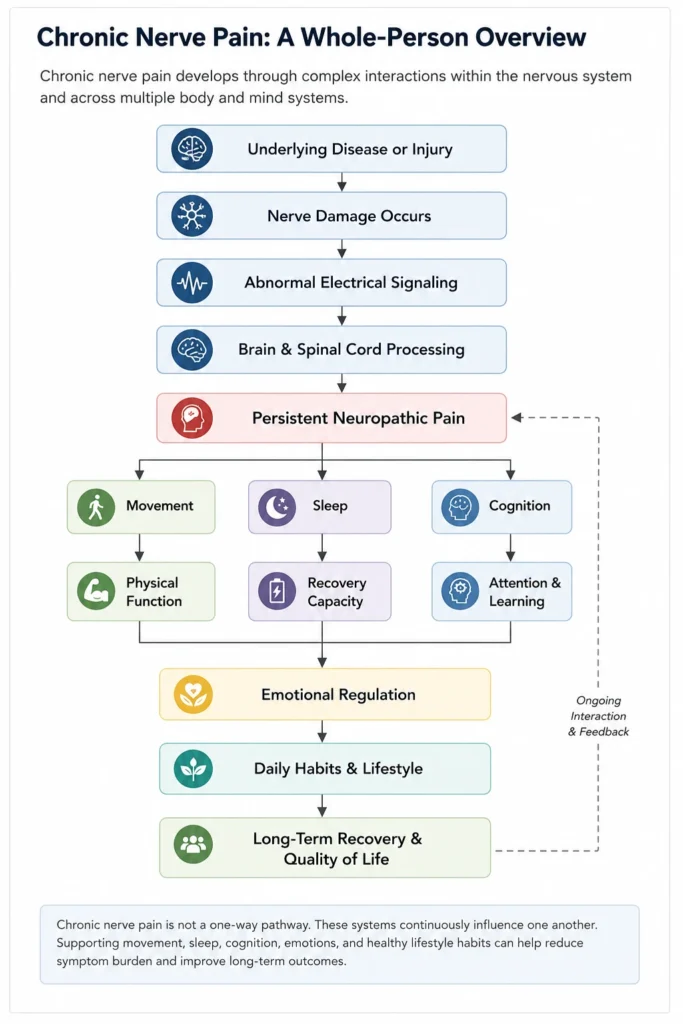
Sources & References
This cornerstone guide is informed by evidence from internationally recognized clinical guidelines, scientific organizations, and peer-reviewed medical literature.
International Guidelines
- International Association for the Study of Pain (IASP)
- Neuropathic Pain Special Interest Group (NeuPSIG)
- American Academy of Neurology (AAN)
- European Academy of Neurology (EAN)
- National Institute for Health and Care Excellence (NICE)
- World Health Organization (WHO)
- Centers for Disease Control and Prevention (CDC)
- American Diabetes Association (ADA)
Scientific Journals
- Pain
- Neurology
- The Lancet Neurology
- Brain
- Nature Reviews Neurology
- Journal of Neurology
- Journal of Neurology, Neurosurgery & Psychiatry
- Current Opinion in Neurology
- Journal of Pain
- Clinical Neurophysiology
Major Scientific Topics Reviewed
- Neuropathic pain mechanisms
- Peripheral neuropathy
- Central sensitization
- Neuroplasticity
- Neuroinflammation
- Pain neuroscience
- Physical rehabilitation
- Exercise therapy
- Sleep and chronic pain
- Nutrition and neurological health
- Multidisciplinary pain management
This educational resource reflects current evidence available at the time of publication. As medical knowledge evolves, recommendations and best practices may change.
Author / Editorial Trust Note
Medically Reviewed Educational Content
This article was developed as part of the Heal Your Nerves Naturally Human Systems Library to provide accurate, evidence-informed, and accessible educational information about chronic nerve pain.
Our editorial approach is based on:
- Current scientific evidence
- International clinical guidelines
- Peer-reviewed medical research
- Whole-person health principles
- Clear, balanced, and medically responsible communication
Every effort is made to present complex neurological concepts in language that is understandable for patients, caregivers, students, and health-conscious readers while maintaining scientific accuracy.
This content is reviewed and updated periodically to reflect significant advances in medical knowledge and clinical practice.
Educational Trust Note
The purpose of this guide is to educate—not to promote miracle cures, unsupported health claims, or unrealistic expectations.
Throughout the Human Systems Library, we are committed to:
- Evidence-informed education
- Transparency about scientific uncertainty
- Balanced discussion of treatment options
- Respect for individual differences
- Encouraging informed conversations with qualified healthcare professionals
Health information should empower people to better understand their condition while recognizing that every individual’s medical situation is unique.
Safety & Medical Disclaimer
This article is intended for educational and informational purposes only.
It is not intended to diagnose, treat, cure, or prevent any disease and should not replace personalized medical advice, diagnosis, or treatment from a qualified healthcare professional.
Always seek medical evaluation if you experience:
- New or worsening neurological symptoms
- Progressive weakness
- Loss of sensation
- Difficulty walking
- Loss of bladder or bowel control
- Severe or rapidly worsening pain
- Symptoms following significant injury
- Any other concerning neurological changes
Never delay seeking professional medical care because of information you have read online.
If you believe you are experiencing a medical emergency, contact your local emergency services or seek immediate emergency medical attention.