
Regeneration Systems for Nerve Health
Understanding How Repair and Adaptation Systems Support Nerve Function
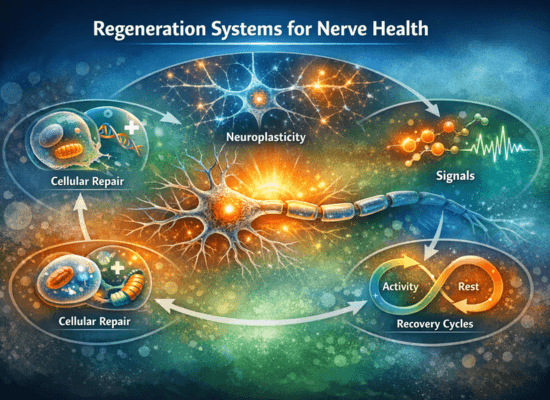
Regeneration systems help explain how the body supports repair, adaptation, and long-term nerve function. Instead of focusing on a single factor, these systems work together to maintain balance within the nervous system.
For example, processes such as cellular repair, neuroplasticity, and internal recovery cycles may all play a role. As a result, understanding regeneration systems can provide a clearer view of how nerve function may be supported over time.
👉 This page explores key regeneration systems — not treatments — to help you understand how repair processes may influence nerve health.
Overall, regeneration systems provide a framework for understanding how repair, adaptation, and recovery processes work together to support long-term nerve function.
On this page, you will learn how different regeneration systems work, how they interact, and where to continue learning next.
EXPLORE THIS PAGE (ANCHOR NAV)
- What Are Regeneration Systems
- How Regeneration Systems Support Nerve Function
- Core Regeneration Systems
- System Interaction Overview
- Supporting Regeneration Processes
- Continue Learning
WHAT ARE REGENERATION SYSTEMS
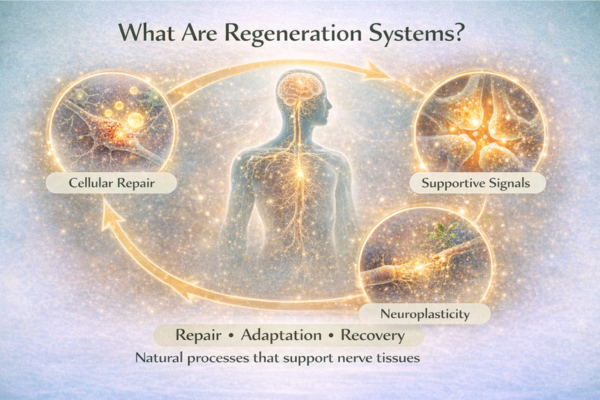
Regeneration systems refer to the natural processes within the body that support repair, adaptation, and recovery over time.
In general, these systems do not act as treatments. Instead, they help maintain internal conditions that allow nerve tissues to respond and adapt to changes.
For example, cellular repair mechanisms, neuroplastic changes, and supportive biological signals may all contribute to regeneration processes.
Therefore, understanding these systems helps explain how the body maintains long-term nerve function.
HOW REGENERATION SYSTEMS SUPPORT NERVE FUNCTION
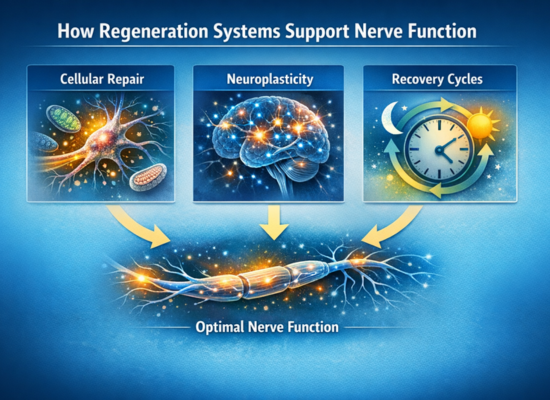
Nerves rely on repair processes, adaptive responses, and stable internal conditions.
First, cellular repair helps maintain nerve structure and function.
Next, neuroplasticity allows the nervous system to adapt to changes.
In addition, internal recovery cycles may influence how the body responds over time.
As a result, when these systems remain active and balanced, nerve function may be better supported.
CORE REGENERATION SYSTEMS
The following core systems play important roles in regeneration, repair, and adaptation within the nervous system.
Together, these systems help explain how repair, adaptation, signaling, and recovery processes support long-term nerve function.
Cellular Repair
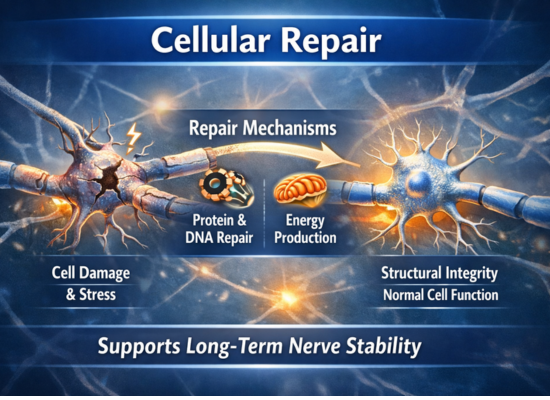
Cells within nerve tissues continuously respond to stress and damage.
For example, repair mechanisms may help maintain structural integrity. In addition, these processes may support normal cellular function.
Therefore, cellular repair plays a key role in long-term nerve stability.
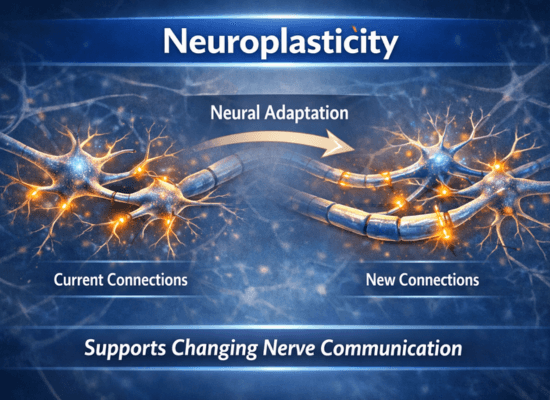
Neuroplasticity
The nervous system has the ability to adapt over time.
For instance, neural pathways may change in response to experience and internal signals. As a result, neuroplasticity may influence how nerve communication evolves.
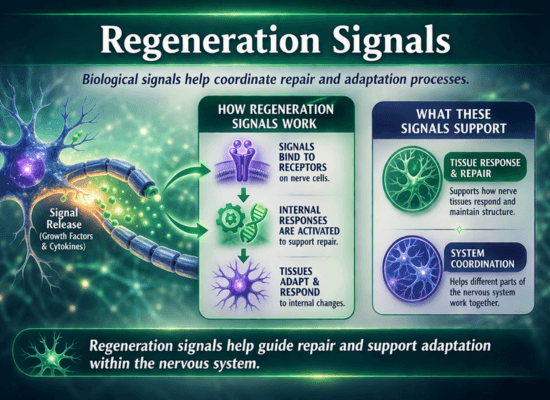
Regeneration Signals
Biological signals help coordinate repair and adaptation processes.
For example, growth-related signals may influence how tissues respond to internal changes. In addition, these signals may support coordination between different regeneration processes.
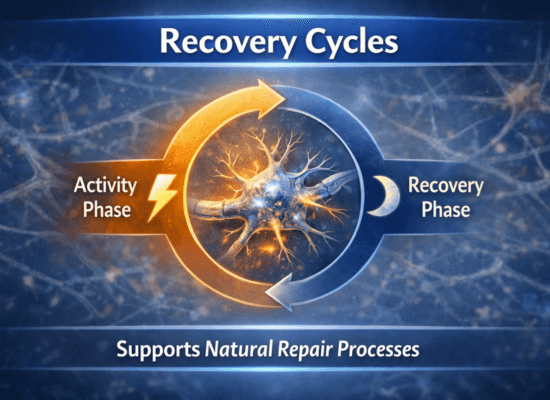
Recovery Cycles
The body operates through cycles of activity and recovery.
For instance, rest and recovery phases may influence how repair processes occur. Therefore, recovery cycles play an important role in regeneration systems.
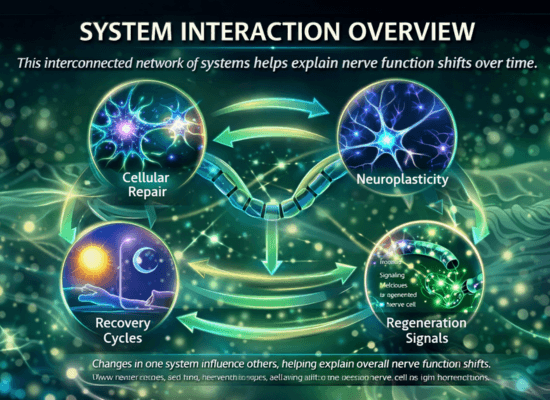
SYSTEM INTERACTION OVERVIEW
These systems do not work in isolation.
Instead, they form a connected network:
Cellular Repair
↓
Neuroplasticity
↓
Regeneration Signals
↓
Recovery Cycles
As a result, changes in one system may influence others. Therefore, understanding this interaction helps explain how overall nerve function may shift over time.
Because of this interaction, supporting regeneration often involves supporting multiple systems rather than focusing on only one process.
Because of this, regeneration is best understood as a system-level process rather than a single repair mechanism.
SUPPORTING REGENERATION PROCESSES
Supporting regeneration is not about a single action.
Instead, it involves understanding how different systems interact and contribute to overall balance.
For example:
First, repair processes help maintain structure.
Next, adaptive responses influence how signals are processed.
Finally, recovery cycles support long-term system balance.
Therefore, learning how these elements connect provides a clearer understanding of regeneration systems.
This is why regeneration systems are best understood as connected processes that work together to support nerve function over time.
This systems-based view helps connect cellular repair, neural adaptation, biological signals, and recovery cycles into one overall regeneration framework.
Explore Regeneration Systems
Below are the major regeneration-related systems you can explore in more detail.
Each system explains one part of how nerve repair, adaptation, and recovery may work over time.
You can start with any system below depending on what you want to learn first.
Cellular Repair
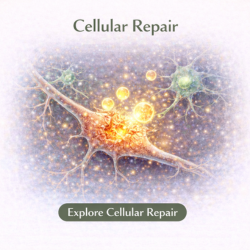
However, regeneration begins at the smallest level. Instead, cellular repair focuses on how individual cells respond and recover over time.
For example, damaged cells may activate internal repair processes. In addition, these processes may help maintain structure and function within nerve tissues.
Therefore, exploring cellular repair can help you understand how foundational recovery supports overall nerve function.
Axonal Regrowth
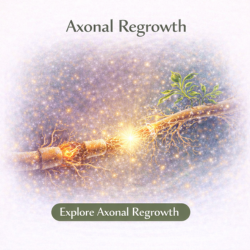
However, nerve repair is not only about maintaining existing structures. Instead, axonal regrowth focuses on how nerve fibers may reconnect over time.
For example, damaged nerve pathways may gradually extend and rebuild connections. In addition, this regrowth process may help support communication between different parts of the nervous system.
Therefore, exploring axonal regrowth can help you understand how nerve connections may be restored over time.
Myelin Regeneration
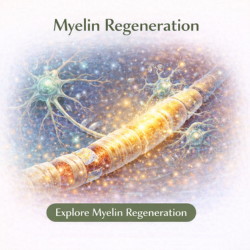
However, nerve function is not only dependent on the nerve itself. Instead, protective structures such as myelin also play an important role.
For example, myelin helps support signal transmission along nerve pathways. In addition, maintaining healthy myelin layers may help support more efficient communication.
Therefore, exploring myelin regeneration can help you understand how protective structures support nerve function over time.
Neuroplastic Adaptation
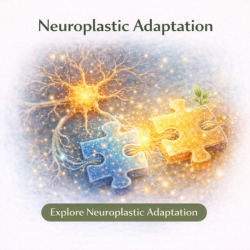
However, nerve function is not fixed over time. Instead, the nervous system has the ability to adapt and change.
For example, neural pathways may adjust based on internal signals and experiences. In addition, these adaptive changes may help support more flexible system responses.
Therefore, exploring neuroplastic adaptation can help you understand how the nervous system evolves and maintains function.
Inflammation Resolution

However, inflammation is not always harmful. Instead, it may play a role in how the body responds and adapts over time.
For example, balanced inflammatory responses may support recovery processes. In addition, proper resolution of inflammation may help maintain overall system stability.
Therefore, exploring inflammation resolution can help you understand how the body restores balance within nerve function.
Vascular Regeneration
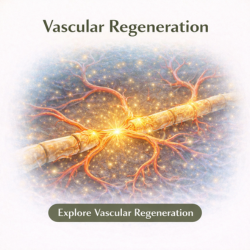
However, regeneration is not only about nerve repair itself. Instead, vascular systems may also play an important role in supporting recovery.
For example, blood vessel networks may influence how oxygen and nutrients reach nerve tissues. In addition, improved circulation pathways may help support ongoing regeneration processes.
Therefore, exploring vascular regeneration can help you understand how circulation connects with nerve repair and function.
Immune Repair
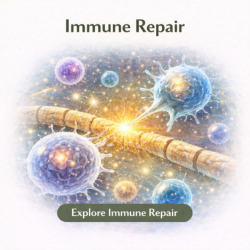
However, regeneration is not only about internal repair processes. Instead, the immune system may also play an important role in how the body responds to change.
For example, immune responses may influence how tissues recover and adapt over time. In addition, balanced immune activity may help support overall system stability.
Therefore, exploring immune repair can help you understand how immune processes connect with nerve regeneration.
Recovery Cycles
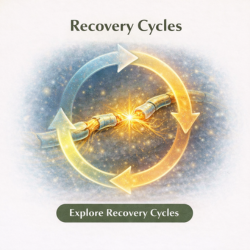
However, regeneration does not happen all at once. Instead, it occurs through repeated cycles of activity and recovery over time.
For example, periods of rest and repair may influence how the body responds and adapts. In addition, consistent recovery cycles may help support long-term system balance.
Therefore, exploring recovery cycles can help you understand how ongoing repair supports nerve function.
Growth Signals

However, regeneration is not only about repair. Instead, growth signals help guide how cells respond and adapt over time.
For example, internal signals may influence how tissues develop and adjust. In addition, these signals may support coordination between different regeneration processes.
Therefore, exploring growth signals can help you understand how the body supports ongoing nerve adaptation.
Integration & Stability

However, regeneration systems do not work in isolation. Instead, integration and stability help connect different processes over time.
For example, multiple systems may work together to support consistent function. In addition, stable integration may help maintain overall system balance.
Therefore, exploring integration and stability can help you understand how different systems connect within nerve function.
CONTINUE LEARNING
SAFETY NOTICE
This page is for educational purposes only.
In other words, it is designed to help you understand general concepts about nerve health.
However, it does not provide medical advice, diagnosis, or treatment.
Therefore, it should not be used as a substitute for professional medical care.