
Nutritional Intelligence

Understanding How Nutrition Supports Nerve Function and System Balance
Nutritional intelligence explains how food, nutrients, and dietary patterns influence the nervous system.
In addition, it helps you understand how nutrition supports nerve communication, energy balance, and overall system stability.
For example, daily food choices may influence how energy is produced and how signals are processed.
As a result, you can better see how nutrition connects with overall system function.
Explore Nutritional Intelligence Topics
What Is Nutritional Intelligence
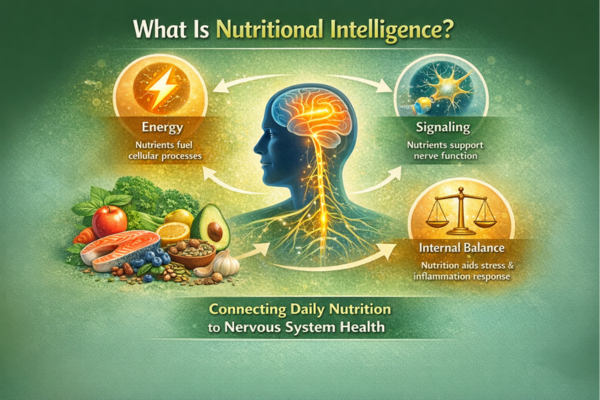
Nutritional intelligence explains how food and nutrients affect the body and nervous system.
In simple terms, it helps you understand how what you eat may influence energy, signaling, and internal balance.
First, the body uses nutrients as building blocks to work properly. As a result, these nutrients support important processes, including nerve signaling.
In addition, nutrition also affects how the body responds to stress, inflammation, and daily demands. For example, different eating patterns may change how the body feels and functions.
Because of this, even small changes in diet may influence overall system balance.
Therefore, understanding nutritional intelligence helps you see how daily food choices connect with how the nervous system works.
How Nutrition Affects Nerve Function
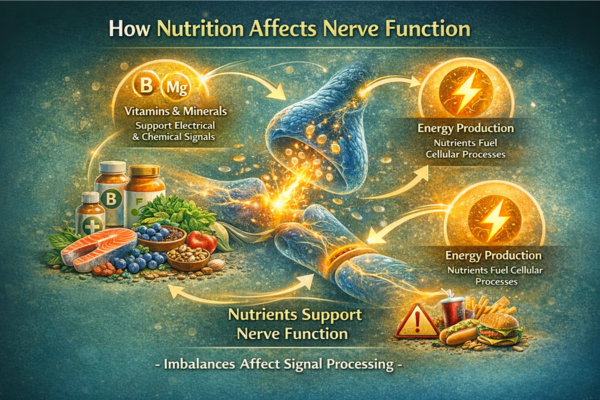
Nutrition plays an important role in how nerves communicate in the body.
First, nutrients help support both electrical and chemical signals in nerve cells. For example, certain vitamins and minerals help signals move from one nerve to another.
Next, the body also needs energy to keep this process working. As a result, nerve cells depend on a steady supply of nutrients to function properly.
In addition, changes in nutrition may affect how signals are processed. For instance, nutrient imbalances may alter how the body sends and receives signals.
Because of this, even small changes in diet may influence how the nervous system responds.
Therefore, maintaining proper nutrition helps support overall nerve function and system balance.
Supporting System Education
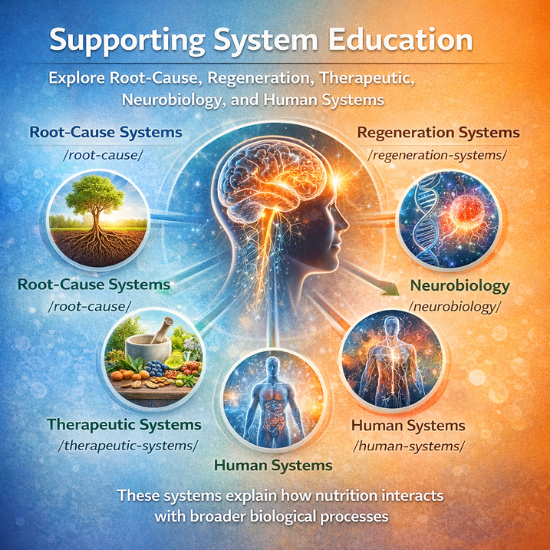
To understand how nutrition connects with nerve health, explore these systems:
These systems explain how nutrition interacts with broader biological processes
Key Nutrients for Nerve Health
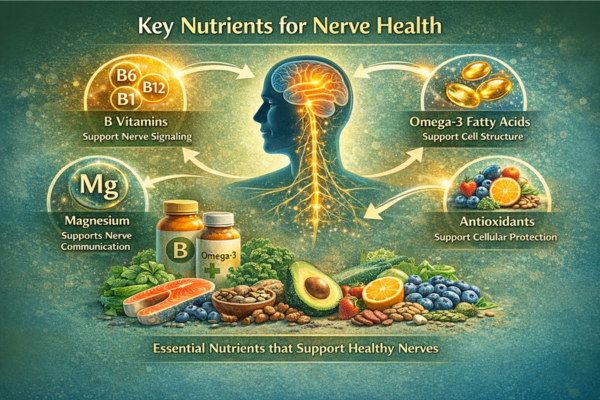
Several nutrients are important for healthy nerve function.
For example:
• B vitamins help support nerve signaling
• Omega-3 fatty acids help support cell structure
• Magnesium helps support nerve communication
• Antioxidants help protect cells
First, these nutrients support how nerves send and receive signals.
In addition, they help maintain important processes inside the body.
As a result, a balanced intake of these nutrients may help support normal nerve function and overall system stability.
However, nutrient needs may vary from person to person.
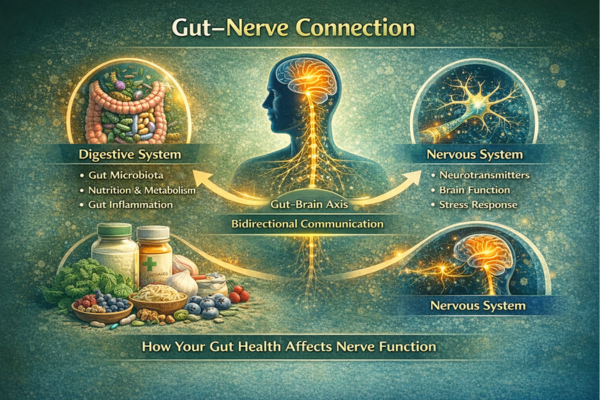
Gut–Nerve Connection
The digestive system and nervous system are closely connected.
First, the gut communicates with the brain through what is known as the gut–brain axis. As a result, signals can travel back and forth between the digestive system and the nervous system.
In addition, gut health may influence inflammation, metabolism, and chemical messengers in the body. For example, changes in gut balance may affect how signals are processed.
Because of this, even small changes in gut health may influence how the body responds.
As a result, these changes may affect overall system function.
Therefore, understanding this connection helps explain how nutrition may influence nerve function.
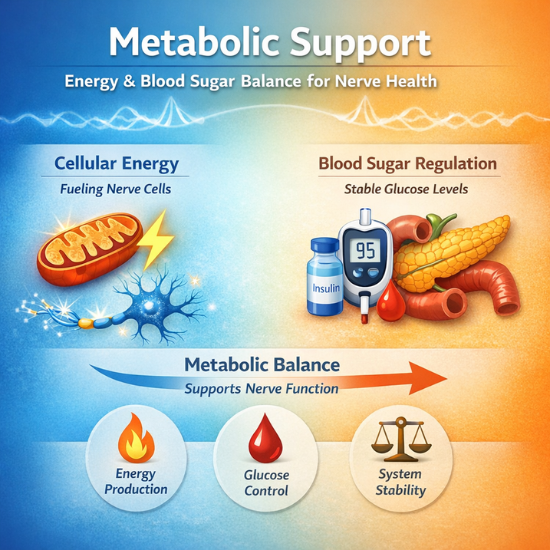
Metabolic Support
Metabolism refers to how the body produces and uses energy.
First, nerve cells need energy to send and receive signals. As a result, proper energy balance is important for healthy nerve function.
In addition, stable blood sugar levels help the body maintain steady energy. For example, balanced nutrition may help support consistent energy throughout the day.
However, when metabolism is not balanced, nerve function may be affected.
Because of this, changes in energy levels may influence how the body performs.
Therefore, supporting metabolic processes helps maintain overall system balance and nerve function.

Anti-Inflammatory Nutrition
Inflammation is a natural response in the body.
However, when it stays unbalanced for a long time, it may affect nerve sensitivity.
First, the way you eat can influence how the body responds. For example, whole foods and nutrient-rich diets are often linked to more balanced responses.
In addition, highly processed foods may increase imbalance in the body.
Because of this, these changes may affect how the nervous system reacts.
As a result, long-term dietary patterns may influence overall system function.
Therefore, understanding food choices helps explain how nutrition relates to nerve health.
Explore Nutritional Systems
Neuro-Nutrition

Neuro-nutrition focuses on how nutrients support brain function and nerve communication.
In addition, it helps explain how diet influences signaling, energy, and overall nervous system balance.
As a result, proper nutrition may support healthy brain and nerve function.
Anti-Inflammatory

Anti-inflammatory nutrition focuses on how diet may influence inflammation in the body.
In addition, it helps explain how balanced food choices support nerve sensitivity and overall system stability.
As a result, supportive dietary patterns may help maintain system balance.
Metabolic Support
Metabolic support focuses on how the body produces and uses energy.
In addition, it helps explain how stable energy and blood sugar levels support nerve function and system balance.
As a result, balanced metabolism may support overall system stability.
Micronutrients
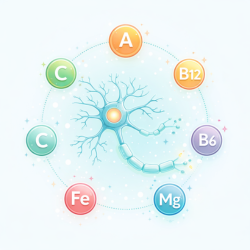
Micronutrients include vitamins and minerals that support essential body functions.
In addition, they help maintain nerve signaling, energy processes, and overall system balance.
As a result, they support proper system function and stability.
Fatty Acids
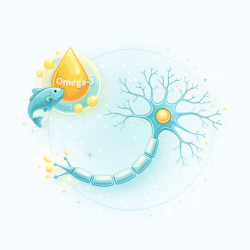
Fatty acids help support the structure and function of nerve cells.
In addition, they play a role in maintaining cell membranes and overall brain and nerve health.
As a result, they help support stable nerve communication.
Protein & Aminos
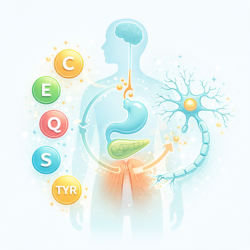
Proteins and amino acids help build and repair body tissues, including nerves.
In addition, they support nerve signaling and overall system function.
As a result, they play an important role in maintaining structural and functional balance.
Gut Axis
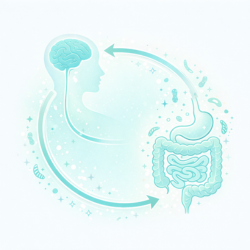
The gut axis explains how the digestive system and nervous system communicate.
In addition, it shows how gut health may influence signaling, balance, and overall nerve function.
As a result, changes in gut health may affect how the system responds.
Detox Nutrition

Detox nutrition focuses on how the body processes and removes internal waste.
In addition, it helps explain how balanced nutrition supports the function of the nervous system and overall nerve health.
As a result, proper nutrition may support internal balance.
Supplement Intelligence

Supplement intelligence focuses on how nutrients may support dietary intake.
In addition, it helps explain how supplements fit into overall nutrition and nerve health.
As a result, supplements may support overall nutritional balance.
Nutritional Timing

Nutritional timing focuses on when you eat and how it affects the body.
For example, meal timing may influence energy balance and overall system function.
As a result, consistent timing may support better system stability.
Continue Learning
- Root Causes of Nerve Damage →
- Repair Nutrition →
- Nervous System Regulation →
- Understanding the Nervous System →
Related Conditions
Peripheral Neuropathy
Safety Notice
This page is for educational purposes only.
In other words, it is designed to help you understand general concepts about nerve health.
However, it does not provide medical advice, diagnosis, or treatment.
Therefore, it should not be used as a substitute for professional medical care.