
Neuro Nutrition: How Nutrition Supports Your Nervous System
Neuro nutrition is part of the Nutritional Intelligence system. This page connects the major nutrition-to-nerve pathways, then hands detailed fatty-acid, protein, micronutrient, action, biology and diagnostic questions to their correct owner pages.
If you arrived here after searching neuro nutrition, nutrition and the nervous system, nutrients for nerve function, or a question such as “Could my diet be causing tingling?”, you are probably not looking for another list of fashionable superfoods. You want to know whether nutrition is genuinely relevant to what you are feeling—and, if it is, what you can realistically do about it.
So this page is built around a more useful idea:
Nutrition can be a cause, a contributor, a support system, or sometimes only an incidental part of a nerve problem. The job is to work out which role it is playing in your situation.
We will move from the food on your plate to the biology inside a nerve cell, then back into real life: what to notice, what you can safely improve, when a supplement deserves scrutiny, when targeted testing makes sense, what not to assume, and when a nutritional explanation is no longer enough.
Important safety boundary: Nutrition is not an emergency treatment. New or rapidly worsening weakness, trouble walking, loss of bladder or bowel control, severe balance problems, breathing difficulty, facial weakness, sudden one-sided neurological symptoms, or other acute neurological changes need prompt medical assessment rather than another dietary experiment.
What Is Neuro-Nutrition?
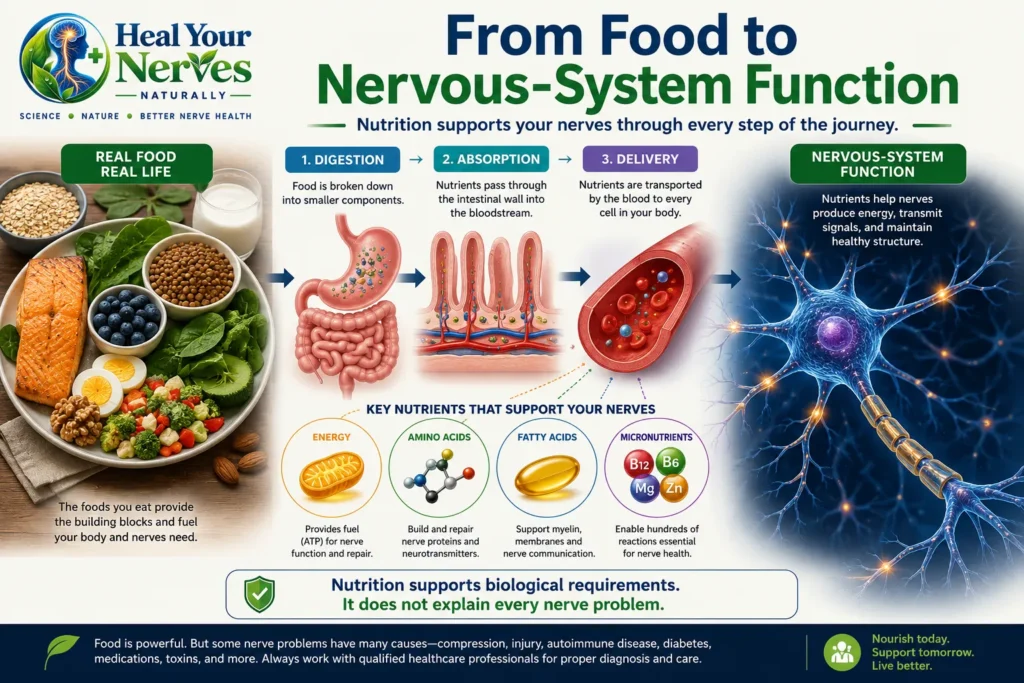
However, Neuro-nutrition is the integration layer between nutrition and nervous-system biology. More specifically, it asks how the food and nutrients available to your body influence the basic conditions nerve cells need to function: energy production, membrane structure, protein synthesis, signaling, micronutrient-dependent reactions, and cellular maintenance.
However, neuro nutrition is not a synonym for “brain supplements,” and it is not a claim that food can cure every neurological condition. Instead, it is closer to a systems question: what does the nervous system require from nutrition, how does the body obtain and use those materials, and what happens when the supply or handling of those materials is inadequate or excessive?
That question deserves more than “eat well and take B vitamins.” Your nervous system depends on energy, proteins, fatty acids, vitamins, minerals, fluid balance, blood flow, and many tightly regulated cellular processes. Yet tingling, burning, numbness, weakness, altered sensation, or nerve pain can also come from problems that nutrition cannot remove: diabetes, nerve compression, injury, autoimmune disease, toxins, vascular problems, medications, kidney or liver disease, and other conditions. The U.S. National Institute of Neurological Disorders and Stroke lists many of these acquired causes of peripheral neuropathy, including both nutritional imbalance and non-nutritional causes such as trauma, vascular disease, autoimmune disease, kidney/liver disorders, toxins, and medications.
Why neuro nutrition matters in real life
Imagine four people who all search “nutrition for tingling.”
- One has been vegan for years and has never used a reliable vitamin B12 source.
- A second eats a varied diet but had bariatric surgery and now has an absorption problem.
- A third takes four overlapping supplements and has unintentionally accumulated a high vitamin B6 intake.
- The fourth has carpal tunnel syndrome from mechanical nerve compression.
The symptom may sound similar, but the nutritional meaning is completely different. In contrast, the first three situations may justify different nutritional questions. Meanwhile, the fourth needs a mechanical explanation and may require a different treatment pathway.
This is why HYN does not treat “nerve health nutrition” as one giant encyclopedia. This page connects the system; deeper ownership belongs elsewhere. For vitamin and mineral detail, use Micronutrients. Next, for lipid biology, use Fatty Acids for Nerve Health. Likewise, for protein and amino-acid biology, use Protein and Amino Acids for Nerve Health.
A better search question than “What heals nerves?”
When users ask “Which vitamin heals nerves?”, they often combine three questions without realizing it:
- Does this nutrient have a biological role in nerves?
- Am I inadequate or deficient in it?
- Will taking more improve my specific nerve problem?
The answer to the first question can be yes while the answer to the third is no. That distinction is one of the most important ideas on this page.
For example, vitamin B12 is unquestionably relevant to normal neurological function, and deficiency can cause numbness and tingling. NIH’s Office of Dietary Supplements notes that neurological symptoms can occur even without anemia. But that does not mean every person with tingling benefits from extra B12. The clinical question is whether B12 status is actually a plausible limiting factor.
NIH Office of Dietary Supplements: Vitamin B12 Fact Sheet for Health Professionals
What Happens Between the Food You Eat and Your Nerves?
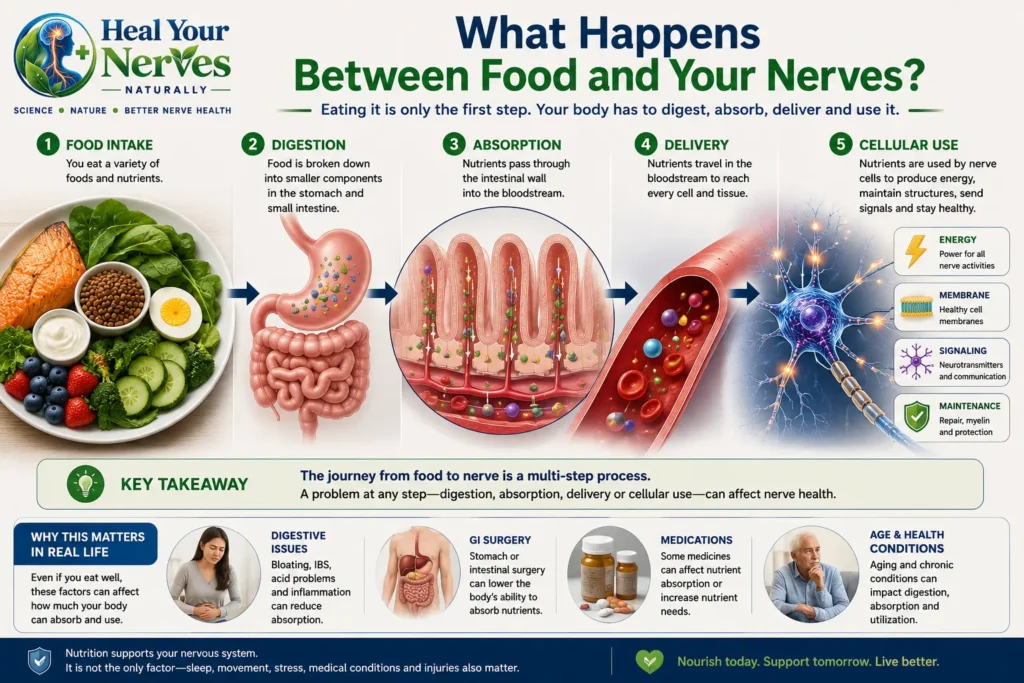
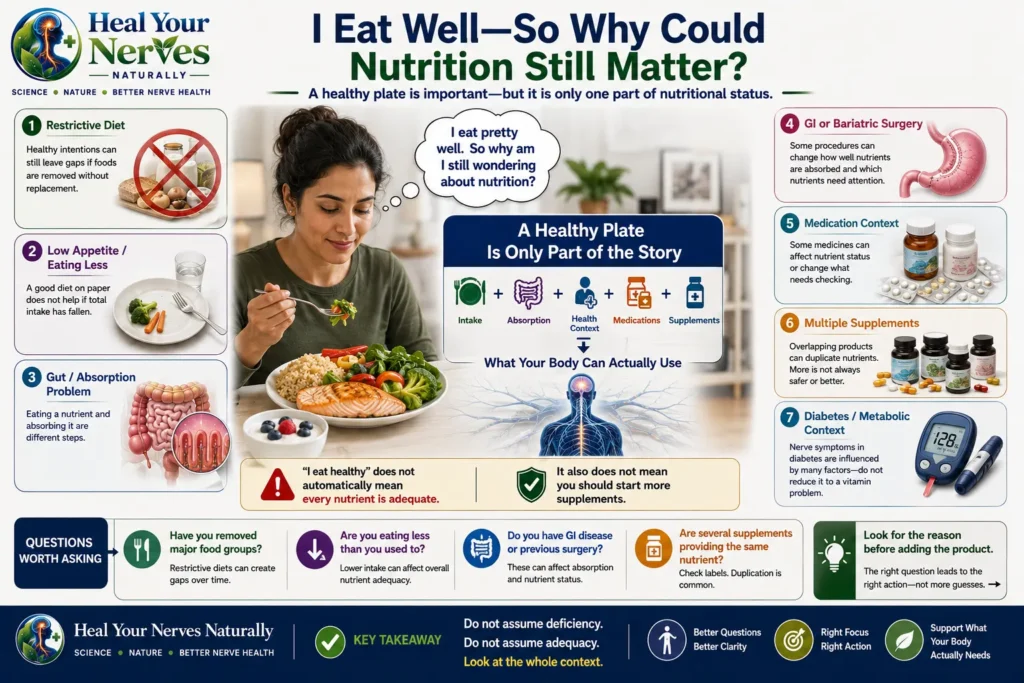
A healthy-looking plate is only the beginning of the story. Nutrients have to move through a chain of events before they can influence nervous-system biology.
Step 1: The food has to be present often enough
Many nutrition problems are not caused by a lack of knowledge. They are caused by normal life.
For example, You know eggs contain protein, but you leave for work without breakfast. Vegetables matter too, yet your evening meal may still be whatever is quickest. Meanwhile, you may intend to eat fish, lentils, dairy or tofu regularly, but appetite is low. In addition, caregiving may mean you forget your own meals. You cut out dairy, meat, gluten, grains, legumes, seed oils, processed foods and several other categories after reading conflicting advice, and suddenly your “clean” diet has become narrow.
Before looking for a rare biochemical explanation, ask a basic question: What do I actually eat during an ordinary week?
Step 2: Food has to be digested
Dietary protein has to be broken into smaller peptides and amino acids. Fats need digestive handling before their fatty acids can be absorbed. Many vitamins and minerals depend on specific physiological conditions for absorption.
A supplement capsule also has to dissolve, release its ingredients and be absorbed. “I swallowed it” and “my tissues received and used it” are not the same statement.
Step 3: Nutrients have to be absorbed
This is where the person who says “But I eat a healthy diet” may still have a legitimate question. Gastrointestinal disease, previous bariatric or other GI surgery, altered stomach physiology, chronic diarrhea, and other absorption problems can change nutrient status. Some medications can also affect certain nutrients.
A useful real-life example is vitamin B12. Food-bound B12 requires a sequence of digestive steps before it can be absorbed efficiently. That is one reason diet history and medical history need to be considered together rather than separately.
Step 4: Nutrients have to be transported and made available
Once absorbed, nutrients enter circulation or other transport pathways. The nervous system exists inside the rest of the body: vascular health, metabolic health, organ function, and the biochemical environment all influence what ultimately reaches cells and how it is handled.
Step 5: Cells regulate how nutrients are used
Nerve cells are not passive storage bags. They regulate transport, metabolism, synthesis, breakdown, signaling and repair. More substrate does not always mean more final product.
In addition, This is why “tryptophan is a serotonin precursor” does not mean “more tryptophan automatically gives more useful serotonin,” and why “DHA is present in membranes” does not mean “more DHA automatically rebuilds a damaged nerve.”
Practical action: trace the pathway instead of guessing
When you suspect a nutrition-related issue, work through four questions:
- Intake: Am I regularly getting the nutrient or food category?
- Absorption: Is there any reason absorption may be impaired?
- Demand/context: Has illness, recovery, pregnancy, age, medication or another factor changed the situation?
- Evidence: Do symptoms, history or testing actually support the suspected problem?
If you want to convert this biology into ordinary food decisions, the practical Action Layer is Nerve Food Repair and Nutrition for Nerve Repair.
What Does Your Nervous System Actually Need Nutrition For?
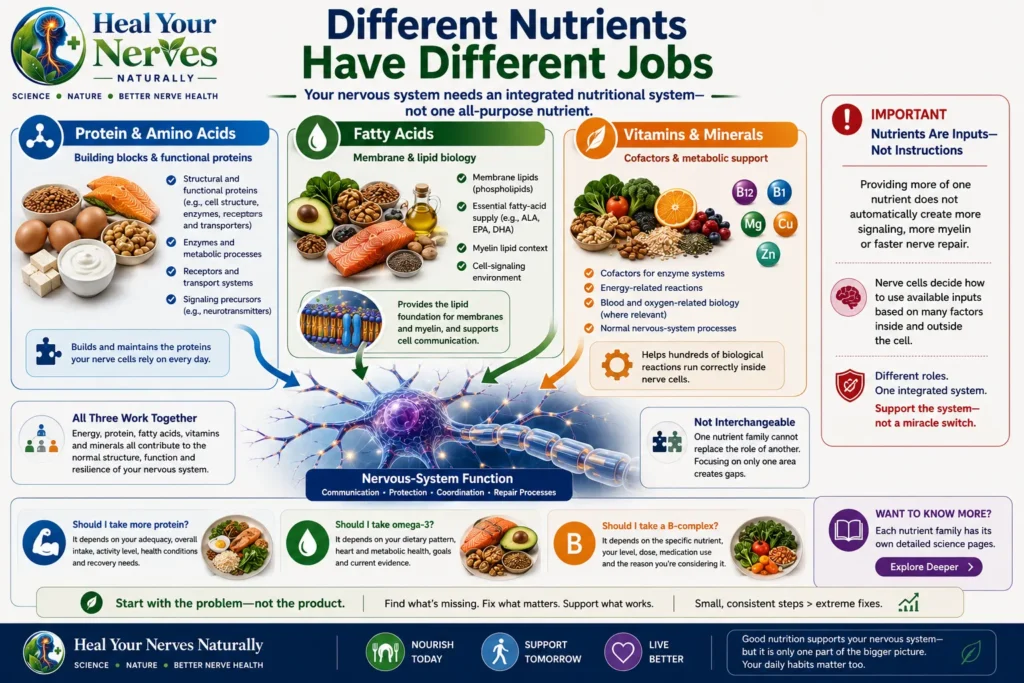
We deliberately avoid the phrase “top five nerve nutrients.” It encourages the wrong mental model. The nervous system does not operate by choosing one champion nutrient from a ranking. It depends on multiple requirements working together.
In neuro nutrition, the practical goal is to identify whether nutrition is a cause, a contributor, or simply one supporting part of the larger nerve-health picture.
1. Adequate energy availability
Nerve cells perform energy-demanding work. They maintain ion gradients, transport materials along long axons, recycle cellular components and support signaling. Adequate overall energy intake is therefore part of basic nutritional sufficiency.
2. Protein and essential amino-acid adequacy
Proteins form enzymes, receptors, ion channels, transporters and structural machinery throughout the body, including nervous tissue. The body requires an adequate supply of indispensable amino acids from the diet.
3. Essential fatty-acid adequacy
Cell membranes contain lipids, and essential fatty acids must come from dietary supply. Long-chain fatty acids such as EPA and DHA have additional biological roles, but the details belong to the Fatty Acids page rather than being duplicated here.
4. Micronutrient adequacy
Therefore, Vitamins and minerals participate in energy metabolism, blood formation, antioxidant systems, enzyme reactions and neurological processes. Deficiency can matter; excess supplementation can also matter.
5. Absorption and bioavailability
The nutritional value of a diet depends not only on what appears on the plate, but on whether important nutrients can be absorbed and used.
WHO’s current healthy-diet framework emphasizes four broad principles—adequacy, balance, moderation and diversity—which fit this systems approach much better than a list of “miracle nerve foods.”
World Health Organization: Healthy Diet
What about glucose, choline and inflammation?
They can matter, but they sit in a second layer rather than replacing the five core requirements.
Glucose and metabolic stability matter because nerves require energy and because diabetes is a major neuropathy cause. Choline contributes to phospholipid and other biological pathways. Amino acids feed precursor pathways. Dietary patterns can influence metabolic and inflammatory environments.
But a neuro-nutrition page should not turn each of those topics into a second encyclopedia. When the deeper question is metabolic disease, use Metabolic Support. For absorption questions, use Gut Axis. For specific micronutrients, use Micronutrients.

How Nerve Cells Obtain and Use Energy
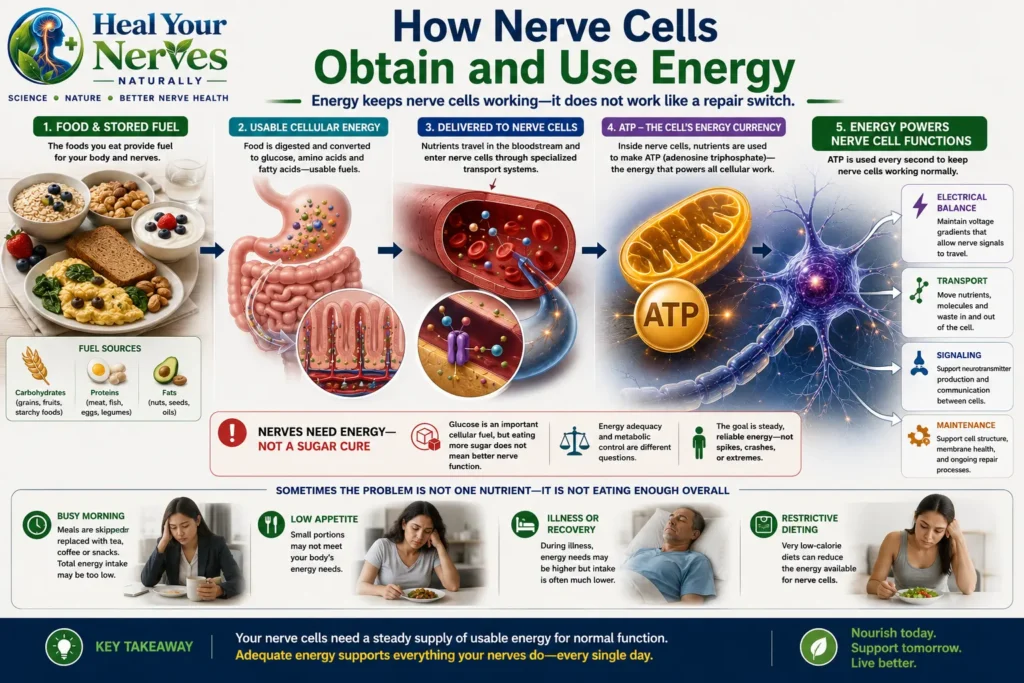
One of the easiest nutrition messages to misunderstand is “nerves need glucose.” A true statement about cellular metabolism can quickly become poor dietary advice such as “eat more sugar for your nerves.”
In neuro nutrition, the practical goal is to identify whether nutrition is a cause, a contributor, or simply one supporting part of the larger nerve-health picture.
Nerve cells need energy, not a sugar prescription
Cells use energy to maintain membrane potentials, power transport systems and support basic cellular work. Glucose is an important fuel in human physiology, but the body regulates glucose through digestion, liver storage and release, hormones, and metabolism. A person does not need to chase sugar spikes in order to “feed nerves.”
At the same time, Likewise, a person with diabetes should not interpret “nerves need glucose” as permission to ignore glucose management. Chronic metabolic disease can itself damage peripheral nerves.
Could under-eating matter?
Yes. This is especially relevant when low energy intake accompanies low protein intake, unintentional weight loss or a very restrictive diet.
Think of an older adult whose appetite has gradually fallen. Breakfast becomes tea and toast. Lunch is skipped. Dinner is small. They may still describe their diet as “healthy” because the foods they do eat are not obviously unhealthy, but total intake has changed dramatically.
The same can happen after illness, surgery, bereavement, depression, chronic pain, swallowing difficulty or a busy period of caregiving.
Could excessive energy intake matter indirectly?
Yes, through a different mechanism. Excess energy intake over time can contribute to obesity and metabolic dysfunction in susceptible people. Diabetes is a major cause of neuropathy, so metabolic context matters. That does not mean every person with neuropathy should follow the same carbohydrate target or weight-loss diet. It means the cause changes the nutrition decision.
A practical neuro nutrition energy check
Instead of calculating calories immediately, look for clues:
- Have you unintentionally lost weight?
- Has appetite decreased?
- Do you repeatedly miss meals?
- Do you replace meals with coffee, tea or energy drinks?
- Has illness made eating difficult?
- Are you following several dietary restrictions simultaneously?
- Do you have diabetes, prediabetes or another metabolic condition that changes the picture?
If the main issue is glucose regulation or diabetic neuropathy, do not keep expanding the neuro-nutrition page. Move to the correct owner: Metabolic Damage System and, where relevant, Diabetic Neuropathy.
Why Nerve-Cell Membranes Need the Right Building Materials
A nerve-cell membrane is not a simple outer wrapper. It is a dynamic lipid-and-protein structure where channels, receptors and transporters operate. The membrane helps maintain electrical gradients and allows the cell to communicate with its environment.
Where nutrition enters the membrane story
Dietary fats supply fatty acids. Protein supplies amino acids used to make membrane proteins. Micronutrients participate in the enzymes and pathways that build and maintain cellular components. Adequate energy supports the work required to keep these systems functioning.
But this is an integration page, so we stop before turning it into a detailed lipid lecture.
The important boundary: component biology is not repair proof
A common supplement claim follows this pattern:
Fact: nerve membranes contain fatty acids and other lipids.
For instance, Marketing leap: therefore taking more omega-3 repairs nerve membranes.
The first statement does not prove the second.
A nutrient can be essential to normal biology without acting like a drug that directs injured tissue to regenerate. The amount already available, the cause of injury, cellular regulation and many other factors determine the outcome.
For the specialist lipid layer, continue to Fatty Acids for Nerve Health. For the structure and function of myelin itself, use Myelin System.
Real-life example: “I started fish oil because my fingers are numb”
Before deciding whether fish oil makes sense, ask what has actually been established. Are the fingers numb because of carpal tunnel compression? Diabetes? Cervical radiculopathy? A vitamin deficiency? An injury? An unknown cause?
The biological importance of fatty acids does not remove the need to identify the problem.
How Nutrition Connects With Nerve Signaling
Nerve signaling depends on electrical and chemical events. Nutrition contributes substrates, cofactors and the cellular environment, but it does not directly control every signal.
Electrical signaling requires maintained gradients
Ion channels and pumps help establish the electrical conditions that allow nerve impulses to propagate. These are protein-rich systems embedded in membranes and powered by cellular energy.
Chemical signaling uses neurotransmitters and receptors
Some neurotransmitters are amino acids. Others are synthesized through pathways that use amino-acid precursors. Receptors and transporters are protein systems. Micronutrients can participate as cofactors in biochemical reactions.
Why precursor marketing can mislead
As a result, Suppose a product says “tyrosine supports dopamine” or “tryptophan supports serotonin.” The biochemical pathway may be real, but a pathway contains multiple steps: transport across membranes, competition with other amino acids, enzyme activity, cofactors, feedback regulation and physiological demand.
That is why we lock this rule across HYN:
Being a neurotransmitter precursor does not mean consuming more automatically creates a clinically useful neurotransmitter effect.
For the detailed nutritional precursor layer, continue to Protein and Amino Acids for Nerve Health. For deeper nervous-system signaling biology, use Neural Signaling.

Where Protein and Amino Acids Fit
Protein is part of the neuro-nutrition foundation because your body requires amino acids to build and maintain proteins throughout the nervous system and the rest of the body.
Proteins function as enzymes, receptors, channels, transporters and structural components. Amino acids also enter metabolic and signaling pathways.
What this page owns
This page owns the integration statement: adequate protein and indispensable amino-acid supply is one part of the nutritional environment nervous-system cells rely on.
What this page deliberately does not own
We do not duplicate:
- essential versus non-essential amino acids in depth;
- animal versus plant protein comparisons;
- protein requirement calculations;
- whey versus plant powder;
- EAA versus BCAA;
- isolated amino-acid supplements;
- detailed neurotransmitter precursor pathways.
Those questions belong to Protein and Amino Acids for Nerve Health.
Real-life decision: do you need more protein?
Do not start with a supplement. Start with your normal day.
- Is breakfast mostly tea, coffee or toast?
- Do you regularly skip lunch?
- Is dinner the only meal with a substantial protein source?
- Has appetite fallen?
- Are you recovering from illness and eating less than usual?
- Are you following a restrictive plant-based diet without enough legumes, soy, nuts, seeds or other protein foods?
If the pattern looks adequate, “more” should not automatically become the next move. If the pattern looks inadequate, improve the pattern before concluding that a specialty amino-acid product is necessary.
Where Fatty Acids Fit
Fatty acids matter because cell membranes are lipid-based structures and because nervous-system tissues have specific lipid biology. Omega-3 and omega-6 fatty acids are both biologically relevant families.
Three distinctions worth knowing now
ALA is not EPA.
EPA is not DHA.
“Omega-3” is not one substance.
NIH ODS explains that ALA is an essential omega-3 fatty acid and that conversion of ALA to EPA and DHA is limited. For the practical implications, food sources, omega-6 myths, fish oil, algal oil and label literacy, use the specialist page rather than duplicating it here.
NIH Office of Dietary Supplements: Omega-3 Fatty Acids
Continue internally to Fatty Acids for Nerve Health.
What not to infer from “myelin contains lipids”
Do not infer that an omega-3 supplement automatically remyelinates a damaged nerve. Myelin formation and regeneration are specialized biological processes. If your question has moved from nutritional building materials to actual remyelination, use Myelin Regeneration.
Where Vitamins and Minerals Fit
Micronutrients attract disproportionate attention because they are easy to package, name and market. A person with tingling can encounter a dozen products before anyone asks whether a deficiency is plausible.
Vitamin B12: important, but not universal
Vitamin B12 deficiency can cause neurological changes such as numbness and tingling, and those symptoms can occur without anemia. That makes B12 status clinically relevant in the right context.
Contexts that can raise the question include low dietary intake, long-term vegan diets without reliable B12 provision, certain digestive diseases or surgeries, pernicious anemia, older age, and some medication contexts.
But “B12 can cause neuropathy when deficient” does not become “B12 treats every neuropathy.”
Vitamin B6: a powerful example of “more is not always better”
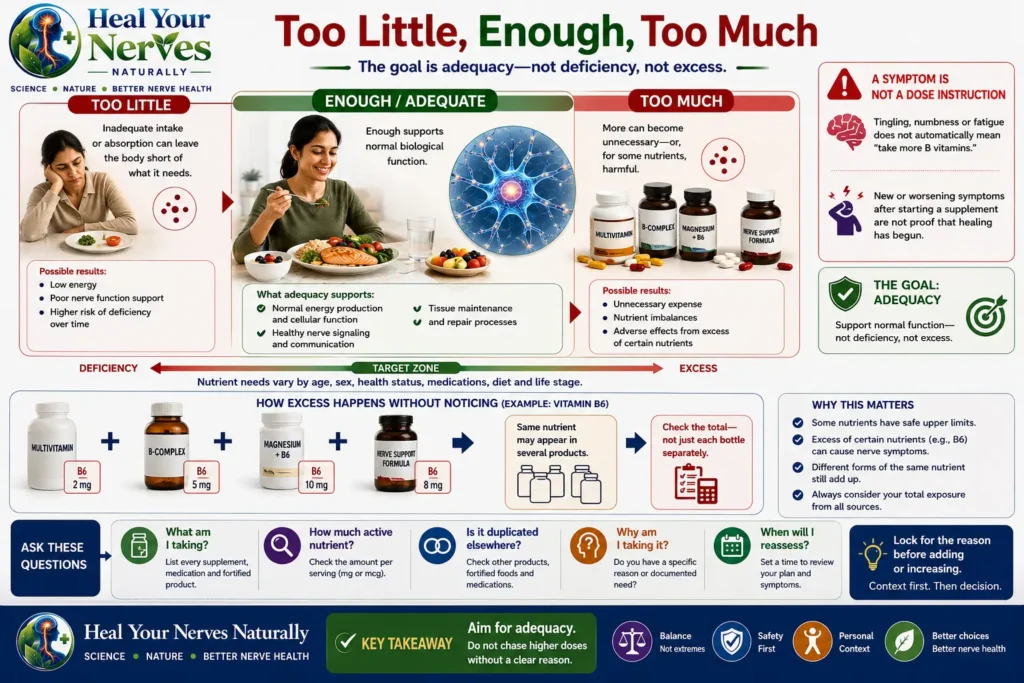
B6 is needed for normal metabolism, but excessive supplemental B6 can itself cause sensory neuropathy. NIH ODS documents severe and progressive sensory neuropathy from chronic high supplemental exposure and notes that safety limits differ among authorities.
NIH Office of Dietary Supplements: Vitamin B6 Fact Sheet for Health Professionals
The supplement-stacking problem
This happens constantly in real life. Someone takes:
- a multivitamin;
- a B-complex;
- a magnesium+B6 product;
- a “nerve support” formula.
They think they are taking four different products. From the perspective of B6 exposure, they may be taking the same nutrient four times.
This is why the front label is not enough. You need the Supplement Facts panel.
What about B1, folate, copper, magnesium and choline?
They can be relevant to nervous-system or metabolic biology, but each has its own evidence, deficiency context and safety considerations. This page uses them as examples, not as mini-monographs. Detailed ownership remains with Micronutrients and, when deficiency is the suspected cause, the Nutritional Deficiency System.
Practical action: stop counting product names; count active ingredients
On the other hand, Put every supplement you use on a table. Write down each active ingredient and amount per serving. Then total duplicated nutrients. That simple exercise is more useful than buying another “complete nerve formula.”
Why Absorption and Bioavailability Matter
“I eat well, so I cannot be deficient” sounds reasonable. It is also incomplete.
In neuro nutrition, the practical goal is to identify whether nutrition is a cause, a contributor, or simply one supporting part of the larger nerve-health picture.
Dietary intake is one part of nutrient status. Digestion, absorption, transport, storage, medication use, disease and previous surgery can all change the final picture.
When a healthy plate does not tell the whole story
Consider someone who eats eggs, dairy, fish and other B12-containing foods but has an absorption disorder. Their food choices may be perfectly sensible while their nutrient status still deserves assessment. Or consider someone after bariatric surgery who follows a carefully planned diet but has new neurological symptoms. The surgery changes the clinical context.
This is why “What do you eat?” and “What has happened to your digestive system?” belong in the same conversation.
Questions that make absorption more relevant
- Have you had bariatric surgery or another major stomach/intestinal operation?
- Do you have celiac disease, Crohn’s disease or another condition associated with malabsorption?
- Do you have persistent diarrhea or unexplained weight loss?
- Has your doctor identified a nutrient deficiency despite reasonable intake?
- Are you taking medicines known to affect the status of a nutrient you are evaluating?
- Have you been self-treating with a supplement before laboratory testing?
Bioavailability is not a reason to chase “premium” supplement forms automatically
Another marketing leap is to take the concept of bioavailability and turn it into “the most expensive form is always clinically superior.” That is not a safe general rule. Bioavailability can matter, but the useful question is whether a difference in absorption meaningfully changes the outcome for the person and nutrient in question.
Use Gut Axis when digestion and absorption are the deeper issue. Use Supplement Intelligence when product form, dose, formulation or label claims are becoming the main question.
Can Too Little—or Too Much—of a Nutrient Affect Nerves?
Meanwhile, Yes. This is one of the places where neuro nutrition becomes directly practical.
Many people use a one-direction model:
Deficiency = bad → therefore more = better.
Real physiology often looks more like:
Too little → adequate range → excessive exposure can sometimes create new problems.
Deficiency and excess are different questions
If a nutrient deficiency is present, the goal is to correct the deficiency safely and address why it occurred.
If intake is already adequate, increasing the dose may provide no additional benefit.
For nutrients with known toxicity at high supplemental exposure, escalating the dose can create risk.
Do not use symptoms as a dosing calculator
Tingling does not tell you “increase B vitamins.” Muscle twitching does not tell you “increase magnesium.” Fatigue does not tell you “increase iron.” Brain fog does not tell you “take more choline.”
Symptoms can be useful clues, but they are rarely specific enough to identify a dose by themselves.
“I felt worse after starting the supplement—does that mean healing?”
No. New or worsening neurological symptoms after starting a supplement are not evidence that “healing has started.”
Because of this, This matters because online communities sometimes reinterpret adverse effects as detoxification, nerve activation or a healing crisis. That can encourage people to keep taking a product that should instead be reviewed.
A better response is:
- Record the new symptom and when it began.
- Record the exact product, serving and active ingredients.
- Check whether anything else changed at the same time.
- Do not automatically increase the dose.
- Seek medical advice when symptoms are significant, progressive or concerning.
The HYN 7-Point Supplement Audit
Before adding, continuing or escalating a supplement, ask:
- What exactly am I taking? Write the product and all active ingredients.
- How much active nutrient am I actually getting? Use the Supplement Facts panel, not the marketing headline.
- Why am I taking it? Define the problem you believe it addresses.
- Am I already getting the same ingredient from another product?
- Is there evidence of deficiency, too little intake or another justified need?
- Could a medication, pregnancy, kidney/liver disease or another condition change the decision?
- What is my stop or reassessment point?
FDA requires dietary-supplement labels to include a Supplement Facts panel with serving size, dietary ingredients and amounts per serving. FDA also does not pre-approve dietary supplements for safety and effectiveness before they are sold in the same way it approves drugs.
U.S. FDA: Dietary Supplements 101
Add two self-experiment questions
These are not replacements for the seven-point audit, but they are extremely useful:
- What changed, when, and what else changed at the same time?
- What are you hoping this product will actually change?
If you start B12, fish oil, magnesium, protein powder and a new exercise plan in the same week, then feel better a month later, you have learned very little about which change mattered. The same confounding problem applies if symptoms worsen.
Who Is More Likely to Have a Nutrition-Related Nerve Problem?
No risk-group list diagnoses nutritional neuropathy. The purpose of this section is to help you decide when the nutrition question deserves more attention.
People following restrictive diets
Restrictive diets can be nutritionally adequate when they are well designed. The risk comes when foods are removed faster than they are replaced.
For example, someone may remove meat, dairy, eggs, gluten-containing grains, legumes and fortified foods for several different reasons. Each restriction may have sounded sensible in isolation. Together, they can produce a narrow eating pattern that is difficult to sustain.
The practical question is not “Is restriction bad?” It is:
What nutrients and food functions disappeared, and how are they being replaced?
Vegetarian and vegan users
A well-planned vegetarian or vegan diet can provide excellent nutrition. But some nutrients require deliberate planning. B12 is the classic example because reliable natural plant sources are limited.
Do not frame the dietary identity as the diagnosis. Instead, use it as context for a targeted adequacy review.
Older adults
Age can change appetite, meal size, chewing ability, medication use, digestive physiology and food access. A person may eat “the same foods as always” but much smaller amounts.
A practical family question is worth asking:
Has the amount changed even if the menu has not?
People with gastrointestinal disease or previous GI surgery
When absorption may be altered, dietary intake alone may not predict status. This is a strong reason to move from internet guessing to targeted assessment.
People with heavy alcohol use
Alcohol can influence food intake, nutritional status and nerve health through multiple pathways. If heavy alcohol exposure is present, do not reduce the situation to “take a B-complex.” The alcohol exposure itself matters.
People with diabetes or metabolic disease
Diabetes is a leading cause of peripheral neuropathy. If diabetes is present, a nutritional plan should support metabolic management rather than treating the nerve problem as a vitamin mystery.
People using several supplements
The more products you combine, the more important label literacy becomes. Overlap, interactions, total dose and self-experiment confounding all increase.
People with unexplained weight loss or low appetite
This group deserves attention because multiple nutrient inadequacies can develop together. The solution is rarely a single isolated capsule; the broader intake problem matters.
Who is not automatically high risk?
Someone with a nerve symptom is not automatically nutritionally deficient. Likewise, a person who does not eat fish is not automatically omega-3 deficient. Similarly, a vegan user is not automatically protein deficient. Someone with a normal B12 level is not automatically free from every nutritional issue—but neither should they keep escalating B12 without a reason.
Risk factors modify probability. They do not replace diagnosis.
Real-life situation: “I eat healthy, but I still have tingling”
In contrast, This is one of the most important neuro-nutrition questions because the phrase “healthy diet” can mean many things. A person may eat vegetables, whole grains and home-cooked meals and still have a specific nutrient problem because of absorption, a very low intake of one food category, medication context, or an unrelated nerve condition.
Start by separating three possibilities:
- Your diet is generally good but one nutrient gap is plausible. Example: a vegan diet without reliable B12 provision.
- Your intake is adequate but absorption may be impaired. Example: GI surgery or malabsorption.
- Your nutrition is probably not the main cause. Example: numbness in a specific hand distribution that worsens with wrist position and suggests possible compression.
A “healthy diet” lowers some risks; it does not make diagnosis unnecessary.
Real-life situation: “I have normal blood work, so why do I still feel numb?”
“Normal blood work” is often a broad phrase. It may mean a routine blood count and basic chemistry panel were normal. It does not necessarily mean every nutritional, metabolic or neurological cause has been assessed. On the other hand, it also does not justify ordering every available micronutrient test.
The safer next move is to ask exactly what was measured and which hypotheses remain plausible. If the pattern of symptoms suggests compression, radiculopathy, diabetic neuropathy, small-fiber neuropathy or another neurological process, the next useful step may be diagnostic evaluation rather than more nutrient testing.
Real-life situation: “My symptoms started after I changed my diet”
The timing is useful, but timing alone does not prove causation. A new diet can change nutrient intake, total energy, alcohol intake, body weight, blood-glucose patterns and supplement use at the same time. Symptoms may also have begun coincidentally.
Write down what actually changed. Did you remove animal foods? Cut calories sharply? Start fasting? Add fortified drinks or supplements? Stop a prescribed supplement? Lose weight quickly? Increase alcohol because meals changed? The more precise the timeline, the more useful it becomes.
Real-life situation: “I started a vegan diet and now I am worried about my nerves”
Do not panic and do not abandon a dietary pattern solely because a search result frightened you. A well-planned vegan diet can be nutritionally adequate, but B12 requires deliberate attention and other nutrients may deserve review depending on the individual diet.
The practical process is:
- confirm a reliable B12 strategy rather than assuming plant foods naturally provide enough;
- review protein and essential amino-acid sources;
- review ALA-containing foods and, if relevant to your goals, EPA/DHA options such as algal oil;
- look at iron, iodine, calcium, vitamin D and other micronutrients in the broader diet without turning them all into nerve diagnoses;
- seek assessment if neurological symptoms are persistent, progressive or otherwise concerning.
Real-life situation: “I take metformin or acid-suppressing medicine—does that mean my symptoms are B12 deficiency?”
No. Medication history can change the probability of a nutrient issue, but it does not diagnose the cause. This is exactly where targeted testing and clinician review can be more useful than self-escalating supplements.
Finally, The purpose of knowing medication–nutrient associations is to ask better questions, not to replace diagnosis with an internet shortcut.
Real-life situation: “I drink heavily—can vitamins protect my nerves?”
Heavy alcohol exposure can affect diet quality, absorption, metabolism and the nervous system itself. Taking vitamins while continuing a harmful exposure does not neutralize the underlying risk.
Nutrition may be part of supportive care, particularly if deficiencies or poor intake are present, but the alcohol pattern itself needs attention. This is a good example of why the most biologically interesting nutrient is not always the most important practical intervention.
Real-life situation: “I am losing weight and my appetite is poor”
This deserves broader attention than choosing a nerve supplement. Unintentional weight loss can signal inadequate energy and protein intake, illness, digestive disease, mood problems, medication effects or other medical issues.
If intake is falling, practical support may include smaller meals, easier-to-eat protein sources, energy-dense foods that fit the person’s condition, and professional assessment. But unexplained weight loss itself can require medical evaluation.
Real-life situation: “My tingling is only in one hand or one foot”
A highly localized pattern should make you cautious about assuming a systemic nutrient deficiency. Nutritional neuropathies often have characteristic patterns, but a focal symptom may raise mechanical or local nerve questions such as entrapment, injury or radiculopathy.
Use the Mechanical Damage System or Nerve Compression when the symptom distribution and history point in that direction.
Real-life situation: “My symptoms started after an injury”
Nutrition can support general recovery, but a post-injury nerve problem has an injury mechanism. Severity, location, whether the nerve was stretched, compressed or cut, and the time course all matter. Do not let a search for “foods for nerve repair” delay appropriate evaluation of an injury.
Continue to Post-Injury Nerve Damage for the condition layer.
Real-life situation: “I have diabetes and take a nerve vitamin”
However, A vitamin may be justified if a deficiency is present, but it does not replace diabetes management. NIDDK and NINDS both identify diabetes as a major cause of peripheral neuropathy. The metabolic driver remains important even when nutrition supplements are also being used.
Think in layers: correct deficiencies when present, improve overall dietary quality, manage the metabolic disease with appropriate care, protect the feet where relevant, and investigate other causes when the clinical pattern does not fit.
Real-life situation: “I tried B12 and it did not help—what should I take next?”
This is where many users enter an endless supplement ladder. B12 did not help, so they try B1, then B-complex, then magnesium, then alpha-lipoic acid, then fish oil, then amino acids. Eventually five products are being taken and no clear question remains.
Stop the ladder. Reassess the original assumption. Was B12 deficiency ever demonstrated or strongly suspected? What is the symptom pattern? Has the condition been diagnosed? Is a mechanical, metabolic, toxic or autoimmune cause more plausible? Failure of a guessed supplement is often a signal to improve the diagnosis, not the supplement stack.
Real-life situation: “A supplement made me feel better immediately”
Some outcomes can change quickly, but immediate subjective improvement does not prove nerve regeneration. Regrowth and remyelination occur on biological time scales that are not equivalent to feeling different within an hour.
Separate the outcome. Did pain perception change? Energy? Anxiety? Sleep? Placebo expectation? A stimulant effect? A gastrointestinal effect? The specific outcome matters because “I felt something” is not the same as “my nerve regenerated.”
Real-life situation: “How long should nutrition take to improve nerve symptoms?”
There is no universal timeline because the answer depends on the cause, severity, duration, nutrient involved, whether deficiency is present, whether damage is reversible and whether another ongoing problem remains.
A documented deficiency has a different expected course from chronic diabetic neuropathy, traumatic axonal injury or mechanical compression. Avoid websites that promise a fixed number of days for “nerve healing” from diet alone.
Real-life situation: “Can I use improvement as proof that nutrition was the cause?”
For example, Improvement can strengthen a hypothesis, but it does not always prove causation. Symptoms fluctuate; multiple interventions may happen together; regression to the mean can occur; and some treatments affect symptoms without correcting the underlying cause.
Use improvement as evidence to discuss, not as absolute proof.
Real-life situation: “I want to optimize everything even though I am not deficient”
This is the optimization/maxxing problem. Once adequacy is reached, chasing increasingly high nutrient levels can increase cost, complexity and sometimes risk without producing a meaningful outcome.
A good neuro-nutrition plan should eventually make your life simpler, not turn every meal and blood test into a performance dashboard.
Cost and sustainability: can the plan survive normal life?
A nutrition strategy that requires imported powders, six supplements and expensive specialty foods may work on paper but fail in a household budget. Ordinary foods—eggs, lentils, beans, milk or fortified alternatives, fish where available, nuts, seeds, whole grains, vegetables and fruit—can often form a strong foundation.
The goal is not to build the most impressive nutrition stack. The goal is to build a pattern you can maintain while the real cause of any nerve problem is properly addressed.
Food vs Supplements: What Changes the Decision?
In short, The locked HYN principle is:
In neuro nutrition, the practical goal is to identify whether nutrition is a cause, a contributor, or simply one supporting part of the larger nerve-health picture.
Food establishes the nutritional pattern. Supplements solve specific gaps or needs—not the entire nervous-system problem.
Choose food as the foundation when the issue is general adequacy
If the goal is to improve overall dietary quality, food is usually the place to start. A varied eating pattern can provide protein, fats, carbohydrate, vitamins, minerals, fibre and other components in a form that fits normal life.
The practical Action Layer for meals and ordinary food choices is Nerve Food Repair and Nutrition for Nerve Repair.
Supplements make more sense when the problem is specific
Examples include:
- a documented deficiency;
- a predictable dietary gap;
- an absorption problem requiring a specific strategy;
- a life stage with an established nutritional recommendation;
- clinician-guided treatment;
- a practical inability to meet a defined need through food alone.
“Nerve support” on the front does not define the evidence
In addition, Marketing language is not a clinical indication. A product called “Nerve Restore Complex” could contain B6, B12, alpha-lipoic acid, herbs and other ingredients. Each ingredient has its own evidence, dose, interaction profile and safety question.
Evaluate the ingredients, not the promise printed on the bottle.
Food-first is not a rule against supplements
There are situations in which supplementation is important. B12 is an obvious example when deficiency or high-risk intake/absorption circumstances are present. The point is not “natural food good, supplement bad.” The point is to match the tool to the problem.
What if you already take a supplement and feel better?
Improvement is useful information, but it does not prove the mechanism. Symptoms fluctuate. Multiple things may change at once. Placebo and expectation can influence subjective outcomes. A real deficiency may have been corrected—or the change may be unrelated.
Use improvement as a reason to observe carefully, not as permission to generalize the product to everyone else.
What if nothing happens?
Do not assume the dose is too low. Ask whether the nutrient was ever the limiting factor.
This is one of the most valuable reassessment questions in the entire page:
If adequate intake or supplementation has not changed the problem, what other cause or limiting factor deserves attention now?
For detailed supplement evaluation, dose logic, stacking, formulation and quality, use Supplement Intelligence. This neuro-nutrition page should not absorb F15’s ownership.
What about fortified foods—food or supplement?
Fortified foods sit between the simple categories. A breakfast cereal, plant milk or nutrition drink may deliver B12, vitamin D or other nutrients in meaningful amounts. Count those nutrients when reviewing adequacy and duplication. A vegan user who drinks a reliably fortified beverage may have a different B12 intake pattern from someone eating unfortified plant foods. The practical rule is the same: read what the product actually provides rather than judging it by whether it comes in a bottle, carton or capsule.
What if a family member gives you a supplement that “worked for them”?
Therefore, Their experience can be useful as a story, not as proof that you share the same cause. Two people can have tingling for completely different reasons. Before copying the product, compare diagnosis, diet, medication, age, medical conditions and the actual ingredient/dose. Personal testimonials are weakest when they skip the question of why the symptom existed in the first place.
What if you cannot remember why you started a supplement?
That is a strong reassessment signal. Many supplement stacks grow one product at a time until the original reason disappears. If there is no current indication and no clinician-directed reason, review rather than automatically refilling. Do not stop a medically prescribed treatment without guidance, but do not keep optional products indefinitely just because they are familiar.
What should you bring to a clinical appointment?
Bring a concise one-page record: symptom timeline, normal diet pattern, all supplements with doses, current medicines, previous GI surgery, relevant diagnoses and any recent laboratory results. Photos of Supplement Facts panels can be useful. This makes the appointment more productive than saying only “I take some vitamins.”
Should You Test Nutrient Levels?
Sometimes. But the most useful testing strategy starts with a question, not with a giant laboratory panel.
In neuro nutrition, the practical goal is to identify whether nutrition is a cause, a contributor, or simply one supporting part of the larger nerve-health picture.
There is no single “nerve nutrition panel”
No one blood draw can tell you:
- whether your diet is perfect;
- whether every nerve cell has every nutrient it needs;
- whether your neuropathy is nutritional;
- whether a supplement will repair the nerve;
- or whether another cause has been excluded.
Use symptoms + diet + medical history + risk factors to choose targeted tests
A clinician may consider targeted laboratory evaluation when the history points toward a plausible deficiency or metabolic issue. B12 is a common example, but the appropriate tests depend on the person and clinical context.
What if B12 is “normal” but symptoms continue?
Do not use one isolated result as permission to either ignore symptoms or keep taking higher doses forever. Laboratory interpretation can depend on the marker, reference range, supplementation, symptoms and other findings.
More importantly, a normal B12 result should remind you to reconsider other explanations rather than trying to force every symptom back into the B12 story.
What if a result is borderline?
At the same time, Borderline results deserve context. Your clinician may use additional history or testing when appropriate. Avoid converting a borderline number into a self-prescribed high-dose long-term protocol without understanding what it means.
What if you started supplements before testing?
Tell the clinician. Supplementation can change laboratory values and complicate interpretation. Never hide “just vitamins” from your medication and supplement history.
Testing should reduce uncertainty—not create endless optimization
Repeatedly measuring nutrients without a clear decision attached can become another form of health anxiety. Before a test, ask:
What decision will change depending on the result?
If you cannot answer that question, the test may not be the next useful step.
If your main question is diagnostic—why you have numbness, burning, tingling or weakness—the correct Safety/Differential Layer is How Nerve Dysfunction Is Diagnosed.
Can Nutrition Repair Nerve Damage?
This question needs a direct answer.
In neuro nutrition, the practical goal is to identify whether nutrition is a cause, a contributor, or simply one supporting part of the larger nerve-health picture.
Nutrition can support the biological requirements involved in normal cell function and recovery, and correcting a true nutritional deficiency can be essential. But nutrition is not a universal mechanism that directly repairs every type of nerve damage.
Start with the cause of damage
If a nerve is damaged by compression, the mechanical pressure matters.
With diabetes-related damage, metabolic control matters.
For instance, With an autoimmune process, disease-specific medical treatment may matter.
If it is damaged by a toxin or medication, exposure and medical management matter.
With traumatic injury, the type and severity of the injury matter., the type and severity of injury matter.
With nutritional deficiency, correcting the deficiency matters., correcting the deficiency matters.
NINDS specifically describes multiple acquired causes of peripheral neuropathy, including diabetes, physical injury, vascular disease, autoimmune disease, kidney/liver disorders, nutritional imbalance, alcoholism, toxins and medications.
Why this matters for “nerve-healing” supplements
A supplement advertisement can show an image of a damaged nerve and talk about membrane nutrients, antioxidants or neurotransmitters. The missing question is whether the studied intervention changes the clinical course of your cause of nerve damage.
Evidence from one neuropathy type does not automatically transfer to every other neuropathy type.
Nutrition may be necessary without being sufficient
Imagine a person who has both B12 deficiency and carpal tunnel syndrome. Correcting B12 may be necessary for their overall neurological health, while the median-nerve compression may still need its own management. Two things can be true at once.
This is why HYN uses:
Cause ≠ Contributor ≠ Incidental Finding.
What nutrition can reasonably support
- adequate energy availability;
- adequate protein and essential amino acids;
- essential fatty-acid supply;
- micronutrient adequacy;
- correction of identified nutritional deficiency;
- a dietary pattern that supports metabolic and cardiovascular health.
What nutrition cannot promise
- instant axonal regrowth;
- automatic remyelination;
- removal of mechanical compression;
- control of an untreated autoimmune neuropathy;
- reversal of every form of established nerve damage;
- a predictable outcome from one food or supplement.
As a result, For actual repair mechanisms, the Deep Biology Layer is Regeneration Biology. For specific axonal repair, use Axonal Regrowth. For myelin, use Myelin Regeneration.

Failure and reassessment: what if nutrition seems relevant but correction does not fix the symptom?
This is where a good page becomes more useful than a supplement list. Nutritional relevance does not guarantee that nutrition is the only limiting factor. A person may genuinely have had low B12 and also have diabetic neuropathy. Another may have improved a poor diet while a compressed nerve remains compressed. Another may correct a deficiency after nerve damage has already become severe enough that recovery is incomplete.
When a plausible nutritional issue has been addressed but symptoms persist, reassessment should move in three directions:
- Was the original nutritional hypothesis correct? Review the evidence rather than assuming.
- Was the intervention sufficient and appropriate? This is a clinical question when a diagnosed deficiency requires treatment.
- Is another cause also present? Mechanical, metabolic, autoimmune, toxic, vascular, genetic and medication-related causes may coexist.
What if a deficiency is corrected but the nerve does not feel normal immediately?
Correction of the biochemical problem and recovery of neurological function are not always simultaneous events. The time course can depend on how long the deficiency existed, how severe the neurological involvement became and whether irreversible injury occurred. This is one reason early assessment can matter when significant neurological symptoms are present.
Do not respond to a slow recovery by repeatedly exceeding a prescribed or evidence-based treatment strategy on your own. More of the nutrient does not necessarily accelerate the biological repair process once the relevant deficiency is being corrected.
What if symptoms improve before the lab value is rechecked?
That information can be encouraging, but it still needs interpretation. Improvement may be related to correction of a nutritional problem, another treatment, natural fluctuation or multiple simultaneous changes. Keep the timeline. If a clinician is monitoring a diagnosed deficiency, follow the planned reassessment rather than using symptom improvement alone to decide when to stop or escalate treatment.
What if the laboratory number improves but symptoms do not?
This is an especially important reassessment trigger. A corrected number may confirm that the nutritional intervention changed the measured nutrient status. It does not prove that the nutrient was the only cause of symptoms or that neurological recovery must be complete.
At that point the next question becomes: What diagnosis or contributor remains?
Can nerve symptoms be caused by more than one thing at the same time?
On the other hand, Absolutely. Real patients do not arrive as single-cause textbook examples. A person can have diabetes, a B12 deficiency and carpal tunnel syndrome simultaneously. Someone can have chemotherapy-related neuropathy and poor dietary intake during treatment. Someone can have alcohol-related nerve injury and thiamin deficiency.
This is why a binary question—“nutrition or not nutrition?”—can be too simple. Sometimes the better model is a stack of contributors.
How should you think about “normal” nutrient levels if you take supplements?
A normal or high laboratory result while taking a supplement may partly reflect the supplement. That does not necessarily reveal what the baseline status would have been without it. Always tell the clinician what you take, including dose and timing. “Just vitamins” can be clinically relevant information.
Should everyone with neuropathy take a multivitamin “just in case”?
Not as a universal rule. A multivitamin can be reasonable in some dietary situations, but “just in case” can also create duplicated nutrient exposure when combined with other products. More importantly, a multivitamin should not delay the work of identifying a treatable cause of neuropathy.
What about a “nerve support” supplement that contains many ingredients at once?
Combination products create an evidence problem. If a formula contains B vitamins, alpha-lipoic acid, herbs, minerals and amino acids, it becomes harder to know which ingredient is responsible for benefit or adverse effects. It also increases the chance that one ingredient overlaps with another product you already use.
For each ingredient ask: what is the dose, what is the evidence for my specific problem, what is the safety profile, and what else am I already taking?
Can food alone correct every deficiency?
No. Some deficiencies require supplementation or medical treatment because the amount needed, the cause of deficiency or the absorption problem makes food alone insufficient. Food-first is a foundation principle, not an ideology that forbids appropriate treatment.
Can supplements replace a poor food pattern?
Not completely. A supplement can provide selected nutrients, but it does not reproduce the full structure of a varied diet, and it does not solve skipped meals, inadequate energy, low protein intake, lack of fibre, poor metabolic pattern or alcohol-related harm.
What if you cannot afford the “ideal” foods people recommend online?
Do not confuse expensive with biologically superior. A practical pattern can be built with affordable staples: lentils, beans, eggs, oats, rice or other grains, seasonal vegetables, fruit, milk or fortified alternatives where appropriate, peanuts/nuts/seeds, and locally available fish or other proteins. The exact foods vary by country and household.
Nutrition becomes useful when it fits the person’s kitchen, budget and routine.
What should you do if online advice conflicts?
When one source says “eat more whole grains,” another says “grains inflame nerves,” one says “omega-6 is toxic,” and another says “seed oils are fine,” step back from the argument and return to evidence hierarchy.
- Does the claim come from a high-authority source or a commercial influencer?
- Is the evidence about normal biology, a disease risk, a symptom, or an actual treatment outcome?
- Was it studied in the same condition you have?
- Does the claim require an extreme restriction or supplement purchase?
- What would change your decision if the claim were wrong?
This credibility filter is part of neuro nutrition because information quality changes real-life decisions.
What outcome should neuro nutrition actually promise?
Not “healed nerves.” A responsible promise is smaller and more useful: after using this page, you should be better able to identify whether nutrition is plausibly relevant, improve ordinary adequacy, avoid obvious supplement errors, recognize when testing is reasonable, and know when the problem needs a different diagnostic or biological pathway.
A Real-Life Neuro-Nutrition Check
This is the section to save and reuse. It is not a self-diagnosis tool. It is a way to organize the information that makes the next decision safer and more useful.
In neuro nutrition, the practical goal is to identify whether nutrition is a cause, a contributor, or simply one supporting part of the larger nerve-health picture.
Step 1: Review seven normal days of food
Do not review your healthiest day. Review a normal week.
Write down, without judging:
- what you eat for breakfast;
- what happens at lunch on workdays;
- how often dinner contains a protein source;
- whether you eat fish or ALA-rich foods;
- whether fruit and vegetables appear regularly;
- whether meals are frequently skipped;
- whether appetite is poor;
- whether your diet has become very restrictive.
Step 2: Build one supplement inventory
Gather everything: multivitamin, B-complex, magnesium blend, fish oil, protein powder, sleep products, “nerve support,” herbal products, fortified drinks and anything else you take regularly.
For each product record:
Meanwhile, Product name → serving size → active ingredient → amount → how often you actually take it.
Step 3: Find overlaps
Circle ingredients repeated across products. B6 deserves particular attention in nerve-health users because excessive supplemental exposure can itself cause neuropathy.
Step 4: Write down the reason for each supplement
Examples:
- “B12 because I am vegan.”
- “Fish oil because I do not eat seafood.”
- “B-complex because my feet tingle.”
- “Magnesium because a video said it repairs nerves.”
The last two reasons reveal uncertainty that deserves evidence review rather than automatic continuation.
Step 5: Make a symptom timeline
Write down when symptoms began and what changed around that time:
- new supplement?
- new medicine?
- injury?
- new exercise or repetitive activity?
- weight loss?
- diabetes control changed?
- GI surgery?
- alcohol use increased?
- illness or infection?
Step 6: Define an observable outcome
“Heal my nerves” is too vague for self-observation.
Choose something concrete:
- number of nights with burning pain;
- duration of tingling episodes;
- distance walked before symptoms appear;
- appetite or meal consistency;
- a laboratory deficiency being corrected;
- supplement duplication being removed.
Be careful not to turn symptom tracking into constant checking. The goal is useful information, not hypervigilance.
Step 7: Choose one or two changes, not seven
If you change everything at once, you lose the ability to learn from the result. A more useful approach might be:
- make breakfast nutritionally complete enough to stop routinely skipping it;
- remove duplicate unnecessary supplementation;
- arrange targeted testing when a risk factor makes it reasonable;
- book assessment for persistent unilateral numbness suggesting possible compression.
Step 8: Set the reassessment point before you begin
Decide when you will review the plan and what would cause you to escalate.
Examples:
- “When my B12 result is available, I will revisit the deficiency decision.”
- “After seven normal days, I will review whether I am actually under-eating protein.”
- “If weakness progresses, I will not wait for a dietary experiment.”
- “Before I buy another fish-oil bottle, I will check the actual EPA+DHA amount.”
Step 8A: Run a “cause vs contributor” check before you conclude
Take the strongest nutrition hypothesis you currently have and write it as one sentence. For example: “I think low B12 may be contributing because I have followed a vegan diet without consistent supplementation.” Then ask what evidence supports that idea and what evidence would make you reconsider it.
Next write the most plausible non-nutritional alternative. For example: “My numbness is worse when I type and affects the thumb, index and middle fingers, so compression may also need assessment.” This exercise prevents tunnel vision.
Step 8B: Review implementation friction
Because of this, Sometimes the nutrition science is clear but the plan fails because it does not fit real life. Ask:
- Can I actually buy these foods where I live?
- Can I afford the plan for months rather than days?
- Can I prepare it with my work schedule?
- Does it fit my family’s normal meals?
- Does my appetite or swallowing ability make the plan unrealistic?
- Am I trying to follow an internet-perfect diet that I cannot sustain?
A smaller change that lasts is often more useful than an elaborate plan abandoned after one week.
Step 8C: Define what you will not change yet
This is an underrated part of self-observation. If you decide to improve breakfast consistency, do not simultaneously start three new supplements, change exercise, begin fasting and eliminate gluten unless there is a separate reason. Holding some variables steady makes the result easier to interpret.
Step 8D: Keep safety thresholds separate from return dates
A return trigger such as “review this page in seven days” is useful for ordinary dietary observation. It is not a reason to wait seven days if neurological symptoms are rapidly worsening. Safety thresholds override the planned observation period.
If weakness progresses, walking becomes difficult, symptoms spread quickly, or other significant neurological changes appear, move from self-observation to medical assessment.
Step 8E: Decide what success would look like without requiring perfection
Success may be:
- discovering that you were unintentionally taking duplicate B6 and correcting the stack;
- confirming that your diet actually contains adequate protein so you can stop worrying about it;
- identifying a B12 risk that deserves targeted testing;
- realizing the symptom pattern looks mechanical and moving to the right diagnostic path;
- building a more sustainable meal pattern even if nerve symptoms require separate treatment.
That is a better outcome than forcing every nutritional experiment to produce a dramatic symptom change.
Step 9: Decide which layer owns the next question
Action Layer: What should I eat? → Nerve Food Repair.
Deep Biology Layer: How does nerve signaling or regeneration work? → Neural Signaling or Regeneration Biology.
A normal-workday neuro-nutrition reset
If the theory feels overwhelming, use one ordinary workday as a reality check. Eat the breakfast you normally eat, not a “healthy challenge” breakfast. Notice whether lunch actually happens, whether there is a protein source, whether your main fat sources come from real meals or snack foods, how many fortified foods or supplements you use, and whether caffeine is replacing food. In the evening, write only three observations: what was adequate, what was repeatedly missing, and what uncertainty needs evidence rather than guessing.
The next day, change one practical thing—perhaps eating a real breakfast, carrying a reliable lunch protein, or stopping an unnecessary duplicate supplement after appropriate review. Do not change five variables. The purpose is to create information you can use at reassessment, not to perform a perfect diet for twenty-four hours.
Five common neuro-nutrition mistakes to catch before you move on
- Assuming every nerve symptom is a deficiency. Nutrition is one possible layer; compression, diabetes, injury, autoimmune disease, toxins and other causes remain important.
- Using a supplement response as a diagnosis. Feeling better after a nutrient can be useful information, but it does not automatically prove the nutrient caused the original problem.
- Starting several products together. This creates duplication and makes benefit or adverse effects difficult to interpret.
- Ignoring ordinary intake while chasing specialty nutrients. Skipped meals, low appetite and restrictive diets can be more important than optimizing one biochemical pathway.
- Never setting a reassessment point. A nutrition strategy should lead to a decision: continue, adjust, stop, test, or move to another cause.
If one of these mistakes sounds familiar, return to the section that addresses it before adding another change. The purpose of this page is not to make nutrition more complicated; it is to make your next decision more accurate.
Choose Your Next Learning Path
You have reached the point where “more information” is not necessarily useful. The next page should match the question you still have.
If you want practical food choices
Use Nerve Food Repair. It is the Action Layer for ordinary foods, meals and a practical start plan.
If you want broader household nutrition implementation
Use Nutrition for Nerve Repair.
If you want to understand what nutrition can and cannot contribute to recovery
Read How Nutrition Supports Nerve Repair.
If your question is about omega-3, membranes or myelin
Continue to the direct F16 sibling Fatty Acids for Nerve Health.
If your question is about protein, amino acids or neurotransmitter precursors
Continue to the direct F16 sibling Protein and Amino Acids for Nerve Health.
If your question is about a particular vitamin or mineral
Use Micronutrients.
If the issue is supplement selection, stacking, dose or label interpretation
If you still do not know what is causing the symptoms
That is a diagnostic question, not a signal to keep adding nutrients. Continue to Nerve Dysfunction Diagnosis and, where appropriate, Peripheral Neuropathy.
Your return trigger
Save this page as a decision tool rather than trying to remember every paragraph.
Return to the Real-Life Neuro-Nutrition Check when:
- you receive a new nutrient or metabolic laboratory result;
- you start or stop a supplement;
- you change dietary pattern;
- you have GI surgery or a new absorption issue;
- a medication changes;
- your appetite or weight changes substantially;
- neurological symptoms change;
- or a nutritional strategy fails to produce the result you expected.
When you return, do not simply ask, “What else can I take?”
Ask:
What new information do I have now, and does it change whether nutrition is the cause, a contributor, a support need, or not the main explanation at all?
In contrast, That is the purpose of neuro nutrition on Heal Your Nerves Naturally: to help you connect food and nervous-system biology without turning every nerve symptom into a food problem, and to give you a practical route from curiosity to safer decisions, observation, reassessment and the right next layer of learning.