
Psychological Therapy and Nervous System Recovery Education
Psychological Therapy and Nervous System Recovery Education explains how professional emotional support may connect with stress, coping, sleep, body tension, and recovery needs.
This page is for education only. It does not diagnose anxiety, depression, PTSD, trauma, neuropathy, nerve damage, burnout, or any medical condition.
Psychological therapy is also called talk therapy, counseling, or psychotherapy. It usually means speaking with a trained professional in a safe setting.
A therapist may help someone understand emotions, thoughts, stress patterns, relationships, and daily struggles. However, this page does not teach therapy steps.
It also does not give trauma-processing methods, self-treatment plans, exposure exercises, or cure claims.
In simple words, this page explains psychological therapy as one support layer. It may help readers understand stress load, emotional safety, body awareness, and recovery education.
Still, serious, sudden, unsafe, or worsening symptoms need professional care.

Quick Navigation
What Is Psychological Therapy and Nervous System Recovery Education?
Psychological Therapy and Nervous System Recovery Education means learning how professional mental health support may connect with stress, coping, body signals, and recovery needs.
People may seek therapy for many reasons. Some need support for stress, grief, fear, worry, trauma-related reactions, relationship strain, or difficult life changes.
Therapy may help a person understand patterns in thoughts, emotions, and behavior. It may also help them talk about hard experiences with a trained professional.
However, therapy should not be described as a quick fix. It should not be used as a cure claim for nerve symptoms.
Stress can affect the body. For example, it may affect sleep, muscle tension, attention, and sensitivity.
Even so, body symptoms should not be explained through stress alone. Tingling, numbness, burning, weakness, balance changes, or sudden symptoms may need medical review.
Therefore, this page explains psychological therapy as a support topic only. It helps readers learn without guessing the cause of symptoms.
Plain Meaning / Glossary Box
This section explains the main terms in simple language.
Psychological therapy means professional support for emotions, thoughts, stress, coping, trauma-related reactions, and daily-life problems.
Psychotherapy, talk therapy, and counseling are related terms. The exact meaning can depend on the professional and the type of care.
A licensed mental health professional is trained to provide mental health support. This may include a psychologist, counselor, therapist, clinical social worker, psychiatrist, or another qualified provider.
Nervous system recovery means the body may need rest, sleep, safety, rhythm, support, and time to settle after stress or overload.
Stress load means the pressure carried by the mind and body. It may come from worry, pain, conflict, grief, trauma, poor sleep, or heavy responsibility.
Coping means how a person responds to stress and difficult emotions.
Body awareness means noticing body signals without rushing to a conclusion.
In simple words, this page explains how professional support may help readers understand stress, coping, and body signals more safely.
How Psychological Therapy and Nervous System Recovery Education Works
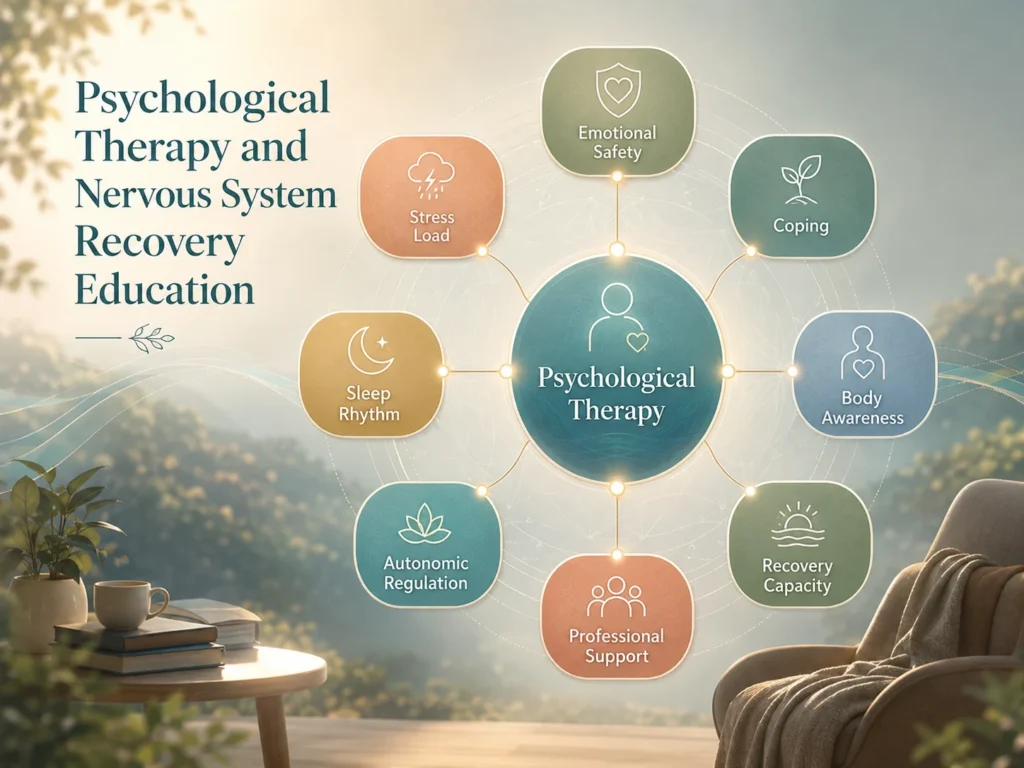
Psychological Therapy and Nervous System Recovery Education may work through several support layers.
First, therapy can give a safer place to talk. A person may discuss fear, grief, stress, shame, worry, or trauma-related feelings without judgment.
Next, therapy may help a person notice patterns. Stress may affect sleep. Poor sleep may increase sensitivity. Stronger sensitivity may make body signals feel louder.
After that, worry about symptoms may add more stress. This does not mean symptoms are only emotional. Instead, it shows that the body and mind may interact.
Professional support may also help someone respond to stress in a safer way. Still, those steps should come from a qualified professional.
Therefore, this page gives education only. It does not provide therapy methods, diagnosis, treatment plans, or recovery promises.
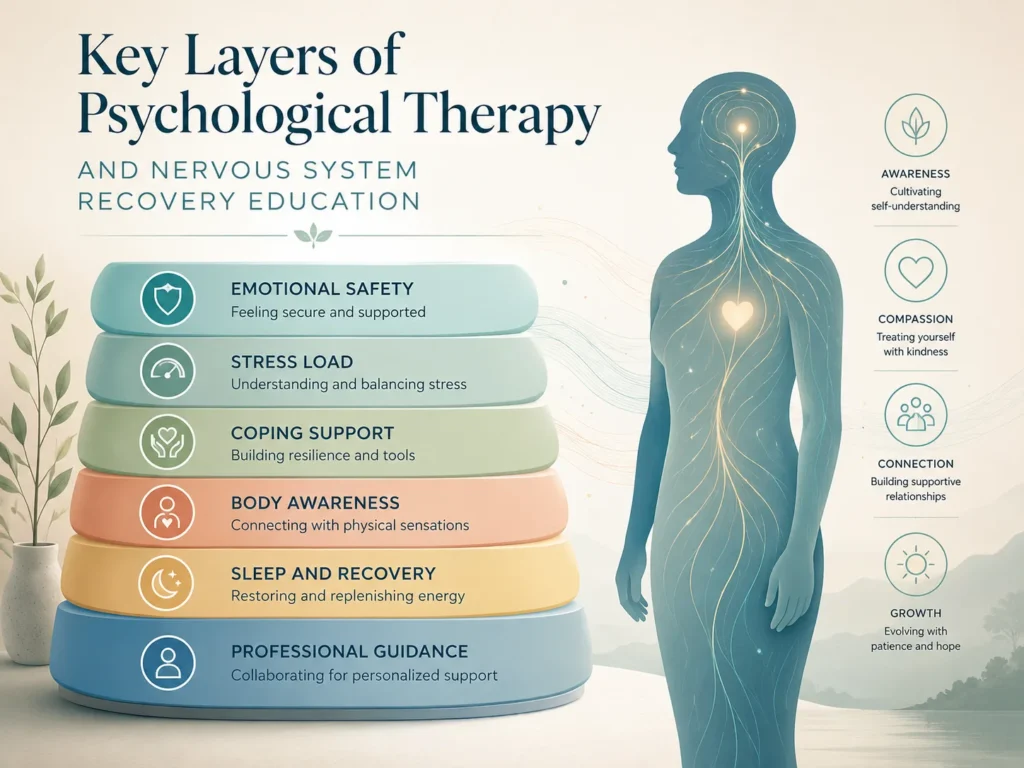
Key Layers of Psychological Therapy and Nervous System Recovery Education
Psychological Therapy and Nervous System Recovery Education has several simple layers.
The first layer is emotional safety. A supportive professional may help a person feel heard and less alone.
Another layer is stress load. Therapy may help people understand how worry, grief, pain, conflict, trauma, or overload affects daily life.
Coping support is also important. A professional may help someone build safer ways to respond to stress.
Body awareness is another layer. Some people notice tension, fatigue, poor sleep, stomach discomfort, headaches, or body sensitivity during stressful times.
However, body symptoms should not be reduced to emotions. Medical causes must still be respected.
Finally, safety matters. Severe distress, self-harm thoughts, unsafe feelings, or sudden neurological symptoms need urgent professional help.
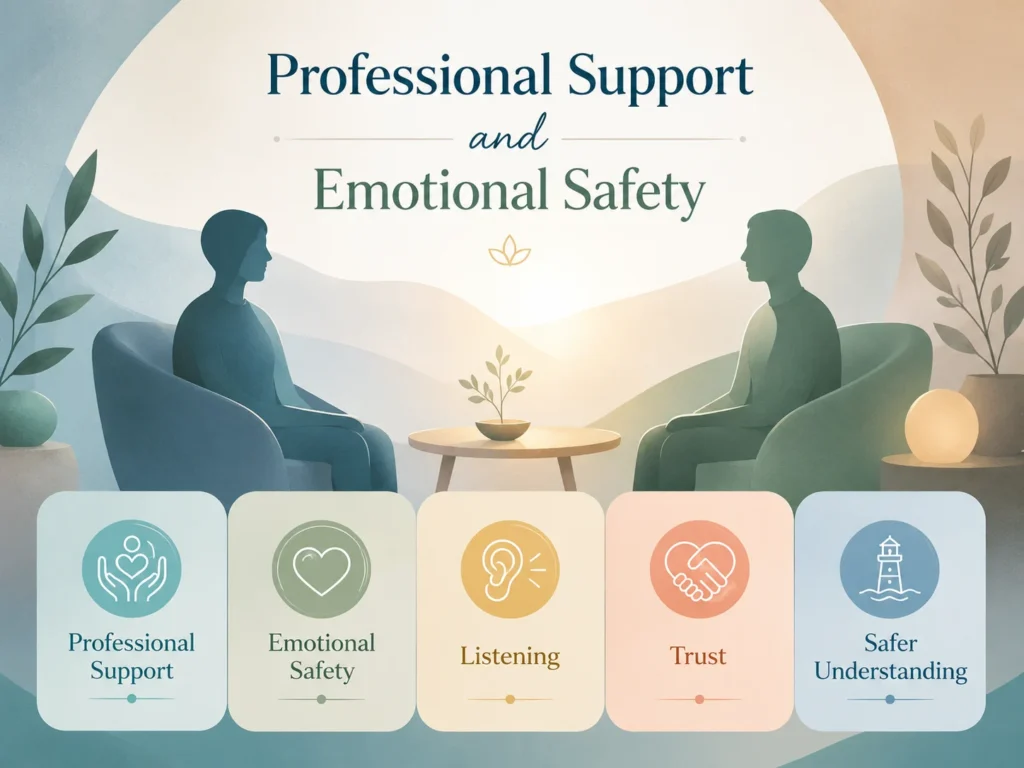
Professional Support and Emotional Safety
Professional support can matter when stress feels too heavy to carry alone.
A trained mental health professional can offer a safe place to talk, reflect, and understand what is happening.
Seeking support does not mean someone is weak. In many cases, it means the person is taking their health and daily function seriously.
Emotional safety also matters for the nervous system. When someone feels judged, threatened, or overwhelmed, the body may stay more alert.
A calm support relationship may help some people feel less alone. It may also help them understand their stress response in a safer way.
However, therapy is different for each person. Some people need short-term support. Others may need longer care, trauma-informed support, medical review, medication review, or crisis help.
This page does not tell readers what care they need. It only explains why qualified support can matter.
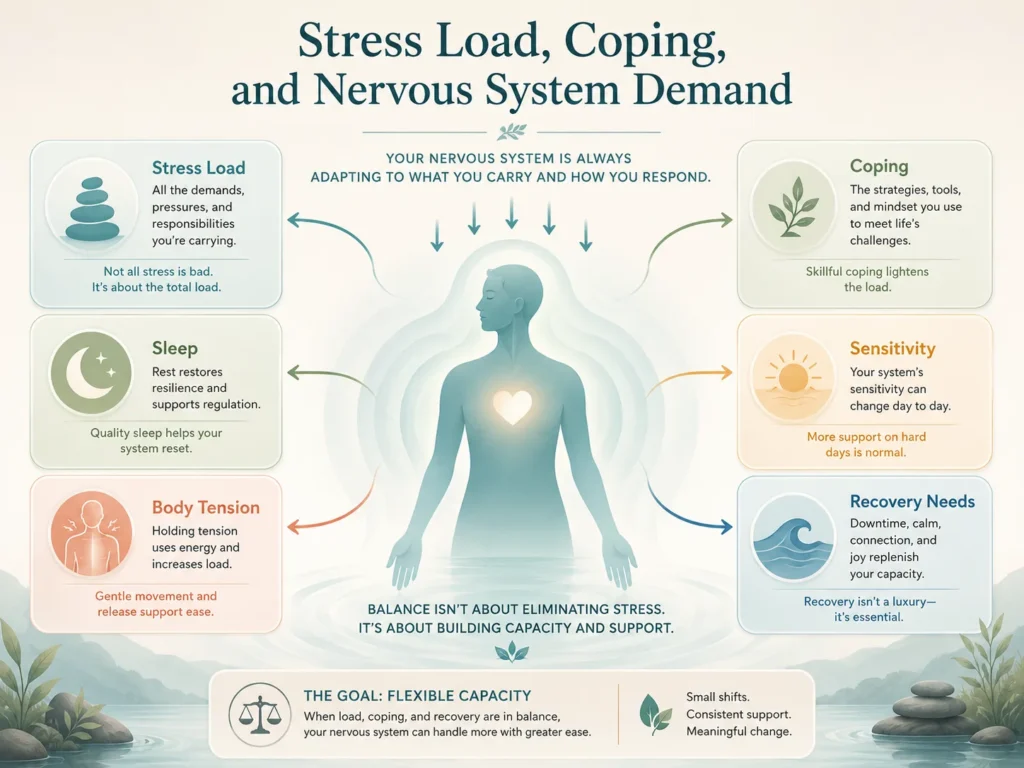
Stress Load, Coping, and Nervous System Demand
Stress load can affect both the body and the mind.
When stress builds up, a person may feel tired, tense, restless, foggy, sensitive, irritable, or unable to settle.
Coping means how someone responds to stress. Some coping habits may help for a short time but add pressure later.
For example, overworking, avoiding everything, ignoring emotions, or checking symptoms again and again may increase nervous system demand.
Therapy may help a person understand these patterns with support. A professional can help explore what feels unsafe, what feels overwhelming, and what care may be useful.
Still, this page should not give therapy instructions.
A safer message is simple. Stress load may increase body demand, and professional support may help some people understand that demand more clearly.
However, stress does not explain every symptom. Physical symptoms may still need medical review.
Body Awareness, Symptoms, and Safe Interpretation
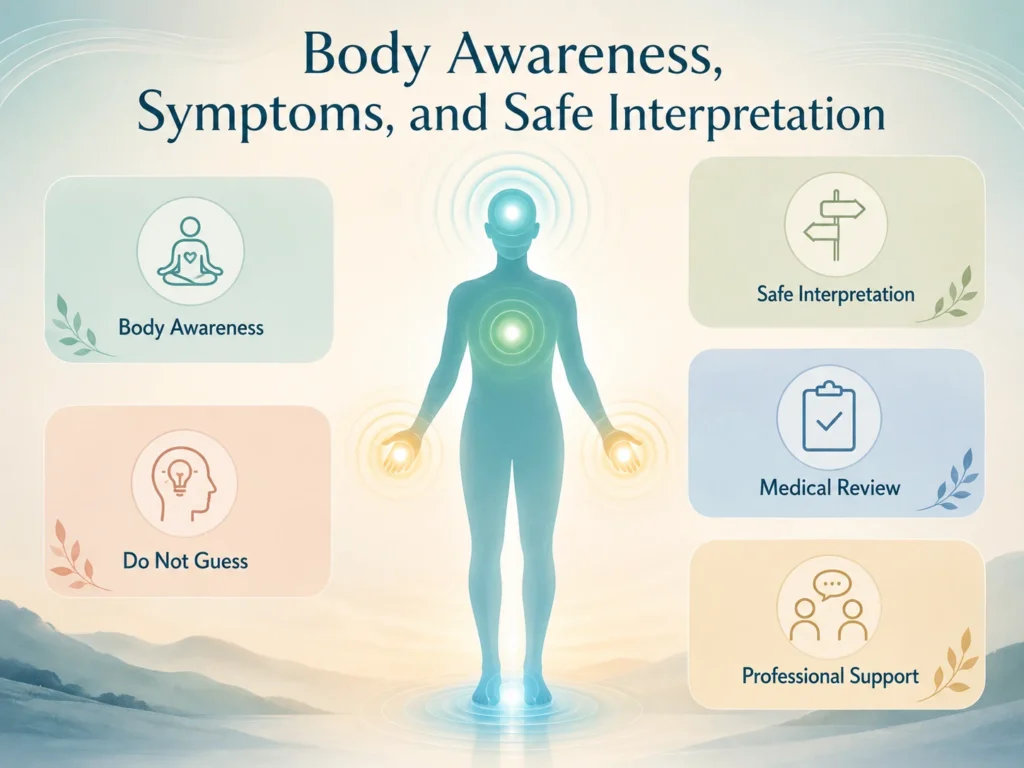
Body awareness means noticing body signals in a careful way.
This can matter when a person feels tension, fatigue, pain, tingling, numbness, burning, dizziness, weakness, or poor sleep.
Therapy may help some people understand how stress and body signals interact. For example, stress may increase muscle tension.
Poor sleep may make discomfort feel stronger. Worry may make symptoms feel more frightening.
However, body awareness should not become guessing. A symptom should not be labeled as anxiety, trauma, or stress without proper review.
This is especially important for nerve-related symptoms. Numbness, weakness, burning pain, spreading symptoms, balance changes, bladder or bowel changes, or symptoms after injury may need medical care.
Therefore, this section supports balance. Therapy may help with emotional support, but it does not replace medical evaluation.
Real-Life Symptom Language Bridge
Some readers may search for this topic because they feel overwhelmed, tense, anxious, stuck, emotionally tired, easily triggered, or unable to calm down.
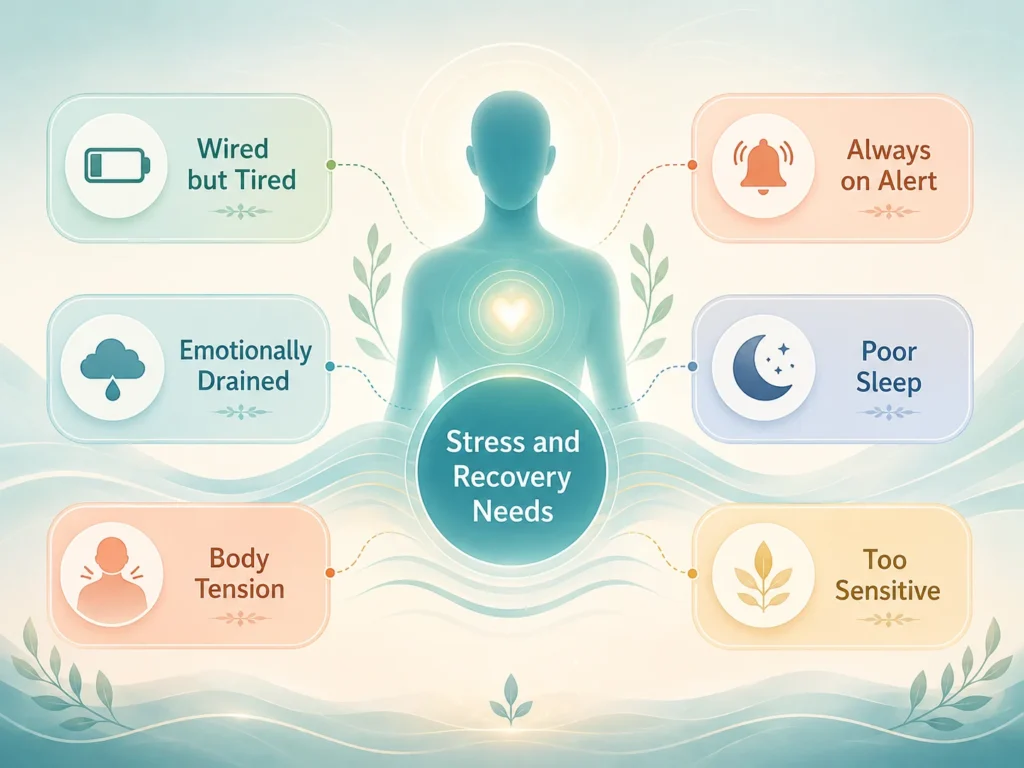
Others may describe body feelings. They may say they feel “wired but tired,” “always on alert,” “shut down,” “unable to sleep,” or “too sensitive.”
These phrases are not diagnoses. However, they can describe how stress and body sensitivity may feel in daily life.
Some readers may also notice nerve-related symptoms. These may include tingling, numbness, burning feelings, weakness, nerve pain, tight muscles, fatigue, poor sleep, or changes in comfort.
These symptoms can feel confusing. Stress may affect muscle tension. Poor sleep may make discomfort feel stronger.
Fear about symptoms may also make the body feel more alert.
Still, nerve symptoms can have many other causes. They may connect with diabetes, vitamin problems, thyroid issues, injury, nerve compression, immune problems, infection, medication effects, or circulation changes.
Therefore, this page explains one support layer only. Psychological therapy may support emotional safety and coping education, but it does not explain every symptom.
Psychological Therapy and Nervous System Recovery Interactions
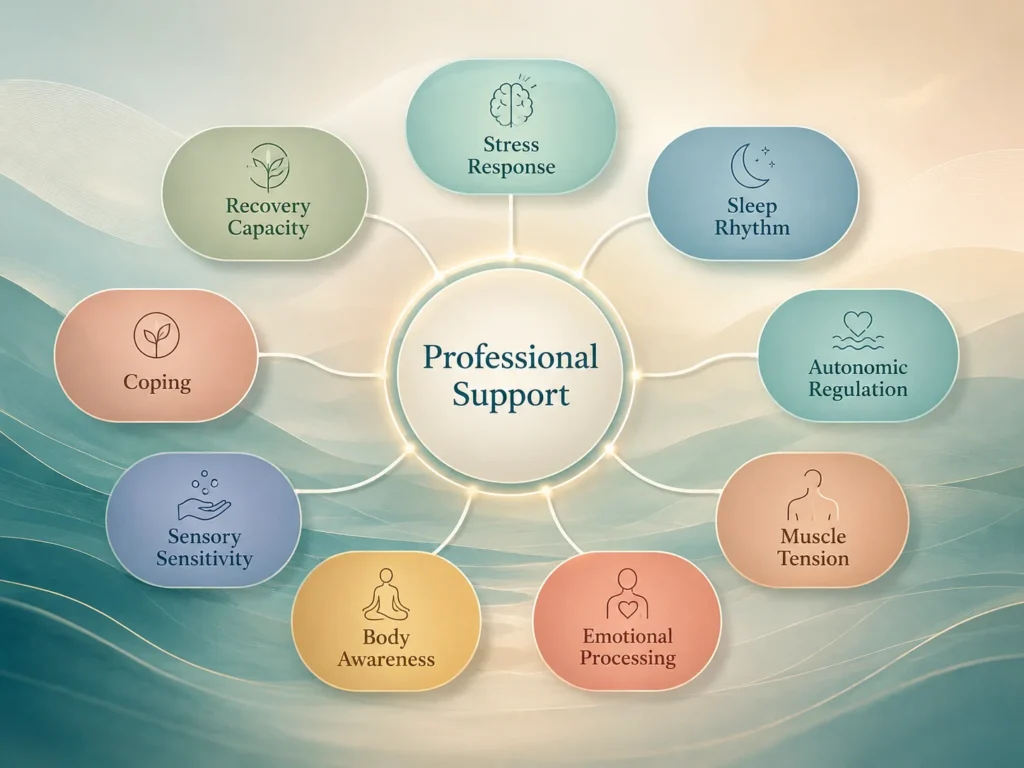
Psychological Therapy and Nervous System Recovery Education may connect with many body systems.
Stress response, sleep rhythm, autonomic regulation, muscle tension, attention, emotional processing, body awareness, sensitivity, and recovery capacity may all interact.
These systems do not work alone. They communicate throughout the day and night.
For example, emotional stress may make sleep harder. Poor sleep may increase body sensitivity.
Higher sensitivity may make symptoms feel more worrying. Then, worry may add more stress.
This loop does not prove a diagnosis. It only shows how stress, sleep, body signals, and recovery demand may connect.
Professional support may help some people understand these patterns safely.
However, therapy should be guided by a qualified professional, especially when trauma, severe distress, unsafe feelings, or mental health symptoms are involved.
Readers can learn more through Trauma and Stress Healing. They can also continue with Trauma Stress and Nervous System Activation.
For long-term stress education, Chronic Stress and Nervous System Dysregulation is another helpful page. For body-response education, readers can continue with Autonomic Regulation.
Patterns That Influence Psychological Therapy and Nervous System Recovery
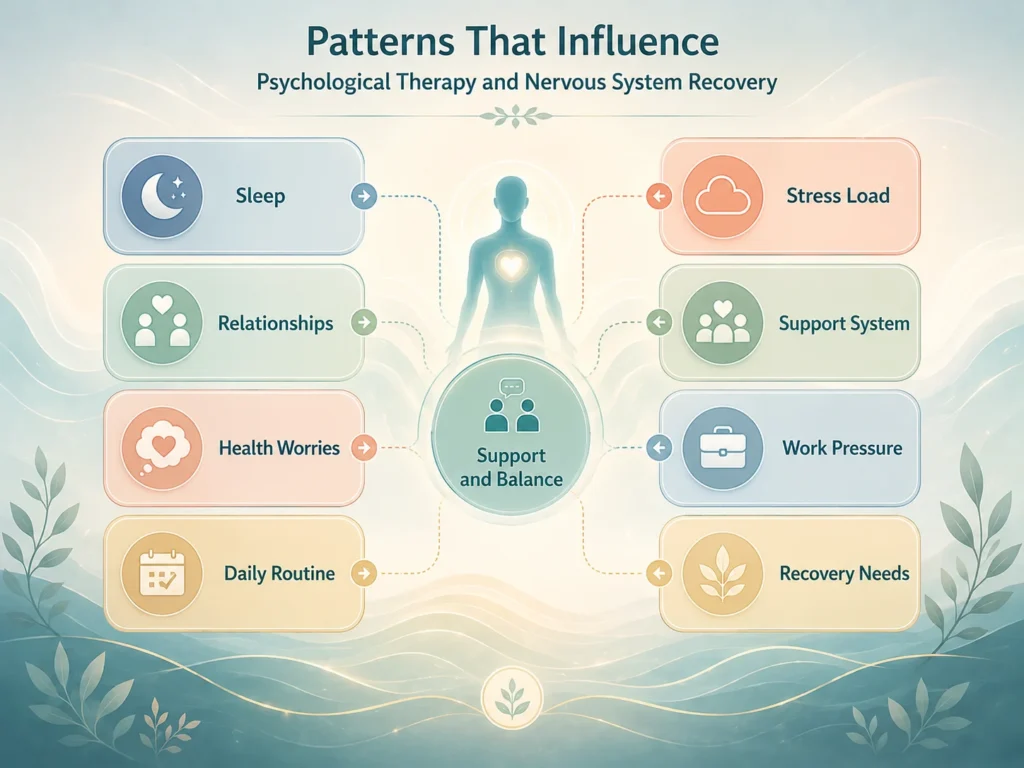
Several daily-life patterns may influence Psychological Therapy and Nervous System Recovery Education.
Sleep is one important pattern. Poor sleep may make emotions harder to manage. It may also increase body sensitivity.
Relationships may also matter. Conflict, isolation, grief, family pressure, or workplace stress can increase emotional demand.
Health worries can add another layer. When symptoms are ongoing or confusing, a person may feel worried, frustrated, fearful, or exhausted.
Daily routines can also shape stress load. Overwork, unpredictable schedules, low rest, high screen use, low movement, and constant responsibility may increase pressure.
However, this section is not a self-help plan. It does not tell readers to treat symptoms alone.
Instead, it explains why professional support may matter when stress, emotions, sleep, or daily function are affected.
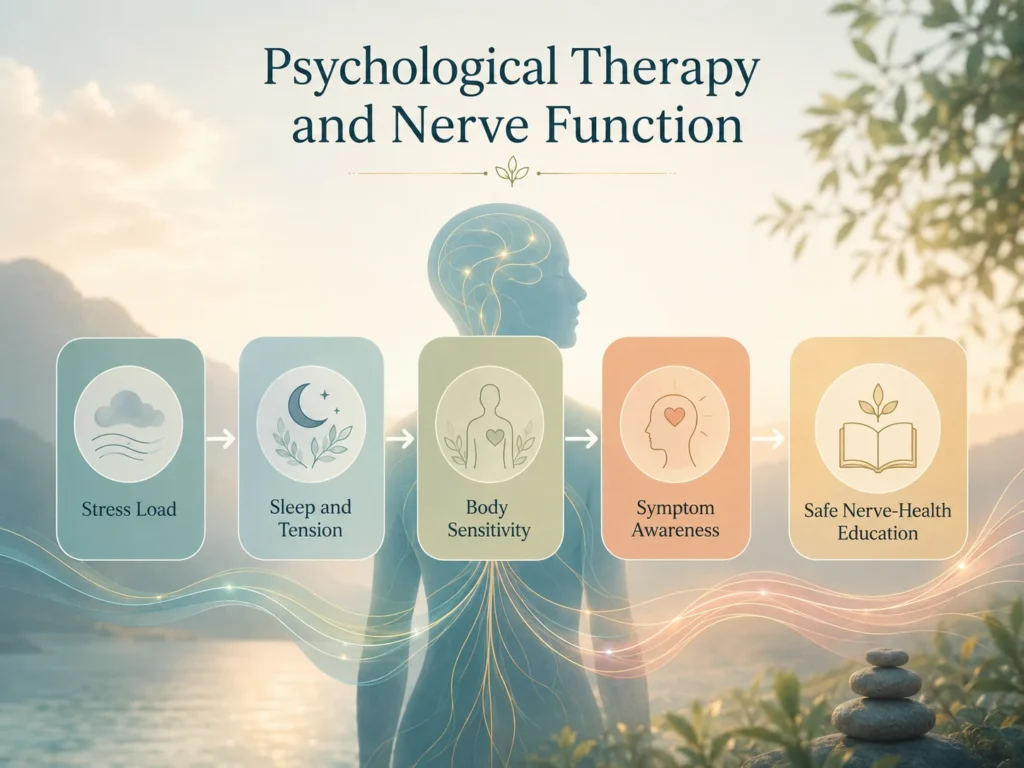
Psychological Therapy and Nerve Function
Psychological Therapy and Nervous System Recovery Education may affect how the body experiences nerve-related sensations indirectly.
However, therapy does not prove nerve repair. It should not be used as a nerve treatment claim.
A safer way to understand the connection is simple. Stress load may affect sleep, muscle tension, attention, and body sensitivity.
These changes may affect how symptoms feel during daily life. For example, poor sleep may make pain feel stronger.
Muscle tension may add body discomfort. Fear about symptoms may also make the body feel more alert.
Still, nerve symptoms should never be dismissed as “just stress” or “just psychological.”
Peripheral neuropathy and other nerve conditions can have medical causes. These causes may need proper evaluation.
In addition, therapy is not a replacement for medical testing, diagnosis, or condition-specific care.
Therefore, this page should be used as a supporting education topic only. Readers who want to understand symptom words more clearly can continue with Symptoms of Nerve Dysfunction.
Practical Daily-Life Examples
A person may feel emotionally drained after weeks of stress.
Even if daily tasks look normal from the outside, the body may feel tired, tense, and hard to settle.
Another person may sleep poorly after conflict, grief, or worry. As a result, the next day may feel heavier.
Small problems may feel harder, and body signals may feel stronger. This does not prove a diagnosis, but it shows how stress and sleep may interact.
Someone else may feel tension in the jaw, neck, shoulders, back, or limbs. This can happen when the body stays alert for a long time.
In addition, a person with ongoing nerve symptoms may feel worried or fearful. That worry is understandable.
However, symptoms should not be guessed from fear alone.
These examples are for education only. They can help readers understand how emotional load, sleep, stress, and body sensitivity may connect.
If symptoms are severe, new, spreading, worsening, unsafe, or linked with sudden neurological changes, a qualified healthcare professional should review the situation.
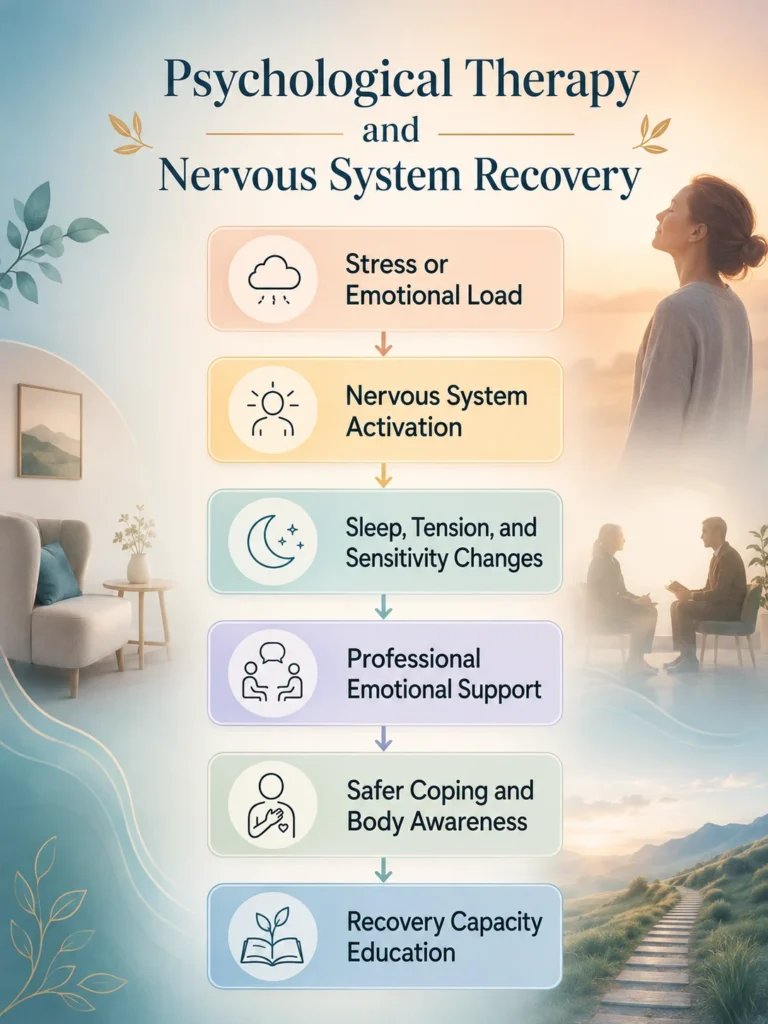
Psychological Therapy and Nervous System Recovery Visual Flow
Psychological Therapy and Nervous System Recovery Education can be understood as a simple body-system flow.
First, a person may experience stress, trauma, conflict, grief, pain, or overload.
Next, the nervous system may become more alert. Sleep may become harder. Muscles may tense. Body signals may feel stronger.
After that, professional support may help the person understand emotions, thoughts, coping patterns, and body responses more safely.
With the right support, the person may learn to ask better questions, seek proper care, and understand recovery needs more clearly.
The flow can look like this:
Stress or Emotional Load
↓
Nervous System Activation
↓
Sleep, Tension, and Sensitivity Changes
↓
Professional Emotional Support
↓
Safer Coping and Body Awareness
↓
Recovery Capacity Education
This flow is for education only. It does not diagnose anxiety, depression, PTSD, trauma, nerve damage, or any medical condition.
It also does not promise recovery. Psychological therapy may support emotional safety and coping education, but serious symptoms need proper care.
Why Psychological Therapy and Nervous System Recovery Matters
Psychological Therapy and Nervous System Recovery Education matters because recovery is not only about one symptom.
The body and mind often respond together when stress load is high.
For example, the body may need sleep, emotional support, safer coping, medical review, social support, movement, rhythm, and time to settle.
When readers understand psychological therapy, they may stop blaming themselves for feeling overwhelmed, tense, sensitive, or slow to recover.
These patterns do not mean a person is weak. They may show that the body and mind are carrying more demand than usual.
This topic is also important because therapy is often misunderstood.
Some people think therapy is only for severe mental illness. Others think therapy is only talking.
Some people may also think therapy can fix every physical symptom. These ideas are too simple.
A balanced view is safer. Psychological therapy may support emotional understanding, coping, stress awareness, and recovery education.
However, it does not replace medical care, emergency support, or condition-specific guidance.
Therefore, this page supports calm education, not pressure, shame, or cure claims.
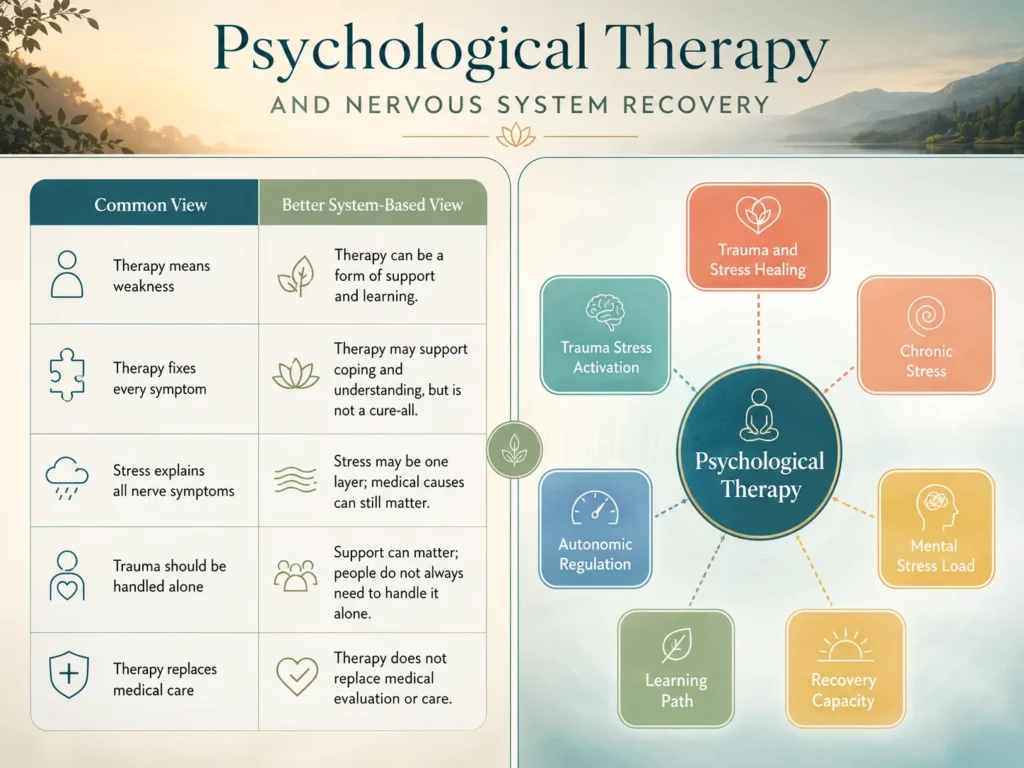
Common Misunderstandings About Psychological Therapy
| Common View | Better System-Based View |
|---|---|
| Therapy means someone is weak. | Seeking support can be a responsible step when stress or symptoms feel hard to manage. |
| Therapy fixes every body symptom. | Therapy may support stress and coping education, but physical symptoms can have medical causes. |
| Talking about stress is enough. | Some people may need medical care, mental health care, social support, medication review, or crisis support. |
| Trauma should be handled alone. | Trauma-related stress may need qualified professional support. |
| Therapy replaces medical care. | Therapy can support emotional health, but medical symptoms still need proper review. |
| One technique works for everyone. | Support should match the person’s needs, history, symptoms, and safety. |
In simple words, psychological therapy can be a helpful support topic. However, it should not be treated as a cure for every symptom.
Therefore, this section gives a balanced message. Emotional support may matter, but serious, sudden, unsafe, or worsening symptoms still need proper care.
Related Condition Connections
Psychological Therapy and Nervous System Recovery Education may connect with several condition pages.
However, it should not explain any condition by itself.
Some readers with Peripheral Neuropathy may feel stress, fear, poor sleep, body sensitivity, or emotional fatigue.
In these cases, psychological support may help with coping and emotional load. Still, it does not explain neuropathy itself.
Readers with Diabetic Neuropathy may notice worry, sleep difficulty, body discomfort, or stress around long-term health needs.
However, diabetic neuropathy can have specific medical causes. For this reason, it should not be explained through stress alone.
In addition, people with Nerve Compression may feel pain, pressure, tingling, numbness, or sensitivity.
Emotional stress may affect how symptoms feel, but it does not explain nerve pressure itself.
Readers with Sciatic Nerve Pain may also experience fear of movement, sleep disruption, body guarding, worry, or frustration.
Because of this, psychological support can be a useful education connection.
People with Post-Injury Nerve Damage may notice fear, grief, body guarding, sleep disruption, or higher recovery demand after injury.
Still, injury-related symptoms need careful medical attention, especially when symptoms are new, severe, spreading, or worsening.
Overall, Psychological Therapy can help readers understand emotional support, coping, body awareness, and recovery capacity. However, it should remain a supporting education topic only.
Topic Cluster Placement
Psychological Therapy belongs inside the Therapeutic Systems cluster.
It explains professional emotional support, stress load, coping, body awareness, nervous system activation, and recovery education.
This page connects closely with Trauma and Stress Healing because trauma-related stress can affect both body and mind.
That parent page gives a wider view of safety, support, and recovery-related learning.
It also connects naturally with Trauma Stress and Nervous System Activation. That page explains how the body may stay alert after intense stress or trauma.
Psychological Therapy supports this cluster by explaining why professional support may matter when emotions, symptoms, and daily function feel difficult.
For long-term stress patterns, Chronic Stress and Nervous System Dysregulation is another important related page.
It explains how ongoing stress may affect sleep, sensitivity, energy, and body load.
In addition, Mental Stress and Nervous System Load connects well with this topic.
That page explains how worry, rumination, attention demand, and emotional load may affect the nervous system.
For recovery education, Recovery Capacity and Nervous System Resilience is also important.
It explains why the body may need more recovery space after stress, poor sleep, pain, or overload.
For the body-response layer, Autonomic Regulation helps readers understand alertness, breathing rhythm, body settling, and nervous system flexibility.
Together, these pages help readers move from symptom confusion toward safer system-based education.
Still, this page should not provide therapy instructions, trauma-processing steps, self-treatment methods, or recovery promises.
Psychological Therapy and Nervous System Recovery FAQ
What is psychological therapy?
Psychological therapy usually means professional support for emotions, thoughts, stress, coping, trauma-related reactions, relationships, and daily-life challenges.
This page explains the topic for education only.
Can psychological therapy help the nervous system recover?
Psychological therapy may support stress understanding, coping, emotional safety, body awareness, and recovery education.
However, this page does not claim that therapy repairs nerves or cures symptoms.
Is therapy only for severe mental illness?
No. Some people seek therapy for stress, grief, coping, relationships, trauma-related reactions, sleep disruption, or life changes.
A qualified professional should guide care.
Can stress cause nerve symptoms?
Stress may affect body awareness, muscle tension, sleep, and sensitivity.
Still, nerve symptoms can have medical causes. Therefore, tingling, numbness, burning, weakness, or spreading symptoms should not be dismissed as stress.
Is this page giving therapy advice?
No. This page does not give therapy steps, trauma-processing methods, exposure methods, emotional release instructions, or self-treatment plans.
When should someone seek urgent help?
Seek urgent help for self-harm thoughts, unsafe feelings, severe panic, chest pain, fainting, sudden weakness, spreading numbness, loss of balance, severe confusion, symptoms after injury, or rapidly worsening symptoms.
Continue Learning
Readers can continue learning through related pages on Heal Your Nerves Naturally.
These pages explain stress load, trauma-related activation, emotional support, sleep, recovery capacity, and safe nerve-health education.
A helpful next step is Trauma and Stress Healing. This page gives the broader parent view of trauma-related stress, safety, support, and recovery education.
Readers can also continue with Trauma Stress and Nervous System Activation. That page explains how the body may stay alert, tense, sensitive, or unsettled after intense stress.
For long-term stress education, Chronic Stress and Nervous System Dysregulation is another useful page.
It explains how ongoing stress may affect sleep, body load, sensitivity, and recovery needs.
In addition, Mental Stress and Nervous System Load helps readers understand how worry, rumination, attention demand, and emotional pressure may affect the nervous system.
For recovery capacity education, Recovery Capacity and Nervous System Resilience can help readers understand why the body may need more recovery space after stress, poor sleep, pain, or overload.
For body-response education, Autonomic Regulation is also helpful.
Finally, Learning Path gives visitors a simple way to move through the website step by step.
Together, these pages support calm education and safer understanding.
Still, readers should seek professional care when symptoms are serious, persistent, unsafe, worsening, or difficult to manage.
Sources / References
The following sources support this educational page.
They help readers learn more about psychotherapy, mental health, trauma-related stress, coping, and safe professional support.
Readers can review National Institute of Mental Health — Psychotherapies to learn how psychotherapy may help people understand and change troubling emotions, thoughts, and behaviors with professional support.
For general therapy education, American Psychological Association — Understanding Psychotherapy and How It Works explains psychotherapy as a collaborative treatment.
Readers can also review MedlinePlus — Mental Health for a simple overview of emotional, psychological, and social well-being.
For trauma-related support education, National Institute of Mental Health — Coping With Traumatic Events explains common reactions to traumatic events and when support may be needed.
For PTSD-related education, National Institute of Mental Health — Post-Traumatic Stress Disorder explains that people with PTSD symptoms should work with a mental health professional experienced in PTSD care.
For broader mental-health help information, National Institute of Mental Health — Finding Treatment offers resources for finding help.
These sources are used for education only. They do not replace medical care, diagnosis, mental health care, emergency support, or personal guidance from a qualified professional.
Author / Editorial Trust Note
This page is part of Heal Your Nerves Naturally.
The website shares calm and structured education about nerve health, body systems, stress load, and recovery-related learning.
This article explains Psychological Therapy and Nervous System Recovery Education in a simple and safe way.
It shows how professional support, emotional safety, coping, stress load, sleep, body awareness, and recovery capacity may connect.
The page is for education only. It does not provide diagnosis, therapy instructions, trauma-processing steps, exposure methods, mental health treatment plans, supplement advice, or personal medical instructions.
In addition, this content does not replace medical care, mental health care, crisis support, or emergency care.
A qualified professional can review symptoms, history, risk factors, mental health needs, and care options when needed.
This topic needs careful wording because therapy, trauma, emotional distress, and nervous system symptoms can be sensitive.
For example, some people may feel emotional symptoms first. Others may notice body tension, sleep disruption, fatigue, or sensory sensitivity.
For this reason, every section supports safe learning.
The content avoids shame-based language, fear-based language, cure claims, recovery promises, direct nerve-regrowth claims, and self-treatment instructions.
The goal is simple. Readers can use this page to understand the topic more clearly, ask better questions, and seek the right support when needed.
Educational Trust Note
This page is for education only.
It should not replace medical care, mental health care, trauma therapy, diagnosis, crisis support, or emergency support.
Psychological therapy can differ from person to person.
Some people may seek therapy for stress, grief, trauma-related reactions, anxiety, depression, relationship strain, sleep problems, or coping support.
However, emotional distress and nerve-related symptoms can have many causes.
They may come from stress, pain, nerve irritation, blood sugar changes, immune issues, breathing problems, medication effects, injury, circulation changes, sleep problems, or other health conditions.
Because of this, it is not safe to explain every symptom through stress or emotions alone.
Psychological therapy may be one part of support, but it should not be the only explanation.
A safer way to use this page is as a learning guide.
It can help readers understand possible body-system connections in a calm and simple way.
In addition, this page may help readers ask better questions when they speak with a qualified healthcare professional or licensed mental health professional.
Safety & Education Notice
Psychological Therapy and Nervous System Recovery Education is a sensitive health topic.
This page is for education only.
It explains how professional support, emotional safety, coping, stress load, sleep, body awareness, and daily demand may connect with recovery needs.
This page does not diagnose anxiety, depression, PTSD, trauma, panic disorder, neuropathy, nerve damage, burnout, or any medical condition.
It also does not provide therapy instructions, trauma-processing methods, exposure methods, emotional release steps, treatment protocols, supplement protocols, recovery promises, cure claims, direct nerve-regrowth claims, or self-diagnosis advice.
Psychological therapy should be guided by a qualified professional.
This is especially important when a person feels unsafe, has self-harm thoughts, has severe panic, has trauma-related symptoms, or cannot manage daily life.
Please seek urgent help if you feel unsafe, have thoughts of self-harm, feel out of control, experience severe panic, chest pain, fainting, sudden weakness, spreading numbness, loss of balance, severe confusion, symptoms after injury, or rapidly worsening symptoms.
If emotional distress, sleep problems, stress reactions, or nerve-related symptoms affect work, relationships, safety, mood, daily routine, breathing, walking, balance, or body comfort, consider speaking with a qualified healthcare professional or licensed mental health professional.
Education can help readers understand their body and stress response better.
Still, professional care is important when symptoms are serious, persistent, unsafe, worsening, or hard to manage.