
Motivation: A Simple Guide to Action and Lasting Change

Motivation helps explain why people start, continue, pause, or stop an action. Every day, people make choices about work, sleep, movement, learning, stress, relationships, and recovery. Sometimes action feels easy. At other times, even simple tasks can feel heavy. Because of this, inner drive is not only a positive feeling. It is also connected with goals, emotions, habits, energy, environment, support, and personal meaning.
Many people think action begins only when they feel inspired. However, real life is more complex. A person may want to improve a habit but still struggle to begin. Meanwhile, another person may continue a difficult task even when the desire feels low. Therefore, this topic should be understood as a human system, not a test of willpower. It can change from day to day, depending on stress, sleep, emotion, and life demand.
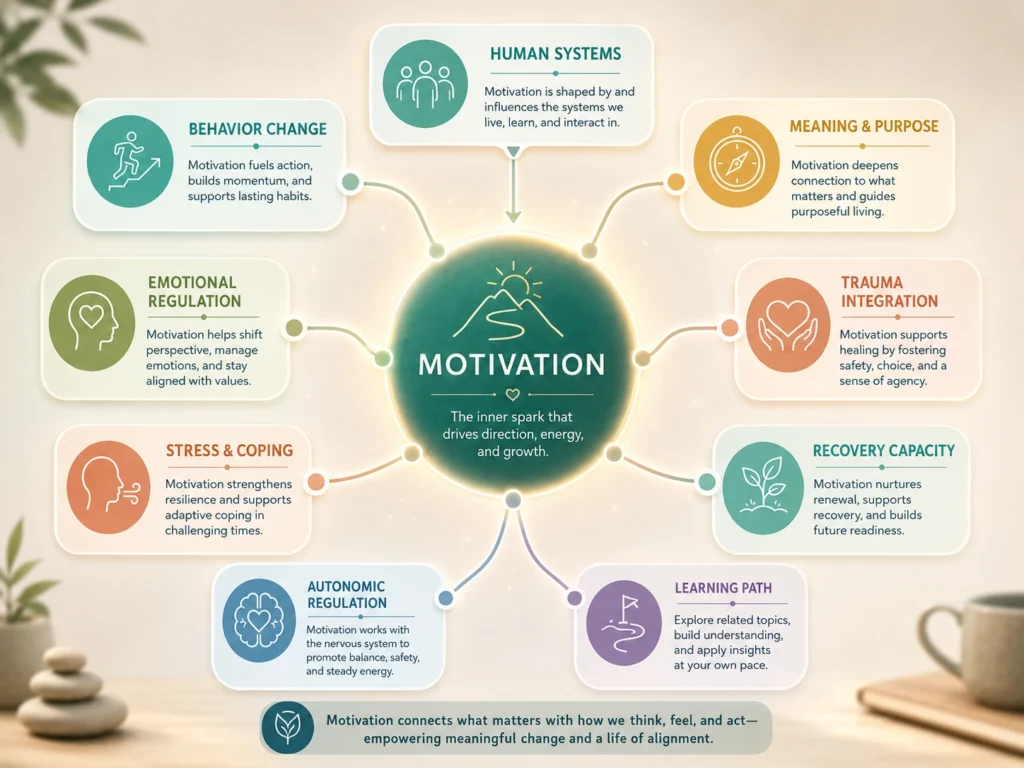
Some readers search for motivational quotes, motivation quotes, motivational quotes for work, or best podcasts for motivation when they feel discouraged. These can give a short spark. However, lasting action usually needs deeper support. For example, Emotional Regulation, Stress & Coping, Behavior Change, Meaning & Purpose, and recovery capacity may all shape whether a person can keep going.
This page is educational only. It does not diagnose low energy, poor focus, depression, anxiety, burnout, nerve symptoms, or any medical condition. Instead, it explains how goals, motive, habits, meaning, stress, and daily routines may influence action. Readers should use this page for learning, not as a substitute for medical or mental health care.
Quick Navigation
What Is Motivation?
Plain Meaning / Glossary Box
How Motivation Works
Key Layers of Motivation
Real-Life Symptom Language Bridge
Motivation and Nervous System Function
Motivation Interactions
Practical Daily-Life Examples
Motivation Visual Flow
Why Motivation Matters for Recovery
Common Misunderstandings About Motivation
Related Condition Connections
Topic Cluster Placement
Motivation FAQ
Continue Learning
Sources / References
Author / Editorial Trust Note
Educational Trust Note
Safety & Education Notice
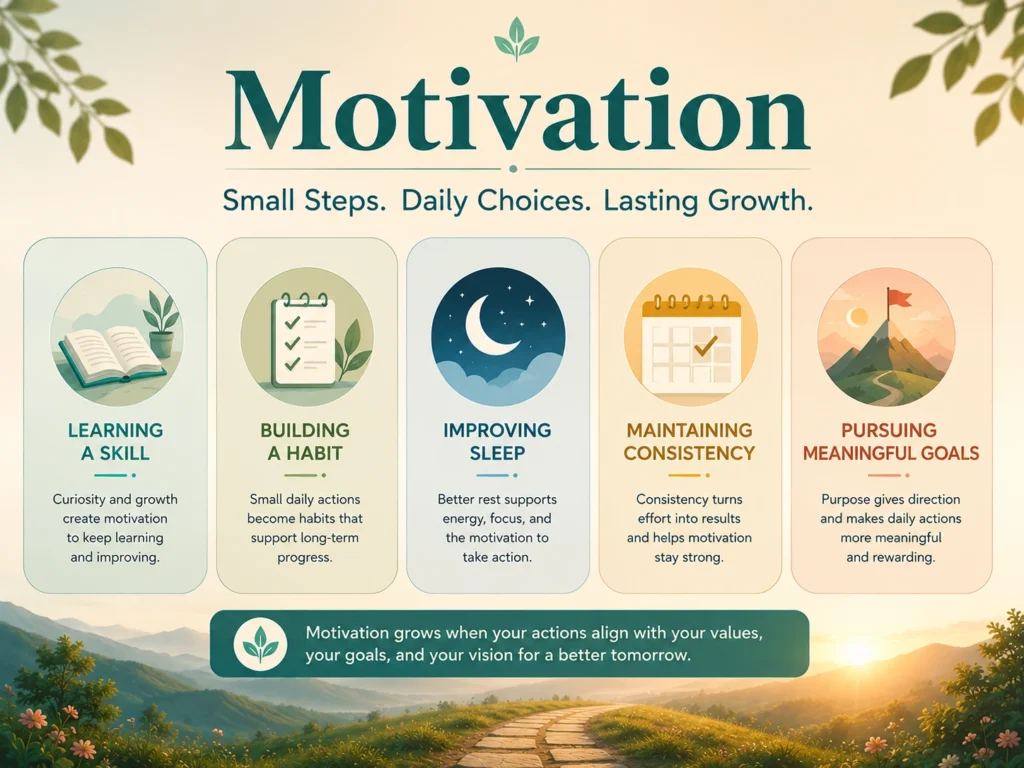
What Is Motivation?
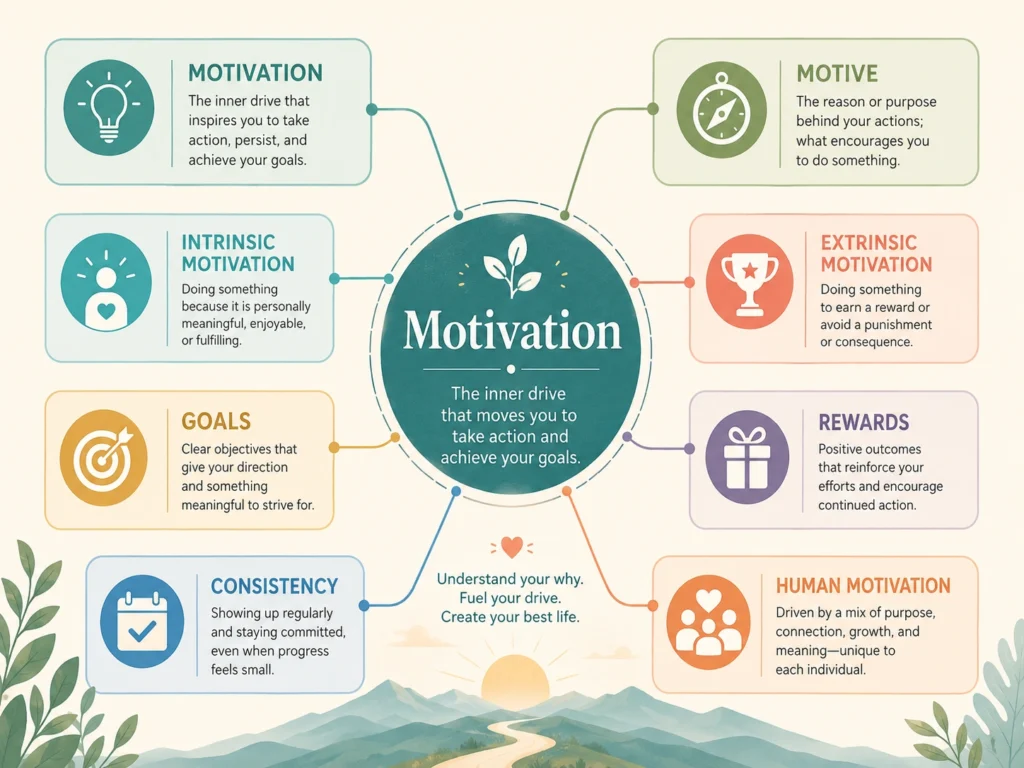
Motivation is the reason or drive behind action. It helps explain why people begin a task, keep working on it, or stop. In simple terms, it answers the question, “Why does this action matter?” However, that answer can be different for each person. A student may study to learn. A parent may work to support family. Another person may build a habit because they value health, growth, or independence.
This inner drive can come from many places. Sometimes it comes from interest, joy, purpose, or personal values. This is called intrinsic motivation. At other times, action is guided by rewards, praise, deadlines, money, grades, or social pressure. This is called extrinsic motivation. Both forms can influence behavior. However, long-term action often becomes stronger when it connects with meaning, identity, and realistic daily habits.
Drive also changes. Energy, sleep, stress, pain, emotions, support, and environment may all affect the desire to act. Therefore, low drive does not always mean laziness. It may show that the body or mind is carrying too much demand. As a result, understanding this topic can help readers become more patient and practical when building habits.
Plain Meaning / Glossary Box
Motivation
Motivation is the reason or drive behind action. It helps explain why people begin, continue, or stop a behavior. It may come from goals, values, emotions, needs, rewards, meaning, or daily pressure.
Motive
A motive is the reason behind a specific action. For example, a person may act because of health, family, safety, learning, faith, independence, service, or achievement.
Intrinsic Motivation
Intrinsic motivation comes from within. A person does something because it feels meaningful, interesting, enjoyable, or personally rewarding.
Extrinsic Motivation
Extrinsic motivation comes from outside the person. It may involve rewards, deadlines, money, grades, praise, recognition, or social approval.
Motivating Define
Some readers search “motivating define” when they want a simple meaning. In plain language, motivating means encouraging action, effort, interest, or movement toward a goal.
Human Motivation
Human motivation refers to the many emotional, social, practical, physical, and mental factors that influence why people act.
Goal
A goal is a desired result. It gives direction and helps the mind understand what action is for.
Consistency
Consistency means repeating actions over time. A strong start may help, but steady action often builds lasting change.
How Motivation Works
First, something becomes important. It may be a need, goal, value, problem, hope, or challenge. After that, attention moves toward the thing that matters. For example, a person may want better sleep, a healthier routine, stronger focus, less stress, or more independence. Because the goal feels meaningful, the person may feel more ready to act.
However, desire does not always lead to action. Stress, fear, low energy, poor sleep, pain, or a crowded schedule can make action harder. Therefore, the gap between wanting and doing is normal. This is why Behavior Change matters. A person often needs small steps, repeatable routines, support, and a lower-stress environment before a goal becomes easier to follow.
Rewards also shape action. Some rewards are external, such as praise or results. Others are internal, such as pride, peace, progress, or personal meaning. Over time, repeated action may become a habit. As a result, the person may need less effort to continue. Therefore, lasting action often depends on both desire and habit working together.
Key Layers of Motivation
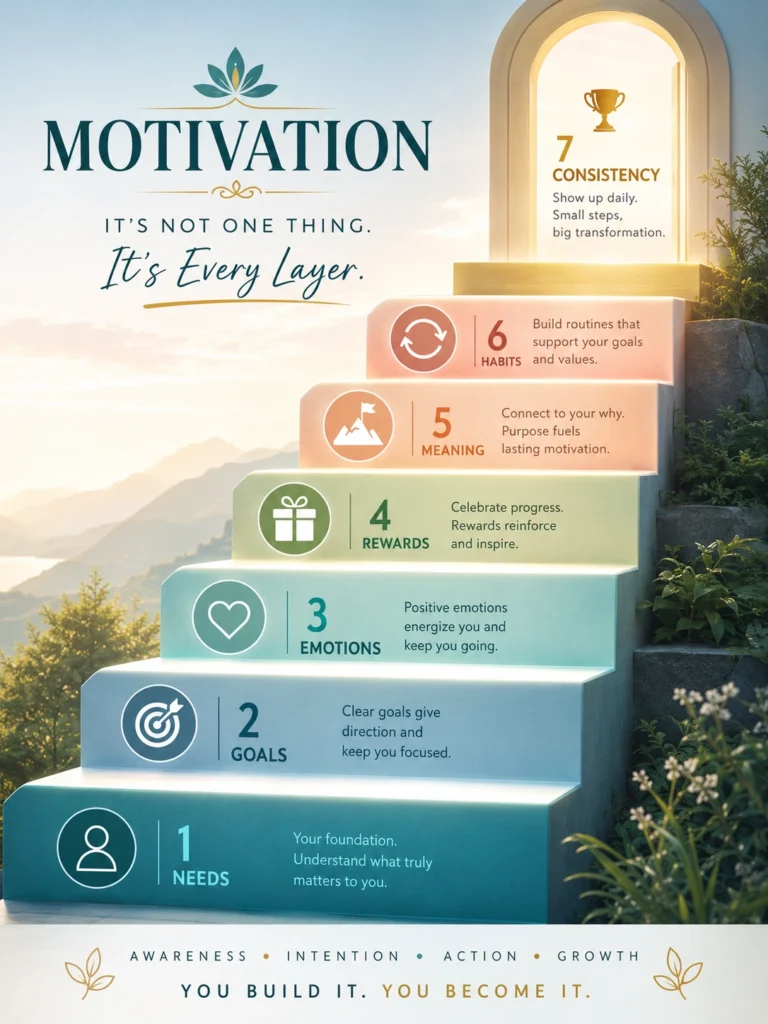
Need Layer
The need layer begins when the body or mind notices that something matters. Needs may include rest, safety, connection, learning, health, stability, purpose, or support. When a need becomes clear, action may feel more important. For example, a person may want better sleep after many tired days. Another person may seek support after feeling alone.
However, needs are not always obvious. A person may feel low drive because sleep is poor, stress is high, pain is present, or emotional load is heavy. Therefore, the first step is often noticing what the person truly needs. This helps reduce blame and makes action more realistic.
Goal Layer
Goals give direction. Without a goal, energy may feel scattered. A clear goal helps the mind know where to move next. However, goals work best when they are simple, realistic, and meaningful. A goal that is too large may feel heavy, while a smaller goal may feel easier to begin.
For example, “walk for five minutes” may feel easier than “change my whole lifestyle.” Likewise, “prepare for bed ten minutes earlier” may feel more realistic than “fix my sleep completely.” Therefore, clear and small goals often support better action than vague or extreme goals.
Emotional Layer
Emotions can strongly shape action. Hope, curiosity, joy, confidence, and interest may make action easier. However, fear, shame, stress, sadness, anger, or discouragement may make action harder. Because emotions affect attention and energy, they often influence whether a person begins or continues a task.
This is why Emotional Regulation connects with this topic. When emotions feel more manageable, the person may have more space to act. However, emotional regulation does not mean removing feelings. Instead, it means understanding them and responding in a safer way.
Reward Layer
Rewards help the brain learn which actions are worth repeating. A reward may be praise, progress, relief, comfort, learning, meaning, or a sense of achievement. When an action brings a good result, the brain may become more likely to repeat it. Therefore, rewards can support habit formation.
However, not all rewards appear quickly. Many useful actions have delayed results. For example, learning a skill, building a routine, or improving sleep may take time. Because of this, people often need small signs of progress to stay engaged. These small signs can help bridge the gap between effort and long-term benefit.
Meaning Layer
Meaning gives deeper strength to action. A person may continue a hard task because it connects with family, faith, service, independence, learning, or personal values. Therefore, meaning often supports long-term effort better than short-term reward alone.
This layer connects strongly with Meaning & Purpose. When a goal has personal meaning, it may remain important even during difficult days. However, purpose does not remove struggle. Instead, it gives a clearer reason to return to the path after setbacks.
Habit Layer
Habits reduce the effort needed for repeated actions. Once a behavior becomes familiar, it may feel easier to continue. For example, a simple evening routine may become more automatic after enough practice. As a result, the person may not need strong desire every time.
However, habits can support helpful or unhelpful patterns. Late-night scrolling, avoidance, overworking, or skipping rest can also become automatic. Therefore, change often means building a new pattern, not only removing an old one.
Consistency Layer
Consistency is where action becomes visible over time. Many people feel inspired for a short period. However, long-term progress usually comes from repeated small steps. Therefore, consistency should not mean perfection. It means returning to the pattern often enough that it can grow.
A person may miss a day and still continue. In fact, flexible consistency is often more useful than strict pressure. Because life changes, a habit needs room to adjust. Therefore, steady progress usually depends on realistic goals, support, recovery, and self-understanding.
Real-Life Symptom Language Bridge
Some readers come to this page because they feel stuck, tired, discouraged, distracted, or unable to keep going. Others may start goals with strong energy but lose the pattern later. Meanwhile, some people know exactly what they want to do, yet daily life makes action difficult. Therefore, many searches about motivation are really searches about why action feels hard.
Other readers may be exploring nerve health, stress, fatigue, poor sleep, body sensitivity, or recovery. However, these experiences can have many causes. Low drive should never be used to diagnose a medical condition, mental health condition, nerve disorder, or recovery problem. Instead, it should be viewed as one possible signal in a larger body-and-life picture.
At the same time, this topic can help readers understand daily patterns. Sleep, stress, pain, emotion, environment, support, and recovery capacity may all affect action. Because of this, low drive is not always a personal weakness. It may reflect the state of the whole system. This page helps readers think with more care and less blame.
Motivation and Nervous System Function
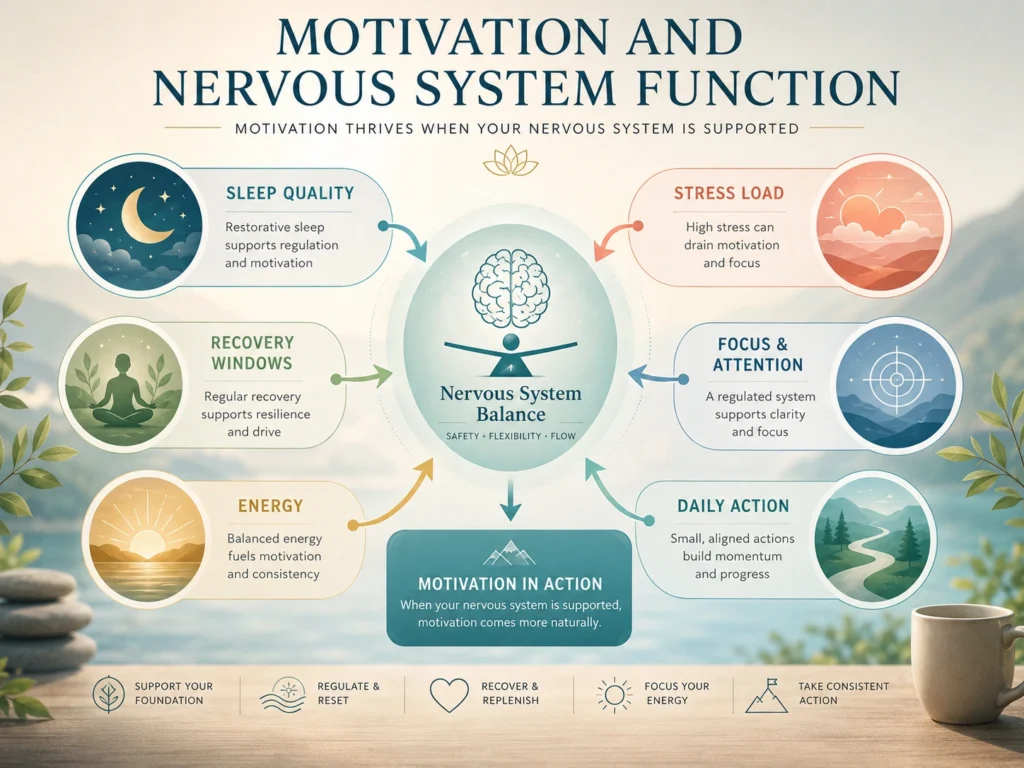
Motivation and nervous system function can influence each other. Daily stress, sleep quality, emotional state, recovery capacity, and body energy may all affect the desire to act. Likewise, meaningful goals may influence whether a person engages in learning, rest, movement, social connection, or routine-building. Therefore, this topic is not separate from the body.
For example, poor sleep may reduce energy and focus. High stress may pull attention toward short-term problems. In contrast, recovery time, emotional balance, and supportive routines may make action easier. Because of this, motivation is often shaped by the person’s current state, not only by willpower.
The nervous system responds to both inner and outer demand. When stress stays high, long-term goals may feel less urgent than immediate problems. However, when recovery improves, planning and focus may feel easier. Therefore, this page connects naturally with Autonomic Regulation and Recovery Capacity and Nervous System Resilience.
Still, motivation should never be used as a measure of nervous system health. A person may feel low drive for many reasons. Likewise, a highly driven person may still face health challenges. As a result, this topic should be understood as one part of a broader Human Systems picture.
Motivation Interactions
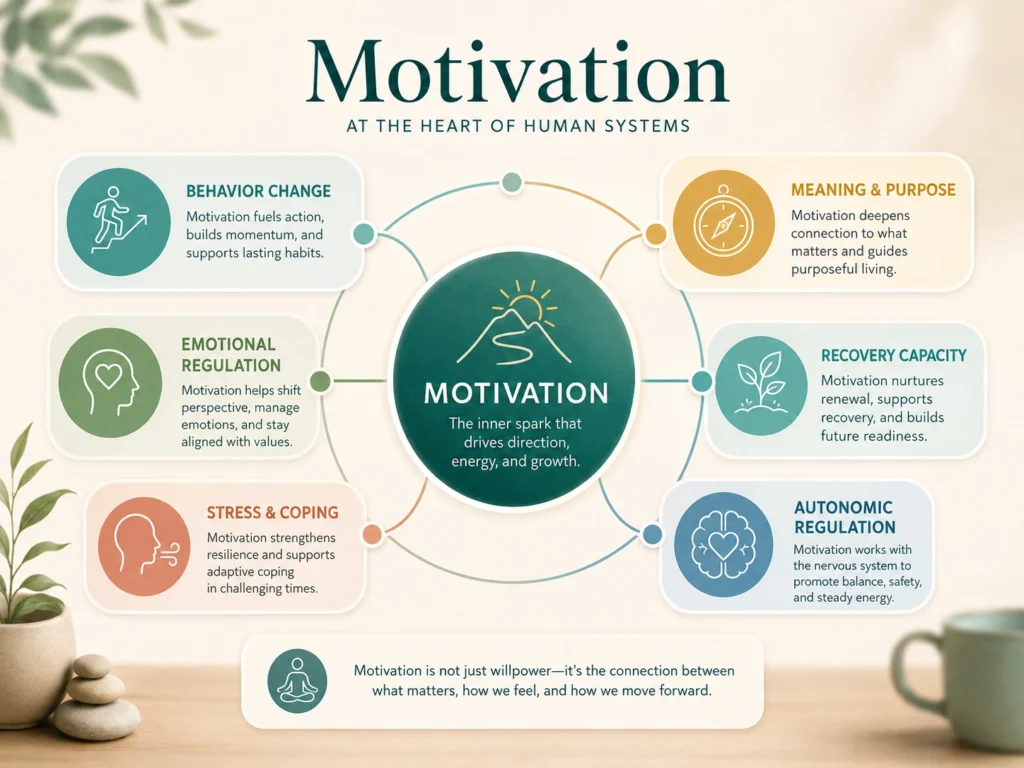
Behavior Change Interaction
Behavior Change and motivation are closely connected. A person may want to improve sleep, reduce stress, learn a skill, or build a healthier routine because a goal feels important. Therefore, motivation often helps start action. However, starting is not the same as maintaining.
Behavior change requires repeated action over time. A person may feel ready on Monday but less ready by Friday. Because of this, small routines, reminders, and supportive environments matter. Motivation may begin the journey, while behavior change helps keep it going.
Emotional Regulation Interaction
Emotional Regulation may influence action because emotions affect attention, energy, and decisions. When emotions feel manageable, it may be easier to focus on a goal. However, when emotions feel overwhelming, the mind may focus on immediate relief instead.
For example, frustration may reduce the desire to continue a task. Meanwhile, hope or curiosity may increase engagement. Therefore, emotional awareness can support steady action. It helps people notice feelings without letting those feelings control every choice.
Stress & Coping Interaction
Stress & Coping also shapes motivation. Short-term stress can create urgency. For example, a deadline may push someone to act. However, long-term stress can drain energy and narrow attention. As a result, meaningful goals may feel harder to pursue.
Coping patterns also matter. Some coping methods support problem-solving, while others increase avoidance. Therefore, stress education helps readers understand why motivation may rise during some challenges and fall during others.
Meaning & Purpose Interaction
Meaning & Purpose often gives the deepest reason for action. Rewards can help, but meaning explains why the goal matters. For example, a person may keep learning because education supports family, service, faith, independence, or long-term growth.
Because meaning goes deeper than a quick reward, it may support action during difficult seasons. Therefore, meaningful goals often create more stable effort. However, meaning does not remove struggle. It simply gives direction.
Recovery Capacity Interaction
Recovery Capacity and Nervous System Resilience may affect energy, focus, patience, and follow-through. When recovery is low, even small tasks may feel hard. However, when the body has enough rest and support, action may become more realistic.
For example, better sleep, lower overload, and safer routines may help a person think more clearly. Therefore, recovery and motivation often work together. Still, recovery is not a guaranteed solution. It is one important part of the larger system.
Autonomic Regulation Interaction
Autonomic Regulation refers to the body’s automatic rhythm of alertness, rest, digestion, breathing, and recovery. When the body feels highly stressed or shut down, action may feel harder. However, a steadier state may support focus and readiness.
At the same time, repeated behaviors can shape daily rhythm. For example, rest, movement, stress coping, and sleep routines may affect how the body feels across the day. Therefore, this connection is two-way, but it should be understood as education only.
Practical Daily-Life Examples
Starting a New Habit
Many people become interested in motivation when they want to start a new habit. They may want to sleep earlier, move more, learn a skill, reduce stress, or build a better routine. At first, the goal may feel exciting. However, excitement often changes. Therefore, long-term success usually needs more than a strong start.
For example, a person may feel ready to exercise during the first week. Later, work, family needs, poor sleep, or stress may make the routine harder. As a result, smaller actions may work better than a large plan. A habit that is easy to repeat has a better chance to last.
Continuing When Drive Feels Low
Action does not always require strong drive. Many people wait until they feel ready. However, action itself can sometimes create more energy. For example, a student may not feel ready to study, but after ten minutes, focus may improve.
Similarly, a person may not feel like walking. Yet, after starting, the body may feel more engaged. Because of this, action and motivation can support each other. Therefore, a small first step may be more useful than waiting for the perfect feeling.
Work and Daily Duties
Many people search for motivational quotes for work because they want encouragement during busy days. Quotes may help for a short time. However, work-related motivation often also depends on purpose, support, skill, rest, and realistic expectations.
For example, a person may feel more engaged when work connects with values or learning. Meanwhile, stress and poor rest may reduce energy. Therefore, workplace drive is not only about positive thinking. It is also shaped by the work setting and the person’s daily load.
Recovery and Personal Growth
Recovery, learning, and personal growth often take time. Because progress may be slow, motivation can rise and fall. A person may feel encouraged after progress, then discouraged when change slows. Therefore, long-term growth needs patience.
For this reason, small signs of progress matter. They help the person see that effort is not wasted. In addition, realistic goals can protect people from giving up too early. Therefore, growth is often stronger when it focuses on progress, not perfection.
Learning From Setbacks
Setbacks do not always mean failure. Instead, they often show where the plan needs support. A setback may reveal stress overload, poor sleep, unclear goals, low support, or a routine that is too large. Therefore, setbacks can become useful information.
For example, if a person stops a habit during a busy week, they can adjust the plan. They may reduce the size of the habit or change the timing. Because of this, flexible learning can protect long-term action better than self-blame.
Motivation Visual Flow
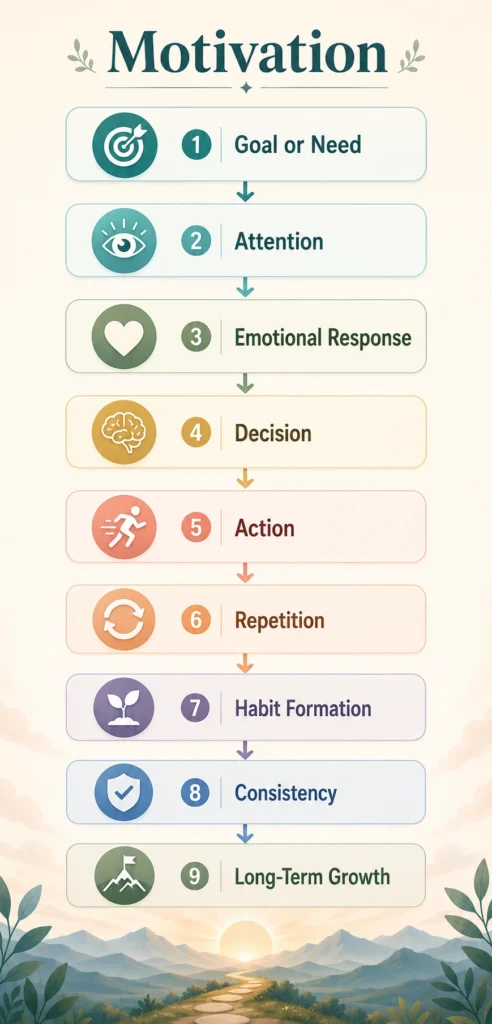
Goal, Need, Desire, or Challenge
↓
Attention and Interest
↓
Emotional Response
↓
Decision to Act
↓
Small First Action
↓
Repeated Action
↓
Habit Formation
↓
Consistency
↓
Long-Term Growth and Adaptation
This flow shows motivation as a process, not just a feeling. Something first becomes important. Then attention moves toward it. After that, emotions, beliefs, support, and daily conditions affect whether action happens. Therefore, action is shaped by many layers.
The process becomes stronger when action repeats. Over time, habits reduce the need for strong desire every time. As a result, growth often comes from steady steps, not short bursts of inspiration. Therefore, the most useful question is not always “How do I feel motivated?” Sometimes it is “What small step can I repeat?”
Why Motivation Matters for Recovery
It Encourages Action
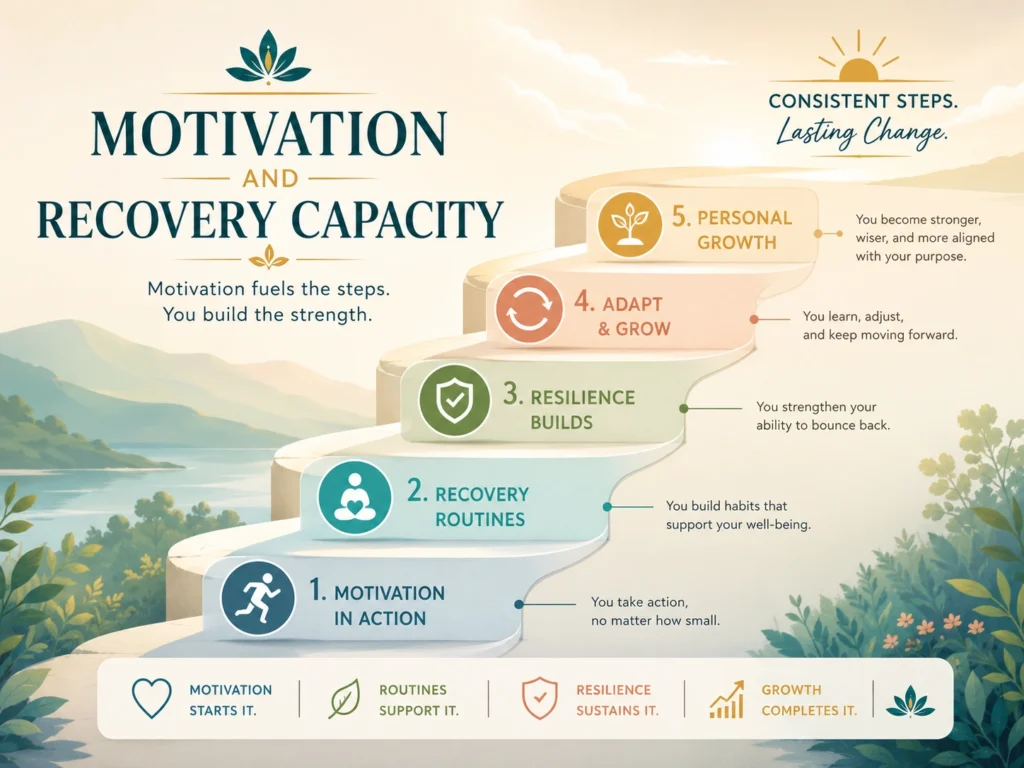
Motivation matters because it often gives the first push toward action. Without some reason to act, people may find it hard to begin new habits, learn, ask for support, or make changes. Therefore, this inner drive can help open the door to growth.
However, it should not be viewed as the only factor. Lasting change also needs consistency, support, realistic goals, and recovery space. Therefore, action is usually stronger when motivation works with a larger system.
It Supports Learning
Learning takes time, effort, and repetition. Therefore, a meaningful reason can help people stay engaged. Whether someone is learning a skill, improving communication, or understanding recovery concepts, motivation may support attention and effort.
In addition, curiosity can be a powerful form of intrinsic motivation. People often learn more easily when a topic feels useful or interesting. As a result, personal interest may support long-term learning.
It Helps Build Consistency
Many people can start a goal. However, keeping it going is harder. Because of this, motivation supports the early stage of consistency. Later, habits and routines may carry more of the work.
For example, a person may start a daily routine because they feel inspired. Over time, repetition makes the routine easier. Therefore, motivation and consistency often work together.
It Connects Goals With Meaning
Goals often last longer when they connect with meaning. A person may keep going because the goal supports family, independence, faith, service, learning, or personal growth. Consequently, the action feels bigger than the task itself.
This is why meaning matters. It gives a reason to return after hard days. Therefore, long-term action often becomes stronger when it connects with purpose.
It Supports Adaptation
Life changes often. Work, health, family, stress, and energy may shift. Therefore, motivation can help people adapt instead of stopping completely. A person may change the size, timing, or method of a goal.
Because adaptation protects progress, it can support long-term growth. A flexible path may last longer than a perfect plan. Therefore, steady change often requires adjustment.
It Is Only One Part of the System
Many people search for motivation quotes, motivational quotes, motivational quotes for work, or best podcasts for motivation because they want a quick lift. These resources may help briefly. However, lasting growth usually needs meaning, habits, support, emotional regulation, recovery, and repeated action.
Therefore, motivation works best as one part of a system. This view can reduce frustration. It also helps readers understand why inspiration alone is not enough.
Common Misunderstandings About Motivation
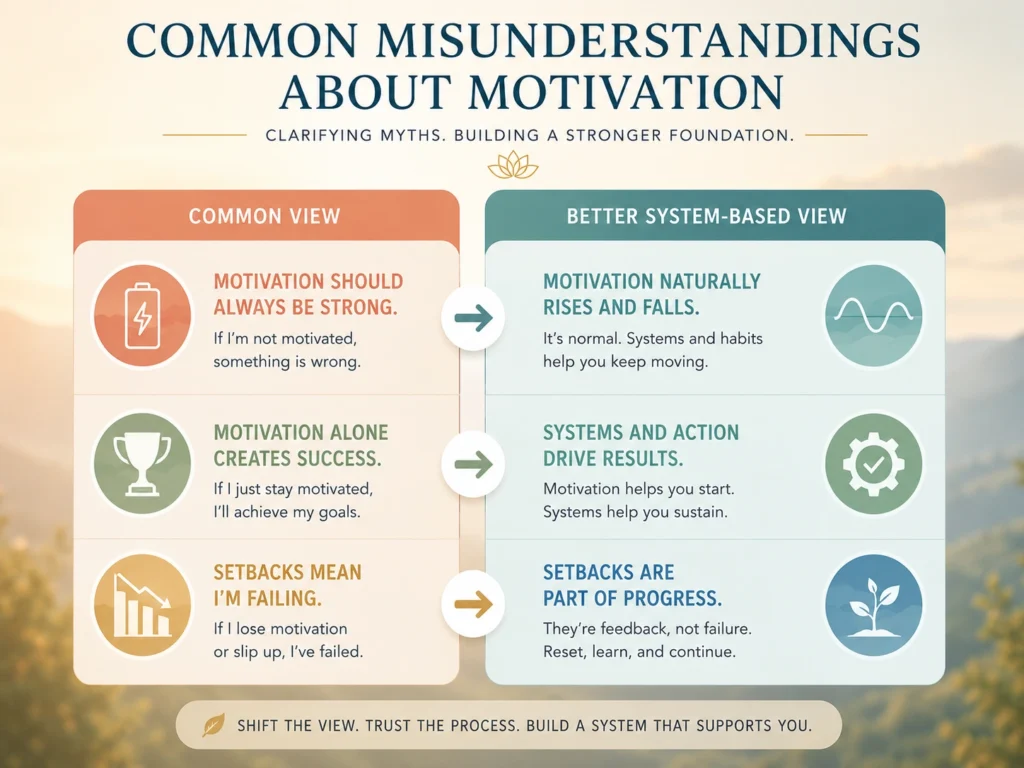
| Common View | Better System-Based View |
|---|---|
| Motivation is something you either have or do not have. | It naturally rises and falls. |
| Highly driven people never struggle. | Everyone has low-energy periods. |
| Motivation alone creates success. | Habits, support, recovery, and consistency also matter. |
| Setbacks mean failure. | Setbacks often show what needs adjustment. |
| Motivation should always feel strong. | It changes with stress, sleep, emotion, and environment. |
| Motivation quotes solve the problem. | Quotes may inspire briefly, but deeper systems support lasting action. |
| One method works for everyone. | Different people need different motives, goals, and support. |
One common misunderstanding is that motivation should always feel strong. In real life, it changes with sleep, stress, emotions, health, support, and daily demand. Therefore, a low-drive day does not automatically mean failure.
Another misunderstanding is that inspiration is enough. Many people search for motivational quotes, motivation quotes, or motivational quotes for work when they need encouragement. However, quotes rarely replace clear goals, habits, meaning, and support. Therefore, they are best used as a spark, not as the full system.
Finally, some people think they must feel ready before they act. However, small action can sometimes create more readiness. Therefore, waiting for perfect motivation may delay progress. A small step can help build momentum.
Related Condition Connections
Motivation is a Human Systems topic, not a medical condition. However, some readers may arrive here while exploring nerve health, stress, recovery, fatigue, or daily function. Because of this, it is helpful to explain the connection safely.
For example, readers exploring Peripheral Neuropathy may struggle with daily routines, movement habits, stress, or long-term consistency. However, nerve symptoms can have many causes. Therefore, motivation should never be used to explain or diagnose those symptoms.
Similarly, readers learning about Diabetic Neuropathy, Nerve Compression, Sciatic Nerve Pain, or Post-Injury Nerve Damage may see information about habits and recovery routines. Motivation may influence engagement with those routines. However, it does not determine medical outcomes.
Because of this, the purpose of this page is simple. It helps readers understand how action, habit, meaning, and consistency may fit into a larger recovery environment. It does not explain disease or replace care.
Topic Cluster Placement
Motivation belongs inside the Human Systems cluster because it explains why people take action, follow goals, build habits, and continue learning. Therefore, it acts as a bridge between emotion, behavior, stress, meaning, and recovery.
This page naturally connects with Behavior Change because motivation often starts action. It also connects with Emotional Regulation because feelings affect energy and attention. Likewise, Stress & Coping explains why stress may support action in small doses but reduce action when it becomes too heavy.
In addition, this page connects strongly with Meaning & Purpose because meaningful goals can support long-term effort. It also connects with Recovery Capacity and Nervous System Resilience because recovery may affect energy, focus, and readiness.
A strong Human Systems path can be:
Emotional Regulation → Stress & Coping → Behavior Change → Motivation → Meaning & Purpose → Trauma Integration
Motivation FAQ
What is motivation?
Motivation is the reason or drive behind action. It helps explain why people start, continue, or stop a behavior. It may come from goals, values, needs, rewards, emotion, learning, or meaning.
What is intrinsic motivation?
Intrinsic motivation comes from within. A person acts because the activity feels meaningful, interesting, enjoyable, or personally rewarding. For example, someone may read because they enjoy learning.
What is extrinsic motivation?
Extrinsic motivation comes from outside rewards or pressure. Examples include money, praise, grades, recognition, deadlines, or approval. Both intrinsic and extrinsic forms can influence behavior.
What is a motive?
A motive is the reason behind a specific action. For example, a person may act because of health, family, learning, faith, safety, growth, or achievement.
Can motivation change over time?
Yes. It changes with stress, sleep, emotion, energy, support, environment, and life demand. Therefore, temporary low drive is common and does not always mean failure.
Are motivational quotes enough for lasting change?
Motivational quotes may offer a short lift. However, lasting action usually needs habits, meaning, support, emotional regulation, recovery space, and repeated steps.
Are best podcasts for motivation useful?
Some people find podcasts helpful for encouragement or learning. However, they work best when they support action, not replace it.
Can motivation support recovery?
It may support learning, habits, consistency, and self-care routines. However, recovery depends on many factors. Therefore, motivation should be seen as one supportive layer, not a complete solution.
Why does motivation sometimes disappear?
It may decrease because of stress, poor sleep, emotional overload, pain, low support, unrealistic goals, or competing demands. Therefore, looking at the whole system is more helpful than self-blame.
Continue Learning
Motivation is only one part of the Human Systems cluster. Although it helps explain why people act, it becomes clearer when linked with related topics. Therefore, readers can continue learning through the wider Human Systems path.
Readers who want to understand feelings and action can continue with Emotional Regulation. Those interested in stress-related patterns can continue with Stress & Coping. In addition, readers who want to understand habit formation can continue with Behavior Change.
For deeper personal direction, continue with Meaning & Purpose. This topic explains how values and purpose may support long-term action. Likewise, Trauma Integration may help readers understand how past experiences can shape action and avoidance.
Finally, readers interested in body-system learning can explore Recovery Capacity and Nervous System Resilience, Autonomic Regulation, and Learning Path. These pages help connect action, energy, recovery, and long-term learning.
Sources / References
The following sources were used as general educational references for this page. They help explain mental well-being, behavior, stress, habits, learning, and human action in a safe educational context. However, they should not be used for self-diagnosis or treatment decisions.
MedlinePlus — Mental Health provides accessible information about mental health, stress, and daily well-being. It supports the page’s discussion of emotional and practical factors that may affect action.
NIMH — Caring for Your Mental Health explains basic self-care, sleep, stress management, social support, and emotional health. Therefore, it supports the safe discussion of energy, focus, and willingness to act.
American Psychological Association — Human Behavior Resources provides educational material related to goals, learning, stress, emotion, and behavior. These resources help explain why people act and why drive may change over time.
CDC — Mental Health and Stress Resources gives practical public-health information about stress, coping, and well-being. Because stress can affect action, this source supports the page’s discussion of daily demand and consistency.
NIH / NCBI — Behavior and Motivation Resources provides scientific information about behavior, habits, learning, and health-related behavior change. These resources support the system-based education used throughout the page.
World Health Organization — Health Communication Resources provides information about health education, communication, and behavior-related learning. It helps support the page’s safe explanation of how clear information may influence action.
Author / Editorial Trust Note
This article was created by Heal Your Nerves Naturally as an educational resource. It was written using a system-based approach that focuses on human behavior, goals, habits, emotional influences, stress response, and long-term learning.
The content is designed to help readers understand how motivation may interact with daily life and recovery capacity. However, it does not provide medical advice, mental health treatment, diagnosis, coaching, or therapy. Readers should consult qualified professionals for personal medical, psychological, behavioral, or mental health concerns.
Educational Trust Note
Heal Your Nerves Naturally provides educational information about nerve health, nervous system learning, recovery capacity, Human Systems, behavior patterns, emotional well-being, and long-term adaptation.
The goal is to explain complex topics in a calm and simple way. Therefore, this page focuses on education rather than treatment. Readers should use it as a learning resource while seeking qualified support when personal care is needed.
Safety & Education Notice
This page is for educational purposes only. It does not diagnose, treat, cure, or prevent any disease, medical condition, neurological condition, psychological disorder, or mental health condition.
Motivation levels can change for many reasons, including stress, life events, sleep quality, emotional load, recovery needs, physical health, medications, and environment. Therefore, readers should not use this page to self-diagnose or explain personal symptoms.
If low drive is severe, persistent, or linked with major distress, inability to function, thoughts of self-harm, severe anxiety, panic, depression, or other concerning symptoms, seek help from a qualified healthcare or mental health professional.
In addition, sudden neurological symptoms, severe weakness, balance changes, loss of bladder or bowel control, severe numbness, severe pain, or rapidly worsening symptoms need prompt medical care.
This page is a learning resource. It is not a substitute for professional care.