Trauma Integration: Understanding Growth, Recovery, and Resilience
Trauma Integration is the process of understanding how difficult life experiences may influence thoughts, emotions, behaviors, relationships, and personal growth over time. Although challenging experiences can shape how people see themselves and the world around them, they do not have to define an entire life story. Instead, many people gradually learn how to place those experiences within a broader context that includes resilience, learning, adaptation, and future possibilities. Therefore, Trauma Integration is often discussed as a journey of understanding rather than a destination that is reached once and for all.
Many readers explore this topic because they want to better understand emotional responses, stress patterns, recovery capacity, resilience, or long-term personal development. In addition, some people arrive here after searching for trauma integration, integration trauma, integrated somatic trauma therapy, or other trauma-related educational topics. However, this page does not provide psychotherapy, diagnosis, treatment recommendations, EMDR services, or clinical care. Instead, it explains Trauma Integration as a Human Systems concept that may help readers understand adaptation, self-awareness, emotional regulation, and personal growth from a broader educational perspective.
Throughout this guide, you will learn how Trauma Integration may develop, how it connects with Human Systems topics such as Emotional Regulation, Stress & Coping, Behavior Change, Motivation, and Meaning & Purpose, and why resilience often involves flexibility rather than perfection. Furthermore, you will explore practical examples, common misunderstandings, related condition connections, and the role of recovery capacity in long-term well-being. As a result, this page aims to provide a balanced, easy-to-understand overview of Trauma Integration while supporting deeper learning across the Heal Your Nerves Naturally education platform.

Quick Navigation
- What Is Trauma Integration?
- Plain Meaning / Glossary Box
- How Trauma Integration Works
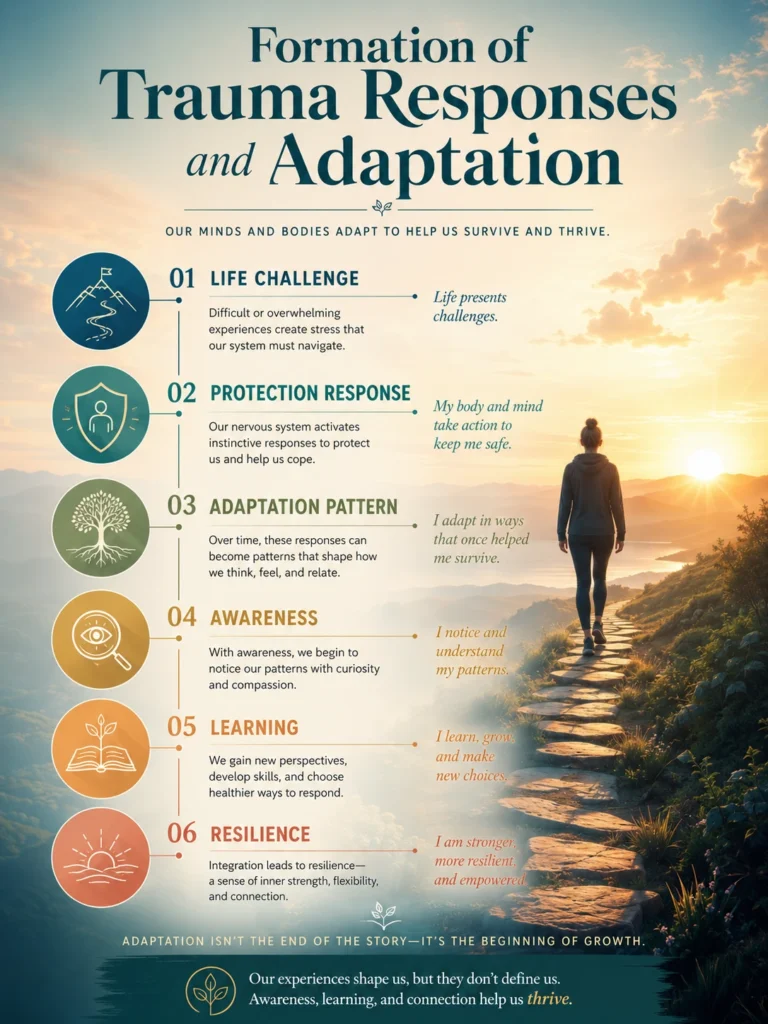
- Initial Formation of Trauma Responses and Adaptation
- Key Layers of Trauma Integration
- Emotional Layer of Trauma Integration
- Cognitive Layer of Trauma Integration
- Physical Layer of Trauma Integration
- Relationship Layer of Trauma Integration
- Meaning Layer of Trauma Integration
- Resilience Layer of Trauma Integration
- Real-Life Symptom Language Bridge
- Trauma Integration and Human Systems
- Emotional Regulation and Trauma Integration
- Stress & Coping and Trauma Integration
- Behavior Change and Trauma Integration
- Motivation and Trauma Integration
- Meaning & Purpose and Trauma Integration
- Recovery Capacity and Nervous System Resilience
- Trauma and Stress Healing
- Nervous System Regulation and Trauma Integration
- Trauma Integration Interactions
- Practical Daily-Life Examples
- Trauma Integration Visual Flow
- Why Trauma Integration Matters for Recovery
- Common Misunderstandings About Trauma Integration
- Related Condition Connections
- Topic Cluster Placement
- Trauma Integration FAQ
- Continue Learning
- Sources / References
- Author / Editorial Trust Note
- Educational Trust Note
- Safety & Education Notice
What Is Trauma Integration?
Trauma Integration is the process of understanding how difficult experiences fit into a person’s larger life story. Rather than trying to erase memories or ignore the past, this process focuses on creating a broader perspective. As a result, people may begin to see experiences as one part of life rather than the whole story.
In simple terms, Trauma Integration is about making sense of what happened while continuing to grow. Difficult experiences may influence emotions, thoughts, behaviors, relationships, and personal beliefs. However, those experiences do not have to control every decision or define every future possibility. Instead, integration encourages people to recognize strengths, values, relationships, achievements, and future goals alongside difficult memories.
Over time, many people describe Trauma Integration as a movement from confusion toward understanding. At first, certain reactions or emotions may feel difficult to explain. Later, patterns may become clearer. As awareness grows, people often develop a better understanding of themselves and their experiences. Therefore, Trauma Integration is commonly linked with resilience, adaptation, recovery capacity, and long-term personal growth.
Plain Meaning / Glossary Box
Plain Meaning
Trauma Integration means learning how difficult life experiences fit into a person’s overall life story without allowing those experiences to control every thought, feeling, decision, relationship, or future goal. While challenging events may leave a lasting impact, they do not have to become the only way a person sees themselves or their life. Instead, Trauma Integration encourages people to view their experiences within a larger picture that also includes strengths, achievements, relationships, learning, values, hopes, and future possibilities.
In simple terms, Trauma Integration is about understanding what happened, recognizing how it may have influenced different areas of life, and gradually finding ways to move forward with greater awareness and flexibility. As a result, people may develop a more balanced view of themselves and their experiences. Rather than being defined only by difficulties, they can begin to recognize many other parts of their identity, including personal strengths, resilience, growth, and the ability to adapt over time.
Simple Example
Imagine your life as a book made up of many chapters. Some chapters may describe family, friendships, education, work, hobbies, achievements, personal growth, and future goals. However, one chapter may describe a particularly difficult or stressful experience. Naturally, that chapter may feel very important because it contains strong emotions and significant memories.
Nevertheless, Trauma Integration helps people understand that while this chapter is an important part of the story, it is not the entire story. In other words, one chapter does not define the whole book. Therefore, the difficult experience remains acknowledged and understood, yet it exists alongside many other meaningful chapters. Over time, people may begin to see how different experiences connect with learning, resilience, values, relationships, and future possibilities. Consequently, the story becomes larger than any single event.
Key Idea
The most important idea behind Trauma Integration is that it is not about forgetting the past, erasing memories, or pretending difficult experiences never happened. Instead, it focuses on understanding, adaptation, resilience, self-awareness, and personal growth. Furthermore, it encourages people to explore how experiences may fit into a broader life journey rather than viewing those experiences as the only defining part of their identity.
As understanding grows, many people develop greater emotional awareness, flexibility, and perspective. Consequently, experiences that once felt overwhelming may gradually become easier to understand within a larger context. While every person’s journey is unique, Trauma Integration is often associated with learning, adaptation, recovery capacity, resilience, and long-term personal development. Therefore, it can be viewed as an ongoing process of making sense of experiences while continuing to move forward with greater clarity, balance, and hope.
How Trauma Integration Works
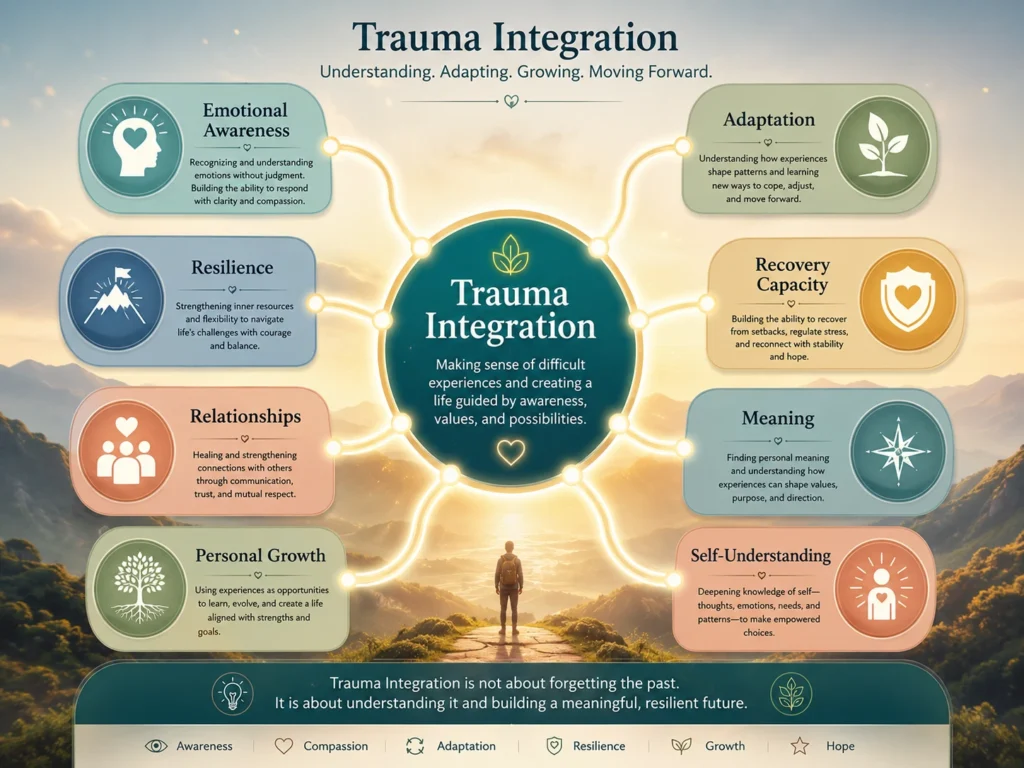
Trauma Integration works by helping a person make sense of difficult experiences in a more organized and balanced way. A stressful or painful experience may affect thoughts, emotions, memories, beliefs, relationships, body sensations, daily habits, and personal values. Because these parts of life are connected, trauma integration is usually not a single quick change. Instead, it often develops slowly through awareness, reflection, learning, support, and life experience.
At first, a person may notice strong reactions without fully understanding why they happen. For example, certain situations may create fear, tension, sadness, anger, worry, or shutdown. Later, the person may begin to see patterns. They may notice that a current reaction is connected to an earlier experience, a learned belief, a coping style, or a relationship pattern. As a result, confusion may begin to decrease, and self-understanding may begin to grow.
From Confusion to Pattern Recognition
Over time, Trauma Integration can help people place difficult experiences inside a larger life story. This does not mean the past becomes unimportant. However, it means the past does not have to explain everything about the present or future. Therefore, people may begin to feel more connected to their strengths, values, relationships, goals, and identity. In this way, integration supports learning, adaptation, emotional flexibility, resilience, and long-term personal growth.
In simple terms, Trauma Integration works like organizing scattered pieces of a story. Some pieces may involve memories. Other pieces may involve emotions, body responses, beliefs, or relationship patterns. When these pieces feel disconnected, life may feel confusing or overwhelming. However, when a person begins to understand how the pieces connect, the story may become clearer. Consequently, the experience can become part of a larger picture instead of feeling like the whole picture.
It is also important to understand that Trauma Integration does not mean a person must handle everything alone. Support, education, safe relationships, healthy routines, emotional awareness, and professional care may all play important roles when needed. However, this page does not provide therapy or treatment. Instead, it explains Trauma Integration as an educational Human Systems concept that helps readers understand how difficult experiences may connect with adaptation, recovery capacity, resilience, and personal growth.
Initial Formation of Trauma Responses and Adaptation
Human beings naturally respond when life feels difficult, stressful, unsafe, or overwhelming. During these moments, the mind and body often focus on protection first. For example, a person may become more alert, more cautious, more emotional, or more focused on avoiding danger. At the time, these responses may help the person get through the situation. Therefore, they should not automatically be viewed as weakness, failure, or personal fault.
However, some responses can continue even after the original situation is over. A person may still feel tense, easily overwhelmed, emotionally sensitive, or highly alert. In addition, certain places, words, memories, relationships, or situations may create strong reactions. These reactions may feel confusing because the present moment may not seem dangerous. Nevertheless, the mind and body may still be responding based on earlier learning and adaptation.
How Protective Responses Can Continue Over Time
Trauma Integration helps explain these patterns in a kinder and more organized way. Instead of asking, “What is wrong with me?” this view encourages a different question: “What did my mind and body learn during a difficult time?” As a result, the response can be understood as an attempt to adapt, protect, or survive. This does not mean every response remains helpful forever. However, it does mean the response may have developed for a reason.
Over time, greater awareness can help people connect different parts of their story. For instance, a current reaction may connect with an old stress pattern, a past relationship, a difficult memory, or a learned belief about safety. Consequently, experiences that once felt random may begin to make more sense. This understanding can support self-awareness, resilience, emotional regulation, and personal growth. While every person’s adaptation looks different, Trauma Integration can help readers understand how past experiences may influence present reactions without defining the whole future.
Key Layers of Trauma Integration
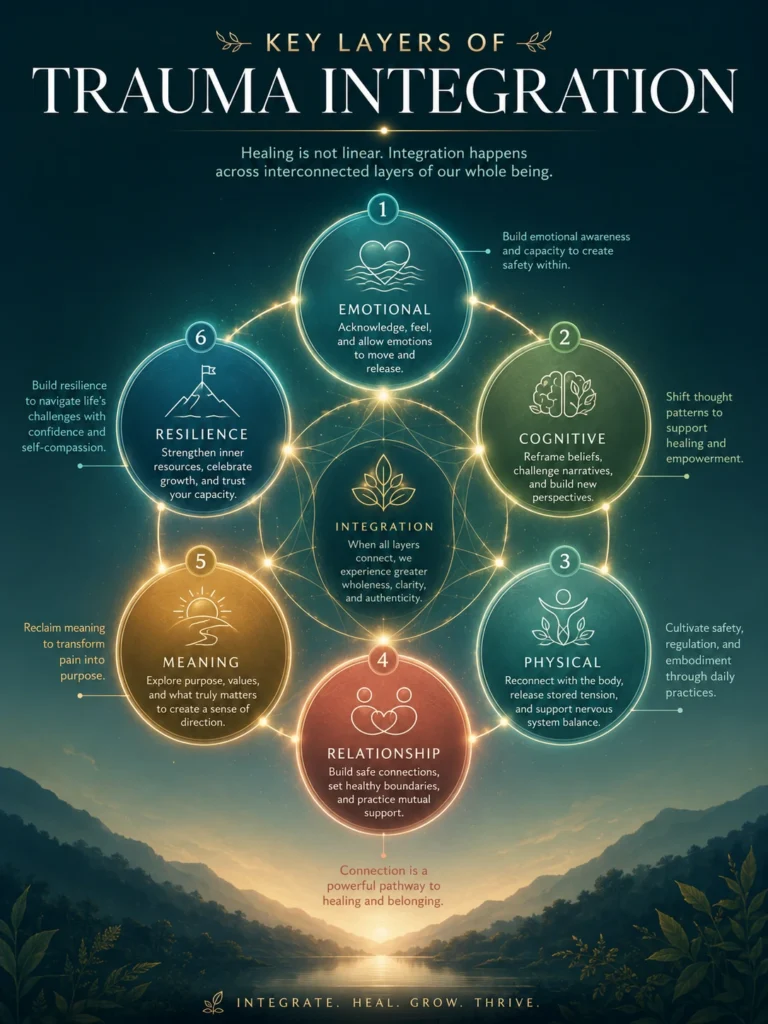
Trauma Integration is not usually shaped by one single factor. Instead, it often involves many different parts of a person’s life working together over time. Thoughts, emotions, physical sensations, relationships, personal values, and daily experiences may all influence how difficult events are understood and processed. Therefore, Trauma Integration is often described as a whole-person process rather than a single mental or emotional activity.
Furthermore, each person may experience these layers differently. Some people may notice emotional changes first, while others may become more aware of physical reactions, relationship patterns, or personal beliefs. Consequently, understanding these different layers can help readers develop a clearer picture of how Trauma Integration may influence growth, adaptation, resilience, and self-awareness over time.
Emotional Layer of Trauma Integration
Emotions are often one of the first areas people notice after difficult experiences. Feelings such as sadness, fear, frustration, anger, worry, or uncertainty may appear in different situations. Because emotions influence decisions, relationships, communication, and daily life, understanding emotional patterns can be an important part of Trauma Integration.
Over time, people may begin recognizing which situations trigger specific feelings. As a result, emotional reactions may become easier to understand. This awareness does not remove emotions. Instead, it helps people respond to them with greater understanding and flexibility. Therefore, emotional awareness often supports resilience, personal growth, and healthier coping strategies.
Cognitive Layer of Trauma Integration
The cognitive layer focuses on thoughts, beliefs, memories, and personal interpretations. Difficult experiences may influence how people view themselves, other people, relationships, safety, or the future. Consequently, these beliefs may shape decisions, expectations, and daily behavior.
As awareness grows, people may begin examining where certain beliefs came from and whether they still reflect their current reality. Furthermore, new experiences may create opportunities for different perspectives. Therefore, the cognitive layer helps support reflection, learning, and personal development. Over time, people may develop a broader and more balanced understanding of themselves and their experiences.
Physical Layer of Trauma Integration
The body can also play an important role in Trauma Integration. Some people notice changes in energy levels, sleep patterns, muscle tension, restlessness, or stress responses. Because the mind and body constantly interact, physical experiences may provide useful clues about personal patterns and adaptation.
As awareness develops, people may begin connecting physical sensations with emotions, thoughts, and experiences. Consequently, physical awareness may contribute to a deeper understanding of how different parts of life influence one another. Therefore, the physical layer helps create a more complete view of adaptation and recovery.
Relationship Layer of Trauma Integration
Relationships influence trust, communication, support, connection, and belonging. Therefore, they often play an important role in Trauma Integration. Positive relationships may provide encouragement, understanding, and opportunities for growth. At the same time, difficult relationships may also shape expectations, communication patterns, and coping styles.
As people become more aware of these patterns, they may gain insight into how experiences influence their relationships. Consequently, they may develop stronger communication skills, healthier boundaries, and greater connection with others. Therefore, relationship awareness is often an important part of long-term adaptation and growth.
Meaning Layer of Trauma Integration
Many people search for meaning after difficult experiences. They may ask questions about values, identity, purpose, learning, and personal growth. As a result, meaning often becomes an important part of Trauma Integration.
Rather than focusing only on what happened, people may begin exploring what they learned and how experiences fit into a larger life story. Consequently, they may develop a stronger sense of direction and understanding. Therefore, the meaning layer helps connect experiences with personal values, future goals, and long-term growth.
Resilience Layer of Trauma Integration
Resilience is often one of the most important outcomes associated with Trauma Integration. However, resilience does not mean avoiding challenges or pretending difficulties do not exist. Instead, it means developing the ability to adapt, learn, recover, and continue moving forward.
Furthermore, resilience usually develops gradually. It often grows through learning, experience, relationships, self-awareness, and adaptation. As a result, resilience is not something people either have or do not have. Instead, it is something that may develop over time. Therefore, the resilience layer highlights the possibility of continued growth even during difficult periods.
Real-Life Symptom Language Bridge
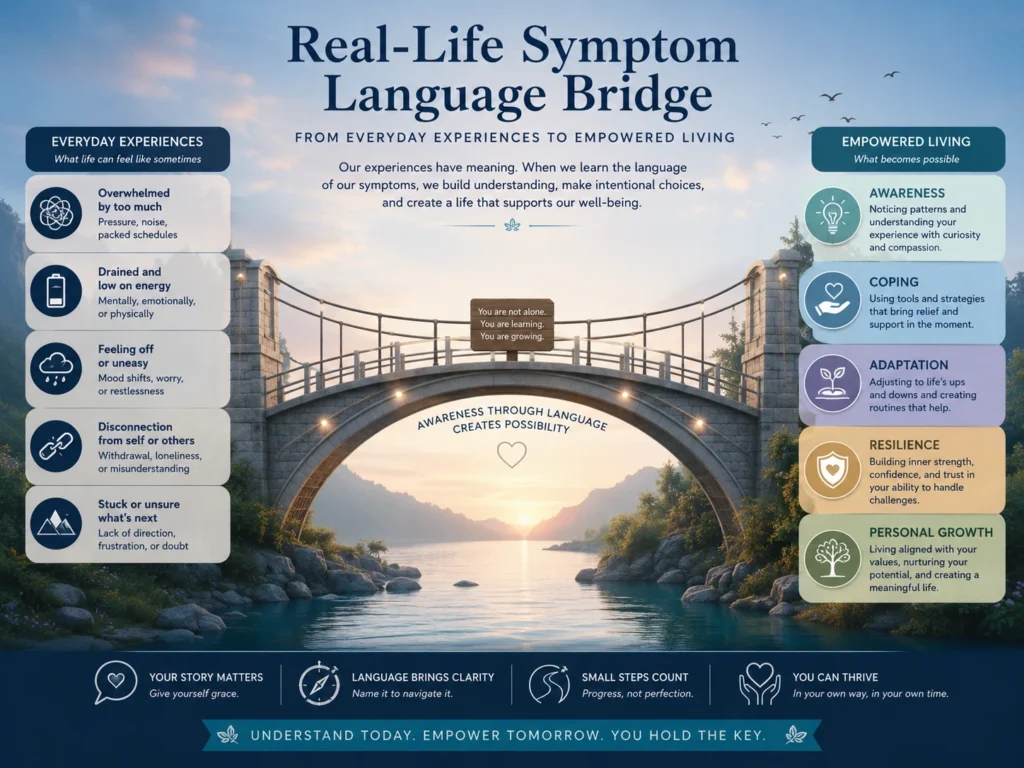
Many people begin exploring Trauma Integration because they notice changes in how they think, feel, react, or cope with daily life. For example, a person may feel emotionally overwhelmed, easily stressed, unusually alert, disconnected, tired, or more sensitive than usual. Others may notice recurring thoughts, difficulty relaxing, changes in trust, or problems in relationships. However, these experiences can happen for many different reasons. Therefore, Trauma Integration should never be used as the only explanation for symptoms or personal struggles.
Instead, Trauma Integration offers one educational way to understand how difficult life experiences may interact with emotions, behavior, stress responses, relationships, and personal growth. It does not mean that every reaction is caused by trauma. Rather, it helps readers ask gentle and useful questions, such as, “What pattern am I noticing?” or “How might past experiences affect the way I respond today?” As a result, this section supports awareness without encouraging self-diagnosis.
Common Trauma Integration Experiences People May Notice
In real life, people may describe many different experiences. Some may feel tense in situations that seem ordinary to others. Meanwhile, others may feel tired, guarded, emotionally reactive, or unsure why certain reminders affect them. In addition, relationship changes may appear when trust, communication, or safety feels difficult. Because each person’s story is different, these patterns should be understood carefully and with context.
Most importantly, this page is a learning resource, not a diagnostic tool. If symptoms are severe, persistent, worsening, sudden, or disruptive, professional evaluation is important. Likewise, intense emotional distress, thoughts of self-harm, severe anxiety, panic, major sleep problems, or rapidly worsening symptoms should be taken seriously. Therefore, Trauma Integration should be used for education, while personal care should come from qualified professionals when needed.
Common Experiences People Sometimes Describe
- Feeling emotionally overwhelmed
- Difficulty relaxing or feeling safe
- Increased stress responses
- Recurring memories or reminders
- Emotional sensitivity
- Relationship challenges
- Difficulty trusting others
- Changes in confidence or identity
- Fatigue or reduced motivation
- Difficulty understanding emotional reactions
- Feeling disconnected from others
- Feeling guarded or highly alert
- Avoiding certain places, people, or situations
- Struggling to explain strong reactions
Trauma Integration and Human Systems
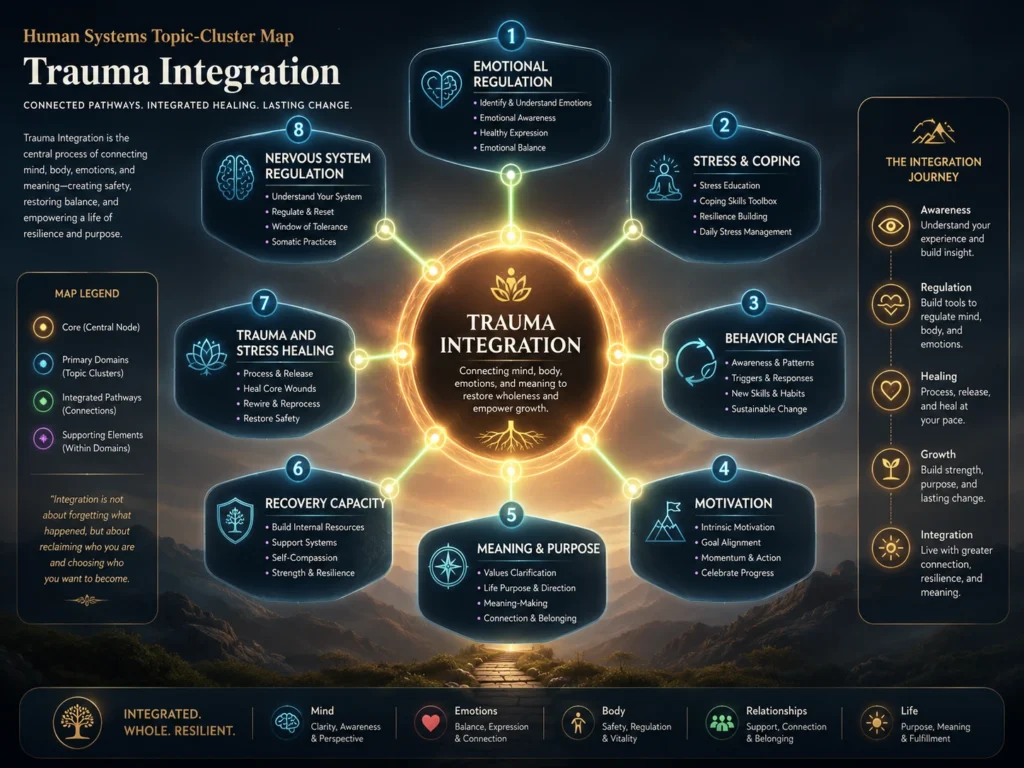
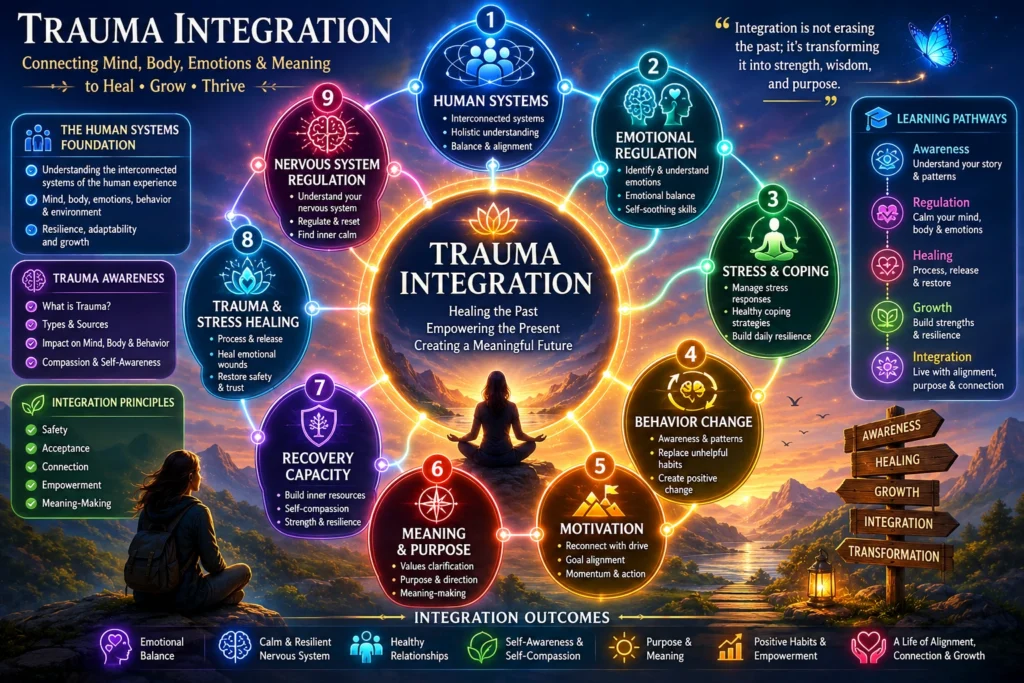
Trauma Integration connects naturally with many Human Systems topics because life experiences rarely affect only one area of a person’s life. Instead, emotions, thoughts, behaviors, relationships, beliefs, habits, stress responses, and personal goals often influence one another. Therefore, Trauma Integration is usually best understood as part of a larger Human Systems framework rather than as a completely separate topic.
For example, a difficult experience may influence emotional reactions, which may then affect relationships, daily decisions, stress levels, confidence, motivation, and coping patterns. Likewise, changes in one area may create changes in several others. As a result, understanding Trauma Integration often requires looking at the bigger picture instead of focusing on only one symptom, one behavior, or one life event.
Furthermore, Human Systems topics help explain how people adapt, learn, recover, and grow over time. Consequently, Trauma Integration can be viewed as a process that interacts with many different systems simultaneously. Rather than existing on its own, it often works alongside emotional awareness, stress management, personal growth, resilience, and recovery capacity. Therefore, understanding these connections may help readers develop a more balanced and compassionate view of themselves and their experiences.
Emotional Regulation and Trauma Integration
Emotional Regulation focuses on recognizing, understanding, and managing emotions in healthy ways. Therefore, it plays an important role in Trauma Integration. Difficult experiences may influence how people react emotionally to situations, relationships, memories, or daily challenges.
As emotional awareness develops, people may begin recognizing patterns they had not noticed before. Consequently, they may gain a better understanding of how emotions connect with experiences, beliefs, and behaviors. Over time, this awareness may support greater flexibility, self-understanding, and resilience.
Stress & Coping and Trauma Integration
Stress & Coping explores how people respond to challenges and manage life demands. Because difficult experiences can affect stress responses, this topic often connects closely with Trauma Integration.
For example, people may develop coping patterns that helped them during stressful periods. While some coping strategies remain helpful, others may become less useful over time. Therefore, understanding stress and coping patterns may help individuals recognize how they adapt to challenges and how those adaptations influence daily life.
Behavior Change and Trauma Integration
Behavior Change focuses on habits, routines, decisions, and actions that develop over time. Consequently, it is closely connected to Trauma Integration because experiences may influence how people behave in certain situations.
As awareness grows, individuals may begin noticing patterns they would like to strengthen, change, or better understand. Furthermore, small daily choices often contribute to long-term adaptation and growth. Therefore, Behavior Change can be viewed as an important part of the integration process.
Motivation and Trauma Integration
Motivation influences how people pursue goals, overcome obstacles, and continue moving forward. Therefore, it often plays an important role in Trauma Integration.
Some experiences may affect confidence, energy, direction, or willingness to take action. However, motivation is not simply about feeling inspired all the time. Instead, it often involves taking small steps even when challenges exist. Consequently, motivation may support learning, resilience, and personal development throughout the integration journey.
Meaning & Purpose and Trauma Integration
Many people naturally search for meaning after significant life experiences. Therefore, Meaning & Purpose often becomes an important part of Trauma Integration.
As people reflect on their experiences, they may explore questions about values, identity, relationships, growth, and life direction. Consequently, they may develop a broader understanding of how experiences fit into their larger life story. While every person’s journey is different, meaning-making often supports resilience, learning, and long-term adaptation.
Recovery Capacity and Nervous System Resilience
Recovery Capacity and Nervous System Resilience focus on how people adapt to stress, recover from challenges, and maintain flexibility over time. Therefore, these concepts naturally connect with Trauma Integration.
Rather than avoiding all difficulties, resilience often involves learning, adaptation, and continued growth despite obstacles. As a result, many educational discussions describe resilience as one of the most important long-term outcomes of integration.
Trauma and Stress Healing
Trauma and Stress Healing explores how people learn, adapt, and recover following stressful or challenging experiences. Consequently, this topic shares many connections with Trauma Integration.
Both topics focus on understanding experiences within a broader life context rather than allowing a single event to define an entire identity. Therefore, they often support one another within the Human Systems framework.
Nervous System Regulation and Trauma Integration
Nervous System Regulation focuses on how the body and mind respond to stress, safety, challenge, and recovery. Because difficult experiences may influence these responses, this topic often overlaps with Trauma Integration.
As awareness increases, people may begin recognizing how emotions, thoughts, body sensations, and stress responses interact. Consequently, understanding nervous system patterns may contribute to greater self-awareness, resilience, and adaptation over time.
Human Systems Connected to Trauma Integration
- Emotional Regulation
- Stress & Coping
- Behavior Change
- Motivation
- Meaning & Purpose
- Recovery Capacity and Nervous System Resilience
- Trauma and Stress Healing
- Nervous System Regulation
Trauma Integration Interactions
Trauma Integration does not occur in isolation. Instead, it interacts with many parts of everyday life. Emotions may affect relationships. Relationships may influence confidence. Confidence may affect motivation. Likewise, stress responses may influence communication, decision-making, and daily habits. As a result, personal experiences often involve multiple systems working together at the same time.
Because these systems are connected, positive changes in one area may influence other areas. For example, greater emotional awareness may improve communication. Better communication may strengthen relationships. Stronger relationships may increase support and confidence. Consequently, growth in one area may create benefits across several Human Systems.
At the same time, adaptation is rarely a straight line. Progress may happen gradually. Some areas may improve quickly, while others may take more time. Therefore, Trauma Integration is often described as an ongoing process of learning, adjustment, and growth rather than a single event.
Trauma Integration May Interact With
- Emotional awareness
- Personal beliefs
- Communication skills
- Relationships
- Stress management
- Recovery capacity
- Motivation
- Personal values
- Daily habits
- Long-term resilience
Practical Daily-Life Examples
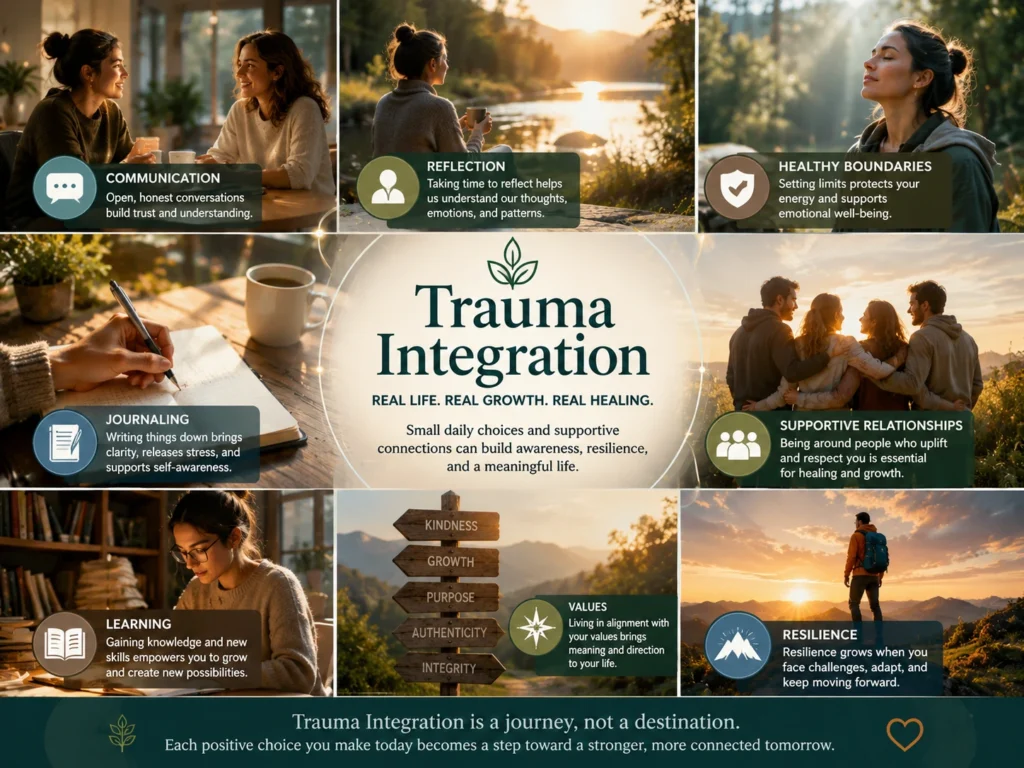
Trauma Integration can feel easier to understand when it is connected with daily life. Many people do not think about integration in abstract terms. Instead, they notice it through small changes in reactions, habits, relationships, and self-understanding. For example, a person may begin to notice why certain situations feel stressful, why some conversations feel difficult, or why trust takes time. As awareness grows, these patterns may become easier to understand. Therefore, practical examples can help readers see Trauma Integration as a real-life learning process, not just a theory.
Trauma Integration and Emotional Reactions
A person may notice that certain situations create strong emotional reactions. At first, these reactions may feel confusing or too intense. However, with more awareness, the person may begin to understand that the reaction is connected to earlier stress, learned patterns, or past experiences. As a result, the reaction may feel less random. Over time, the person may respond with more patience, clarity, and self-understanding. This does not mean the emotion disappears. Instead, it means the person begins to understand the emotion in a more balanced way.
Trauma Integration and Relationships
Another person may realize that past experiences influenced how they approach trust, communication, or closeness. For example, they may find it hard to ask for help, speak openly, or feel safe in relationships. However, greater awareness may help them understand these patterns without blaming themselves. As a result, they may slowly learn healthier ways to communicate, set boundaries, or build trust. Therefore, Trauma Integration may support relationship awareness by helping people understand how past experiences can shape present interactions.
Trauma Integration and Personal Values
Someone else may discover that difficult experiences influenced their values, priorities, or goals. For example, they may care more about safety, honesty, independence, family, service, learning, or personal growth. Over time, these values may help guide decisions and future direction. As a result, the difficult experience becomes one part of a larger story, not the whole story. Therefore, Trauma Integration can help people connect life experiences with meaning, purpose, and long-term growth.
Trauma Integration and Daily Choices
Trauma Integration may also show up in small daily choices. A person may choose to pause before reacting, speak more clearly, rest when needed, or avoid repeating an old coping pattern. These choices may seem small, yet they can reflect growing awareness and resilience. In addition, small changes often build over time. Therefore, daily choices can become part of the larger integration process.
Everyday Examples of Trauma Integration
- Learning healthier communication habits
- Understanding emotional triggers
- Building stronger personal boundaries
- Developing greater self-awareness
- Exploring personal values
- Improving relationship skills
- Creating healthier coping strategies
- Recognizing personal growth
- Building confidence over time
- Strengthening resilience during challenges
Trauma Integration Visual Flow
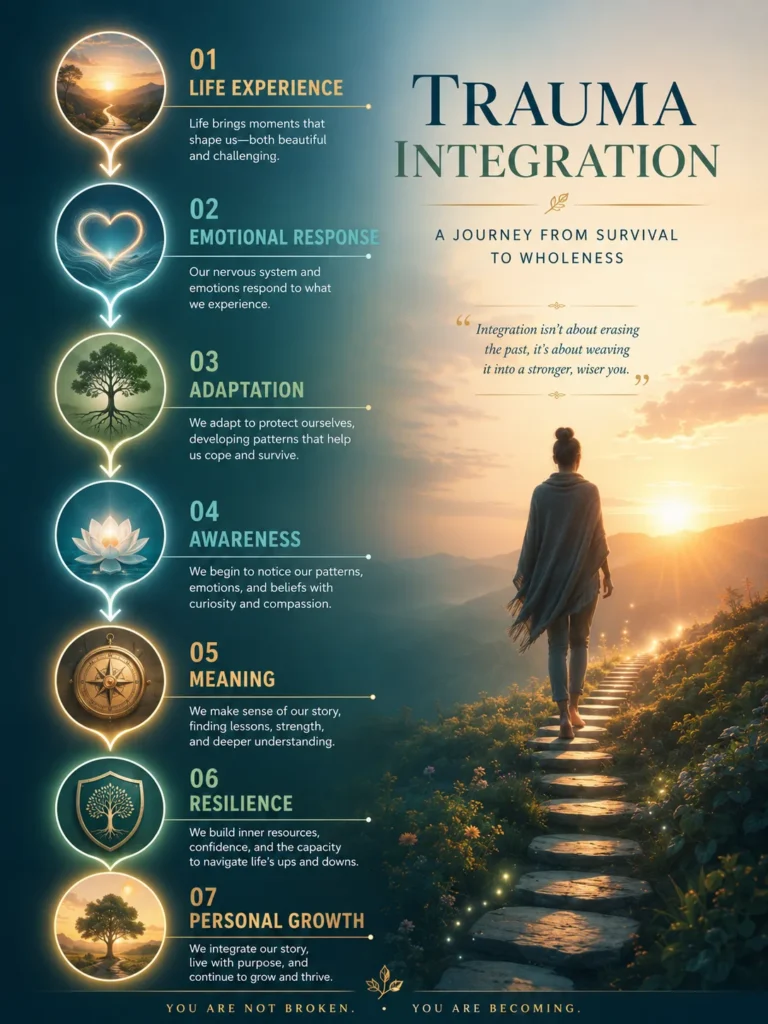
Trauma Integration is often easier to understand when it is viewed as a journey rather than a single event. Most people do not suddenly reach a point where everything makes sense. Instead, understanding usually develops step by step over time. As life moves forward, people often learn more about themselves, their experiences, their reactions, and their strengths. Therefore, a visual flow can help explain how different stages of adaptation, awareness, and growth may connect with one another.
Although every person’s experience is different, many educational models describe Trauma Integration as a process that moves through several connected stages. Sometimes people move forward quickly. At other times, they may pause, reflect, or revisit earlier stages. As a result, Trauma Integration is rarely a straight line. Instead, it is often a flexible and ongoing learning process.
Trauma Integration Visual Flow
1. Life Experience
Every journey begins with a life experience. Some experiences may be positive, while others may be stressful, difficult, unexpected, or emotionally challenging. Because every person has a unique life story, experiences can affect people in different ways. Therefore, what feels overwhelming to one person may feel different to another. Nevertheless, important experiences often become part of the foundation for future learning and adaptation.
↓
2. Emotional Response
After an experience occurs, people naturally respond with emotions. For example, they may feel sadness, fear, frustration, confusion, disappointment, uncertainty, or even relief. These emotional responses are normal human reactions. However, people do not always understand why they feel a certain way right away. As a result, emotions may sometimes seem confusing or difficult to explain.
↓
3. Adaptation and Protection
Next, the mind and body often try to adapt. During this stage, people may develop habits, coping strategies, beliefs, or protective behaviors that help them manage challenges. For example, someone may become more cautious, more independent, more alert, or more protective of their personal boundaries. Initially, these responses may serve a useful purpose. Therefore, they are often part of the natural adaptation process.
↓
4. Awareness and Reflection
As time passes, people may begin noticing patterns in their thoughts, emotions, behaviors, and relationships. Consequently, they may become curious about why certain situations create specific reactions. Through reflection, learning, and self-awareness, people often start connecting present experiences with past experiences. Therefore, confusion may gradually be replaced with greater understanding.
↓
5. Understanding and Meaning
Once awareness grows, people may begin making sense of their experiences in a broader way. Instead of focusing only on what happened, they may explore what they learned, how they changed, and what matters most to them now. Furthermore, they may begin connecting experiences with personal values, goals, relationships, and future direction. As a result, difficult experiences often become easier to place within a larger life story.
↓
6. Resilience and Flexibility
Greater understanding often supports resilience. However, resilience does not mean life becomes easy or free from challenges. Instead, it means developing the ability to adapt, recover, learn, and continue moving forward. In addition, resilience often brings greater flexibility because people become better able to respond to challenges without feeling completely controlled by them. Therefore, resilience is often viewed as an important part of long-term growth.
↓
7. Personal Growth
Over time, many people discover that they have learned important lessons about themselves, their relationships, their values, and their future goals. Consequently, they may develop greater self-awareness, confidence, perspective, and emotional balance. While difficult experiences remain part of the story, they no longer define the entire story. Instead, personal growth becomes part of a larger journey that includes resilience, learning, adaptation, and hope.
An Important Reminder
This visual flow is not meant to describe a fixed formula. People may move forward, pause, return to an earlier stage, or experience several stages at the same time. Furthermore, every person’s journey is unique. Therefore, Trauma Integration should be viewed as a flexible process rather than a straight path. The goal is not perfection. Instead, the goal is greater understanding, self-awareness, resilience, and personal growth over time.
Why Trauma Integration Matters for Recovery
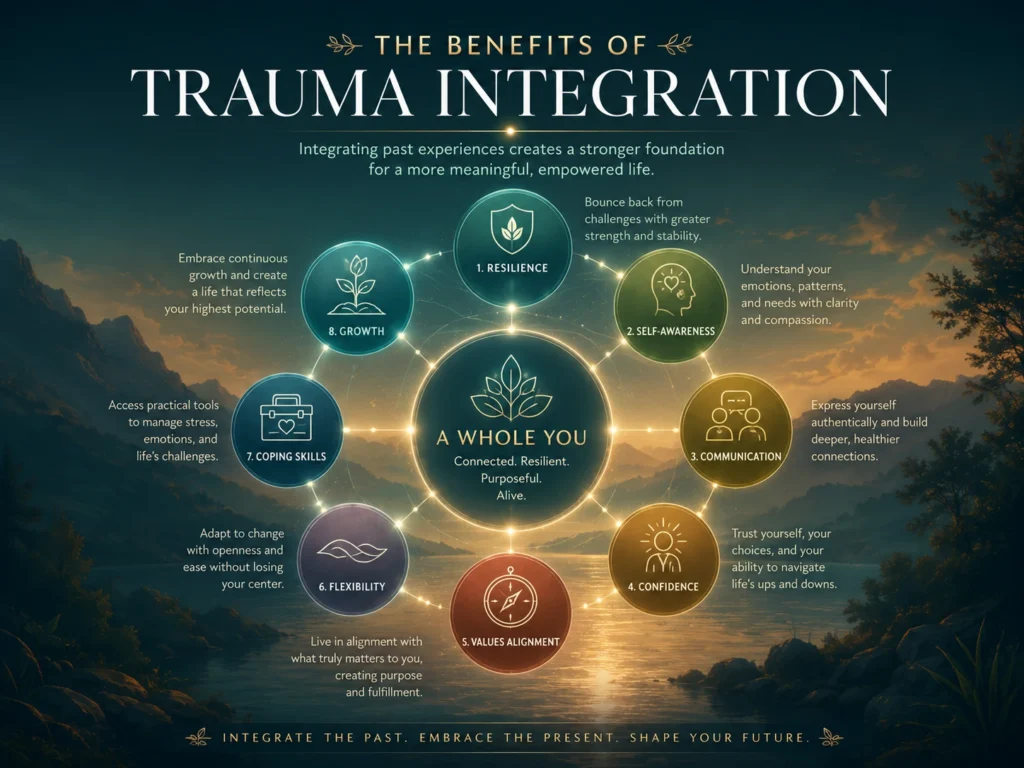
Trauma Integration matters because difficult experiences can affect many parts of life at the same time. A person may notice changes in emotions, relationships, stress responses, confidence, communication, habits, or personal beliefs. At first, these changes may feel confusing. However, when people begin to understand how these areas connect, their experiences may start to make more sense. As a result, Trauma Integration can help readers look beyond the problem itself and notice learning, adaptation, resilience, and personal growth.
Many people spend a long time trying to understand why certain situations create strong reactions. For example, a simple conversation, place, sound, memory, or relationship pattern may create stress or discomfort. However, greater awareness may help those reactions feel less random. Over time, people may begin to see patterns that were hard to notice before. Therefore, Trauma Integration can support clearer self-understanding and a more balanced view of personal experiences.
Another reason Trauma Integration matters is that it helps people see a wider life story. Difficult experiences may remain important, yet they do not have to become the center of a person’s identity. Instead, people may also notice strengths, values, supportive relationships, achievements, lessons, and future goals. As a result, recovery can be viewed as more than symptom improvement. It can also include understanding, flexibility, confidence, and growth.
Benefits People Often Associate With Trauma Integration
People may associate Trauma Integration with many helpful learning outcomes. These benefits are not guarantees, and they should not be treated as treatment claims. Instead, they describe common educational themes linked with awareness, adaptation, and resilience.
- Greater self-awareness
- Better understanding of personal patterns
- Stronger resilience
- Improved emotional flexibility
- Greater confidence
- Better communication skills
- Clearer understanding of personal values
- A broader life perspective
- Stronger connection with personal goals
- Better awareness of coping habits
Trauma Integration and a Balanced Recovery View
A balanced recovery view does not ignore difficult experiences. However, it also does not allow those experiences to explain everything about a person’s life. Instead, Trauma Integration encourages people to see both challenge and strength. This wider view can help readers understand that recovery-related learning may involve emotions, relationships, habits, values, and long-term personal development. Therefore, Trauma Integration matters because it helps connect past experiences with present awareness and future growth.
Common Misunderstandings About Trauma Integration
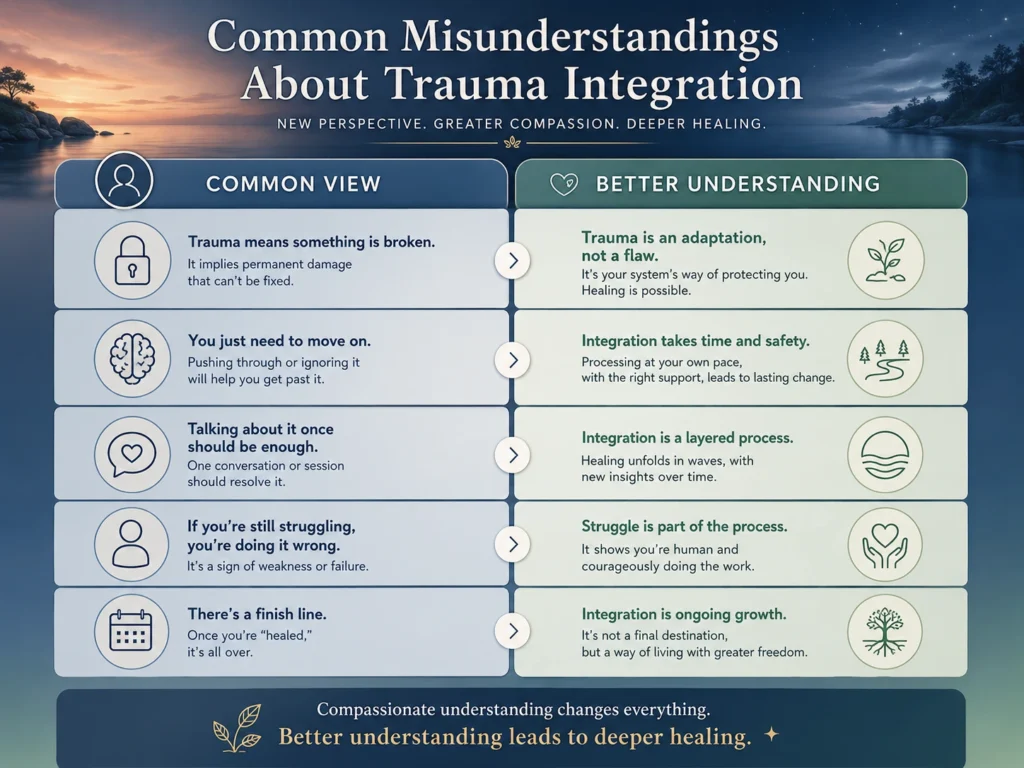
Many people misunderstand Trauma Integration because they expect it to work like a quick fix. However, personal growth rarely happens in a straight line. Some days may feel clear, while other days may feel confusing again. This does not mean progress has failed. Instead, it often means the person is still learning, adjusting, and building a better understanding of their experiences. Therefore, Trauma Integration should be viewed as a gradual learning process rather than one perfect result.
Another common problem is that people may expect Trauma Integration to remove every difficult feeling. However, emotions are a normal part of life. The goal is not to stop feeling. Instead, the goal is to understand reactions more clearly and respond with more flexibility. As a result, people may feel less controlled by old patterns and more connected to their strengths, values, and future goals.
Common View vs Better Understanding
| Common View | Better Understanding |
|---|---|
| Trauma Integration means forgetting the past. | It focuses on understanding experiences. |
| Difficult memories should disappear completely. | Memories may remain while becoming easier to understand. |
| Integration happens quickly. | Growth often takes time. |
| Resilience means never struggling. | Resilience means continuing despite challenges. |
| Trauma affects only emotions. | Experiences may affect thoughts, relationships, habits, stress responses, and identity. |
| Growth means the experience was positive. | Growth and difficulty can exist together. |
| Everyone follows the same path. | Every person’s journey is unique. |
Trauma Integration Is Not About Perfection
One common misunderstanding is that Trauma Integration removes all emotional reactions. In real life, people continue to feel sadness, stress, fear, frustration, or uncertainty at different times. However, greater understanding can help these reactions feel less confusing. Instead of asking, “Why am I like this?” a person may begin asking, “What pattern am I noticing?” This shift can support self-awareness and reduce self-blame. Therefore, Trauma Integration is not about becoming perfect. It is about developing greater understanding, patience, and flexibility over time.
Trauma Integration Does Not Erase the Past
Another misunderstanding is that Trauma Integration means the past no longer matters. However, difficult experiences may remain important parts of a person’s story. The difference is that those experiences do not have to become the entire story. As awareness grows, people may begin to see other parts of life more clearly, including strengths, relationships, values, learning, and future possibilities. As a result, the past can be acknowledged without becoming the only lens through which life is viewed.
Growth Looks Different for Everyone
People often compare their progress with someone else’s progress. However, Trauma Integration does not follow one universal timeline. Some people may notice changes quickly. Others may need more time to understand their patterns and experiences. Also, progress may look different in different areas of life. For example, emotional awareness may improve before relationship confidence improves. Therefore, comparison is often less helpful than noticing personal learning, small changes, and steady growth.
Related Condition Connections
Why Conditions and Trauma Integration Are Connected
Trauma Integration belongs to the Human Systems cluster. Therefore, it can sit beside several condition-focused education pages on Heal Your Nerves Naturally. However, this connection does not mean trauma causes a specific nerve condition. It also does not mean a condition is explained by emotions alone. Instead, this section helps readers understand how stress, coping, resilience, personal experience, and recovery capacity may interact with broader health learning.
For example, someone reading about Peripheral Neuropathy may also want to understand how long-term stress or emotional load can affect daily coping. Likewise, a reader exploring Diabetic Neuropathy may be interested in behavior change, motivation, and recovery routines. In the same way, people learning about Post-Injury Nerve Damage, Sciatic Nerve Pain, or Nerve Compression may want a clearer view of how Human Systems topics connect with daily life.
Trauma Integration and Recovery Learning
Many condition pages focus on symptoms, causes, and body systems. However, readers also need education about the human side of recovery. This includes stress responses, emotional reactions, coping patterns, confidence, habits, and support systems. Therefore, Trauma Integration can help readers understand one important layer of the recovery experience without turning it into a medical explanation.
In addition, some readers may live with ongoing discomfort, uncertainty, or lifestyle changes. As a result, they may search for topics like resilience, emotional regulation, coping, and recovery capacity. Trauma Integration can support this learning by explaining how difficult experiences may become part of a larger story that includes adaptation, self-awareness, and growth.
Examples of Related Educational Pages
These pages may connect with Trauma Integration for educational exploration:
- Peripheral Neuropathy
- Diabetic Neuropathy
- Post-Injury Nerve Damage
- Sciatic Nerve Pain
- Nerve Compression
- Autoimmune Nerve Disorders
- Chronic Pain Syndromes
Important Educational Note
These connections are for learning only. They should not be used as medical explanations, diagnoses, or treatment advice. Nerve-related symptoms can have many causes, and emotional or life-history topics should never replace proper medical evaluation. Therefore, readers should use this section as a guide for related learning, not as a reason to self-diagnose.
If symptoms are sudden, severe, worsening, unusual, or disruptive, professional care is important. Likewise, ongoing emotional distress, severe stress, or major changes in daily function should be discussed with a qualified professional. As a result, this page stays focused on education while encouraging safe, responsible next steps.
Topic Cluster Placement
Parent Human Systems Cluster
Trauma Integration belongs inside the Human Systems cluster because it explains how difficult experiences may affect learning, coping, emotions, relationships, identity, and personal growth over time. This page does not focus on diagnosis or treatment. Instead, it helps readers understand how people adapt after hard experiences and how they may build resilience through awareness, reflection, and support. Therefore, Trauma Integration works best as an educational Human Systems page, not as a medical or therapy page.
Related Human Systems Pages
Trauma Integration connects naturally with other Human Systems pages because these topics often work together. For example, Emotional Regulation helps explain how people understand and manage feelings. Stress & Coping shows how people respond to pressure and life demands. Behavior Change explains how habits and daily choices can shift over time. In addition, Motivation and Meaning & Purpose help readers understand goals, values, direction, and long-term personal growth.
Related Recovery Pages
Trauma Integration also connects with recovery-focused education. For example, Recovery Capacity and Nervous System Resilience explains how people adapt and recover after stress or challenge. Trauma and Stress Healing gives a broader view of how stressful experiences may affect learning, coping, and resilience. Also, Nervous System Regulation helps readers understand how the body and mind may respond to stress, safety, challenge, and recovery. As a result, these pages support a fuller learning path around adaptation and resilience.
Related Condition Pages
Some readers may also explore condition pages while learning about Trauma Integration. For example, Peripheral Neuropathy, Diabetic Neuropathy, Post-Injury Nerve Damage, Sciatic Nerve Pain, Nerve Compression, and Autoimmune Nerve Disorders may lead readers to think about stress, coping, routines, recovery capacity, and daily-life adjustment. However, these links are educational only. They do not mean trauma causes these conditions. Instead, they help readers explore related learning across the site.
Learning Path Connections
Trauma Integration fits into a wider learning journey on Heal Your Nerves Naturally. Readers may begin with Human Systems pages, then continue into recovery pages, condition pages, or nervous system education. Therefore, this topic should be viewed as part of a connected educational framework. It helps readers move from emotional awareness to coping, behavior change, meaning, resilience, and long-term growth. As a result, Trauma Integration strengthens the site’s Human Systems cluster and supports deeper topic exploration.
Trauma Integration FAQ
What Is Trauma Integration?
Trauma Integration is the process of understanding how difficult experiences fit into a larger life story. Rather than focusing on forgetting the past, it focuses on understanding experiences and how they may influence emotions, thoughts, relationships, behaviors, and personal growth. As a result, people may develop greater self-awareness and a broader perspective on their lives.
Furthermore, Trauma Integration does not require a person to view difficult experiences in a positive way. Instead, it encourages understanding, learning, and adaptation. Therefore, many educational discussions describe it as a process of making sense of experiences while continuing to move forward.
Does Trauma Integration Mean Forgetting the Past?
No. Trauma Integration is not about erasing memories or pretending difficult experiences never happened. Instead, it focuses on understanding those experiences and placing them within a larger life story. As a result, memories may become easier to understand even though they remain part of the past.
Many people find this idea helpful because it shifts the focus away from forgetting and toward learning. Therefore, the goal is not to remove experiences from memory. Instead, the goal is to understand how those experiences connect with personal growth, resilience, and adaptation.
Is Trauma Integration the Same as Therapy?
No. Trauma Integration is a broader educational concept. While some therapy approaches may discuss similar ideas, this page focuses on understanding, awareness, resilience, and personal growth. Therefore, it should not be viewed as therapy, counseling, diagnosis, or treatment.
Instead, this topic helps explain how people learn from experiences and continue developing throughout life. As a result, readers can explore Trauma Integration as part of a larger Human Systems learning journey.
Why Do People Search for Trauma Integration?
People search for Trauma Integration for many reasons. Some want to better understand emotional reactions. Others want to learn about resilience, adaptation, personal growth, or recovery. In addition, many readers are interested in understanding how past experiences may influence current patterns.
As a result, Trauma Integration often becomes a useful educational topic for people who want a broader understanding of learning, growth, and self-awareness. Therefore, it is frequently explored alongside topics such as resilience, emotional regulation, stress management, and personal development.
Can Trauma Integration Support Personal Growth?
Many educational models suggest that understanding experiences may support personal growth over time. As awareness increases, people often gain a clearer understanding of their emotions, beliefs, habits, and relationships. Consequently, they may develop new perspectives and stronger coping skills.
However, growth looks different for every person. Therefore, there is no single path or timeline that applies to everyone. Instead, Trauma Integration is often viewed as a gradual process that develops through learning, reflection, and life experience.
How Does Trauma Integration Connect With Human Systems?
Trauma Integration connects with many Human Systems topics because life experiences rarely affect only one area of life. Emotions, thoughts, relationships, behaviors, habits, and values often influence one another. Therefore, understanding one area may help explain another.
As a result, Trauma Integration is commonly discussed alongside Emotional Regulation, Stress & Coping, Behavior Change, Motivation, and Meaning & Purpose. Together, these topics help create a broader understanding of adaptation, resilience, and long-term personal growth.
Continue Learning
Trauma Integration is one part of a larger Human Systems learning journey. It explains how difficult experiences may connect with awareness, resilience, adaptation, and personal growth. However, readers often need related topics to understand the full picture. Therefore, this section guides readers toward pages that explain emotions, coping, habits, motivation, meaning, recovery capacity, and nervous system learning in a simple way.
Learn About Emotional Regulation
Emotional Regulation helps readers understand how people notice, name, and respond to emotions. This topic is useful because emotions often affect communication, relationships, decisions, and daily habits. Also, emotional awareness can help readers understand why some reactions feel strong or confusing. Therefore, this page is a helpful next step after Trauma Integration.
Learn About Stress & Coping
Stress & Coping explains how people respond to pressure, challenges, and life demands. It also shows why coping patterns may change after difficult experiences. As a result, readers can better understand stress responses, daily reactions, and resilience. Therefore, this page connects naturally with Trauma Integration and recovery learning.
Learn About Behavior Change
Behavior Change focuses on habits, routines, decisions, and small daily actions. This page is important because personal growth often appears through repeated choices, not one large change. Also, behavior change can help readers understand how awareness may slowly turn into new patterns. Therefore, it supports long-term adaptation and growth.
Learn About Motivation
Motivation explains how goals, values, direction, and effort influence action. After difficult experiences, motivation may feel different for each person. However, small steps can still support progress over time. As a result, this page helps readers understand persistence, confidence, and growth in a practical way.
Learn About Meaning & Purpose
Meaning & Purpose explores how values, identity, relationships, and life direction shape personal growth. This topic connects strongly with Trauma Integration because many people search for meaning after difficult experiences. Therefore, readers may use this page to understand how life experiences can fit into a wider story.
Learn About Recovery Capacity
Recovery Capacity and Nervous System Resilience explains how people adapt to stress and recover after challenges. It also helps readers understand why flexibility, rest, support, and learning may matter over time. As a result, this topic supports a broader view of resilience and long-term well-being.
Learn About Trauma and Stress Healing
Trauma and Stress Healing gives readers a wider view of stress, adaptation, and recovery learning. It can help explain how difficult experiences may influence emotions, coping, and resilience. Therefore, this page works well as a supporting topic for readers who want to continue learning after Trauma Integration.
Learn About Nervous System Regulation
Nervous System Regulation explains how the body and mind respond to stress, safety, challenge, and recovery. This topic can help readers understand why reactions may feel automatic at times. Also, it supports deeper learning about resilience, body awareness, and adaptation. Therefore, it is a strong next step in the learning path.
Sources / References
The following sources support the educational ideas used in this Trauma Integration page. They provide general information about mental health, emotional well-being, coping, resilience, stress, adaptation, and personal growth. However, these sources are provided for learning only. They should not be used for self-diagnosis, treatment decisions, or replacing professional care.
Mental Health and Well-Being
MedlinePlus – Mental Health explains mental health in a simple public-health format. It covers how emotions, thoughts, stress, relationships, and daily life can affect well-being. Therefore, it is useful for readers who want a basic and reliable starting point.
National Institute of Mental Health (NIMH) – Caring for Your Mental Health provides education about self-care, emotional well-being, healthy routines, and when to seek support. As a result, it helps readers understand why professional help may be important when symptoms are serious or ongoing.
Centers for Disease Control and Prevention (CDC) – Mental Health explains mental health as part of overall health and community well-being. Also, it helps connect emotional health with daily life, stress, relationships, and support systems.
Resilience and Adaptation
American Psychological Association (APA) – Resilience Resources provides broad psychology education about resilience, coping, stress, behavior, and personal growth. Therefore, it supports the educational discussion of adaptation and long-term development.
National Center for Biotechnology Information (NCBI) provides access to research related to health, stress, trauma, adaptation, resilience, and well-being. However, research articles can be complex, so readers should use them for learning rather than personal diagnosis.
World Health Organization (WHO) – Mental Health Resources explains mental health as part of overall health, daily function, learning, work, relationships, coping, and community life. As a result, it supports a wider view of well-being and human development.
Author / Editorial Trust Note
This page is part of Heal Your Nerves Naturally, an educational platform created to help readers understand Human Systems, resilience, recovery concepts, adaptation, personal growth, and nerve health education. The content is written in simple language so readers can explore complex ideas without feeling overwhelmed. Therefore, this page focuses on learning, awareness, and clear explanation rather than diagnosis, treatment, or medical advice.
Each page on Heal Your Nerves Naturally is designed to connect related topics in a structured way. For example, Trauma Integration connects with emotional regulation, stress coping, behavior change, recovery capacity, and nervous system learning. As a result, readers can move through the site and build a broader understanding step by step. However, this content should always be used as education, not as a replacement for professional support.
Educational Trust Note
The information on this page is for educational purposes only. It is designed to help readers understand Trauma Integration, adaptation, resilience, emotional awareness, recovery capacity, and personal growth in a simple and accessible way. Also, it explains these topics from a Human Systems perspective, which means it looks at how thoughts, emotions, behaviors, relationships, and daily life may connect over time.
Because every person has a unique life story, experiences and outcomes can vary widely. Therefore, no article can explain every personal situation. Readers should use this page as a learning resource, not as personalized advice. As a result, this content may support better questions, clearer understanding, and deeper learning, but it should not replace care from qualified professionals when help is needed.
Safety & Education Notice
This page does not provide medical advice, diagnosis, counseling, psychotherapy, EMDR services, integrated somatic trauma therapy, or treatment recommendations. Instead, it explains Trauma Integration as an educational Human Systems topic. Therefore, readers should not use this page to diagnose themselves, diagnose others, or decide what care they need.
Emotional experiences, behavior patterns, stress responses, and life challenges can have many possible causes. For this reason, serious, sudden, worsening, persistent, or concerning symptoms should be discussed with a qualified healthcare or mental health professional. Also, urgent emotional distress, thoughts of self-harm, severe anxiety, panic, or major changes in daily function require appropriate support.
As a result, this page should be used as a learning resource only. It can help readers understand broad ideas about adaptation, resilience, and personal growth. However, it is not a substitute for healthcare, mental health services, counseling, emergency care, or professional treatment.