
Toxic Load System
The Toxic Load System is a root-cause sub-system that explains how accumulated internal and environmental burden may influence detoxification demand, cellular stress, inflammatory signaling, circulation load, immune activity, and nerve sensitivity.
However, this page is not about diagnosing toxicity, treating poisoning, or promoting aggressive detox programs. Instead, it explains toxic load as an educational system model.
In everyday life, the body is constantly interacting with air, water, food, household products, metabolic waste, stress patterns, and environmental exposures. For example, environmental exposures may include air pollution, certain chemicals, particles, and other substances that the body may need to process or respond to over time.
As a result, exposure burden may place added demand on body systems involved in regulation, clearance, repair, and protection. Therefore, this page uses that broad educational concept to explain how exposure burden may interact with body systems related to cellular stress, inflammation, circulation, immune activity, and nerve sensitivity.

Quick Navigation
What Is the Toxic Load System?
The Toxic Load System refers to the combined burden created when the body is exposed to internal and external stressors that require processing, regulation, and clearance.
For example, these stressors may include environmental particles, air pollution, food-related exposures, household chemicals, metabolic byproducts, inflammatory signals, oxidative stress, and waste products created during normal body activity.
To manage this burden, the body has natural systems that help process and remove substances it does not need. These systems include the liver, kidneys, digestive tract, lungs, skin, lymphatic flow, circulation, immune signaling, and cellular energy systems.
However, when the total burden becomes higher than the body’s ability to comfortably process, clear, and regulate, the system may become more strained.
Therefore, in this educational model, toxic load is not described as a single disease or diagnosis. Instead, it is described as a system-level pressure that may interact with inflammation, metabolism, circulation, immune activity, and nerve sensitivity.
How the Toxic Load System Works
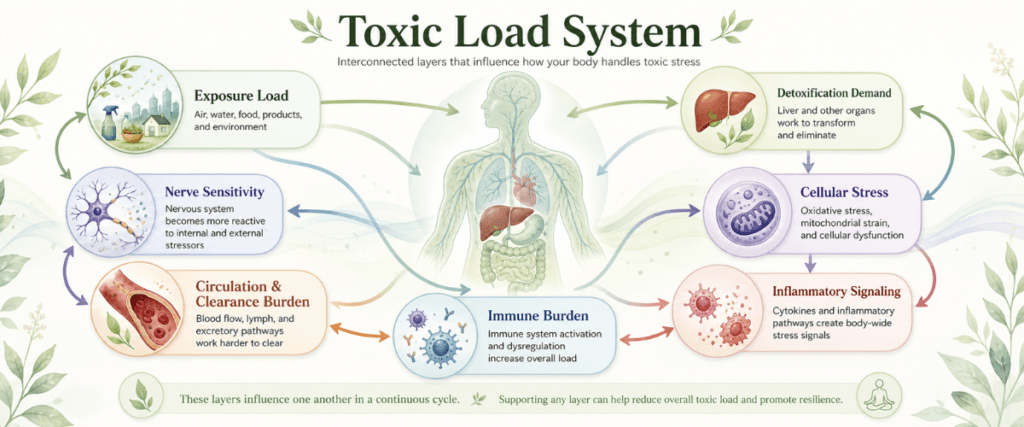
The Toxic Load System works through several connected layers.
First, the body receives exposure from the environment, food, water, air, products, and internal metabolic activity.
Next, the body must process these exposures through detoxification and clearance pathways. For example, the liver plays an important role in transforming many substances, while the kidneys, digestive tract, lungs, skin, lymphatic system, and circulation also support elimination and regulation.
However, if exposure burden remains high, the body may experience increased detoxification demand. As a result, this may increase cellular stress, oxidative pressure, inflammatory signaling, and immune activity.
Over time, these interactions may affect circulation, tissue clearance, energy production, and nervous system reactivity.
For this reason, the Toxic Load System should be understood as an interconnected body-wide process rather than a single isolated problem.
Key Layers of the Toxic Load System
The Toxic Load System can be understood through several interacting layers.
Exposure Load
Exposure load refers to the total amount of external and internal burden the body may need to process.
For example, this may include air quality, water quality, food exposures, household products, occupational exposure, environmental particles, metabolic waste, and inflammatory byproducts.
However, not all exposure is avoidable. Therefore, the goal is not fear or perfection. Instead, the goal is awareness, reduction where possible, and support for the body’s natural regulation systems.
Detoxification Demand
Detoxification demand refers to the work required by the body to process, transform, and eliminate substances.
In this process, the liver plays a central role. However, it does not work alone. The kidneys, digestive system, lungs, skin, lymphatic flow, and circulation also contribute to clearance and regulation.
When the burden is higher, these systems may need to work harder. However, this does not mean the body is failing. Instead, it means the system may be under more demand.
Cellular Stress
Cellular stress may occur when cells are exposed to increased oxidative pressure, inflammatory signals, metabolic strain, or nutrient imbalance.
To function well, cells require energy, oxygen, nutrients, and waste clearance. However, if cellular stress increases, the body may have less capacity for repair, regulation, and adaptation.
Because nerves are energy-demanding tissues, cellular stress may be especially relevant when discussing nerve sensitivity and recovery education. Therefore, this layer helps explain why cellular health is important within the Toxic Load System.
Inflammatory Signaling
Inflammation is part of the body’s normal protective response. However, when inflammatory signaling remains elevated or poorly regulated, it may contribute to body-wide stress.
In addition, toxic load may interact with inflammatory pathways by increasing immune demand, oxidative stress, and cellular irritation.
However, this does not mean toxic load is always the cause of inflammation. Instead, it means toxic burden may be one layer that interacts with inflammatory response patterns.
Circulation & Clearance Burden
Circulation supports both delivery and clearance.
For example, blood flow helps deliver oxygen and nutrients, while lymphatic and excretory pathways help move waste products and inflammatory byproducts away from tissues.
However, when the body is managing higher exposure burden, circulation and clearance systems may carry more demand.
As a result, this may influence tissue comfort, recovery capacity, and sensitivity patterns.
Immune Burden
The immune system helps the body respond to stressors, irritants, infections, tissue injury, and environmental challenges.
In addition, when toxic load interacts with inflammation, cellular stress, and clearance demand, immune signaling may become more active.
However, in this model, immune burden does not mean the immune system is “bad.” Instead, it means the immune system may be participating in a larger system response.
Nerve Sensitivity
Nerves respond to the internal environment around them.
When cellular stress, inflammation, circulation burden, immune signaling, and metabolic strain increase, the nervous system may become more reactive.
As a result, this may influence how the body processes discomfort, tingling, burning, numbness, fatigue, or sensitivity patterns.
Therefore, the Toxic Load System is one possible educational lens for understanding how body-wide burden may interact with nerve-related experiences.
Toxic Load System Interactions
The Toxic Load System rarely works alone. It can interact with several other root-cause systems.
Toxic Load System and Metabolic Damage System
Metabolism and detoxification are closely connected.
When blood sugar regulation, energy production, and mitochondrial function are under stress, the body may have less capacity to process the exposure burden efficiently.
At the same time, toxic load may increase oxidative stress and cellular pressure. As a result, this may influence metabolic resilience.
Therefore, this creates a two-way relationship between metabolic stress and toxic burden.
Toxic Load System and Circulatory Impairment System
Circulation supports both delivery and clearance.
However, if circulation is under pressure, tissues may receive less oxygen and fewer nutrients, while waste products and inflammatory byproducts may clear more slowly.
In addition, toxic load may increase the demand on circulation and lymphatic flow, especially when the body is managing cellular stress, inflammation, and immune activity.
Toxic Load System and Nutritional Deficiency System
Nutrients are required for energy production, antioxidant defense, tissue repair, and normal detoxification processes.
However, if nutrient intake, absorption, or utilization is poor, the body may have less support for handling the exposure burden.
At the same time, this does not mean supplements are always needed. Instead, it means nutrition quality is an important part of system resilience.
Toxic Load System and Inflammatory Response System
Toxic load and inflammation may influence one another.
For example, exposure burden may contribute to immune activation and inflammatory signaling. In addition, inflammatory activity may increase oxidative stress and create additional byproducts that require clearance.
As a result, this interaction can create a repeating cycle of stress, response, and increased system demand.
Toxic Load System and Nervous System Sensitization
The nervous system monitors both the external environment and the body’s internal state.
When internal stress signals increase, the nervous system may become more alert and reactive.
As a result, this may contribute to sensitivity patterns, especially when toxic load is combined with inflammation, metabolic strain, poor sleep, stress overload, or circulation burden.
Patterns That Influence the Toxic Load System
Several everyday patterns may influence the Toxic Load System. These patterns are not listed as diagnoses or treatments. They are educational examples of factors that may increase or reduce system burden.
Environmental Exposure Patterns
Air pollution, smoke, dust, mold exposure, chemical fumes, pesticides, plastics, and household products may increase the exposure burden.
However, the goal is not to fear the environment. Instead, the goal is to identify practical ways to reduce unnecessary burden where possible.
Food and Water Quality
Food and water can influence exposure load, nutrient support, gut function, inflammation, and metabolic health.
Highly processed diets may increase system burden, while balanced whole-food patterns may support resilience.
This section is educational and should not be used as a restrictive diet instruction.
Gut and Digestive Function
The digestive system helps process food, absorb nutrients, remove waste, and interact with the immune system.
If digestion, elimination, or gut balance is under stress, the body may experience increased internal burden.
Digestive health may therefore influence how the Toxic Load System interacts with inflammation, metabolism, and nerve sensitivity.
Hydration and Clearance
Hydration supports circulation, kidney function, digestive movement, and tissue clearance.
Poor hydration may place more pressure on clearance systems.
However, hydration should be balanced and appropriate for the individual, especially for people with kidney, heart, or medical conditions.
Sleep and Repair Capacity
Sleep supports repair, nervous system regulation, immune balance, and metabolic recovery.
When sleep is poor, the body may have less capacity to regulate stress signals and recover from daily exposure to burdens.
Sleep does not “detox” the body in a simplistic way, but it supports the systems involved in regulation and repair.
Stress Load
Stress affects hormones, immune activity, circulation, digestion, and nervous system sensitivity.
When stress remains high, the body may become more reactive to internal and external signals.
This may amplify the effects of toxic load, inflammation, and metabolic strain.
Movement and Circulation
Gentle movement supports circulation, lymphatic flow, breathing, metabolism, and tissue clearance.
However, more exercise is not always better. When the nervous system is highly sensitive or the body is under strain, movement may need to be gradual and recovery-based.
Connection to Nerve Function
Nerves are sensitive to the internal environment of the body.
They depend on oxygen, nutrients, blood flow, cellular energy, immune balance, and regulated inflammatory signaling.
When the Toxic Load System is under pressure, several changes may influence nerve function:
- Increased cellular stress may affect energy availability.
- Inflammatory signaling may increase sensitivity in surrounding tissues.
- Circulation burden may affect delivery and clearance.
- Immune activity may create body-wide stress signals.
- Metabolic strain may reduce recovery capacity.
- Nervous system alertness may increase when internal stress signals remain elevated.
For this reason, toxic load may be relevant to nerve health education, not as a single cause, but as one interacting system that may influence sensitivity, repair, and regulation.
Visual System Flow
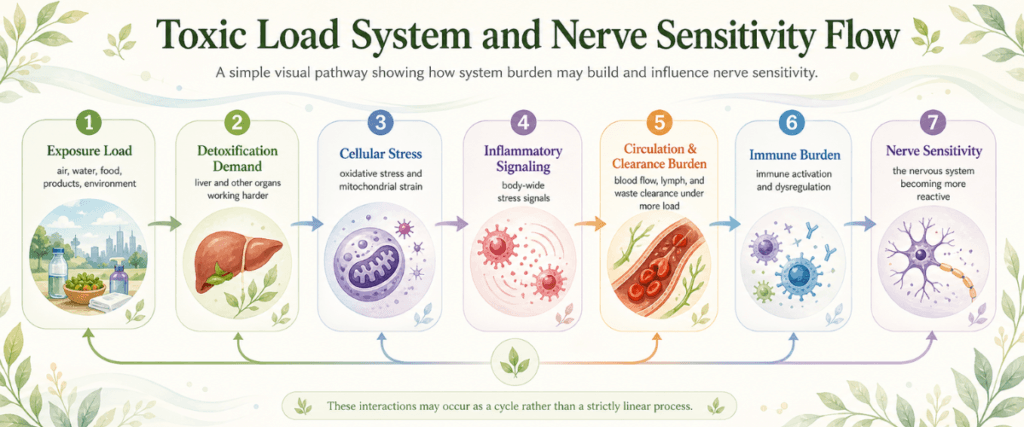
The Toxic Load System can be viewed as a flow of connected events. This flow is not always linear. In real life, these layers may loop back and influence one another.
A simple educational pathway may look like this:
Exposure Load
↓
Detoxification Demand
↓
Cellular Stress
↓
Inflammatory Signaling
↓
Circulation & Clearance Burden
↓
Immune Burden
↓
Nerve Sensitivity
This flow helps explain why toxic load should be viewed as a system, not as a single isolated factor.
Why This System Matters for Recovery
Recovery is not only about reducing symptoms. It also depends on whether the body has enough capacity to repair, regulate, clear waste, calm inflammation, and support nerve function.
The Toxic Load System matters because increased burden may reduce the body’s available recovery resources.
Recovery Requires Processing Capacity
The body must process internal and external stressors every day. If this demand is high, fewer resources may be available for repair and adaptation.
Recovery Requires Cellular Energy
Cells need energy to repair tissue, maintain nerve signaling, regulate inflammation, and support detoxification pathways.
When cellular stress increases, recovery may become slower or less stable.
Recovery Requires Inflammatory Balance
Inflammation can be protective in the short term, but persistent inflammatory signaling may increase sensitivity and discomfort.
Reducing unnecessary burden may help support a calmer internal environment.
Recovery Requires Circulation and Clearance
Tissues need oxygen, nutrients, and waste removal. Circulation and lymphatic flow support these processes.
When clearance demand increases, the circulation and lymphatic systems may carry more pressure.
Recovery Requires Nervous System Regulation
The nervous system responds to internal stress. If the internal environment remains overloaded, the nervous system may stay more alert.
Supporting the Toxic Load System may therefore help create better conditions for regulation, resilience, and recovery education.
Common Misunderstandings
The Toxic Load System is often misunderstood. Because the topic involves toxins, detoxification, and body burden, it can easily become fear-based or overly simplified.
This page uses a balanced educational approach.
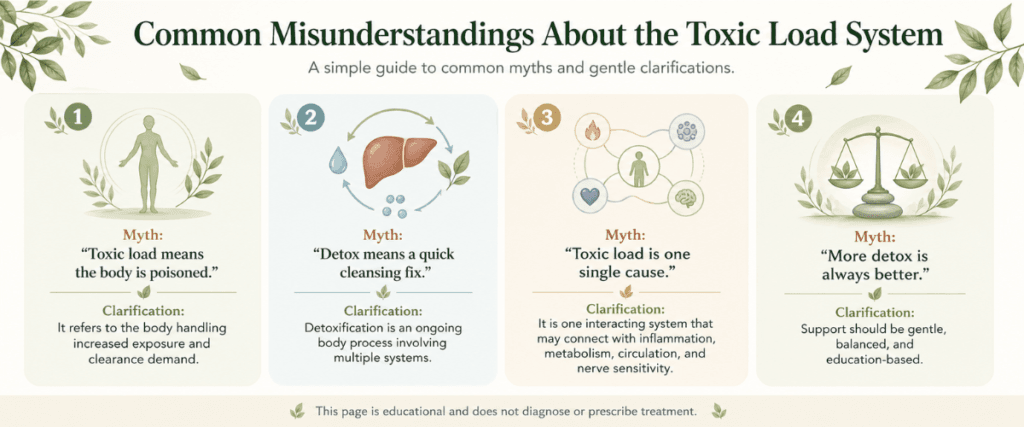
Misunderstanding 1: Toxic Load Means the Body Is Poisoned
This is not the meaning used on this page.
Toxic load refers to the body’s handling of increased exposure and clearance demand. It does not mean a person is poisoned or in a medical emergency.
Poisoning and toxic exposure emergencies require professional medical care. This page is only an educational system overview.
Misunderstanding 2: Detox Means a Quick Cleansing Fix
Detoxification is not a short-term cleanse.
The body’s natural processing and clearance systems work continuously. These include the liver, kidneys, digestive tract, lungs, skin, lymphatic flow, circulation, and immune regulation.
Quick detox claims, extreme cleansing programs, and aggressive supplement plans should be approached carefully.
Misunderstanding 3: Toxic Load Is One Single Cause
Toxic load should not be viewed as one single cause of nerve symptoms.
It is one interacting system that may connect with inflammation, metabolism, circulation, immune activity, cellular stress, and nervous system sensitivity.
This system-based view helps prevent oversimplification.
Misunderstanding 4: More Detox Is Always Better
More is not always better.
The body needs balanced support, not aggressive stress. Gentle nutrition, hydration, sleep, movement, exposure reduction, and medical guidance when needed may be safer than extreme detox approaches.
Support should be appropriate, gradual, and education-based.
Continue Learning
The Toxic Load System is one part of a larger root-cause education framework. To understand how it connects with nerve sensitivity and recovery, continue with these related pages:
Related Systems
Metabolic Damage System
Toxic load may increase oxidative stress and cellular strain, while metabolic imbalance may reduce energy available for processing and repair.
Circulatory Impairment System
Circulation supports oxygen delivery, nutrient transport, and waste clearance. Toxic load may increase the demand on these pathways.
Nutritional Deficiency System
Nutrients support cellular energy, antioxidant protection, tissue repair, and normal detoxification processes.
Inflammatory Response System
Toxic load may interact with immune activity and inflammatory signaling, creating body-wide stress patterns.
Nervous System Sensitization
When internal stress signals remain elevated, the nervous system may become more reactive to discomfort, sensory input, and environmental stimuli.
Safety & Education Notice
This page is for educational purposes only. It does not diagnose, treat, cure, or prevent any disease.
The Toxic Load System is presented as a system-level educational model, not as a medical diagnosis.
If you suspect poisoning, chemical exposure, medication reaction, severe neurological symptoms, sudden weakness, breathing difficulty, confusion, chest pain, or rapidly worsening symptoms, seek urgent medical care.
Do not start aggressive detox programs, extreme diets, fasting, chelation therapy, supplement protocols, or cleansing routines without guidance from a qualified healthcare professional.
This content is intended to help readers understand possible system interactions related to nerve sensitivity, inflammation, circulation, cellular stress, and recovery support.