
Inflammatory System
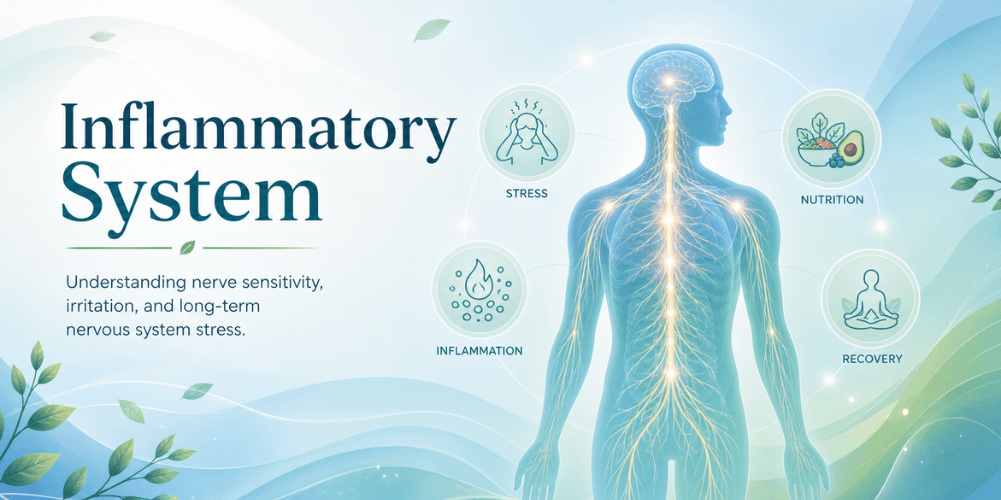
The Inflammatory System is one of the most important root-cause systems for understanding nerve sensitivity, irritation, and long-term nervous system stress. In addition, it helps explain how the body responds to injury, imbalance, immune activity, and environmental pressure. Therefore, understanding this system can make it easier to see how inflammation connects with nerve function, stress patterns, and long-term recovery education.
This page explains the Inflammatory System as an educational model, not as a diagnosis. In other words, it is designed to help readers understand how inflammation works within a larger body system. As a result, it shows how inflammation connects with nerve function, stress patterns, metabolism, nutrition, and recovery-related learning.
Quick Navigation
What is the Inflammatory System?
The Inflammatory System is the body’s internal response network for dealing with stress, injury, irritation, infection, and imbalance. However, it is not a single organ or one simple process. Instead, it works through immune signals, tissue responses, cellular communication, and nervous system feedback. As a result, this system helps the body recognize pressure, respond to change, and communicate with the nervous system.
Inflammation is not always harmful. Short-term inflammation can help the body respond to a clear problem, such as injury or irritation. However, when inflammatory activity becomes persistent, low-grade, or poorly regulated, it may place extra stress on the body’s internal environment.
For nerve health education, this matters because nerves are highly sensitive to their surroundings. Nerves do not function in isolation. They respond to blood flow, oxygen, nutrient availability, stress signals, immune activity, and tissue condition.
A simple way to understand the Inflammatory System is to think of it as an alarm system. A short alarm can protect the body. However, if the alarm stays active too long, the whole system may become more reactive.
How the Inflammatory System Works
The Inflammatory System works through several layers of communication. For example, these layers include immune cells, chemical messengers, tissue signals, changes in blood flow, and nervous system responses. Together, they help the body detect problems and respond to internal stress. As a result, inflammation becomes part of a larger communication network rather than a single isolated reaction.
The first layer is detection. The body notices irritation, damage, infection, overload, or imbalance. Then it sends signals to activate a protective response. This response may change blood flow, immune activity, and local tissue behavior.
The second layer is communication. Cells send chemical messages to coordinate the response. These messages help the body decide whether to increase protection, begin repair, or continue monitoring the area.
The third layer is regulation. After the body responds to a threat or stressor, a healthy system should eventually calm down. This return to balance is very important because it helps prevent the body from staying in a state of unnecessary alert. Otherwise, prolonged activation may keep the inflammatory system more reactive over time.
When regulation becomes difficult, inflammation may become prolonged. As a result, tissues may remain irritated, nerve pathways may become more sensitive, and the body may experience a greater systemic load.
System Interactions: Network Thinking
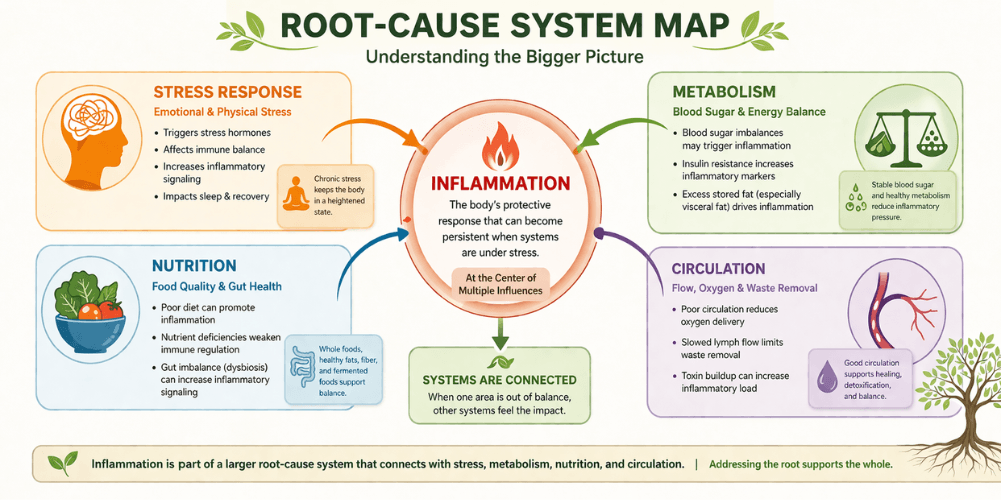
The Inflammatory System does not function in isolation; it connects with various other systems that influence nerve health, recovery processes, and long-term body regulation. Here’s a clearer overview of how these systems interact:
Nervous System
The nervous system is responsible for sending and receiving signals throughout the body. However, when inflammatory activity increases, nerve pathways may become more sensitive to stimuli. As a result, normal sensations can feel more intense, sharper, or more pronounced. Therefore, understanding this connection helps explain why inflammation may influence nerve sensitivity and signal perception.
Stress System
The stress system affects immune function, sleep patterns, hormone levels, and the balance of the nervous system. Prolonged high stress can make the Inflammatory System more reactive.
Metabolic System
The metabolic system regulates energy usage, blood sugar levels, and the availability of cellular fuel. Poor metabolic balance can lead to increased internal stress, which can exacerbate inflammation and nerve sensitivity.
Nutritional System
Nutrition plays a crucial role in providing the necessary materials for repair, regulation, and cellular support. While poor nutritional habits may not directly cause specific problems, they can hinder the body’s ability to maintain a balanced internal environment.
Circulatory System
The circulatory system is responsible for delivering oxygen and nutrients while removing waste products. When circulation is impaired, tissues may undergo additional stress.
By understanding these interconnected systems, we can better appreciate how they collectively influence nerve health and overall well-being. In addition, this network view helps readers see that inflammation rarely works alone. Instead, it often interacts with stress, metabolism, nutrition, circulation, and nervous system regulation over time.
Patterns That Influence This System
Inflammation often becomes easier to understand when viewed through patterns. A pattern is something that repeats over time and influences how the body behaves.
Diet Patterns
Diet patterns can influence energy stability, blood sugar response, gut function, and nutrient availability. For example, a person who regularly eats irregular meals may experience changes in energy rhythm. Over time, this can affect system balance.
This does not mean one food creates one outcome. Instead, the focus is on repeated patterns. The body responds to the overall environment created by daily nutrition habits.
Stress Patterns
Stress patterns include emotional pressure, mental overload, poor sleep, worry, and long periods without recovery. These patterns may keep the nervous system in a more alert state.
When the body feels constantly pressured, the Inflammatory System may also become harder to regulate. Therefore, stress and inflammation often interact as part of one larger body response.
Lifestyle Patterns
Lifestyle patterns include movement, rest, posture, screen time, sleep timing, and daily rhythm. A body that receives irregular signals may struggle to maintain stable regulation.
For example, poor sleep may increase stress load. Low movement may affect circulation. High screen exposure at night may disrupt the recovery rhythm. Each pattern may be small, but together they can influence the system.
Environmental Triggers
Environmental triggers may include pollution, noise, poor air quality, chemical exposure, temperature stress, or repeated irritation. In addition, these triggers can increase the body’s total load when they occur repeatedly or combine with other stress patterns.
For example, think of the body like a cup. Each stressor adds a small amount of water. However, when too many stressors build up, the cup may overflow. As a result, the Inflammatory System often reflects this accumulated system load.
Connection to Nerve Function
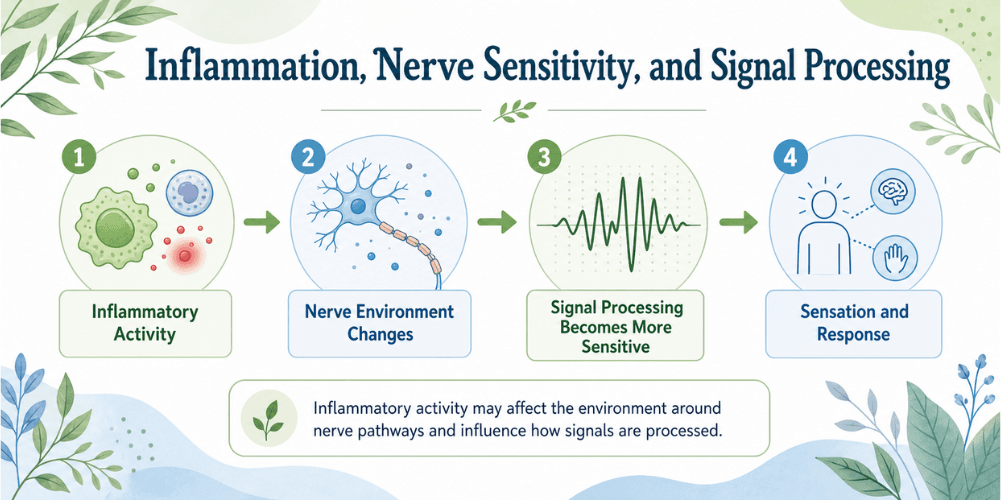
The inflammatory system is closely linked to nerve function through sensitivity, signal processing, and pain perception. Nerves serve as communication pathways, transmitting information between the body, spinal cord, and brain.
When the internal environment becomes irritated or inflamed, nerve pathways may react more sensitively. This heightened sensitivity does not necessarily indicate new damage; rather, it can mean that the system is processing signals more acutely.
Signal processing plays a crucial role in pain perception, as pain is not solely determined by tissue condition. It also involves how the nervous system interprets sensory input. Factors such as stress, inflammation, sleep quality, circulation, and emotional state can all influence this interpretation.
For instance, the same physical sensation might feel mild on one day and more intense on another. This variation can occur because the nervous system alters its response based on the body’s overall condition.
Additionally, the inflammatory system may impact the environment around nerves. If nearby tissues are stressed, irritated, or poorly regulated, nerve signals can become less stable. This connection highlights why inflammation is a significant topic in understanding the root causes of pain and sensitivity.
Visual System Flow
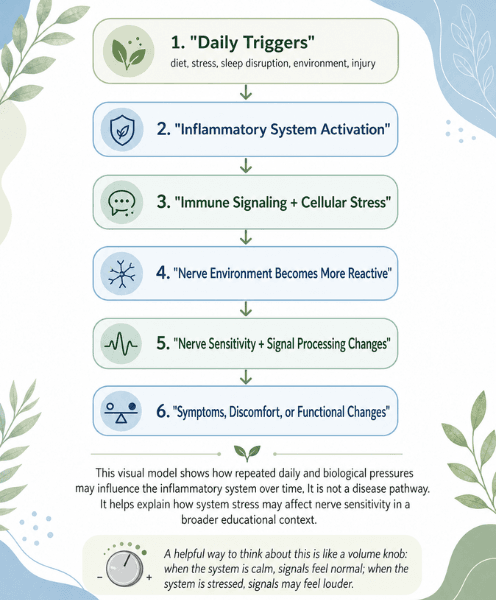
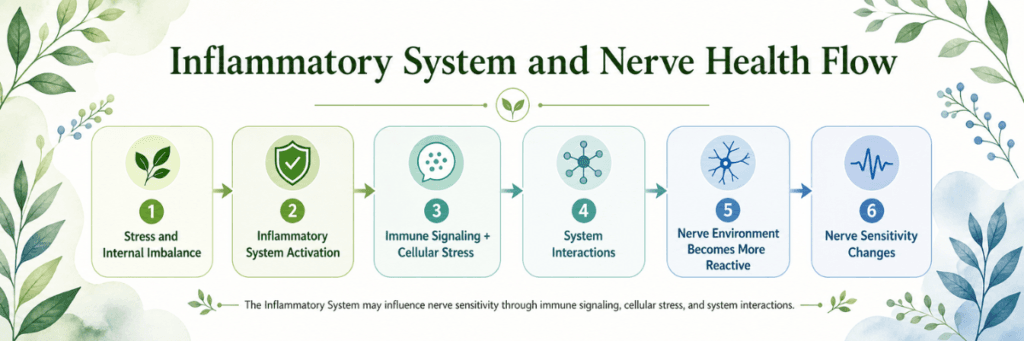
This diagram shows how different daily and biological triggers may influence the Inflammatory System. It does not show a direct disease pathway. Instead, it explains how repeated system pressure may affect nerve sensitivity over time.
A helpful analogy is a volume knob. Inflammation may turn up the “volume” of nerve sensitivity. When the system is calm, signals may feel normal. When the system is stressed, signals may feel louder.
This visual model helps users understand inflammation without fear. It shows that inflammation is part of a larger body communication system.
Why This System Matters for Recovery
The inflammatory system plays a crucial role in recovery because nerves need a stable internal environment. Recovery involves more than just addressing a single symptom or specific area of the body; it relies on the body’s ability to manage stress, circulation, immune response, sleep, and nutrition.
When inflammation is balanced, the body can respond effectively to stress and return to a state of stability. This flexibility is essential, as it allows the body to react when necessary and calm down once the challenge has passed.
However, if inflammatory activity remains elevated, the body may enter a more reactive state. This can increase the systemic load and make it harder to understand nerve sensitivity.
This page does not recommend any treatments or protocols. Instead, it emphasizes the importance of considering inflammation within a root-cause education framework. It helps users recognize how internal patterns can influence long-term nerve health.
Understanding this system also improves navigation through the website. Visitors can explore the connections between inflammation, stress, metabolism, nutrition, circulation, and regeneration systems, creating a richer learning experience.
Common Misunderstandings
Misunderstanding 1: All inflammation is bad
Inflammation is not always bad. Short-term inflammation can be part of normal protection and repair. The concern is usually prolonged, repeated, or poorly regulated inflammation.
Misunderstanding 2: Inflammation always looks visible
Some inflammation is visible, such as redness or swelling. However, system-level inflammatory activity may not always appear on the surface. It may show up as sensitivity, fatigue, or general system stress.
Misunderstanding 3: One trigger explains everything
Nerve sensitivity usually does not come from one factor only. It may involve stress, metabolism, circulation, sleep, nutrition, immune activity, and tissue condition.
Misunderstanding 4: Inflammation means permanent damage
Inflammation does not automatically mean permanent damage. It is a response pattern. The goal is to understand how the system behaves, not to create fear.
Misunderstanding 5: Symptoms always match tissue condition
Symptoms can be influenced by signal processing. Sometimes the nervous system becomes more sensitive because the body is under greater load. This is why systemic education is important.
Continue Learning
To understand how the Inflammatory System fits into the larger nerve health education model, continue with these related pages:
- Root-Cause Systems
- Therapeutic Systems
- Regeneration Systems
- Conditions
- Neurobiology
- Nutritional Intelligence
- Recovery Engineering
Related Systems
The Inflammatory System connects closely with other system-level pages:
- Stress System
- Metabolic Damage System
- Nutritional Deficiency System
- Circulatory Impairment System
- Toxic Load System
- Mechanical Damage System
- Autoimmune Patterns
- Lifestyle Degeneration
These related systems help explain how nerve health is shaped by multiple overlapping processes. In addition, they allow visitors to continue exploring the root-cause layer step by step. As a result, readers can move from one system to another and build a clearer understanding of how inflammation, stress, metabolism, nutrition, and circulation work together.
Safety & Education Notice
This content is for educational purposes only. It does not provide medical advice, diagnosis, treatment, or personal health instructions.
Inflammation, nerve pain, neuropathy, and related symptoms can have many possible causes. Anyone experiencing new, severe, worsening, or persistent symptoms should consult a qualified healthcare professional.
Heal Your Nerves Naturally is an educational platform designed to help visitors understand nerve health concepts, body systems, and recovery-related learning topics in a calm and structured way.