Protein and Amino Acids: A Simple Guide to Smarter Nerve Nutrition
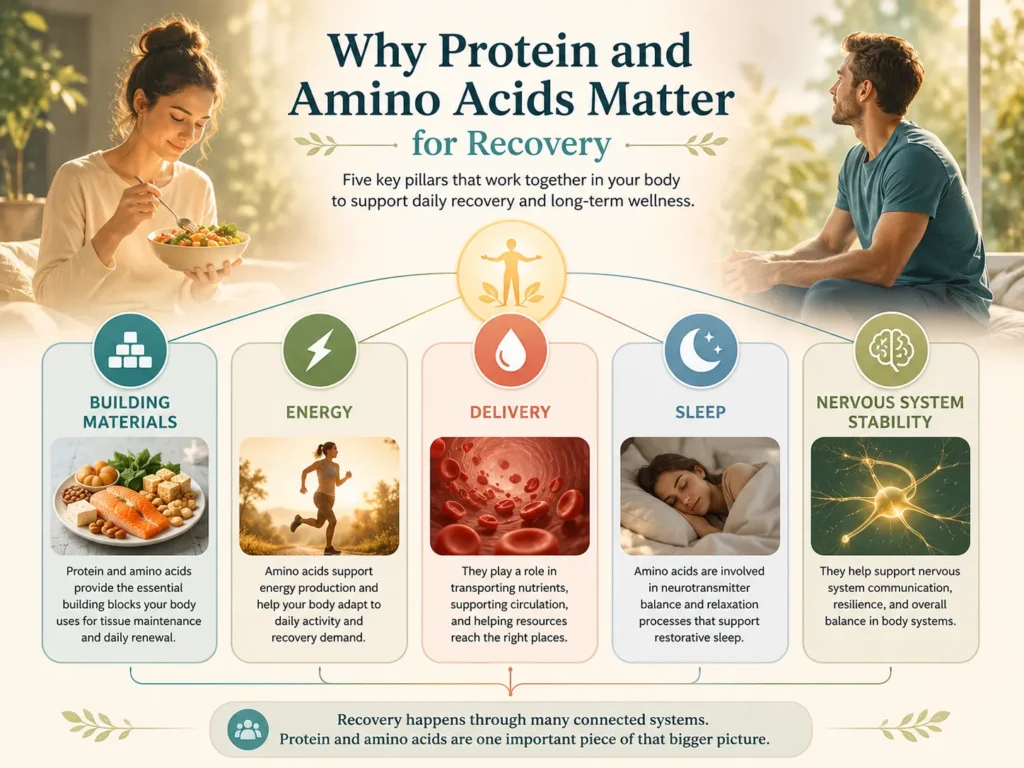
Protein and Amino Acids help readers understand one important nutrition layer in the Heal Your Nerves Naturally learning system. In simple words, protein gives the body useful building materials, and amino acids are the smaller parts inside protein. After digestion, the body can use amino acids for many normal functions, such as tissue maintenance, enzyme activity, immune function, and daily body repair demand.
However, this page does not say that protein repairs nerves, cures symptoms, or heals the nervous system. Instead, it explains how nutrition may fit into a wider body system. For example, protein works together with digestion, blood flow, sleep, stress response, energy use, and nervous system regulation. Therefore, Protein and Amino Acids should be understood as one helpful learning topic, not as a complete answer for nerve symptoms.
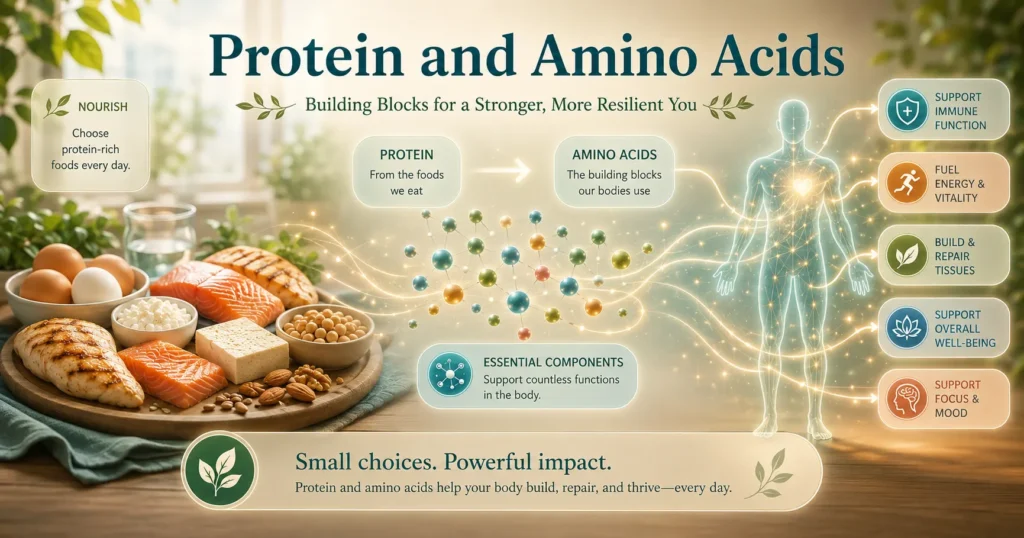
This page also connects with nerve food repair education because many readers search for food-based ways to understand nerve health. For this reason, Protein and Amino Acids can help explain how nutrition may support body maintenance from a safe educational view. Still, nerve pain, tingling, numbness, burning feelings, weakness, and sensitivity can have many different causes.
Because of this, the goal of this page is to guide learning, not self-diagnosis. A safe nutrition page should help readers ask better questions, understand related body systems, and avoid fear-based claims. In addition, it should not promote supplement promises, cure claims, or one-size-fits-all advice.
Quick Navigation
What Are Protein and Amino Acids?
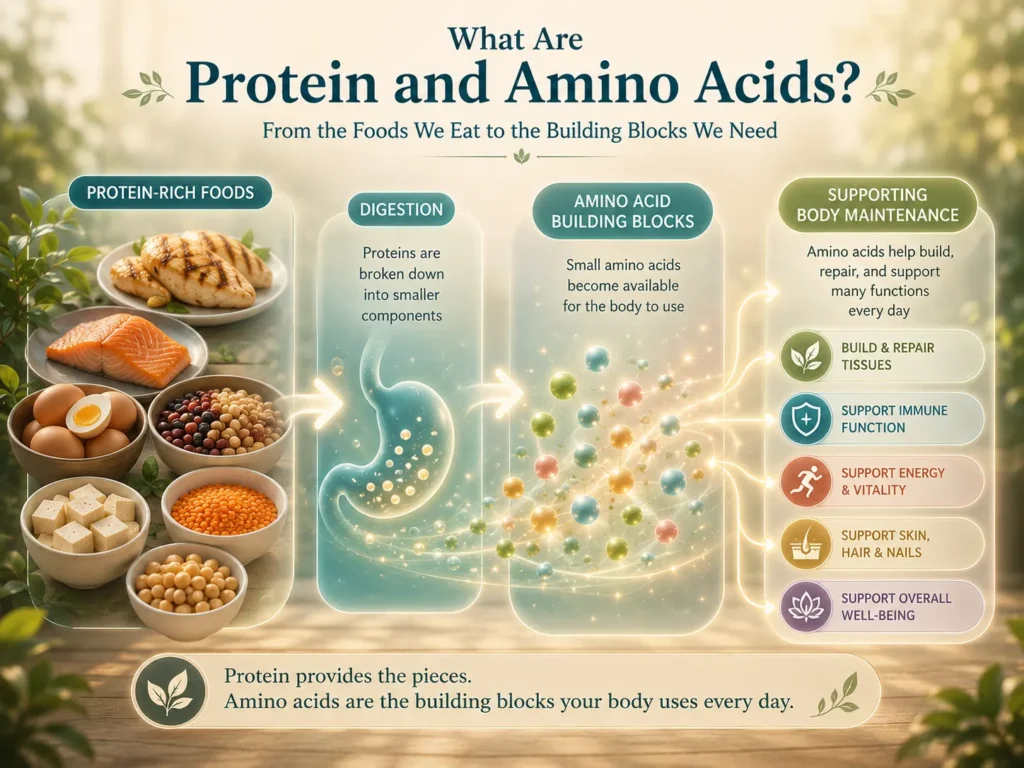
Protein and Amino Acids describe how dietary protein becomes useful building material inside the body. In simple words, protein is a major nutrient, and amino acids are the small parts that build protein. During digestion, the body breaks protein into amino acids and smaller pieces. After that, these pieces can enter the bloodstream and support many normal body processes. For this reason, the topic belongs inside Nutritional Intelligence.
Protein appears throughout the body. It helps maintain muscles, skin, connective tissue, enzymes, transport proteins, immune activity, and many body structures. Meanwhile, the nervous system works inside this whole-body environment. Therefore, Protein and Amino Acids may relate to recovery capacity, tissue demand, body regulation, and nerve-health education. However, they should not be described as a direct nerve treatment. A clear page should explain the role of protein without turning nutrition into a medical promise.
A simple example may help. Think of the body as a repair and communication network. Protein and amino acids are like building materials. However, materials alone do not complete the work. The body also needs energy, oxygen delivery, blood flow, sleep, immune coordination, and safe medical care when symptoms are serious. Because of this, Protein and Amino Acids should be understood as one system layer, not the full answer.
Plain Meaning / Glossary Box
Protein means a nutrient made of amino acids. The body uses protein for structure, enzymes, immune activity, transport systems, and daily maintenance. Amino acids are the smaller building blocks inside protein. Some amino acids are called essential amino acids because the body must get them from food. Therefore, food variety can matter when people learn about safe nutrition and body maintenance.
Protein quality describes how well a food pattern provides the amino acids the body needs. A complete protein contains all essential amino acids in useful amounts. However, this does not mean plant foods are weak. A varied plant-based pattern can still provide helpful amino acids. Nerve food repair is a safe educational phrase for understanding how nutrition may fit into body maintenance. It should not mean food directly repairs nerves or cures symptoms.
Nervous system regulation means the way the nervous system helps manage activity, rest, stress response, internal stability, and communication across the body. Autonomic response refers to automatic body functions such as heart rate, digestion, sweating, blood vessel tone, and stress response. Meanwhile, neurological regulation describes how nerve signals, brain-body communication, autonomic activity, and body systems interact. These ideas help connect Protein and Amino Acids with wider nerve-health education.
How Protein and Amino Acids Work
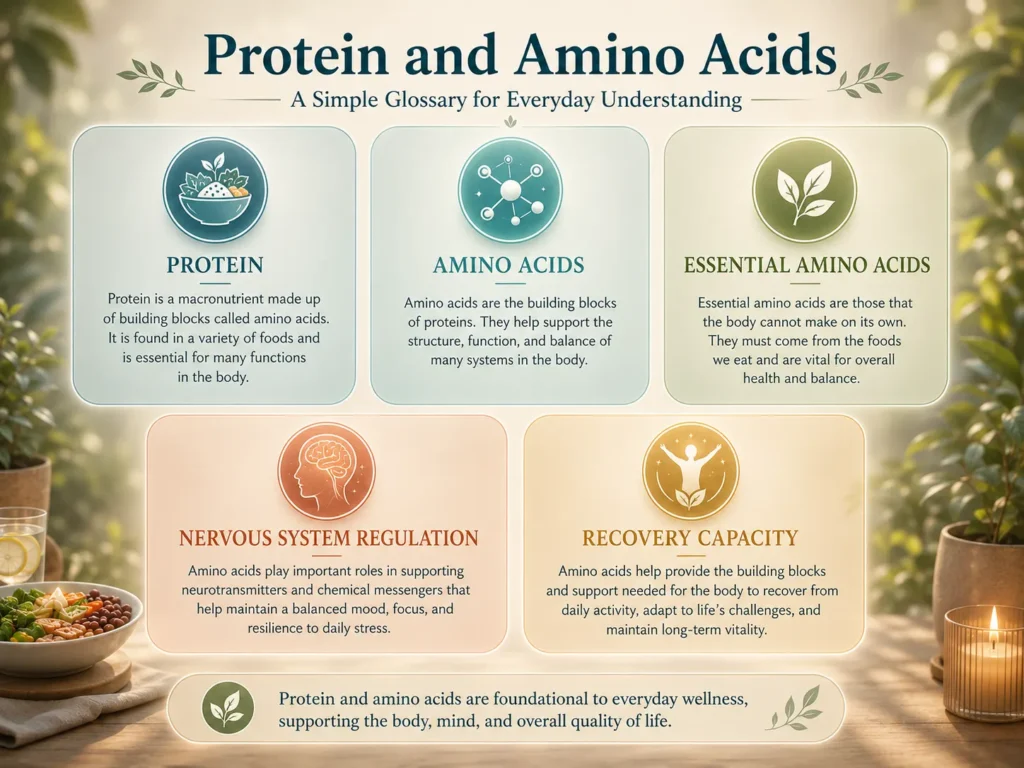
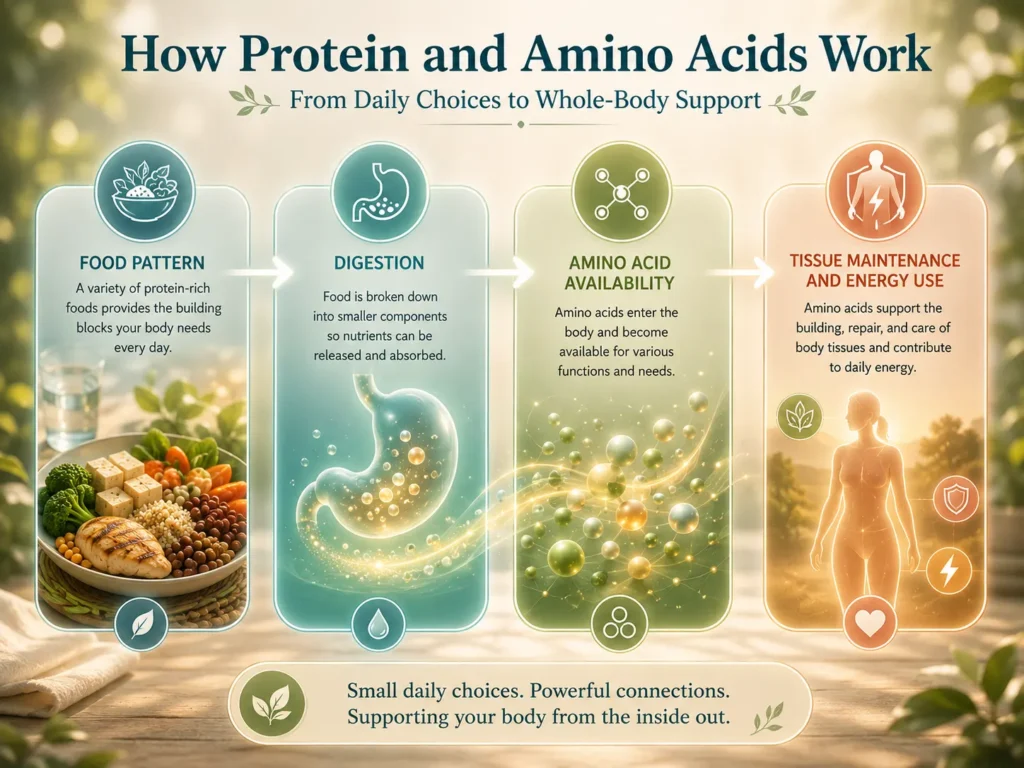
First, a person eats protein-containing foods. These may include fish, eggs, dairy, meat, beans, lentils, soy foods, nuts, seeds, grains, or other protein sources. Then digestion breaks protein into smaller parts, including amino acids and peptides. After absorption, these smaller parts become available for many body processes. This is the basic starting point for Protein and Amino Acids education.
Next, the body uses amino acids in different ways. Some amino acids may help build or maintain body proteins. Others may support enzymes, immune activity, transport molecules, connective tissue, or other normal functions. In addition, amino acids work with energy availability. If the body lacks enough overall energy, it may use amino acids differently. As a result, protein should not be separated from the wider nutrition picture.
Over time, protein adequacy may influence the body’s ability to maintain tissues and respond to daily demand. However, this does not mean protein directly fixes nerve symptoms. Instead, Protein and Amino Acids can be understood as one layer of nutritional intelligence. They work beside micronutrients, fatty acids, blood flow, sleep rhythm, metabolic stability, inflammatory signaling, and nervous system regulation. Therefore, this page explains a system, not a supplement protocol.
Key Layers of Protein and Amino Acids
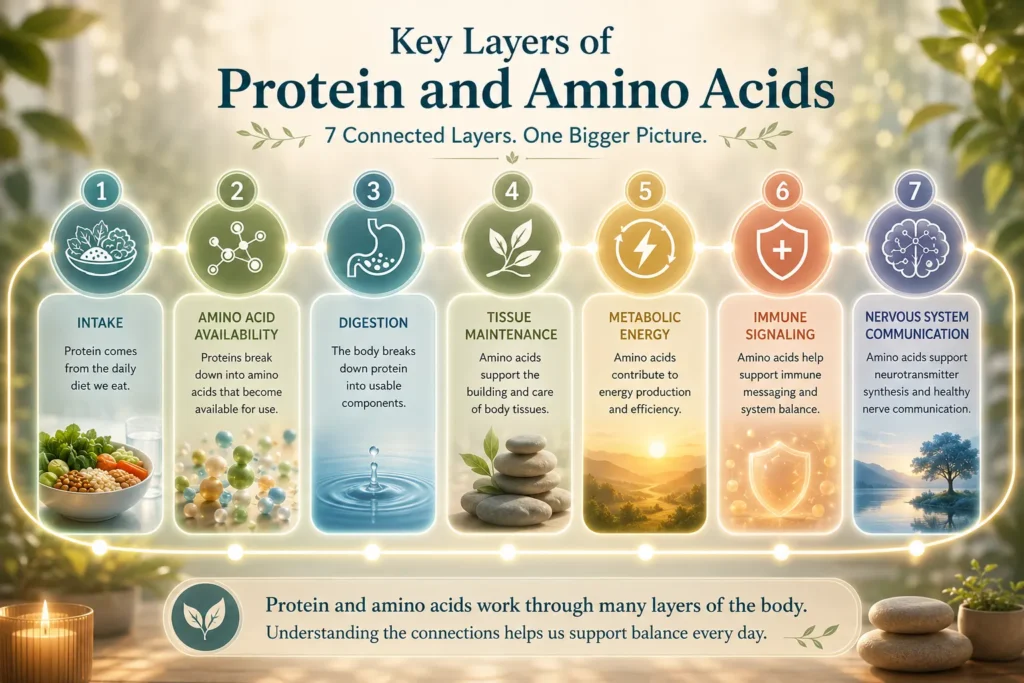
Protein and Amino Acids Intake Layer
The first layer is overall protein intake. The body needs protein to maintain normal tissues and biological functions. However, the right amount can vary by age, body size, activity level, appetite, digestion, health status, and medical conditions. For this reason, this page does not provide a protein target, meal plan, or personal instruction. It explains the topic from a general education view.
Low or inconsistent protein intake may reduce the body’s supply of building materials. At the same time, more protein is not always better for every person. People with kidney disease, liver disease, digestive problems, metabolic conditions, or medical restrictions need qualified guidance. Therefore, Protein and Amino Acids should stay educational, not prescriptive. A safe page explains what protein does without telling every reader what to eat.
For nerve-health education, this layer matters because the nervous system does not work alone. It depends on the wider body environment. When the body is undernourished, overloaded, or medically stressed, recovery capacity may change through many connected systems. Still, protein should not be blamed as the only reason for symptoms. Balanced wording keeps the page useful and safe.
Amino Acid Availability Layer
Amino acids are the smaller parts of protein. Some amino acids are essential, which means they must come from food. Others can be made by the body under normal conditions. However, illness, stress, growth, aging, injury, or recovery demand may change how the body uses amino acids. Because of this, the topic needs a system-based explanation.
This layer matters because protein is not only about total amount. It is also about variety, digestion, and amino acid pattern. For example, a varied food pattern may provide a broader amino acid profile than a very narrow diet. Therefore, Protein and Amino Acids should connect with overall nutrition quality rather than one food, one powder, or one supplement idea.
At the same time, amino acid availability should not become supplement advice. Whole food patterns, digestion, medical status, and overall nutrition all matter. For this reason, amino acid supplements should not be promoted as nerve repair, neurological healing, or nervous system treatment. A strong educational page can explain the concept while avoiding unsafe claims.
Digestion and Absorption Layer
Protein must be digested before amino acids can be used. The stomach, pancreas, liver, gut lining, and digestive rhythm all play roles in this process. Therefore, the same food pattern may not feel the same for every person. Digestion is part of the system, not a small detail. This makes Protein and Amino Acids more than a simple food list.
One person may struggle with poor appetite, digestive discomfort, food restriction, or stress-related eating changes. Another person may eat enough protein but still have other nutritional gaps. As a result, Protein and Amino Acids should be understood inside a larger digestive and metabolic picture. This view is more realistic for readers who want clear nerve-health education.
Digestion also connects with nerve-health learning because nutrient availability depends on absorption. However, digestive symptoms and nerve symptoms can have many causes. Persistent, severe, unusual, or worsening symptoms should be discussed with a qualified healthcare professional. Nutrition education should support understanding, not replace proper care.
Tissue Maintenance Layer
The body uses amino acids for tissue maintenance. This includes muscle tissue, connective tissue, skin, enzymes, transport proteins, and immune-related proteins. Nerves also exist beside muscles, blood vessels, fascia, and connective structures. Therefore, tissue health and nerve-health education can overlap in a broad system view. Protein and Amino Acids help readers understand that connection.
Repeated body strain may increase maintenance demand. For example, injury, inactivity, inflammation, poor sleep, or high stress may increase system load. Protein alone does not solve these issues, but it may be one part of the body’s maintenance environment. Because of this, the topic should stay balanced and avoid claims that nutrition alone can repair nerve problems.
This layer also shows why nutrition cannot be separated from movement, circulation, recovery cycles, sleep, and daily rhythm. The body uses many systems together. Therefore, Protein and Amino Acids belongs inside a larger Nutritional Intelligence cluster. That cluster can guide readers toward safer learning about food patterns, metabolism, and recovery capacity.
Metabolic Energy Layer
Protein does not work in isolation. The body also needs energy from food, vitamins, minerals, fluids, oxygen delivery, and stable metabolic function. When energy availability is too low, the body may use amino acids differently. As a result, protein use depends on the wider body context. This point helps make the page easier to understand.
Recovery capacity depends on coordination. The body needs building materials, but it also needs enough energy to use those materials. Therefore, Protein and Amino Acids should connect with metabolic support, micronutrients, circulation, and sleep. This wider view helps avoid narrow nutrition claims and gives readers a better map of the body.
For nerve-health education, this layer explains why single-nutrient thinking is too limited. A stronger approach looks at the full body environment, including food pattern, energy rhythm, digestion, circulation, and nervous system regulation. In addition, it helps readers see why recovery demand can be complex. Protein is one part, not the whole system.
Immune and Inflammatory Signaling Layer
Amino acids also take part in immune function and inflammatory signaling. The immune system uses proteins for many structural and signaling roles. However, this does not mean protein controls inflammation or treats inflammatory disease. Instead, it shows that nutrition and immune activity connect inside a larger body network. Protein and Amino Acids should be explained with that balance.
When the body is under stress, the immune system may need more coordination. At the same time, inflammatory activity may influence appetite, metabolism, tissue demand, and energy use. Therefore, Protein and Amino Acids may help readers understand how nutritional adequacy can be part of body-wide education. It should not become a cure message.
This is especially important for health content because oversimplified nutrition claims can mislead readers. Protein and Amino Acids should be presented as one part of a complex network, not as a guaranteed nerve healing solution. Because of this, the language must stay calm, safe, and non-diagnostic.
Nervous System Communication Layer
The nervous system depends on energy, oxygen, blood flow, immune stability, sleep, and tissue health. Amino acids are involved in many body processes, including structural proteins and some signaling pathways. However, nerve symptoms should never be explained by amino acids alone. Many systems may be involved, so the explanation must stay balanced.
Some readers may search for healing your neurological system or neurological healing. These phrases can help match real search language, but they need careful handling. The body may have repair and adaptation processes. However, no food, protein source, amino acid, or supplement should be described as a cure. Protein and Amino Acids should support education, not overpromise results.
From an educational perspective, this topic may help readers understand one nutritional layer of neurological regulation. Still, nerve symptoms require careful interpretation, especially when they are sudden, severe, spreading, or worsening. Therefore, the page should guide readers toward safe learning, related pages, and professional care when needed.
Real-Life Symptom Language Bridge
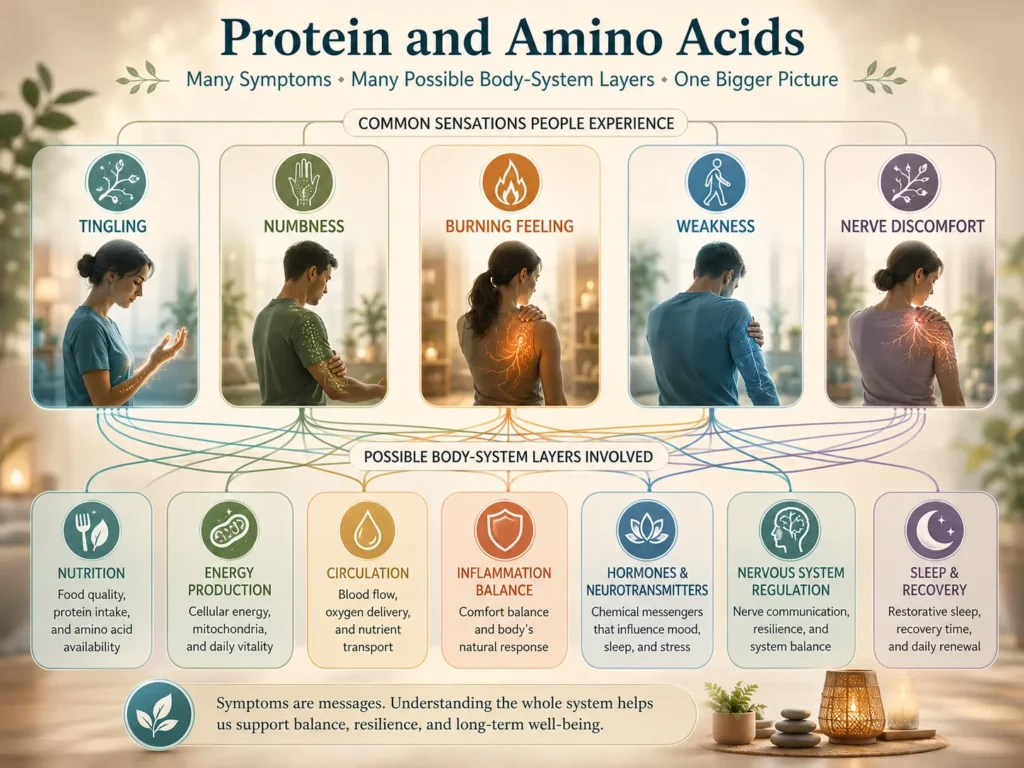
Some readers search for Protein and Amino Acids because they worry about nerve pain, tingling, numbness, burning feelings, weakness, tired nerves, slow recovery, or sensitive nerves. Others search for nerve food repair because they want to know whether nutrition can help the body maintain nerve-related systems. These concerns are understandable. However, the wording must stay careful.
Symptoms can have many possible causes. They may involve diabetes, vitamin imbalance, nerve compression, injury, autoimmune activity, circulation changes, medication effects, infection, inflammation, or other medical conditions. Therefore, Protein and Amino Acids should never be used as the only explanation. Instead, this page can help readers understand one possible nutrition-related background layer.
A safe view is simple. Protein and amino acids may relate to body maintenance, nutritional adequacy, and recovery capacity. However, they do not diagnose symptoms, replace medical care, or guarantee neurological healing. In addition, sudden weakness, spreading numbness, severe pain, loss of balance, bladder or bowel changes, chest pain, breathing difficulty, or rapidly changing neurological symptoms need urgent medical care.
Protein and Amino Acids and Nervous System Regulation
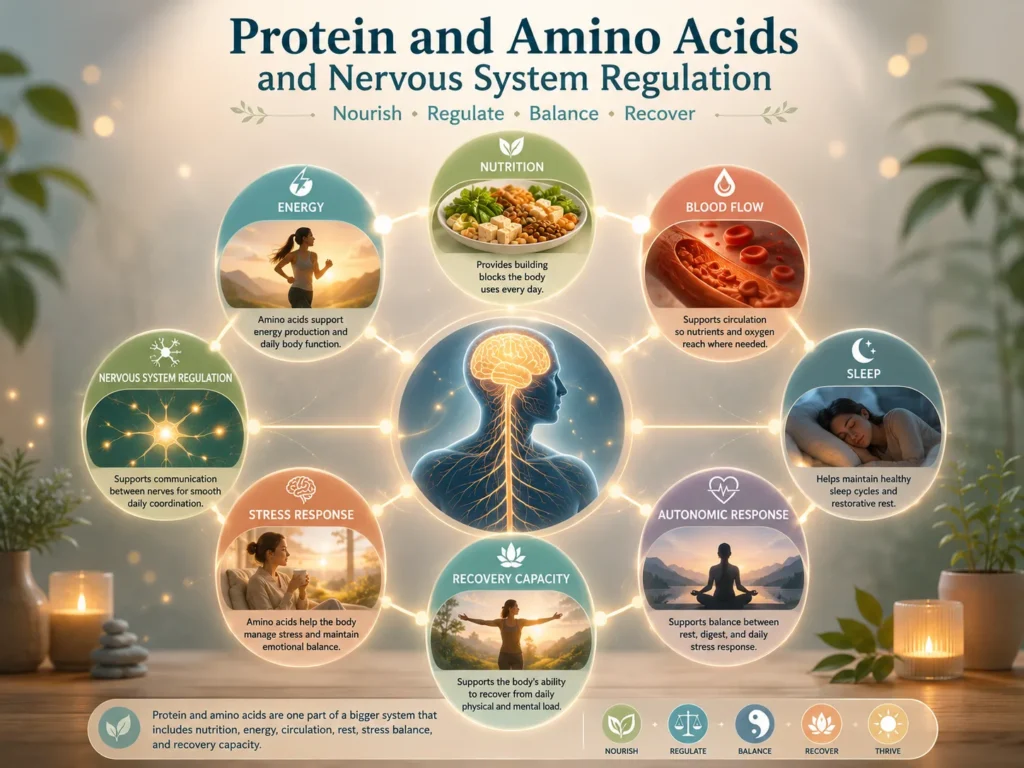
Protein and Amino Acids may connect with nervous system regulation because the nervous system works inside a larger body environment. Nerves depend on energy supply, oxygen delivery, blood flow, micronutrients, sleep rhythm, immune activity, and metabolic stability. Therefore, protein and amino acids should be understood as one nutritional layer inside a wider system.
Many readers search for nervous system regulation, autonomic response, neurological regulation, healing your neurological system, or neurological healing. These phrases can help shape educational content, but they must be used with care. The body has regulation, repair, and adaptation processes. However, no food, protein source, amino acid, or supplement should be described as a guaranteed way to heal the nervous system.
The autonomic response matters because it connects stress, rest, digestion, heart rate, blood vessel tone, sweating, and recovery demand. Protein does not control the autonomic system by itself. However, nutrition may be one background layer in the body’s ability to manage daily demand. Therefore, this section should connect with Autonomic Regulation, Neural Signaling, and Nerve Food Repair.
Protein and Amino Acids Interactions
Nutritional Intelligence Interaction
Protein and Amino Acids belongs inside the Nutritional Intelligence cluster. It connects with micronutrients, fatty acids, metabolic support, gut axis, nutritional timing, and nerve food repair. Together, these topics explain how food patterns may influence body maintenance and recovery capacity. Therefore, this page should point readers toward related nutrition pages.
Protein may provide amino acids, while micronutrients help many enzyme systems work. Fatty acids may relate to cell membranes and inflammatory signaling. Meanwhile, metabolic support may influence how nutrients are used. As a result, the body uses nutrition as a network, not as isolated parts. This is why one nutrient should not carry the whole recovery message.
This interaction matters because readers often search for one nutrient or one phrase. However, a safe education page should widen the view. Protein and Amino Acids can guide readers toward broader nutrition education without making treatment claims. In addition, it can strengthen internal links to Nerve Food Repair and Micronutrients and Nerve Function.
Metabolic System Interaction
The metabolic system helps the body use energy and nutrients. Protein metabolism depends on digestion, liver processing, blood sugar context, energy intake, and overall health status. Therefore, amino acids cannot be separated from metabolic function. This is why Protein and Amino Acids connects naturally with metabolic support and diet pattern education.
Metabolism matters in nerve-health education because nerve cells and supporting tissues require steady energy and internal stability. Metabolic stress may affect the body in many ways. However, Protein and Amino Acids should not be presented as a treatment for metabolic or nerve conditions. Instead, it should explain one nutrition-related layer.
A better explanation is that protein and amino acids may be part of the wider nutritional environment. This environment may influence tissue maintenance, energy use, and recovery demand. Because of this, the topic should connect with Metabolic Support Through Diet Patterns and Micronutrients and Nerve Function.
Regeneration Systems Interaction
Regeneration systems include repair, adaptation, stability, cellular maintenance, blood flow, and recovery cycles. Protein and Amino Acids may connect with these topics because amino acids provide structural materials for many tissues. However, regeneration is not only about materials. It also depends on timing, sleep, blood flow, immune signaling, inflammation resolution, stress load, and medical context.
This connection helps readers who search for axonal regeneration, axonal regeneration definition, axon regeneration steps, or which system is capable of axonal regeneration. Those topics should lead to deeper regeneration pages. Protein may provide building blocks, but axonal regeneration involves complex biological systems. Therefore, better internal links include Axonal Regrowth and Regeneration Biology.
Protein should not be described as a direct nerve-regeneration treatment. Instead, it can be presented as one nutrition layer inside a larger recovery-capacity system. This keeps the page safe, useful, and aligned with the site structure. It also helps connect nutrition content with regeneration education in a natural way.
Circulatory System Interaction
Blood flow helps deliver oxygen and nutrients to tissues. Even when food intake is adequate, delivery still matters. If circulation is limited, tissue support may change in many ways. Therefore, protein intake and amino acid availability should be explained beside circulation and oxygen delivery.
This connection is useful because it shows why eating enough protein is not the whole picture. Nutrients must be digested, absorbed, transported, and used. At the same time, nerves need a stable environment. As a result, delivery, clearance, and tissue support all become part of the wider education model.
Protein and Amino Acids should connect naturally with Vascular Regeneration, Oxygen Delivery and Nerve Function, and Microcirculation and Nerve Sensitivity. These pages help explain delivery, oxygenation, and small-vessel support in a safe educational way. Together, they help readers see the whole system.
Inflammatory System Interaction
Inflammation can change how the body uses nutrients. During immune activity, the body may shift energy and protein use toward defense and repair processes. However, inflammation is complex and should not be reduced to a single food factor. Therefore, Protein and Amino Acids should be explained without cure or control claims.
This topic may help readers understand how nutritional adequacy can be part of the body’s response system. Still, chronic inflammation, autoimmune disease, or persistent symptoms should be evaluated by qualified professionals. Because of this, nutrition education must remain careful, supportive, and non-diagnostic.
This balanced view avoids both extremes. Protein is not irrelevant, but it is also not a cure. It is one educational layer inside a larger system that includes immune activity, metabolic stability, sleep, stress load, and medical context. Therefore, the page should link to inflammation and immune-related topics only where useful.
Nervous System Interaction
The nervous system communicates through electrical and chemical signals. It also depends on surrounding tissues, blood flow, energy supply, immune stability, and sleep. Protein and Amino Acids may relate to this network through tissue maintenance and biochemical building blocks. However, nerve symptoms do not always reflect a nutrition issue.
A person may have tingling, burning, numbness, pain, or weakness because of compression, diabetes, autoimmune activity, injury, medication effects, or other causes. Therefore, this topic should be framed as education, not diagnosis. It should also guide readers to condition pages when symptoms are their main concern.
A careful explanation protects readers from overconfidence. In addition, it helps them ask better questions about nutrition, nervous system regulation, and professional care. This is the main purpose of Protein and Amino Acids inside the site’s learning system. It supports exploration without creating fear or false certainty.
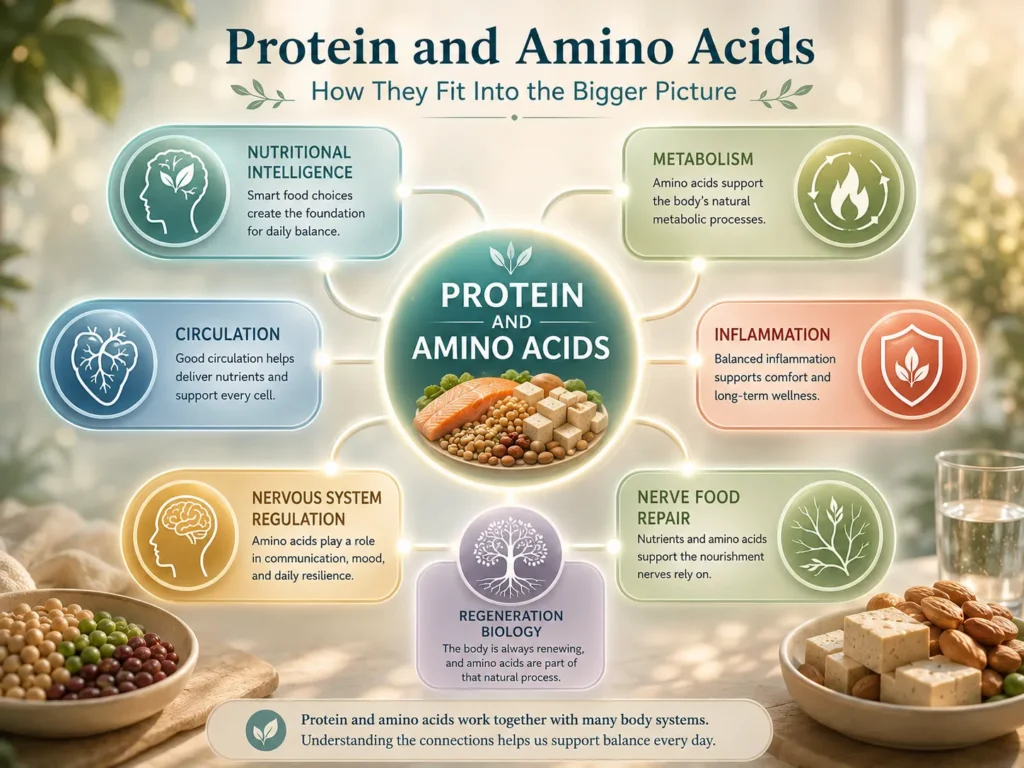
Practical Daily-Life Examples
Skipping Meals and Low Energy
A person may skip meals during a busy day and later feel tired, tense, or less resilient. From an educational view, this may reduce steady nutrient and energy availability. However, it does not prove a protein problem or a nerve problem. Many other factors may be involved, including sleep, stress, hydration, and medical conditions.
This example shows why Protein and Amino Acids should be discussed with overall food rhythm. The body needs building materials, but it also needs energy, rest, hydration, and stable routines. Therefore, meal timing, appetite, stress, and sleep can all influence the wider nutrition picture. A helpful page should explain these patterns without giving strict rules.
Narrow Food Variety
Another person may eat the same limited foods every day. As a result, their protein and amino acid pattern may be less diverse. A wider food pattern may help explain nutritional variety, but personal tolerance, culture, budget, and medical restrictions still matter. Therefore, the page should avoid rigid diet rules.
This example connects Protein and Amino Acids with broader nutritional intelligence. It also shows why plant and animal protein discussions should be calm, practical, and non-judgmental. Instead of saying one pattern is always best, the safer message is that variety, adequacy, digestion, and medical context all matter.
High Stress and Poor Appetite
Stress may affect appetite, digestion, and food choices. Over time, this may influence overall nutrition. Therefore, Protein and Amino Acids should connect with stress load, autonomic response, sleep rhythm, and recovery capacity. These connections help readers understand the system without blaming one factor.
This does not mean stress or protein explains every symptom. Instead, it shows how body systems can interact in daily life. Poor sleep may affect appetite, while stress may affect digestion. As a result, nutrition education becomes more useful when it includes nervous system regulation and daily body load.
Plant-Based Eating
A plant-based food pattern can provide protein, but variety matters. Beans, lentils, soy foods, nuts, seeds, grains, and other plant foods may contribute different amino acid patterns. Therefore, plant-based eating should not be dismissed as automatically weak. It can be part of a balanced nutrition pattern when planned well.
At the same time, highly restricted diets may need careful planning. People with medical conditions, digestive concerns, pregnancy, older age, or persistent symptoms should seek professional nutrition guidance. This keeps the message safe and practical while still supporting reader understanding. It also avoids one-size-fits-all advice.
Recovery After Body Load
After illness, injury, poor sleep, long stress, or physical strain, the body may have higher maintenance demand. Protein can be one part of that wider environment. Still, symptoms after injury or illness should not be managed through nutrition education alone. Medical context matters, especially when symptoms are severe or changing.
This example connects Protein and Amino Acids with recovery capacity. It also helps readers understand why nerve food repair is a system topic, not a quick solution. Therefore, this page should link naturally to Nerve Food Repair, Cellular Repair, Axonal Regrowth, and Regeneration Biology.
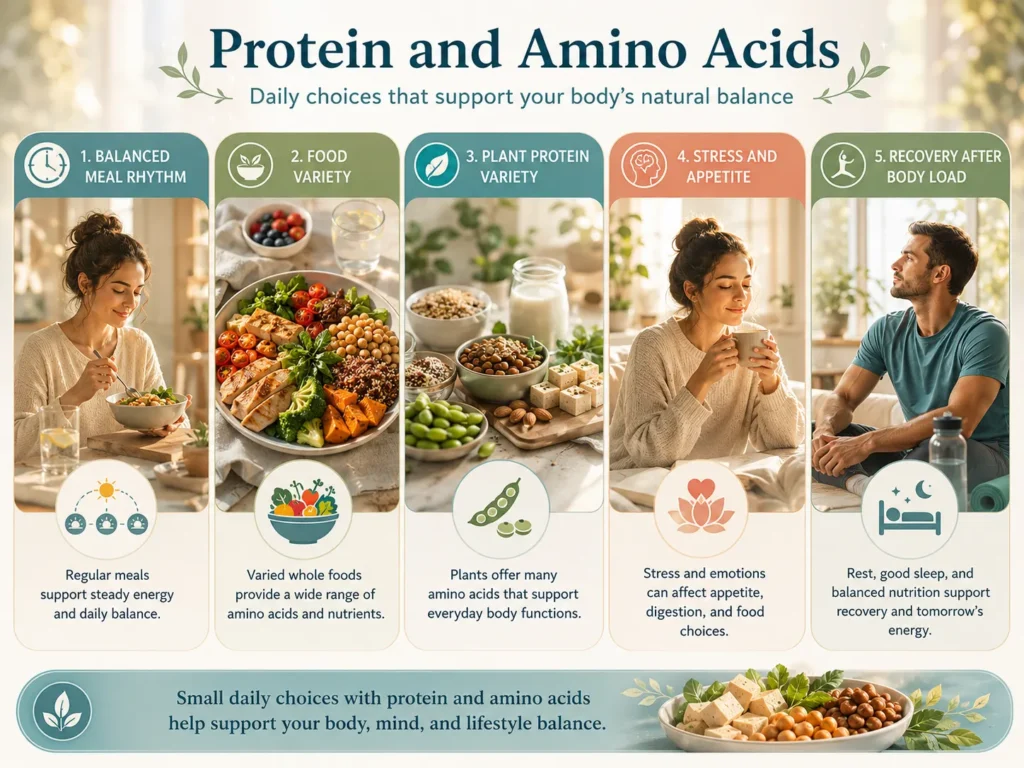
Protein and Amino Acids Visual Flow
Protein and Amino Acids Visual Flow
Daily Food Pattern
↓
Protein Intake
↓
Digestion and Amino Acid Availability
↓
Tissue Maintenance, Enzyme Activity, Immune Function, and Energy Use
↓
Interaction With Metabolism, Circulation, Sleep, Stress, and Inflammation
↓
Nervous System Regulation and Body-Wide Recovery Capacity
↓
Nerve-Health Education Context
This visual flow shows how Protein and Amino Acids may fit into a wider nutrition and nerve-health education system. First, daily food patterns influence protein intake. Next, digestion breaks protein into amino acids. After that, the body may use these amino acids for tissue maintenance, enzyme activity, immune function, and energy-related processes.
However, this flow is educational, not diagnostic. It does not mean protein directly changes nerve symptoms or creates neurological healing. Instead, it helps readers understand how nutrition may connect with metabolism, circulation, sleep, stress response, inflammation, and nervous system regulation. Therefore, readers should view this as a learning model, not a treatment plan.
In addition, the flow is not always linear. Poor sleep may affect appetite. Stress may affect digestion. Inflammation may influence nutrient use. Meanwhile, metabolic health may affect how the body uses amino acids. Because of this, Protein and Amino Acids should be understood as part of a connected network, not as a single cause, cure, or guaranteed recovery solution.
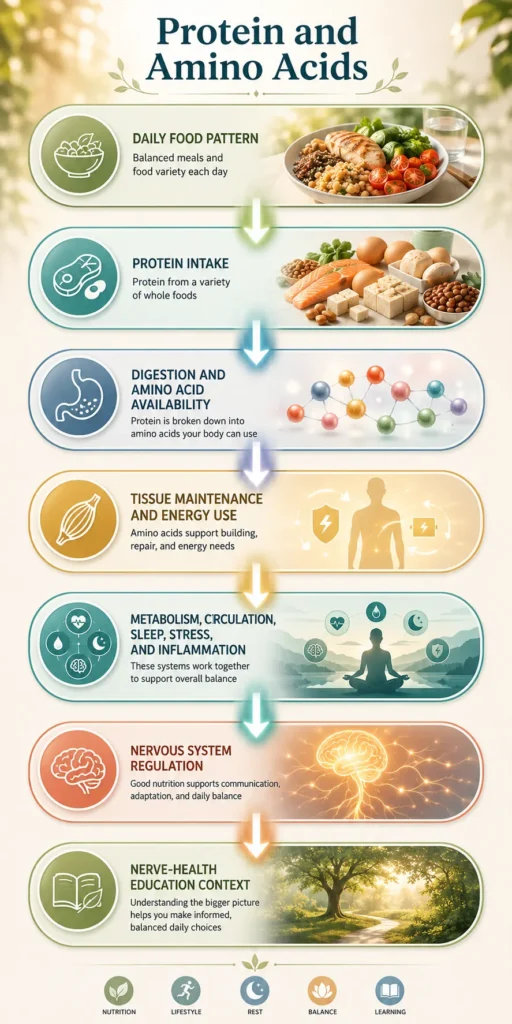
Why Protein and Amino Acids Matter for Recovery
Recovery Requires Building Materials
The body needs materials for tissue maintenance. Amino acids are part of those materials. They help form proteins used throughout the body. Therefore, Protein and Amino Acids may matter when explaining recovery capacity in a nutritional intelligence framework. However, this does not mean more protein automatically improves recovery.
The body needs the right context, including digestion, energy, circulation, micronutrients, rest, and medical safety. As a result, protein should be discussed as one part of a wider recovery-supportive environment. It should not be presented as a stand-alone solution for nerve symptoms or neurological healing.
Recovery Requires Energy and Coordination
The body must coordinate energy use, repair signals, immune activity, stress response, and daily function. If energy availability is low, amino acids may not be used in the same way. Therefore, protein should be explained beside overall nutrition and metabolic stability.
This is why a balanced system view is safer than a single-nutrient message. It also helps readers understand why nerve food repair should include more than one food group or one nutrient. In addition, it supports internal links to Micronutrients and Nerve Function, Metabolic Support Through Diet Patterns, and Nerve Food Repair.
Recovery Requires Delivery and Clearance
Nutrients must reach tissues through circulation. At the same time, the body must manage waste products and metabolic byproducts. Because of this, Protein and Amino Acids connects with circulation, oxygen delivery, hydration, and cellular repair. These systems work together in the body.
This does not create a treatment claim. It simply explains that body systems are connected. Delivery, clearance, and energy use are part of the wider recovery environment. Therefore, this page should link to Oxygen Delivery and Nerve Function, Microcirculation and Nerve Sensitivity, and Vascular Regeneration where relevant.
Recovery Requires Nervous System Stability
Nerve-health education often includes sensitivity, signal processing, pain perception, autonomic response, and stress load. A stable nervous system may depend on sleep, energy, stress regulation, blood flow, and body-wide support. Therefore, Protein and Amino Acids may be one small part of that larger environment.
However, severe, persistent, or changing symptoms should not be managed through nutrition education alone. A person may need medical testing, neurological evaluation, blood work, imaging, or other professional guidance. For this reason, this page must include strong safety language and careful symptom wording.
Recovery May Be Influenced by Repeated System Stress
Long-term stress, poor sleep, low movement, high inflammation, digestive problems, and metabolic strain may increase recovery demand. In that context, nutrition can become more important as part of whole-body education. However, nutrition should not be turned into a guaranteed recovery plan.
Readers should avoid using this page as a protocol. It is an educational guide, not a personal nutrition prescription, supplement plan, or neurological healing program. Therefore, the safest message is that Protein and Amino Acids may help readers understand one layer of recovery capacity while professional care remains important.
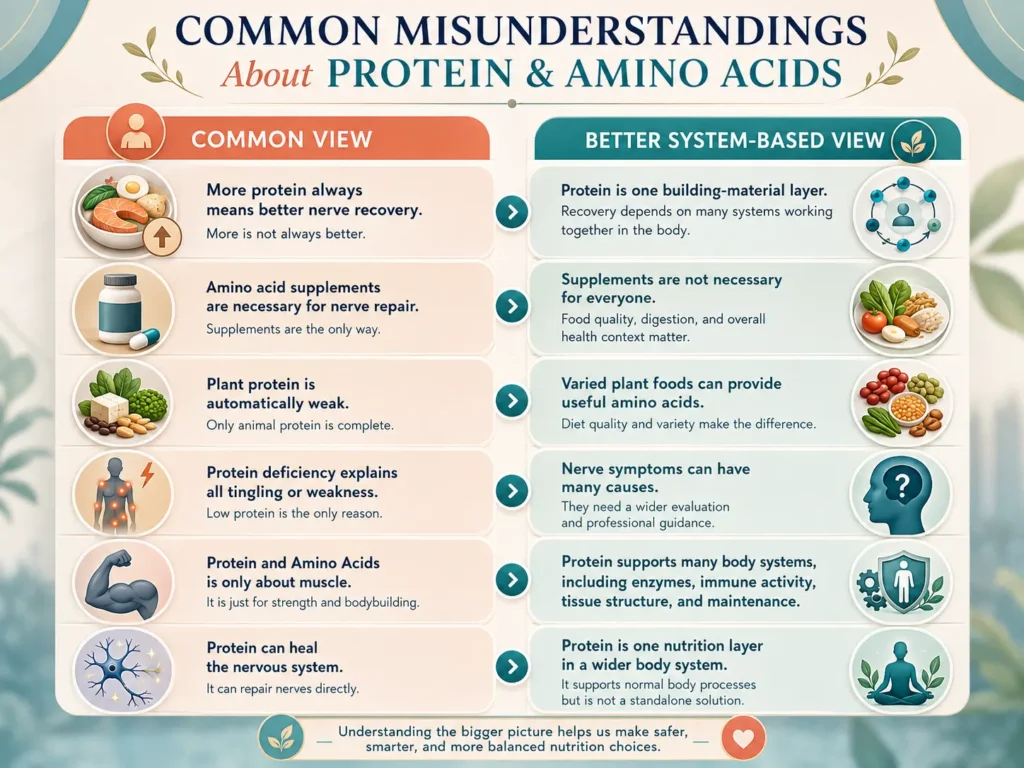
Common Misunderstandings About Protein and Amino Acids
Protein and Amino Acids can be helpful to understand, but this topic is often misunderstood. Many readers search for protein, amino acids, nerve food repair, or neurological healing because they want simple answers. However, nerve health is not controlled by one nutrient alone. Instead, protein works inside a wider system that includes digestion, energy, blood flow, sleep, stress response, inflammation, and nervous system regulation.
The table below explains common views in a safer and more system-based way.
| Common View | Better System-Based View |
|---|---|
| More protein always means better nerve recovery. | Protein may provide useful building materials. However, recovery also depends on sleep, blood flow, energy, inflammation, stress load, and medical context. |
| Amino acid supplements are necessary for nerve repair. | Supplements are not necessary for everyone. In addition, they should not be promoted as a treatment, cure, or guaranteed nerve-repair solution. |
| Plant protein is automatically weak. | Varied plant foods can provide useful amino acids. For example, beans, lentils, soy foods, nuts, seeds, and grains may all contribute to protein intake. |
| Protein deficiency explains all tingling or weakness. | Tingling, numbness, burning, and weakness can have many causes. Therefore, symptoms should not be explained by protein alone. |
| Protein and Amino Acids is only about muscle. | Protein also relates to enzymes, immune activity, tissue structure, transport proteins, and general body maintenance. |
| Protein can heal the nervous system. | A safer view is that protein may be one nutrition layer inside a wider body system. However, it should not be described as neurological healing. |
Protein Directly Repairs Nerves
Protein provides building materials for the body. However, nerve repair is much more complex than one nutrient. It may involve cells, blood flow, immune signals, myelin biology, axonal processes, sleep, metabolic stability, and medical context. Therefore, Protein and Amino Acids should not be described as a direct nerve-repair solution.
A better explanation is that protein may help readers understand one part of the body’s maintenance system. For example, amino acids may support normal tissue structure, enzyme function, and immune activity. Still, nerve symptoms need careful understanding because many different body systems may be involved.
Animal Protein Is the Only Useful Protein
Animal foods often contain all essential amino acids. However, that does not mean plant protein is weak or useless. Many plant foods can contribute helpful protein and amino acids. For example, lentils, beans, soy foods, nuts, seeds, and grains may support protein intake when the diet includes enough variety.
At the same time, personal needs can differ. Some people may prefer plant-based foods, while others may include animal foods. In both cases, the safer message is variety, adequacy, digestion, and medical context. Therefore, this page should not create fear around one food pattern.
Protein Explains Every Symptom
Some readers may connect protein with tingling, numbness, burning feelings, weakness, or nerve pain. However, these symptoms can have many causes. They may relate to diabetes, vitamin imbalance, nerve compression, injury, autoimmune activity, inflammation, circulation changes, medication effects, or other medical conditions.
Because of this, Protein and Amino Acids should not be used for self-diagnosis. Instead, the topic can help readers understand one nutrition-related background layer. If symptoms are sudden, severe, spreading, or worsening, professional medical care is important.
Nutrition Alone Controls Recovery
Nutrition matters, but it does not work alone. Recovery capacity also depends on sleep, circulation, stress load, inflammation, movement, metabolic stability, and medical care when needed. Therefore, Protein and Amino Acids should be placed inside a wider recovery education system.
This system-based view is more helpful for readers. It shows that nutrition can be meaningful without becoming a cure claim. As a result, readers can learn safely, avoid overthinking one nutrient, and continue into related pages such as Nerve Food Repair, Micronutrients and Nerve Function, and Regeneration Biology.
[Image Placement: Common Misunderstandings Infographic — Place after this section]
Protein Directly Repairs Nerves
Protein provides building blocks for the body. However, nerve repair is complex. It may involve cells, blood flow, immune signals, myelin biology, axonal processes, sleep, metabolic stability, and medical context. Therefore, protein should not be described as a direct nerve-repair solution.
Amino Acid Supplements Are Always Better
Amino acid supplements are often marketed strongly. However, this page does not recommend supplements, dosages, or protocols. People with medical conditions, medications, pregnancy, kidney disease, liver disease, or complex symptoms should seek professional guidance before using supplements.
Animal Protein Is the Only Useful Protein
Animal foods often contain complete proteins. However, plant foods can also contribute important protein and amino acids. A varied pattern may include legumes, soy foods, grains, nuts, seeds, and other sources. Personal preference, culture, medical needs, and tolerance all matter.
Protein Explains Every Symptom
Nerve pain, tingling, burning, numbness, and weakness can come from many different causes. Nutritional imbalance is only one possible layer. Therefore, Protein and Amino Acids should help readers understand questions to ask, not create a self-diagnosis.
Nutrition Alone Controls Recovery
Nutrition matters, but recovery capacity also involves sleep, circulation, stress load, inflammation, movement, medical care, and time. A strong educational page should explain this network clearly. As a result, readers get a safer and more complete view.
Related Condition Connections
Protein and Amino Acids may help readers understand one nutrition-related layer connected with body maintenance. However, this topic should not be used to explain, diagnose, or treat a condition by itself. Instead, condition links should help readers move from general nutrition education into safer and more specific learning paths.
Peripheral Neuropathy can involve many causes. A nutrition page may help readers understand one background layer, but symptoms need proper evaluation when they are persistent, severe, or worsening. Diabetic Neuropathy also needs careful medical management because blood sugar, metabolism, circulation, and nerve health can interact. Therefore, protein education should not replace diabetes care.
Post-Injury Nerve Damage may involve higher repair demand after injury. Still, injury-related nerve symptoms require medical assessment when they are severe, persistent, spreading, or linked with weakness. Nerve Compression is another example. Protein does not remove compression, although nutrition may be part of general body maintenance. Similarly, Sciatic Nerve Pain and Chronic Nerve Pain may involve mechanical, inflammatory, neurological, or medical factors.
Topic Cluster Placement
Protein and Amino Acids belongs inside the Nutritional Intelligence cluster because it explains how protein, amino acids, food quality, nutrient availability, and body maintenance may connect with nerve-health education. This page should work as a supporting nutrition page, not as a treatment page or supplement guide.
The main parent page should be Nutritional Intelligence. From there, readers can continue into related nutrition pages such as Nerve Food Repair, How Nutrition Supports Nerve Repair, Micronutrients and Nerve Function, Metabolic Support Through Diet Patterns, and Gut Axis. Together, these pages create a stronger nutrition learning path.
This page should also connect with neurobiology and regeneration pages. For example, Autonomic Regulation can help readers understand nervous system regulation and autonomic response. Neural Signaling can explain nerve communication. In addition, Axonal Regrowth and Regeneration Biology are better pages for readers who want to learn about axonal regeneration, axonal regeneration definition, axon regeneration steps, and which system is capable of axonal regeneration.
For condition-based learning, this page can safely connect with Peripheral Neuropathy. However, the link should not suggest that protein or amino acids diagnose, treat, or cure neuropathy. Instead, it should help readers understand one nutrition-related background layer. If a short glossary page exists later, Nerve Repair can also be used as a simple definition bridge.
Suggested Body Link Placements:
Link Nutritional Intelligence in the introduction or Continue Learning section. Link Nerve Food Repair in the hero section or recovery section. Link Micronutrients and Nerve Function in the metabolic layer. Link Metabolic Support Through Diet Patterns in the energy section. Link Autonomic Regulation in the nervous system regulation section. Link Axonal Regrowth in the axonal regeneration discussion. Link Peripheral Neuropathy in the symptom bridge or related condition section.
Protein and Amino Acids FAQ
Is Protein and Amino Acids a treatment for nerve symptoms?
No. Protein and Amino Acids is an educational nutrition topic. It does not diagnose, treat, cure, or prevent nerve symptoms. It may help readers understand one nutrition-related layer of body maintenance and recovery capacity.
Does Protein and Amino Acids connect with nerve food repair?
Yes, Protein and Amino Acids can connect with nerve food repair education because amino acids are part of the body’s building-material system. However, protein should not be described as a direct nerve-repair treatment or cure.
Does protein help with nervous system regulation?
Protein may be one nutritional layer that supports general body maintenance. However, nervous system regulation also depends on sleep, stress response, blood flow, metabolism, inflammation, and medical context.
What is the connection between Protein and Amino Acids and autonomic response?
The autonomic response is part of how the body manages stress, rest, circulation, digestion, and internal stability. Protein does not control the autonomic system by itself, but nutrition may be one background layer in overall body regulation.
Can low protein cause tingling or numbness?
Tingling or numbness can have many causes. Nutrition may be one possible factor in some situations, but symptoms can also involve diabetes, nerve compression, vitamin imbalance, injury, autoimmune activity, medication effects, or other conditions. Persistent or worsening symptoms need professional evaluation.
Is Protein and Amino Acids related to axonal regeneration?
Protein may provide general building blocks, but axonal regeneration is a complex biological process. Readers who search for axonal regeneration definition, axon regeneration steps, or which system is capable of axonal regeneration should also read pages about Axonal Regrowth and Regeneration Biology.
Which system is capable of axonal regeneration?
Axonal regeneration is mainly discussed within the nervous system and regeneration biology context. Peripheral nerves may have more regenerative potential than central nervous system pathways, but the process is complex and depends on many biological and medical factors. This page only explains the nutrition layer.
What are axon regeneration steps?
Axon regeneration steps may involve injury response, cellular cleanup, growth signaling, axon sprouting, guidance, reconnection, and functional adaptation. However, this is a complex neurobiology topic. Protein and Amino Acids may provide general building materials, but it does not explain or control the whole process.
Can Protein and Amino Acids help with neurological healing?
This page does not promise neurological healing. A safer explanation is that protein and amino acids may be part of a wider educational picture involving nutrition, tissue maintenance, recovery capacity, and nervous system education.
Do I need amino acid supplements for nerve repair?
This page does not recommend amino acid supplements. Supplements can be inappropriate for some people and may interact with medical conditions or medications. A qualified professional should guide supplement decisions.
Is plant protein enough?
Plant-based eating can provide protein when it includes enough variety and total intake. Beans, lentils, soy, grains, nuts, and seeds can all contribute. Individual needs vary, so people with medical conditions or restricted diets should seek personalized guidance.
When should nerve symptoms be checked urgently?
Seek urgent care for sudden weakness, loss of bladder or bowel control, chest pain, difficulty breathing, severe numbness, severe pain, symptoms after injury, or rapidly changing neurological symptoms.
Continue Learning
Continue with Nutritional Intelligence to explore how food patterns, nutrient availability, and body systems connect in nerve-health education. This page helps readers understand Protein and Amino Acids as one part of a wider nutrition learning system.
Next, read Nerve Food Repair to learn how nutrition may fit into the wider recovery-capacity framework without treatment claims. This is a strong related page because Protein and Amino Acids may connect with body maintenance and nerve food repair education.
For deeper nutrient learning, explore Micronutrients and Nerve Function. This page explains how vitamins and minerals may relate to nerve-health education. In addition, Metabolic Support Through Diet Patterns can help readers understand how energy stability and food patterns may connect with body-wide demand.
Readers who want to understand nervous system regulation can continue with Autonomic Regulation. This page explains how the autonomic response may relate to stress, rest, internal stability, and body regulation.
For regeneration-focused learning, continue with Axonal Regrowth and Regeneration Biology. These pages are better places to explore axonal regeneration, axonal regeneration definition, axon regeneration steps, and which system is capable of axonal regeneration.
Finally, follow the Learning Path for a structured education journey through nerve symptoms, root causes, recovery concepts, and long-term nerve-health learning.
[Image Placement: Related Systems Image — Place before Sources / References]
Sources / References
This page uses trusted educational sources to explain Protein and Amino Acids in a safe and simple way. These references help readers understand basic protein nutrition, amino acids, essential amino acids, and general nerve-health education. However, they do not turn this page into medical advice, diagnosis, or treatment guidance.
For basic protein education, MedlinePlus dietary protein guide explains how dietary proteins help the body maintain tissues and normal body functions. In addition, MedlinePlus protein in diet explanation explains how protein from food breaks down into amino acids during digestion. This helps readers understand why Protein and Amino Acids belong inside the Nutritional Intelligence section.
Also, MedlinePlus amino acids overview gives a simple explanation of amino acids, including why some amino acids are called essential. Therefore, this source is useful for readers who want a plain-language introduction before learning about deeper nutrition and nerve-health connections.
For a more detailed science background, NCBI Bookshelf essential amino acids chapter explains essential amino acids and how they fit into human biochemistry. In addition, NCBI Bookshelf protein and amino acids chapter gives broader information about protein and amino acids. These sources help support the educational explanation without making supplement, cure, or treatment claims.
For nerve-health safety context, NINDS peripheral neuropathy overview explains peripheral neuropathy and why nerve symptoms can have many causes. In addition, NCBI / PMC review on vitamin deficiency, toxins, medications, and peripheral neuropathy explains how vitamin deficiency, toxins, and medications may relate to peripheral neuropathy. As a result, this page keeps the language careful and reminds readers not to self-diagnose nerve symptoms from nutrition information alone.
Author / Editorial Trust Note
This article was created for Heal Your Nerves Naturally as an educational resource. It was written with safety-focused wording, non-diagnostic language, and source-based nutrition education. It does not provide a diet plan, supplement protocol, treatment instruction, dosage recommendation, or medical advice.
For more context, readers can visit the About page, Health Disclaimer, and Contact page.
Educational Trust Note
This page helps readers understand Protein and Amino Acids as part of Nutritional Intelligence and nerve-health education. It explains how protein, amino acids, food patterns, digestion, and body maintenance may connect with recovery capacity and nervous system regulation. However, this page does not diagnose symptoms, replace professional care, or give personal nutrition advice.
In addition, this page does not claim that protein, amino acids, foods, or supplements can cure nerve problems, repair nerves directly, or create guaranteed neurological healing. Instead, it uses safe educational language so readers can understand one nutrition-related layer without overthinking one nutrient.
Nutrition needs can vary from person to person. For example, age, health status, medical conditions, medication use, kidney function, liver function, digestion, activity level, appetite, and personal food pattern may all change what a person needs. Therefore, readers should seek qualified guidance before making personal diet, supplement, or health decisions.
Safety & Education Notice
This page is for educational purposes only. It does not diagnose, treat, cure, or prevent disease. Also, it is not a substitute for professional medical advice, diagnosis, or treatment. The information is designed to support learning, not to replace care from a qualified healthcare professional.
Seek urgent medical care for severe, sudden, unusual, or worsening symptoms. These may include sudden weakness, loss of bladder or bowel control, chest pain, difficulty breathing, severe numbness, severe pain, symptoms after injury, or rapidly changing neurological symptoms. In these situations, quick medical attention is important.
Because this topic may involve nutrition, supplements, medical conditions, digestion, metabolism, kidney function, liver function, and nerve symptoms, readers should not use this page to self-diagnose. In addition, they should not stop medication, begin supplements, follow restrictive diets, or delay professional care based on this information alone.