
Recovery Engineering
Understanding Systems That Support Nerve Function and Recovery
Recovery engineering is the process of designing structured support systems that help recovery happen over time. Instead of a single event, recovery engineering focuses on routines, environments, and systems that support long-term nerve function and stability.
Recovery engineering helps explain how routines, environments, and daily habits may influence recovery processes and long-term nerve function stability.
Rather than focusing on one solution, recovery engineering looks at the full system — including rest cycles, movement patterns, stress regulation, and learning pathways.
This page introduces recovery engineering as a system-based approach to understanding long-term recovery support.
Overall, recovery engineering connects daily habits, recovery cycles, and support systems into one structured recovery framework.
On this page, you will learn how recovery systems work, how they interact, and how structured routines may support long-term recovery.
EXPLORE THIS PAGE (ANCHOR NAV)
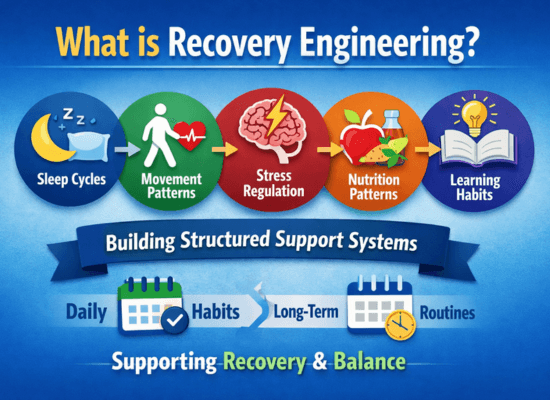
The recovery engineering approach focuses on building structured recovery systems that support long-term nerve function, stability, and adaptation. This recovery engineering framework connects sleep, movement, stress regulation, nutrition, and learning systems into one structured recovery model.
What Is Recovery Engineering
Recovery engineering refers to the process of designing routines, environments, and systems that support recovery over time.
In general, recovery is influenced by many factors rather than a single action. Therefore, recovery engineering focuses on building structured support systems that may help the body maintain balance and support recovery processes.
For example, sleep cycles, movement patterns, stress regulation, nutrition patterns, and learning processes may all influence recovery.
Therefore, understanding recovery engineering helps explain how daily habits and long-term routines may influence nerve recovery and overall system stability.
HOW RECOVERY ENGINEERING SUPPORTS RECOVERY
Recovery often depends on consistency rather than intensity.
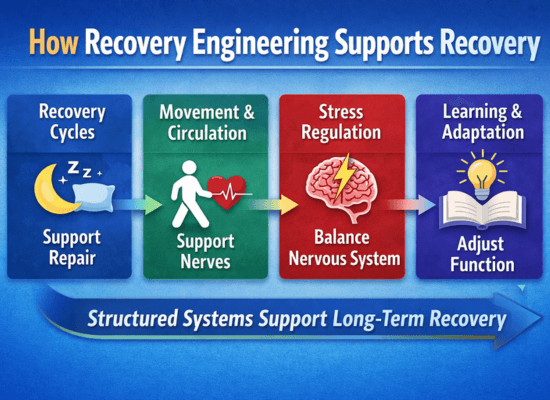
First, recovery cycles help support repair processes.
Next, movement and circulation may support tissue and nerve function.
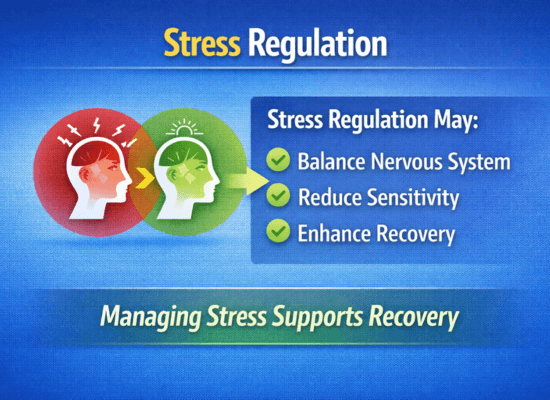
In addition, stress regulation may influence nervous system balance.
Finally, learning and adaptation processes may help the nervous system adjust over time.
As a result, when recovery systems are structured and consistent, long-term recovery processes may be better supported.
Core Recovery Systems in Recovery Engineering
The following core systems are often involved in recovery engineering and long-term recovery support.
Together, these systems help explain how daily habits, recovery cycles, movement, and adaptation processes support long-term recovery.
Sleep and Recovery Cycles in Recovery Engineering
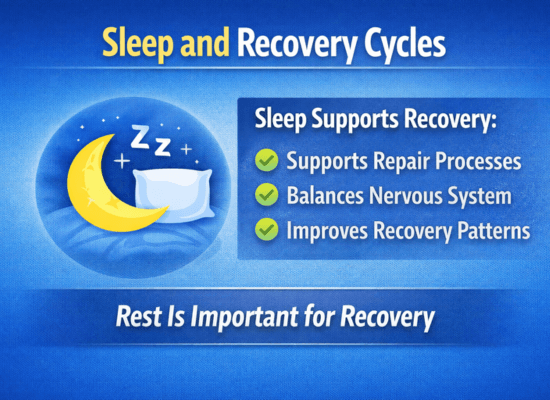
The body performs many repair and recovery processes during rest periods. In general, recovery is closely connected to sleep and rest cycles. For example, sleep cycles may influence repair processes, nervous system balance, and overall recovery patterns. Furthermore, regular sleep routines may help support long-term recovery stability. As a result, structured sleep patterns may support overall recovery systems. Therefore, sleep and recovery cycles are one of the most important parts of recovery engineering.
Movement and Circulation in Recovery Engineering
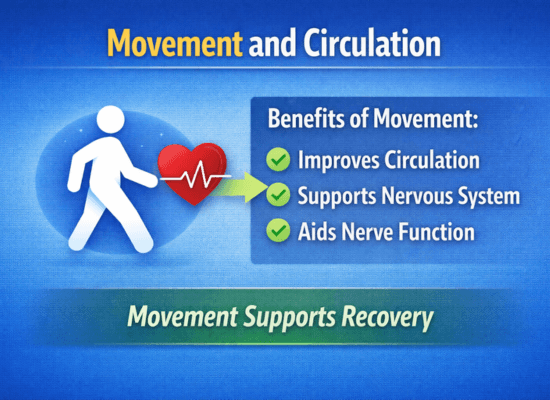
Movement and circulation play an important role in supporting recovery processes. In general, physical activity may help maintain blood flow and system function. For example, movement may support circulation, which helps deliver oxygen and nutrients to tissues. In addition, regular movement may help support nerve function and overall system balance. As a result, recovery processes may be supported more effectively over time. Therefore, movement and circulation are important components of recovery engineering.
Stress Regulation in Recovery Engineering
Nutrition Patterns
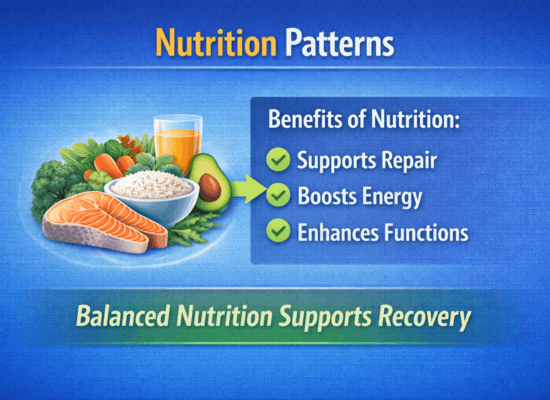
Nutrition provides the building blocks that support cellular repair and energy systems. In general, balanced nutrition may influence how the body maintains and repairs itself. For example, nutrition patterns may support cellular repair processes and overall system function. In addition, consistent nutrition habits may help maintain energy balance and support recovery. As a result, recovery systems may function more effectively over time. Therefore, nutrition patterns are an important part of recovery engineering.
Learning and Adaptation
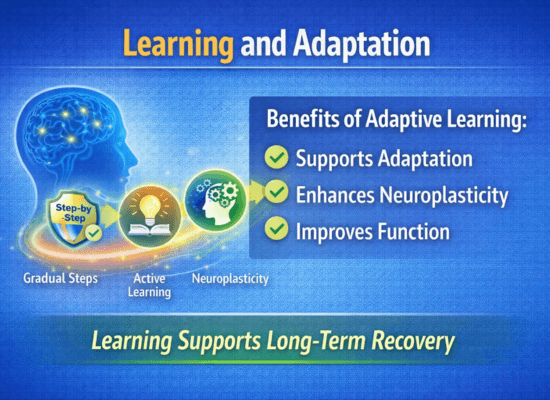
The nervous system can adapt and change over time. In general, adaptation happens gradually through repeated experiences and internal responses. For example, learning processes and gradual exposure may influence neuroplastic adaptation. In addition, these adaptive changes may help support recovery and function. As a result, the nervous system may become more responsive and flexible over time. Therefore, learning and adaptation are important parts of long-term recovery engineering.
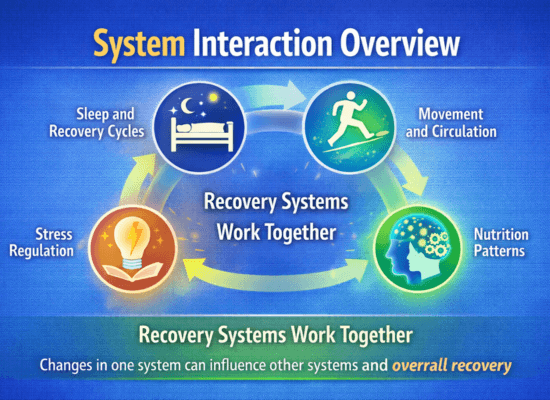
Recovery Engineering System Interaction Overview
Recovery systems do not work in isolation.
Instead, they form a connected system:
Sleep and Recovery Cycles
↓
Movement and Circulation
↓
Stress Regulation
↓
Nutrition Patterns
↓
Learning and Adaptation
As a result, changes in one system may influence others. Therefore, understanding this interaction helps explain how overall recovery may change over time.
Because of this interaction, recovery engineering often focuses on building multiple support systems rather than focusing on only one area.
Therefore, recovery is best understood as a system-level process rather than a single action.
Explore the Systems
Now that we have discussed how recovery systems work together, you can explore specific recovery engineering components in more detail. Each section below explains one part of how structured recovery systems are designed and organized over time. You can start with any system depending on what you want to learn first.
Below are the major regeneration-related systems you can explore in more detail.
Each system explains one part of how nerve repair, adaptation, and recovery may work over time.
You can start with any system below, depending on what you want to learn first.
Protocol Design
Protocol design helps organize recovery into structured routines. Instead of random actions, it focuses on timing, sequence, and consistency. As a result, recovery systems can work together more effectively over time. Therefore, protocol design helps create a more structured and consistent recovery approach.
Healing Sequencing
Healing sequencing focuses on the order in which recovery processes occur. Instead of doing everything at once, it organizes recovery into step-by-step phases. As a result, each stage can support the next more effectively. Therefore, healing sequencing helps create a more structured and balanced recovery process over time.

Load Management
Load management focuses on balancing activity and recovery over time. Instead of doing too much at once, it helps control workload and stress on the body and nervous system. As a result, recovery systems may function more effectively. Therefore, load management helps create a more balanced and sustainable recovery process.

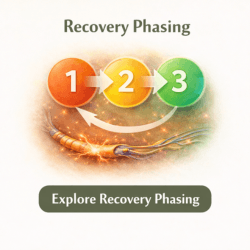
Recovery Phasing
Recovery phasing focuses on dividing recovery into different stages over time. Instead of expecting recovery to happen all at once, it organizes recovery into structured phases. First, early recovery focuses on stabilization. Then, later phases focus on adaptation and improvement. As a result, recovery becomes more structured and manageable over time.
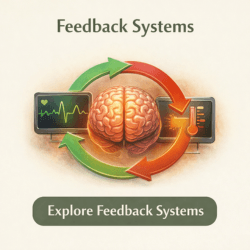
Feedback Systems
Feedback systems help monitor progress and responses over time. Instead of guessing what is working, feedback systems use observation and tracking. Then, adjustments can be made based on responses. As a result, recovery systems can become more personalized and effective over time.
Personalization
Personalization focuses on adapting recovery systems to individual needs. Instead of using a one-size-fits-all approach, it considers personal responses and conditions. Then, recovery strategies can be adjusted accordingly. As a result, recovery may become more effective and better suited over time.

Integration
Integration focuses on connecting different recovery systems into one structured approach. Instead of working on separate systems individually, integration helps them work together. As a result, recovery processes may become more balanced and coordinated over time. Therefore, integration helps create a more complete recovery system.
Stability
Stability focuses on maintaining balance within recovery systems over time. Instead of constant fluctuation, it supports consistent internal conditions. As a result, recovery processes may function more smoothly and reliably. Therefore, stability helps create a strong foundation for long-term recovery.

Adaptation Engineering
Adaptation engineering focuses on helping the body and nervous system adjust over time. Instead of forcing sudden changes, it supports gradual adaptation and progression. As a result, recovery systems may become more resilient and responsive. Therefore, adaptation engineering helps build long-term recovery capacity.
Automation
Automation focuses on turning recovery routines into consistent habits and systems. Instead of relying only on motivation, automation helps routines happen regularly and automatically. As a result, recovery activities may become more consistent and easier to maintain over time. Therefore, automation helps support long-term recovery through consistency and routine systems.
Continue Learning Recovery Engineering Systems
Recovery engineering connects root causes, regeneration systems, and therapeutic systems into one structured approach.
To continue learning, explore the systems below.
SAFETY NOTICE
This page is for educational purposes only.
In other words, it is designed to help you understand general concepts about nerve health.
However, it does not provide medical advice, diagnosis, or treatment.
Therefore, it should not be used as a substitute for professional medical care.