
Nutritional Therapy for Nerve Health and Recovery

If you searched for nutritional therapy, you may not be looking for another list of “healthy foods.”
You may be trying to answer a much more practical question:
Is nutrition actually part of my nerve problem—and if it is, what should I change first?
Maybe your feet tingle at night and you are wondering about vitamin B12. Maybe you have diabetes or prediabetes and want to know whether your eating pattern is making neuropathy worse. Maybe you already eat reasonably well but still have numbness. Maybe you take several supplements because each one claims to support “nerve repair,” and now you are no longer sure what is useful, what is duplicated, or what may be unsafe. Maybe you are vegan, have had stomach or bariatric surgery, take metformin or acid-suppressing medicine, struggle with appetite, or simply skip meals because life is busy.
Those situations are not the same.
That is why this page does not begin by telling you to buy a supplement, remove gluten, stop carbohydrates, drink a special juice, or eat a handful of “nerve-healing superfoods.”
Instead, we will work through a more useful sequence:
What problem are you actually trying to solve?
Could nutrition reasonably be part of it?
What can you safely improve at home first?
What should you observe before adding more changes?
When does the problem need testing, a dietitian, a doctor, or a different nerve-health pathway?
That is the practical purpose of nutritional therapy on Heal Your Nerves Naturally.
Quick Answer: What Is Nutritional Therapy?
Nutritional therapy is a structured way of using food, nutrition and lifestyle information to support health goals in a more individualized way than generic “eat healthy” advice.
In practice, that often means looking at:
- what and how much you actually eat;
- whether you are getting enough energy and protein;
- whether a vitamin or mineral deficiency is plausible;
- whether a nutrient excess could be a problem;
- whether your gut can absorb what you eat;
- whether diabetes, blood sugar, alcohol, medications or surgery change your nutritional needs;
- whether food is enough, or whether testing or professional care is needed;
- what changes are realistic in your home, culture, schedule and budget;
- and how you will know whether the plan is helping.
In the UK, the British Association for Nutrition and Lifestyle Medicine describes nutritional therapy as the application of nutrition and lifestyle medicine sciences for individualized care. In clinical medicine, however, Medical Nutrition Therapy (MNT) is a more specific term. Cleveland Clinic describes MNT as nutrition-based treatment delivered by a registered dietitian as part of medical care.
Those terms should not be treated as interchangeable.
On HYN, Nutritional Therapy is an educational decision framework. It does not diagnose disease, prescribe treatment, replace a registered dietitian, or claim that food can repair every damaged nerve.
If your question is simply “What should I eat?”, go directly to practical foods and meals for nerve health.
If you want the biology first, read how nutrition supports nerve repair.
If your symptoms are unexplained, progressive, or affecting strength, balance or function, nutrition should not delay how nerve dysfunction is diagnosed.
Nutritional Therapy Starts With Recognition, Not Restriction
One of the easiest mistakes in health nutrition is to start removing foods before you understand the problem.
A person develops tingling and decides to stop sugar.
Another person reads that “inflammation causes neuropathy” and removes gluten, dairy, tomatoes, coffee and fruit.
Another person takes B12, B-complex, magnesium, alpha-lipoic acid and a “nerve support” formula at the same time.
Another person eats less because they are trying to lose weight quickly.
Another starts fasting because they saw a claim that fasting “regenerates nerves.”
These actions feel active. They create the feeling that something is being done.
But nutritional therapy should not begin with activity. It should begin with clarity.
The first question is:
What nutritional problem, if any, do I have evidence or a reasonable reason to suspect?
That question protects you from two opposite mistakes:
- Ignoring a real nutritional problem, such as B12 deficiency, thiamin deficiency, undernutrition, malabsorption or poor diabetes management.
- Blaming nutrition for a nerve problem that may be mechanical, autoimmune, toxic, inherited, medication-related, vascular or otherwise unrelated to diet.
The National Institute of Neurological Disorders and Stroke lists nutritional and vitamin imbalance among possible causes of peripheral neuropathy, but it also lists diabetes, vascular problems, autoimmune disease, alcohol, toxins and other causes. That is why nutrition should be cause-aware.
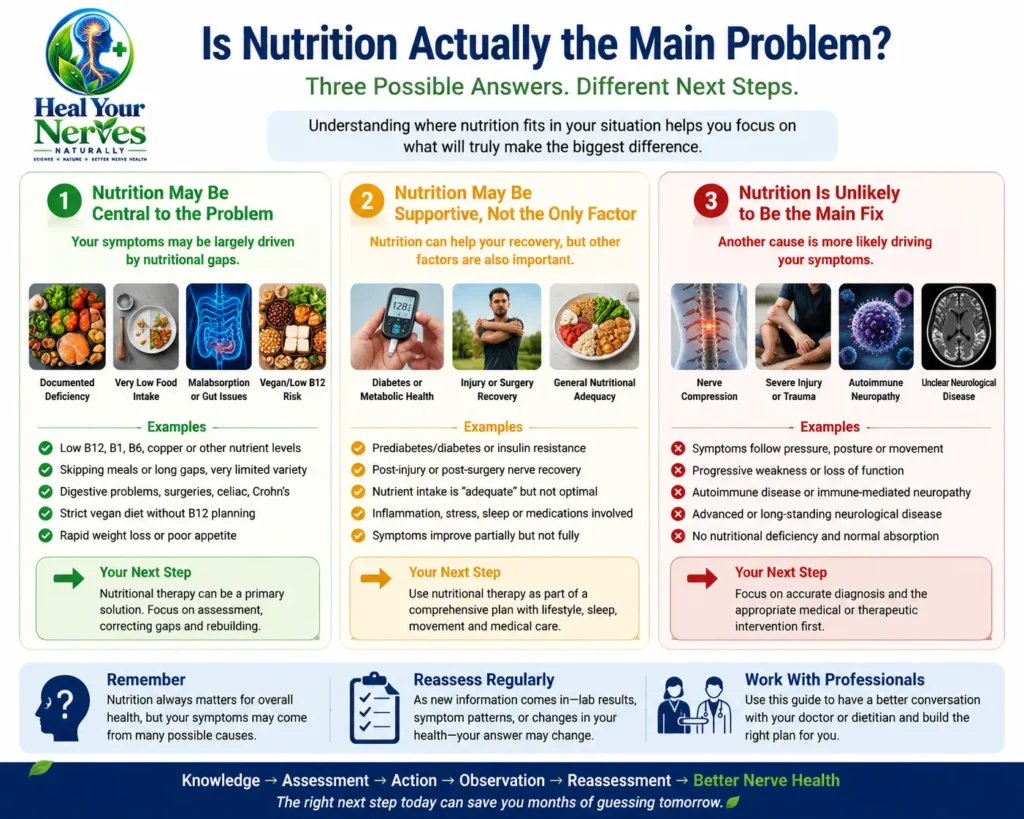
Which of These Sounds Most Like Your Life?
You may benefit from looking more closely at nutrition if:
- you regularly skip meals;
- your appetite has dropped;
- you have lost weight without intending to;
- most meals are based on tea, biscuits, bread, noodles or rice with little protein or variety;
- you follow a restrictive diet without reliable nutrient planning;
- you are vegan and do not have a reliable B12 strategy;
- you have a history of gastrointestinal or bariatric surgery;
- you have Crohn’s disease, celiac disease or another condition that may affect absorption;
- you have diabetes or prediabetes;
- you take metformin long term;
- you take proton-pump inhibitors or other acid-suppressing medicines;
- you drink heavily or depend on alcohol;
- you take several supplements with overlapping B vitamins;
- testing has already shown a nutrient deficiency;
- or a clinician has told you nutritional status may be contributing.
Nutrition may still matter when none of those apply—but it is less responsible to assume it is the explanation.
If you are unsure whether food is central or merely supportive, explore other possible causes of nerve damage.
What Can You Do Today Without Overhauling Your Life?
If you want an immediate step, do not start with a complicated protocol.
Look at your next meal.
Ask four simple questions:
- Is there a reliable protein source?
- Is there at least one plant food—vegetable, fruit, beans or lentils?
- Is the carbohydrate source appropriate for my health needs and eaten in a sensible amount?
- Am I drinking mostly water or unsweetened drinks rather than depending on sweet drinks or alcohol?
That is enough for today.
If breakfast is only tea and biscuits, you do not have to abandon tea. Add something that makes breakfast more complete: an egg, yogurt, milk, oats, lentils, beans, tofu, peanut butter, or another affordable protein-rich option that works in your home.
If your family eats rice every day, you do not need to declare rice “bad for nerves.” Look at the plate around it. Can you add dal, fish, eggs, chicken, tofu or beans? Can vegetables take up more space? If diabetes is part of the picture, can you discuss portions and glucose response rather than removing an entire cultural staple?
If you are exhausted and cooking feels impossible, nutritional therapy should become simpler, not more demanding.
A practical meal can be:
- yogurt + oats + fruit;
- boiled eggs + whole-grain toast + fruit;
- lentils + rice + vegetables;
- canned beans + frozen vegetables + a grain;
- fish + vegetables + potatoes or rice;
- tofu + vegetables + noodles;
- milk or fortified soy drink + oats + nuts/seeds.
The point is not to create a perfect diet.
The point is to create a repeatable baseline.
WHO’s 2026 healthy-diet framework emphasizes adequacy, balance, moderation and diversity—not a single “superfood” pattern.
For a deeper meal-by-meal implementation guide, continue to Nerve Food Repair.
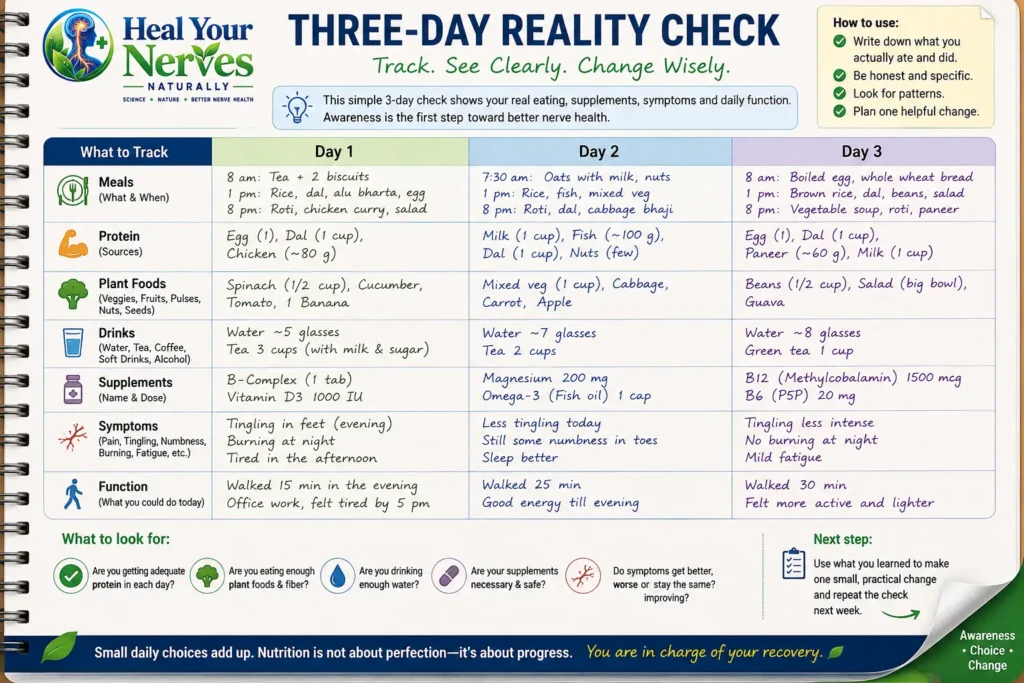
Start With a Three-Day Reality Check
Before changing everything, spend three ordinary days learning what your diet actually looks like.
Do not eat differently because you are writing it down.
Record:
| What to notice | What to write |
|---|---|
| Meals | breakfast, lunch, dinner, snacks |
| Missed meals | when and why |
| Protein | what source, if any |
| Plant foods | vegetables, fruit, legumes |
| Main carbohydrates | rice, bread, noodles, potatoes, oats, etc. |
| Drinks | water, tea, coffee, sweet drinks, alcohol |
| Supplements | product name and label dose |
| Symptoms | tingling, numbness, burning, pain, fatigue |
| Function | walking, balance, grip, sleep, work tolerance |
| Context | long sitting, exercise, poor sleep, stress, illness |
This is not a diagnostic test.
It is a way of replacing memory with information.
You may discover that your diet is more balanced than you thought.
You may discover that breakfast is almost always skipped.
You may notice that your largest meal happens late at night.
You may realize that three different products all contain vitamin B6.
You may discover that food intake falls dramatically on days when pain or fatigue is worse.
Or you may discover something equally important:
Your diet looks reasonably adequate, but the nerve symptoms are still progressing.
That is a sign to widen the question rather than making the diet more extreme.
What Are You Actually Trying to Fix?
“Nutritional therapy” becomes vague when the goal is simply “heal my nerves.”
A better plan gives nutrition a specific job.
There are five common jobs.
Job 1: Correct Inadequate Intake
You may simply not be eating enough energy, protein or variety.
This can happen with:
- poor appetite;
- depression or chronic stress;
- pain;
- fatigue;
- financial pressure;
- difficulty shopping or cooking;
- chewing or swallowing problems;
- restrictive dieting;
- intentional rapid weight loss;
- alcohol replacing food;
- recovery after surgery or illness;
- or living alone and losing interest in meals.
The first intervention may not be a micronutrient at all.
It may be eating enough.
Job 2: Correct a Real Nutrient Deficiency or Harmful Excess
This is where B12, thiamin and B6 deserve careful attention.
A nutrient can be essential and still become harmful in excess.
A deficiency can be important without being the cause of every neuropathy.
Job 3: Improve the Metabolic Environment
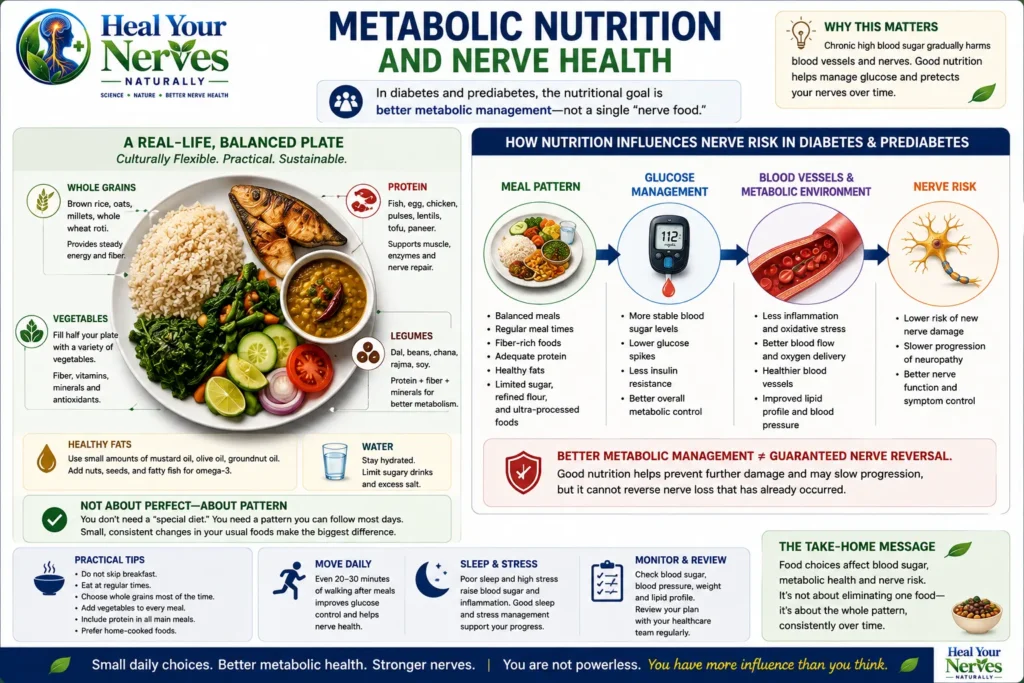
For someone with diabetes, the main nutritional goal may be better glucose, weight, blood pressure and lipid management—not finding a “nerve vitamin.”
Job 4: Work Around an Absorption Problem
Eating the nutrient and absorbing the nutrient are different steps.
If the problem is the stomach, intestine, intrinsic factor, prior surgery or medication-related absorption, adding more of the same food may not solve the issue.
Job 5: Support Recovery While Another Cause Is Treated
Nutrition can support the body during recovery from injury, surgery or chronic illness.
But support is different from treating the cause.
A compressed nerve still needs the pressure problem addressed.
An autoimmune neuropathy may require disease-specific treatment.
A severe peripheral nerve injury may need surgical or rehabilitation care.
That is why “What job is nutrition doing?” is one of the most important questions on this page.
Step 1: Are You Eating Enough Energy and Protein?
Many nutrition discussions jump directly to vitamins.
But the body cannot run a repair process on an inadequate overall intake.
How Can You Tell Your Intake May Be Too Low?
Possible clues include:
- unplanned weight loss;
- clothes becoming looser without trying;
- low appetite;
- weakness or reduced stamina;
- eating only once or twice a day;
- frequent meal skipping;
- meals becoming smaller because of pain, nausea or fatigue;
- relying mostly on beverages or biscuits;
- difficulty buying or preparing food;
- or a recent illness/surgery that changed intake.
None of these proves malnutrition, but they justify closer attention.
Clinical nutrition guidelines in neurology emphasize that neurological conditions can be associated with malnutrition, micronutrient deficiency and dehydration, and that nutritional status should be assessed rather than assumed.
Does More Protein Make Nerves Grow Faster?
No.
Protein provides amino acids that the body uses throughout normal tissue maintenance and recovery, but eating excessive protein does not force an injured nerve to regenerate.
The useful goal is adequacy and consistency, not “maximum protein.”
Practical sources include:
- eggs;
- fish;
- chicken;
- milk and yogurt;
- lentils;
- chickpeas;
- beans;
- tofu;
- soy foods;
- nuts and seeds;
- or other protein foods that fit your culture and medical needs.
If you want the deeper nutrition science, continue to protein and amino acids in nutrition.
What If I Have Kidney Disease?
Do not automatically follow a high-protein plan.
Kidney disease can change protein, potassium, phosphorus, sodium and fluid recommendations. This is one of the situations where individualized professional nutrition advice is more appropriate than a generic internet plan.
Try This This Week
Pick the main meal where protein is most often missing.
Fix that meal first.
Do not try to redesign the entire day.
Step 2: Could a Micronutrient Problem Be Affecting Your Nerves?
Nutrients matter because nerve cells and supporting tissues depend on normal metabolism.
But “nutrient required for nerve function” is not the same as “extra nutrient repairs neuropathy.”
That distinction protects you from both deficiency and overuse.
For a deeper nerve-specific overview, see micronutrients involved in nerve function.
Vitamin B12: When Nutrition Deserves Serious Attention
Vitamin B12 deficiency can cause neurological changes, including numbness and tingling.
NIH notes several routes to B12 deficiency:
- low intake;
- difficulty absorbing food-bound B12;
- lack of intrinsic factor;
- gastrointestinal surgery;
- prolonged use of some medications;
- and other malabsorption conditions.
This creates several very different real-life situations.
“I am vegan. Do I need to think about B12?”
Yes.
A vegan diet needs a reliable B12 strategy through fortified foods and/or appropriate supplementation.
Do not wait for neurological symptoms before thinking about it.
“I eat meat and eggs. Can I still have B12 deficiency?”
Yes.
Adequate dietary intake does not guarantee adequate absorption.
That is why B12 assessment should not stop at “Do you eat animal foods?”
“I take metformin. Does that matter?”
It can.
The ADA Standards of Care in Diabetes—2026 notes that long-term metformin use is associated with B12 deficiency and recommends periodic assessment in people at risk, especially when anemia or peripheral neuropathy is present.
“I take a proton-pump inhibitor.”
Long-term gastric-acid suppression can affect B12 absorption from food.
That does not mean everyone taking an acid-suppressing medicine becomes deficient. It means medication history belongs in the assessment.
“My B12 is low. Can I fix it just by eating more eggs?”
Sometimes dietary intake is the issue.
Sometimes it is not.
If absorption is impaired or deficiency is clinically significant, treatment may require a different approach. That is a healthcare decision, not something this page can prescribe.
For the broader deficiency pathway, read how nutritional deficiencies can affect nerves.
Vitamin B6: A Good Example of Why “More” Is Not Better
Vitamin B6 is essential.
But excessive supplemental B6 can itself cause sensory neuropathy.
NIH’s Office of Dietary Supplements notes that high supplemental intakes can cause severe, progressive sensory neuropathy. This is especially relevant because B6 often appears in multiple products:
- multivitamins;
- B-complex;
- magnesium products;
- energy formulas;
- “stress” supplements;
- and “nerve support” blends.
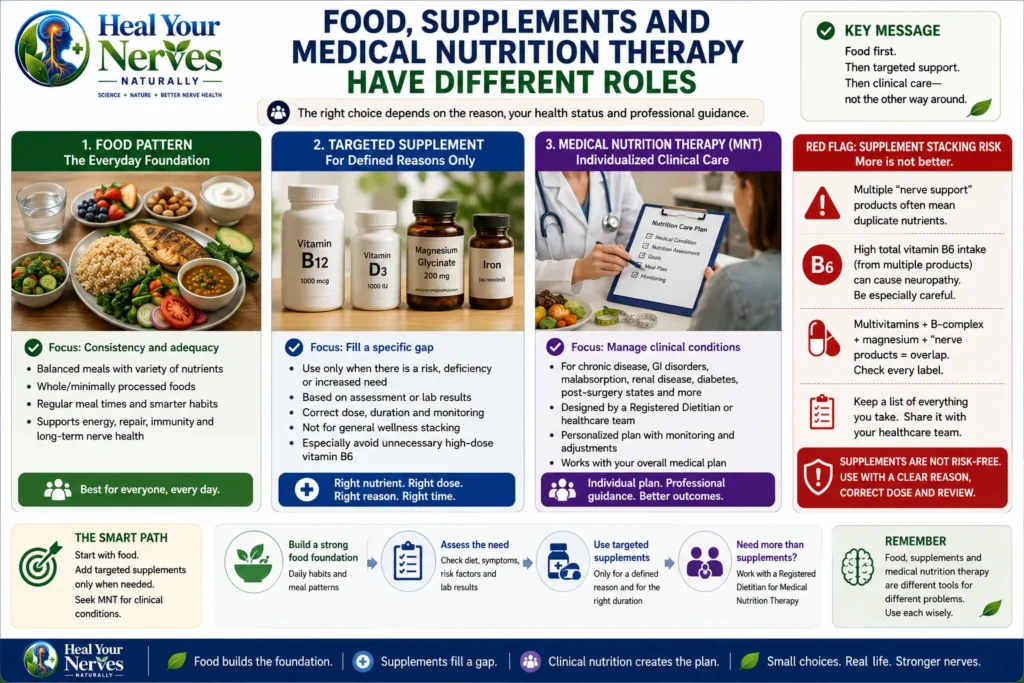
The real-life risk is often stacking, not one bottle viewed in isolation.
A Quick B6 Label Check
Write down every supplement you use.
For each one, look for:
- vitamin B6;
- pyridoxine;
- pyridoxine hydrochloride;
- pyridoxal-5-phosphate / P5P.
Then ask:
Am I getting B6 from more than one product?
Do not change a prescribed medical treatment from this page, but if symptoms are unexplained and you use several B6-containing products, bring the complete list to your clinician or pharmacist.
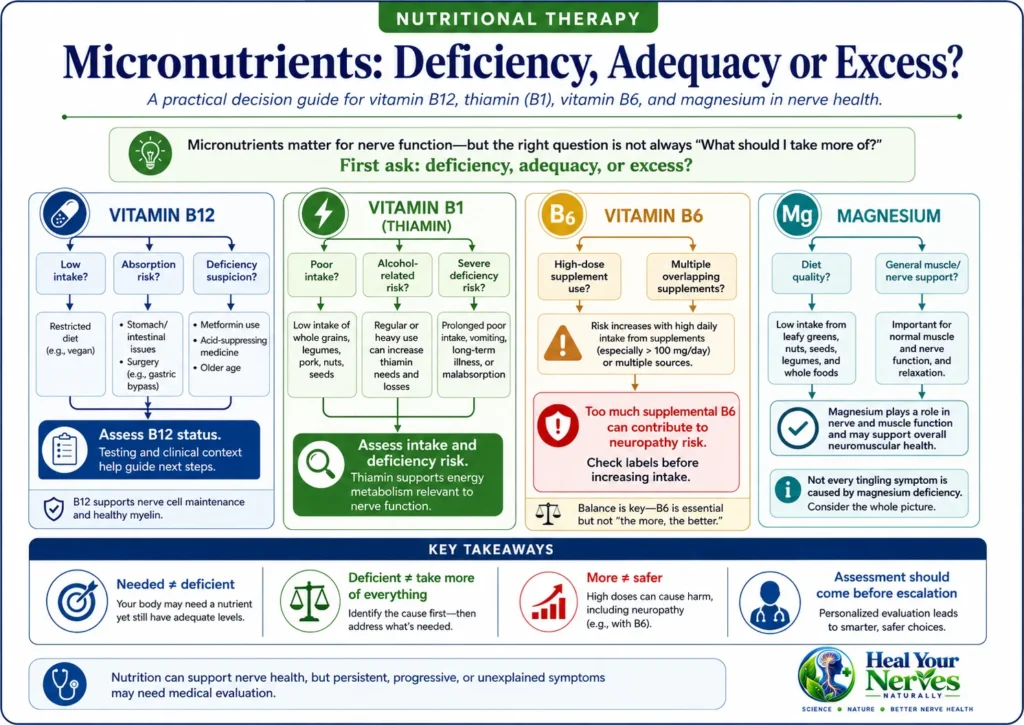
Thiamin, or Vitamin B1
Severe thiamin deficiency can cause peripheral neuropathy.
Risk can rise when intake is poor or in conditions such as alcohol dependence, where both intake and metabolism can be disrupted.
The lesson is not “everyone with neuropathy needs high-dose thiamin.”
The lesson is:
When a true deficiency is plausible, identify and correct the actual problem.
Magnesium
Magnesium participates in normal nerve and muscle function and glucose regulation.
But tingling does not automatically mean magnesium deficiency.
That is another place where internet symptom-matching can create unnecessary supplement use.
The better question is:
Do I have a reason to suspect deficiency, or am I trying magnesium because the symptom sounds familiar?
For broader nutrient science, continue to Micronutrients.
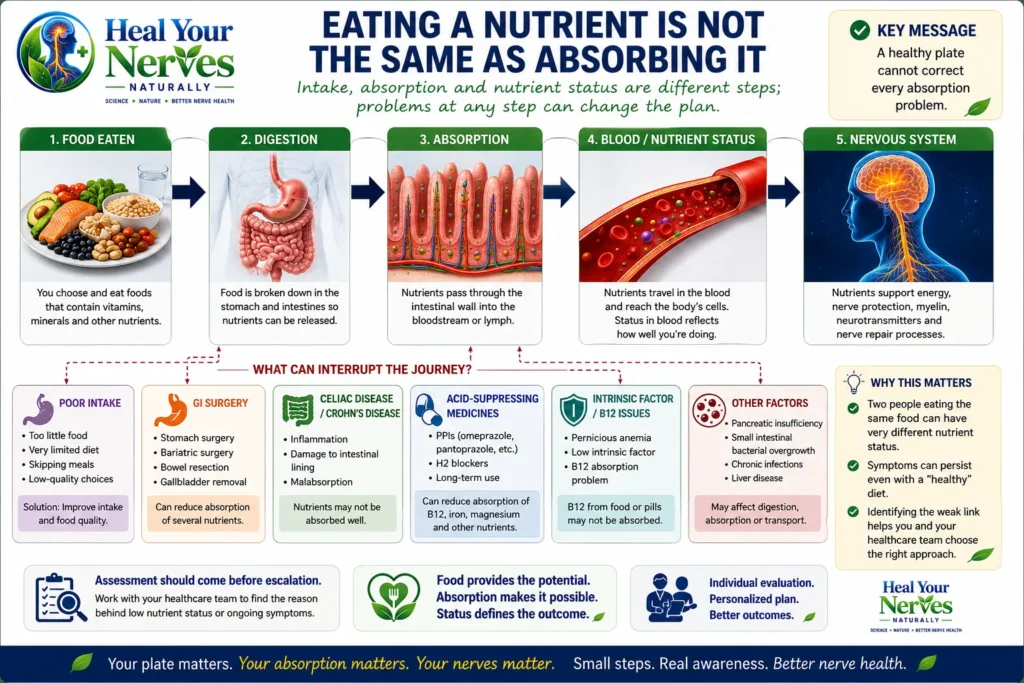
Step 3: What If You Eat Well but Do Not Absorb Nutrients Properly?
This is one of the most overlooked nutritional therapy questions.
A healthy plate is not the end of the story.
Your body still has to:
- digest the food;
- release nutrients;
- absorb them through the gastrointestinal tract;
- transport them;
- and use them.
When Should Absorption Move Higher on the List?
Think about it more seriously if you have:
- bariatric surgery;
- stomach or small-bowel surgery;
- Crohn’s disease;
- celiac disease;
- chronic diarrhea;
- pancreatic or other digestive disease;
- unexplained multiple deficiencies;
- long-term acid-suppressing medication;
- or a history of deficiency despite apparently adequate intake.
Bariatric Surgery Changes the Question
After bariatric surgery, “eat better” may be too simple.
Certain procedures can change intake and absorption. Nutritional monitoring becomes especially important because deficiencies can develop even when someone is actively taking supplements.
If you already have neuropathy and are considering bariatric surgery or revision surgery, this deserves individualized discussion with the surgical and nutrition team rather than an online supplement experiment.
Does Gut Health Explain Every Nerve Symptom?
No.
“Gut health” has become a catch-all internet explanation.
There are legitimate gut-related nutritional problems, but that does not mean every case of tingling comes from the microbiome or “leaky gut.”
If absorption is your main question, continue to when gut health and nutrient absorption affect nerves.
For broader nutrition science, see the HYN Gut Axis.
Step 4: Blood Sugar, Prediabetes and Diabetic Neuropathy
For some readers, this will be the most important part of nutritional therapy.
Diabetes can damage peripheral nerves.
The ADA Standards of Care in Diabetes—2026 recommends optimizing glucose management to prevent or delay neuropathy in type 1 diabetes and to slow progression in type 2 diabetes. It also states that glucose management does not reverse established neuronal loss.
That distinction matters.
Better metabolic management is still valuable.
But it is not the same as promising reversal.
“My A1C Is Only in the Prediabetes Range. Could That Still Matter?”
If you have nerve symptoms and borderline glucose levels, do not self-diagnose diabetic neuropathy.
But do not ignore metabolic health either.
Use the information as one part of the wider assessment.
A clinician may need to consider glucose status alongside B12, thyroid disease, kidney disease, medications, alcohol, compression and other causes.
“Do I Need to Stop Eating Rice?”
Not automatically.
Nutritional therapy should work with your actual culture and household.
A more useful strategy may involve:
- portion awareness;
- adding protein;
- adding vegetables and legumes;
- choosing less refined carbohydrate options where practical;
- spreading carbohydrate intake through the day;
- reducing sugar-sweetened drinks;
- and monitoring glucose if you have been advised to do so.
If rice is your family staple, the plan should improve the meal around the rice, not pretend your life is built around a completely different food culture.
“Is Sugar Poison for Nerves?”
That language is not useful.
Chronically elevated glucose can contribute to diabetic neuropathy, but a single sweet food does not explain every nerve symptom.
Avoid turning metabolic care into fear-based eating.
“Can Lifestyle Changes Help?”
Yes, as part of diabetes and cardiovascular risk management.
NIDDK emphasizes glucose, blood pressure, cholesterol, physical activity, meal planning, smoking cessation and alcohol moderation.
For practical metabolic eating patterns, continue to meal patterns that support metabolic health.
For the condition-specific pathway, read Diabetic Neuropathy.
For the deeper root-cause layer, see how metabolic stress can affect nerves.
Step 5: What About Healthy Fats, Omega-3 Foods and “Anti-Inflammatory” Eating?
Fatty fish, nuts, seeds and appropriate plant oils can be part of a nutritious diet.
NIH lists fish such as salmon, sardines, herring and mackerel as food sources of EPA/DHA, while chia, flax and walnuts provide ALA.
That is useful nutrition information.
It does not prove that eating one omega-3-rich food regenerates a damaged nerve.
If you want the deeper science, read the role of fatty acids in nutrition.
Should You Follow an Anti-Inflammatory Diet?
You can build a diet that supports general cardiovascular and metabolic health.
But “inflammation” is not one disease and it is not the explanation for every neuropathy.
A useful eating pattern may include:
- vegetables and fruit;
- legumes;
- whole grains or other high-fibre carbohydrate sources;
- fish or other appropriate protein foods;
- nuts and seeds;
- mostly unsaturated fats;
- and fewer highly processed foods.
What we should avoid is turning the phrase anti-inflammatory into a diagnosis.
Should I Cut Out Gluten?
Not unless there is a reason.
If you have celiac disease, gluten avoidance is medically important.
If you do not, removing gluten simply because you have tingling may add cost and restriction without answering the real question.
Should I Remove Dairy, Nightshades, Coffee or Spicy Food?
Not automatically.
Some people notice individual symptom patterns, but anecdotal triggers should be observed rather than converted into universal rules.
A food-and-symptom diary can help you test a repeatable pattern before permanently removing several food groups.
Step 6: Build a Nutritional Therapy Plan You Can Actually Follow
The best plan on paper is useless if it collapses on Tuesday.
Nutritional therapy should fit the real constraints of your life.
If Mornings Are Rushed
Instead of:
“Cook a perfect breakfast every day.”
Try:
- boiled eggs prepared ahead;
- yogurt + oats;
- milk or fortified soy drink + oats;
- fruit + nuts + yogurt;
- leftover dal + bread;
- peanut butter + whole-grain toast;
- or another fast combination of protein + plant food + carbohydrate.
If Lunch Is at Work
Keep the target simple:
protein + plant + practical carbohydrate
Examples:
- lentil soup + whole-grain bread + fruit;
- rice + dal + vegetables + egg;
- chicken/fish/tofu wrap + vegetables;
- beans + grain + salad;
- yogurt + fruit + nuts plus a more substantial meal if needed.
If Dinner Is the Family Meal
Do not cook a “neuropathy dinner” separately.
Use the same food and adjust the plate.
Make the protein visible.
Add vegetables or legumes.
Adjust carbohydrate amount if your metabolic plan requires it.
If Money Is the Barrier
Nutritional therapy does not require expensive salmon, blueberries or branded powders.
Budget-friendly foods can include:
- lentils;
- beans;
- eggs;
- oats;
- seasonal vegetables;
- seasonal fruit;
- frozen vegetables;
- canned beans;
- local fish;
- peanuts;
- whole grains or familiar staples.
Fresh is not automatically nutritionally superior to frozen.
Canned foods can be useful when chosen thoughtfully.
If Cooking Is the Barrier
Use the minimum-effort meal formula:
one ready protein + one easy plant food + one familiar staple
Examples:
- egg + fruit + bread;
- yogurt + oats + fruit;
- canned beans + frozen vegetables + rice;
- fish + frozen vegetables + potatoes;
- tofu + pre-cut vegetables + noodles.
If the Problem Is Habit, Not Knowledge
Sometimes you already know what to eat.
The problem is that the plan never survives fatigue, work, stress or family pressure.
At that point, the next useful question is behavioral.
Explore how to build habits that are easier to repeat.
Real-Life Nutritional Therapy Problems: Start With the Smallest Useful Fix
This is where a nutritional therapy page either becomes useful or turns into theory.
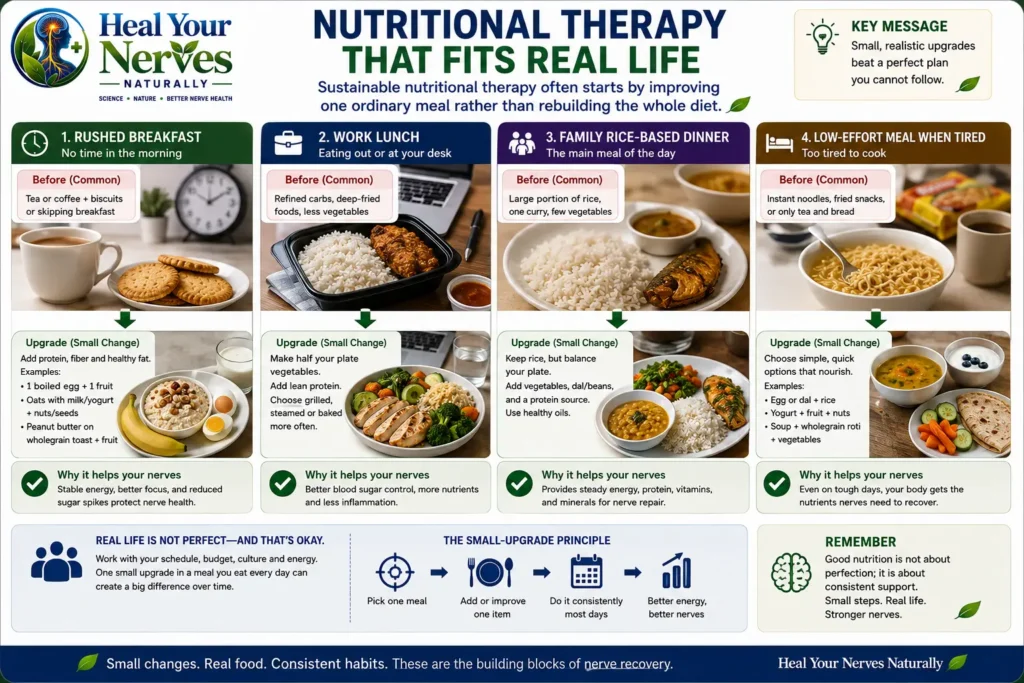
Most people do not live inside a meal-plan template. They live with work, fatigue, family preferences, limited money, medications, pain, poor sleep, cultural foods, unpredictable schedules and days when cooking simply does not happen.
The first fix should respect that.
“I Know What to Eat, but I Keep Skipping Breakfast”
Do not begin by designing a seven-item breakfast.
Ask why breakfast disappears.
If the reason is lack of time, choose a two-minute option.
If the reason is nausea, a smaller or later meal may be easier.
If the reason is that tea suppresses appetite, try eating something small before or with it.
If the reason is that pain and poor sleep make mornings difficult, prepare the food the night before.
A practical first target might be:
Eat something containing protein on four mornings this week.
That is measurable.
“Eat perfectly” is not.
“I Eat Tea and Biscuits Because That Is What Is Available”
Do not turn this into shame.
Keep the part that works and improve the part that is weak.
Tea + biscuits could become:
- tea + egg + one or two biscuits;
- tea + yogurt;
- tea + peanut butter toast;
- tea + leftover dal and bread;
- tea + milk and oats.
Nutritional therapy works better when it adds useful food before removing familiar food.
“My Family Will Not Eat a Special Diet”
Good.
They may not need to.
If your household meal is rice, curry, dal and vegetables, work inside that pattern.
If it is pasta, improve the sauce, protein and vegetables.
If it is bread-based, add a meaningful filling and plant food.
If it is a shared pot meal, adjust your portion and add a side.
The goal is not to make the entire family feel that one person’s nerve symptoms have transformed dinner into a medical procedure.
“Healthy Food Costs Too Much”
Nutrition advice becomes unrealistic when it assumes unlimited money.
Prioritize nutritional return per unit of effort and cost.
Often useful budget foods include:
- dried or canned beans;
- lentils;
- eggs;
- oats;
- frozen vegetables;
- seasonal produce;
- local fish rather than imported “superfood” fish;
- peanuts rather than expensive specialty nuts;
- plain yogurt rather than branded wellness products.
A supplement marketed for “nerve repair” can cost more than several days of ordinary food.
That does not mean every supplement is unnecessary.
It means the basic food pattern deserves attention before expensive extras.
“I Work Shifts and My Meals Are All Over the Place”
Shift work changes the practical problem.
Do not aim first for perfect meal timing.
Aim for predictability.
Choose two anchor meals you can usually protect.
Carry a backup meal or snack with protein.
Avoid reaching the end of a long shift so hungry that the only realistic option is a large ultra-processed meal.
If blood glucose is part of your plan, medication timing and carbohydrate distribution may require individualized advice.
For the deeper timing layer, see Nutritional Timing.
“I Feel Too Tired or Unsteady to Cook Safely”
This is not a motivation failure.
Change the cooking method.
Use:
- microwaveable grains;
- frozen vegetables;
- canned beans;
- boiled eggs;
- yogurt;
- ready-cooked lentils;
- pre-cut vegetables;
- simple sandwiches;
- supermarket rotisserie chicken where appropriate;
- or family help.
If balance is poor, carrying heavy pots, standing at a stove or using sharp knives may be a genuine safety issue.
Nutrition support should not create another injury risk.
“My Appetite Is Worst When My Symptoms Are Worst”
This creates a vicious circle.
Pain or poor sleep reduces appetite.
Intake falls.
Fatigue gets worse.
Cooking becomes harder.
Then diet quality declines further.
Do not wait for appetite to become perfect.
Use smaller, easier meals and keep a few reliable foods available.
If reduced intake continues or weight is falling, move beyond home experimentation.
“I Keep Blaming Individual Foods for Every Flare”
It is understandable to look for patterns.
But a flare after dinner does not automatically mean dinner caused it.
Neuropathy symptoms can change with:
- activity;
- position;
- temperature;
- stress;
- sleep;
- glucose;
- medication timing;
- or no obvious reason at all.
If you suspect a food trigger, test the idea carefully.
Look for repetition.
Do not remove five food groups after one bad night.
“I Feel Better When I Cut Out Carbs—Does That Prove Carbs Damage My Nerves?”
No.
You may have changed several things at once:
- total calories;
- sugar intake;
- meal timing;
- weight;
- glucose variability;
- processed food intake.
Feeling better is important.
But the mechanism still needs caution.
If a lower-carbohydrate pattern helps you manage diabetes and is nutritionally adequate, that may be useful.
It does not prove that all carbohydrate is neurotoxic.
“I Am Afraid to Eat Because Every Website Gives Me a Different ‘Avoid’ List”
This is a warning sign that health information has become a burden.
A nerve-health diet should not leave you afraid of:
- fruit;
- grains;
- dairy;
- gluten;
- tomatoes;
- coffee;
- spices;
- seed oils;
- nightshades;
- or every processed food.
Some people genuinely need restrictions.
But restriction should have a reason.
If your safe-food list keeps shrinking, get qualified nutrition help.
“I Want to Lose Weight Quickly Because I Have Prediabetes”
Weight management can improve metabolic health.
But crash dieting can worsen nutritional adequacy.
A plan that reduces weight while also reducing protein, vitamins, minerals and total intake too aggressively may solve one problem while creating another.
Aim for a sustainable metabolic plan rather than the fastest number on the scale.
“I Am Taking a Multivitamin, B-Complex and Magnesium—Surely That Covers Everything?”
Not necessarily.
It may create duplication.
It may also create a false sense that food quality no longer matters.
Bring all bottles together.
Read the labels side by side.
This is especially important for B6.
If the supplement question becomes complicated, stop expanding it on this page and move to how to evaluate supplement evidence and safety.
“My Lab Result Is ‘Normal’ but I Still Feel Abnormal”
A lab reference range does not always explain a symptom.
But the opposite mistake is also common: deciding that every “low-normal” value proves a deficiency.
Interpretation depends on the nutrient, test, symptoms, medications and clinical context.
Use lab results as evidence.
Do not use them as self-diagnosis without interpretation.
“I Corrected a Deficiency but I Am Still Not Better”
This is one of the most emotionally difficult situations.
You did the thing you were told to do.
The number improved.
The symptoms did not.
There are several possibilities:
- nerve recovery may take longer than blood values normalize;
- damage may be incomplete or only partly reversible;
- the deficiency may have been one contributor rather than the whole cause;
- another cause may still be present;
- the diagnosis may need to be revisited.
The next step is reassessment, not automatically a higher dose.
“I Have Several Medical Conditions and Every Diet Contradicts Another”
This is where generic online nutritional therapy reaches its limit.
Diabetes advice, kidney-disease advice, heart-health advice, gastrointestinal restrictions and weight-loss advice can conflict.
A registered dietitian can help prioritize across conditions.
The more medically complex the situation, the less useful a single-condition internet diet becomes.
Questions to Take to a Doctor or Dietitian
You do not need to arrive at an appointment with a diagnosis.
A short, organized question list can make the visit more useful.
Bring:
- your three-day food record;
- your supplement list with doses;
- your medication list;
- recent lab results if you have them;
- a short symptom timeline;
- and any major diet, surgery or weight changes.
Then ask questions such as:
About the Cause
- Could a nutritional deficiency reasonably explain my symptoms?
- Are there non-nutritional causes that still need to be investigated?
- Does the symptom pattern fit peripheral neuropathy, compression, or something else?
About Testing
- Which nutrient tests are actually relevant to my situation?
- Does my medication history change what should be checked?
- If B12 is borderline, is additional assessment needed?
- Does prior supplementation make the test harder to interpret?
About Food
- Am I eating enough for my age, weight, activity and medical needs?
- Do I need more protein, or is my current intake adequate?
- Are there foods I actually need to avoid, or am I over-restricting?
- How should I adapt my normal cultural foods rather than replacing them?
About Supplements
- Is there a clear reason for each supplement I am taking?
- Am I duplicating B6 or other nutrients?
- Could any supplement interact with my medicines?
- What result or symptom would tell us to stop or change it?
About Monitoring
- What should improve first if nutrition is part of the problem?
- What timeline is realistic?
- Which symptoms or functional changes should trigger earlier review?
A good appointment should leave you with a clearer decision, not simply a longer supplement list.
Special Situations: When the Plan Needs to Change
Vegan and Vegetarian Diets
A plant-based diet can be nutritionally strong.
But B12 needs deliberate planning.
Vegetarians may obtain B12 from dairy and eggs, but intake can still vary.
Vegans need reliable fortified foods and/or appropriate supplementation.
Also look at protein variety, iron, iodine, calcium, vitamin D and other nutrients depending on the full diet rather than assuming “plant-based” automatically means adequate.
Older Adults
Age can change appetite, chewing, cooking ability, medication burden and B12 absorption.
The practical priorities may be:
- eating enough;
- making protein easier to access;
- preventing unintentional weight loss;
- checking medication-related nutrient risks;
- and avoiding unnecessarily restrictive diets.
Poor Appetite
If full meals are difficult, try smaller, more nutrient-dense meals.
For example:
- yogurt;
- eggs;
- milk/fortified soy drink;
- soup with lentils or beans;
- nut butter;
- soft fish;
- oats;
- mashed beans;
- smoothies that contain real food rather than only juice.
Persistent loss of appetite or unintentional weight loss deserves medical assessment.
Alcohol
Alcohol deserves a direct but nonjudgmental discussion.
Heavy alcohol use can contribute to neuropathy and can coexist with poor intake and thiamin deficiency.
If you are physically dependent on alcohol, suddenly stopping can be medically dangerous. Do not use an online nutrition page as a detox plan.
Seek professional help for a safe reduction or withdrawal plan.
After Gastrointestinal or Bariatric Surgery
Do not assume a standard food-first approach is enough.
Monitoring, supplementation and individualized nutrition may be necessary.
Food Allergies or Intolerances
Work around true allergies.
But avoid expanding a small number of medically necessary exclusions into a large elimination diet without evidence.
Kidney Disease, Liver Disease or Complex Medical Conditions
Generic nutritional therapy becomes less appropriate as medical complexity increases.
This is where Medical Nutrition Therapy with a registered dietitian may be the safer route.
Food First or Supplements?
This is where Nutritional Therapy must hand off rather than expand forever.
Food and supplements are related.
They are not interchangeable.
Food provides combinations of nutrients within a broader eating pattern.
Supplements provide concentrated amounts of specific ingredients.
Sometimes supplementation is clearly useful—especially when correcting a documented deficiency or when absorption/intake makes food alone inadequate.
But a supplement should have a job.
Before adding one, ask:
- What problem is this supposed to solve?
- Do I have evidence or a meaningful risk of deficiency?
- Am I already getting the same nutrient from another product?
- Could this interact with a medicine or medical condition?
- Could the supplement itself contribute to symptoms?
- Would testing or professional review answer the question better than experimenting?
FDA notes that supplements can interact with medicines, interfere with lab tests and cause harm when combined or taken in excessive amounts. NCCIH also stresses that “natural” does not automatically mean safe.
The HYN Supplement Boundary
This page should help you decide whether supplementation belongs in the plan.
It should not become a catalogue of doses, formulations or product recommendations.
If your next question is:
- “Which supplement should I consider?”
- “What does the evidence say?”
- “How do I read the label?”
- “Am I stacking ingredients?”
- “Does this interact with my medicine?”
continue to our supplement decision guide.
For the deeper evidence and label-literacy layer, use Supplement Intelligence.
What Nutritional Therapy Cannot Fix
This section is as important as the practical advice.
Nutritional Therapy Cannot Remove Mechanical Compression
If a nerve is compressed by position, anatomy, swelling, entrapment or another mechanical problem, food does not release the pressure.
If symptoms repeatedly change with posture, wrist position, sitting, neck/back movement or pressure, explore when nerve compression may be the real problem.
It Cannot Reconnect a Severed Nerve
Severe peripheral nerve injury may require specialist surgical assessment and rehabilitation.
Nutrition can support general nutritional needs during recovery, but it does not replace structural repair.
If symptoms began after trauma or surgery, continue to nerve symptoms after an injury.
It Cannot Replace Disease-Specific Treatment
Autoimmune neuropathies, infections, kidney disease, cancer-related neuropathy, toxic exposure and hereditary neuropathies require condition-specific evaluation.
It Cannot Prove the Cause From Symptoms Alone
Burning feet do not diagnose B12 deficiency.
Tingling does not diagnose magnesium deficiency.
Night symptoms do not prove food intolerance.
Improvement after one meal does not prove nerve regeneration.
It Cannot Guarantee Nerve Regeneration
Nutrition-related factors are biologically interesting and may support the recovery environment, but the human evidence does not justify treating individual nutrients as universal nerve-regeneration therapies.
For deeper biology, explore how nerve repair and regeneration actually work.
If myelin is your main question, continue to how myelin supports healthy nerve signaling.
How Do You Know Whether Nutritional Therapy Is Helping?
You need a way to observe progress that does not depend on one good or bad symptom day.
Track both nutrition behavior and nerve-related function.
Nutrition Behaviors
- Did you eat more regularly?
- Did you reduce skipped meals?
- Did protein become more consistent?
- Did you improve B12 reliability if you are at risk?
- Did you reduce unnecessary supplement duplication?
- Did you improve beverage choices?
- Did you make meals easier to prepare?
- Did you follow a diabetes meal plan more consistently if relevant?
Symptoms
Track:
- numbness;
- tingling;
- burning;
- pain;
- sensitivity;
- cramping;
- fatigue.
But remember:
Symptoms naturally fluctuate.
Do not interpret every change as proof that a food caused it.
Function
Function is often more useful than symptom intensity alone.
Ask:
- Can I walk farther?
- Can I stand longer?
- Am I dropping things less often?
- Is sleep less disrupted?
- Is balance improving or worsening?
- Can I tolerate work or exercise better?
- Am I recovering from activity more predictably?
Labs or Clinical Measures
If a documented deficiency, diabetes, anemia, weight loss or another medical problem is being monitored, follow the measurement plan your clinician gives you.
Do not invent your own testing schedule from internet advice.
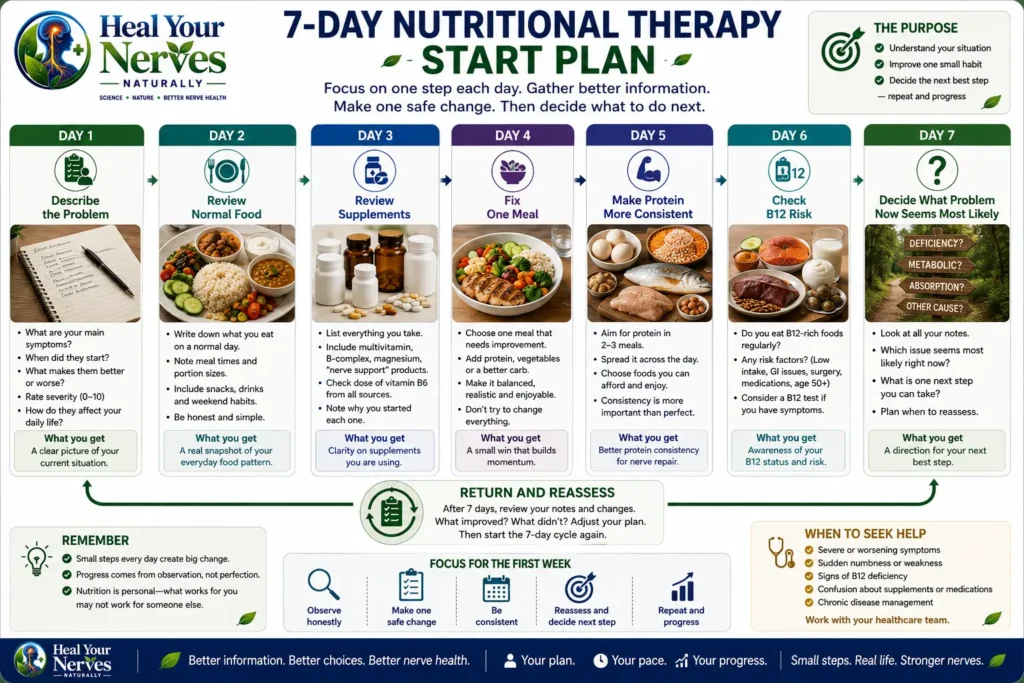
A 7-Day Nutritional Therapy Start Plan
This is not a seven-day cure.
It is a seven-day clarity plan.
Day 1 — Describe the Problem
Write down:
- what symptoms you notice;
- when they started;
- where they occur;
- whether they are spreading;
- whether weakness or balance is involved;
- and what you hope nutrition will change.
Day 2 — Review Your Normal Food
Do not “eat healthy for the diary.”
Record a normal day.
Look for:
- skipped meals;
- low protein;
- very low variety;
- long gaps;
- heavy reliance on processed snacks;
- or inadequate overall intake.
Day 3 — Review Every Supplement
Write every product name.
Do not forget:
- multivitamins;
- B-complex;
- magnesium products;
- energy powders;
- herbal products;
- “nerve support” formulas.
Pay particular attention to duplicated B6.
Day 4 — Fix One Meal
Choose the weakest meal.
Improve it using ordinary food.
Day 5 — Make Protein More Consistent
Do not chase a huge protein target.
Make sure a realistic source appears at your main meals.
Day 6 — Check B12 Risk
Ask:
- vegan/vegetarian?
- metformin?
- acid-suppressing medicine?
- GI surgery?
- bariatric surgery?
- digestive disease?
- previous low B12?
If yes, B12 deserves a more specific discussion.
Day 7 — Ask the Big Question
What did you discover?
My diet is clearly weak.
My diet is okay, but absorption may be a problem.
Diabetes/metabolic health is central.
Supplements are confusing the picture.
Symptoms do not seem nutrition-driven.
I need testing or professional help.
That answer determines your next step.
A 30-Day Practical Progress Framework
Thirty days is not a promise that nerve symptoms will resolve.
It is long enough to learn whether your plan is becoming more useful, more realistic and more specific.
Week 1 — Understand the Baseline
Complete the seven-day plan.
Your goal is information.
Week 2 — Strengthen the Foundation
Choose two or three basics only.
For example:
- breakfast at least five days;
- protein at main meals;
- vegetables/fruit at least twice a day;
- water replacing one sugary drink;
- B12 planning if relevant.
Week 3 — Work on the Main Barrier
Ask why the plan is difficult.
Is it:
- cost?
- fatigue?
- shopping?
- family preferences?
- work schedule?
- pain?
- appetite?
- food fear?
- cooking?
- alcohol?
- medication side effects?
Solve the barrier, not just the menu.
Week 4 — Reassess
Compare with Day 1.
Do not ask only:
“Is my tingling gone?”
Also ask:
- Is my food intake more adequate?
- Is my weight more stable?
- Is glucose management improving if relevant?
- Have I stopped unnecessary duplication?
- Is function changing?
- Are symptoms stable, improving or spreading?
- Have I discovered a reason for testing or referral?
When Should You Continue the Same Plan?
Continue if:
- it is safe;
- it is practical;
- it improves nutritional adequacy;
- and there is no sign that you are delaying necessary evaluation.
When Should You Change Direction?
Change direction if:
- the diet is becoming more restrictive;
- you are losing weight unintentionally;
- symptoms are progressing;
- weakness is appearing;
- supplement use is escalating;
- you are afraid to eat normal foods;
- or the plan is based on increasingly speculative explanations.
Return and Reassess: Why This Page Should Become a Reference Point
Nutritional therapy is not a one-time article.
Come back when you have new information.
That might be:
- a B12 result;
- a diabetes diagnosis;
- a new medication;
- a bariatric surgery plan;
- a food diary;
- a supplement list;
- a new symptom pattern;
- a clinician’s diagnosis;
- or simply seven days of honest observation.
When you return, ask:
What changed, what did not change, what new information do I have, and what is the safest next nutritional decision now?
Your answer may be completely different from the first time you visited.
That is expected.
A good nutritional plan should become more specific as you learn more—not more complicated.
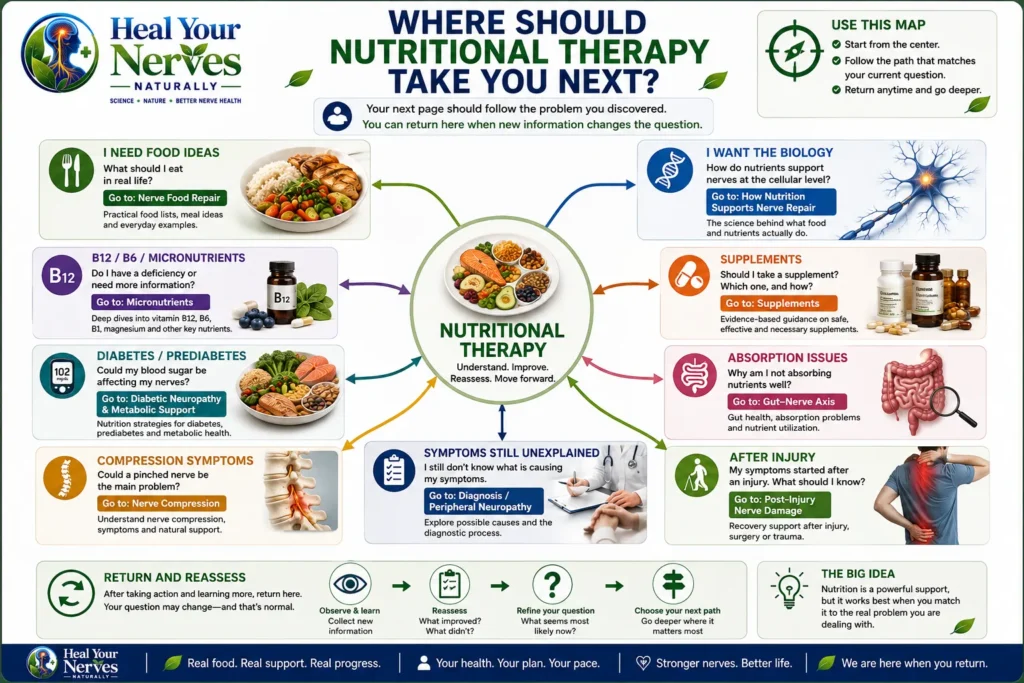
Where Should You Go Next?
Use the problem you discovered—not a generic “related reading” list.
“I Just Need Practical Foods and Meals”
Continue to practical foods and meals for nerve health.
“I Need Everyday Household Nutrition”
Use everyday nutrition for nerve repair.
“I Want to Understand Why Nutrition Matters Biologically”
Read how nutrition supports nerve repair.
“I Think a Nutrient Deficiency Is Involved”
Continue to how nutritional deficiencies can affect nerves and micronutrients involved in nerve function.
“I Think Absorption Is the Problem”
Read when gut health and nutrient absorption affect nerves.
“Diabetes or Prediabetes Is Central”
Continue to meal patterns that support metabolic health and Diabetic Neuropathy.
“My Main Question Is Now Supplements”
Use our supplement decision guide.
“Food Looks Fine but Symptoms Continue”
Read understanding peripheral neuropathy and how nerve dysfunction is diagnosed.
“Symptoms Change With Pressure or Position”
Read when nerve compression may be the real problem.
“Symptoms Started After an Injury or Surgery”
Continue to nerve symptoms after an injury.
“I Want the Long-Term Picture”
Use long-term nerve health protection.
Common Nutritional Therapy Questions People Ask in Real Life
Is Nutritional Therapy the Same as Medical Nutrition Therapy?
No.
The terms may overlap in everyday conversation, but Medical Nutrition Therapy (MNT) is a defined clinical nutrition service commonly delivered by a registered dietitian as part of medical care.
HYN uses “nutritional therapy” as an educational framework for structured nutrition decision-making—not as a claim to provide clinical MNT.
Can Nutritional Therapy Cure Neuropathy?
No universal nutritional cure exists for neuropathy.
Nutrition can be central when deficiency or metabolic disease is part of the cause, and supportive in many other situations. But mechanical compression, severe injury, autoimmune disease and other causes require different treatment.
What Is the Best Food for Damaged Nerves?
There is no single best food.
A useful pattern provides adequate protein, energy, micronutrients, plant foods, appropriate carbohydrates and healthy fats while fitting the condition affecting the person.
For food examples, use Nerve Food Repair.
Should I Test B12 Before Taking It?
If symptoms or risk factors suggest deficiency, testing and clinical interpretation can be more useful than blind supplementation.
The right approach depends on the situation, especially if you have already started supplements, have malabsorption risk, take metformin, or have neurological symptoms.
Can B12 Deficiency Cause Tingling Without Anemia?
Yes. Neurological manifestations can occur with B12 deficiency.
Do not assume a normal hemoglobin automatically rules out every B12-related neurological problem.
Can Too Much B6 Cause Neuropathy?
Yes. Excess supplemental B6 is a recognized cause of sensory neuropathy.
Check total exposure across all products.
Should Everyone With Tingling Take Magnesium?
No.
Magnesium is important to normal nerve and muscle function, but tingling has many causes.
Does More Protein Speed Nerve Regeneration?
There is no evidence that simply eating excessive protein forces nerve regeneration.
Adequate protein is part of general nutritional support.
Can I Eat Carbohydrates if I Have Neuropathy?
Yes, unless your individualized medical plan says otherwise.
For diabetes or prediabetes, the type, amount, timing and context of carbohydrate matter more than treating all carbohydrate as toxic.
Should I Cut Out Sugar Completely?
Reducing excessive free sugar can support metabolic health.
But complete elimination is not a universal neuropathy treatment.
Should I Try Keto?
Keto may be appropriate for certain medical or personal situations, but it is not a universal nerve-repair diet.
If you use diabetes medicines, kidney disease, pregnancy or other medical factors may make restrictive diets more complicated.
Should I Fast to Regenerate My Nerves?
Human evidence does not justify presenting fasting as a proven peripheral nerve-regeneration treatment.
If fasting causes inadequate intake, weight loss, hypoglycemia or poor medication timing, it may create new problems.
Do I Need an Anti-Inflammatory Diet?
A minimally processed, plant-rich, balanced pattern is reasonable for general health.
But “anti-inflammatory” should not replace diagnosis.
Does Coffee Make Neuropathy Worse?
Some people report symptom changes with caffeine.
That is not a universal effect.
Observe a repeatable pattern before removing a food or drink permanently.
Is Alcohol Relevant?
Yes, particularly when intake is heavy or prolonged.
Alcohol can directly contribute to neuropathy and can coexist with poor nutritional intake and thiamin deficiency.
What If My Symptoms Improve After I Change My Diet?
That is useful information.
It does not prove a specific nerve mechanism.
Keep the change if it is safe and healthful, but continue appropriate medical follow-up when the cause is unclear.
What If My Symptoms Do Not Improve After I Fix a Deficiency?
Do not assume the correction failed.
Neurological recovery can be slow, and some damage may not fully reverse.
More importantly, the deficiency may not be the only cause.
Reassess with your healthcare team rather than continually increasing doses.
What If All My Tests Are “Normal” but I Still Have Symptoms?
That is a common and frustrating situation.
Do not keep escalating food restrictions to create an explanation.
Use Peripheral Neuropathy and How Nerve Dysfunction Is Diagnosed to widen the investigation.
How Long Should I Try Nutritional Changes?
There is no universal countdown.
A practical change should be judged first by whether it improves nutritional adequacy and is sustainable.
The timeline for nerve symptoms depends on the underlying cause, severity and treatment.
When Should I See a Dietitian?
Consider professional nutrition care when:
- diabetes, kidney disease or another medical condition complicates the diet;
- you are losing weight unintentionally;
- you have bariatric or gastrointestinal surgery;
- multiple deficiencies are present;
- eating is limited by swallowing or digestive problems;
- your diet is becoming highly restrictive;
- or you need individualized Medical Nutrition Therapy.
When Is Nutrition Not the Answer?
Nutrition is not the main answer when the dominant problem is structural compression, severe injury, progressive neurological disease, active autoimmune neuropathy, toxin exposure or another condition that requires specific treatment.
How Strong Is the Evidence?
A responsible nutritional therapy page should separate established facts from plausible but unproven claims.
| Claim | Evidence position |
| B12 deficiency can cause neurological symptoms | Established |
| Long-term metformin can increase B12 deficiency risk | Established |
| Excess supplemental B6 can cause sensory neuropathy | Established |
| Severe thiamin deficiency can cause peripheral neuropathy | Established |
| Adequate nutrition matters in neurological care | Established |
| Diabetes management can prevent/delay or slow neuropathy progression | Established, condition-specific |
| Better glucose control reverses established neuronal loss | Not established; ADA says it does not reverse neuronal loss |
| A balanced diet supports general metabolic and cardiovascular health | Established |
| Omega-3-rich foods are nutritious | Established as nutrition |
| Omega-3 foods universally regenerate peripheral nerves | Not established |
| One “anti-inflammatory” food treats neuropathy | Not established |
| Fasting regenerates damaged human peripheral nerves | Not established |
| A high-dose B-complex is appropriate for all neuropathy | No |
| Food can remove nerve compression | No |
| Supplements are safe because they are natural | No |
The strongest nutritional therapy usually begins with a real, identifiable problem.
That is less dramatic than a miracle claim.
It is also much more useful.
When Should You Get Medical Help Instead of Continuing to Experiment With Food?
Seek prompt medical assessment when nerve symptoms are:
- new and rapidly worsening;
- spreading quickly;
- associated with new weakness;
- causing repeated falls or major balance problems;
- associated with loss of bladder or bowel control;
- associated with saddle-area numbness;
- following major trauma;
- associated with breathing or swallowing difficulty;
- or accompanied by other sudden neurological changes.
Also seek medical review when persistent numbness means you may not feel injuries, especially in the feet.
If you have diabetes and reduced foot sensation, daily foot care is important because injuries may go unnoticed.
Do not stop prescribed treatment because a diet seems to help.
Do not delay evaluation because you want to “try nutrition first.”
What We Want You to Remember About Nutritional Therapy
If you remember nothing else, remember this:
Nutritional therapy is not a search for the most powerful food or supplement.
It is a way of making better decisions.
Ask:
Am I eating enough?
Am I getting reliable protein and dietary variety?
Could I have a real nutrient deficiency?
Could I be taking too much of something?
Can I absorb what I eat?
Is diabetes or metabolic health central?
Is my supplement list making the picture more confusing?
Is nutrition actually the main cause—or just one part of recovery?
What can I safely change this week?
What should I observe?
What new information would make me change direction?
Sometimes food is central.
Sometimes it supports treatment.
Sometimes a supplement is appropriate.
Sometimes the next step is testing.
Sometimes nutrition is not the main solution at all.
The goal is not to make nutrition sound powerful enough to explain everything.
The goal is to use nutrition where it genuinely belongs.
Medical and Evidence Sources
The external sources below are used to support the clinical boundaries and evidence claims on this page.
British Association for Nutrition and Lifestyle Medicine (BANT) — What Is Nutritional Therapy?
Used for the professional description of nutritional therapy as individualized nutrition and lifestyle support.
Read BANT’s overview
Cleveland Clinic — Medical Nutrition Therapy
Used to distinguish clinical MNT from general nutritional therapy and to clarify the registered-dietitian role.
Read Cleveland Clinic’s MNT overview
National Institute of Neurological Disorders and Stroke — Peripheral Neuropathy
Used for the broad cause framework, including nutritional imbalance, B12 deficiency, B6 excess, diabetes, vascular problems, autoimmune disease and toxins.
Read the NINDS Peripheral Neuropathy overview
NIH Office of Dietary Supplements — Vitamin B12
Used for neurological deficiency, dietary sources, malabsorption, gastrointestinal surgery, metformin and acid-suppressing medication context.
Read the NIH Vitamin B12 fact sheet
NIH Office of Dietary Supplements — Vitamin B6
Used for dietary sources and sensory neuropathy risk from excessive supplemental B6.
Read the NIH Vitamin B6 fact sheet
NIH Office of Dietary Supplements — Thiamin (Vitamin B1)
Used for thiamin deficiency, alcohol-related risk and peripheral neuropathy associated with beriberi.
Read the NIH Thiamin fact sheet
NIH Office of Dietary Supplements — Magnesium
Used for magnesium’s role in normal nerve and muscle function and deficiency context.
Read the NIH Magnesium fact sheet
NIH Office of Dietary Supplements — Omega-3 Fatty Acids
Used for food sources and physiological context without claiming universal nerve regeneration.
Read the NIH Omega-3 fact sheet
World Health Organization — Healthy Diet, 2026
Used for the healthy-diet principles of adequacy, balance, moderation and diversity.
Read WHO Healthy Diet guidance
American Diabetes Association — Standards of Care in Diabetes—2026: Retinopathy, Neuropathy and Foot Care
Used for current diabetic-neuropathy recommendations and the statement that glucose management does not reverse established neuronal loss.
Read the ADA 2026 neuropathy standard
American Diabetes Association — Standards of Care in Diabetes—2026: Pharmacologic Approaches
Used for the association between long-term metformin use and vitamin B12 deficiency.
Read the ADA 2026 pharmacologic standard
National Institute of Diabetes and Digestive and Kidney Diseases — Diabetic Neuropathy
Used for practical diabetes management and foot-care context.
Read NIDDK’s diabetic neuropathy overview
U.S. Food and Drug Administration — FDA 101: Dietary Supplements
Used for supplement regulation, interaction and safety boundaries.
Read FDA 101: Dietary Supplements
National Center for Complementary and Integrative Health — Dietary Supplement Safety
Used for evidence-quality, medication interaction and “natural does not mean safe” guidance.
Read NCCIH’s supplement guidance
ESPEN — Guideline on Clinical Nutrition in Neurology
Used for the broader clinical principle that neurological disease can be associated with malnutrition, micronutrient deficiency and dehydration and that nutritional status deserves assessment.
View the PubMed record
Review — New Approach to Peripheral Nerve Injury: Nutritional Therapy
Used only for the limited research context that nutrition-related factors have been studied in peripheral nerve injury while their exact impact on neurogenesis remains uncertain.
View the PubMed record
Editorial and Site Information
Copyright © 2026 Heal Your Nerves Naturally