
Feedback Systems: Learning, Adjustment, and Adaptation
Feedback Systems help people learn from experience. They show how actions, results, and information can guide future choices. Every day, people try things, notice what happens, and adjust. Because of this, feedback plays an important role in learning, behavior, recovery, and adaptation.
Feedback Systems in Daily Life
Feedback appears in many simple moments. A student studies and later sees exam results. A worker completes a task and receives comments. A person tries a new routine and notices whether it helps. In each case, feedback gives useful information.
Feedback does not always come from another person. Sometimes it comes from results. Sometimes it comes from the body, a habit, a routine, or a daily experience. Therefore, feedback can appear in many forms.
Why Feedback Systems Matter
Feedback Systems matter because they help people make adjustments. A person may repeat what works. They may change what feels unhelpful. They may also try a new approach after noticing a pattern.
For example, learning to ride a bicycle requires feedback. If balance feels unsteady, the person adjusts. If a movement works well, the person repeats it. Over time, practice and feedback help the skill feel easier.
Feedback Systems and Adaptation
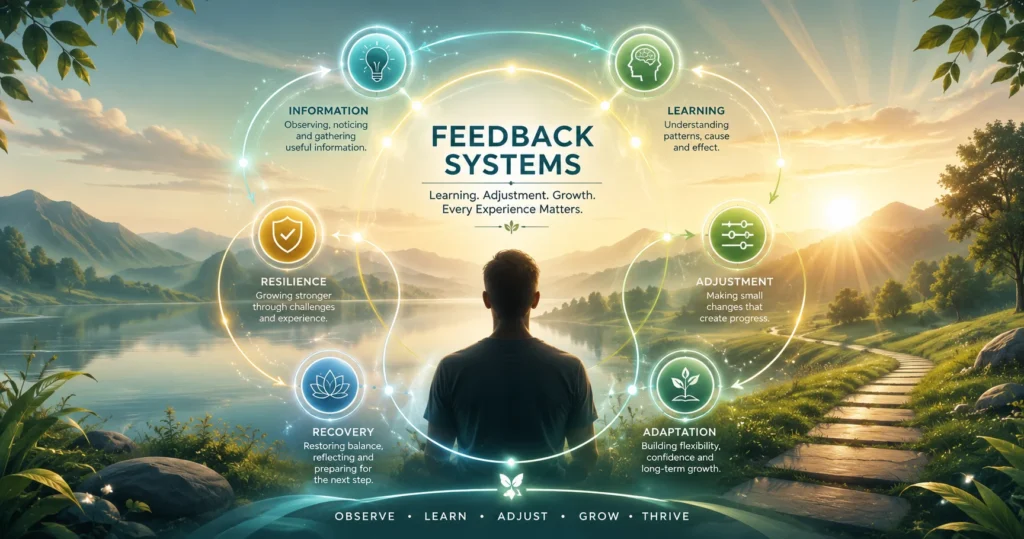
Feedback Systems are closely connected to adaptation. Every experience gives information. Then the brain, body, and behavior can respond to that information. As a result, future actions may become more effective.
This same process can appear in routines, relationships, decision-making, recovery, and personal growth. Therefore, feedback should not be seen only as criticism. It is also a learning tool.
Feedback Systems in the HYN Framework
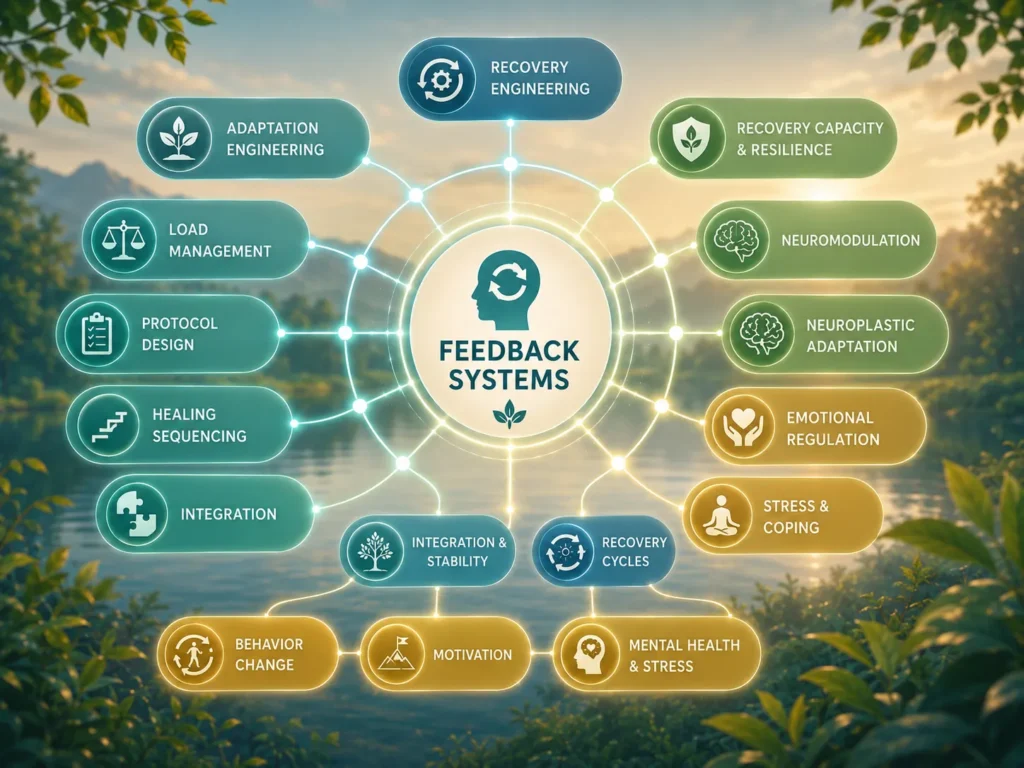
This topic connects with Adaptation Engineering, Load Management, Protocol Design, Healing Sequencing, Integration, Neuromodulation, and Neuroplastic Adaptation. Together, these pages help explain how people learn, adjust, recover, and respond to change over time.
The main idea is simple. People act. They notice results. They learn from those results. Then they adjust. Feedback Systems help explain how this cycle supports learning, resilience, recovery, and long-term growth.
Quick Navigation
Key Layers of Feedback Systems
Information Layer of Feedback Systems
Learning Layer of Feedback Systems
Behavior Layer of Feedback Systems
Adaptation Layer of Feedback Systems
Recovery Layer of Feedback Systems
Real-Life Symptom Language Bridge
Feedback Systems and Human Systems
Common Misunderstandings About Feedback Systems
How Feedback Systems Connect With Other Nerve Health Pages
Plain Meaning / Glossary Box
Plain Meaning
Feedback Systems are the ways people learn from information, results, and experience. They help people notice what is happening, understand patterns, and make adjustments over time.
Every day, people receive feedback. Sometimes feedback comes from success. Sometimes it comes from mistakes. In other situations, it comes from observation, practice, conversations, or daily experiences. Because of this, feedback is a normal part of life.
For example, a person may try a new routine and notice that it helps them stay organized. Another person may discover that a different approach works better when facing challenges. In both cases, feedback provides information that helps guide future decisions.
Feedback Systems are not only about correcting mistakes. They also help people recognize strengths, repeat helpful actions, and build confidence. Therefore, feedback can support both learning and growth.
Simple Definition
Feedback Systems are processes that help people learn from experience, understand results, and make adjustments that support future learning and adaptation.
Simple Example
Imagine learning to cook a new recipe. The first attempt may not turn out exactly as expected. However, the result provides information. The person may notice that the cooking time was too short or that an ingredient needs adjustment.
The next time, they use that information and make small changes. As a result, the recipe may improve. This simple example shows how feedback helps guide learning and future actions.
Quick Glossary
Feedback – Information about an action, result, or experience.
Feedback System – A process that uses information to guide future decisions or adjustments.
Learning – Gaining knowledge, understanding, or skills through experience.
Adjustment – A small change made in response to information or experience.
Adaptation – Gradual improvement or change over time based on learning and experience.
Observation – Paying attention to results, patterns, or events.
Resilience – The ability to adapt and continue moving forward through challenges.
Recovery – A period of restoration that helps prepare for future activity or learning.
What Are Feedback Systems?
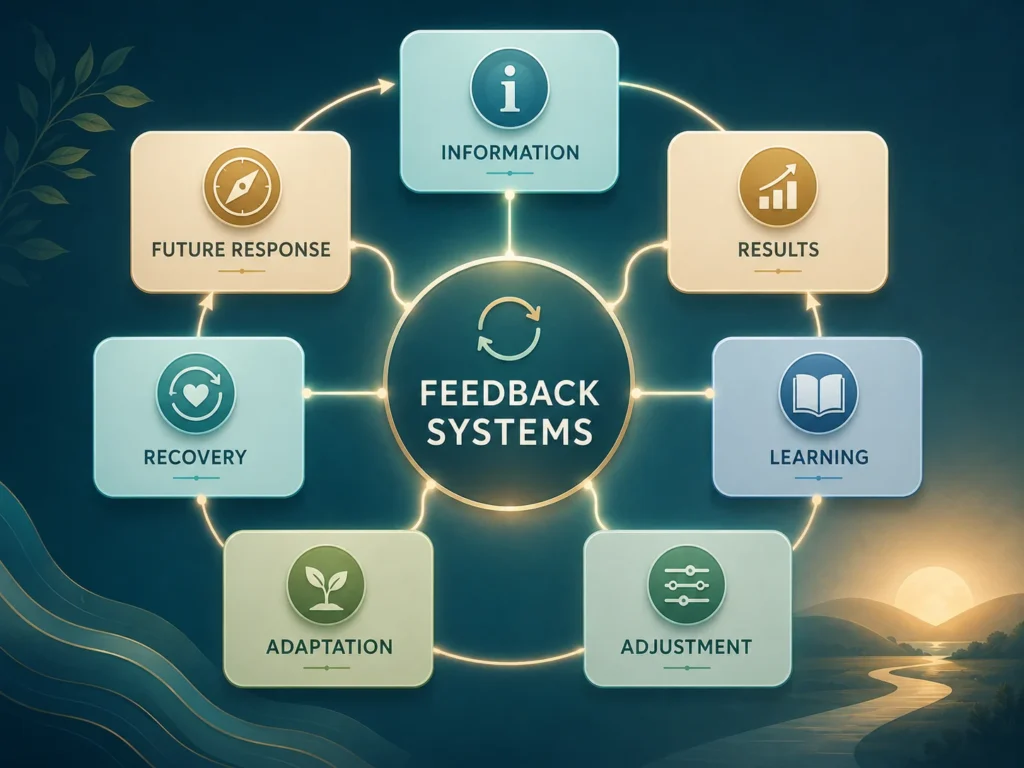
Feedback Systems are processes that help people learn from experience. They explain how information from actions, results, and everyday events can influence future decisions. In simple terms, feedback tells us what happened after we did something. Then that information can help guide what happens next.
People use Feedback Systems throughout life, often without realizing it. Every day, people make choices, take actions, notice results, and adjust their behavior. Because of this ongoing process, feedback plays an important role in learning, growth, recovery, and adaptation.
For example, a person may start a new habit. After a few days, they notice how the habit affects their routine. If the habit feels helpful, they may continue. If it creates difficulties, they may make changes. In both situations, feedback provides information that supports future decisions.
Feedback Is Part of Everyday Life
Feedback is not limited to classrooms, workplaces, or training programs. Instead, it appears in many daily situations.
A conversation may provide feedback about communication. A routine may provide feedback about time management. A movement activity may provide feedback about balance and coordination. Likewise, personal experiences can provide feedback about habits, goals, and decision-making.
Because feedback appears in so many areas of life, it becomes a natural part of learning and adjustment.
Feedback Helps People Learn
Learning often happens through experience. First, a person tries something. Next, they observe the result. Then they decide whether to continue, change, or improve their approach.
For example, someone learning a new skill may make small mistakes at the beginning. However, those mistakes provide useful information. Over time, that information helps guide improvement.
As a result, feedback often becomes one of the most important tools for learning.
Feedback Supports Adjustment
People constantly make adjustments. Sometimes the changes are small. Other times they are larger. Regardless of size, adjustments often happen because feedback provides new information.
For example, a person may discover that a certain routine helps them stay organized. Therefore, they continue using it. Another person may realize that a different approach works better for their schedule. As a result, they make a change.
This ability to adjust helps people respond to changing situations over time.
Feedback and Adaptation
Adaptation happens when learning and adjustment continue over time. Feedback helps support this process by providing information about what is happening and what may need to change.
As people gather more experience, they often become more familiar with situations, challenges, and opportunities. Therefore, feedback becomes one of the foundations of adaptation.
Rather than focusing on a single event, Feedback Systems help explain how learning, adjustment, recovery, resilience, and adaptation develop through repeated experiences.
How Feedback Systems Work
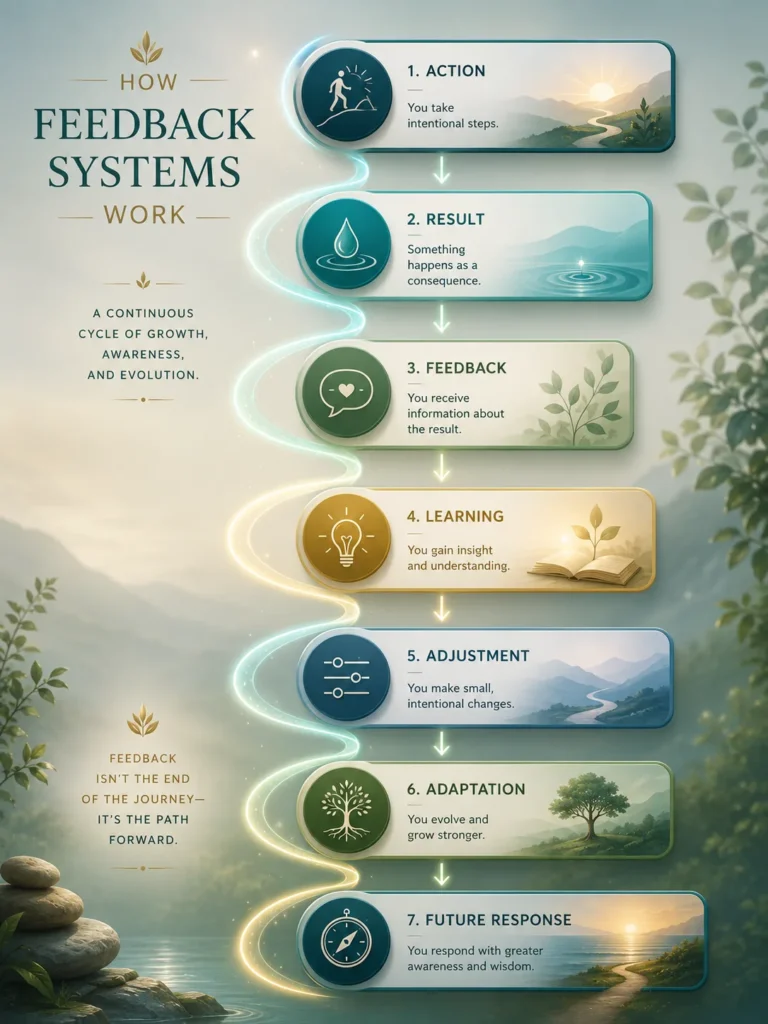
Feedback Systems work through a simple cycle. First, something happens. Next, information becomes available. Then people use that information to learn, make adjustments, and respond in a different way in the future.
Although the process sounds simple, it happens every day. People often use Feedback Systems without even thinking about them. For example, they learn from conversations, habits, routines, work tasks, movement experiences, and personal decisions. Because of this, feedback becomes a natural part of learning and adaptation.
The main purpose of a Feedback System is not to judge success or failure. Instead, it helps provide information that can guide future actions. As a result, people can continue learning and improving over time.
Step 1: Action
Every Feedback System begins with an action. A person does something, makes a decision, tries a new approach, or responds to a situation.
For example, someone may begin a new morning routine. Another person may start learning a skill. Someone else may choose a different way to solve a problem.
Without action, there is no new information to learn from. Therefore, action is the starting point of every feedback process.
Step 2: Result
After an action takes place, a result follows. Sometimes the result is expected. Other times it may be surprising.
For example, the new routine may improve organization. The new skill may feel easier than expected. In another situation, the chosen approach may not work as planned.
Regardless of the outcome, the result provides valuable information. Therefore, results become an important part of the feedback process.
Step 3: Feedback
Feedback appears when people notice and interpret the result. This information may come from observation, experience, communication, or personal reflection.
For example, a person may notice that a habit saves time. Another person may realize that a different strategy creates less stress. Likewise, comments from other people may provide useful feedback.
As a result, feedback helps transform experience into information that can be used for learning.
Step 4: Learning
Once feedback becomes available, learning can begin. People start to understand what happened and why it happened.
Some lessons are obvious. Others require more observation and experience. However, each learning opportunity adds to future understanding.
Therefore, learning helps turn feedback into useful knowledge.
Step 5: Adjustment
Learning often leads to adjustment. A person may continue a helpful action, change an ineffective approach, or try something new.
These adjustments do not need to be large. In many situations, small changes can create meaningful improvements over time.
Because of this, adjustment is one of the most practical parts of the feedback process.
Step 6: Adaptation
Adaptation develops when learning and adjustment continue over time. Each experience adds new information. Then future actions become more informed.
For example, a person may become more skilled, more confident, or more efficient through repeated learning experiences. As a result, adaptation often develops gradually rather than instantly.
Step 7: Future Response
The cycle does not end after one adjustment. Instead, the process begins again. Future situations create new actions, new results, and new feedback.
Because life is constantly changing, people continue learning and adapting throughout life. Therefore, Feedback Systems should be viewed as ongoing learning cycles rather than one-time events.
Simple Feedback Systems Flow
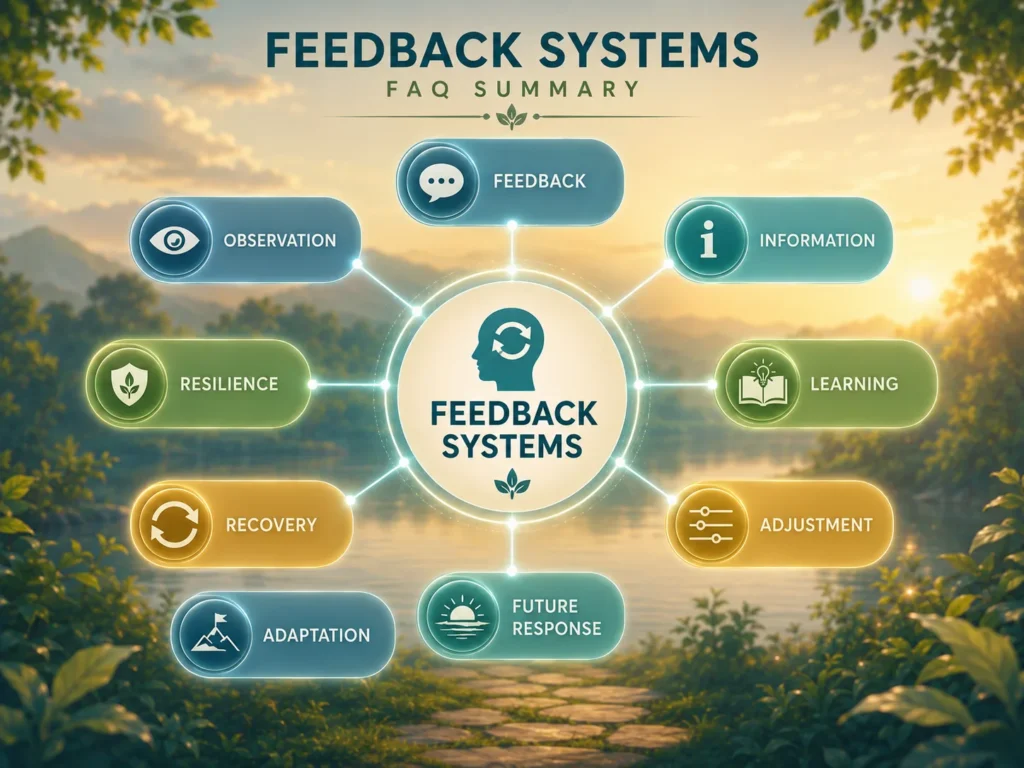
Action → Result → Feedback → Learning → Adjustment → Adaptation → Future Response
This simple flow helps explain how people learn from experience, respond to information, and gradually improve their ability to adapt to changing situations.
Why Feedback Matters
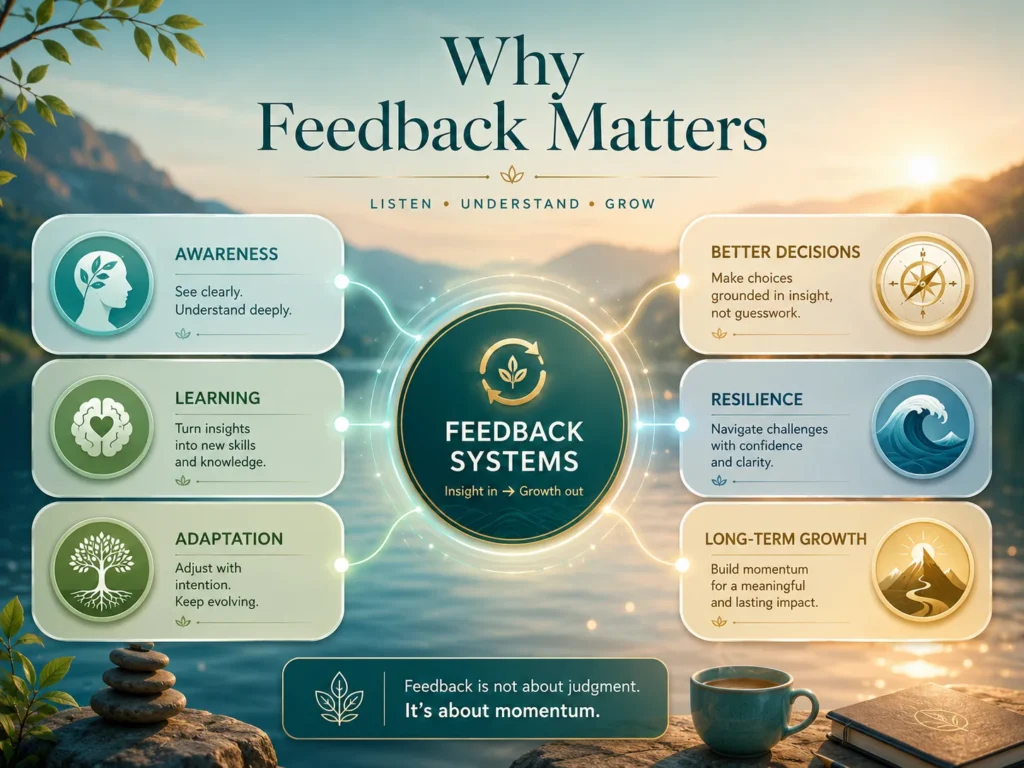
Feedback matters because it helps people learn from experience. Without feedback, it would be much harder to understand whether an action is helpful, effective, or needs adjustment. Therefore, feedback acts as a guide that helps people make better decisions over time.
Every day, people receive information about their actions. Sometimes that information comes from results. Sometimes it comes from observation or communication. Regardless of the source, feedback helps people understand what happened and what they may want to do next.
Because of this role, feedback supports learning, growth, adaptation, and problem-solving in many areas of life.
Feedback Improves Awareness
One of the most important benefits of feedback is awareness. Feedback helps people notice patterns that may otherwise go unnoticed.
For example, a person may discover that a certain routine helps them stay organized. Another person may notice that a particular habit creates challenges. Once these patterns become visible, people can make more informed choices.
As a result, feedback often increases understanding and self-awareness.
Feedback Supports Better Decisions
People make decisions every day. Some decisions are simple, while others require careful thought.
Feedback provides information that can make future decisions easier. For example, a person may learn from a previous experience and apply that knowledge to a similar situation later.
Therefore, feedback often supports more informed decision-making over time.
Feedback Encourages Learning
Learning depends on information. Feedback provides that information by showing people the results of their actions.
For example, someone learning a new skill may receive feedback from practice. Each attempt creates new information. Then that information helps guide future improvement.
Because of this process, feedback often becomes one of the foundations of learning.
Feedback Helps Build Adaptation
Adaptation happens when people continue learning and adjusting. Feedback supports adaptation by showing what is working and what may need to change.
Over time, repeated experiences create repeated opportunities to learn. As a result, people often become more familiar with situations, challenges, and opportunities.
Therefore, feedback and adaptation are closely connected.
Key Layers of Feedback Systems
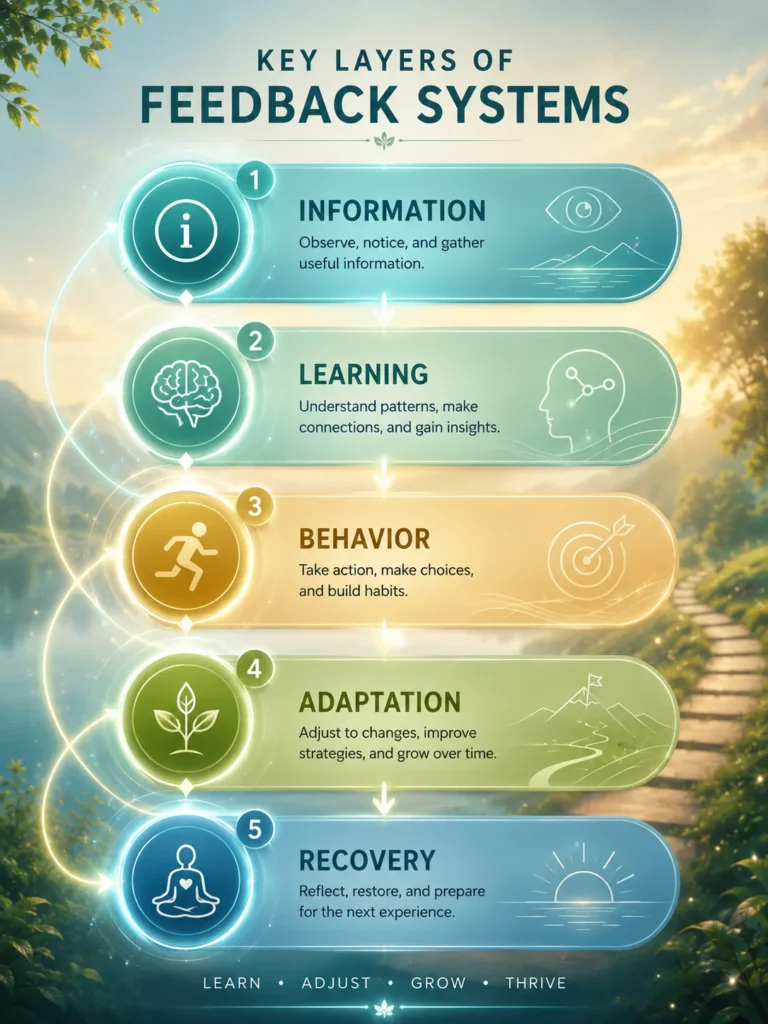
Feedback Systems contain several connected layers. These layers help explain how information moves from experience to learning and then to future action.
Although the process may seem simple, many different parts work together. Information must be noticed, understood, applied, and repeated. Because of this, Feedback Systems involve much more than a single response.
The main layers include information, learning, behavior, adaptation, and recovery. Each layer contributes something important to the overall process.
For example, information provides the feedback. Learning helps interpret that information. Behavior turns learning into action. Adaptation develops over time. Recovery provides opportunities for reflection and restoration.
Together, these layers help explain how people learn from experience and gradually improve their responses to changing situations.
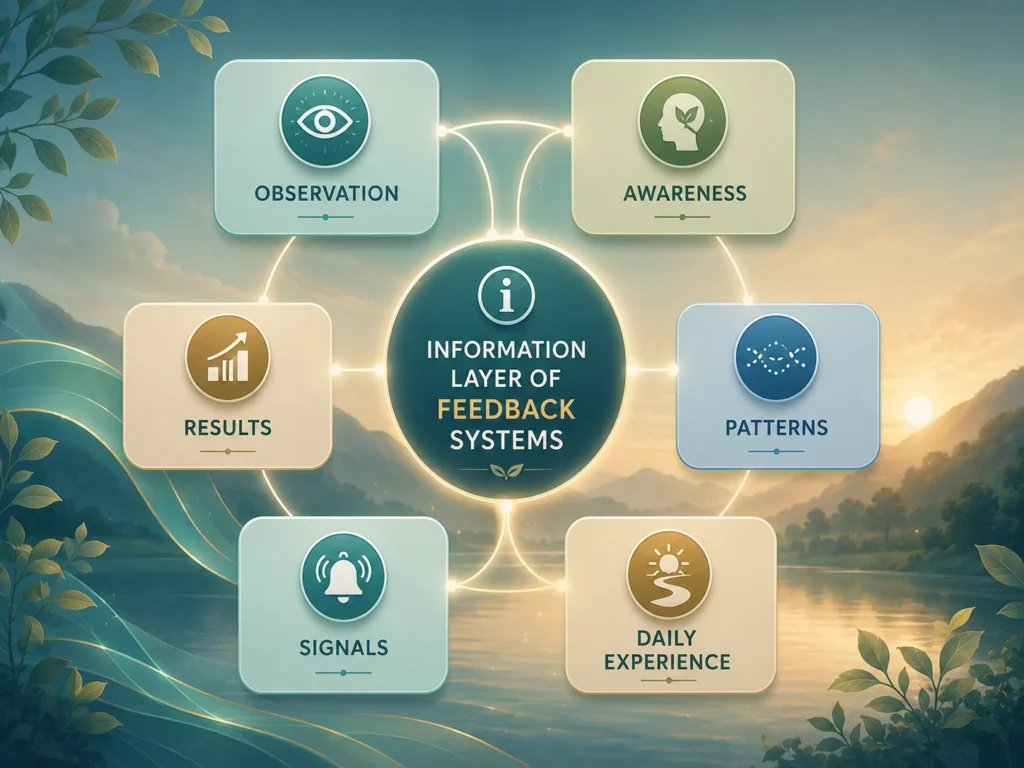
Information Layer of Feedback Systems
The Information Layer is the foundation of every Feedback System. Before people can learn, adjust, or adapt, they first need information. This information helps them understand what is happening, what has changed, and what may require attention.
Every day, people receive information from many different sources. Some information comes from personal experiences. Other information comes from conversations, observations, routines, results, or the environment. Because information is everywhere, people constantly receive feedback whether they realize it or not.
However, information alone is not enough. People must notice it, understand it, and decide whether it is useful. Therefore, the Information Layer plays a critical role in the overall feedback process.
Information Comes From Many Sources
Information can come from almost any experience. A person may receive information from a conversation, a daily routine, a work task, a learning experience, or a personal goal.
For example, someone learning a new skill may notice steady improvement after regular practice. Another person may observe that a specific routine helps them stay organized. In both situations, information becomes available through experience.
Because people interact with many situations every day, information constantly enters the feedback process.
Observation Creates Awareness
Observation is the ability to notice what is happening. It helps people recognize results, patterns, and changes that might otherwise be missed.
For example, a person may notice that they feel more productive when following a certain routine. Another person may observe that a particular approach helps them stay focused during difficult tasks.
As a result, observation often creates greater awareness. Once people become aware of patterns, they can make more informed decisions about future actions.
Recognizing Patterns
Patterns are repeated experiences or repeated results. Recognizing these patterns helps people understand how actions and outcomes are connected.
For example, a person may notice that regular preparation improves performance. Another person may discover that rushing through a task often creates problems. Over time, these repeated observations form recognizable patterns.
Because patterns provide useful information, they often become important sources of feedback.
Information Quality Matters
Not all information is equally useful. Some information is clear and reliable. Other information may be incomplete, confusing, or difficult to interpret.
For example, making a decision based on one isolated event may provide limited insight. However, observing repeated experiences over time often provides a clearer picture.
Therefore, high-quality information helps support better learning, better adjustments, and more effective adaptation.
Information as the Starting Point
Every Feedback System begins with information. Without information, there is nothing to learn from and nothing to adjust.
For this reason, the Information Layer acts as the starting point of the feedback cycle. It provides the raw material that supports awareness, learning, decision-making, and future adaptation.
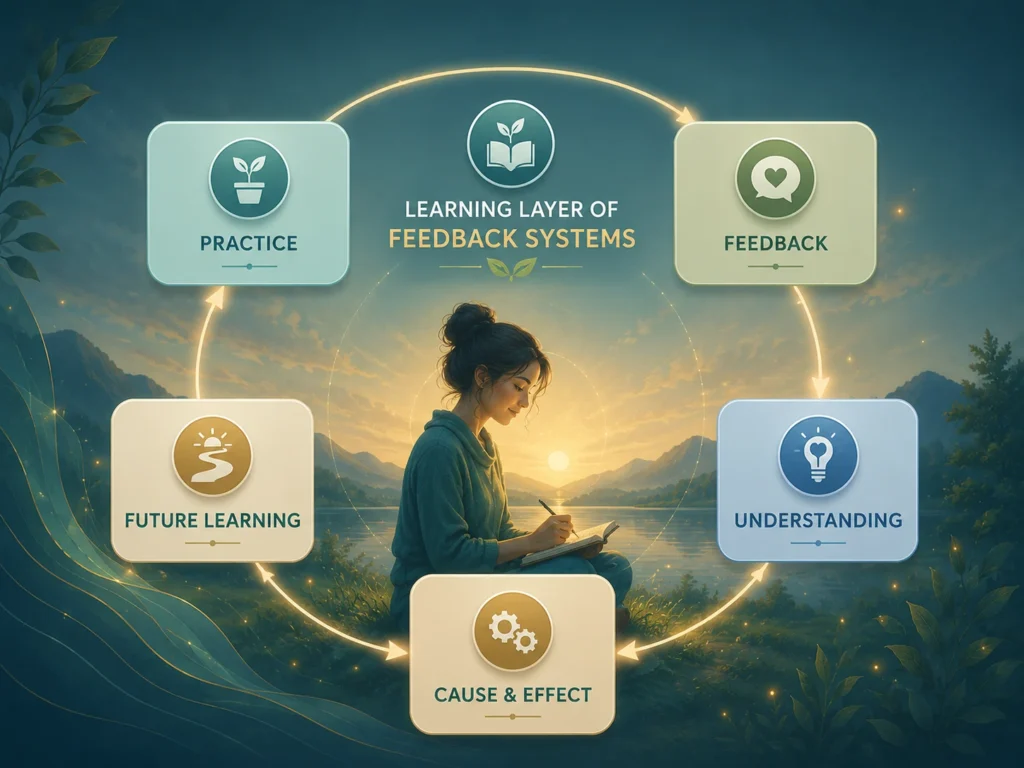
Learning Layer of Feedback Systems
Once information becomes available, learning can begin. The Learning Layer focuses on how people interpret information, gain understanding, and use experience to improve future responses.
Learning does not happen only in schools or training programs. Instead, it happens throughout everyday life. People learn from successes, mistakes, observations, conversations, routines, and personal experiences. Because of this, learning is one of the most active parts of any Feedback System.
Feedback becomes valuable when it creates understanding. As people learn from information, they become better able to recognize patterns, solve problems, and make adjustments.
Learning Through Experience
Experience is one of the most common sources of learning. Every action creates a result. Then that result provides information that can influence future decisions.
For example, someone trying a new strategy may discover that it works well. Another person may learn that a different approach creates better results. In both cases, experience provides opportunities for learning.
Therefore, experience often acts as a bridge between information and future action.
Understanding Cause and Effect
Learning helps people understand connections between actions and outcomes. This understanding is sometimes called cause and effect.
For example, a person may notice that careful preparation improves performance. Another person may discover that consistency helps build habits.
As a result, learning helps people see how actions can influence future results.
Building Knowledge Over Time
Learning rarely happens all at once. Instead, knowledge usually develops gradually through repeated experiences.
Each experience adds new information. Then that information contributes to a larger understanding. Over time, small lessons can build into meaningful knowledge.
Because of this gradual process, learning often becomes stronger through repetition and continued experience.
Learning Supports Growth
Growth depends on learning. When people understand more about situations, patterns, and experiences, they can respond more effectively.
Therefore, the Learning Layer helps transform information into understanding. That understanding then becomes the foundation for future adjustments, adaptation, and long-term development.
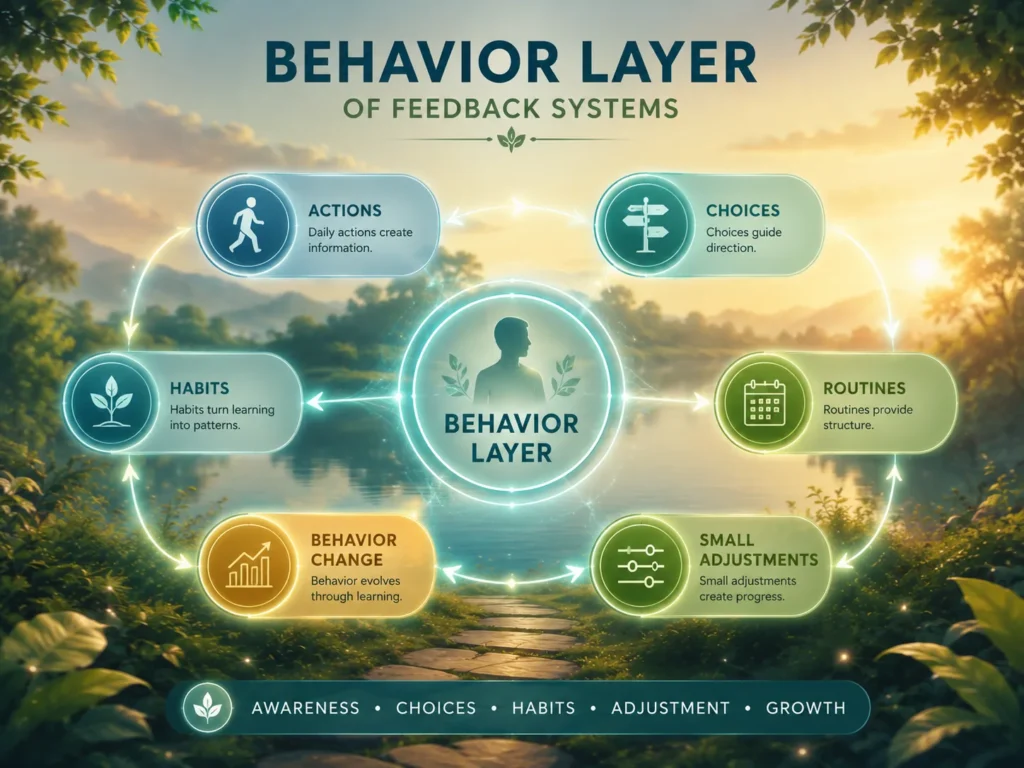
Behavior Layer of Feedback Systems
The Behavior Layer focuses on actions. While information and learning are important, feedback becomes most useful when it influences behavior. In other words, people often use feedback to decide what to continue, what to change, and what to improve.
Every day, people make choices based on previous experiences. Some actions are repeated because they seem helpful. Other actions are adjusted because they create different results than expected. Because of this process, behavior and feedback are closely connected.
The Behavior Layer helps explain how learning moves from understanding into action. As a result, it plays a major role in growth, adaptation, and everyday decision-making.
Feedback Influences Actions
People rarely make decisions in complete isolation. Instead, previous experiences often influence future choices.
For example, a person may continue a routine that helps them stay organized. Another person may change a habit after noticing that it creates unnecessary stress. In both situations, feedback helps guide behavior.
Therefore, feedback often acts as a practical tool for making adjustments.
Small Changes Can Create Big Results
Behavior does not always change dramatically. In many cases, small adjustments happen first.
A person may wake up earlier, organize tasks differently, spend more time practicing a skill, or improve a daily routine. Although these changes may seem minor, they can create meaningful differences over time.
As a result, gradual adjustments often become an important part of long-term improvement.
Habits and Feedback
Habits develop through repeated actions. Feedback helps people understand whether those actions support their goals and needs.
For example, someone may notice that a specific habit makes daily tasks easier. Another person may discover that a different habit creates challenges. This information can influence future behavior.
Because habits involve repetition, feedback often becomes an important part of habit development.
Behavior Creates New Feedback
An important part of the feedback process is that behavior creates more feedback.
When people change an action, they create a new experience. That experience generates new information. Then the cycle begins again.
Therefore, Feedback Systems should be viewed as ongoing processes rather than one-time events.
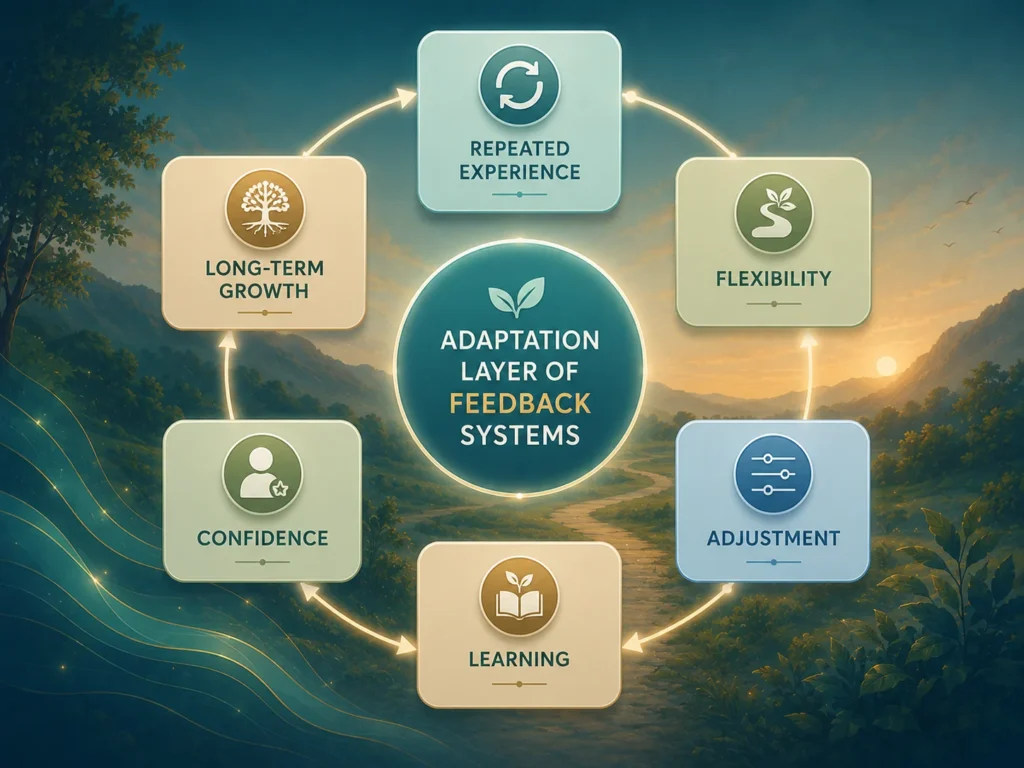
Adaptation Layer of Feedback Systems
The Adaptation Layer focuses on long-term change. Adaptation happens when learning, feedback, and behavioral adjustments continue over time.
People constantly face new situations, new responsibilities, and new experiences. Because life changes, adaptation becomes an important part of daily functioning.
Feedback helps support adaptation by providing information that guides future responses. As a result, people often become more familiar, flexible, and effective when facing similar situations in the future.
Adaptation Happens Gradually
Many people expect change to happen quickly. However, adaptation usually develops step by step.
A person may learn a little from one experience. Then they learn more from the next experience. Over time, these lessons build on one another.
Therefore, adaptation often develops through many small adjustments rather than one major change.
Experience Supports Adaptation
Experience provides opportunities for learning. Every experience creates information. Then that information can be used to guide future actions.
For example, a person who repeatedly practices a skill often becomes more familiar with it. Likewise, someone who faces a challenge multiple times may develop greater confidence and understanding.
Because experience creates learning opportunities, it plays a major role in adaptation.
Flexibility and Adjustment
Adaptation often involves flexibility. Instead of responding the same way in every situation, people learn how to adjust when circumstances change.
For example, a person may use different strategies depending on the environment, the challenge, or the goal. This ability to adjust can support learning and resilience.
As a result, flexibility becomes an important part of successful adaptation.
Adaptation and Long-Term Growth
Growth often develops when adaptation continues over time. Small lessons become larger patterns. Small adjustments become new habits. Repeated experiences create deeper understanding.
Therefore, adaptation helps explain how learning and feedback can contribute to long-term development.
Recovery Layer of Feedback Systems
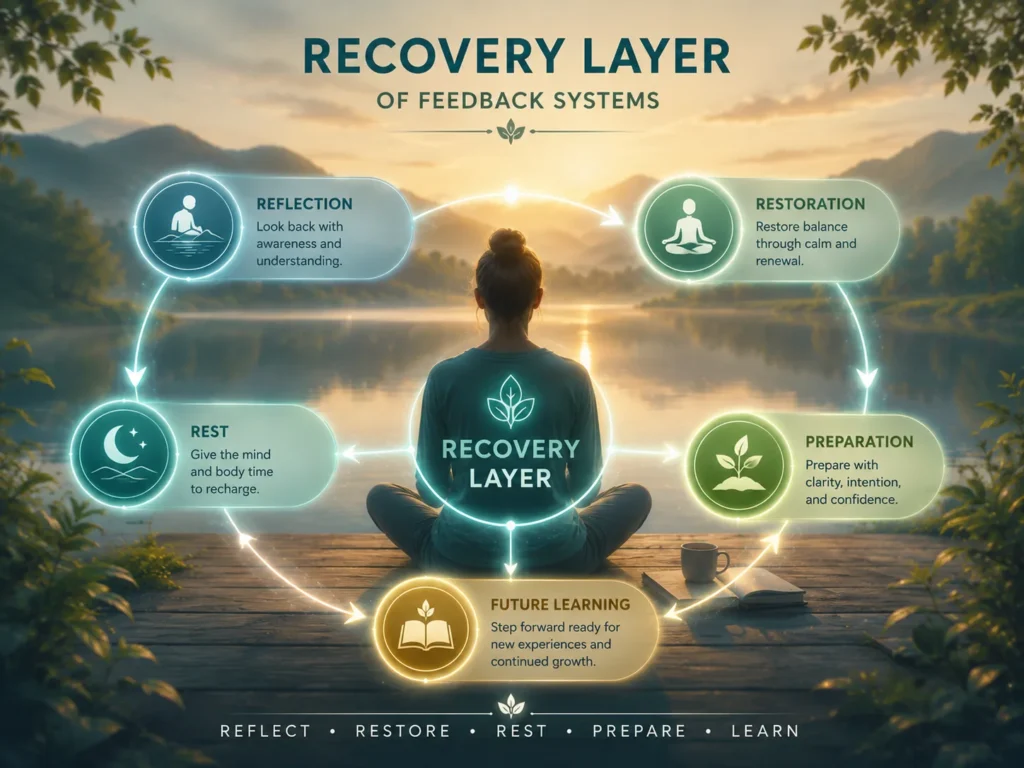
The Recovery Layer focuses on restoration, reflection, and preparation for future learning. While feedback often emphasizes action and adjustment, recovery provides time to process information and prepare for future experiences.
Without recovery, it can be difficult to maintain attention, learning, and adaptation. Therefore, recovery plays an important role within Feedback Systems.
Recovery Supports Reflection
Reflection is the process of thinking about experiences and learning from them.
For example, a person may review what worked well, what felt challenging, and what they want to do differently next time. This reflection helps transform experience into useful knowledge.
As a result, recovery often creates opportunities for deeper learning.
Recovery Helps Prepare for Future Learning
Recovery is not only about rest. It is also about preparing for future experiences.
A balanced routine, time for reflection, and opportunities to reset can help people approach future situations with greater awareness.
Therefore, recovery supports the continuation of the feedback cycle.
Recovery and Resilience
Recovery and resilience often work together. Recovery provides opportunities for restoration. Resilience helps people continue adapting when challenges arise.
Because these concepts are closely connected, recovery often supports long-term learning and adjustment.
Recovery Completes the Feedback Cycle
Information creates learning. Learning influences behavior. Behavior supports adaptation. Recovery helps prepare for the next experience.
Then the cycle begins again.
For this reason, recovery should be viewed as an essential part of Feedback Systems rather than a separate process.
Real-Life Symptom Language Bridge
Many readers arrive at Feedback Systems topics because they notice changes in how they think, learn, respond, or adapt during daily life. Some people feel stuck in repeated patterns. Others feel uncertain about decisions, habits, or responses to challenges. Because of this, they often look for ways to better understand how learning and adjustment happen.
Some readers may search for information because they experience stress, frustration, difficulty adapting to change, low confidence, decision fatigue, mental overload, or challenges with habits and routines. These experiences can have many different causes. Therefore, Feedback Systems should never be viewed as the only explanation.
Instead, this topic helps explain one layer of learning and adaptation. It focuses on how information, experience, feedback, and adjustment can influence future responses. However, severe emotional distress, worsening mental health concerns, or significant changes in daily functioning should always be discussed with qualified healthcare professionals.
Everyday Examples People Often Describe
People often describe feedback-related experiences using simple everyday language.
For example:
- “I keep making the same mistake.”
- “I don’t know why this habit isn’t working.”
- “I learn better after practice.”
- “I feel more confident when I receive guidance.”
- “I notice patterns after repeating an activity.”
- “I learn from experience over time.”
These examples show how feedback often appears in daily life, even when people do not use the term “feedback system.”
Understanding the Bigger Picture
Learning and adaptation rarely happen because of one event. Instead, they develop through repeated experiences, observations, adjustments, and recovery.
Because many systems work together, Feedback Systems should be viewed as one part of a larger picture that includes learning, behavior, resilience, recovery, and adaptation.
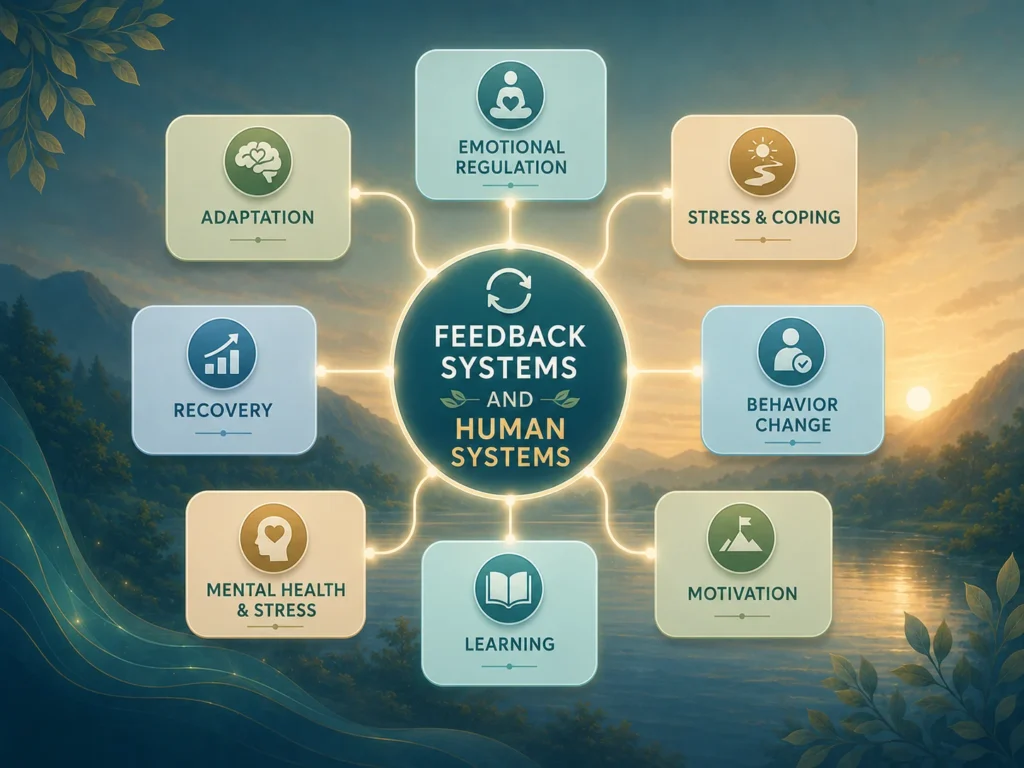
Feedback Systems and Human Systems
Feedback Systems connect closely with Human Systems topics throughout the Heal Your Nerves Naturally educational framework. This is because people learn, adjust, and adapt through interactions between thoughts, emotions, behaviors, experiences, and daily routines.
Feedback is not separate from human experience. Instead, it helps explain how people respond to information and use it to guide future actions.
Connection With Emotional Regulation
Emotions provide information. Feelings of confidence, uncertainty, excitement, or frustration can all act as forms of feedback.
For example, a person may notice that certain situations increase confidence while others create discomfort. This awareness can support future adjustments.
Therefore, Emotional Regulation and Feedback Systems share important connections.
Connection With Stress & Coping
Stress often provides information about demands, challenges, and changing circumstances.
People frequently adjust routines, behaviors, and strategies based on stressful experiences. Because of this, Feedback Systems and Stress & Coping are closely linked.
Connection With Behavior Change
Behavior Change depends heavily on feedback. People often change habits after noticing patterns, outcomes, or results.
For example, a person may continue a helpful routine because feedback suggests it is working. Likewise, they may modify a habit when feedback suggests a different approach may be more effective.
Connection With Motivation
Motivation influences whether people continue learning and adjusting. At the same time, feedback can influence motivation by providing information about progress and effort.
As a result, Feedback Systems and Motivation often work together throughout the learning process.
Feedback Systems Interactions
Feedback Systems interact with many other processes throughout daily life. Learning, decision-making, adaptation, recovery, behavior, and resilience all depend on information in some way.
Because of these interactions, feedback rarely operates alone. Instead, it influences and is influenced by many connected systems.
Feedback and Learning
Learning depends on information. Feedback provides that information.
As people receive feedback, they gain opportunities to improve understanding and make better decisions. Therefore, learning and feedback are deeply connected.
Feedback and Decision-Making
People use feedback to guide decisions. Past experiences often influence future choices.
Because of this relationship, feedback can help people make more informed decisions over time.
Feedback and Recovery
Recovery provides time to process experiences and reflect on information.
As a result, recovery often strengthens learning and supports future adaptation.
Feedback and Resilience
Resilience involves continuing to adapt despite challenges.
Feedback helps support resilience by providing information that can guide future adjustments. Therefore, resilience and feedback frequently work together.
Practical Daily-Life Examples
Feedback Systems appear throughout daily life. Most people use them without consciously thinking about the process.
For example:
- Learning a new skill
- Building a daily routine
- Improving time management
- Practicing a hobby
- Adjusting a work process
- Developing communication skills
- Solving problems
- Managing responsibilities
Each situation creates information. Then that information can influence future actions.
Because of this cycle, Feedback Systems are present in many ordinary experiences.

Feedback Systems Visual Flow
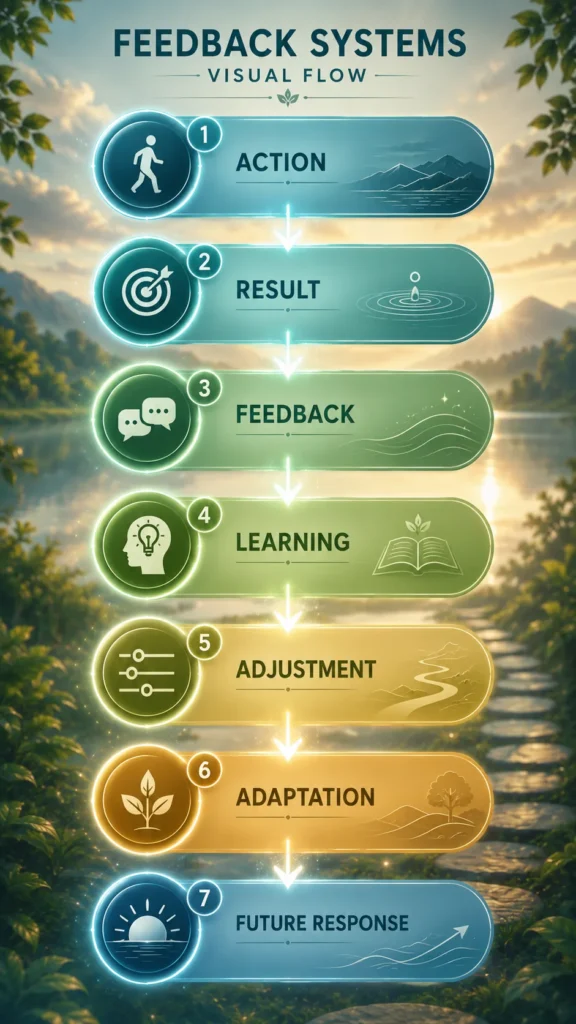
Feedback Systems often follow a simple learning cycle. Although individual experiences vary, the overall pattern remains similar.
Action → Result → Feedback → Learning → Adjustment → Adaptation → Future Response
First, an action occurs. Next, a result appears. Then feedback provides information about that result. Learning follows. Adjustments are made. Adaptation develops over time. Finally, future responses become more informed.
Because the cycle repeats, learning and adaptation can continue throughout life.
Why Visual Flow Matters
Understanding the feedback cycle helps readers see how growth often develops.
Rather than appearing instantly, improvement usually happens through repeated experiences, information, and adjustments.
As a result, Feedback Systems provide a useful framework for understanding long-term learning and adaptation.
Why Feedback Systems Matter
Feedback Systems matter because they help people learn, adjust, and improve over time. Every experience creates information. Then that information can guide future actions and decisions. Because of this process, feedback becomes an important part of learning and personal growth.
People often face new situations, unexpected challenges, and changing responsibilities. Without feedback, it would be much harder to understand what is working well and what may need adjustment. Therefore, Feedback Systems provide a practical way to learn from experience and respond to change.
Rather than focusing only on results, Feedback Systems help people understand the process behind those results. As a result, they support learning, adaptation, resilience, and long-term development.
Supporting Learning
Learning depends on information. Feedback provides that information.
For example, a person learning a new skill receives information through practice and experience. Each attempt creates new feedback. Then that feedback helps guide future improvement.
Because learning happens throughout life, feedback remains one of the most valuable tools for gaining knowledge and understanding.
Supporting Adaptation
Adaptation happens when people continue learning and adjusting over time.
Feedback helps support adaptation by showing what is working and what may need to change. As people gain experience, they often become more familiar with situations and more confident in their responses.
Therefore, feedback plays an important role in helping people adapt to new challenges and opportunities.
Supporting Better Decisions
People make decisions every day. Some choices are simple, while others require careful thought.
Feedback provides useful information that can improve future decision-making. For example, past experiences often help people recognize patterns and avoid repeating ineffective approaches.
As a result, feedback can contribute to more informed and effective decisions.
Supporting Long-Term Growth
Growth rarely happens overnight. Instead, it often develops through many small experiences, adjustments, and learning opportunities.
Feedback helps support this process by providing information that guides improvement over time. Because of this, long-term growth often depends on repeated cycles of action, feedback, learning, and adaptation.
Therefore, Feedback Systems help explain how people continue developing throughout life.
Common Misunderstandings About Feedback Systems
Many people misunderstand Feedback Systems. Some believe feedback only means criticism. Others assume feedback is only useful in schools or workplaces. However, feedback is much broader than these common assumptions.
Understanding these misconceptions can help readers develop a clearer view of how feedback supports learning and adaptation.
Misunderstanding: Feedback Means Criticism
One of the most common misunderstandings is that feedback only involves pointing out mistakes.
In reality, feedback can be positive, supportive, informative, corrective, or encouraging. It simply provides information about an action, experience, or result.
Therefore, feedback should be viewed as a learning tool rather than a form of judgment.
Misunderstanding: Feedback Only Comes From Other People
Many people think feedback only comes from teachers, managers, coaches, or other individuals.
However, feedback can also come from personal experiences, observations, routines, habits, and results. Sometimes the most valuable feedback comes from noticing patterns in everyday life.
Because of this, feedback can come from many different sources.
Misunderstanding: Feedback Creates Instant Change
People often expect feedback to produce immediate improvement. However, meaningful change usually takes time.
Learning, adjustment, and adaptation often develop through repeated experiences. Therefore, feedback should be viewed as part of an ongoing process rather than a quick solution.
Misunderstanding: More Feedback Is Always Better
While feedback can be helpful, more information is not always better information.
Sometimes too much information creates confusion. In contrast, clear and relevant feedback often provides greater value.
As a result, the quality of feedback is often more important than the quantity.
Misunderstanding: Feedback Is Only for Learning New Skills
Feedback is useful for much more than learning skills.
People use feedback in relationships, communication, routines, decision-making, problem-solving, personal growth, and everyday life. Therefore, feedback remains relevant in many different situations.
The Bigger Picture
Feedback Systems help explain how people learn from experience, recognize patterns, make adjustments, and adapt to change.
Rather than focusing on perfection, Feedback Systems focus on continuous learning. As a result, they provide a practical framework for understanding growth, resilience, recovery, and adaptation over time.
Related Condition Connections
Some readers explore Feedback Systems because they want to better understand learning, adaptation, decision-making, and daily function. Others may be interested in how information, habits, and responses influence everyday experiences.
Some people search for these topics because they notice challenges with focus, learning, routines, confidence, problem-solving, or adapting to change. However, these experiences can have many different causes. Therefore, Feedback Systems should never be viewed as the only explanation.
Instead, this topic helps explain how information and experience can influence future responses. It focuses on learning, adjustment, and adaptation rather than diagnosis or treatment.
Related educational condition pages include:
These pages explore different experiences and conditions that may influence daily function. As a result, they can help readers build a broader understanding of nervous system health.
How Feedback Systems Connect With Other Nerve Health Pages
Feedback Systems do not operate in isolation. Instead, they connect with many other topics throughout the Heal Your Nerves Naturally educational framework. This is because learning, adjustment, recovery, and adaptation influence many different aspects of human experience.
For example, Adaptation Engineering explores how people adjust to change over time. Load Management focuses on balancing demands and capacity. Protocol Design explains how structured approaches can guide progress. Meanwhile, Healing Sequencing examines how timing and order may influence learning and recovery.
Together, these topics help explain how information becomes learning, how learning influences behavior, and how adaptation develops over time.
Connections With Human Systems
Feedback Systems also connect closely with Human Systems topics.
For example:
These topics influence how people interpret information, respond to experiences, and make adjustments in daily life.
Connections With Recovery Engineering
Recovery Engineering topics share especially strong connections with Feedback Systems.
Examples include:
These pages explore different parts of the learning, adjustment, and adaptation process. Therefore, Feedback Systems act as one of the foundation concepts within the Recovery Engineering cluster.
Topic Cluster Placement
Within the Heal Your Nerves Naturally educational framework, Feedback Systems belong primarily within the Recovery Engineering cluster.
This topic acts as a bridge between information, learning, adjustment, recovery, resilience, and adaptation. Because of this role, it connects naturally with multiple systems across the site.
Feedback helps explain how people learn from experience. It also helps explain how future actions become more informed through repeated cycles of observation and adjustment.
Primary Cluster
Direct Connections
• Recovery Capacity and Nervous System Resilience
Supporting Connections
As a result, Feedback Systems serve as one of the core educational topics within the Recovery Engineering cluster.
Feedback Systems FAQ
What are Feedback Systems?
Feedback Systems are processes that help people learn from information, experiences, and results. They help guide future decisions, actions, and adjustments.
Why are Feedback Systems important?
They help people understand what is happening, recognize patterns, learn from experience, and adapt to change over time.
Do Feedback Systems only exist in schools or workplaces?
No. Feedback Systems appear throughout daily life, including routines, relationships, hobbies, habits, learning experiences, and decision-making.
Is feedback always criticism?
No. Feedback can be positive, supportive, informative, corrective, or encouraging. It simply provides information that can guide future actions.
How does feedback support learning?
Feedback provides information about results. That information helps people understand what worked, what did not work, and what may need adjustment.
Why does adaptation depend on feedback?
Adaptation requires information. Feedback provides that information and helps guide future learning and adjustment.
Can people learn without feedback?
Learning can still occur, but feedback often makes learning clearer and more effective because it provides useful information about outcomes.
What role does observation play?
Observation helps people notice patterns, results, and changes. Therefore, it is an important part of the feedback process.
How do Feedback Systems relate to recovery?
Recovery provides time to reflect, process information, and prepare for future learning experiences.
Are Feedback Systems connected to resilience?
Yes. Feedback helps people learn from challenges, make adjustments, and continue adapting over time.
Do Feedback Systems guarantee success?
No. Feedback provides information, but individual outcomes depend on many factors, including experience, learning, decisions, and circumstances.
Is this page providing medical advice?
No. This page discusses Feedback Systems as an educational concept. It does not provide diagnosis, treatment, or medical advice.
Continue Learning
Feedback Systems connect with many other topics throughout the Heal Your Nerves Naturally educational framework. Exploring related pages can help readers develop a deeper understanding of learning, adaptation, recovery, resilience, and long-term growth.
To continue learning, consider exploring:
• Recovery Capacity and Nervous System Resilience
Together, these topics help explain how information, learning, adjustment, recovery, and adaptation interact throughout daily life.
Sources / References
The following educational resources provide reliable information about learning, adaptation, neuroscience, behavior, decision-making, recovery, and human performance. Readers who want to explore these topics in greater depth may find these sources helpful.
• National Institutes of Health (NIH)
• National Institute of Neurological Disorders and Stroke (NINDS)
• National Center for Biotechnology Information (NCBI)
• American Psychological Association (APA)
• Centers for Disease Control and Prevention (CDC)
These organizations provide educational information about learning, resilience, adaptation, health, behavior, and nervous system function.
Author / Editorial Trust Note
This page was created as part of the Heal Your Nerves Naturally educational platform. The goal is to explain complex topics in a clear, practical, and user-friendly way so readers can better understand learning, adjustment, adaptation, and resilience.
Whenever possible, technical concepts are explained using simple language and real-life examples. As a result, readers can explore important ideas without needing specialized scientific knowledge.
The purpose of this page is education and awareness. It is designed to help readers understand how Feedback Systems contribute to learning, recovery, behavior, and long-term growth.
Educational Trust Note
Feedback Systems are studied across many fields, including neuroscience, psychology, education, behavioral science, rehabilitation, human performance, and organizational learning.
As research continues to grow, understanding also continues to evolve. Therefore, this page focuses on broad educational principles rather than specific methods, treatments, or interventions.
The goal is to help readers understand how information, experience, learning, and adaptation work together throughout life.
Safety & Education Notice
This page is for educational purposes only. It does not diagnose, treat, cure, or prevent any disease or medical condition.
Symptoms such as severe emotional distress, significant cognitive changes, worsening mental health concerns, loss of function, unusual neurological symptoms, or other serious health issues should be evaluated by qualified healthcare professionals.
Feedback Systems should be viewed as an educational topic that helps explain learning, adjustment, adaptation, resilience, recovery, and personal growth. It should not replace professional medical advice, diagnosis, or treatment.