
Emotional Regulation: A Simple Guide to Nervous System Balance
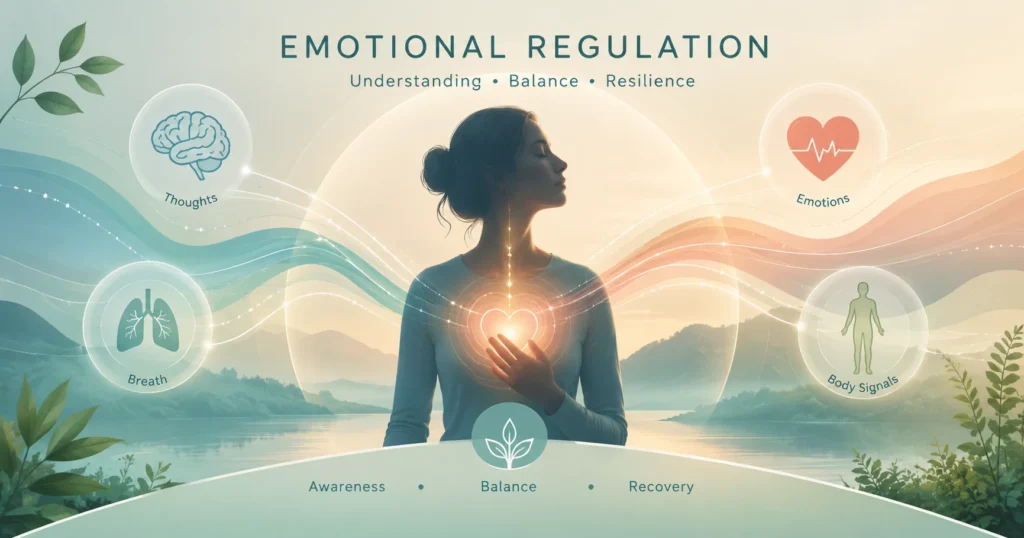
Emotional Regulation is the body and mind’s ability to notice, understand, and respond to emotional signals without becoming fully overwhelmed by them. It is not about hiding feelings, forcing calmness, or acting strong when the body feels overloaded. Instead, emotional regulation helps explain how emotions, thoughts, body sensations, stress response, sleep rhythm, and coping patterns may work together as part of a wider human system. Because of this, the topic belongs inside the Human Systems cluster, not only inside mental health language.
From a nerve-health education view, emotional regulation may matter because emotional stress can interact with muscle tension, breathing rhythm, attention, sleep quality, sensory sensitivity, and recovery demand. However, it should never be used as the only explanation for nerve pain, tingling, numbness, burning feelings, weakness, or other symptoms. Those symptoms can have many causes and may need proper medical evaluation. Therefore, this page explains emotional regulation as one possible educational lens, not as a diagnosis, treatment, or cure.
Many readers also search for emotion regulation, emotional regulation skills, emotional regulation mindfulness, how to regulate emotions, and the best techniques for emotional regulation. This page uses those ideas in a safe way. It does not teach medical therapy or replace professional care. Instead, it explains how emotional awareness, body signals, coping patterns, and recovery windows may help readers understand nervous system balance more clearly.
Quick Navigation
— #what-is-emotional-regulation
— #plain-meaning-emotional-regulation
— #
— #
— #
— #
— #
— #
— #
— #
— #
— #
— #
— #
— #
— #
— #
— #
— #
What Is Emotional Regulation?
“What is emotional regulation?” is a common question because many people feel emotions in both the mind and the body. Emotional Regulation means the way a person notices feelings, understands them, and responds to them over time. It includes emotional awareness, thought patterns, body signals, coping skills, stress response, and social support. In simple terms, it is the system that helps emotions move through the body without controlling every reaction.
However, emotional regulation does not mean a person should always feel calm. Fear, sadness, anger, worry, frustration, grief, and emotional tiredness are normal human experiences. When emotional load stays high for a long time, the body may remain more alert. As a result, sleep, attention, muscle tension, digestion, and daily energy may also feel affected. Therefore, emotional regulation can be understood as a flexible response system, not a demand to feel positive all the time.
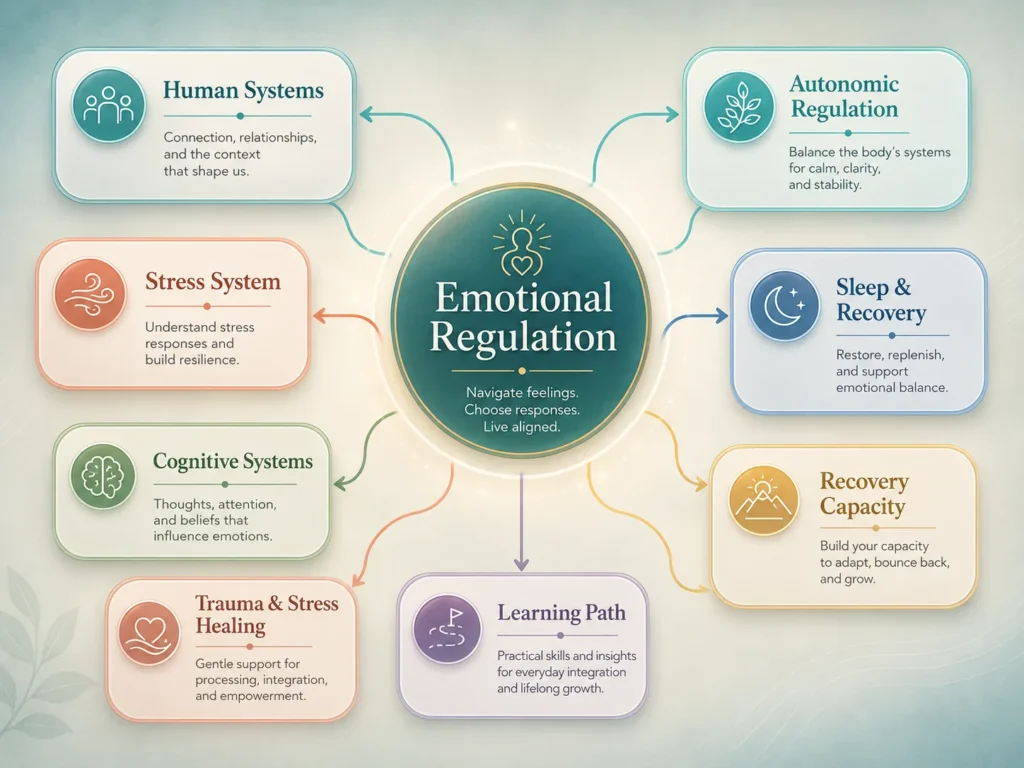
From a nervous system view, emotional regulation can be understood as one layer of body-wide regulation. It may interact with Autonomic Regulation, the Stress System, breathing rhythm, pain processing, and recovery capacity. Meanwhile, it may also connect with emotion regulation skills, emotional regulation mindfulness, and daily coping patterns. These ideas can help readers understand how emotions and body signals may communicate without assuming emotions are the only cause of symptoms.
Plain Meaning / Glossary Box
Emotional Regulation
The ability to notice and respond to emotions without becoming completely overwhelmed. It does not mean hiding feelings. Instead, it means the body and mind can move through emotions with more awareness, flexibility, and recovery space.
Emotion Regulation
Another common way to describe the same idea. Some readers search for emotion regulation when they want to understand how feelings, thoughts, body reactions, and behavior work together during stress or emotional pressure.
Emotional Load
The amount of emotional demand a person is carrying. For example, conflict, worry, grief, fear, pressure, and uncertainty may all add to emotional load over time.
Stress Response
The body’s alert system that helps a person respond to pressure, threat, or demand. It may change breathing, heart rate, muscle tone, attention, and energy.
Emotional Regulation Skills
General skills that may help people notice emotions, pause, reflect, communicate, and recover more safely. This page discusses them as education only, not as therapy instructions.
DBT Emotion Regulation Skills
Skills from Dialectical Behavior Therapy that are usually taught by trained professionals. This page may mention DBT emotional regulation skills as a recognized concept, but it does not teach therapy or replace mental health care.
Emotional Regulation Mindfulness
A gentle awareness practice that may help a person notice emotions and body signals without reacting immediately. It should be used safely and may not be enough for trauma, crisis, or severe distress.
Recovery Capacity
The body’s ability to restore energy, calm signals, and rebuild stability after demand. Emotional regulation may interact with recovery capacity through stress load, sleep, coping patterns, and nervous system balance.
How Emotional Regulation Works
First, the brain and body notice a signal. This signal may come from a difficult conversation, a memory, a body sensation, a conflict, uncertainty, pain, or sensory overload. Next, the nervous system checks whether the signal feels safe, stressful, painful, or threatening. Because of this, emotion is not only a thought. It is also a body-based response that may involve breathing, muscle tone, heart rhythm, attention, and energy.
After that, the body may respond with alertness, tension, restlessness, sadness, anger, freezing, crying, or mental overload. However, these reactions are not signs of weakness. Instead, they show that the body is trying to respond to demand. Therefore, learning about emotional regulation can help readers understand how emotional signals and body signals may work together before a reaction becomes too strong.
Over time, repeated emotional stress may make the system more reactive. As a result, small events may feel larger than expected, and physical discomfort may feel harder to tolerate. Meanwhile, poor sleep, ongoing worry, and low recovery time may increase this pattern. This is one reason emotional regulation connects with Mental Stress and Nervous System Load, nervous system balance, and recovery capacity.
Key Layers of Emotional Regulation
Emotional Awareness Layer
Emotional awareness is the ability to notice what is happening inside before the reaction becomes too strong. A person may recognize fear, sadness, anger, worry, shame, grief, frustration, or emotional fatigue. However, awareness often starts with body signals rather than clear thoughts. For example, someone may notice tight shoulders, shallow breathing, a heavy chest, or restlessness before they realize they are stressed.
Therefore, emotional awareness is one of the first emotional regulation skills. It helps a person name the signal instead of reacting automatically. In simple terms, awareness creates a pause. That pause does not fix everything, and it is not a medical treatment. Still, it may help the nervous system shift from automatic reaction toward clearer understanding and safer response choices.
Stress Response Layer
The stress response helps the body prepare for action. It may increase alertness, attention, heart rate, breathing speed, and muscle readiness. In short bursts, this response can be useful. However, long-term emotional stress may place extra demand on the body and may reduce the system’s ability to settle after pressure has passed.
For example, ongoing worry, conflict, financial pressure, caregiving load, social stress, or unresolved trauma may keep the body in a more activated state. As a result, sleep and recovery may become harder. This layer connects emotional regulation with the Stress System, autonomic response, and nervous system balance. Even so, stress should not be blamed for every symptom.
Thought Interpretation Layer
Thoughts can shape how emotions feel. The same event may feel different depending on how the brain interprets it. For example, a body sensation may feel less frightening when it is understood calmly. However, it may feel more stressful when the mind reads it as immediate danger. Because of this, thought patterns may influence emotional intensity.
This does not mean symptoms are “only in the mind.” Instead, it means thoughts and body signals can interact. Therefore, emotional regulation also connects with Cognitive Load, Rumination, and Nervous System Fatigue, especially when repeated worry keeps the system alert. From an educational view, learning how to regulate emotions often begins with noticing the story the mind adds to the signal.
Body Sensation Layer
Emotions often appear in the body. A person may notice chest tightness, stomach discomfort, jaw tension, restlessness, fatigue, a heavy feeling, or a sense of inner pressure. These sensations can increase worry, especially when the person does not understand them. Therefore, body awareness may be part of emotion regulation skills.
From an educational view, body sensations may reflect stress response, muscle tension, breathing changes, poor sleep, or sensory overload. However, this page does not diagnose symptoms. Instead, it explains how emotional patterns and physical signals may interact as one possible layer of nervous system education. Severe, sudden, unusual, or worsening symptoms should always be taken seriously.
Coping Pattern Layer
Coping patterns are the ways people respond to emotional load. Some patterns may help the system settle, while others may increase demand over time. For example, avoidance, overworking, constant checking, poor sleep, isolation, emotional suppression, and endless rumination may keep the nervous system under pressure. As a result, the body may have fewer recovery windows.
Meanwhile, supportive conversation, steady routines, mindful awareness, rest rhythm, safe connection, and professional help when needed may support emotional processing. These examples are not cures, protocols, or treatment promises. Instead, they show how daily coping patterns may shape system load. This is where emotional regulation mindfulness can be understood safely as awareness, not as a cure.
Recovery Window Layer
After emotional stress, the body needs recovery windows. These are periods when the system can reduce alertness and restore energy. Without these windows, emotional stress may carry into sleep, work, movement, digestion, and daily comfort. Therefore, recovery time is not laziness. It is part of how the body returns toward stability.
For example, a person may move from work stress to screen overload to poor sleep without a real pause. Over time, this pattern may affect attention, mood, energy, and sensitivity. Because of this, emotional regulation is also about timing, rest, rhythm, and recovery capacity. It connects naturally with Sleep & Recovery and Recovery Capacity and Nervous System Resilience.
Real-Life Symptom Language Bridge
Some readers search for emotional regulation because they feel overwhelmed, emotionally reactive, mentally exhausted, tense, sensitive, or unable to settle after stress. Others may arrive here because they experience nerve pain, tingling, numbness, burning feelings, body sensitivity, poor sleep, emotional fatigue, or a feeling that their nervous system is always “on.” These experiences can be frustrating, especially when the cause is not obvious.
However, symptoms should never be explained by emotional regulation alone. Nerve symptoms, pain, weakness, sensory changes, and fatigue may involve many different factors, including injury, inflammation, circulation, nutrition, diabetes, autoimmune conditions, medication effects, mechanical compression, or other medical issues. Therefore, emotional regulation should be viewed as one educational layer within a much larger system rather than a complete explanation.
At the same time, emotional load may influence how strongly a person notices discomfort, how quickly the body settles after stress, and how much recovery demand the nervous system experiences. Because of this, learning about emotional regulation may help readers better understand the relationship between emotional stress, body awareness, and nervous system balance without encouraging self-diagnosis.
Emotional Regulation and Nervous System Function
Emotional regulation may connect with nervous system function because emotions are not only mental experiences. Instead, they involve communication between the brain, body sensations, stress response systems, breathing patterns, attention networks, and recovery mechanisms. Therefore, emotional experiences often have physical effects as well as mental effects.
When emotional load remains high for long periods, the nervous system may become more alert. As a result, normal sensations may feel louder, stronger, or more difficult to ignore. For example, muscle tension, fatigue, discomfort, and sensory sensitivity may become more noticeable. This does not mean emotions are causing symptoms. Rather, emotional stress may increase overall system demand.
Meanwhile, strong emotional reactions may influence sleep quality, recovery capacity, concentration, energy levels, and coping ability. Because of this, emotional regulation can be understood as one factor that may interact with nervous system regulation. Nevertheless, it should never replace medical evaluation when symptoms are severe, unusual, worsening, or difficult to explain.
Many people searching for how to regulate emotions are actually looking for ways to reduce overwhelm and improve stability. From an educational perspective, emotional regulation skills may help create more recovery space. However, they are not treatments for nerve disorders, neurological diseases, or physical injuries.
Emotional Regulation Interactions
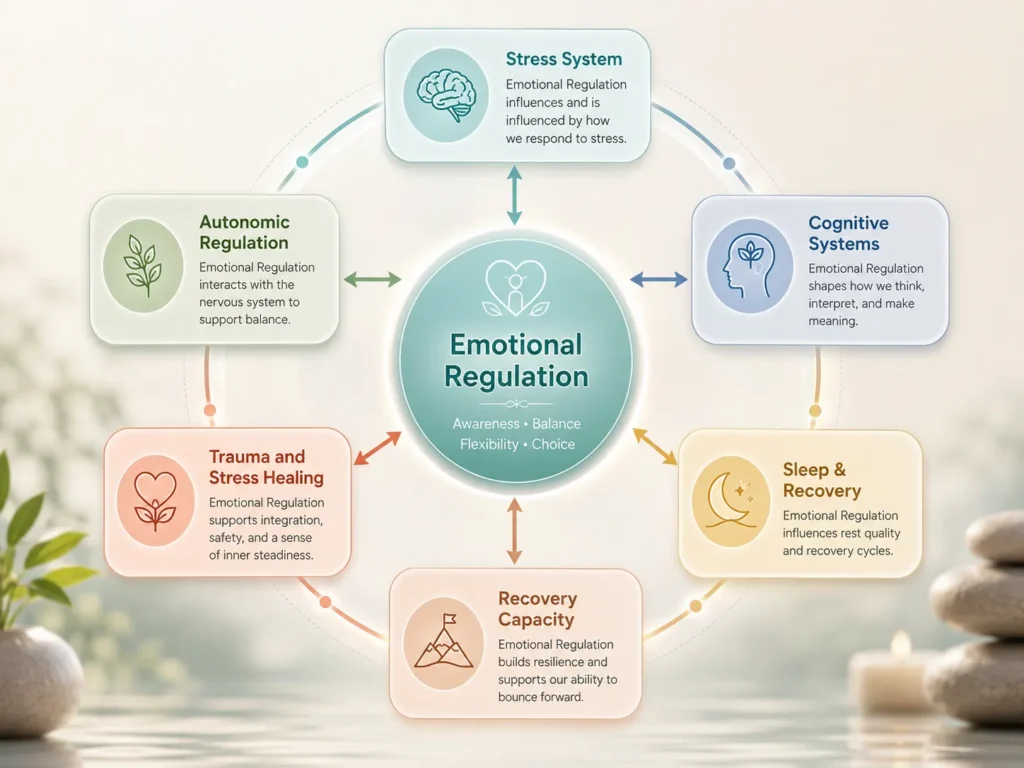
Stress System Interaction
Emotional regulation and the Stress System have a strong two-way relationship. When emotional pressure rises, the stress response may become more active. At the same time, long-term stress may make emotional regulation more difficult. Therefore, emotional overload and stress overload often reinforce each other.
For example, ongoing uncertainty, relationship difficulties, work pressure, financial concerns, or health worries may increase emotional demand. As a result, the nervous system may remain in a more alert state. However, this does not mean stress is the cause of every symptom. Instead, stress should be understood as one system that interacts with many others.
Autonomic Regulation Interaction
The Autonomic Regulation system controls many automatic functions, including heart rate, digestion, breathing rhythm, temperature control, and alertness patterns. Emotional experiences often influence these functions. Therefore, emotional regulation and autonomic regulation frequently overlap.
For example, fear may increase alertness and muscle readiness, while sadness may reduce energy and motivation. Meanwhile, emotional relief may help the body settle more easily. Because of this, emotional states and body states often communicate with one another. Understanding this connection may help readers develop a more balanced view of nervous system regulation.
Cognitive Systems Interaction
Thoughts, beliefs, attention, memory, and interpretation patterns may shape emotional responses. Therefore, emotional regulation is closely connected with future Cognitive Systems education pages. When attention repeatedly focuses on threat, uncertainty, or negative outcomes, emotional intensity may increase.
At the same time, strong emotions may influence concentration, decision-making, memory, and attention. As a result, emotional and cognitive systems often work together. This relationship helps explain why emotional regulation is not only about feelings. It is also about how the brain processes information and assigns meaning to experiences.
Sleep and Recovery Interaction
Sleep & Recovery and emotional regulation influence each other continuously. When sleep quality declines, emotional reactions may become stronger and harder to manage. Meanwhile, emotional stress may make restful sleep more difficult. Therefore, sleep and emotional regulation often form a cycle.
For example, a stressful day may reduce sleep quality. Then, poor sleep may increase emotional sensitivity the following day. Over time, that pattern may increase recovery demand. Because of this, emotional regulation education often includes discussions about sleep rhythm, rest, and recovery capacity.
Trauma and Stress Healing Interaction
Past stress and trauma may influence how the nervous system responds to emotional signals. Therefore, emotional regulation often appears in discussions about Trauma and Stress Healing and Trauma Stress and Nervous System Activation. However, trauma is a complex topic that deserves careful and respectful language.
For some people, emotional reactions may feel stronger because the nervous system has learned to stay alert for protection. Meanwhile, others may experience emotional numbness, disconnection, or difficulty identifying feelings. Because of this, emotional regulation should never be viewed as a simple willpower skill. Instead, it may be affected by life experience, stress history, support systems, recovery opportunities, and nervous system patterns.
Practical Daily-Life Examples
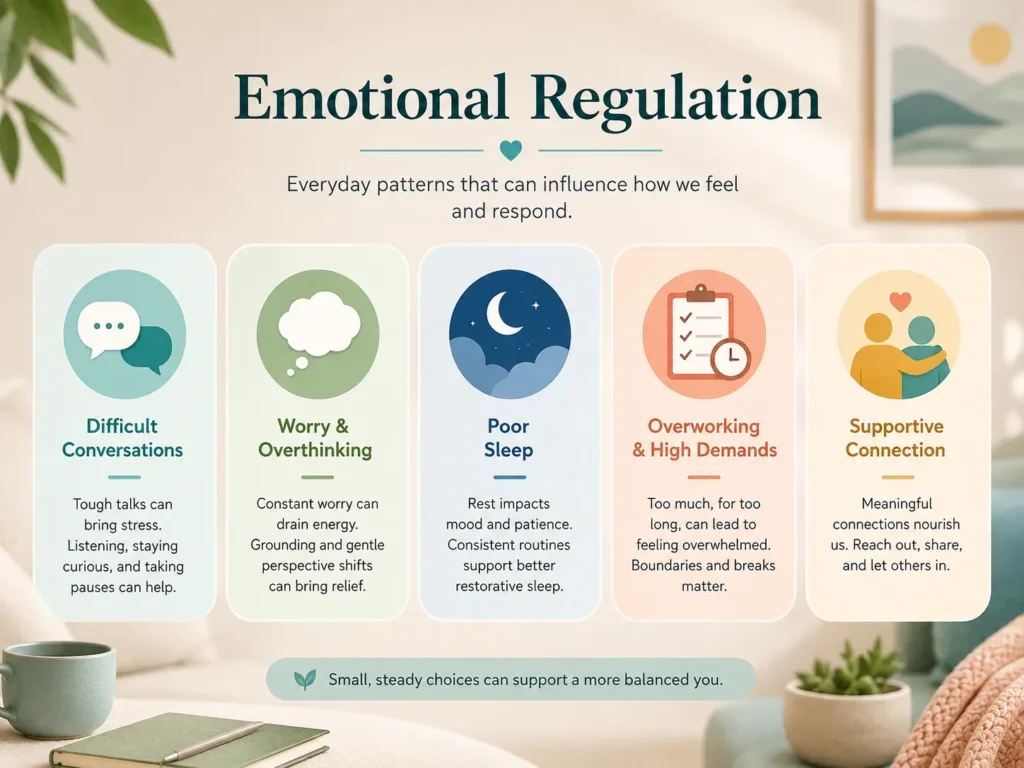
A Difficult Conversation and Emotional Recovery
A difficult conversation may continue affecting the body long after the discussion ends. For example, a person may replay the event repeatedly, feel muscle tension, experience restless sleep, or struggle to focus on daily tasks. Although the conversation itself may be over, the nervous system may still be processing the emotional demand. Therefore, the emotional response may continue even when the situation has already passed.
From an educational perspective, emotional regulation does not mean forgetting the event or pretending it did not happen. Instead, it involves recognizing the emotional signal, understanding the body response, and gradually creating space for recovery. Because of this, emotional regulation skills may help readers understand why certain experiences seem to stay with them longer than expected.
Worry, Rumination, and Body Sensitivity
Many people notice that ongoing worry makes body sensations feel stronger. For example, a small discomfort may become the center of attention when the mind repeatedly checks for problems. As a result, tension, fatigue, or sensitivity may feel more noticeable than before. However, this does not mean the sensation is imaginary.
Instead, attention and emotional load may influence how strongly the nervous system responds to information. Therefore, learning how to regulate emotions may sometimes involve noticing when attention is trapped in repetitive worry patterns. At the same time, this topic connects naturally with Mental Stress and Nervous System Load, because worry, emotional pressure, and body alertness may influence one another.
Poor Sleep and Emotional Reactivity
Sleep and emotional regulation often influence each other. When sleep quality is poor, emotional reactions may become stronger, patience may decrease, and recovery may feel slower. Meanwhile, emotional stress may make restful sleep more difficult. Consequently, a cycle can develop in which poor sleep increases emotional sensitivity while emotional stress further disrupts sleep.
Because of this relationship, emotional regulation connects naturally with Sleep & Recovery. However, the goal is not perfect sleep or perfect emotions. Instead, the goal is understanding how recovery, sleep rhythm, emotional load, and nervous system stability may interact within a larger education framework.
Overworking Without Recovery Windows
Some people move from one demand to another without allowing the body time to settle. For example, work pressure may be followed by family responsibilities, digital stimulation, and poor sleep. As a result, the nervous system may remain active for much longer than intended.
Over time, this pattern may increase emotional fatigue, reduce resilience, and make emotional responses feel stronger. Therefore, emotional regulation can also be viewed as the ability to recognize when the system needs recovery rather than constant performance. This perspective connects with Recovery Capacity and Nervous System Resilience, because recovery depends on rhythm, rest, and lower system overload.
Social Support and Emotional Processing
Supportive relationships may influence emotional regulation because humans are social beings. A calm conversation, understanding listener, trusted friend, or supportive community may help some people process emotional experiences more effectively. However, support does not mean giving advice, forcing positivity, or fixing every problem.
Instead, healthy connection may provide a sense of safety that helps the nervous system settle. Because of this, emotional regulation belongs inside Human Systems, not only inside stress education. It may involve social connection, communication patterns, emotional awareness, and safe support environments that help the body move through emotional demand.
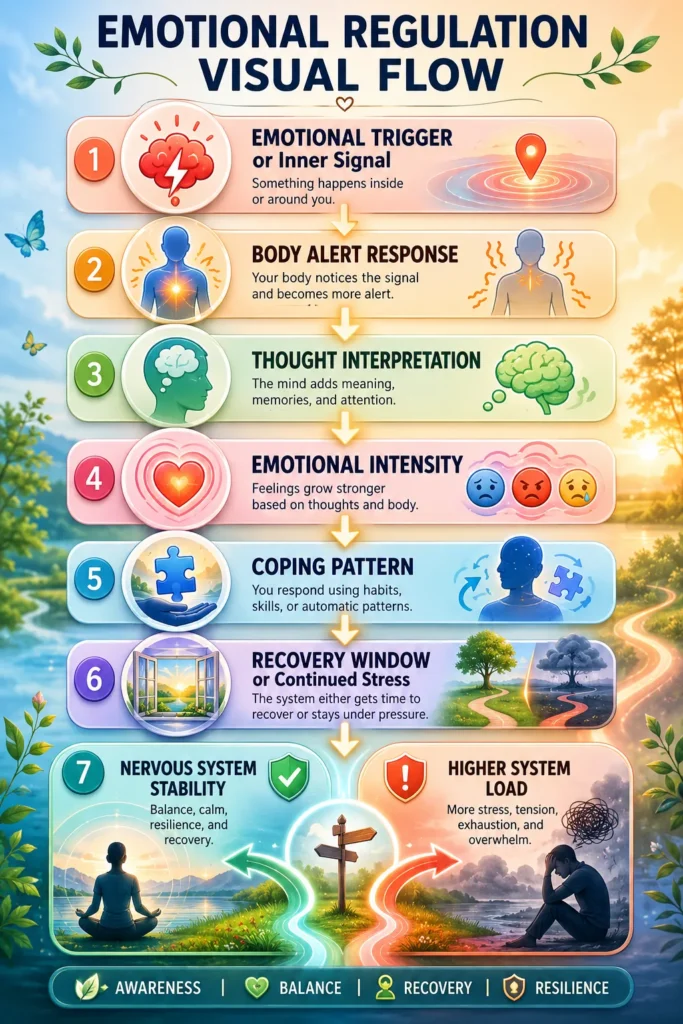
Emotional Regulation Visual Flow
Emotional Trigger or Inner Signal
↓
Body Alert Response
↓
Thought Interpretation
↓
Emotional Intensity
↓
Coping Pattern
↓
Recovery Window or Continued Stress
↓
Nervous System Stability or Higher System Load
The flow above is a simplified educational model. In reality, emotional regulation is rarely a straight line. Sometimes the body reacts before a person fully understands what they are feeling. In other situations, repeated thoughts increase emotional intensity before the body response becomes noticeable. Therefore, emotional experiences may move back and forth between emotions, thoughts, body sensations, and behavior.
Because each person is different, the pattern may not always look the same. Some people experience strong physical sensations first, while others notice emotional thoughts before body changes occur. Nevertheless, the general cycle helps explain how emotions may interact with the nervous system. This model should be used for education only and should never be used as a diagnosis tool.
Why Emotional Regulation Matters for Recovery
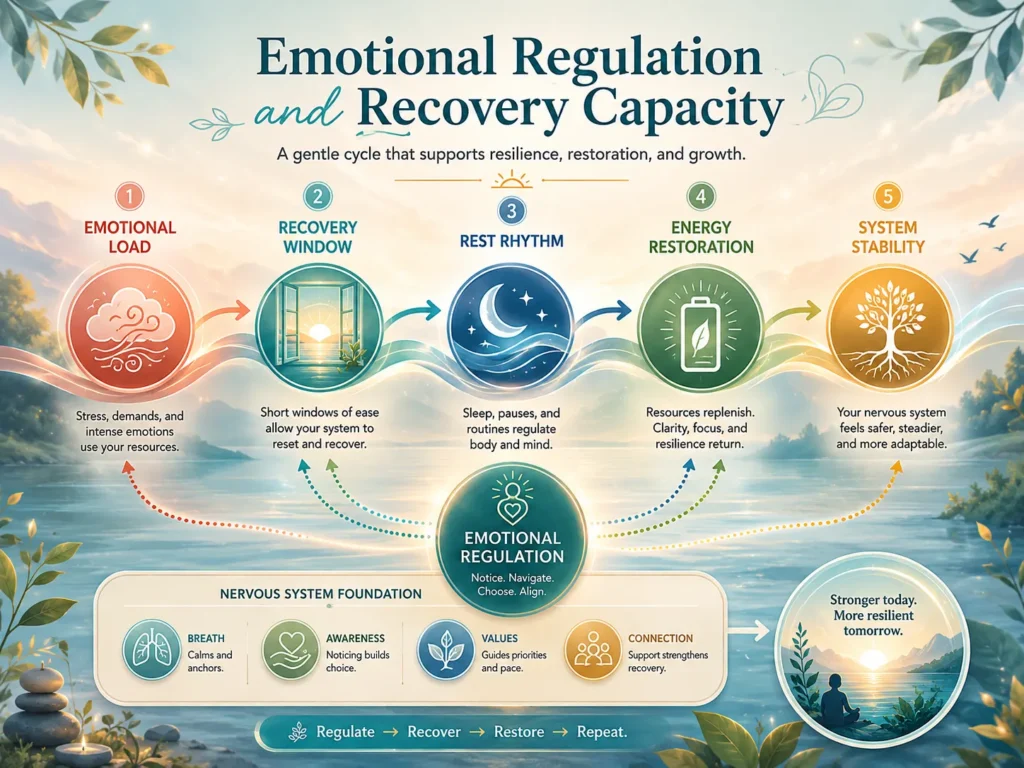
Recovery Requires System Coordination
Recovery capacity depends on many systems working together rather than one system working alone. Emotional regulation may interact with sleep rhythm, stress response, attention, social connection, coping patterns, and nervous system balance. Therefore, emotional health can be viewed as one piece of a larger Recovery Capacity and Nervous System Resilience picture.
Because of this, emotional regulation should not be separated from other recovery-related topics. Instead, it may connect with stress management, recovery windows, sleep quality, and overall system stability. This broader perspective helps readers avoid oversimplified explanations and supports the wider Human Systems learning path.
Recovery Requires Energy and Regulation
Every emotional experience uses some amount of energy. When emotional stress remains high for long periods, the body may spend more resources maintaining alertness. As a result, recovery may feel slower, and emotional resilience may become harder to maintain.
However, emotional regulation is not about eliminating emotions. Instead, it is about helping the system move through emotions more effectively. Therefore, emotional regulation skills may support recovery capacity by reducing unnecessary emotional overload rather than suppressing feelings.
Recovery Requires Delivery and Clearance
The body depends on circulation, oxygen delivery, nutrition, hydration, and waste removal for normal function. Although emotional regulation does not directly control these systems, emotional stress may influence daily behaviors connected to them. For example, stress may affect sleep, movement, appetite, and recovery habits.
Consequently, emotional patterns may indirectly influence how the body manages demand. This does not mean emotional regulation cures symptoms. Rather, it shows how emotional load may interact with broader recovery-related systems.
Recovery Requires Nervous System Stability
A stable nervous system can move more effectively between alertness and recovery. Therefore, emotional regulation may contribute to nervous system flexibility by helping emotional signals pass through the system without remaining stuck in constant activation.
Meanwhile, emotional overload may increase system demand. As a result, the body may find it harder to settle after stress. Because of this, emotional regulation and nervous system stability often appear together in educational discussions about recovery capacity.
Recovery May Be Influenced by Repeated Emotional Stress
Short periods of emotional stress are a normal part of life. However, repeated emotional stress without adequate recovery opportunities may increase overall system demand. Over time, this pattern may affect sleep, attention, mood, energy, and emotional resilience.
Therefore, emotional regulation matters because it helps readers understand one possible factor influencing recovery capacity. Even so, emotional stress should never be viewed as the only explanation for symptoms, illness, or recovery challenges.
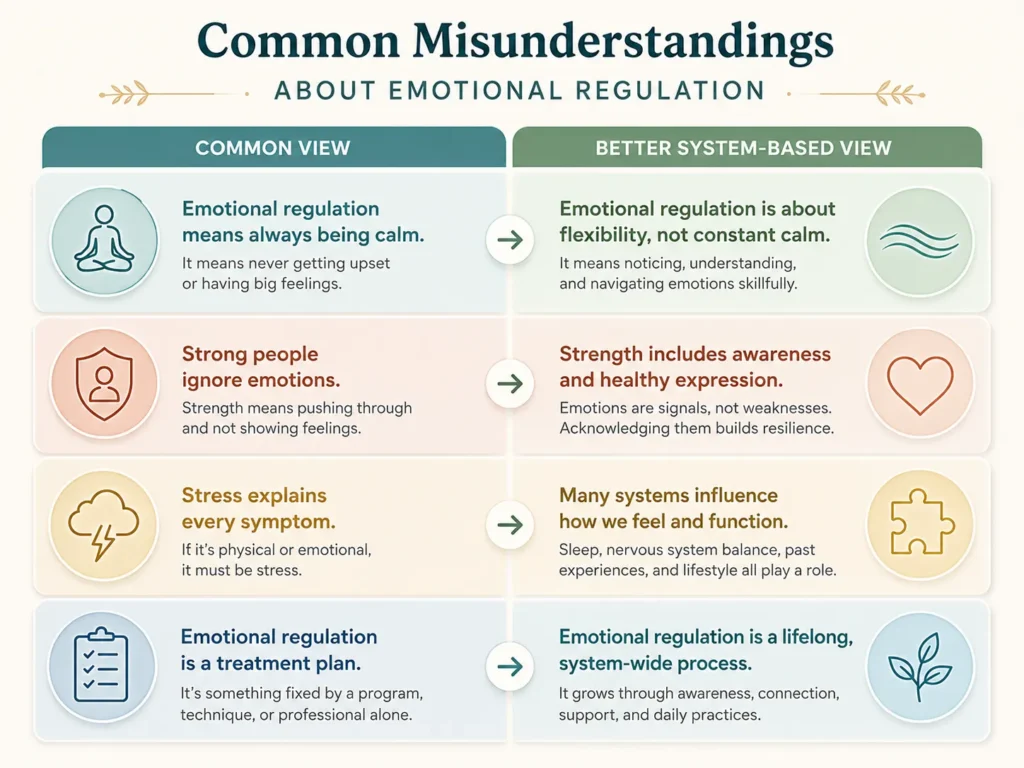
Common Misunderstandings About Emotional Regulation
| Common View | Better System-Based View |
|---|---|
| Emotional regulation means staying calm all the time. | Emotional regulation means responding to emotions with awareness and flexibility. |
| Strong people ignore emotions. | Healthy emotional processing involves recognizing emotions rather than suppressing them. |
| Emotional regulation removes stress completely. | Emotional regulation helps people respond to stress more effectively, but it does not eliminate stress. |
| Emotional problems explain every symptom. | Symptoms may involve many body systems and should not be explained by emotions alone. |
| Emotional regulation is a treatment plan. | Emotional regulation is an educational concept, not a medical treatment. |
One of the most common misunderstandings is that emotional regulation means never feeling angry, worried, sad, or overwhelmed. However, emotions are a normal part of being human. Therefore, emotional regulation is not about avoiding emotions. Instead, it is about understanding them and responding in a way that reduces unnecessary system overload.
Another misunderstanding involves emotional regulation skills. Some people believe emotional regulation skills remove difficult emotions completely. In reality, emotions often continue to exist. However, awareness, reflection, communication, and recovery practices may help reduce the intensity of emotional reactions. Because of this, emotional regulation can be viewed as a process rather than a destination.
Many readers also search for the best techniques for emotional regulation. While techniques may be helpful in some situations, no single method works for everyone. Furthermore, emotional experiences are influenced by personality, environment, life history, stress load, support systems, sleep quality, and nervous system patterns. Therefore, emotional regulation should be understood within a wider system context.
Related Condition Connections
Some readers arrive at this topic because they are trying to understand symptoms rather than emotions. Therefore, it is important to clarify that emotional regulation should never be used to diagnose conditions or explain every symptom. Instead, it may help readers understand one possible layer of body-wide stress, coping, and nervous system demand.
For example, Peripheral Neuropathy may involve tingling, numbness, burning feelings, weakness, or sensory changes. Emotional stress may influence comfort, coping ability, sleep quality, and attention. However, emotional regulation does not explain the medical causes of neuropathy.
Likewise, Diabetic Neuropathy involves important metabolic and medical factors that require professional care. Although emotional stress may affect quality of life, emotional regulation is not a substitute for diabetes management or medical evaluation.
Similarly, Nerve Compression, Sciatic Nerve Pain, and Post-Injury Nerve Damage involve physical and structural factors. Therefore, emotional regulation should be viewed as a supportive educational topic rather than an explanation for those conditions.
Topic Cluster Placement
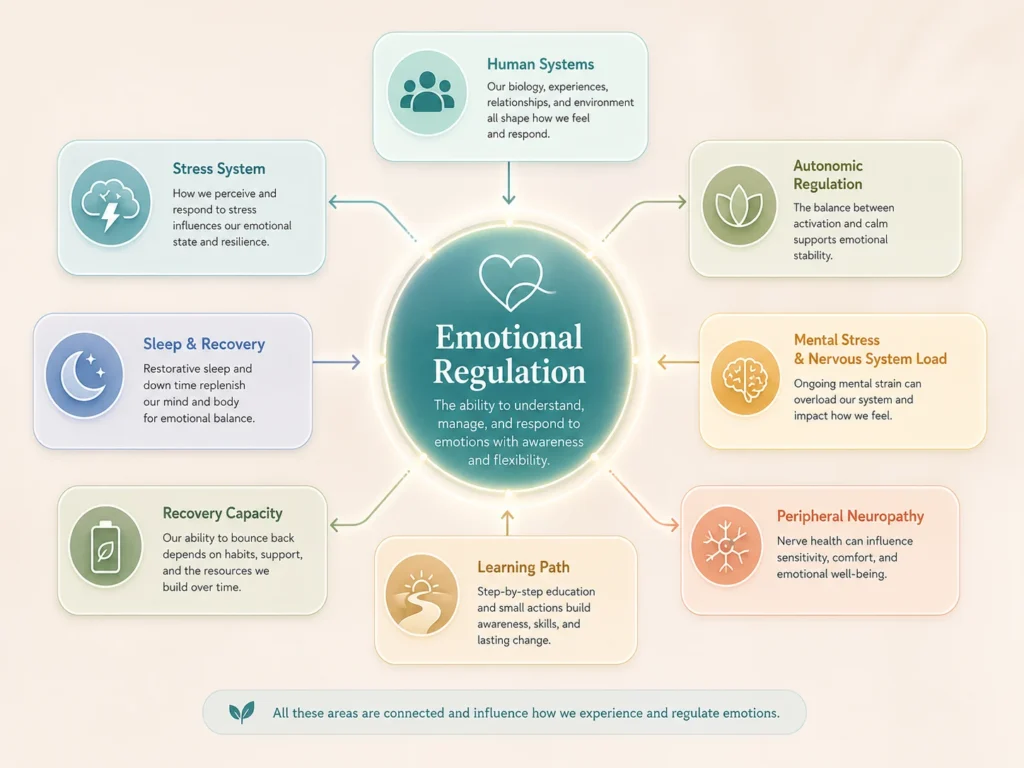
Emotional Regulation belongs within the Human Systems cluster because it explains how emotions, thoughts, coping patterns, social interaction, body awareness, and recovery windows may influence nervous system education. Therefore, this page supports broader understanding rather than focusing on a single symptom or diagnosis.
The parent page should be Human Systems. Meanwhile, supporting pages may include Cognitive Systems, Stress & Coping, Trauma Integration, Behavior Change, and Meaning & Purpose. Together, these topics help readers understand how emotions, beliefs, habits, and life experiences may influence recovery capacity and nervous system stability.
In addition, this page should connect naturally with Stress System, Autonomic Regulation, Mental Stress and Nervous System Load, and Recovery Capacity and Nervous System Resilience. These related systems help readers move from emotional education toward broader body-system learning.
Emotional Regulation FAQ
What is emotional regulation?
Emotional regulation refers to the ability to recognize, understand, and respond to emotions in a balanced way. Rather than eliminating emotions, emotional regulation helps people move through emotional experiences with greater awareness and flexibility.
What are emotional regulation skills?
Emotional regulation skills are abilities that may help people understand emotions, pause before reacting, communicate more effectively, and create recovery space after stressful experiences. From an educational perspective, these skills may support emotional awareness and nervous system balance.
How to regulate emotions?
Many people searching for how to regulate emotions are looking for ways to reduce overwhelm and improve stability. In general, emotional awareness, healthy coping patterns, recovery time, supportive relationships, and professional guidance when needed may all play a role. However, emotional regulation is a learning process rather than a quick solution.
What is emotional regulation mindfulness?
Emotional regulation mindfulness refers to paying attention to emotions and body sensations without immediately reacting to them. Instead of fighting emotions, mindfulness encourages observation and awareness. However, mindfulness is not a cure and may not be appropriate as a stand-alone approach for severe distress or trauma.
What are DBT emotion regulation skills?
DBT emotion regulation skills are skills commonly taught within Dialectical Behavior Therapy. These skills are designed to help individuals better understand emotions and respond more effectively to emotional experiences. However, this page is educational only and does not provide therapy instruction.
What are DBT emotional regulation skills?
DBT emotional regulation skills focus on recognizing emotions, understanding emotional patterns, and developing healthier responses. Because these skills are normally taught in a therapeutic setting, readers should seek qualified mental health guidance if they wish to learn formal DBT approaches.
Are emotions connected to the nervous system?
Yes. Emotions may interact with attention, breathing, stress response, sleep quality, body sensations, and nervous system activity. However, emotional regulation should not be used as the only explanation for physical symptoms or medical conditions.
Continue Learning
Readers who want to continue learning can explore Human Systems to understand how emotions, cognition, habits, identity, motivation, and social experiences may interact with nervous system education.
For a deeper understanding of body-wide stress patterns, continue with Stress System and Mental Stress and Nervous System Load. These pages explain how emotional demand and stress demand may influence recovery capacity and nervous system balance.
To explore automatic body functions, continue with Autonomic Regulation. This topic explains how alertness, rest, recovery, and body rhythms may interact with emotional experiences.
Readers interested in resilience and recovery can continue with Recovery Capacity and Nervous System Resilience. This page expands on how recovery windows, adaptability, and system stability may influence long-term recovery education.
For a structured educational journey, continue with Learning Path and explore related systems step by step.
Sources / References
The sources below were used as general educational references for this Emotional Regulation page. They help explain stress, mental health, sleep, body response, and emotional well-being in simple public-health language. However, these sources are not used to diagnose symptoms or give personal medical advice.
MedlinePlus — Stress
explains how stress can affect both the brain and body. It is useful for understanding how emotional pressure may connect with alertness, heart rate, body tension, and the stress response. Therefore, it supports the page’s explanation of emotional regulation as a body-wide process.
CDC — Managing Stress
gives simple public-health guidance about coping with stress in daily life. It discusses ideas such as taking breaks, relaxing, connecting with others, and making time to unwind. As a result, it supports the practical daily-life examples in this page without turning them into medical instructions.
NIMH — Caring for Your Mental Health
explains basic ways people can care for mental well-being, such as movement, sleep, hydration, connection, and professional help when needed. In addition, it supports the page’s safe message that emotional regulation is part of well-being, not a replacement for mental health care.
NINDS — Brain Basics: Understanding Sleep
explains why sleep matters for brain and body function. This source supports the connection between emotional regulation, sleep rhythm, recovery capacity, and nervous system stability. Because sleep and emotion often influence each other, this reference is helpful for the Sleep and Recovery sections.
NCCIH — Stress
explains stress as a physical and emotional reaction to life challenges. It also describes how the body may respond through breathing, heart rate, blood pressure, and muscle tension. Therefore, it supports the page’s discussion of emotional load and body-based stress response.
Cleveland Clinic — Stress
gives a user-friendly overview of stress, symptoms, and stress management. It is helpful for explaining how stress may affect daily comfort, energy, sleep, and emotional well-being. However, the page still avoids treatment claims and keeps the information educational.
American Psychological Association — Stress Effects on the Body
explains how stress may affect multiple body systems. This source supports the page’s system-based view that emotional stress may interact with the body, rather than staying only in the mind. Therefore, it fits the Human Systems approach of this article.
Author / Editorial Trust Note
This article was created by Heal Your Nerves Naturally for educational purposes. It was written using safety-focused language, non-diagnostic wording, and system-based education principles. The content is designed to help readers understand emotional regulation within the context of nervous system education.
No diagnosis, treatment, cure, or prevention claims are made. Furthermore, this article should not replace medical advice, mental health care, or professional assessment.
Educational Trust Note
Heal Your Nerves Naturally provides educational information about nerve health, nervous system regulation, recovery capacity, body systems, and long-term learning. The purpose is to help readers understand complex topics in a calm, structured, and accessible way.
Therefore, this page focuses on education rather than treatment. Readers are encouraged to use this information as a learning resource while seeking qualified professional care for personal medical or mental health concerns.
Safety & Education Notice
This page is for educational purposes only. It does not diagnose, treat, cure, or prevent disease. It is not a substitute for professional medical advice, diagnosis, or treatment.
Seek urgent medical care for severe, sudden, unusual, or worsening symptoms, including sudden weakness, loss of bladder or bowel control, chest pain, difficulty breathing, severe numbness, severe pain, or rapidly changing neurological symptoms.
Because this topic involves emotional stress, mental well-being, nervous system activity, and potentially sensitive personal experiences, readers should not use this information to self-diagnose, stop medication, delay professional care, or replace qualified mental health support.
If emotional distress includes thoughts of self-harm, feeling unsafe, severe panic, trauma crisis, or inability to function in daily life, seek immediate professional help or emergency support.