
Myelin System
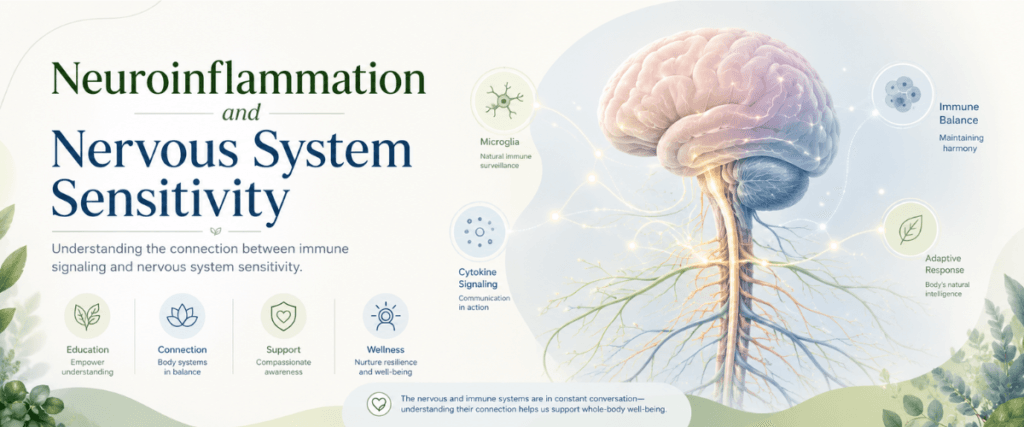
The Myelin System is an important part of nerve communication. Myelin is a soft protective covering around many nerve fibers. It helps nerve signals move with better speed, timing, and order.
In simple terms, myelin works like insulation around a wire. The wire carries the message. The insulation helps the message travel more smoothly. In the body, myelin helps signals move between the brain, spinal cord, and nerves.
However, myelin is not only about speed. It also helps support signal quality, energy use, movement, sensation, and nervous system stability. Because of this, the Myelin System should be understood as part of a larger nerve communication network.
Also, myelin does not work alone. It depends on nerve cells, support cells, blood flow, energy, immune balance, and repair systems. Therefore, this page explains myelin as a system, not as one isolated body part.
This page is for education only. It does not diagnose, treat, cure, or prevent disease. Instead, it gives a calm way to understand how myelin may relate to nerve signals, sensitivity, and recovery capacity.
Quick Navigation
What Is the Myelin System?
The Myelin System refers to the way the body supports nerve fibers with myelin. Myelin is a protective layer that wraps around many nerve fibers. It helps nerve messages move in a clearer and more organized way.
Nerve signals travel along long nerve fibers called axons. When myelin is present, the signal can move more efficiently. As a result, the nervous system can send messages with better speed and timing.
In simple terms, myelin helps nerve messages stay on track. It supports the pathway that the signal travels through. However, it is not the only part of nerve function. It works with many other systems.
For example, nerves also need oxygen, nutrients, energy, and support cells. They also respond to inflammation, stress, sleep, and recovery load. Therefore, myelin should be seen as one layer in a larger nervous system pattern.
The Myelin System matters because the body depends on clear signals. Movement, sensation, balance, coordination, pain processing, and body awareness all need good communication.
A simple example is a road. The nerve fiber is like the road. The signal is like traffic. Myelin helps the traffic move more smoothly. However, if the road environment is stressed, traffic may still slow down.
This does not mean every nerve symptom comes from myelin. Tingling, burning, numbness, pain, weakness, or sensitivity may involve many layers. These may include nerve pressure, inflammation, blood flow, metabolism, pain processing, or stress load.
Therefore, the Myelin System is best understood as part of the full nerve communication system.
How the Myelin System Works
The Myelin System helps nerve signals travel along nerve fibers. It does this by wrapping parts of the nerve fiber with myelin. This wrapping supports smoother and faster communication.
First, a nerve signal begins. This may happen when the body senses touch, pressure, movement, heat, cold, or another change. Then the nerve needs to carry that message toward the spinal cord or brain.
Next, the signal moves along the nerve fiber. If myelin is present, the signal can move in a more efficient way. Instead of moving slowly along every part of the nerve, it can move between small gaps.
These small gaps are called nodes. In simple terms, they are like signal checkpoints. The signal moves from one checkpoint to the next. As a result, the message can travel faster.
After that, the message reaches the next part of the nervous system. This may be another nerve, the spinal cord, the brain, or a muscle response pathway. Because timing matters, signal quality is important.
For example, walking needs good timing. Balance also needs good timing. In addition, sensation depends on clear timing. If signals are delayed or unclear, the nervous system may need more effort to understand them.
Over time, myelin also connects with repair and maintenance. Support cells help make and care for myelin. These cells may respond to injury, stress, inflammation, and recovery needs.
Because of this, myelin is not just a covering. It is part of a living support system. It depends on energy, circulation, immune balance, and repair capacity.
Key Layers of the Myelin System
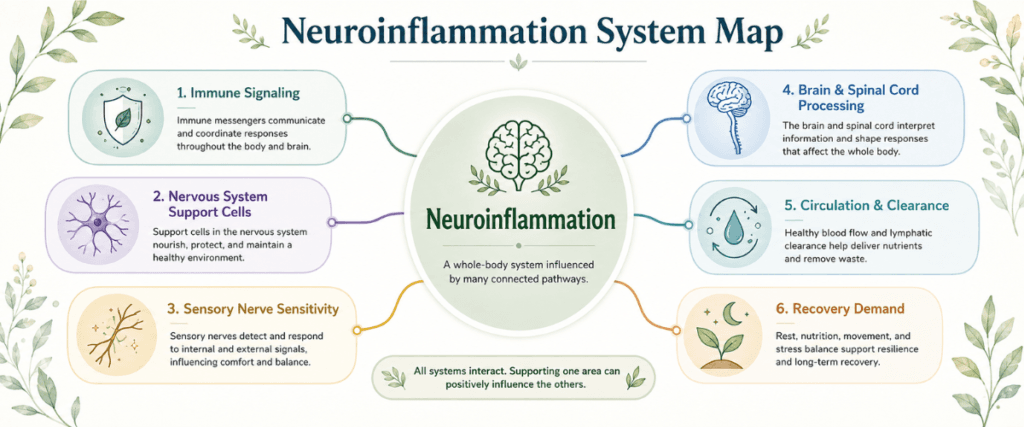
1. Myelin Protective Insulation Layer
The first layer of the Myelin System is protection. Myelin wraps around many nerve fibers and helps protect the signal pathway. This helps the nervous system communicate with more stability.
For example, insulation helps protect a wire. In a similar way, myelin helps support the nerve signal. However, it does not make nerves fully protected from every kind of stress.
Nerves are sensitive tissues. They may respond to pressure, inflammation, poor blood flow, low energy, or repeated stress. Therefore, protection is only one part of the bigger picture.
This layer matters because nerve communication needs a stable pathway. When the pathway has better support, signals may move with less strain.
2. Myelin Signal Speed Layer
The second layer is signal speed. Myelin helps many nerve signals move faster. This is important because the body often needs quick messages.
For example, when you pull your hand away from something hot, your nervous system must respond fast. Quick signaling helps the body react in time.
However, speed is not the only goal. The signal also needs to be organized. Because of this, myelin supports both speed and signal order.
3. Myelin Signal Timing Layer
The third layer is timing. Nerve signals need to arrive at the right time. This helps the body coordinate movement, sensation, and response.
For example, walking is not controlled by one signal. It needs many signals working together. The brain, spinal cord, muscles, joints, and nerves all take part.
If signals arrive late or out of rhythm, movement may feel less smooth. Also, the body may need more effort to stay balanced. Therefore, myelin supports timing as well as speed.
4. Myelin Energy Efficiency Layer
The fourth layer is energy efficiency. Nerve signaling uses energy. Myelin helps signals move in a way that may reduce extra effort.
In simple terms, myelin helps the nervous system do more with less strain. This matters because nerve cells already need a lot of energy.
However, energy demand can rise during stress. Poor sleep, inflammation, pain processing, or metabolic strain may increase nervous system load. As a result, the body may need more recovery support.
Because of this, energy balance is closely connected with myelin education.
5. Myelin Support Cell Layer
The fifth layer involves support cells. These cells help create, care for, and maintain myelin. They also help keep the nerve environment more stable.
Support cells are not passive. Instead, they help the nervous system respond to change. They may react to stress, injury, inflammation, or repair demand.
Therefore, myelin is not only a structure. It is part of a support network. This network helps the body protect and maintain nerve pathways over time.
6. Myelin Repair and Maintenance Layer
The sixth layer is repair and maintenance. The body has systems that help maintain nerve tissue. These systems also help support myelin over time.
However, myelin biology is complex. It is not safe to say that one food, supplement, or routine can repair myelin. That would be too simple and may be misleading.
Instead, this layer is about recovery conditions. The nervous system needs energy, sleep, blood flow, immune balance, and repair support. Together, these systems help maintain nerve stability.
7. Myelin Communication Stability Layer
The seventh layer is communication stability. Myelin helps signals travel more clearly. Still, the whole nervous system must receive and interpret those signals.
For example, pain, tingling, burning, numbness, or fatigue may not come from myelin alone. These symptoms may involve many systems at the same time.
Because of this, the Myelin System should be connected with neural signaling, pain processing, neuroinflammation, and recovery systems. Together, they help explain nerve communication in a safer and clearer way.
Myelin System Interactions
Myelin System and Nervous System Interaction
The Myelin System is closely connected with the nervous system. It helps signals move between the brain, spinal cord, and body. As a result, it supports movement, sensation, balance, and coordination.
However, myelin does not work alone. It depends on nerve cells, support cells, oxygen, nutrients, energy, and immune balance. Therefore, it should be understood as part of the full nervous system.
Myelin System and Stress System Interaction
Stress may increase nervous system load. During stress, the body may become more alert. Breathing, heart rate, muscle tension, and attention may change.
As a result, nerve signaling demand may rise. This does not mean stress directly damages myelin. Instead, stress may add load to the systems that support nerve communication.
Over time, repeated stress may reduce recovery capacity. Because of this, stress balance is relevant when learning about the Myelin System.
Myelin System and Metabolic System Interaction
The metabolic system helps the body make and manage energy. Nerve cells and support cells both need energy to work well. Myelin maintenance also depends on healthy cell activity.
For example, if the body is under energy stress, the nervous system may have less support for stable signaling. As a result, signals may feel harder to regulate.
Therefore, metabolism and myelin are connected. Energy balance supports nerve signaling, supports cell function, and long-term nervous system stability.
Myelin System and Nutritional System Interaction
Nutrition gives the body building blocks. It supports cell health, energy production, immune balance, and repair capacity.
However, the Myelin System should not be reduced to one nutrient or supplement. Myelin biology is more complex than that. It depends on many systems working together.
Instead, nutrition should be viewed as one support layer. It works with metabolism, circulation, inflammation, sleep, and repair systems.
Myelin System and Circulatory System Interaction
Circulation helps deliver oxygen and nutrients to nerve tissue. It also helps clear waste products from the tissue environment.
Because nerves need steady delivery and clearance, blood flow matters. If circulation is under strain, nerve tissue may experience more demand.
At the same time, nerve activity may influence body regulation and blood flow. Therefore, circulation and nervous system function are closely connected.
Myelin System and Inflammatory System Interaction
Inflammation may affect the environment around nerves. Short-term inflammation can be part of protection and repair. However, repeated or prolonged inflammatory signals may increase system load.
The Myelin System may interact with immune activity because myelin is part of nerve support. In some medical conditions, immune activity may involve myelin. However, this page does not diagnose or explain specific diseases.
From a system view, the key idea is balance. Inflammation, nerve sensitivity, and repair demand may all interact.
Myelin System and Regeneration Systems Interaction
Regeneration systems support repair, adaptation, and stability. The Myelin System connects with these systems because nerve communication depends on long-term care.
When the body is recovering from stress or injury, support cells may become more important. Meanwhile, ongoing stress may increase demand on those support systems.
Therefore, myelin and regeneration should be understood together. Stable recovery conditions may help support long-term nervous system organization.
Patterns That Influence the Myelin System
Many daily patterns may influence the Myelin System indirectly. These patterns do not act alone. Instead, they may build together and affect total nervous system load.
Sleep rhythm is one important pattern. Sleep supports repair, immune balance, and nervous system stability. Therefore, poor sleep may reduce recovery capacity.
Stress patterns may also matter. Ongoing worry, pressure, or mental overload may keep the body alert. As a result, the nervous system may use more energy for protection.
Movement patterns can influence nerve function too. Balanced movement supports circulation and body awareness. However, repeated posture strain, long sitting, or sudden overload may increase nerve-related input.
Nutrition quality may also play a role. The body needs steady support for energy, cell health, and repair. However, this does not mean one diet can fix myelin. It only means nutrition is one part of the support system.
Hydration and circulation are also relevant. Nerve tissues need delivery and clearance. Because of this, fluid balance and blood flow may influence the environment around nerves.
Inflammatory load can add another layer. Repeated inflammatory signaling may increase nervous system demand. It may also interact with support cells and signal processing.
Environmental load may also matter. Noise, poor sleep rhythm, long screen time, poor air quality, and overstimulation may increase nervous system stress.
The goal is not blame. Instead, the goal is awareness. When many small loads build over time, the nervous system may need more stability and recovery support.
Myelin System and Nerve Function
The Myelin System may influence nerve function because it helps signals move with better speed and order. Nerves need clear communication to support sensation, movement, balance, and coordination.
When signal quality is stable, the body can process information more smoothly. However, when timing, energy, or the nerve environment is under pressure, communication may feel less steady.
This may relate to tingling, burning, numbness, weakness, fatigue, or sensitivity. However, these symptoms can have many possible causes. Myelin is only one possible layer.
For example, tingling may involve changed sensory signaling. Burning may involve nerve sensitivity or pain processing. Numbness may involve reduced or changed signal flow. Fatigue may reflect higher system demand.
Pain may also involve signal processing. Pain is not just a message from one nerve. Instead, it is created after the nervous system reviews many types of input.
Therefore, the Myelin System should be linked with neural signaling and pain processing. Myelin helps support the message pathway. Meanwhile, the brain and spinal cord help interpret the message.
It is also important to be cautious. Sudden weakness, severe numbness, loss of coordination, sudden vision changes, or fast-changing neurological symptoms should not be ignored.
Overall, the Myelin System helps explain that nerve communication is not only about sending messages. It is also about support, timing, energy, protection, and interpretation.
Myelin System Visual Flow
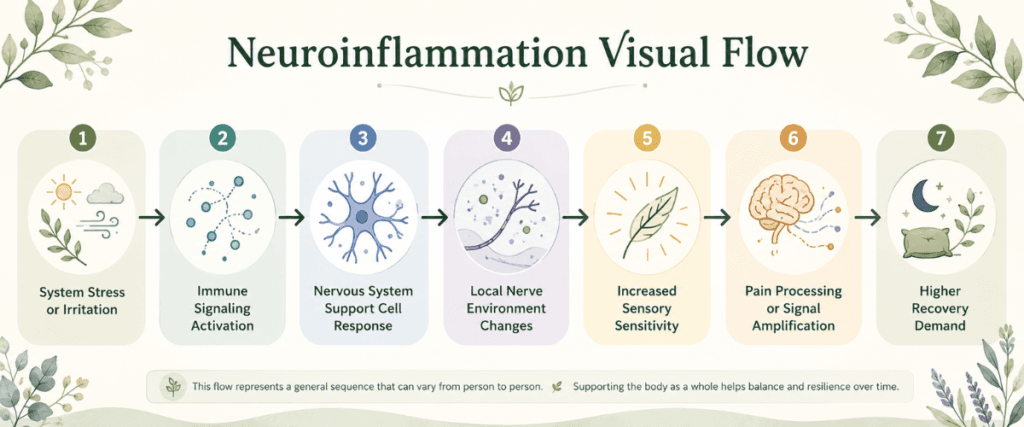
Nerve Cell Communication Need
↓
Myelin Support Around Nerve Fibers
↓
Improved Signal Speed and Timing
↓
Better Communication Efficiency
↓
Movement, Sensation, and Coordination Support
↓
Lower Communication Demand
↓
Greater Recovery Capacity Support
This flow is a simple educational model. It shows how the Myelin System may support nerve communication and recovery capacity.
However, real nerve function is not always a straight line. Myelin interacts with energy, inflammation, circulation, support cells, and repair processes. Because of this, the Myelin System works as part of a larger cycle.
For example, better communication may support smoother movement. Smoother movement may reduce extra strain. Less strain may reduce system load. As a result, the nervous system may have more space for regulation.
Different people may notice different patterns. One person may notice tingling. Another may notice fatigue, numbness, sensitivity, or coordination changes.
Therefore, this flow is not a diagnosis. It is a learning tool. It helps explain how myelin may relate to nerve communication, system load, and recovery capacity.
Why the Myelin System Matters for Recovery
1. Recovery Requires Clear Communication
Recovery depends on communication. The brain, spinal cord, nerves, muscles, immune system, and circulation all exchange information.
The Myelin System supports this communication by helping signals move more efficiently. As a result, the body may coordinate movement, sensation, and regulation with less effort.
2. Recovery Requires Energy and Timing
Nerve communication uses energy. Timing also matters. If signals arrive too slowly or out of rhythm, the nervous system may need more effort to interpret them.
Myelin helps support efficient timing. Therefore, it may help reduce unnecessary communication demand from a system perspective.
3. Recovery Requires Support Cells
Support cells are important for nerve health. They help maintain the nerve environment. Also, they help support myelin and respond to change.
Because of this, recovery is not only about the nerve fiber itself. It also depends on the support system around the nerve.
4. Recovery Requires Delivery and Clearance
Nerve tissue needs oxygen, nutrients, and waste clearance. Circulation helps with these needs.
If delivery and clearance are under pressure, the nerve environment may become less stable. As a result, signaling demand and sensitivity may rise.
5. Recovery Requires Nervous System Stability
A stable nervous system can respond to signals and then return toward balance. This matters because the body should not stay in high-alert mode all the time.
The Myelin System may support stability by helping signals move in a more organized way. However, stability also depends on sleep, stress balance, inflammation balance, metabolism, and repair capacity.
6. Recovery May Be Influenced by Repeated Load
Repeated stress may increase nervous system demand. This stress may come from poor sleep, inflammation, metabolic strain, posture load, injury, emotional stress, or low recovery time.
Over time, repeated load may affect the systems that support nerve communication. Therefore, the Myelin System is important for understanding recovery as a whole-body process.
Common Misunderstandings About the Myelin System
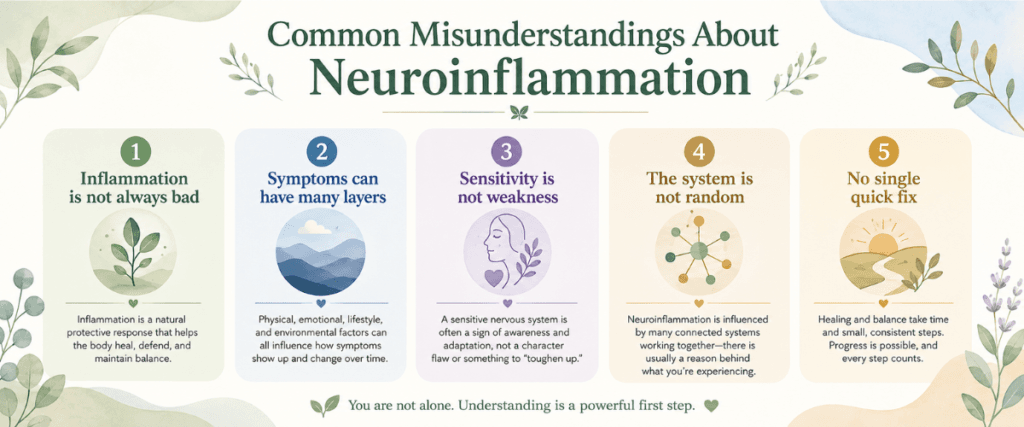
Misunderstanding 1: Myelin is only about speed.
Clarification:
Myelin does help signals move faster. However, it also supports timing, efficiency, communication quality, and nervous system organization.
Misunderstanding 2: Every nerve symptom means myelin damage.
Clarification:
Nerve symptoms can have many layers. These may include nerve sensitivity, pain processing, inflammation, circulation, pressure, stress, or metabolic strain. Myelin is only one possible layer.
Misunderstanding 3: Myelin problems can be fixed with one supplement.
Clarification:
The Myelin System is complex. It involves nerve cells, support cells, energy, circulation, immune balance, and repair processes. This page does not recommend supplements, protocols, or treatment plans.
Misunderstanding 4: Myelin is separate from the rest of the body.
Clarification:
Myelin depends on many body systems. It interacts with metabolism, inflammation, circulation, nutrition, sleep, stress, and repair systems.
Misunderstanding 5: If symptoms change, the issue is not real.
Clarification:
Changing symptoms can still be real. Nerve signaling may shift with sleep, stress, inflammation, posture, movement, and recovery load. Change does not mean the experience is false.
Misunderstanding 6: Myelin damage always means permanent loss.
Clarification:
Myelin-related issues are medically complex. They depend on the situation. Therefore, it is not safe to make broad claims. Some symptoms need professional diagnosis and care.
Continue Learning
Neurobiology System
Learn how nerve biology, signaling, sensitivity, inflammation, myelin, and regulation work together.
Neural Signaling
Explore how nerves send, filter, and interpret messages across the body.
Pain Processing
Learn how the nervous system may turn signals into pain experiences.
Neuroinflammation
Understand how immune signaling may interact with nerve sensitivity and recovery demand.
Root-Cause Systems
Explore body-wide patterns that may influence nerve sensitivity and system load.
Therapeutic Systems
Learn about sleep, movement, stress regulation, and circulation from a safe educational view.
Regeneration Systems
Explore how repair, adaptation, and stability may support long-term recovery capacity.
Learning Path
Follow a step-by-step education journey through nerve function, root causes, sensitivity, and recovery concepts.
Related Systems
Neural Signaling
Neural signaling explains how nerves send and process messages. The Myelin System helps support the path those messages travel through.
Pain Processing
Pain processing explains how the nervous system interprets signals. Myelin may support signal quality, while pain processing gives meaning to incoming information.
Neuroinflammation
Neuroinflammation may influence the nerve environment. It may interact with myelin support, sensitivity, and recovery demand.
Neuroplasticity
Neuroplasticity explains how the nervous system adapts. Myelin may also change as the nervous system learns, responds, and organizes.
Autonomic Regulation
Autonomic regulation controls stress response, breathing, heart rate, digestion, and body state. It may influence the recovery environment around the nervous system.
Metabolic Damage System
Metabolic stress may influence nerve energy demand. Since nerves and support cells need energy, metabolism is closely linked with myelin education.
Circulatory Impairment System
Circulation supports oxygen and nutrient delivery. It also helps clear waste products from tissues around nerves.
Inflammatory System
Inflammatory activity may affect the nerve environment. This may influence sensitivity, repair demand, and nervous system stability.
Nutritional Deficiency System
Nutrition supports cell health, energy, and repair capacity. However, the Myelin System should not be reduced to one nutrient or supplement.
Lifestyle Degeneration
Sleep, stress, posture, movement, nutrition, and daily routine may influence total nervous system load over time.
Regeneration Systems
Regeneration systems help the body repair, adapt, and return toward stability. Myelin maintenance connects with these long-term support processes.
Safety & Education Notice
This page is for educational purposes only. It does not diagnose, treat, cure, or prevent disease. It is not a substitute for professional medical advice, diagnosis, or treatment.
Seek urgent medical care for severe, sudden, unusual, or worsening symptoms, including sudden weakness, loss of bladder or bowel control, chest pain, difficulty breathing, severe numbness, severe pain, loss of coordination, sudden vision changes, or rapidly changing neurological symptoms.
Because this topic involves medically sensitive nervous system structures, readers should not use this information to self-diagnose, stop medication, begin supplements, follow detox protocols, attempt self-treatment, or delay professional care.