
Pain Processing
Pain Processing explains how the nervous system handles body signals. It receives signals from the body, filters them, gives them meaning, and creates a response.
Pain is not only about one tissue, one nerve, or one body part. It may involve a wider system. This system can include nerves, the spinal cord, the brain, stress response, inflammation, circulation, movement patterns, and recovery capacity.
This page explains Pain Processing as a body-wide educational system. It does not diagnose pain or give treatment advice. Instead, it helps readers understand why nerve sensitivity may change over time.
Pain Processing matters because the nervous system helps protect the body. However, repeated load may change how the system reads signals. The nervous system may become more sensitive, more protective, or easier to activate.
For this reason, Pain Processing education can help readers understand nerve sensitivity more calmly. It gives the topic a clearer structure without fear-based language.
Quick Navigation
What Is Pain Processing?
Pain Processing is the body’s signal interpretation system. It includes how sensory information travels from tissues and nerves, how the spinal cord filters that information, and how the brain interprets whether a signal may require attention. In simple terms, pain is not only a message from one area. The nervous system also creates this response after evaluating many forms of information.
This system matters for nerve-related education because nerve sensitivity can change. For example, a person may feel burning, tingling, aching, sharp discomfort, or widespread sensitivity even when the original stress pattern is not easy to identify. This does not mean the experience is imaginary. Instead, it means the nervous system may be processing signals more sensitively or protectively.
A simple analogy is a security system in a building. A balanced security system responds when there is a real concern. However, if the system becomes overly sensitive, it may react to smaller signals, repeated triggers, or background noise. Similarly, Pain Processing may become more alert when the body has experienced repeated stress, inflammation, poor sleep, emotional strain, injury, metabolic stress, or ongoing overload.
Pain Processing should not be understood in isolation. It can interact with inflammation, circulation, stress chemistry, sleep rhythm, immune activity, mechanical load, and emotional regulation. Therefore, readers should view this system as part of a wider body-wide network.
How the Pain Processing Works
First, sensory receptors in the body detect information. These signals may relate to pressure, temperature, movement, chemical irritation, tissue stress, or nerve sensitivity. Not all signals become pain. The nervous system filters and manages many signals quietly in the background.
Next, the signals travel through nerves toward the spinal cord. The spinal cord acts like a processing gateway. It can increase, reduce, or modify signal flow depending on the state of the nervous system. For example, stress, poor sleep, inflammation, or repeated irritation may influence how easily signals pass through this gateway.
As a result, the brain receives and interprets the information. The brain does not simply read signals like a machine. Instead, it evaluates context. It may consider past experiences, current stress load, emotional state, movement patterns, fatigue, inflammation, and perceived safety. This means pain can be influenced by both body signals and system state.
Over time, repeated activation may make the system more responsive. This does not mean permanent damage. It means the nervous system may become trained to notice, amplify, or protect against certain signals. For this reason, Pain Processing is closely connected to recovery capacity, regulation, sleep quality, and body-wide balance.
Key Layers of the Pain Processing
Pain Processing Sensory Signal Layer
The sensory signal layer begins with receptors that detect changes in the body. These receptors may respond to pressure, stretch, temperature, chemical changes, inflammation, or tissue irritation. Their job is to send information to the nervous system so the body can respond appropriately.
For example, if a muscle is overloaded after long sitting or repeated posture strain, sensory signals may increase. These signals do not automatically mean serious damage. Instead, they may represent information that the nervous system needs to evaluate.
From a system perspective, this layer matters because nerve sensitivity often begins with signal input. If the body is under repeated mechanical, inflammatory, metabolic, or stress-related load, the amount of incoming information may increase. As a result, the nervous system may need more regulation capacity to process it calmly.
Pain Processing Spinal Filtering Layer
The spinal cord is not just a cable carrying messages to the brain. It also helps filter and shape signals. This layer can influence whether a signal remains quiet, becomes noticeable, or feels stronger than expected.
For example, when the body is tired, inflamed, or stressed, the spinal filtering system may become more reactive. In many cases, this can make ordinary signals feel more intense or harder to ignore. This is one reason why discomfort may feel worse during periods of poor sleep or emotional stress.
This layer connects Pain Processing with the wider nervous system. If spinal filtering becomes more sensitive, nerve-related sensations may feel more active. Therefore, recovery education should consider not only the painful area but also the state of the whole regulatory system.
Pain Processing Brain Interpretation Layer
The brain interpretation layer gives meaning to signals. The brain evaluates whether a signal is important, whether the body feels safe, and whether a protective response is needed. This process can involve memory, attention, emotion, stress state, fatigue, and previous pain experiences.
For example, a sensation that feels mild on a calm day may feel stronger during a stressful week. This does not make the sensation false. Instead, it shows that Pain Processing is influenced by context. The nervous system is always interpreting body signals through the lens of the current system load.
This layer is important because pain is not only a physical signal. It is also a protective output. Therefore, body-wide stability, emotional regulation, rest rhythm, and confidence in movement may all influence how the system processes signals.
Pain Processing Sensitivity Amplification Layer
Sensitivity amplification refers to a pattern where the nervous system becomes more responsive to signals. This may happen when the body has been under repeated stress, irritation, inflammation, injury, or prolonged uncertainty. Over time, the system may lower its threshold for activation.
For example, a person may notice that light pressure, small movements, or normal daily activities feel more uncomfortable than before. From an educational perspective, this may reflect a more alert processing system rather than a single cause.
This layer connects directly with nerve sensitivity. When the system becomes easier to activate, sensations such as burning, tingling, aching, sharpness, or widespread discomfort may feel more present. However, this should always be interpreted carefully and not used for self-diagnosis.
Stress Regulation in Pain Processing
The stress regulation layer includes the body’s response to pressure, uncertainty, fear, sleep loss, emotional strain, and repeated daily demands. Stress systems can influence muscle tone, breathing patterns, inflammation, circulation, attention, and nervous system alertness.
For example, during a long period of work stress, the body may become more guarded. Muscles may tighten, sleep may become lighter, and the nervous system may become more watchful. As a result, pain signals may feel stronger or more persistent.
This does not mean stress is the only reason for pain. Instead, stress is one important system that may interact with Pain Processing. For this reason, pain education should avoid blame and focus on understanding body-wide regulation.
Recovery Capacity in Pain Processing
Recovery capacity refers to the body’s ability to rest, repair, regulate, and adapt. Pain Processing may become more stable when the body has enough resources to manage the load. However, when recovery capacity is low, signals may feel harder to calm.
For example, poor sleep, undernourishment, repeated overexertion, emotional strain, or ongoing inflammation may increase the demand placed on the nervous system. Meanwhile, the body may have less energy available for regulation.
This layer matters because pain sensitivity often reflects the balance between load and recovery. Therefore, Pain Processing is not only about what activates the system. It is also about whether the body has enough capacity to settle afterward.
Pain Processing Interactions
Nervous System Interaction
Pain Processing is deeply connected with the nervous system because nerves carry sensory information and help coordinate protective responses. The nervous system may increase attention to certain signals when it senses threat, uncertainty, or repeated irritation.
At the same time, ongoing pain sensitivity may influence nervous system regulation. It may affect sleep, mood, movement confidence, and stress response. This two-way relationship is why Pain Processing should be viewed as a network pattern, not a single isolated problem.
Stress System Interaction
The stress system may influence Pain Processing by increasing alertness, muscle tension, breathing changes, and protective guarding. In many cases, the body becomes more sensitive when it feels under pressure for long periods.
Meanwhile, ongoing pain can also increase stress load. This creates a cycle where discomfort increases alertness, and alertness may make discomfort feel stronger. This does not mean pain is “just stress.” Instead, it shows how body systems may interact.
Metabolic System Interaction
The metabolic system supports energy production, blood sugar balance, and cellular function. Pain Processing may be influenced when energy availability is unstable or when the body is under metabolic stress.
For example, fatigue, poor fuel regulation, and cellular stress may reduce the body’s ability to maintain calm signal processing. Therefore, metabolic health can be understood as a background support system for nerve regulation and recovery capacity.
Nutritional System Interaction
The nutritional system provides building blocks for nerve function, tissue maintenance, neurotransmitter support, and cellular energy. Poor nutritional patterns may increase system demand, especially when the body is already under stress.
This does not mean one food or nutrient controls Pain Processing. Instead, nutrition is part of the wider support network. From an educational perspective, consistent nourishment may help explain how the body maintains regulation capacity over time.
Circulatory System Interaction
The circulatory system helps deliver oxygen and nutrients while supporting waste clearance. Pain Processing may become more sensitive when tissues experience poor delivery, reduced movement, or higher local stress.
For example, long sitting or reduced movement may influence circulation and tissue comfort. As a result, sensory signals may become more noticeable. This connection shows why circulation, movement, and nerve sensitivity are often discussed together in system education.
Inflammatory System Interaction
Inflammation is part of the body’s response to stress, irritation, and repair needs. Inflammatory signaling may influence sensory receptors and nerve sensitivity. When inflammatory load remains elevated, the nervous system may receive more alert signals.
At the same time, nervous system stress may influence inflammatory patterns. Therefore, inflammation and Pain Processing can interact in both directions. This is why one system should not be blamed as the only cause.
Regeneration Systems Interaction
Regeneration systems involve repair, adaptation, tissue remodeling, nerve support, and stability. Pain Processing may affect recovery when it limits movement, sleep, or confidence. Meanwhile, recovery capacity may influence how easily the nervous system settles.
For this reason, regeneration should not be viewed only as tissue repair. It also includes regulation, pacing, adaptation, and nervous system stability. Pain Processing plays an important role in this broader recovery picture.
Patterns That Influence the Pain Processing
Daily patterns may influence how Pain Processing behaves. For example, sleep rhythm is an important factor because the nervous system uses rest to regulate signal sensitivity. When sleep becomes shallow or irregular, the body may have less capacity to calm protective responses.
Movement patterns may also matter. Too little movement may increase stiffness, reduce circulation, and make signals more noticeable. However, repeated overload may also increase system demand. Therefore, the key educational idea is balance, not extremes.
Stress patterns can influence attention, muscle tone, breathing, and nervous system alertness. In many cases, a body under constant pressure may interpret signals more protectively. This can make discomfort feel more intense, even when the original trigger is not obvious.
Nutrition and hydration patterns may support or strain the system. The body needs energy, fluids, and nutrients for nerve communication, circulation, and cellular function. However, this page does not recommend a specific diet or supplement plan.
Work habits and posture patterns may also influence Pain Processing. Long sitting, repetitive positions, poor ergonomic support, or limited movement variety may increase mechanical and sensory load. Over time, this may contribute to a more active signal-processing pattern.
Environmental exposure, emotional strain, recovery load, and daily routine can also shape the system. In simple terms, Pain Processing often reflects the total load placed on the body, not just one isolated factor.
Pain Processing and Nerve Function
Pain Processing is closely connected to nerve function because nerves carry information between the body, spinal cord, and brain. When nerves are irritated, compressed, inflamed, undernourished, or exposed to repeated system stress, signal activity may change.
This may interact with sensations such as tingling, burning, numbness, aching, sharp discomfort, fatigue, or body-wide sensitivity. These sensations should not be used for self-diagnosis. However, they can be understood as signals that may involve nervous system interpretation and regulation.
Pain Processing may also influence pain perception. The nervous system does not measure tissue condition in a simple one-to-one way. Instead, it is shaped by signal input, nervous system sensitivity, stress load, previous experiences, inflammation, sleep, and perceived safety.
For this reason, Pain Processing is one possible educational lens for understanding why symptoms may fluctuate. A person may feel worse after poor sleep, emotional stress, physical overload, or long sitting. Meanwhile, symptoms may feel calmer when the body has more regulation capacity.
This system also connects with recovery capacity. When the nervous system is highly alert, the body may require more energy and stability to settle. Therefore, Pain Processing is not only about discomfort. It is also about how the body manages protection, adaptation, and recovery demand.
Pain Processing Visual Flow
Repeated Body or System Load
↓
Sensory Signal Input
↓
Spinal Cord Filtering
↓
Brain Interpretation and Protection Response
↓
Increased Nervous System Sensitivity
↓
Pain, Tingling, Burning, Numbness, or Fatigue Signals
↓
Higher Recovery Demand
↓
Need for Regulation, Stability, and System Support
This visual flow presents an educational model. It does not mean Pain Processing always follows a straight line. In real life, the system may work more like a cycle, where stress, inflammation, poor sleep, movement patterns, and sensitivity influence each other.
Different people may experience different patterns. For example, one person may notice more sensitivity after stress, while another may notice it after repeated physical overload. Therefore, this model should be used for learning, not diagnosis.
The main point is that Pain Processing involves both signal input and system interpretation. When the nervous system becomes more alert, the body may require more support, stability, and recovery capacity to return toward balance.
Why the Pain Processing Matters for Recovery
1. Recovery Requires System Balance
Recovery depends on coordination between many systems. The nervous system, immune system, circulatory system, metabolic system, and stress system all play different roles. If one system is under repeated load, it may influence how pain signals are processed.
For this reason, Pain Processing matters because it reflects the body’s overall regulatory state. A balanced system may filter signals more calmly, while an overloaded system may become more protective.
2. Recovery Requires Energy and Regulation
The nervous system needs energy to regulate signals. Cellular energy supports communication, repair, adaptation, and stability. When the body is tired or under metabolic stress, regulation may become more difficult.
In simple terms, recovery is not only about reducing symptoms. It is also about whether the body has enough energy and regulation capacity to manage signals without becoming overly reactive.
3. Recovery Requires Delivery and Clearance
Circulation supports oxygen delivery, nutrient transport, and waste clearance. These processes help tissues maintain a healthier internal environment. When delivery and clearance are under strain, sensory signals may become more noticeable.
This does not mean circulation explains all pain. However, it is an important support system that may influence tissue comfort, nerve sensitivity, and recovery demand.
4. Recovery Requires Nervous System Stability
A stable nervous system can respond to signals without staying in constant alert mode. When Pain Processing becomes highly sensitive, the body may remain guarded, tense, or watchful.
Nervous system stability may support better signal filtering, calmer interpretation, and improved tolerance for daily activity. From an educational view, this stability is an important part of recovery capacity.
5. Recovery May Be Influenced by Repeated System Stress
Repeated system stress may increase the demand placed on Pain Processing. This may include poor sleep, emotional strain, inflammation, repetitive posture, overexertion, under-recovery, or ongoing uncertainty.
Over time, the body may become more protective. Therefore, understanding repeated stress patterns can help readers see pain sensitivity as part of a broader system, not as a personal failure or simple weakness.
Common Misunderstandings About Pain Processing
Misunderstanding 1: Pain Always Means Damage
Clarification:
Pain can be associated with injury or tissue stress, but it is not always a direct measurement of damage. Pain is an output of the nervous system after evaluating many signals. This means pain intensity may be influenced by sensitivity, stress, inflammation, sleep, and context.
Misunderstanding 2: If Pain Changes, It Must Be Random
Clarification:
Pain changes often reflect changes in system load. For example, symptoms may shift with sleep quality, activity level, emotional stress, posture, or recovery capacity. This does not make the experience random. It suggests that the system is responsive.
Misunderstanding 3: Pain Processing Means the Pain Is Not Real
Clarification:
Pain Processing does not mean pain is imaginary. It means the nervous system is involved in interpreting and producing the pain experience. The pain is real, but the system behind it may include more than one tissue or trigger.
Misunderstanding 4: One Cause Explains Everything
Clarification:
Pain Processing is rarely best understood through a single factor. Nerves, tissues, inflammation, circulation, stress, sleep, movement, and emotional context may all interact. Therefore, systemic education avoids blaming one cause for everything.
Misunderstanding 5: Recovery Means Forcing the Body
Clarification:
Recovery is not always about pushing harder. In many cases, the body may need better regulation, pacing, sleep, movement variety, and lower system overload. This page does not provide a protocol, but it explains why recovery capacity matters.
Continue Learning
Root-Cause Systems
explore how body-wide patterns such as inflammation, metabolic stress, circulation, nutrition, toxicity, mechanical load, stress, and lifestyle may influence nerve sensitivity.
Therapeutic Systems
learn how supportive systems such as sleep, movement, circulation, mental recovery, and stress regulation may relate to long-term nerve health education.
Regeneration Systems
understand how repair, adaptation, stability, cellular recovery, and nervous system regulation may support recovery capacity.
Conditions
explore educational pages that explain nerve-related conditions in a safe, non-diagnostic way.
Learning Path
follow a structured step-by-step journey from symptoms to system understanding, recovery concepts, and long-term nerve health education.
Related Systems
Neural Signaling
Pain Processing depends on how nerves send, receive, and interpret signals throughout the body.
Neuroinflammation
Inflammatory signaling may influence nerve sensitivity and the way the nervous system responds to stress.
Autonomic Regulation
The autonomic nervous system may affect alertness, circulation, digestion, sleep, and stress response, all of which can interact with pain sensitivity.
Stress System
Stress load may influence muscle tension, nervous system alertness, and protective signal processing.
Metabolic Damage System
Metabolic stress may affect cellular energy, nerve function, and the body’s ability to regulate signals.
Circulatory Impairment System
Circulation supports oxygen delivery, nutrient transport, and waste clearance, which may influence tissue comfort and recovery capacity.
Inflammatory System
Inflammation may increase sensory receptor activity and contribute to a more alert pain-processing pattern.
Mechanical Damage System
Posture, compression, repetitive strain, and movement load may influence sensory input and nerve-related discomfort.
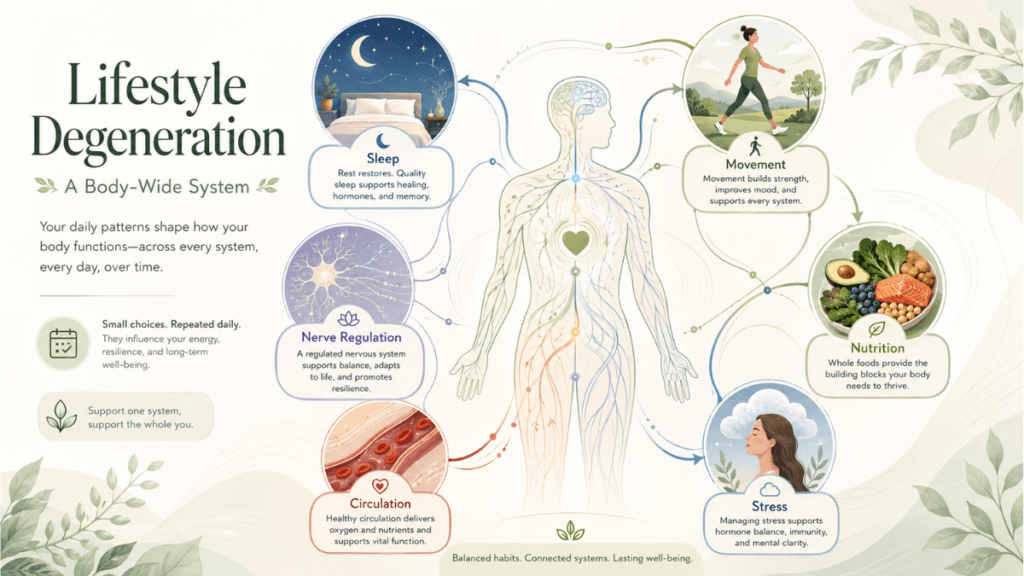
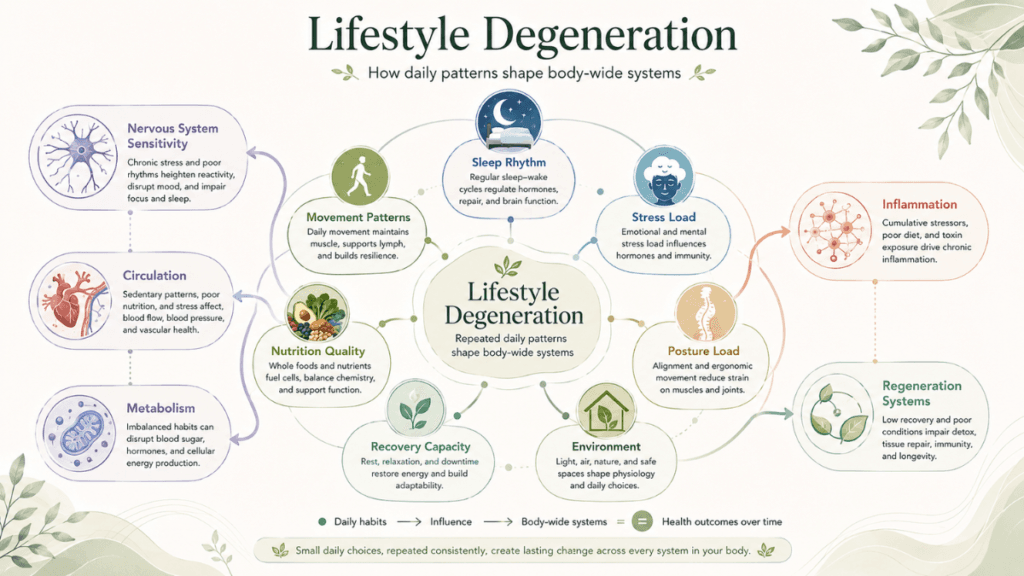
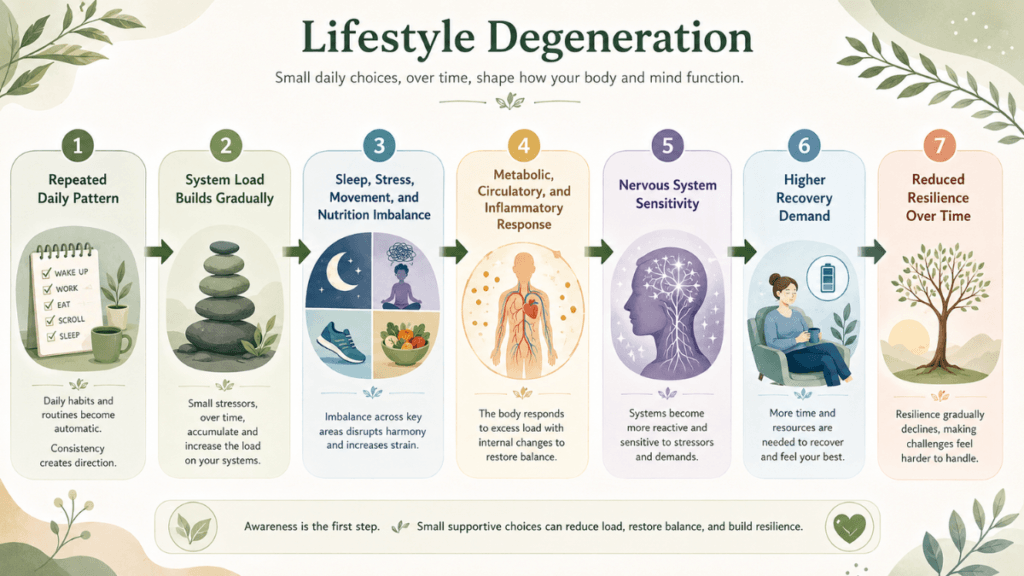
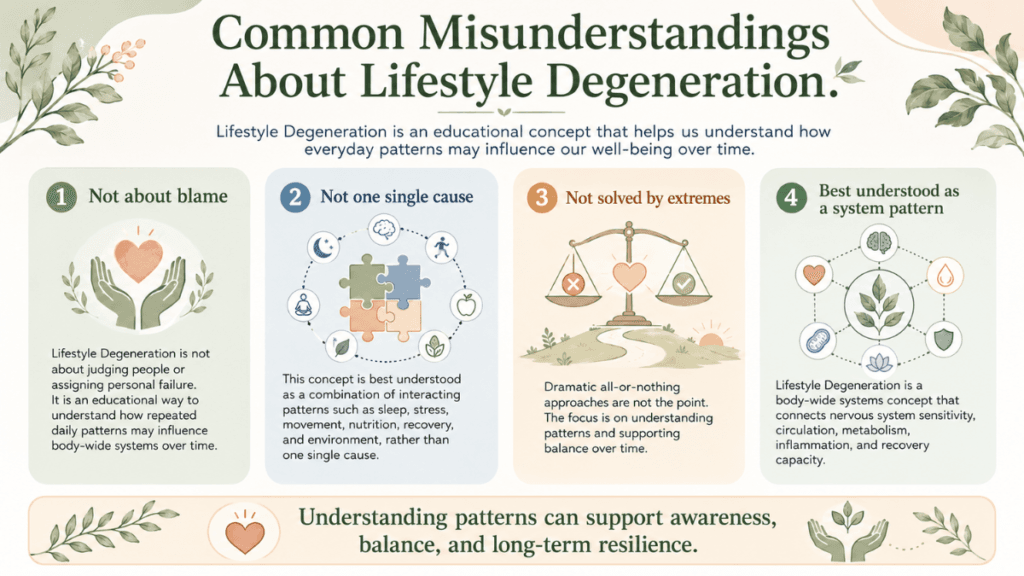
Lifestyle Degeneration
Repeated patterns involving sleep, movement, stress, nutrition, posture, and recovery may influence system load over time.
Regeneration Systems
Repair and adaptation depend on energy, regulation, delivery, clearance, and nervous system stability.
Safety & Education Notice
This page is for educational purposes only. It does not diagnose, treat, cure, or prevent disease. It is not a substitute for professional medical advice, diagnosis, or treatment.
Seek urgent medical care for severe, sudden, unusual, or worsening symptoms, including sudden weakness, loss of bladder or bowel control, chest pain, difficulty breathing, severe numbness, severe pain, or rapidly changing neurological symptoms.
Because this topic may involve medical-sensitive body systems, readers should not use this information to self-diagnose, stop medication, begin supplements, follow detox protocols, or delay professional care.