
Autoimmune Patterns
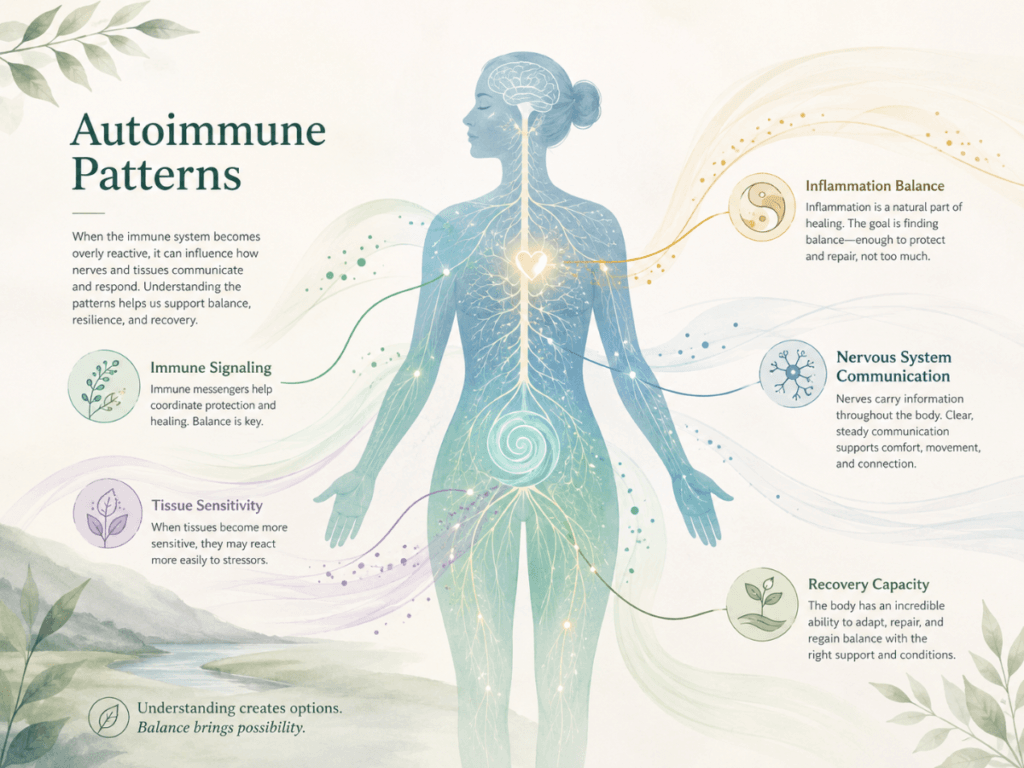
Autoimmune Patterns help explain how immune system activity, inflammatory signaling, tissue sensitivity, nervous system regulation, and recovery capacity may interact.
This page does not describe autoimmune patterns as a diagnosis. Instead, it presents Autoimmune Patterns as a body-wide educational system that may help users understand immune reactivity, inflammation, fatigue, nerve sensitivity, stress load, and recovery demand.
The immune system is designed to protect the body. However, when immune signaling becomes highly reactive, prolonged, or poorly regulated, it may place more demand on tissues and nerves. Therefore, Autoimmune Patterns can be understood as one possible educational lens for exploring body-wide sensitivity, flare-like patterns, fatigue, discomfort, and system regulation.
Quick Navigation
What Are Autoimmune Patterns?
Autoimmune Patterns refer to immune-related activity where the body’s protective system may become more reactive, sensitive, or difficult to regulate. This page uses the term as an educational framework, not as a medical diagnosis.
The immune system normally helps identify threats, respond to irritation, support repair, and protect the body. However, immune activity can also interact with inflammation, stress response, gut signaling, metabolism, circulation, and nerve sensitivity.
A simple analogy is a security team. A security team is useful when it responds to real problems. However, if the system becomes overly alert, it may react strongly to signals that are not always dangerous. In the body, immune reactivity can sometimes work in a similar way.
For nerve-related education, this matters because nerves operate inside a living immune environment. When immune and inflammatory signals are more active, the nervous system may become more alert to discomfort, fatigue, tingling, burning, pain, or body-wide sensitivity.
An Educational Lens, Not a Diagnosis
Autoimmune Patterns should not be used to self-diagnose autoimmune disease. Many symptoms can overlap across different systems, including stress, inflammation, metabolic stress, nutrient issues, mechanical load, and circulation patterns.
Instead, this page helps explain how immune-related patterns may fit into the wider body system. Therefore, it should be used for learning, not for medical decision-making.
How Autoimmune Patterns Work
First, the immune system detects signals from the body. These signals may come from infection history, tissue irritation, inflammation, gut activity, stress load, environmental exposure, poor sleep, or other internal changes.
Next, the immune system responds through chemical messengers, inflammatory signals, immune cells, and tissue-level communication. At the same time, the nervous system monitors body state, discomfort, energy demand, and safety signals.
As a result, immune activity may influence fatigue, sensitivity, stiffness, discomfort, temperature regulation, sleep quality, and recovery demand. In addition, nervous system alertness may influence immune balance through stress pathways and regulation signals.
Over time, repeated immune activation or poor recovery may place more demand on the body. For this reason, Autoimmune Patterns should be understood as a system of immune signaling, inflammation, nervous system regulation, and recovery capacity—not as one isolated cause.
Key Layers of Autoimmune Patterns
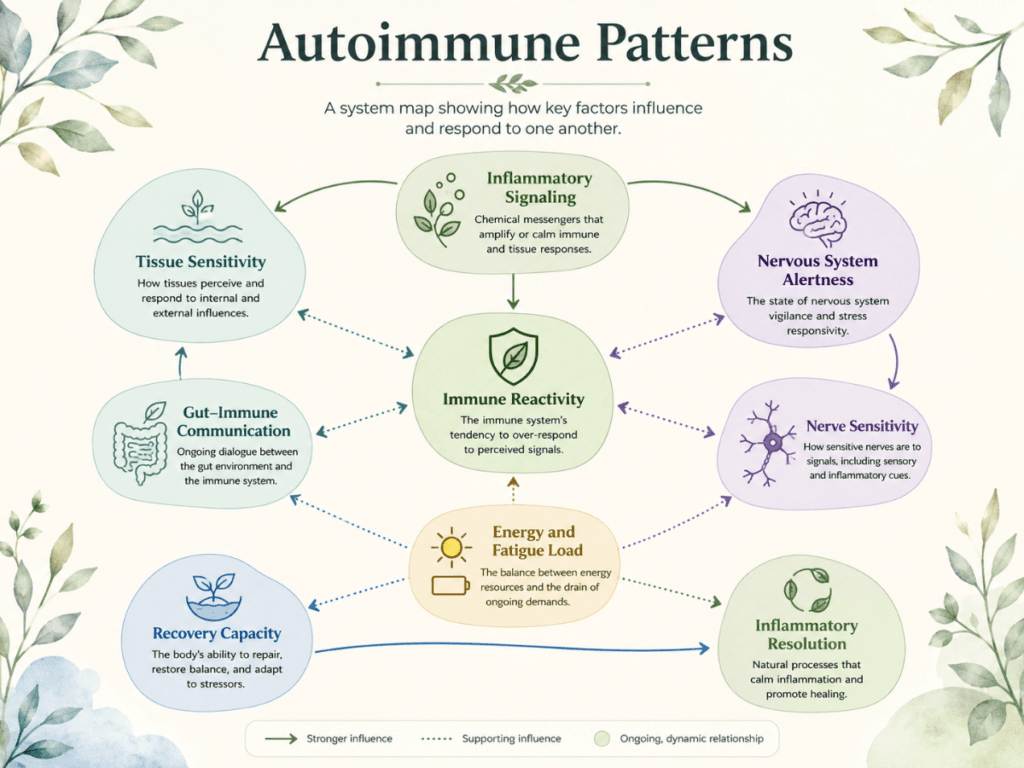
1. Immune System Reactivity
Immune reactivity refers to how strongly the immune system responds to internal or external signals. This may include irritation, infection history, tissue stress, environmental triggers, or inflammatory signals.
A responsive immune system is important for protection. However, when the response becomes repeated or difficult to regulate, the body may feel more sensitive or fatigued.
For nerve-related education, immune reactivity matters because immune signals can influence how the nervous system interprets body sensations.
2. Inflammatory Signaling
Inflammation is part of the body’s protection and repair process. It helps the body respond to injury, irritation, or unwanted stress.
However, when inflammatory signaling remains active for longer than needed, tissues may become more reactive. This may influence stiffness, tenderness, fatigue, and sensitivity.
This does not mean inflammation is always harmful. Instead, balance, timing, and resolution are important parts of Autoimmune Patterns.
3. Tissue Sensitivity
Tissues can become more sensitive when immune and inflammatory signals are repeatedly active. This may include muscles, joints, skin, connective tissue, nerves, or internal body systems.
For example, a person may feel more body discomfort during periods of stress, poor sleep, illness recovery, or flare-like patterns. This does not confirm a diagnosis, but it may reflect increased system demand.
Tissue sensitivity can also influence movement, rest, energy, and emotional load. Therefore, it should be viewed as part of the wider body response.
4. Nervous System Alertness
The nervous system and immune system communicate closely. When immune activity increases, the nervous system may become more alert to internal body signals.
At the same time, stress and nervous system activation may influence immune balance. This creates a two-way relationship between immune signaling and nervous system regulation.
For this reason, Autoimmune Patterns may interact with pain perception, body awareness, fatigue, and sensory sensitivity.
5. Gut–Immune Communication
The gut is closely connected to immune activity. It interacts with food inputs, microbiome activity, gut barrier function, immune signaling, and inflammation.
When gut-related patterns are stressed, immune communication may become more active. At the same time, immune reactivity may influence digestion, appetite, comfort, and sensitivity.
This does not mean the gut explains every immune pattern. Instead, gut–immune communication is one important layer of the wider system.
6. Energy and Fatigue Load
Immune activity requires energy. When the immune system is highly active, the body may spend more resources on protection, signaling, and regulation.
As a result, fatigue may become more noticeable. Energy may feel less steady, and recovery from ordinary tasks may feel slower.
For nerve-related education, this matters because nerves and repair systems also need steady energy support.
7. Recovery and Resolution Capacity
The immune system should ideally respond, protect, repair, and then return toward balance. This return process is part of resolution.
When recovery capacity is lower, immune and inflammatory signals may stay more active. Poor sleep, high stress, low nutrient availability, overwork, or repeated burden may influence this pattern.
Therefore, Autoimmune Patterns should be understood through recovery capacity, not fear-based thinking.
Autoimmune Patterns Interactions
Autoimmune Patterns and Nervous System
The immune system and nervous system communicate constantly. Immune signals may influence pain perception, fatigue, sensitivity, and body awareness.
At the same time, nervous system stress may influence immune balance. For example, ongoing stress may change sleep, muscle tension, digestion, and inflammatory response.
This relationship is not one-way. Instead, immune activity and nervous system alertness may influence each other over time.
Autoimmune Patterns and Stress System
Stress may increase system demand. It can influence sleep, hormone patterns, muscle tension, digestion, and immune signaling.
At the same time, immune-related discomfort or fatigue may increase stress. This can create a cycle where the body feels more reactive.
This does not mean stress causes autoimmune disease. Instead, stress may interact with immune regulation and recovery capacity.
Autoimmune Patterns and Metabolic System
The immune system needs energy to respond and regulate. Metabolic stress may influence how much energy is available for immune balance, tissue repair, and nervous system stability.
At the same time, immune activity may influence fatigue, appetite, blood sugar patterns, and energy demand.
For this reason, Autoimmune Patterns connect closely with metabolic education and cellular energy balance.
Autoimmune Patterns and Nutritional System
Nutrients support immune function, tissue repair, energy production, and nervous system regulation. Therefore, nutrient availability may influence immune and recovery systems.
However, nutrition should not be presented as a cure for autoimmune patterns. Food patterns affect people differently depending on medical history, digestion, stress, sleep, and tolerance.
This page explains nutrition as one support layer, not as a treatment protocol.
Autoimmune Patterns and Circulatory System
Circulation helps deliver oxygen, nutrients, immune cells, and signaling molecules. It also helps clear metabolic byproducts from tissues.
When inflammation or tissue sensitivity increases, circulation may become more important for delivery and clearance. At the same time, poor circulation may affect tissue comfort and recovery demand.
This connection shows why immune patterns should be understood through whole-body systems.
Autoimmune Patterns and Inflammatory System
Autoimmune Patterns and the Inflammatory System are closely connected. Inflammation is one of the main ways the immune system communicates and responds.
However, inflammation is not always negative. It can protect and repair. The concern is repeated, poorly resolved, or disproportionate inflammatory signaling.
Therefore, the focus should be on understanding balance and resolution, not fearing inflammation itself.
Autoimmune Patterns and Gut–Nerve Axis
The gut, immune system, and nervous system are closely linked. Gut signaling may influence immune activity, and immune activity may influence nervous system sensitivity.
Stress, digestion, microbiome balance, food tolerance, and inflammation may all interact within this network.
For this reason, Autoimmune Patterns may connect with Gut–Nerve Axis education in a careful, system-level way.
Autoimmune Patterns and Regeneration Systems
Regeneration depends on immune balance, inflammatory resolution, sleep, energy, circulation, and tissue repair signaling.
If immune activity is repeated or poorly regulated, recovery demand may increase. At the same time, healthy repair processes require immune participation.
This means the immune system is not only about defense. It also helps coordinate repair and adaptation.
Patterns That Influence Autoimmune Patterns
Daily patterns can influence immune regulation and inflammatory signaling. These patterns do not diagnose autoimmune disease. Instead, they help explain how the body’s immune environment may become more or less reactive.
Common patterns may include:
- Poor sleep or irregular sleep timing
- High stress without recovery breaks
- Recent illness or prolonged recovery demand
- Gut discomfort or digestive stress
- Low nutrient variety
- Overwork or physical overexertion
- Low movement variety
- Environmental exposure or chemical burden
- Repeated inflammation or tissue irritation
- Emotional strain or unresolved stress load
- Food fear or extreme dietary restriction
- Poor hydration
- Low sunlight or circadian disruption
- Long periods without rest
- Recovery pressure after injury, infection, or burnout
Sleep and Recovery Patterns
Sleep is one of the body’s most important regulation windows. During sleep, the body supports repair, immune rhythm, nervous system balance, and energy restoration.
When sleep is poor or irregular, immune signaling may become less steady. As a result, the body may feel more sensitive, tired, or reactive.
Stress and Immune Load
Stress does not only affect emotion. It may also influence immune signaling, digestion, sleep, muscle tension, and inflammation.
For example, a person under long-term pressure may notice more fatigue, discomfort, or sensitivity. This does not prove autoimmune disease, but it may show that the body is carrying more system demand.
Gut and Food-Related Patterns
Gut discomfort, food uncertainty, digestive irritation, or restrictive eating may increase stress around the body’s internal signals.
At the same time, gut–immune communication may influence inflammation and sensitivity. Therefore, gut patterns can be one important layer of autoimmune education.
Environmental and Recovery Burden
Environmental exposures, illness recovery, overwork, and repeated tissue irritation may all influence immune load. These factors affect people differently.
For this reason, they should be understood as patterns, not automatic causes. The goal is to reduce oversimplification and support safer education.
Autoimmune Patterns and Nerve Function
Autoimmune Patterns may connect with nerve function through several body-wide processes. These may include immune signaling, inflammation, circulation changes, tissue sensitivity, stress response, and recovery capacity. Together, these systems may influence how the nervous system receives and responds to signals from the body.
Nerves need a stable internal environment to function well. For example, they depend on oxygen, nutrients, energy, immune balance, circulation, and protection from repeated irritation. When immune and inflammatory signals become more active, the nervous system may become more alert and responsive.
As a result, some people may notice tingling, burning, numbness, pain, fatigue, or body-wide sensitivity during periods of immune stress or flare-like patterns. However, these symptoms can have many possible causes. Therefore, they should not be explained by autoimmune activity alone or used as a self-diagnosis.
In addition, immune signals may influence how the nervous system processes discomfort. When the body is already in a heightened state, sensations may feel stronger, sharper, or more persistent. For this reason, even mild irritation may feel more noticeable when the system is under stress.
At the same time, autoimmune-related nerve education should stay careful and balanced. Autoimmune Patterns can offer one helpful educational lens for understanding sensitivity and recovery demand. However, they are not a diagnosis, treatment plan, or complete explanation for every nerve-related symptom.
Autoimmune Patterns Visual Flow
Immune Trigger / Internal Stress Signal
↓
Immune System Reactivity
↓
Inflammatory Signaling
↓
Tissue Sensitivity and Fatigue Load
↓
Nervous System Alertness
↓
Nerve Sensitivity or Signal Amplification
↓
Higher Recovery Demand
↓
Repeated Immune–Nerve Cycle
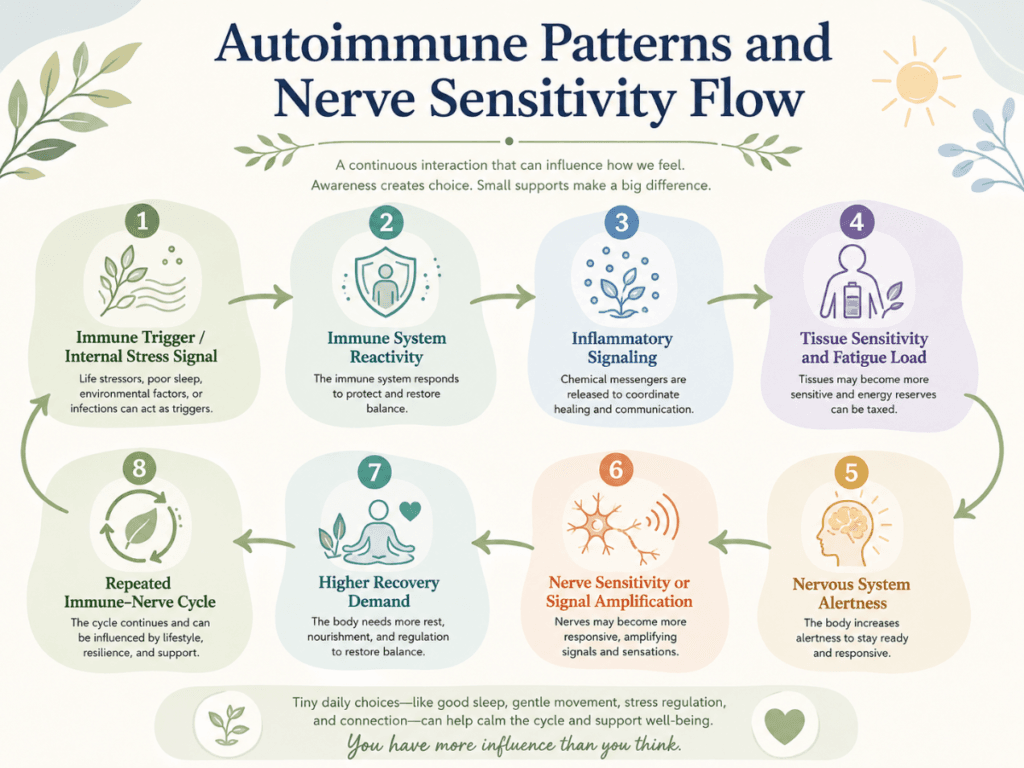
This flow is not always linear. For example, poor sleep may increase immune reactivity before symptoms become noticeable. In another case, nerve discomfort may increase stress, which then influences inflammation, digestion, and recovery.
Understanding the Cycle
Autoimmune Patterns often work more like a cycle than a straight path. Immune signaling, inflammation, stress response, energy demand, and nervous system sensitivity may all influence each other over time.
As a result, one stressed system may place more demand on another system. This is why immune-related education should avoid simple cause-and-effect explanations.
Why Visual Learning Helps
A visual flow can help users see the wider system. Autoimmune Patterns are not only about immunity. They may involve inflammation, fatigue, nervous system alertness, gut signaling, metabolism, and recovery demand.
Therefore, the flow should be understood as an educational map, not as a medical diagnosis.
Why Autoimmune Patterns Matter for Recovery
1. Recovery Requires Immune Balance
The immune system helps protect the body and support repair. It responds to irritation, infection, tissue stress, and other internal signals. However, when the immune system is activated again and again, the body may need more energy and recovery support.
For this reason, recovery is not only about responding to a challenge. It is also about whether the immune system can return toward balance after activation. When this balance is harder to maintain, the body may feel more tired, sensitive, or reactive over time.
2. Recovery Requires Inflammatory Resolution
Inflammation is a natural part of protection and healing. It helps the body respond when tissues are irritated, stressed, or injured. However, inflammation also needs a resolution phase.
Resolution means the body can gradually move back toward a calmer, less reactive state. When this process is delayed, tissues may remain more sensitive for longer. As a result, discomfort, fatigue, or body-wide sensitivity may become more noticeable.
3. Recovery Requires Energy Support
Immune activity uses energy. In addition, nerves, muscles, tissues, and repair systems also need steady energy to function well.
Therefore, when the body is already under high demand, fatigue may feel stronger. This does not mean energy issues explain everything. Instead, it shows why energy balance is an important part of understanding Autoimmune Patterns and recovery capacity.
4. Recovery Requires Nervous System Regulation
The nervous system helps the body interpret internal signals. It also helps the body respond to stress, discomfort, fatigue, and changes in the internal environment.
When the body is under stress or immune activity is high, the nervous system may become more alert. However, regulation does not mean forcing the body to stay calm all the time. Instead, it means supporting flexibility between activation and recovery.
This flexibility matters because the body needs both response and rest. As a result, nervous system regulation can be an important part of understanding recovery in autoimmune-related patterns.
5. Recovery May Be Influenced by Repeated Immune Stress
One stressful day, poor night of sleep, or short illness may not create a long-term issue. However, repeated immune stress without enough recovery time may gradually increase system load.
Over time, the body may have less capacity to adapt, repair, and return toward balance. For this reason, Autoimmune Patterns should be understood through rhythm, timing, and recovery capacity rather than fear-based thinking.
Instead of focusing on one trigger alone, it is more helpful to look at the wider pattern. Sleep, stress, digestion, inflammation, energy demand, and nervous system regulation may all interact within the recovery process.
Common Misunderstandings About Autoimmune Patterns
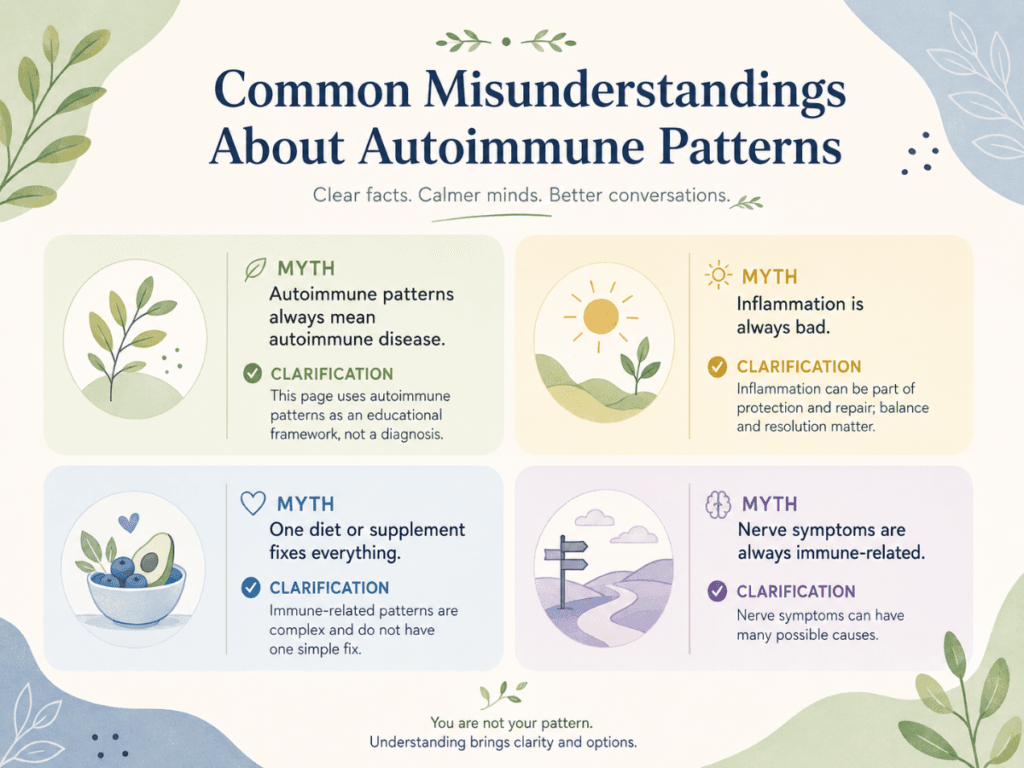
Misunderstanding 1: Autoimmune patterns always mean autoimmune disease.
Clarification:
Autoimmune Patterns on this page are used as an educational framework. They do not diagnose autoimmune disease.
In many cases, symptoms can overlap across several systems, including stress, inflammation, nutrition, circulation, gut signaling, mechanical load, and nervous system sensitivity. For this reason, autoimmune patterns should be understood carefully and not used as a self-diagnosis.
Misunderstanding 2: The immune system is only harmful when reactive.
Clarification:
The immune system is protective and necessary. It helps defend the body, support repair, clear unwanted materials, and coordinate healing responses.
However, the issue is not immunity itself. Instead, the concern is repeated, poorly regulated, or unresolved immune activity that may keep the body in a more reactive state.
Misunderstanding 3: Inflammation should always be eliminated.
Clarification:
Inflammation is part of healing and protection. The body needs inflammatory signaling in the right context.
Therefore, the goal is not to fear inflammation or remove it completely. Instead, the goal is to understand balance, timing, and resolution within the wider body system.
Misunderstanding 4: Autoimmune patterns can be fixed by one diet or supplement.
Clarification:
Autoimmune-related patterns are complex. They may involve genetics, medical history, immune activity, stress, sleep, gut signaling, environment, and recovery capacity.
For this reason, one diet, supplement, or simple routine should not be presented as a complete solution. Also, this page does not provide diet rules, supplement advice, detox protocols, or treatment instructions.
Misunderstanding 5: Nerve symptoms are always caused by immune activity.
Clarification:
Nerve symptoms can have many possible causes. For example, they may involve mechanical pressure, metabolic stress, nutritional issues, circulation problems, inflammation, injury, stress, or neurological conditions.
Therefore, Autoimmune Patterns should be viewed as one possible educational lens. They are not a complete explanation for every symptom, and they should not replace professional medical evaluation when symptoms are severe, sudden, or worsening.
Continue Learning
To understand Autoimmune Patterns more clearly, continue exploring related areas of nerve health education.
Root-Cause Systems
Learn how different body-wide stress systems may interact with nerve sensitivity and recovery capacity.
Inflammatory System
Explore how inflammatory signaling may connect with tissue sensitivity, immune activity, and recovery demand.
Gut–Nerve Axis
Understand how digestion, immune signaling, microbiome balance, stress response, and nerve sensitivity may interact.
Stress System
Explore how stress response, sleep disruption, nervous system alertness, and body tension may influence sensitivity.
Metabolic Damage System
Understand how energy regulation, cellular stress, and metabolic patterns may interact with immune and nerve function.
Nutritional Deficiency System
Learn how nutrient availability may support immune balance, energy production, and nervous system regulation.
Regeneration Systems
Understand how repair, adaptation, inflammatory resolution, and nervous system stability may support recovery education.
Conditions
Review nerve-related condition pages to understand common patterns and experiences without self-diagnosis.
Learning Path
Follow a step-by-step educational route if you are new to nerve health, root causes, and recovery systems.
Related Systems
Inflammatory System
Inflammatory signaling is closely connected with immune activity. It may influence tissue sensitivity, fatigue, discomfort, and recovery demand.
Gut–Nerve Axis
Gut signaling, microbiome activity, immune communication, and nervous system regulation may all interact with Autoimmune Patterns.
Stress System
Stress may influence immune balance, sleep, digestion, muscle tension, and nervous system alertness.
Metabolic Damage System
Metabolic stress may affect energy availability, fatigue, tissue repair, and immune regulation.
Nutritional Deficiency System
Nutrient availability may support immune function, energy production, repair, and nerve regulation.
Circulatory Impairment System
Circulation supports delivery and clearance. It may influence tissue comfort, inflammatory balance, and recovery capacity.
Toxic Load System
Environmental burden may interact with immune stress and inflammatory signaling. This should be discussed carefully without detox claims.
Mechanical Damage System
Mechanical irritation or tissue stress may interact with inflammation, guarding, and nerve sensitivity.
Regeneration Systems
Regeneration systems require immune balance, inflammatory resolution, sleep, circulation, energy, and nervous system stability.
Safety & Education Notice
This page is for educational purposes only.
It does not diagnose, treat, cure, or prevent disease. It is not a substitute for professional medical advice, diagnosis, or treatment.
Autoimmune disease, nerve pain, numbness, weakness, tingling, burning, fatigue, rash, swelling, fever, unexplained weight loss, severe pain, vision changes, chest pain, breathing difficulty, fainting, loss of bladder or bowel control, or rapidly worsening symptoms can have many possible causes. Seek urgent medical care for severe, sudden, progressive, or worsening symptoms.
This page does not provide immune treatment advice, diet rules, supplement advice, detox protocols, medication guidance, fasting guidance, or medical treatment plans. Use it as a learning resource, not as a medical decision tool.